SABRE
Registered Member

I might be proven wrong, but I don't see any viable reason(s) for Pakistan to get J-10C's ToT. There is no indication of PAF planning on acquiring 90-100+ aircraft &/or CAC production line being busy to the point where it cannot guarantee delivery of these numbers in time, both of which would make sense for getting the ToT. Otherwise it might turn out to be the same dead rubber as Agosta-90B ToT from France. It was speculated that PAF would induct 36 J-10C but the plan seems to be have been slowed down, if not put on hold completely. This may have something to do with J-35 (or not). We'll have to wait and see.I'm not opposed to China providing Pakistan with the J-10CE ToT. My analysis is that the J-10CE assembly line and technology alone pose no threat to China's strategic security. In other words, China's State Administration of Science, Technology and Industry for National Defense (SASTIND) will not block the deal.
For CATIC, if it sells the J-10CE to the PAF as a whole, the PAF's purchase quantity will be limited. However, if it sells J-10CE components to PAC, with PAC independently producing some fuselage parts and final fighter assembly, the PAF's purchase quantity could at least double or triple. This would not affect CATIC's economic benefits and could even generate higher profits.
So, I wouldn't be surprised if that day ever comes.
However, China is unlikely to transfer the technology for core components (engines, radar, avionics, etc.), much less open the fighter's core source code. At most, China will allow it to be compatible with weapons payloads developed jointly by China and Pakistan or independently by Pakistan, but not with third-party payloads(Including weapons payloads from Pakistan and Türkiye).
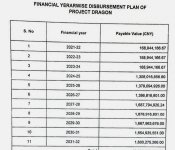
For Pakistan, this is a deal destined to lose money. Given Pakistan's economic strength and production capacity, the final cost cannot be lower than CATIC's quotation. So, how will the costs of the production line and technology transfer be handled? CATIC cannot afford a second soft loan of more than a decade.
The original purpose of the FC-31/J-35 was to serve the international market. It has no necessary connection to China-Pakistan relations.
Based on official information, we can confirm that the FC-31/J-35 export version is a downgraded version of the J-35A Self-use version. It has been declassified.
As for the others, we can discuss them when they arrive in Pakistan. For now, everything is speculation.
We do not wish to interfere in the close relationship between Pakistan and Turkey. This is Pakistan's internal affairs.
However, Turkey's pan-Turkism poses a profound threat to China's national security. In recent years, Sino-Turkish relations have improved somewhat. However, the fundamental issues between us have not been resolved; they have merely been temporarily shelved. They could flare up again at any time. Based on the most basic national security strategy, we can engage in appropriate economic trade with Turkey. However, on the military level, especially in military technology, there is no basis for trust between the two sides.
There is also the US's military influence on Pakistan.
For ordinary Chinese, we are not opposed to our government providing Pakistan with cutting-edge military technology. Our real concern is Pakistan's inability to keep these technologies secret. This is due to both active and passive factors. Numerous countries hostile to China can easily infiltrate Pakistan's major confidential facilities. The widespread corruption in Pakistan is also an important channel for leaks.
I disagree with the last paragraph. Americans had similar fears with F-16s but Pakistan never provided China access to these aircraft, even when Pakistan was under embargo. China being more important ally, security partner, and more reliable arms supplier, I doubt Pakistan would mishandle Chinese tech. But this is easy for me to say sitting across the border. From Chinese perspective they would be right to be cautious.


 you went too far bro, just like yesterday, when you told us Pakistan will be self destructed if it acquired certain weapons from China. When we are a nuke state and have been for 27 years managing those complex weapons.