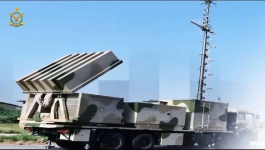
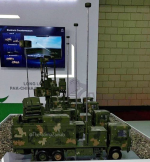
Special Mission Aircraft PAF QUWA MACRH 2024
The apparent plan to retire the KE AEW&C was unexpected. Inducted in 2009, the KE pairs the ZDK03 PESA radar to the Shaanxi Y-8F600 turboprop-powered transport aircraft. The KE has been a key part of the PAF’s maritime operations, where the PAF deployed the AEW&C in joint maneuvers with the Pakistan Navy (PN). It appeared that the KE was interoperable with the PN’s assets.
Moving forward, it seems that the PAF is standardizing on the Saab 2000-based Erieye AEW&C. The PAF had originally planned to only operate the Erieye in the early 2000s. However, in the late 2000s, it complemented its fleet of four aircraft with four KEs from China. In 2012, the PAF had lost three of its four Erieye AEW&C to a terrorist attack on Minhas Air Base. Ironically, the four KEs were a critical asset for the PAF as it filled the coverage gap caused by the loss of Erieye AEW&Cs.

By 2016, the PAF restored its Erieye fleet to its original strength of four aircraft and, in 2017, ordered another three aircraft. This was followed by an order for at least two additional systems in 2020, the deliveries of which took place from 2020 to 2023. Thus, the PAF has a total of nine Erieye AEW&Cs.
To support this enlarged fleet, the PAF may have decided to reassign personnel from the KE to new Erieye aircraft. In turn, the PAF will likely station several Erieye AEW&Cs in Southern Air Command; it would take up the KE’s role of supporting maritime operations in coordination with the PN.
It is also worth noting that the PN is also building its own AEW capability through its next-generation long-range maritime patrol (LRMPA) aircraft, the Sea Sultan. The PN may add the AEW capability via the Sea Sultan’s primary search radar. If the PN opts for the Leonardo Seaspray 7500 V2 (a variant of the radar used onboard the PN’s RAS-72 Sea Eagle MPAs), it would gain an AESA radar with both air-to-air and air-to-surface tracking and imaging modes. Though not as robust as a dedicated AEW&C, the PN can combine the AEW element of its LRMPAs with the Erieye’s coverage via a TDL.
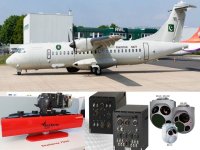
Standardizing on the Erieye also confirms a key factor – the Erieye can indeed support Link-17, the PAF’s in-house TDL alongside Link-16 and NIXS, the PN’s TDL. The PAF could leverage off-the-shelf solutions, like
the MilSOFT Multi-Data Link Processor (Mil-DLP), to enable the Erieye to support and manage multiple TDLs simultaneously. Thus, there is no technical limitation stopping the PAF from connecting the Erieye to the F-16s, JF-17s, J-10CEs, or any other platform.
Electronic Warfare
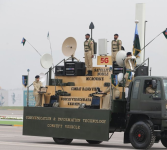
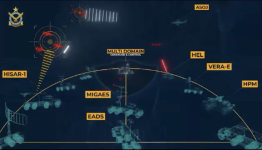
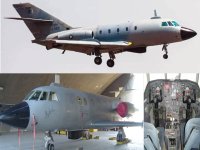
For the PAF, electronic warfare (EW) was traditionally an essential part of its offensive operations; but it is now leveraging EW for area denial. In its promotional video, the PAF highlighted at least three new land-based EW systems: HISAR-1, MIGAES, and EADS…
Electronic Warfare
For the PAF, electronic warfare (EW) was traditionally an essential part of its offensive operations; but it is now leveraging EW for area denial. In its promotional video, the PAF highlighted at least three new land-based EW systems: HISAR-1, MIGAES, and EADS…
End of excerpt. Subscribe to Quwa Premium to read the rest of this section.
3. Enhancing Situational Awareness
The PAF is using a range of radars and passive sensors to build its situational awareness, not just over Pakistani territory, but, potentially, across its borders too.
Multi-Layered Radar Coverage
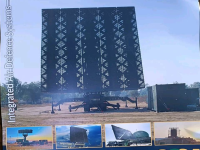
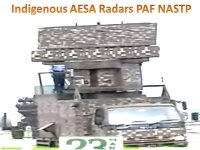
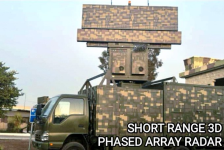
The PAF’s radar coverages use a combination of land-based radars and airborne early warning and control (AEW&C) systems. Together, these assets monitor Paksitani airspace across multiple radar bands while also providing support for different missions, including offensive operations.
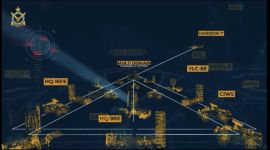
Horizon-7
It appears that the PAF has begun designating its Erieye AEW&C as the ‘Horizon-7’. The PAF operates seven to nine Erieye systems, with the latest unit being inducted as recently as January 2024.
With the Saab 2000 as its aircraft platform, the Erieye is an S-band active electronically scanned array (AESA) radar with a range of 450 km. It also has five onboard mission operator consoles for managing connected air and surface assets for air-to-air and air-to-surface maneuvers.
Being an airborne radar system, the Erieye also gives the PAF with over-the-horizon (OTH) coverage, which it can leverage to monitor the airspace of its neighbours, especially India and Iran.
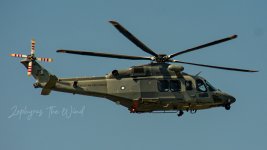
It appears that the PAF is standardizing its AEW&C fleet on the Erieye. Moreover, its latest unit – i.e., 23-058 – exhibited some different hardware compared to the PAF’s preceding Erieye units. This unit is unlikely to be the Erieye-ER, but it may have updates similar to Brazil’s E-99M, which is an upgraded Erieye system. That said, the PAF may seek the Erieye-ER in the future, but as an offensively oriented asset that can support its long-range strike wings.

Passive Sensors
The PAF confirmed that it inducted at least one passive sensor, among them the ERA VERA-E and a Chinese system (that may or may not accompany the CHL-906, as explained above)…