Pakistan Agriculture News / Discussions

FoodAg concludes with deals worth $641m​

Our Correspondent
foodag concludes with deals worth 641m

KARACHI:
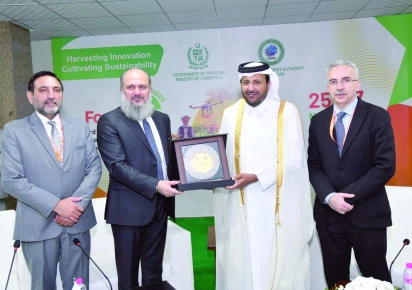
The 3rd International Food and Agriculture Exhibition, FoodAg 2025, concluded on Thursday at the Expo Centre Karachi on a high note as business deals worth $641 million were locked over the first two days.

Held from November 25-27 under the theme "Harvesting Innovation, Cultivating Sustainability," the event has been hailed as a success, showcasing Pakistan's potential as a global agro-food hub.

Trade Development Authority of Pakistan (TDAP) Chief Executive Faiz Ahmad stated, "FoodAg 2025 has been a monumental success, exceeding our expectations. Under our theme of Harvesting Innovation and Cultivating Sustainability, we have showcased the quality, diversity and competitiveness of Pakistan's agro-food sector to the world. The results speak for themselves."

The event, organised by TDAP, brought together over 370 Pakistani exhibitors from more than 20 agro-food sub-sectors and attracted over 850 international buyers from 80-plus countries, including some of the world's largest food importers.

The event featured high-level government and regulatory dialogues with delegations from Qatar, China, Italy, Malaysia, Indonesia and others, which focused on removing trade barriers and the mutual recognition of certifications.
 

Wheat sowing likely to beat target​

Punjab reviews plantation drive as certified seed use rises 25%


MULTAN:
Punjab Agriculture Secretary Iftikhar Ali Sahu chaired a review meeting on the ongoing wheat cultivation at Muhammad Nawaz Sharif Agricultural University Multan, noting a sharp rise in the use of certified seed and improved input availability across the province.


According to a spokesperson, the secretary said wheat remains vital for national food security and Punjab has set a cultivation target of 16.5 million acres for the current season.

He stated that wheat sowing was expected to exceed the target due to favourable field conditions and timely input supply.

He observed that certified wheat seed was widely available in markets at Rs5,500 per bag and its use increased more than 25% compared to previous years.

Fertilisers were also available in ample quantity, with prices reported below officially fixed rates, he added. Sahu said adequate supply of canal water had been ensured to support the current crop sowing phase.

Also, under the Kisan Card initiative, interest-free loans worth more than Rs100 billion have so far been provided to over 700,000 farmers.
 

Wheat sowing likely to beat target​

Punjab reviews plantation drive as certified seed use rises 25%


MULTAN:
Punjab Agriculture Secretary Iftikhar Ali Sahu chaired a review meeting on the ongoing wheat cultivation at Muhammad Nawaz Sharif Agricultural University Multan, noting a sharp rise in the use of certified seed and improved input availability across the province.


According to a spokesperson, the secretary said wheat remains vital for national food security and Punjab has set a cultivation target of 16.5 million acres for the current season.

He stated that wheat sowing was expected to exceed the target due to favourable field conditions and timely input supply.

He observed that certified wheat seed was widely available in markets at Rs5,500 per bag and its use increased more than 25% compared to previous years.

Fertilisers were also available in ample quantity, with prices reported below officially fixed rates, he added. Sahu said adequate supply of canal water had been ensured to support the current crop sowing phase.

Also, under the Kisan Card initiative, interest-free loans worth more than Rs100 billion have so far been provided to over 700,000 farmers.
 

Ghani Dairies to Raise Rs. 2.5 Billion Through IPO on PSX​

By Business Desk | Published Dec 1, 2025 | 12:05 pm
Ghani Dairies Limited, a corporate dairy farm based in Punjab, has filed for an initial public offering on the Pakistan Stock Exchange (PSX), aiming to raise as much as Rs. 2.5 billion to fund its expansion and strengthen its position in the country’s dairy sector.

According to a notice from the PSX, the company will offer 104.2 million ordinary shares with a face value of Rs. 1 each, representing 24.28% of its post-IPO paid-up capital.

The IPO will be conducted via the book-building method at a floor price of Rs. 24 per share, with a price band of up to 40%. JS Global Capital Limited is acting as the lead manager for the issue.

75 percent of the shares, or 78.15 million, will be allocated to institutional and high-net-worth investors through book building, while the remaining 25%, or 26.05 million shares, will be offered to retail investors at the strike price determined in the book building process.

ALSO READ
Ghandhara to Roll Out Zhongtong Luxury Buses in Pakistan in 2026
The principal purpose of the IPO is to finance Ghani Dairies’ herd expansion, support the company’s operational growth, upgrade farm infrastructure, and strengthen its working capital position. The planned investments are expected to boost raw milk production capacity from 17,840 tons per annum in FY 2025-26 to 33,570 tons by FY 2026-27.

This growth will be driven by the induction of 1,000 pregnant heifers and organic expansion as young calves mature and enter the milking cycle, immediately increasing milk output.


The company expects the milking capacity to reach 38,371 tons per annum in FY 2027-28, as an additional 250 young heifers, procured through IPO proceeds and ready for insemination, begin producing milk alongside continued organic herd growth.

Ghani Dairies, incorporated in 2020 and converted to a public limited company in July 2025, operates a large-scale dairy farm in Rahdari, Noor Pur Thal, District Khushab, Punjab.

The company began commercial operations in October 2021 with the import of 210 heifers from the United States, and has since expanded its herd with further imports from the US and Australia. As of August 2025, the farm manages 2,487 cattle, including 1,377 mature milking animals.

The company has invested heavily in modern infrastructure, including French-made KUHN TMR feed mixing machines, automated milking parlors from the US, and a European plate heat exchanger cooling system. A digital herd management system is in place to optimize animal health and productivity.

Ghani Dairies supplies its entire milk output to leading dairy processors in Pakistan under long-term contracts.
 

Horticulture exporters unveil plan to raise exports from $700m to $2bn​


PFVA unveils 3-year strategy to triple fruit, vegetable, value-added product sales

Usman Hanif
December 03, 2025


tribune


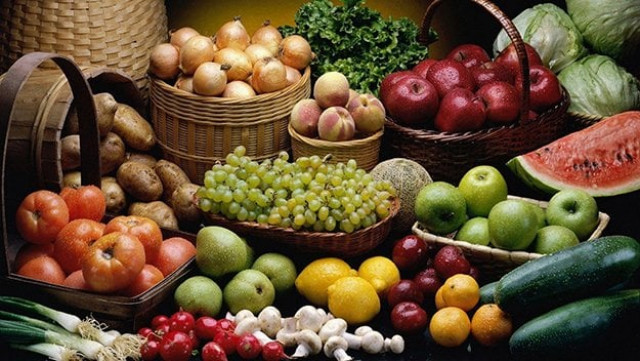
KARACHI: Taking cue from the response of international clients in the recent food exhibition, FoodAg 2025, the horticulture sector is outlining a three-year plan to boost the country's fruit, vegetable, and value-added exports from $700 million to $2 billion.

Addressing a press conference at the PFVA office, Waheed Ahmed, Patron-in-Chief of the Pakistan Fruit and Vegetable Exporters, Importers and Merchants Association (PFVA), said the Pakistan Horticulture Development Company and the Trade Development Authority will work together to strengthen the agricultural economy and achieve the $2 billion export target. The development company includes representation from the agriculture sectors of all four provinces and Gilgit-Baltistan.

Speaking on the occasion, Shehryar Taj, Secretary of the Trade Development Authority, said that the Food and Agriculture Exhibition held in November delivered strong results, generating orders worth $35 million. "For the first time, Pakistan received export orders from the United Kingdom, Germany and Oman," he said.

The exhibition played a key role in showcasing Pakistan's agricultural potential to the world, he added. This year, 25 fruit, vegetable and value-added exporting companies participated, while buyers from 35 countries expressed interest in Pakistani produce and value-added items.
 
The PFVA's three-year plan focuses heavily on new varieties, product diversification, and industrial-scale processing. Ahmed said the roadmap includes the development of new citrus varieties, as well as growth in avocado, garlic, and banana production.

On the value-added side, Pakistan plans to expand its portfolio through mango pulp, apricot concentrate, kinnow concentrate, date syrup, fruit beverages, tomato paste, guava products, and other processed items. According to Ahmed, value addition is essential for reaching the $2 billion target, as fresh produce alone cannot generate the required volume or margins.

He said value-added manufacturing has accelerated in recent years, with the number of processing companies increasing from just a few players to more than a dozen. Pakistan's juice, concentrate, and pulp industries are also expanding, enabling greater export potential. While several firms have long been involved in this space, new entrants are rapidly emerging, broadening the country's export base.
 

Pakistan’s soils face severe nutrient depletion: FAO


Amin Ahmed
December 6, 2025

1765024573995.png

A farmer in Multan spray pesticide in a field. — APP

ISLAMABAD: As ‘World Soil Day’ was observed on Friday, a new assessment by the Food and Agriculture Organisation (FAO) of the United Nations has found that Pakistan’s soils generally suffer from low fertility and major nutrient deficiencies, including essential elements.

The FAO analysis notes that organic matter levels in most soils are critically low, weakening soil structure and reducing water retention.

Around 36 million hectares are classified as agricultural land as of 2022. Of the agricultural land, approximately 30.2 million hectares are used for arable farming, 5m hectares for permanent meadows and pastures and 0.72m hectares are dedicated to permanent crops. Around 2.5m hectares of the country’s total area are classified as forest land.

The soil is predominantly alkaline, with large areas affected by salinity and sodicity, particularly in irrigated agricultural areas. Erosion and pollution are also widespread issues, says the analysis.

The analysis recommended to develop a comprehensive national soil policy that integrates various aspects of soil management. This policy should provide a clear framework for all stakeholders and guide the implementation of soil governance at national and provincial levels.

Analysis finds organic matter levels critically low, leading to reduced soil structure, poor water retention

New legal frameworks or amendments to existing ones can also be introduced to address gaps, particularly focusing on critical issues such as overgrazing, mining impacts, urbanisation, and the effects of climate change on soil degradation.

It suggested revision in the existing laws to close gaps and strengthen regulations concerning soil protection, including tightening enforcement provisions and clarifying responsibilities among various governmental and non-governmental entities involved in soil management.
 
The analysis called for creating formal mechanisms for interagency coordination that brings together relevant ministries to ensure a holistic approach to soil governance.

Intensive farming practices have contributed to nutrient depletion and waterlogging in many agricultural areas. Deforestation and overgrazing have accelerated erosion and the loss of organic matter. Land tenure issues, such as insecure ownership, discourage long-term investments in sustainable soil management.

The FAO says many farmers still rely heavily on chemical fertilisers, including in key agricultural regions such as Punjab, which accounts for 70 per cent of the country’s agricultural output. While reforestation efforts have produced positive results in some regions, deforestation remains a significant threat in Balochistan and Sindh because of illegal logging and insufficient enforcement of forest conservation laws.

A lack of capacity within provincial agencies has also resulted in inconsistent enforcement, particularly in rural and remote areas. Weak enforcement of penalties limits their deterrent effect.

Violations such as industrial pollution persist due to gaps in monitoring and legal follow-up. These agencies often lack the expertise and personnel necessary to effectively implement and monitor soil-related strategies and legal frameworks. Limited extension services have also contributed to significant knowledge gaps on sustainable practices.

The FAO assessment reviewed and analysed soil-related strategies and legislative frameworks in Pakistan, with the aim of providing targeted recommendations to policymakers for addressing eventual policy gaps and strengthening implementation and monitoring of impacts mechanisms.

The analysis evaluated these strategies and frameworks based on their effectiveness in addressing key soil threats, as well as their implementation, monitoring, and improvement.
 

Pakistani agri-specialists return from China with cutting-edge expertise to transform farming sector​


By Mariam Raheem | Gwadar Pro
Dec 7, 2025

ISLAMABAD- The second batch of 1,000 Pakistani agricultural specialists has returned to Pakistan following intensive training in China, bringing with them advanced expertise in smart farming technologies to propel the modernization of the country’s agricultural sector. The training, conducted under the Pakistani Prime Minister’s Capacity Building Initiative, featured specialized courses at institutions in Wuhan and Chengdu, with a focus on innovation and hands-on technology transfer.

Pakistani agri-specialists return from China with cutting-edge expertise to transform farming sector


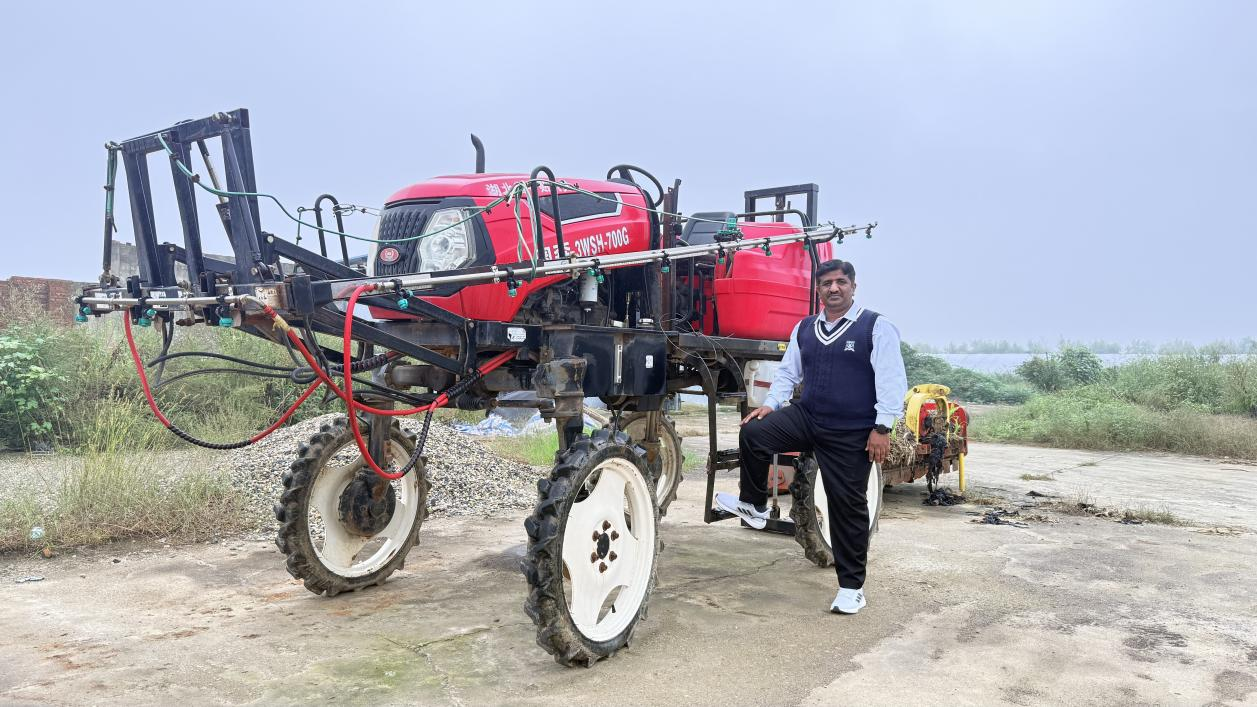
Hafiz Muhammad Mohsin Raza poses with a high-tech agricultural machinery during a field training session in Wuhan, photo provided to GP

Among the returning experts is Hafiz Muhammad Mohsin Raza, a Unit Head at Zarai Taraqiati Bank Limited, a leading agricultural development bank. After completing training in artificial intelligence, drones and the Internet of Things at Huazhong Agricultural University in Wuhan, Raza emphasized the program’s practical value. “This training helped me gain hands-on knowledge in drone applications and modern farming methods used in China,” he said. He aims to use these insights to design better financial products and policies to help local farmers access loans for climate-resilient, technology-driven agriculture.

Pakistani agri-specialists return from China with cutting-edge expertise to transform farming sector


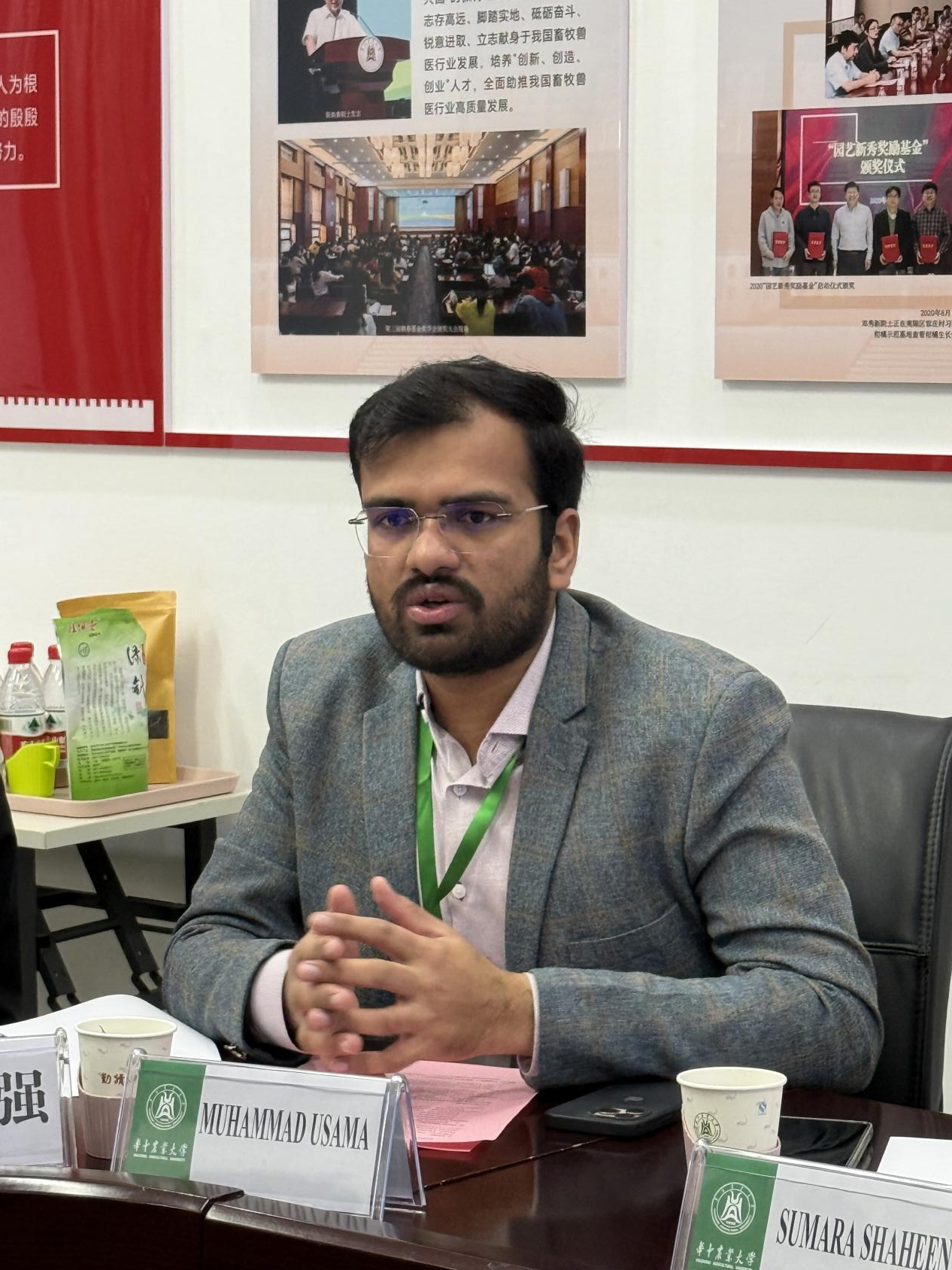
Muhammad Usama shares his idea during a training session in Wuhan, photo provided to GP

Muhammad Usama, an early-career agriculture professional who also trained at Huazhong Agricultural University, described China as a “living laboratory” for agricultural transformation. Noting shared challenges such as food security and climate stress, he sought to learn from China’s integration of digital tools, smart machinery and efficient irrigation systems. “I wanted to bring back adaptable practical models, not just theory,” Usama explained. He plans to organize training sessions and build lasting collaborative networks with Chinese institutions to launch joint projects in Pakistan.
 
.

Pakistani agri-specialists return from China with cutting-edge expertise to transform farming sector


Fraz Ahmad Khan operates a machine during his training in Chengdu, photo provided to GP

For researchers like Fraz Ahmad Khan, a scientific officer at the Rice Research Institute in Punjab who trained in Chengdu, the program provided a deep dive into cutting-edge applications. Highlighting his hands-on experience with AI-driven crop models and drone-based phenotyping, he stressed that AI-powered precision agriculture is essential to address water scarcity and high input costs in Pakistan. “Monitoring crop health and predicting yields with drones is now a necessity for climate resilience,” Khan stated. He proposed to start with pilot smart farms at research stations in Pakistan to develop localized and scalable models.

Pakistani agri-specialists return from China with cutting-edge expertise to transform farming sector


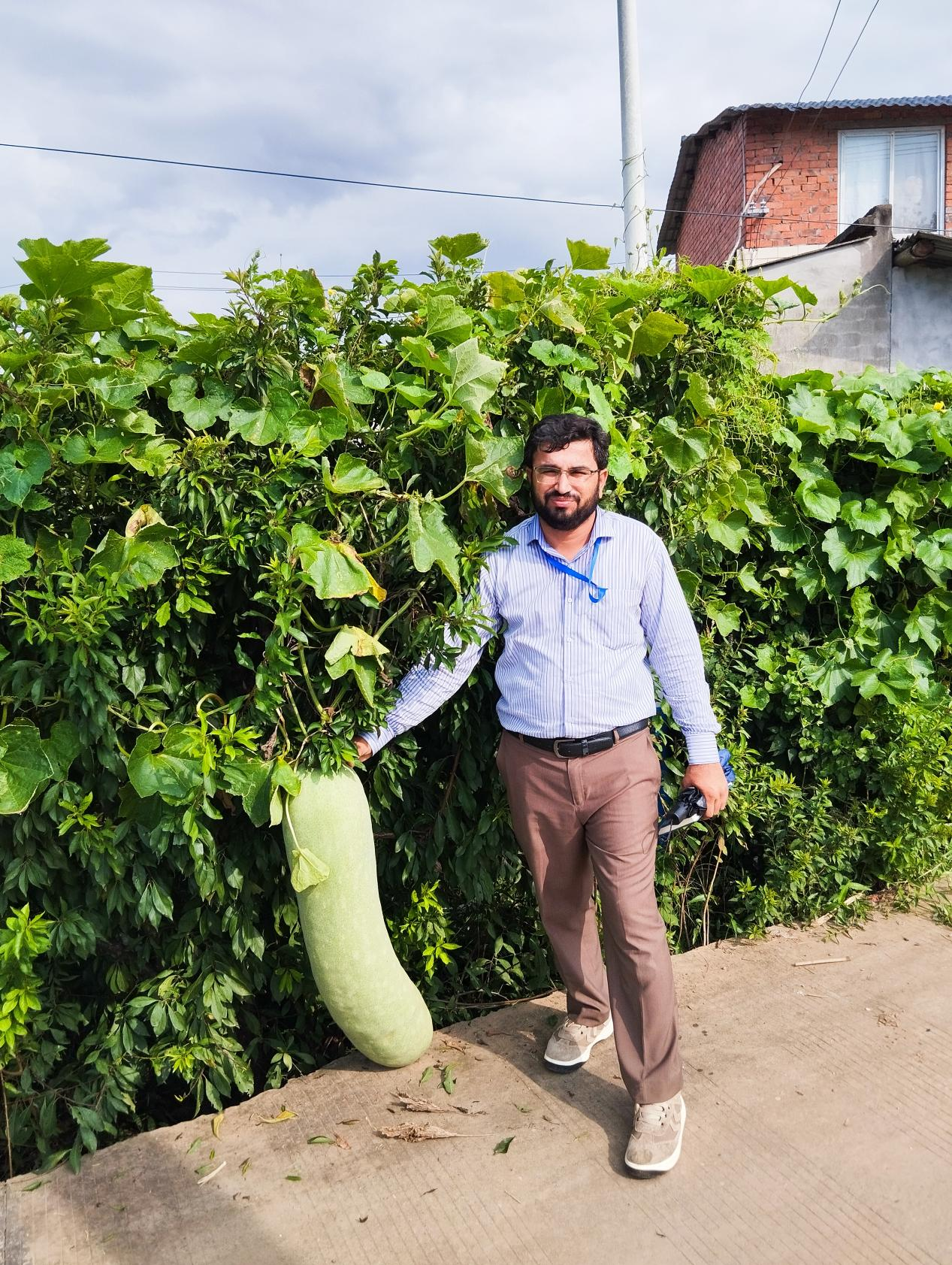
Maqbool Ahmad takes a photo with a large wax gourd during his agricultural training in Chengdu, photo provided to GP

The program also delivered valuable insights for horticultural specialists. Maqbool Ahmad from Mango Research Institute, Multan visited production bases in Sichuan, including Panzhihua, where he observed advanced cultivation and processing techniques that have significantly boosted yields. “We saw how they achieve double or triple the yield while improving livelihoods through enhanced productivity,” Ahmad said. He plans to introduce small drones for orchard monitoring and spraying, as well as modern drying techniques to strengthen Pakistan’s dried mango industry, reduce post-harvest losses and increase farmers’ incomes.
 
The collective experience of this cohort underscores the strong consensus on the urgency of adopting smart agriculture. The experts are poised to bridge the gap between research and field applications, advocate for supportive policies in financing and extension services, and enhance agricultural cooperation between Pakistan and China.

As expressed by Maqbool Ahmad, seeing China’s progress has been a powerful motivator and the hope is that the exchange will continue so that these concepts can take root and become a fruitful part of Pakistan’s agricultural system and drive it towards a more productive and sustainable future.


Pak experts trained by Chinese Company set up VitaGene Farms​

By Yasir Habib Khan | Gwadar Pro
Dec 7, 2025

ISLAMABAD - In connection with Pakistan-China livestock genetics initiative, local Pakistani experts have established VitaGene farms under the training of Royal Cell Biotechnology (Pakistan)— one of the pioneers of buffalo IVF technology in Pakistan.

With a moto of shaping the future of livestock genetics, the VitaGene farms, a state-of-the-art embryo production and research facility, have been established in various part of country including Lahore.

Cutting-edge technology, machinery and equipment are being brought in the VitaGene Farms. Buffalo and cattle embryo will be produced in the world class IVF lab.

Royal Cell Biotechnology (Pakistan) Project Directo Dr. Qaisar told Gwadar Pro that VitaGene Farms will produce elite cattle and buffalo embryos, accelerating genetic improvement and supporting the development of high-performance livestock across Pakistan.

This milestone reflects the growing strength of Pakistan’s biotechnology ecosystem and the long-term impact of modern reproductive technologies on our livestock sector.
 

Pakistan aims to export 300,000 tonnes of oranges after record harvest​


Shrinking orchards, outdated varieties continue to hold back citrus potential

Web Desk
December 09, 2025

tribune


Pakistan has kicked off kinnow exports for the ongoing season, with the Pakistan Fruit and Vegetable Exporters, Importers and Merchants Association (PFVA) setting a target of 300,000 tonnes, expected to fetch $110 million in foreign exchange.

Since December 1, exporters have already shipped around 6,000 tonnes to the Middle East, Sri Lanka and the Philippines.

Last year, Pakistan exported 250,000 tonnes, earning $95 million. Despite this season’s bumper output — projected at 2.7 million tonnes, up from 1.7 million tonnes — exports remain nearly 50% below the 550,000 tonnes shipped five years ago.

PFVA Patron-in-Chief Waheed Ahmed attributed the decline to “zero investment in R&D” and the failure to introduce new, climate-resilient citrus varieties. The association has submitted short-, medium- and long-term plans to the government, which Ahmed said could lift citrus exports to $400 million within five years if implemented.

He added that Pakistan must begin cultivating new varieties sourced from Egypt, the US, Morocco and China, along with low-water citrus types — lemon, grapefruit, orange and mandarin — that enjoy strong global demand.
 

Tajikistan plans to import 100,000 tons of Pakistani meat worth over $50mn

  • Federal Minister for National Food Security and Research, Rana Tanveer Hussain holds productive bilateral meeting with the Ambassador of Tajikistan to Pakistan, H.E. Yusuf Sharifzoda

Tajikistan has conveyed its intention to buy 100,000 tons of meat from Pakistan, a potential import order exceeding USD 50 million and signaling growing trade cooperation between the two countries.

This was conveyed during a meeting between Federal Minister for National Food Security and Research, Rana Tanveer Hussain, and Ambassador of Tajikistan to Pakistan, H.E. Yusuf Sharifzoda, in Islamabad today, the information ministry said in a press release.


During the meeting, Ambassador Sharifzoda expressed Tajikistan’s strong interest in expanding agricultural imports from Pakistan, with a particular focus on meat products.

Both sides agreed that a formal agreement for the commencement of large-scale meat exports will be signed soon. Rana assured full facilitation in fulfilling Tajikistan’s requirements and reiterated Pakistan’s readiness to support Tajikistan’s food and livestock needs.

The two sides also reviewed the current trade scenario, noting that Pakistan exports rice, citrus, and mango to Tajikistan, though the volume remains below potential.

Despite producing 1.8 million tons of mangoes annually, Pakistan exported only 0.7 metric tons to Tajikistan in 2024.


“Similarly, Pakistan’s rice exports to Tajikistan remain minimal at just 240 metric tons in 2022 compared to its annual production of 9.3 million tons. Pakistan’s major import from Tajikistan is ginned cotton.

Both sides agreed on the need to enhance trade volumes and reduce technical and logistical barriers.”

They also agreed to “pursue a forward-looking roadmap for agricultural cooperation, including expanding trade in fresh fruits, vegetables, meat, and staple crops; strengthening collaboration in research and development; enhancing compliance with international standards; establishing pest-free production zones; and building capacity of relevant stakeholders on phytosanitary and agricultural best practices”.

They also agreed on the importance of exchanging scientific information and promoting innovation to drive sustainable agricultural development, added the press release.
 

Punjab signs MoUs with China to advance agricultural development and technology​


News Desk10 Dec 2025
The Punjab Government has signed several Memorandums of Understanding (MoUs) with China to enhance agricultural development through the adoption of advanced technologies.

The agreements include two B2B MoUs focusing on modern agricultural technologies and machinery, three MoUs to promote agricultural research and technology, and one MoU to ensure the availability of high-quality seeds for farmers. Both sides agreed to deepen cooperation to support Punjab’s agricultural growth.

Chief Minister Maryam Nawaz Sharif led a high-level meeting to review the province’s agricultural development. Authorities briefed the CM on the record supply of fertilizers, maintaining stable prices, and the successful completion of wheat plantation targets. Punjab led the country in wheat cultivation, with 16.5 million acres planted, and saw a 27% increase in seed sales and a 26% rise in urea sales compared to the previous year.

The CM was informed that a subsidy of Rs 500 per certified wheat seed bag was provided, and Punjab achieved a significant milestone by issuing 800,000 Kisan Cards for the first time in its history. The cards facilitated loans worth Rs 250 billion, with Rs 160 billion spent on seeds, fertilizers, and pesticides. The loan repayment rate reached an impressive 96%.

In South Punjab, loans totaling Rs 105 billion were disbursed, with a significant portion benefiting small farmers. Through Kisan Cards, Punjab’s farmers spent Rs 110 billion on fertilizers.

The CM was also briefed on the importance of mechanization, with Rs 66 billion invested in agricultural equipment. Over two years, 30,000 green tractors and 10,000 Super Seeders were distributed to farmers, while modern farm-level implements worth Rs 6 billion were also made available.

The phase-2 of the Green Tractor Scheme has already allocated 9,500 tractors, with deliveries underway. Under the High-Tech Machinery Financing Program, 6,077 farmers have been registered for credit approvals to purchase modern machinery.

Looking ahead, the government plans to distribute 20,000 modern farm-level implements over the next three years, with a 68% subsidy on 38 types of equipment. Distribution will begin in January 2026, with a total of 12,000 applications already received for the first batch.
 

Users who are viewing this thread

Back
Top