Pakistan Agriculture News / Discussions

Agricultural development: China, Punjab sign MoUs

Recorder Report

LAHORE: Punjab and China signed Memorandums of Understanding (MoUs) to promote development, modernization and use of advanced technologies in this regard.

As per details, two B2B MoUs were signed for collaboration in modern agricultural technologies and machinery. Additionally, three MoUs were signed to enhance cooperation in agricultural research and technology, while one MoU was finalized to ensure availability of high-quality seeds for farmers.

Both sides agreed to further strengthen mutual cooperation with China to boost Punjab’s agricultural growth.

Chief Minister Punjab Maryam Nawaz Sharif chaired a high-level meeting to review progress in the province’s agricultural development. Authorities concerned briefed the CM that Punjab has maintained a consistent supply of fertilizers this year, setting a new record. They added that despite market pressures, fertilizers did not become expensive, nor were they hoarded or sold in the black market.

They also apprised the CM that from February 2024, prices and supply of DAP and urea remained stable, adding that Punjab has successfully achieved its wheat plantation target in a record time, becoming the leading province in the country.

They further briefed her that around 16.5 million acres were brought under wheat cultivation, more than any other province. They added that sale of wheat seeds increased by 27% and urea sales rose by 26% as compared to last year.
 

Pakistan Looks to Chinese Investors as It Launches Ambitious Tea Commercialisation Strategy​

By Tahir Ali | Gwadar Pro
Dec 12, 2025

Pakistan Looks to Chinese Investors as It Launches Ambitious Tea Commercialisation Strategy


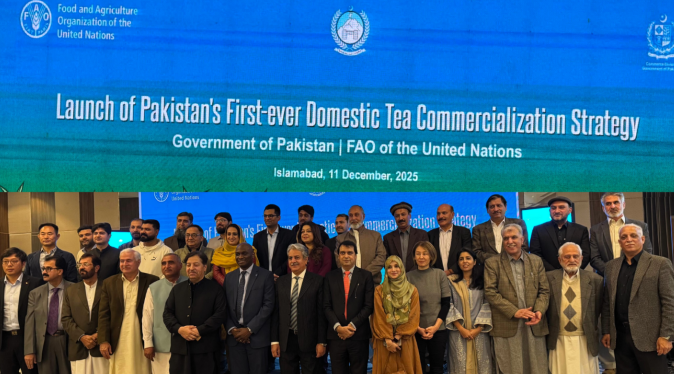
Participants at the Islamabad launch of Pakistan’s first Tea Commercialisation Strategy. [Photo/Tahir]


ISLAMABAD: Pakistan on Thursday formally launched its Domestic Tea Cultivation and Commercialisation Strategy, but officials and experts made clear that the plan’s success will depend heavily on attracting international investors, with Chinese investment under the China-Pakistan Economic Corridor (CPEC) seen as the most promising and transformative option.

Supported by the Food and Agriculture Organization (FAO), the strategy aims to reduce Pakistan’s USD 650 million annual tea import bill by initiating large-scale tea cultivation in Khyber Pakhtunkhwa (KP).

The roadmap targets 600 acres of privately operated tea gardens in Mansehra by 2030, expected to produce 2,500 metric tons of green leaf annually and serve as the foundation for a fully integrated tea industry by 2040.

Federal Minister for Planning Development and Special Initiative Ahsan Iqbal said the country’s broader agricultural modernization, reinforced by China’s training of 1,000 Pakistani agricultural scientists, has positioned Pakistan to diversify into high-value crops.

“Effective measures in tea processing, packaging, and branding will enable Pakistani tea to secure a distinguished position in the global market,” he said.
 
FAO’s National Tea Policy Consultant Dr. Muhammad Khurshed underscored that investor confidence is rising, but Chinese partners remain uniquely aligned with Pakistan’s needs.
“One Chinese investor tested Mansehra’s soil here and in China and came back ready to begin commercial work. If the Chinese are involved, they will make it happen,” he said, adding that bringing such investors under CPEC would ensure stronger institutional backing from both governments.

International Tea Consultant Dr. Jhon Snell also stressed the critical role of external financing. “There are CPEC partners interested in investment in tea production from plantation to consumer-packaged goods,” he said, noting that official approval of the programme has “opened up external funding sources immeasurably.”

FAO officials emphasized that the long-term success of Pakistan’s tea sector will hinge on sustained foreign investment, robust extension services and globally competitive processing standards, areas where Chinese collaboration has already begun.

FAO KP Head of Office Mujibur Rahman highlighted the strategic urgency: Pakistan consumes 252,000 tons of tea annually and imports 99% of it. He added that tea cultivation can also fuel tea tourism, with potential integration with CPEC connectivity projects and as well as other major routes including Kalam and Malam Jabba in Swat.

By 2040, the strategy envisions a workforce of 10,000 in KP’s tea fields, supporting an estimated 70,000 rural residents. The plan includes distributing proven Chinese and Sri Lankan tea clones through national nurseries and offers investment opportunities via smallholder, cluster-farm and plantation models.
 

The new agriculture frontier​

Can Pakistan adopt digital agriculture quickly enough?

By Sheeraz Ahmed |
December 21, 2025

Broad-based initiatives are urgently needed to improve environmental sustainability across the globe, especially in agricultural economies like Pakistan, which is a source of food security for several countries. In recent years, the pace and intensity of climate change in Pakistan have increased dramatically.

Repeated cycles of devastating floods, caused by unprecedented heavy rainstorms and even cloudbursts during the monsoon season, have destroyed crops on a national scale. The recent floods have once again revealed how deeply vulnerable our agricultural sector has become.

To prevent drastic reductions in national productivity, Pakistan must urgently adopt emerging technologies that protect its food systems from climate shocks.

In 2025 alone, more than 1.2 million hectares of farmland in Punjab were inundated, destroying major crops such as rice, sugarcane, wheat, and cotton. The floods struck at the beginning of the Rabi sowing season, affecting standing crops and damaging the next planting cycle.

Farmers’ income and livelihood opportunities were wiped out for the year. The agricultural emergency also included livestock losses, as fodder was washed away and cattle feed became unaffordable for dairy farmers. Meat supply chains were disrupted, and distress sales of cattle stripped herders of long-term economic gains. Agricultural tools and machinery, already scarce among smallholders, were damaged, further reducing rural communities’ capacity to produce food and livestock.

Pakistan now needs a national agenda to rehabilitate farmers through financial assistance for land preparation, fertilizers, and seed purchases, along with veterinary and human healthcare support to prevent disease outbreaks in flood-hit areas.

Any meaningful national agenda must move beyond diagnosing gaps and clearly outline which technologies can close them.

Pakistan already has the foundations to deploy a new generation of climate smart tools. Artificial Intelligence (AI) powered flood and weather intelligence systems that integrate satellite data, Doppler radars, hydrological sensors and machine-learning models can generate hyperlocal, 72-hour risk forecasts.

These allow disaster authorities and farming communities to pre-position fodder, evacuate livestock and plan harvest schedules with greater precision. Internet of Things (IoT) sensor networks placed along canals, spillways, embankments and crop belts can detect soil saturation, seepage, water flow anomalies and structural stress in real time, enabling intervention before weaknesses turn into breaches.

Drone based crop diagnostics, combined with satellite imagery, can give small farmers access to agronomic intelligence once reserved for large commercial farms, identifying nutrient deficiencies, pest pressure and irrigation needs at plot level. For financial resilience, digital micro insurance and fintech wallets can automate climate triggered pay outs within hours, limiting dependence on slow manual verification processes and protecting productive assets that would otherwise be sold.

These solutions are not aspirational. Versions already operate in Bangladesh, Kenya and Indonesia, where digital public infrastructure has multiplied the impact of traditional relief systems.

A truly resilient strategy must also spell out how these tools will reach the most vulnerable farmers in practice. That requires a clear architecture for data, governance and delivery. At the national level, institutions and provincial irrigation departments can host integrated resilience platforms that pull in sensor feeds, satellite layers and field reports on a single dashboard that decision-makers actually use.

At the district level, agriculture extension workers and local government staff can receive simple early warning messages and advisory scripts on their phones, in local languages, to share with communities. This is how technology shifts from pilots to protection.

To rebuild resilience, we must pursue an innovative approach powered by modern technology. Many water-stressed regions of the world are adopting Vertical Farming and Hydroponics, systems that grow food in controlled environments without soil, powered by the IoT and AI.

In a country defined by water scarcity, IoT sensors can continuously monitor nutrient levels and water quality in hydroponic systems, enabling recirculation that saves up to 90 percent of water compared to conventional farming.

These automated systems are also becoming more cost-effective, as smart IoT frameworks manage energy-intensive components like LED lights. By scheduling major operations during off-peak hours and using advanced algorithms to provide light and nutrients only when needed, energy costs are reduced, making commercial scaling viable and sustainable.
 
With this controlled environment, crops receive optimal conditions around the clock, ensuring a reliable, year-round harvest that is protected from floods, heatwaves, and droughts.

This model not only guarantees food security for Pakistan’s rapidly growing population but also enhances export competitiveness. Through blockchain-based traceability systems, the quality of produce can be verified for global buyers demanding transparency and consistency.

Such a shift will transform agriculture from an educated gamble into a data-driven science. It will also relocate food production away from flood-prone regions, ensuring that even when farmlands are submerged, food can continue to grow safely indoors.

With Pakistan’s young and tech-savvy workforce, the country has the talent to build an enabling ecosystem for digital agriculture that offers scalability, flexibility, and adaptability to evolving challenges.
 
Swift policy reforms are essential to reduce import duties and taxes on smart agricultural components such as sensors, controllers, and connectivity hardware.

Telecom companies, which already operate robust nationwide networks, can play a crucial role if incentivised to provide subsidised data plans and cloud-based dashboard packages for growers.

Simultaneously, agricultural training programs must be launched to help farmers operate new technologies and manage data through mobile applications in local languages, ensuring inclusive adoption across rural areas.

The question before Pakistan is simple yet urgent: can we adopt digital agriculture quickly enough? Investing in these technologies is a strategic and intelligent choice to build resilience against climate change.

Pakistan still has time to transform its agriculture into a sustainable, profitable, and secure sector that is flood-proof, water-efficient, and future-ready. The future of Pakistani agriculture is digital, and its survival depends on it.
 

Pakistan’s soils face severe nutrient depletion: FAO


Amin Ahmed
December 6, 2025

View attachment 163894

A farmer in Multan spray pesticide in a field. — APP

ISLAMABAD: As ‘World Soil Day’ was observed on Friday, a new assessment by the Food and Agriculture Organisation (FAO) of the United Nations has found that Pakistan’s soils generally suffer from low fertility and major nutrient deficiencies, including essential elements.

The FAO analysis notes that organic matter levels in most soils are critically low, weakening soil structure and reducing water retention.

Around 36 million hectares are classified as agricultural land as of 2022. Of the agricultural land, approximately 30.2 million hectares are used for arable farming, 5m hectares for permanent meadows and pastures and 0.72m hectares are dedicated to permanent crops. Around 2.5m hectares of the country’s total area are classified as forest land.

The soil is predominantly alkaline, with large areas affected by salinity and sodicity, particularly in irrigated agricultural areas. Erosion and pollution are also widespread issues, says the analysis.

The analysis recommended to develop a comprehensive national soil policy that integrates various aspects of soil management. This policy should provide a clear framework for all stakeholders and guide the implementation of soil governance at national and provincial levels.


New legal frameworks or amendments to existing ones can also be introduced to address gaps, particularly focusing on critical issues such as overgrazing, mining impacts, urbanisation, and the effects of climate change on soil degradation.

It suggested revision in the existing laws to close gaps and strengthen regulations concerning soil protection, including tightening enforcement provisions and clarifying responsibilities among various governmental and non-governmental entities involved in soil management.
Hi dear
Combination of organic and inorganic fertilizers, use of lime in saline-sodic soils, use of acid and gypsum, and also agronomic practices etc. would enhance the soil fertility status only.
 

1,000 agri trainees sent to China​


Seed tech programme under joint initiative has already trained 700 professionals

NEWSDESK
December 26, 2025


tribune


WUHAN: Pakistan is significantly enhancing its agricultural modernisation efforts by deploying 1,000 specialists to China for specialised training under a key bilateral initiative backed by the leadership of both countries. The multi-phase programme is aimed at building expertise in advanced agricultural technologies, biotechnology and sustainable practices. Around 700 professionals have already returned to Pakistan after completing their training, while new groups continue to arrive in China for ongoing and upcoming sessions.

A central component of the initiative is the current training programme on seed production and processing technology. Jointly organised by Huazhong Agricultural University, a leading Chinese institution in agricultural sciences, and Wuhan Qingfa-Hesheng Seed Co Ltd, which has more than two decades of collaboration experience with Pakistan, the programme is running from November 10 through next February.

The training adopts an integrated "theory plus practice" approach to strengthen the professional competencies of 56 Pakistani participants. All trainees hold at least a master's degree and represent a wide range of sectors, including government, businesses, academia and civil society organisations from across Pakistan. The group also includes 11 women, reflecting the growing participation of women in agricultural innovation.
 
Pakistan rice exports have recorded a steep downturn amid intensifying international competition and domestic policy headwinds, with industry experts warning that higher costs and a sharp loss of price competitiveness are displacing the country from key export markets.

In July-November period of the fiscal year 2025-26, Pakistan rice exports declined by 40.02% in volume, with shipments of IRRI-6 and IRRI-9 (non-basmati rice) falling by 39.70%, while basmati rice exports dropped by 41.79%, Pakistan Bureau of Statistics (PBS) data showed.

“In the international market, Indian rice is priced lower, while Pakistani rice remains relatively expensive, leading to reduced demand for Pakistan’s rice exports,” Rice Exporters Association of Pakistan’s (REAP) senior vice president Muhammad Javed Jillani told Business Recorder.

“Due to reduced liquidity in the international market, non-basmati rice, which was previously exported at around 550 dollars per ton, was exported this time at around 350 dollars per ton.”

In value terms, rice exports fell even more sharply, declining by 49.24% in dollar terms. Exports of IRRI-6 and IRRI-9 in dollar terms decreased by 53.23%, whereas basmati rice exports registered a decline of 37.58%, as PBS data.

The re-entry of Indian rice into global markets significantly increased supply, exerting downward pressure on international prices and simultaneously displacing Pakistani rice in price-sensitive markets.
During the first five months of the fiscal year 2025-26, the country’s trade deficitincreased by over 37% to $15.47 billion from $11.28 billion recorded in the same period last year (SPLY). Exports in 5MFY26 decreased by over 6% to $12.84 billion from $13.72 billion in SPLY.

Arif Habib Commodities CEO Ahsan Mehanti said rice production had declined due to the damage caused by floods.

He further said a decline in soft commodity prices in the international market had also been a major reason for the reduction in Pakistan’s export volume.

According to him, prices of soft commodities have fallen in the international market, while prices of gold and silver increased.

“In the coming period, Pakistan’s export numbers will improve as the effects of the floods subside. Along with this, higher tariff rates imposed on India and dumping accusation of rice in United States by India will benefit Pakistan,” he envisaged.

Meanwhile, Policy Research & Advisory Council (PRAC) Head of Research Dr Usama Ehsan Khan told Business RecorderPakistan’s rice exports recorded a sharp decline of 56%, falling from $431.37 million in November 2024 to $188.13 million in November 2025.

Elaborating the number Khan said of the total reduction of $243.25 million, detailed decomposition showed that $195.85 million was due to a contraction in export quantities, while $47.40 million resulted from lower international prices.

“This indicates that the decline was driven predominantly by volume losses rather than price effects alone.”

Khan said a key external factor behind the downturn was intensified international competition following India’s removal of restrictions on rice exports.

“The re-entry of Indian rice into global markets significantly increased supply, exerting downward pressure on international prices and simultaneously displacing Pakistani rice in price-sensitive markets.

“Domestic policies have also adversely impacted the exports of rice as well as other sectors. The shift from the Final Tax Regime (FTR) to the Normal Tax Regime (NTR) substantially altered exporters’ cost structures.

“Under the previous FTR, exporters faced a simplified 1% turnover tax, whereas the NTR imposes a 29% corporate income tax, along with up to 10% Super Tax. This abrupt transition sharply compressed exporters’ margins and increased compliance risks, particularly amid widespread concerns over mandatory tax audits and regulatory uncertainty,” Khan said.

In addition, export financing costs in Pakistan rose markedly, with borrowing rates estimated to be around 600 basis points higher than those faced by Indian exporters. Elevated interest rates, combined with higher tax liabilities, significantly weakened Pakistan’s price competitiveness at a time when Indian exporters benefited from subsidised financing and a more supportive policy environment, according to PRAC official.

“Taken together, external competitive pressures and internal policy distortions jointly undermined Pakistan’s rice export performance. Without addressing structural issues related to taxation, financing costs, and regulatory certainty, Pakistan risks continued erosion of its market share in global rice trade, even in periods of stable production.”

Earlier this month, US President Donald Trump recently accused India of “dumping” its shipments into the US market, referring to a practice whereby a product is exported at a price lower than its normal price.

India later rejected US accusations that it was dumping rice in the US, saying its rice exports were primarily premium-grade basmati which typically commands higher prices than non-basmati varieties.
 

The new agriculture frontier​

Can Pakistan adopt digital agriculture quickly enough?

By Sheeraz Ahmed |
December 21, 2025

Broad-based initiatives are urgently needed to improve environmental sustainability across the globe, especially in agricultural economies like Pakistan, which is a source of food security for several countries. In recent years, the pace and intensity of climate change in Pakistan have increased dramatically.

Repeated cycles of devastating floods, caused by unprecedented heavy rainstorms and even cloudbursts during the monsoon season, have destroyed crops on a national scale. The recent floods have once again revealed how deeply vulnerable our agricultural sector has become.

To prevent drastic reductions in national productivity, Pakistan must urgently adopt emerging technologies that protect its food systems from climate shocks.

In 2025 alone, more than 1.2 million hectares of farmland in Punjab were inundated, destroying major crops such as rice, sugarcane, wheat, and cotton. The floods struck at the beginning of the Rabi sowing season, affecting standing crops and damaging the next planting cycle. Farmers’ income and livelihood opportunities were wiped out for the year.

The agricultural emergency also included livestock losses, as fodder was washed away and cattle feed became unaffordable for dairy farmers. Meat supply chains were disrupted, and distress sales of cattle stripped herders of long-term economic gains. Agricultural tools and machinery, already scarce among smallholders, were damaged, further reducing rural communities’ capacity to produce food and livestock.

Pakistan now needs a national agenda to rehabilitate farmers through financial assistance for land preparation, fertilizers, and seed purchases, along with veterinary and human healthcare support to prevent disease outbreaks in flood-hit areas.

Any meaningful national agenda must move beyond diagnosing gaps and clearly outline which technologies can close them. Pakistan already has the foundations to deploy a new generation of climate smart tools. Artificial Intelligence (AI) powered flood and weather intelligence systems that integrate satellite data, Doppler radars, hydrological sensors and machine-learning models can generate hyperlocal, 72-hour risk forecasts.

These allow disaster authorities and farming communities to pre-position fodder, evacuate livestock and plan harvest schedules with greater precision. Internet of Things (IoT) sensor networks placed along canals, spillways, embankments and crop belts can detect soil saturation, seepage, water flow anomalies and structural stress in real time, enabling intervention before weaknesses turn into breaches.

Drone based crop diagnostics, combined with satellite imagery, can give small farmers access to agronomic intelligence once reserved for large commercial farms, identifying nutrient deficiencies, pest pressure and irrigation needs at plot level. For financial resilience, digital micro insurance and fintech wallets can automate climate triggered pay outs within hours, limiting dependence on slow manual verification processes and protecting productive assets that would otherwise be sold.

These solutions are not aspirational. Versions already operate in Bangladesh, Kenya and Indonesia, where digital public infrastructure has multiplied the impact of traditional relief systems.

A truly resilient strategy must also spell out how these tools will reach the most vulnerable farmers in practice. That requires a clear architecture for data, governance and delivery. At the national level, institutions and provincial irrigation departments can host integrated resilience platforms that pull in sensor feeds, satellite layers and field reports on a single dashboard that decision-makers actually use.

At the district level, agriculture extension workers and local government staff can receive simple early warning messages and advisory scripts on their phones, in local languages, to share with communities. This is how technology shifts from pilots to protection.
 
To rebuild resilience, we must pursue an innovative approach powered by modern technology. Many water-stressed regions of the world are adopting Vertical Farming and Hydroponics, systems that grow food in controlled environments without soil, powered by the IoT and AI.

In a country defined by water scarcity, IoT sensors can continuously monitor nutrient levels and water quality in hydroponic systems, enabling recirculation that saves up to 90 percent of water compared to conventional farming.

These automated systems are also becoming more cost-effective, as smart IoT frameworks manage energy-intensive components like LED lights. By scheduling major operations during off-peak hours and using advanced algorithms to provide light and nutrients only when needed, energy costs are reduced, making commercial scaling viable and sustainable.

With this controlled environment, crops receive optimal conditions around the clock, ensuring a reliable, year-round harvest that is protected from floods, heatwaves, and droughts. This model not only guarantees food security for Pakistan’s rapidly growing population but also enhances export competitiveness.

Through blockchain-based traceability systems, the quality of produce can be verified for global buyers demanding transparency and consistency.
 

Climate shocks agriculture​


Punjab bears bulk of flood losses as high costs squeeze farmers

SHAHRAM HAQ
January 01, 2026


climate shocks agriculture


Climate shocks agriculture

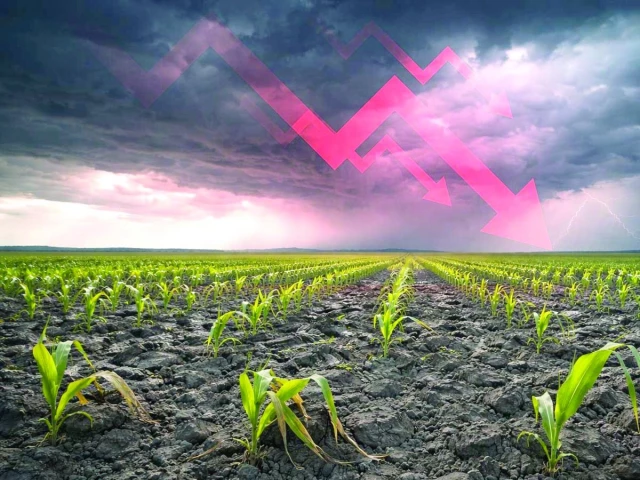
LAHORE: Pakistan's agriculture sector once again found itself trapped between climate shocks and policy uncertainty in 2025. For a sector that contributes around 24% of GDP and provides livelihoods to more than one-third of the country's workforce, the year served as a stark reminder of how vulnerable national food security remains.

As Punjab is the key province when it comes to agricultural output, the crisis has been far more pronounced there. The combination of lower agricultural output in FY25, high input costs, hyperinflation and devastating monsoon floods that destroyed crops and damaged infrastructure pushed thousands of farmers deeper into financial distress.

The Economic Survey of Pakistan 2024-25 reflects this fragility. Agriculture recorded a modest growth of 0.56% in FY25, far below expectations and insufficient to support broader economic momentum. While livestock showed relative resilience with growth of 4.72%, the crop sector contracted sharply due to erratic weather, reduced acreage and falling productivity. Major crops such as cotton and wheat underperformed, undermining farm incomes and weakening backward and forward industrial linkages.
 
Punjab, which accounts for nearly 70% of national food grain production, entered 2025 already under pressure from rising input costs, falling crop prices and a controversial shift to a free-market wheat and sugarcane regime. Subsequent floods turned a difficult year into a near crisis.

Torrential rains, followed by an unusual release of water by India into Pakistani rivers, inundated large parts of central and southern Punjab, submerging standing crops of rice, cotton, sugarcane, maize and vegetables. Irrigation channels, farm-to-market roads and storage facilities were damaged, delaying harvests and disrupting supply chains.


Although the floods also affected Khyber-Pakhtunkhwa and Sindh, the agriculture sector in those provinces was not hit as hard as in Punjab. Official assessments estimate that crop and agriculture-related infrastructure losses exceeded Rs430 billion nationwide, with Punjab accounting for the largest share.

The destruction has not only reduced output for the current season but also disrupted subsequent sowing cycles, raising fears of prolonged pressure on food supplies and rural incomes.
 

Chinese firm inks cooperation deal in Pakistan on smart agriculture, drone technology​

By Tahir Ali | Gwadar Pro
Jan 2, 2026

Chinese firm inks cooperation deal in Pakistan on smart agriculture, drone technology


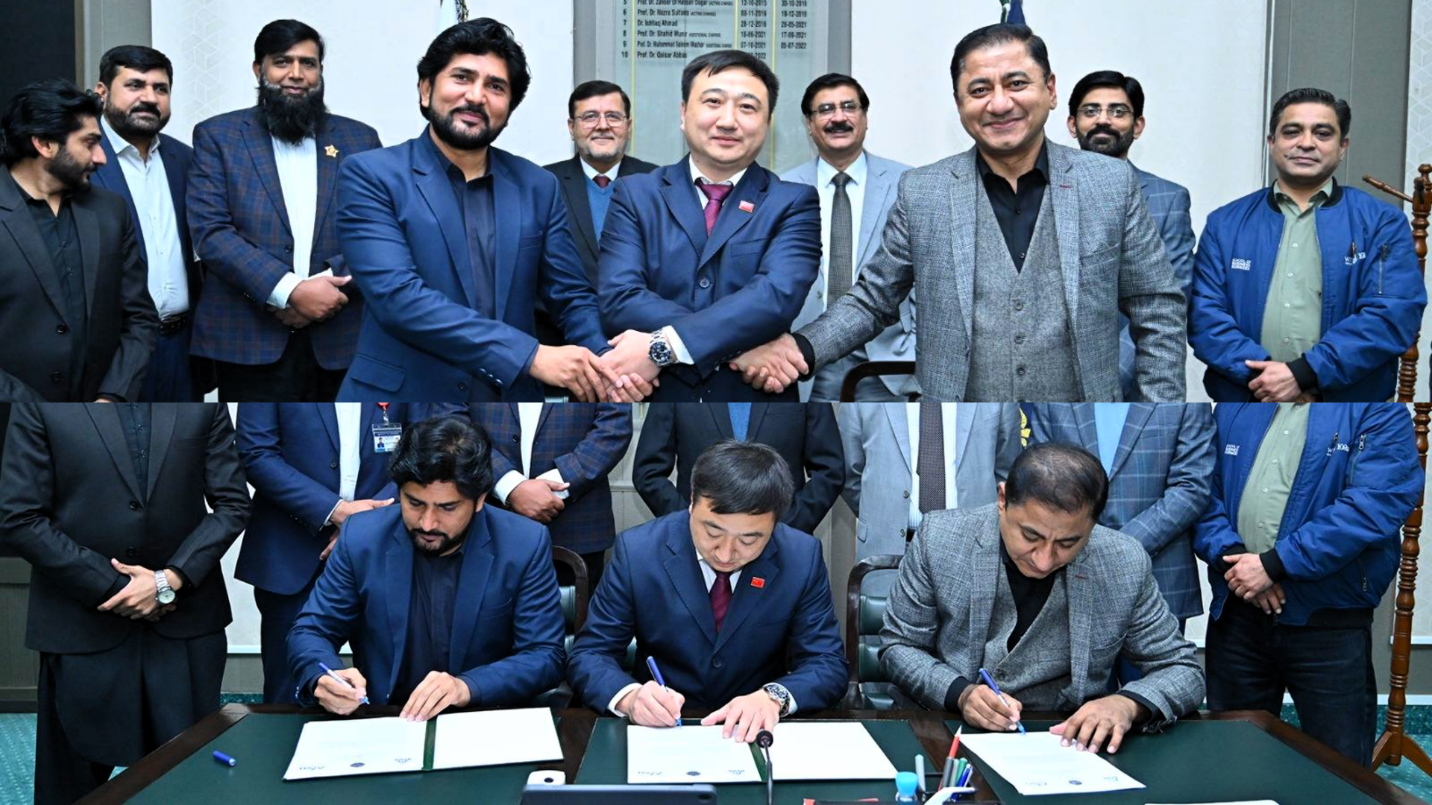
Representatives of Chengdu Yihe Technology Co. Ltd., the UoS and Pak Agro Fertilizer sign IoC in Sargodha. [Photo/UOS]


SARGODHA, Jan 2 (Gwadar Pro) - China’s Chengdu Yihe Technology Co. Ltd. has signed a bilateral and tri-party Intent of Cooperation (IoC) with the University of Sargodha and Pak Agro Fertilizer and Chemical Industries to expand collaboration in advanced agricultural and industrial technologies.

Under the IoC, Chengdu Yihe Technology Co. Ltd. “will establish a Research and Training Center at the University of Sargodha, aimed at enhancing applied research, skills development, and technology transfer,” the partners said.

At the same time, the Chinese company will work with Pak Agro Fertilizer and Chemical Industries to set up a Drone Technology Manufacturing Facility in Sargodha focused on UAVs, UGVs and crop mechanization technologies.

The initiative seeks to “promote smart agriculture, industrial innovation, capacity building, and commercialization,” contributing to rural development and sustainable economic growth in the region, according to the statement.

The cooperation follows a recent visit by a University of Sargodha delegation to China, where the university signed multiple agreements with Chinese institutions to deepen academic, industrial and research partnerships.

The latest IOC is viewed as part of those ongoing efforts to strengthen Pakistan-China collaboration in agricultural modernization.
 

Users who are viewing this thread

Pakistan Defence Latest

Latest Posts

Back
Top