Navigation
Install the app
How to install the app on iOS
Follow along with the video below to see how to install our site as a web app on your home screen.
Note: This feature may not be available in some browsers.
More options
Style variation
You are using an out of date browser. It may not display this or other websites correctly.
You should upgrade or use an alternative browser.
You should upgrade or use an alternative browser.
Pakistan Agriculture News / Discussions
- Thread starter ghazi52
- Start date
More options
Who Replied?


ghazi52
THINK TANK: CONSULTANT
- Thread starter
- #17
China's Role in Advancing Hybrid Rice Cultivation in Pakistan Highlighted
Shafqat Ali | Gwadar ProApr 9, 2024
LAHORE – The Chairman of the Pakistan Hitech Hybrid Seed Association (PHHSA), Shahzad Ali Malik, in a recent press briefing, highlighted the pivotal role of Chinese expertise in revolutionizing Pakistan’s agriculture through hybrid seed technology.
This collaboration marks a significant stride towards self-sufficiency and the bolstering of Pakistan's export potential in key crops including cotton, wheat, edible oils, and pulses.
Malik pointed out that the adoption of hybrid rice technology from China has already showcased remarkable yield improvements, setting a precedent for its application across other agricultural sectors. The initiative aims at reducing Pakistan’s heavy reliance on imports by enhancing local production capabilities.
For cotton, a critical export commodity, hybrid technology promises higher yields and quality, positioning Pakistan to reduce imports and explore export opportunities.
Similarly, the introduction of hybrid wheat and oilseed varieties like soybean and sunflower is expected to boost productivity, quality, and domestic availability, potentially transforming Pakistan into a net exporter of these commodities.
Malik also touched upon the issue of pulse shortages, emphasizing that hybrid varieties could significantly enhance local production, thereby decreasing the need for imports and enabling Pakistan to meet its domestic demand more effectively.
This strategic move towards hybrid varieties, in collaboration with China, aims to ensure food security, achieve economic stability, and foster export growth, underlining the crucial role of advanced agricultural technologies in Pakistan’s development, he maintained.
ghazi52
THINK TANK: CONSULTANT
- Thread starter
- #18
Experts laud China’s role in advancing Hybrid Rice cultivation in Pakistan
The Frontier Post
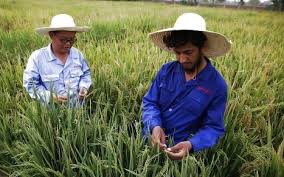
ISLAMABAD: Experts lauded China’s role in advancing Hybrid Rice cultivation in Pakistan.
The Chairman of the Pakistan Hitech Hybrid Seed Association (PHHSA), Shahzad Ali Malik, in a press briefing, highlighted the pivotal role of Chinese expertise in revolutionizing Pakistan’s agriculture through hybrid seed technology.
This collaboration marks a significant stride towards self-sufficiency and the bolstering of Pakistan’s export potential in key crops including cotton, wheat, edible oils, and pulses.
Malik pointed out that the adoption of hybrid rice technology from China has already showcased remarkable yield improvements, setting a precedent for its application across other agricultural sectors.
The initiative aims at reducing Pakistan’s heavy reliance on imports by enhancing local production capabilities.
For cotton, a critical export commodity, hybrid technology promises higher yields and quality, positioning Pakistan to reduce imports and explore export opportunities.
Similarly, the introduction of hybrid wheat and oilseed varieties like soybean and sunflower is expected to boost productivity, quality, and domestic availability, potentially transforming Pakistan into a net exporter of these commodities.
Malik also touched upon the issue of pulse shortages, emphasizing that hybrid varieties could significantly enhance local production, thereby decreasing the need for imports and enabling Pakistan to meet its domestic demand more effectively.
This strategic move towards hybrid varieties, in collaboration with China, aims to ensure food security, achieve economic stability, and foster export growth, underlining the crucial role of advanced agricultural technologies in Pakistan’s development, he maintained.(INP)
ghazi52
THINK TANK: CONSULTANT
- Thread starter
- #19
‘Modern warehousing can transform agriculture’
The Newspaper'sApril 26, 2024
LAHORE: Finance Minister Muhammad Aurangzeb has said that Pakistan’s current economic outlook can help the private and financial sectors transform agriculture in the country.
He was speaking at the concluding session of ‘Agri Connections 2024’ at the Expo Centre on Thursday.
“Robust growth in the agriculture sector, declining inflation rates, strong value of the rupee, strong remittance inflows, rising forex reserves, and a buoyant stock market are stable macroeconomic indicators underscoring the country’s improved economic outlook,” he said.
“We want to facilitate farm machinery service providers, and we need a major scale-up of modern agri warehousing under the EWRs financing that allows agri commodities to be traded nationally and internationally,” said the minister.
Ahsan Rana, an Associate Professor at LUMS, said the country’s overly regulated seed system is unsuitable for agriculture’s growth.
“Cumbersome procedures have made our seed system depend on the government, making Pakistan stay in the lowest ranks in this domain according to the World Bank.”
He said that compliance should be voluntary, enforcement should be limited to few aberrations, a two-tier system for seed companies should be developed, and the regulator should become a facilitator.
Maria Saleem, GM Agri-Business, Fatima Group, said that an additional $18 billion can be generated by enhancing wheat yields per acre by freeing up 5 million acres of cotton land.
She added that Pakistan could earn $1.6bn by planting canola/raya on 5 million acres saved from the wheat area, as Pakistan imports 4 million tonnes of edible oil worth $4bn annually.
Published in Dawn, April 26th, 2024
ghazi52
THINK TANK: CONSULTANT
- Thread starter
- #21
2024 Sesame Contract Farming Project comes in action
Gwadar ProMay 8, 2024
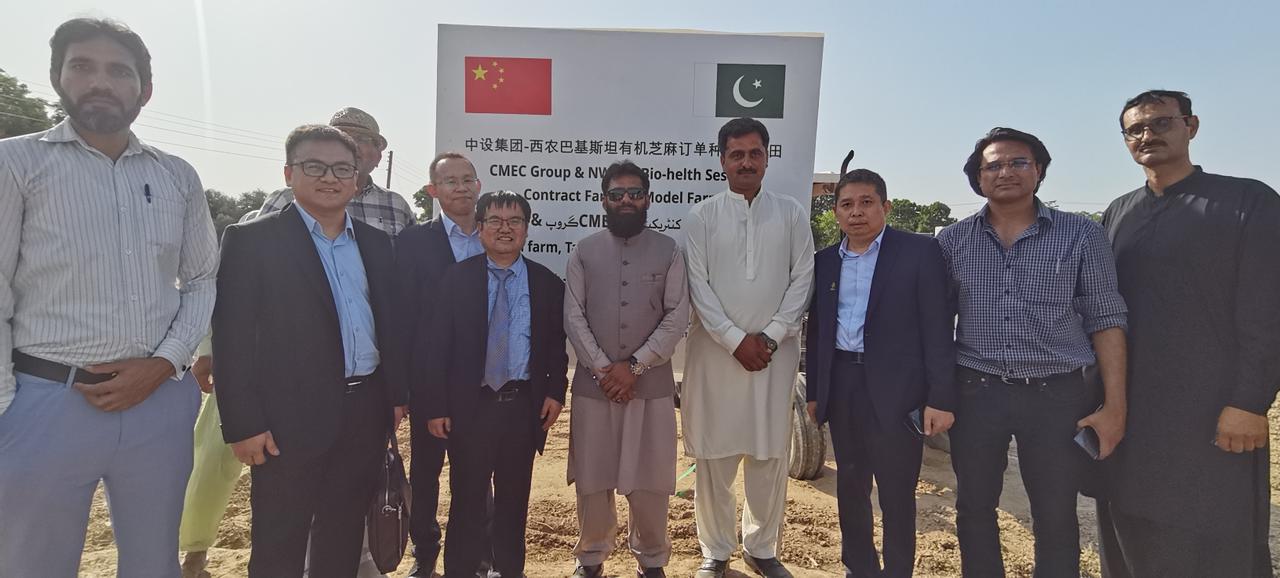
Amid blossoming Pak-China agricultural cooperation, the 1st “2024 Sesame Contract Farming Project” has formally been rolled out by China Machinery Engineering Cooperation (CMEC) group on May 6.
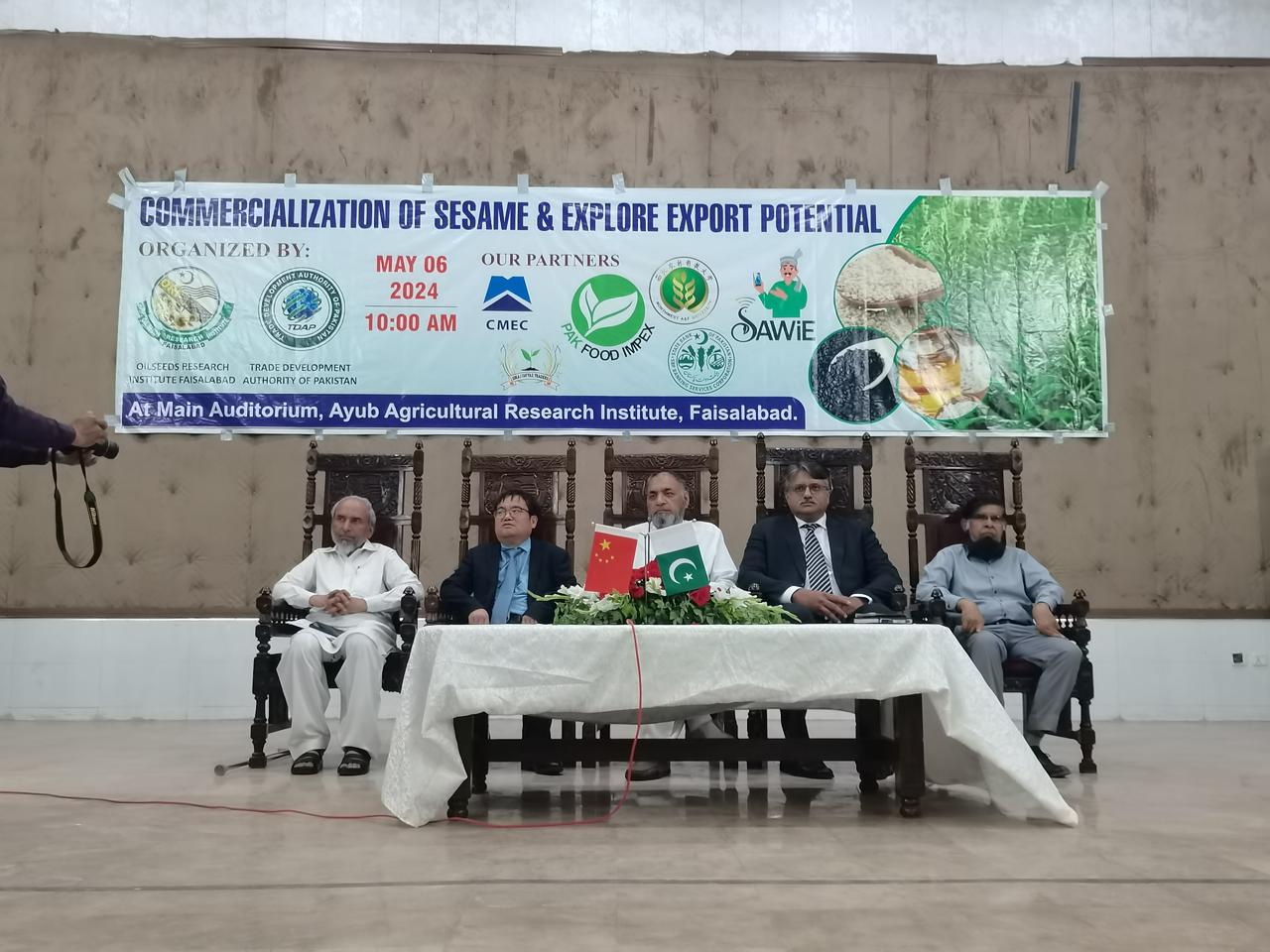
The project came into force after it was signed between CMEC Group and local farmer “Joiya Zarai farm Tandlianwala” in collaboration with Northwest A & F University China, Ayub Agriculture Research Institute, Faisalabad, Punjab government, Oilseeds Research Institute Faisalabad and Trade Development Authority Pakistan (TDAP).
In a seminar, CMEC Pakistan Vice General Manager Dai Bao said that since China and Pakistan have been forging ahead in agriculture synergic collaborations, the project will be impetus to opening up brand-new chapter of Pak-China agri-based commercialization to optimize sesame export potential.
In the backdrop of operationalization of many CMEC-run model sesame farms since 2020 that helped Pakistan spur sesame export to China of $400 million, it is highly likely that the sesame export to China will be $1 billion in the coming time, he added.
CMEC Senior Commercial Manager Alan Xi said that with the efforts of CMEC, Pakistan has become the 5th largest country in sesame production in the world. Discussing benefits of Pak-China Sesame Contract Farming, he divulged that it is causing technology transfer with adoption of advanced agricultural practices, improving quality standards of sesame, and increasing income generation for farmers.
“CMEC contract farming also makes sure of traceability systems formation, infrastructure development (irrigation system & processing facilities), and skill development and capacity -building programs for farmers to strengthen trade & diplomatic relations between Pakistan and China, promote sustainable agriculture practices and contribute to poverty reduction and rural development,” he added.
Besides cultivating sesame seeds, he underlined the need to concentrate on its value-added productions like bakery & confectionary, oil extraction, sesame meal, cosmetics, medicine, fuel, fertilizer, cement, pesticides, etc.
In a seminar, Prof Dr Zhang Lixin Chairman, Silk-Road Bio-Health Agriculture Industry Alliance, NorthWest A & F University China said that China has huge demand for high-quality sesame in China and Pakistan has huge sesame production potential. The Belt and Road Initiative has brought enormous convenience facilitating China and Pakistan universities, enterprises, scientific research institutes and growers work together.
“Global sesame production is mainly concentrated in China, India, Mexico and other countries. China has long history of sesame planting with record on sesame as early as the Han Dynasty. Since reform and opening up, planning area and output of sesame in China has continued to increase,” he added. He revealed that China imports about 1 million tons of sesame per year.

Being producer of 40 sesame varieties, Pakistan must work on value-added products to stay competitive and survive market volatility. Now, Pakistan export 90 percent sesame to China and China still eager for export that is promising signs for sesame grower in Pakistan. Instead of sesame seed oil, Pakistan growers should also look for other players in international market due to sesame growing global demand.
Being a part of corporate farming, contract farming in Pakistan has picked up some momentum as an instrument to link farmers with agribusinesses or companies, especially in sectors like cotton, fruits, vegetables, and dairy. This arrangement has been seen as a way to enhance agricultural productivity, improve quality standards, and provide market access to smallholder farmers.
ghazi52
THINK TANK: CONSULTANT
- Thread starter
- #22
Pakistani expert envisions boosting mushroom exports through enhanced cooperation with China
Gwadar ProMay 11, 2024
FAISALABAD- As Pakistan strives to diversify its agricultural exports and tap into new markets, Dr. Muhammad Muzammil Jahangir, an Associate Professor at the University of Agriculture, Faisalabad (UAF), who holds a Ph.D. from Zhejiang University, China and has been a leading researcher in the field of mushroom production, processing, and storage, highlighted the potential of strengthening cooperation with China in a bid to expand mushroom exports.
“Pakistan’s rich agricultural resources and favorable climatic conditions make it a prime location for mushroom cultivation. With a focus on quality, variety, sustainable production methods and international cooperation, Pakistani mushrooms are poised for further gains in the international market,” Dr. Muhammad Muzammil Jahangir said in a recent interview with Gwadar Pro.
Nutritional value, health benefits and economic viability of mushrooms, particularly button and oyster varieties, are key factors to driving export growth of mushrooms. In recent years, Pakistan has successfully exported mushrooms to countries including France, China, Switzerland, the United Kingdom, the United Arab Emirates, Spain, Oman, Mozambique and Malaysia. According to World Bank, Pakistan’s exports for the period 2019-2021 totaled approximately US$6,000,000, indicating a promising start.
Dr. Muzammil Jahangir pointed out that despite this, Pakistan’s actual export volume in the mushroom industry was still relatively low compared to established exporters such as China, Netherlands and Poland. He added, “Pakistani exporters face competition in terms of pricing, quality and market access. The country’s mushroom exports have not reached their full potential due to lack of technology and market access.”
China is one of the world’s largest consumers and producers of mushrooms, with its annual output of edible fungi reaching more than 40 million tons, with a total value of over RMB 300 billion, accounting for nearly 80 percent of the world’s output.
The Associate Professor believes that as a major exporter, China boasts advanced mushroom cultivation techniques and a robust supply chain that could improve Pakistan’s mushroom sector. By sharing best practices and engaging in joint research and development initiatives, the two countries can benefit from this mutually beneficial partnership.
In the context of agriculture and food processing, Pakistan and China have signed agreements and initiatives aimed at enhancing bilateral trade, technology transfer and agriculture development. Dr. Muzammil Jahangir highlighted that it was plausible that joint initiatives or exchanges in agriculture between the two countries could directly or indirectly benefit the mushroom industry.
He also proposes to establish specialized research and innovation centers dedicated to mushroom cultivation, processing, and value addition in Pakistan. “Through these centers, both sides can advance sustainable mushroom production and contribute to environmental conservation, economic development, and social well-being,” he concluded.
ghazi52
THINK TANK: CONSULTANT
- Thread starter
- #23
Experts back soilless crop growing technique
In hydroponics, crops can be produced in any season with less input, output
GOHAR ALI KHAN
May 26, 2024
Around 64% Pakistan’s population (212 million) lives in rural areas, most of who are employed directly or indirectly in agriculture.
KARACHI: Agricultural experts have underscored the importance of promoting hydroponics, a soilless technique, which can produce any crop in any season with less input and more return in comparison with conventional practices. Deploying the hydroponics technique-cum-system can ensure better food security while meeting rising demand from the local population. Growing food in the soilless system is termed a better strategy because it leverages less water than conventional agriculture.
This is an important crop growing method in glasshouses and greenhouses abroad. This can also be adopted in the urban areas of Pakistan aimed at scaling up crop yields. Farmers can grow plants without soil while using buckets or pipes. The main source in this modus operandi is water. Various nutrients are added to water while farmers have to maintain the temperature, humidity and light intensity for growing crops under controlled conditions.
Sindh Agriculture University (SAU)’s Office of Research, Innovation and Commercialisation (ORIC) Director Professor Dr Tanveer Fatima Miano said this technique is not popular in the country. Hydroponics technique requires more and more awareness among farmers who will be trained to adopt it, otherwise it is not generally being promoted. The farming community should be encouraged, guided and helped so that they can earn more through it, she said.
Hydroponics technique does not require ample water as farmers are using 15-centimetre pipes compared to buckets in the past. Water is being reutilised instead of being changed as excess water is drained to underground water tanks for storage, she elaborated. In the initial stage, farmers should opt for horticulture and floriculture by growing tomatoes, spinach, lettuce, cucumber, flowers and other such crops.
She said, “We can get winter crops in the summer and summer crops in the winter. For example, in November and December, there is usually a shortage of tomatoes and cucumbers as these are summer crops. Prices of these crops are higher in the winter season. We can grow these crops through hydroponics.
“There is no negative impact on human or animal health and environment. They are safe and healthy crops because of less consumption of fertiliser and no use of pesticides because there are controlled conditions and no pest attacks.” There are two types of hydroponics.
In outdoor hydroponics, light intensity system, air conditioners and other such equipment are not installed. Secondly, controlled environmental conditions are ensured like shade or other structure where 72% to 75% humidity is maintained with other equipment because more humidity causes more pathogens.
For hydroponics, prepared nutrients are available in the market and they can dissolve in water and applied successfully. This innovative method bristles with many advantages including less input, more output, less amount of fertiliser and no pesticides.
Natural calamities such as floods, torrential rains, heat waves, frequent fluctuations in humidity and others take a heavy toll on plants. Farmers suffer big losses because of climate change, excessive use of pesticides and fertilisers, resulting in the presence of toxic material in environment and soil as well as affecting long-term natural ecosystem, human and animal health.
In hydroponics, peasants can grow crops in controlled conditions and they do not require open fields. This technique can benefit commercial farmers because the farming community is facing challenges of salinity, water-logging and climate change.
If commercial farmers grow crops through hydroponics, they will get more benefits. After winter, farmers set up a mid-nursery as high temperatures of May and June affect the nursery and if the nursery fails, farmers are unable to get seedlings for fields. This issue can be resolved through hydroponics as crops will be available in every season.
Hydroponics can save expenses while under conventional methods, farmers have to apply more and more fertiliser to get higher returns and avert pesticide attacks on standing crops.
Fertilisers are not only expensive but they also pollute the environment and damage the soil and roots of plants. In hydroponics, overall input expenses are less than that of output as there is a balanced ratio of fertiliser while pesticides are not used due to controlled conditions.
In hydroponics, crops can be produced in any season with less input, output
GOHAR ALI KHAN
May 26, 2024
Around 64% Pakistan’s population (212 million) lives in rural areas, most of who are employed directly or indirectly in agriculture.
KARACHI: Agricultural experts have underscored the importance of promoting hydroponics, a soilless technique, which can produce any crop in any season with less input and more return in comparison with conventional practices. Deploying the hydroponics technique-cum-system can ensure better food security while meeting rising demand from the local population. Growing food in the soilless system is termed a better strategy because it leverages less water than conventional agriculture.
This is an important crop growing method in glasshouses and greenhouses abroad. This can also be adopted in the urban areas of Pakistan aimed at scaling up crop yields. Farmers can grow plants without soil while using buckets or pipes. The main source in this modus operandi is water. Various nutrients are added to water while farmers have to maintain the temperature, humidity and light intensity for growing crops under controlled conditions.
Sindh Agriculture University (SAU)’s Office of Research, Innovation and Commercialisation (ORIC) Director Professor Dr Tanveer Fatima Miano said this technique is not popular in the country. Hydroponics technique requires more and more awareness among farmers who will be trained to adopt it, otherwise it is not generally being promoted. The farming community should be encouraged, guided and helped so that they can earn more through it, she said.
Hydroponics technique does not require ample water as farmers are using 15-centimetre pipes compared to buckets in the past. Water is being reutilised instead of being changed as excess water is drained to underground water tanks for storage, she elaborated. In the initial stage, farmers should opt for horticulture and floriculture by growing tomatoes, spinach, lettuce, cucumber, flowers and other such crops.
She said, “We can get winter crops in the summer and summer crops in the winter. For example, in November and December, there is usually a shortage of tomatoes and cucumbers as these are summer crops. Prices of these crops are higher in the winter season. We can grow these crops through hydroponics.
“There is no negative impact on human or animal health and environment. They are safe and healthy crops because of less consumption of fertiliser and no use of pesticides because there are controlled conditions and no pest attacks.” There are two types of hydroponics.
In outdoor hydroponics, light intensity system, air conditioners and other such equipment are not installed. Secondly, controlled environmental conditions are ensured like shade or other structure where 72% to 75% humidity is maintained with other equipment because more humidity causes more pathogens.
For hydroponics, prepared nutrients are available in the market and they can dissolve in water and applied successfully. This innovative method bristles with many advantages including less input, more output, less amount of fertiliser and no pesticides.
Natural calamities such as floods, torrential rains, heat waves, frequent fluctuations in humidity and others take a heavy toll on plants. Farmers suffer big losses because of climate change, excessive use of pesticides and fertilisers, resulting in the presence of toxic material in environment and soil as well as affecting long-term natural ecosystem, human and animal health.
In hydroponics, peasants can grow crops in controlled conditions and they do not require open fields. This technique can benefit commercial farmers because the farming community is facing challenges of salinity, water-logging and climate change.
If commercial farmers grow crops through hydroponics, they will get more benefits. After winter, farmers set up a mid-nursery as high temperatures of May and June affect the nursery and if the nursery fails, farmers are unable to get seedlings for fields. This issue can be resolved through hydroponics as crops will be available in every season.
Hydroponics can save expenses while under conventional methods, farmers have to apply more and more fertiliser to get higher returns and avert pesticide attacks on standing crops.
Fertilisers are not only expensive but they also pollute the environment and damage the soil and roots of plants. In hydroponics, overall input expenses are less than that of output as there is a balanced ratio of fertiliser while pesticides are not used due to controlled conditions.
ghazi52
THINK TANK: CONSULTANT
- Thread starter
- #24
Rs400b allocation to revolutionise agriculture in Punjab: Experts
The NationMay 28, 2024
The allocation of Rs400 billion by the Punjab government is set to be a massive financial boost for farmers, rural communities and the agriculture sector, Dr. Malik from the University of Agriculture, Faisalabad, told WealthPK.
He said modern agricultural machinery is crucial for the sector, which is grappling with multiple problems, mainly due to climate change. With the help of modern machinery, farmers can enhance their production and minimize harvest losses, he added.
“The agriculture sector is playing a vital role in national and economic development.
However, it’s ironic that our farmers are being neglected and the millers having ties with the policymakers are enjoying all the perks and privileges,” he said.
Currently, our farmers need access to water, as its scarcity is hitting production. Only modern irrigation methods can resolve the water scarcity issues and improve the financial condition of the farmers.
ghazi52
THINK TANK: CONSULTANT
- Thread starter
- #25
Govt to digitalise registration system of pesticides
The Express Tribune
Jun 3, 2024
ISLAMABAD: Minister for National Food Security and Researchr Tanveer Hussain said Sunday that a comprehensive strategy would be formulated to improve the fumigation system and that the number of fumigation companies would be further expanded.
“The Plant Protection Department plays a significant role in the agriculture sector,” the minister said while talking to Director General of Plant Protection,
The Plant Protection DG briefed the minister on the department’s functions, performance, and the challenges it faced.
Speaking on the occasion, the minister noted, “Efforts will be made to develop a comprehensive strategy to further improve the performance of the department, and it will be brought up to high standards, ensuring its operations meet top quality benchmarks.”
Rana Tanveer said, “The system will be digitalized to ensure transparency in operations.”
The minister maintained that DPP would be developed on modern lines to enhance its efficiency and effectiveness, and all resources will be utilized to address staff shortages within the department.
“The registration system for pesticides will also be digitalised to streamline the processes,” he said.
“An effective system for the inspection of rice and mango plants must be established, and inspections will be conducted in a timely manner to ensure quality,” he added.
“Exporters will be provided with all possible facilities within the law to boost exports, but compromise on quality and standards will not be acceptable.”
The Express Tribune
Jun 3, 2024
ISLAMABAD: Minister for National Food Security and Researchr Tanveer Hussain said Sunday that a comprehensive strategy would be formulated to improve the fumigation system and that the number of fumigation companies would be further expanded.
“The Plant Protection Department plays a significant role in the agriculture sector,” the minister said while talking to Director General of Plant Protection,
The Plant Protection DG briefed the minister on the department’s functions, performance, and the challenges it faced.
Speaking on the occasion, the minister noted, “Efforts will be made to develop a comprehensive strategy to further improve the performance of the department, and it will be brought up to high standards, ensuring its operations meet top quality benchmarks.”
Rana Tanveer said, “The system will be digitalized to ensure transparency in operations.”
The minister maintained that DPP would be developed on modern lines to enhance its efficiency and effectiveness, and all resources will be utilized to address staff shortages within the department.
“The registration system for pesticides will also be digitalised to streamline the processes,” he said.
“An effective system for the inspection of rice and mango plants must be established, and inspections will be conducted in a timely manner to ensure quality,” he added.
“Exporters will be provided with all possible facilities within the law to boost exports, but compromise on quality and standards will not be acceptable.”
ghazi52
THINK TANK: CONSULTANT
- Thread starter
- #26
First cherry shipment sent to China
The Newspaper'sJune 7, 2024

ISLAMABAD: Pakistan exported its first batch of fresh cherries to China using a reefer container and projected a total quantity of 260 tonnes by the end of this month.
An official announcement from the Trade Development Authority of Pakistan (TDAP) said the first cargo was six tonnes, followed by 12 tonnes, beginning Monday and lasting until June 30.
The country’s success in exporting the fruit is due to the phytosanitary agreement signed between China and Pakistan in 2022, under which Beijing granted Islamabad market access for fresh cherries.
China imports most of its cherries from Chile, with an annual demand of around 350,000 tonnes valued at $3 billion.
Approximately 5,000 tonnes of cherries are produced in Gilgit-Baltistan per season. These cherries are mostly sold at low prices in local markets. The protocol with China has allowed the growers to meet the Chinese market’s demand.
To implement the protocol, the TDAP and Department of Plant Protection (DPP) assisted eligible orchard owners in registering with the General Administration of Chinese Customs (GACC).
Pakistan Horticulture Development & Export Company (PHDEC) also conducted cherry product development activities to educate farmers on producing renowned varieties like black and French cherries.
With these efforts, more than 100 cherry orchards and a cold storage and packing house at Rahim Abad are registered with GACC. The approval of the cherry orchards and the processing facility led to the expedition to export fresh cherries to China.
The National Logistic Cell (NLC) has provided the required reefer containers. The Export Development Fund (EDF) meets the logistic cost of cherry exports.
TDAP Chief Executive Zubair Motiwala has said that growers will be a major beneficiary of the export of cherries. He said that TDAP and PHDEC are trying to ensure growers get maximum benefits by exploring the huge Chinese market.
He also noted that the protocol on cherries was signed in November 2022, and within one year, they have not only registered more than 100 cherry orchards with GACC but also built growers’ capacity.
PHDEC chief executive Athar Hussain Khokhar has said that by producing the required varieties of cherries, the country can capture a large chunk of the $3bn Chinese cherry market.
“Proximity and growing demand for the fruit in the Chinese market are a major competitive advantage to GB growers,” he added.
Published in Dawn, June 7th, 2024
ghazi52
THINK TANK: CONSULTANT
- Thread starter
- #27
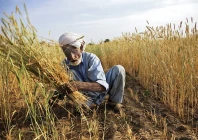
Punjab government announces ‘historic’ support package for farmers
Package includes Punjab Kisan Bank, CM Punjab Green Tractor Scheme, and Oilseed Promotion Programme
ghazi52
THINK TANK: CONSULTANT
- Thread starter
- #28
Chinese and Pakistani enterprises sign MoU to build potato starch plant in Pakistan
By Zafar Hussain | Gwadar ProJun 11, 2024
BEIJING - In a significant move towards strengthening economic ties between Pakistan and China, leading enterprises from both countries Henan Ruzhou Ideal Starch and KASB Corporation of Pakistan, signed a Memorandum of Understanding (MoU) on Monday to construct a state-of-the-art potato starch plant in Pakistan.
This strategic partnership aims to leverage the abundant potato resources available in the region and cater to the growing demand for this versatile agricultural product, said Ghulam Qadir Trade and Investment Counsellor at Embassy of Pakistan in China.
ghazi52
THINK TANK: CONSULTANT
- Thread starter
- #29
A harvest fit for a king
In the searing June heat, scores of workers gather under tree canopies across Sindh’s mango-growing regions to harvest and pack the fruit.Mohammad Hussain Khan
June 17, 2024
“BIRDS are the first to learn that mangoes are ready for harvest,” Mir Shah Mohammad Talpur says, picking up a mango that has been bitten by a bird.
Strolling under the huge canopy of one of the oldest trees in his over 450-plus acres of orchards, Mir remarks that the size of a tree’s canopy is a good indicator of how large its root zone would be. “A mango tree protects its roots first,” he explains.
Even in the shade, it is sizzling hot. Labourers, some as young as 12, are busy handling the harvest, while others are preparing wooden boxes (known locally as bardana) and stuffing them with mangoes. Harvesting on Mir’s farm has been underway since the first week of June.
Mango picking is a conventional affair at old-school orchards like Mir’s; workers scale trees, pluck the unripe fruit and throw it to their colleagues on the ground.
Only few growers have adopted progressive farming in Sindh so far.
June coincides with picking season, primarily for the Sindhri variety.In the searing June heat, scores of workers gather under tree canopies across Sindh’s mango-growing regions to harvest and pack the fruit

Labourers wait to catch mangoes picked by their colleagues, who send down the fruit from their perch in the branches.—Umair Ali
This year’s season witnessed some variations in weather, which delayed flowering and fruiting amid extended periods of colder weather. Now, picking seasons is at its peak, though there will be a lull during the Eid holidays.
“Once the fruit starts falling from a branch, it marks the ripening. We say shaakh aa gaee [the branch has arrived]. It is the stone that matures first in the mango,” says Talpur.
“The Sindhri harvested in Naukot and the ones we here have are visibly different, both in look and shape,” says Kewal Kohli, who hails from Nagarparkar.
Picking all the fruit from a 150-acre portion of Mir’s farm will take Kewal and his team around 25 days, since the crop yield is good.
In Naukot, his team had picked Sindhri and Dussehri from 400 acres over a period of 20 days in May.
Some of the workers hail from Punjab’s Seraiki belt. They are known for their command in packaging of fruit and preparing bardana — something local labour is not very adept at. “Once the season finishes here, we will head for Balochistan to handle the apple harvest and then the citrus fruit season awaits us in November. We harvest watermelons in Badin in March-April as well,” says Mohammad Khan, one of the workers from Punjab.
While Sindhri starts appearing on pushcarts in May, it is June that actually heralds the arrival of a fully tasty fruit, according to veteran producer Ghulam Sarwar Abro. “Nature has made June ideal for picking Sindhri as it develops all of its characteristics by then,” says Abro, who owns a progressive mango orchard.
Conventionally, the Mirpurkhas belt reports the first pickings, which heralds the commencement of mango season.
Usually, immature Sindhri is picked first by growers, who harvest it as early as end of April or early May, to capitalise on the market and export the fruit.
Mir, however, doesn’t believe in early picking. His orchard is located in a rural taluka near Hyderabad city. The hub of Sindhri production stretches from here to Mirpurkhas, which has a rich legacy of Sindhri orchards. He doesn’t use tractors to plough the land, for he believes that would kill the roots, and mostly depends on organic matter to meet the needs of soil and trees.
“Leaves falling from trees get mixed with soil and other residuals to become organic matter. Then the fertiliser uptake coupled with irrigation water supplies ensures nutrients,” he points out. “It is said that the old course of the mighty Indus used to pass through this region and has left the soil in this belt very rich and fertile,” Mir says.
At any conventional orchard, the height of a mango tree varies between 30ft to 40ft, with thick stems and branches, making picking a difficult task.
This is unlike high-density farms, where the job is easily done. “Yes, we let out the farm to contractors to reap the harvest. It is now the contractor’s job to arrange labourers for harvest and picking,” Mir insists.
“We take care of fertilisation. Besides, irrigation water supplies is also my responsibility. The contractor can spray pesticides if need be, but this is something we usually cater for,” he says. In Mir’s case, the contractor this year is an Iranian national who is sending most of the consignment to his country.
Only some growers have opted for modern farming practices including high-density farming. Fewer still don’t outsource farms to contractors.
Sarwar Abro, Babar Ismail and Imdad Nizamani are among those few who sell their fruit themselves in the market. “If we avoid managing our farms we will be causing loss to our economy, fruit and orchards,” Abro says.
Contractors have been dominating the mango landscape for years. Deals will be struck for next year shortly after the current harvest is over. They have the knack to assess how the same orchard will behave production-wise. Some Karachi-based contractors have invested billions of rupees in contracts.
“Contractors have strong links across Pakistan’s markets, staying in touch round the clock to know how the market will behave in the next few hours. A contractor even changes the route of his consignment and diverts it to the destination where, price-wise, the market is going his way,” contends Nizamani, a name to reckon with in mango farming.
Published in Dawn, June 17th, 2024
ghazi52
THINK TANK: CONSULTANT
- Thread starter
- #30
Planting area of Chinese peanut varieties to reach 2,000 acres in Pakistan
Gwadar ProJun 17, 2024
BEIJING - Last month, farmers in Lahore received a special batch of peanut seeds. These seeds originated from Weifang in Shandong Province which is renowned for its high-quality agricultural products. This batch of seeds is one of the new varieties developed by China-Pakistan Peanut Breeding and Promotion Program.
Pakistan's peanut sowing season falls in May. Chinese technicians utilize Internet technology to remotely monitor peanut growth for Pakistani farmers and provide guidance on field management.
In 2016, Shandong Rainbow Agriculture Polytron Technologies Inc began cultivating the Pakistani market. In 2023, they exported the first batch of original peanut seeds to Pakistan and planted about 1,000 mu (66.7 hectare) in Attock and Chakwal cities, Punjab province.
"We have experimented and planted five new peanut varieties in Pakistan through the peanut breeding and promotion project, which grows and yields well
The yields of these varieties in 2023 are twice as high as those of the local traditional varieties, which have been recognized by the local government and farmers," said Fan Changcheng, deputy general manager of the company. “This year, we’ll expand the trial planting area to about 2,000 mu (133.4 hectare),” He added.
Pakistan is a significant consumer of edible oil, with peanuts being one of the primary cash crops for oil production. Previously, Pakistan had low edible oil production, with some cultivation areas yielding approximately 1 ton of peanuts per hectare highlighting a significant disparity compared to China's high oleic peanut varieties.
Imran Mahmood, who studied in China for many years and is now a technician at Rainbow Agriculture, is responsible for coordinating the peanut breeding project with Pakistan. "Pakistan and China are close friends, and I aim to introduce China's advanced agricultural technology to Pakistan.
This project will not only boost the income of Pakistani farmers but also decrease Pakistan's reliance on imported edible oils,” Imran stated.
Since the establishment of China-Pakistan Agricultural Cooperation Center in Weifang in March 2023, more than 10 Pakistani agricultural companies have discussed cooperation with Chinese enterprises.
They have launched a variety of cooperation projects, including peanut breeding and promotion, combined cultivation of potatoes and ginger, cotton pest control, and agricultural technology training. These initiatives aim to promote new crop varieties of peanuts, potatoes, ginger, and other crops in Pakistan.
"China has obvious advantages in crop varieties, industrial chain, technical equipment, etc., while Pakistan has advantages in land and labor. Agricultural cooperation will allow both to complement each other's strengths, mutually benefit, and achieve win-win results," Imran said.
Users who are viewing this thread
Total: 4 (members: 0, guests: 4)
Pakistan Defence Latest
-
 Federal cabinet gives nod to imposition of emergency in KP; summary sent to president (55 Viewers)
- Latest: flyingorca
-

-
-
 Pakistan Deploys Chinese SH-15 155mm howitzers Near India Border Against a Backdrop of Regional Tensions. (6 Viewers)
- Latest: Signalian
Country Watch Latest
-
Iran - Israel/US War: Israel-US declare war on Iran, Iran responds (1,032 Viewers)
- Latest: OldTwilight
-
 What the Indian Air Force ought to do if Narendra Modi had a Spine (14 Viewers)
- Latest: Pakistanithinktank
-

-

-

Latest Posts
-
Iran - Israel/US War: Israel-US declare war on Iran, Iran responds (1,032 Viewers)
- Latest: OldTwilight
-
What the Indian Air Force ought to do if Narendra Modi had a Spine (14 Viewers)
- Latest: Pakistanithinktank
-
 Magnitude-7 earthquake hits Tibet, killing at least 16 and destroying hundreds of homes (3 Viewers)
- Latest: Feroze
-

-
