Pakistan Agriculture News / Discussions

PHDEC to distribute banana bunch bags, conduct awareness seminar for progressive growers​

The Nation
Jun 11, 2024

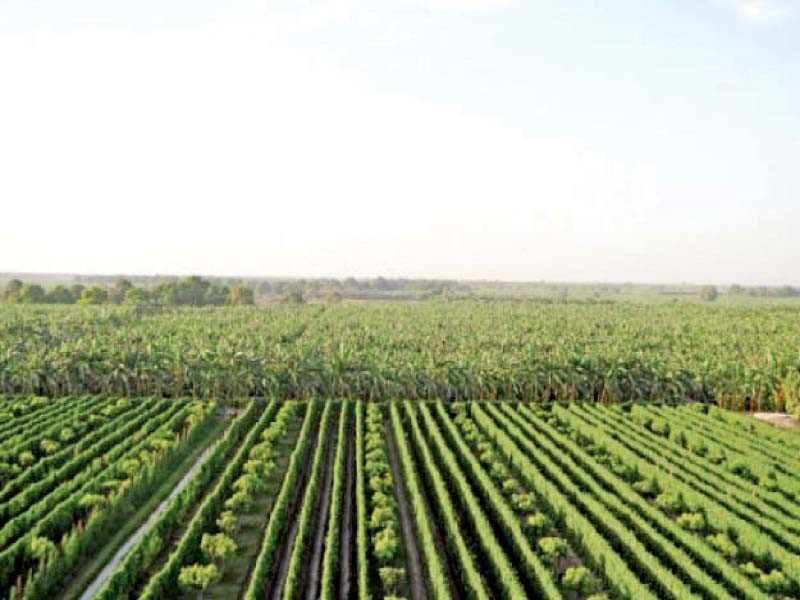
The Pakistan Horticulture Development and Export Company (PHDEC) has planned to distribute banana bunch bags to progressive banana growers in Sindh on Thursday, June 13, 2024, in Hyderabad. This initiative aims to enhance the quality and cosmetic appeal of banana fruit, facilitating its export to high-end markets.

Pakistan is a major producer of bananas, cultivating the fruit across approximately 33 thousand hectares. Despite this extensive production, banana exports have been primarily limited to Iran and CARs countries due to issues with the quality and cosmetic appeal of the fruit.

Sindh province plays a pivotal role in this sector, encompassing 93% of the banana cultivation area and 83% of the total production. The region’s soil and climatic conditions are ideal for successful banana cultivation.

Improving the cosmetic appeal and overall quality of bananas can significantly enhance Pakistan’s ability to export the fruit to more lucrative markets. The distribution of banana bunch bags by PHDEC is a strategic step in this direction.

PHDEC has been continuously working to develop Pakistan’s horticulture sector, focusing on enhancing exports through the improvement of horticultural products. Last season, PHDEC distributed 150,000 mango bags to growers in Sindh and Punjab. These bags brought very positive results, significantly improving the quality and appearance of the mango fruit.
 

Farmers deserve more

Mohiuddin Aazim
June 24, 2024

The federal government has allocated Rs5 billion for the Kissan package for the next fiscal year starting July 1. The amount is equal to a little over the two-day expense of running the civil government (for which the government has projected a Rs839bn expense for FY25, bringing the daily expense to about 2.36bn).

This federal fund for agriculture will be used through a markup and risk-sharing scheme — designed in 2022 — that will offer subsidised loans to farmers for the purchase of agricultural machinery.

When talking about provincial budgets, Punjab and Sindh have allocated Rs117.2bn and Rs30.7bn to the sector, respectively. While Khyber Pakhtunkhwa has allocated Rs31.5bn, Balochistan’s budgetary allocation was Rs23.8bn.

Provincial allocations for agriculture as a percentage of the total budget are surprisingly low: Punjab at 2.2 per cent, Sindh at 1pc, KP at 1.8pc and Balochistan as 2.5pc. After including Sindh’s Rs35bn allocation for irrigation, a sector closely related to agriculture, its spending rises to 2.1pc, comparable to Punjab’s.

Pakistan cannot create an exportable food surplus with modest allocation to the agriculture sector in the federal and provincial budgets
 

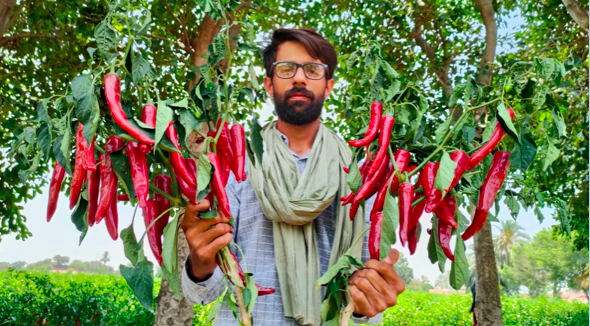
Chinese chili project partners with local farmers for 10,000 acres of chili cultivation​

Gwadar Pro
Jul 3, 2024

ISLAMABAD - China’s LTEC International Agriculture Development Co., Ltd. collaborates with Pakistani farmers to cultivate chili across 10,000 acres of land for its export to China.

The company, renowned for supplying high quality hybrid chili seed, has successfully harvested over 3 tons of dried red chili per acre in June across various regions of Pakistan including Sindh, central and southern Punjab.

Chinese chili project partners with local farmers for 10,000 acres of chili cultivation


Dr. Muhammad Adnan, Executive Manager LTEC International Agriculture Development Co., Ltd.told Gwadar Pro that the yield of all contract farmers would be exported to China. This year more than 10,000 acres are under contract with them.


He said they do a contract with local farmers, provide them with technical advisory service from nursery till harvesting/drying, then at the end they buy back chili from farmers on premium price.

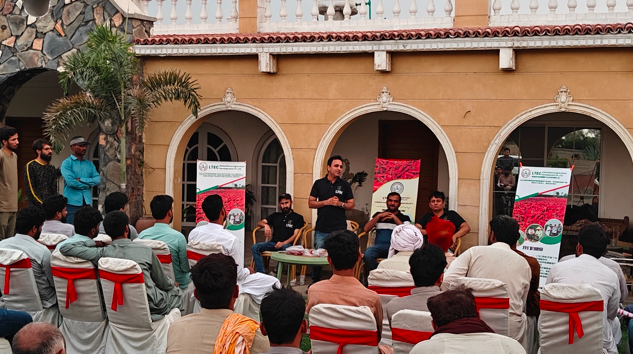
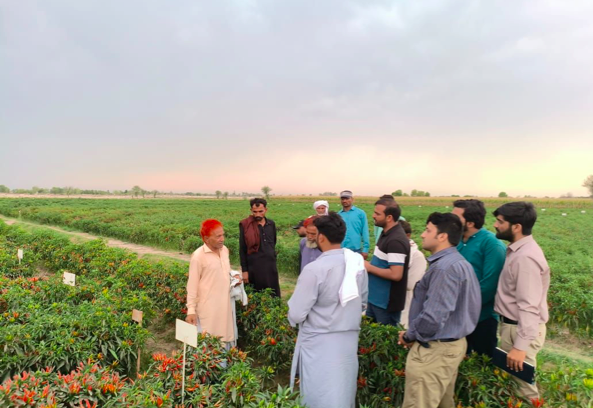
He said their contract farmers are from all over Pakistan, particularly in Sindh, the central and south Punjab. They have model farms in all major chili growing areas where they hold training sessions for local farmers. Last month, their training was held at our model farms in Multan, Lodhran, Jalalpur, Vehari, Jampur and Layyah.


Chinese chili project partners with local farmers for 10,000 acres of chili cultivation


LTEC training held at a model farm in Qasba Marral, Multan for local farmers.
The objective was to showcase their 90+ chili trial varieties to farmers and to train farmers about effective chili picking and drying in order to get quality chili.

They were also guided to manage various diseases in the field, he said.
Adnan highlighted that their main objective is to increase chili acreage and produce quality chili for export because Pakistan is not self sufficient in dry chili. So increasing its cultivation is their main objective in Pakistan.

In future along with exports, their focus is also to establish a food industry in Pakistan related to chili products.

“We have directly supervised 3,000 acres and successfully cultivated 16,000 acres of chili in Pakistan under our contract till now (2020-2024). Out of which 10,000 acre contracts are for this year (2024) thus meeting the needs of chilis in the Chinese market and making Pakistan self-sufficient in chili production,” he said.

Director, LTEC International Agriculture Development Co., Ltd. Chen Liyang said the Chinese Chili Contract Farming Project in Pakistan aims to improve agricultural practices and foster economic growth.

Through this initiative, they provide high-quality hybrid chili seeds, state-of-the-art production technology, and a supportive buyback program at competitive prices.


Chinese chili project partners with local farmers for 10,000 acres of chili cultivation


Chen Liyang emphasized the comprehensive support empowers farmers to concentrate on crop production while ensuring sustainability through balanced fertilizer application and eco-friendly farming techniques. He said their efforts have yielded significant results, with successful chili cultivation spanning thousands of acres in Pakistan.

“We are steadfast in our mission to make Pakistan a self-reliant producer of chili and to bolster foreign reserves through strategic export opportunities. We are committed to driving agricultural innovation, fostering sustainable development, and contributing to the economic prosperity of Pakistan.”
 

Stability on cotton market as business activity picks up​

Brecorder
Jul 22, 2024

The cotton market remained stable, with a notable increase in business activity. Favourable rainfall has had a positive impact on the crop. Cotton production has reached to 4,42,041 bales. However, to curb tax evasion, the Track and Trace system will be implemented in the cotton ginning industry.

The textile industry has vehemently protested the imposition of taxes on exports under SRO-350. All Pakistan Textile Mills Association, Textile Exporters Association have demanded that an urgent review of agreements with Independent Power Producers (IPPs) is necessary.

Following the Muharram holidays, the local cotton market resumed trading last week and has since remained generally stable.
 

China-Pakistan chilli collaboration doubles farmers' income​

Gwadar Pro
Aug 5, 2024

ISLAMABAD - Chilli growers in Lodhran and Layyah districts of Punjab are reaping higher incomes after collaborating with a Chinese company, LTEC.

The red chilli contract farming under China-Pakistan Economic Corridor (CPEC) initiative has also stabalised the local market as it offers guaranteed income for the farmers. Moreover, the collaboration has generated thousands of farming jobs, especially for women, in rural areas of Sindh and Punjab provinces of Pakistan.

Irshad Hussain, a graduate of the UAF (University of Agriculture, Faisalabad), told Gwadar Pro that he started growing chillies in 2017. “However, I was even unable to meet the production cost before collaborating with the Chinese company in 2023”, Hussain said.

Hussain got a contract with the LTEC for 100 acres, but he grew red chillies on 115 acres due to the better local market demand following China-Pakistan red chillies project.

He said the Chinese red and green chillies’ seeds not only produced higher yields but also garnered higher prices in the local market because of their superb quality.

It is a blessing for the farmers as their incomes have doubled, Hussain said.

“Also, even being an agriculturist myself, I learnt a lot from the Chinese experts, so you can imagine how much the ordinary farmers would have benefited from this Chinese collaboration,” he said.

Malik Masood ul Haq cultivated 25 acres for the LTEC in 2023. This year, he has grown red chillies on 85 acres of land in Lodhran, Punjab, and plans to extend the farm to 100 acres next year. “My relatives and other villagers are also eyeing partnership with the LTEC in the future,” he said. He also admired the quality of Chinese chilli seeds, both red and green.

Sher Afghan Khan, a red chilli farmer in Layyah, Punjab, said that he had employed 200 women in his 14-acre farm. “Larger farms like 100 acres or above have provided jobs to thousands of local women,” he said.
 

Import of 100,000MT urea approved for smooth supply, price stability​

The APP
Aug 3, 2024

Minister for Finance and Revenue Muhammad Aurangzeb on Friday chaired a meeting of the Economic Coordination Committee (ECC) of the Cabinet which approved the import of 100,000 Metric Tons (MT) urea.

The committee decided on a proposal submitted by the Ministry of Industries and Production aimed at ensuring sufficient supplies of urea in the market.

“This will also ensure stability of prices of fertilizer during the cropping season,” a Finance Division news release said.
 

Salt-tolerant crops

Amin Ahmed
August 10, 2024

ISLAMABAD: With initial support from the International Atomic Energy Agency (IAEA), the National Institute for Agriculture and Biology (Niab) has made significant strides in developing and planting salt-tolerant crops and implementing soil management techniques to combat salinisation.

Niab has now started sharing its expertise with other countries affected by soil salinisation, by offering training to their scientists, according to information released by IAEA.

Pakistan has lost 5.7 million hectares of arable land due to soil salinisation. This figure is growing by 40,000 hectares each year, Niab estimates. Most crops are unable to grow in soil with high salt levels, turning fields into desert landscapes and posing a serious threat to food security.

Over the last three years, with IAEA support, Niab conceptualised and organised specific training to expand the expertise in the region. In total, 21 scientists and soil specialists from Azerbaijan, Burundi, Iraq, Lesotho and Senegal have been trained on relevant isotopic techniques through fellowships and scientific visits.

To support the Asia-Pacific region, Niab experts also trained 39 members of the regional scientific community on climate-smart agriculture practices to boost climate change resilience.
 

Govt launches project to form 33 farmer enterprise groups​

Business Recorder
Sep 20, 2024

The Punjab government has launched a project worth Rs 6 billion to form 33 farmer enterprise groups consisting of 450 farmers to bring 17,500 acres of land cumulatively under onion and tomato crops, both for seasonal and off-season sowing, in a bid to enhance the production of these two important vegetables in the province.

The breakup of the land shows that 9,000 acres of land will be brought for seasonal cultivation of onion in Lodhran, Multan and Rajanpur districts while another 2500 acres of land will be brought under non-seasonal cultivation in Vehari, Khanewal and Rahim Yar Khan districts.

Likewise, 3500 acres of land will be brought for seasonal cultivation of tomato crops in Muzaffargarh, Rahim Yar Khan and Sheikhupura areas while another 2500 acres of land for non-seasonal sowing of tomatoes in Khushab, Chakwal, Rawalpindi, Jhelum and DG Khan.

The World Bank has funded the project and will provide support for onion and tomato seeds, nursery plants, machinery and agricultural equipment and cold storage.

Sources in the provincial agriculture department told Business Recorder that the plan has been chalked out on the directives of Chief Minister Punjab Maryam Nawaz Sharif to ensure the provision of quality vegetables at affordable prices to consumers throughout the year.

Punjab Agriculture Minister Syed Ashiq Hussain Kirmani also chaired a meeting regarding this project recently in which he disclosed that the growers will be provided with all the help to achieve the targets of this mega project.

Kirmani while addressing the meeting said that modern farm machinery and solar systems will be provided to farmers on subsidy for increasing seasonal and non-seasonal cultivation of onion and potatoes.

In this context, a group cluster of farmers will be formed consisting of 12 to 15 farmers having less than 25 acres and they will work together to achieve the desired goals.

The provincial minister said that capacity building of farmers will be done through Farmer Field School, while technical training of Farmer Enterprise Group will be arranged through quality improvement, climate-smart agriculture practices, regenerative agriculture and post-harvest practices.

Punjab Agriculture Secretary said that under this project, the seasonal and non-seasonal production of onions will increase by 28,500 tons, while the seasonal and non-seasonal production of tomatoes will increase by 39,000 tons, he added.
 

Pakistan a potential supplier in global kiwifruit market: Experts​

By Wang Xiaotong | China Economic Net
Sep 23, 2024

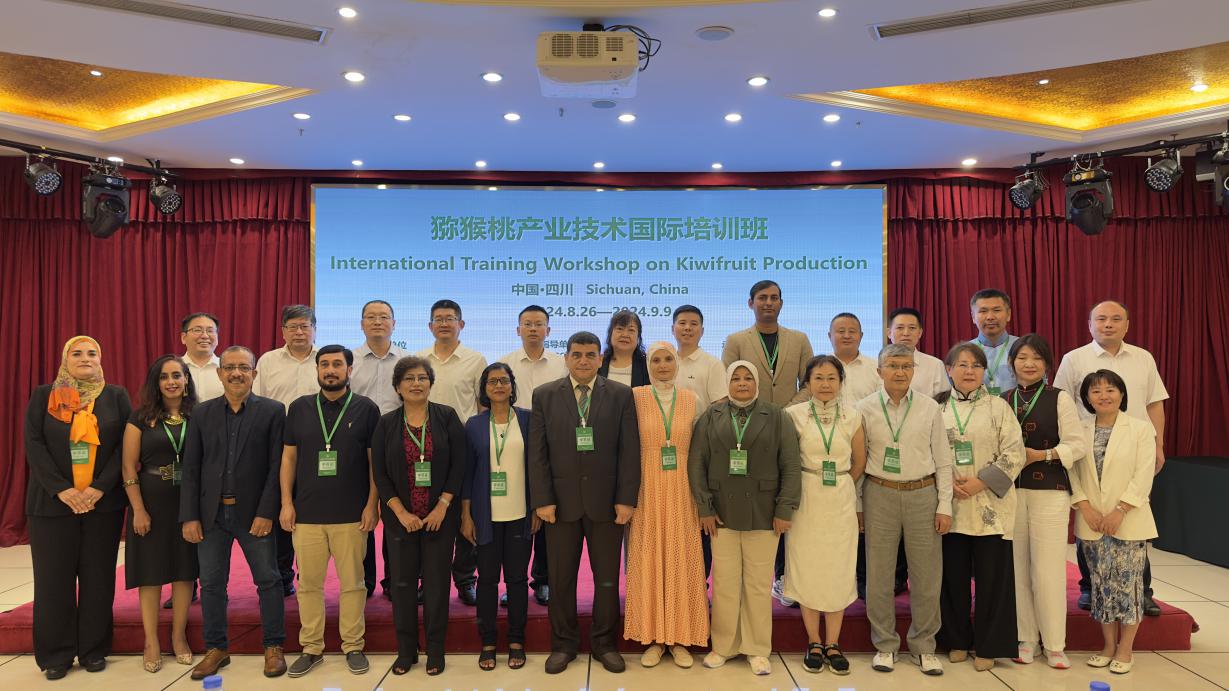
BEIJING, Sept 23 (China Economic Net) - From the newly concluded International Training Workshop on Kiwifruit Production in Sichuan, agricultural experts from Pakistan saw their country's potential to become an important player in the world's kiwifruit market, through collaborating with China. Meanwhile an MoU was reached between Sichuan Provincial Academy of Natural Resource Sciences and the University of Swabi, marking a promising beginning of Sino-Pak kiwifruit cooperation in a more in-depth form.

Pakistan a potential supplier in global kiwifruit market: Experts


Agricultural experts from Pakistan, Egypt, Nepal, Mongolia, etc. gather in Sichuan to learn Chinese expertise in kiwifruit production. [Photo provided by SPANRC]

“Pakistan's kiwi industry has immense potential for growth and development. With its favorable climate, rich soil and abundant water resources, Pakistan can become a significant player in the global kiwifruit market,” Dr. Ruidar Ali Shah from the University of Swabi told CEN. Further, “Pakistan's strategic location allows for easy access to markets in the Middle East, Central Asia and Europe, providing a competitive edge. I am optimistic about the future of Pakistan's kiwi industry and its potential to contribute significantly to the country's economy,” he added.

“Pakistan's climate, especially in its northern and hilly regions, is suitable for growing kiwifruit, which requires moderate temperatures and adequate rainfall. The growing demand for kiwifruit in both local and international markets, coupled with Pakistan's large agricultural workforce, presents a significant opportunity for the country to develop a profitable kiwifruit industry,”
 

Weeding out a crop killer

Nasir Jamal
October 28, 2024


Cows graze on a plot infested with insidious parthenium near Chakwal. — Photo courtesy: Nabeel Anwar Dhakku/File


Cows graze on a plot infested with insidious parthenium near Chakwal. — Photo courtesy: Nabeel Anwar Dhakku/File
https://whatsapp.com/channel/0029VaMc238IiRov8okfYy3n
The widespread growth of Parthenium weed is emerging in Pakistan as a major threat to the country’s food security, as well as human and animal health.

It is estimated that the three major food crops — wheat, rice and maize — alone suffer yield losses of 16 per cent globally due to invasive weeds, costing approximately $96 billion annually. For a country like Pakistan, with 60pc of the economy dependent on agriculture, this issue is incredibly serious.

At first glance, a parthenium plant with tiny white flowers looks innocuous. Florists use this plant to fill, pack and enhance bouquets. In reality, however, it is one of the most noxious weeds that invades cropland, wasteland, lawns and public parks.

Several countries like India and Sri Lanka have introduced legislation to deal with the challenges posed by this weed — also known as “famine weed” — to their agro system and public health. Pakistan, too, has launched initiatives to combat this fast-spreading threat, but these efforts remain inadequate given the magnitude of the challenge.

Any strategy to manage the weed must focus on short to long-term actions. Short-term goals should focus exclusively on gathering evidence to generate awareness among key stakeholders, as well as prevent, detect, and control Parthenium.

Biocontrol agents may be the best way to deal with the noxious Parthenium weeds that threaten to damage Pakistan’s food crops

Medium-term goals will involve in-depth communication activities like mass extension campaigns, initiation of activities to import host-specific and damaging biological control agents and registering appropriate chemical herbicides for Parthenium control. Finally, long-term goals will focus on the development of an appropriate legal framework.

Dr Muhammad Anjum Ali, Directorate General Agriculture Extension Punjab, explains, “It has become a significant agricultural and environmental problem in Pakistan. Its rapid growth, allelopathic effects, and ability to displace native species have caused considerable damage to ecosystems and reduced crop yields.

“It’s become challenging for everyone and gone beyond the ambit of just the agriculture department or extension service. This is now a community pest, and it is possible to manage only with the mobilisation of the community.”

The weed called Gajar Booti in Pakistan entered the country from India in the 1980s and rapidly invaded rural and urban landscapes, affecting local habitats, harming agriculture and posing a big burden to farmers.

It now covers thousands of hectares of land, particularly in the rain-fed districts of northern Punjab, Khyber Pakhtunkhwa and Azad Kashmir, Balochistan’s Barkhan, Loralai and Musakhel districts and in Sindh’s Tandojam, Tando Allah Yar and Mirpur Khas districts.

The weed can reduce food crop (wheat, rice and maize) yields between 46pc and 90pc, thus posing a major threat to the farmers’ livelihoods and the nation’s food security.

The weed is poisonous to humans and cattle and can reduce wheat, rice and maize yields between 46pc and 90pc

This weed also has severe health effects on humans and livestock. It is poisonous, hosts malaria-carrying mosquitoes, and is highly allergenic. Its pollen can cause asthma, eye irritation, throat infections and eczema. In livestock, it causes mouth ulcers in animals that consume the weed.

“With no natural enemies to control it in its invasive range, it grows rapidly and displaces native plant species causing biodiversity loss,” says Abdul Rehman, Deputy Director of Projects Implementation and Research at the Centre for Agriculture and Bioscience International (CABI), a UK-based nonprofit inter-governmental organisation for scientific research, which is leading efforts to control this weed naturally in Pakistan since 2018.

Mr Rehman continues, “Farmers have traditionally relied on chemical pesticides; however, these can manage the weed only partially while posing grave risks to health and the environment.

“The other strategy is the introduction of biocontrol agents in some parts last year after extensive research and government approval. Invasive species like Parthenium invade new locations without their natural enemies. And this is a big problem. Without those beneficial plants and insects, the weed spreads out of control.”

Pakistan has made significant progress in implementing biocontrol programmes for the Parthenium, with the government showing commitment to supporting these initiatives. The stem-boring weevil (Listronotus Setosipennis) has been released in various regions, including Punjab, Sindh, Khyber Pakhtunkhwa, Balochistan and AJK, showing promise in controlling the weed’s growth and spread due to suitable climatic conditions.

However, Dr Babar Ehsan Bajwa, CABI’s Senior Regional Director, cautions that biocontrol is not a silver bullet. “It may take time for biocontrol agents to establish and have a significant impact on the weed population. In some cases, a combination of biocontrol, chemical control, and cultural practices may be necessary to effectively manage Parthenium.”

Furthermore, there is always a risk of non-target impacts on native plants or beneficial insects. Additionally, the success of biocontrol can be influenced by environmental factors such as temperature, humidity, and the presence of natural enemies of the biological control agent. Dr Bajwa is of the view that Pakistan should concentrate on a multi-biocontrol-agent approach. Therefore, CABI is focusing on the import of two new biocontrol agents.

Given its implications for the environment, agriculture, and human and cattle health, it is critical to tackle this invasive species. Therefore, the government must commit more resources and formulate an integrated policy to manage this invasive species.

Published in Dawn, The Business and Finance Weekly, October 28th, 2024
 

Land fragmentation and its impacts​

Division of land hits productivity due to failure to achieve economies of scale

AHMAD MUKHTAR
November 04, 2024
in terms of financial support the representative from the state bank of pakistan informed the fca that allocations of institutional credit for agriculture had substantially increased to rs1 819 billion for 2022 23 photo file

In terms of financial support, the representative from the State Bank of Pakistan informed the FCA that allocations of institutional credit for agriculture had substantially increased to Rs1,819 billion for 2022-23. PHOTO: file

print-news

ISLAMABAD:
Land fragmentation is a significant issue in Pakistan, where agricultural land is divided into smaller and smaller plots over generations.

In Punjab, the most agriculturally productive region of Pakistan, land fragmentation is particularly severe. A study found that approximately 68% of total farms are small and subsistent, making it difficult to apply modern agricultural technologies effectively. In Sindh, land fragmentation has resulted in significant challenges for water management. The province relies heavily on irrigation from the Indus River, but fragmented landholdings make it difficult to implement efficient irrigation systems. This has led to water wastage and uneven distribution, exacerbating water scarcity issues.

In Khyber-Pakhtunkhwa (K-P), land fragmentation has been linked to increased poverty and migration. As landholdings become smaller, many farmers find it difficult to sustain their livelihoods, leading to migration to urban areas in search of better opportunities.

Balochistan faces unique challenges due to its arid climate and limited water resources. Land fragmentation in this region has made it difficult to implement sustainable agricultural practices, leading to soil degradation and reduced agricultural productivity.

This phenomenon has profound implications for agricultural productivity, economic stability, and food security. Understanding the causes and consequences of land fragmentation is crucial for developing effective policies to mitigate its negative impacts.

The main causes for land fragmentation are, firstly, the inheritance laws, which mandate the division of land among all heirs, leading to progressively smaller plots with each generation. This practice ensures equitable distribution but results in fragmented landholdings that are often too small for efficient farming. Secondly, the rapid population growth worsens land fragmentation. As families expand, the demand for land increases, leading to further subdivision. This trend is particularly pronounced in rural areas where agriculture is the primary livelihood.

Thirdly, the expansion of urban areas and industrial projects often encroaches on agricultural land, forcing farmers to sell or subdivide their holdings. This not only reduces the amount of land available for farming but also disrupts traditional agricultural practices.

The land fragmentation negatively impacts the agricultural productivity due to smaller farms and inability to achieve economies of scale. Modern farming techniques and machinery are often not feasible on small plots, leading to lower yields and higher production costs.

The smallholder farmers may also struggle to manage multiple small plots, leading to wasted resources and time. This inefficiency is compounded by the difficulty of implementing crop rotation and other sustainable practices on small plots.

The cost of cultivation also increases with land fragmentation. Farmers must invest more in fencing, irrigation, and transportation to manage scattered plots. These added costs reduce overall profitability and discourage investment in modern farming techniques.


The intensive farming on small plots can lead to soil degradation. Without the ability to leave land fallow or implement sustainable practices, soil fertility declines over time.

This degradation further reduces agricultural productivity and increases the need for chemical fertilisers, which can have long-term environmental impacts. Moreover, efficient water management is challenging on the fragmented land. Small plots often lack access to adequate irrigation infrastructure, leading to water wastage and uneven distribution. This issue is particularly critical in Pakistan, where water scarcity is a growing concern.

The reduced agricultural productivity directly affects the livelihoods of rural communities. Lower yields and higher costs lead to a decrease in income of farmers, contributing to rural poverty.

This economic strain worsens food insecurity, as small-scale farmers struggle to produce enough food for their families and local markets.

These challenges, associated with land fragmentation, often drive rural populations to migrate to urban areas in search of better opportunities. This migration can lead to overcrowding in cities and the loss of agricultural knowledge and labour in rural areas. Fragmented landholdings may also lead to disputes over property rights and boundaries. These disputes can be costly and time-consuming to resolve, further hindering agricultural productivity and community cohesion. In order to mitigate this situation, the following potential solutions may be considered:

Introducing land consolidation programmes through cooperatives or shared production of certain crops. These programmes can be supported by government incentives and legal and regulatory reforms to facilitate the process.

Promoting the adoption of modern agricultural practices and technologies can help to mitigate some of the negative impacts of land fragmentation. This includes the use of high-yield crop varieties, efficient irrigation systems, and sustainable farming techniques.

Providing education and training to farmers in best practices for land management and sustainable agriculture can improve productivity and reduce the negative impacts of fragmentation. Extension services and agricultural cooperatives can play a key role in this effort.

Reforming inheritance laws to allow for more flexible land distribution can help to reduce fragmentation. Policies that promote land leasing and cooperative farming can also provide alternatives to traditional land division. Investing in rural infrastructure, such as roads, irrigation systems, and storage facilities, can help to improve the efficiency and productivity of fragmented farms. Better infrastructure can reduce the costs associated with managing small plots and improve access to markets.

Land fragmentation is a complex issue with far-reaching implications for agricultural productivity and rural livelihoods in Pakistan. Addressing this challenge requires a multifaceted approach that includes policy reforms, education, and investment in infrastructure.

By taking proactive measures to reduce fragmentation and support small-scale farmers, we can improve agricultural productivity, enhance food security, and promote sustainable rural development.
 

Low growth in agri sector could stifle food exports unless govt involves stakeholders

In every non-food industry, products of only few selected exporters are competitive enough to earn net additional foreign exchange.

currently under obligations of the $7 billion International Monetary Fund (IMF) loan conditions, Pakistan will bring agriculture under full taxation, taxing income originating from agricultural activity without any exemptions, or with the least exemptions.

That is one of the only two options the revenue-starved country is now left with, as it has already aggressively taxed the industry and service sector. Taxing these two sectors further, either through the imposition of new taxes or by increasing the rate of existing taxes, will be political suicide for this hybrid regime. People and businesses will become unforgiving if they are made to pay any more taxes to a government that has done little for them.

Another still viable option is to tax those operating in the informal economy by first documenting their economic activities. Further documentation of the informal economy is possible and desirable, but if it is done while leaving the agricultural sector untaxed or at least taxed as it is now, it will create an urban-rural divide that the government may find difficult to bridge. And the political price of a possible widening of the urban-rural divide in sharing tax generation responsibility will be too high.

With the interest rate now at 15 per cent and with the rupee still stable despite four straight rate cuts, the government is expecting a revival of industrial output from next month. That may happen, but the pace of revival will be slow as domestic demand has only started picking up, and foreign demand for Pakistani goods, except for food and food products, remains low.
 

Agriculture: A seed quality dilemma

Aslam Memon | Dr Muhammad Ismail Kumbhar
November 18, 2024


Rehan Ahmed

Rehan Ahmed
Listen to article1x1.2x1.5x
Join our Whatsapp channel
Pakistan’s economy and food security heavily rely on wheat, one of the nation’s main crops. There is a growing need to expand wheat production through productivity increases to feed the population, growing at 1.8 per cent each year.

As one of the principal wheat-producing provinces, Sindh has always made a substantial contribution to the country’s wheat production. However, farmers in Sindh have continued to face difficulties with the availability of certified wheat seeds.

Certified seeds increase crop yields, disease resistance, and agricultural production. Certified wheat seeds have been developed under strict quality control standards to ensure purity, germination rate, and disease-free status. They deliver higher-quality crops, improving food security and farmer incomes. Despite their value, many farmers in Sindh have difficulty getting certified wheat seeds, resulting in poor productivity.

According to progressive farmers, it increases productivity by approximately 10-15 mounds per acre. The farmers claimed: “They can arrange their own seeds by sowing them on a two-acre piece of land and then use it in the next season but usually avoid it. Farmers can easily multiply their own quality seeds.” Small farmers mostly depend on input dealers to buy seeds on credit. So, they mostly rely on the seeds they provide. They cannot pay so much attention to quality seed.

The gap between certified seed demand and availability has consistently exceeded 50pc, lowering wheat yields, especially in Sindh
According to recent estimates, Pakistan’s national requirement for certified wheat seed is approximately 1.1 million metric tonnes annually. However, the country is struggling to meet this need, with approved seed sources accounting for less than half of overall wheat seed requirements.

According to data from the Federal Seed Certification and Registration Department, over the last eight years, 39-47pc of certified wheat seed has been available from official sources. The remaining seed is either saved by farmers or acquired from other farmers, middlemen, or village shops (see table), where the variety source is typically unknown.

The availability of certified seeds has not improved much over the past decade, ranging between 39pc and 47pc; the gap between the requirement and availability has consistently been over 50pc. The majority of certified seed (31–42pc) comes from the private sector.

In Sindh, the situation is much direr. According to survey reports, only 25-35pc of wheat seeds grown in the province are certified, with the rest being uncertified or farmer-saved seeds. The shortfall in certified seed availability is a major factor contributing to lower wheat yields in Sindh compared to other wheat-growing regions in Pakistan.

An inadequate certified seed distribution network, insufficient production of high-quality seeds, and logistical constraints further limit the province’s seed supply. Farmers, particularly those in rural locations, struggle to obtain certified wheat seed, and when they can, the seeds are usually more expensive than uncertified alternatives, making them unaffordable to small-scale farmers.

Only a small portion of the required seed is produced by the formal seed industry, which includes both government and private seed corporations — the low volume contributes to the high cost. This results in a significant dependence on uncertified or farm-saved seeds, which are frequently of lesser quality and produce lower yields.

Inconsistencies in quality control afflict Sindh’s seed certification procedure. Although rules governing seed certification exist, they are not strictly enforced. There have been cases of seed adulteration, in which approved seeds have been mixed with uncertified or inferior seeds, and farmers experience low crop performance as a result of this quality compromise.

The government, the private sector, and agricultural extension agencies must work together to address these problems and make sure Sindh’s farmers have access to the certified seeds they require to increase their yields and livelihoods.
 

Chinese drone tech to transform agriculture in Pakistan​

By Fatima Javed | Gwadar Pro
Nov 21, 2024

ISLAMABAD, A major Chinese power company has highlighted the potential of integrating smart agriculture with low-altitude drone technology in Pakistan. In a statement issued on November 14, PowerChina emphasized the role of advanced drone technology in modernizing farming practices and enhancing efficiency. The company is committed to supporting sustainable, modern farming initiatives in Pakistan and beyond.

In China, drones equipped with multispectral and thermal imaging cameras are used to analyze soil fertility, moisture levels, and other parameters. The data, processed through artificial intelligence, guides targeted farming actions, improving productivity while reducing costs and environmental impact.

To bring these cutting-edge technologies to Pakistan, Chinese companies are introducing solutions such as precision farming, smart irrigation, and data analytics. Earlier this year, the University of Agriculture Faisalabad launched the Pakistan-China Joint Lab for Artificial Intelligence and Smart Agriculture. This initiative aims to boost agricultural productivity, especially in Punjab, which accounts for 76% of Pakistan’s annual grain output.


Dr. Iqrar Ahmad Khan, Vice Chancellor of the University of Agriculture Faisalabad, highlighted the potential for drone spraying technology in Punjab’s 25,000 villages. He stated that large-scale implementation could increase productivity, reduce costs, and promote intelligent agriculture across the region.


However, high costs and economic constraints may hinder the adoption of drone farming in Pakistan. Dr. Muhammad Adnan, Executive Manager at LTEC International—a Chinese company working on chili farms in Punjab—told Gwadar Pro that overcoming these barriers requires targeted strategies.

He proposed the following measures to facilitate drone adoption:
• Government subsidies to alleviate financial burdens on farmers.
• Public-private partnerships to offer affordable drone rental services.
• Local manufacturing of drone technology to lower costs and reduce reliance on imports.
• Farmer training programs to ensure proper use of drones, maximizing benefits while minimizing operational expenses.

With strategic investments and collaborations, Chinese drone technology could pave the way for a more efficient and sustainable agricultural future in Pakistan.
 
To view this content we will need your consent to set third party cookies.
For more detailed information, see our cookies page.
 

Users who are viewing this thread

Country Watch Latest

Back
Top