Pakistan Agriculture News / Discussions

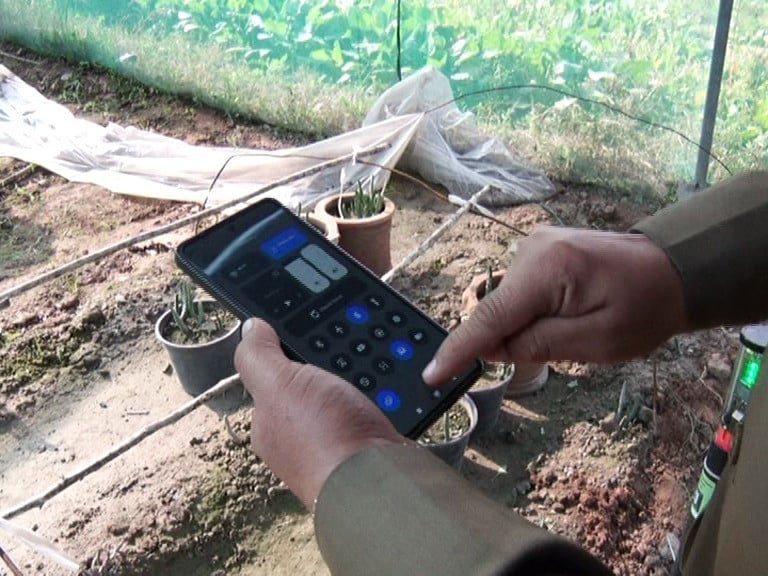
“The sensors are connected to a mobile application that provides real-time data. Farmers can check soil moisture levels from their homes and decide whether their fields actually need water,” he said. This approach not only prevents over-irrigation but also helps conserve scarce water resources.

whatsapp-image-2026-01-23-at-10-58-401769149864-1.jpeg


“This project aims to promote water-related research and significantly reduce the amount of water used in agriculture,” Dr Ahmad said, adding that consultations are also underway with international water-saving institutions.

Kifayat Zaman, the project in charge in K-P, said the initiative is part of a UK-funded programme titled Water Resources Accountability in Pakistan. “The programme was launched in Punjab in 2021, while in K-P it began in 2024,” he said.

“Farmers who previously irrigated their crops four to six times during a season are now doing so only three to four times,” Zaman said. “This has resulted in water savings of 25 to 30 percent”.

According to Zaman, the soil moisture sensors are designed to improve water demand assessment, supply management, and overall governance in the water sector. “One of the core objectives of this programme is to strengthen coordination among government institutions and improve the overall water management system,” he added.
 
Climate change and its impacts are becoming increasingly visible for farmers across the province. “Erratic rainfall, rising temperatures, and water shortages are directly affecting agriculture. With the help of this technology, farmers can not only optimise water use but also increase crop productivity,” he said.

Moreover, research reports suggest that the use of these sensors has led to a 15 to 20 per cent increase in crop yields. The economic benefits are also significant, particularly for farmers who rely on tube wells powered by electricity or solar energy. “These farmers faced high operational costs, and the reduced need for irrigation has helped them save a considerable amount of money,” Zaman said.
 

The wheat paradox

Khalid Saeed Wattoo | Dr Waqar Ahmad
January 26, 2026

From the harvest of the previous wheat crop in March–April 2025 to the sowing of the current one in November 2025, key office bearers of Pakistan’s major farmers’ associations consistently criticised the government’s wheat policy.

Their criticism, through press conferences, television talk shows, and public forums, centred particularly on two major policy shifts in the wheat sector: the withdrawal of the wheat support price, and the abolition of the decades-old practice of direct procurement from farmers.

They warned that farmers were likely to reduce the wheat-sown area in the upcoming season in protest, as most had received prices ranging between Rs1,800 and 2,200 per 40kg — far less than their production costs and the import parity price.

Several independent experts also predicted a decline in wheat acreage, particularly in Punjab, where the government imposed district-specific wheat ceiling prices of around Rs2,800 per 40kg once prices began to rebound after a period of oversupply during harvest season. This artificial price suppression through administrative measures — quite contrary to the principles of deregulation and free market economy — hurts farmers who managed to hold their stocks for better prices.

Surprisingly, in contrast to earlier predictions, the first estimate of the 2025-26 wheat crop prepared by the Crop Reporting Service (Government of the Punjab) indicates that in Punjab — which produces 76 per cent of the country’s wheat — the crop has been sown over 16.41 million acres compared to 16.25m acres in 2024–25. This reflects an increase of 159,000 acres.

Historically, farmers have preferred wheat because most alternative crops require higher upfront investments, provide lower or uncertain financial returns, or lack developed marketing channels

The Punjab government has taken credit for this expansion, attributing it to the timely announcement of an indicative price (not a support price) of Rs3,500 per 40kg, a reduction in the price of certified wheat seeds, and an effective sowing campaign.
 
If the integrity of this data holds up, this raises a critical question: what is the ground reality? Have farmers once again been drawn in by government assurances — particularly the Rs3,500 indicative price — or do they simply have limited viable alternatives to wheat? There is a possibility that many farmers opted to sow wheat, anticipating that a reduction in total wheat acreage would reduce supply and lead to higher market prices this year.

In part, the answer lies in the timely announcement of an indicative price, which helped revive farmers’ confidence. However, the deeper reality is that Pakistan grows a very limited number of Kharif and Rabi crops — excluding vegetables, which have a wide range, but cannot be cultivated on a large scale due to limited domestic consumption and constrained export opportunities.

For wheat growers, alternative cropping options vary across various regions of Pakistan. For example, in the Sahiwal division, farmers can shift from wheat to potatoes, garlic, canola, mustard, and spring maize. Likewise, farmers in the Sargodha division may opt for sugarcane (a year-long crop), chickpeas, lentils, maize, and oilseeds. Similarly, in some regions, sunflowers and tobacco can replace wheat.

Historically, farmers have preferred wheat because most alternative crops require higher upfront investments due to costly seeds and fertilisers, provide lower or uncertain financial returns compared to wheat, or lack well-developed marketing channels, particularly when grown outside their established production clusters.

In contrast, wheat requires relatively few and simple agricultural operations. It can be grown under both irrigated/rain-fed or water-scarce conditions, which makes it suitable across a wide range of agro-ecological zones. \

Wheat is less susceptible to pest and disease infestations and relatively more resilient to climatic variability than many alternative crops. Moreover, it is traded even in the smallest local grain markets, so farmers face minimal marketing constraints. Additionally, smallholders who rear livestock are compelled to grow wheat, as wheat straw serves as an essential fodder source.
 

Agriculture: A crop in shambles

Mohammad Hussain Khan
January 26, 2026

Though the new wheat crop harvest will begin around early March, with early arrivals taking place by February’s end as growers prepare for cotton sowing, the open market prices of wheat have started steeply rising over the past month and a half.

The price surge is now forcing consumers to buy expensive flour, despite the Sindh government’s downward revision of prices for roller flour mills and chakki owners, at the food department’s request. The cost of 100kg wheat bags was reduced from Rs9,500 to Rs8,000 in December 2025 under the Wheat Release Policy 2026 to align with the open market rate and stabilise grain and flour prices.

The present situation has once again raised serious questions over the government food department’s handling of the wheat supply chain ever since the state decided to procure a certain quantum of wheat this season. The food department, while holding off on releasing wheat stocks all November 2025, began releasing wheat in December only after a price revision, and not without their hallmark financial irregularities.

Usually, chakki and flour millers lift wheat from the food department by October every year. Until November 2025, however, they were comfortably buying healthy wheat from the open market, even on credit. This is when the food department found itself in a quandary: how to deplete carryover wheat stocks ranging from 1.2 to 1.3 million tonnes? Furthermore, the department conducted no independent verification of the quantity or quality of these three-year-old stocks, meaning adulterated or unhealthy supplies couldn’t be ruled out.

Both wheat growers and consumers — especially those among lower income groups — are losers in the whole wheat procurement process that is marred by corruption
 
“The sensors are connected to a mobile application that provides real-time data. Farmers can check soil moisture levels from their homes and decide whether their fields actually need water,” he said. This approach not only prevents over-irrigation but also helps conserve scarce water resources.

whatsapp-image-2026-01-23-at-10-58-401769149864-1.jpeg


“This project aims to promote water-related research and significantly reduce the amount of water used in agriculture,” Dr Ahmad said, adding that consultations are also underway with international water-saving institutions.

Kifayat Zaman, the project in charge in K-P, said the initiative is part of a UK-funded programme titled Water Resources Accountability in Pakistan. “The programme was launched in Punjab in 2021, while in K-P it began in 2024,” he said.

“Farmers who previously irrigated their crops four to six times during a season are now doing so only three to four times,” Zaman said. “This has resulted in water savings of 25 to 30 percent”.

According to Zaman, the soil moisture sensors are designed to improve water demand assessment, supply management, and overall governance in the water sector. “One of the core objectives of this programme is to strengthen coordination among government institutions and improve the overall water management system,” he added.

Homegrown and High-Tech: How LUMS Sensors Are Revolutionizing Pakistan’s Agriculture

SUBHEAD: From the scorching fields of Sindh to the glaciers of Swat, locally designed "WIT" sensors are proving that Pakistan doesn’t need expensive imported solutions to solve its water crisis.

LAHORE
– In the face of Pakistan’s deepening water scarcity and rising energy costs for farmers, a quiet technological revolution is taking root. It is not being driven by expensive Silicon Valley imports, but by engineers at a laboratory in Lahore.

The Centre for Water Informatics & Technology (WIT) at the Lahore University of Management Sciences (LUMS) has successfully developed, tested, and deployed indigenous soil moisture sensors that are fast becoming the "gold standard" for Pakistani agriculture.

For decades, the barrier to adopting "smart farming" in Pakistan has been twofold: cost and calibration. Imported sensors from the US or Europe are prohibitively expensive, often subject to import duties exceeding 40%. Furthermore, they are frequently calibrated for western soil types, failing to read accurately in the saline, silt-heavy soils of the Indus Basin.

The WIT team recognized that for technology to scale in Pakistan, it had to be built in Pakistan.

The Indigenous Advantage

The LUMS WIT sensors remove the reliance on foreign hardware. By designing and assembling the units locally, they have created an industrial-grade solution that is affordable for progressive farmers and scalable for large development projects.

Unlike hobbyist kits, these sensors are ruggedized. They are IP67 rated—meaning they are waterproof and dustproof—capable of surviving monsoon rains and scorching summer heat. Crucially, they are designed with connectivity options like LoRaWAN and GSM, meaning they function reliably in remote villages with no WiFi access, transmitting vital data to cloud dashboards accessible via smartphones.

Proven Results in the Field

The impact of this homegrown tech is already measurable. Through long-standing partnerships with major agri-stakeholders like Nestlé Pakistan, the sensors have been put to the test in real-world farming conditions.

The results have been significant. Data from pilots involving water-intensive crops like sugarcane and maize has shown that farmers using the WIT arrays to schedule irrigation were able to reduce water usage by approximately 35% without compromising yield. For a farmer relying on expensive diesel tubewells, this translates to massive financial savings and a substantial reduction in groundwater extraction.

From Sindh to Swat: Expanding the Footprint

The technology's footprint expanded significantly in late 2025 and early 2026, proving its versatility across Pakistan's diverse climates.

In December 2025, WIT, in partnership with the Food and Agriculture Organization (FAO) and the Sindh Irrigation Department, deployed their "smart hydro-informatics" systems in Sanghar, Sindh. These deployments are helping monitor water flow in an area notoriously difficult for technology to survive.

Conversely, just this month (January 2026), the same rugged engineering principles were applied in the freezing heights of Gabin Jabba, Swat. WIT deployed sensors designed to measure glacial snowmelt and depth, providing critical data on climate change and future water availability for the rivers below.

The Future of Pakistani Farming

The success of the LUMS WIT sensors signals a shift in Pakistan’s agricultural landscape. It moves the conversation from simply "needing more water" to "managing the water we have with precision."

By proving that world-class, climate-resilient technology can be developed within Pakistan, LUMS is offering more than just a sensor; they are offering a sustainable roadmap for national food security that is not dependent on foreign aid or imported hardware.
 

500,000 tons of Passco wheat set for disposal, ECC aims to curb storage costs

  • ECC approved provision of 300,000 metric tons of Passco wheat to the Food and Consumer Protection Department
BR Web Desk
The Economic Coordination Committee (ECC) of the Cabinet on Wednesday approved the disposal of 500,000 metric tons of Pakistan Agricultural Storage and Services Corporation Limited (Passco) wheat through competitive bidding, aiming to manage surplus stocks, reduce storage costs, and stabilise domestic wheat prices.

Moreover, the committee also approved the provision of 300,000 metric tons of Passco wheat to the Food and Consumer Protection Department of the Government of Punjab, aimed at maintaining adequate wheat supplies for flour mills, stabilising prices and ensuring uninterrupted availability of wheat flour to consumers, read a statement.
 

Pakistan-China agricultural universities sign MoU to expand research & technology transfer​

By Shafqat Ali | Gwadar Pro
Feb 2, 2026

ISLAMABAD - Academic cooperation between Pakistan and China received a further boost as the University of Agriculture Peshawar (UAP) and the Northwest Agriculture and Forestry University of China (NWAFU) formalized a new partnership framework on Saturday afternoon aimed at expanding joint research, technology exchange, and capacity development aligned with broader Silk Road and CPEC-era knowledge collaboration.

The Memorandum of Understanding (MoU) was signed at a ceremony hosted at the Pakistan Science Foundation in Islamabad, which facilitated the agreement as part of its mandate to promote international scientific linkages. The accord was signed by UAP Vice Chancellor Prof. Emeritus Dr. Jehan Bakht and Professor Dr. Zhang Lixin, Chairman of the Silk Road Bio Health Agri Industry Alliance at the Chinese university.
 
KARACHI: In a landmark development for Pakistan’s agricultural sector, Pakistan Mercantile Exchange Limited (PMEX), has signed a strategic agreement with Meskay & Femtee Trading Company, one of Pakistan’s leading agri-commodity traders and exporters.

For the first time in Pakistan’s history, agricultural commodities, starting with wheat and rice, will be traded on a formal, documented and transparent exchange-based platform, enabling credible price discovery and supporting free-market operations in the agri economy. Pursuant to this agreement signing, the exchange expects the trading of enlisted agri-futures contracts to commence later this month.


By integrating major agricultural trade flows onto PMEX’s platform, the initiative is expected to deliver broad-based benefits across the value chain, enabling farmers to access transparent price signals, while traders and exporters benefit from standardization and effective risk management. Importers, processors, and investors gain reliable price benchmarks and documented, regulated transactions. The collaboration will commence with deliverable wheat and rice futures.

As anAgri Market Maker on PMEX, Meskay & Femtee Trading Company will provide continuous two-way quotes and bring sizeable agri-commodity volumes onto the Exchange, deepening liquidity, improving price discovery, and reducing volatility for market participants. Market makers play a critical role in ensuring depth and continuity in futures trading by actively participating on both the buy and sell side.

Established in 2006, Meskay & Femtee Trading Company is one of Pakistan’s leading agri-commodity exporters, with a strong focus on rice alongside wheat, corn, and sesame. The company is amongst the top 2 largest millers in the country and also the largest farm mechanization company, covering procurement, processing, warehousing, and exports, and maintains significant storage and logistics infrastructure all over Pakistan.

At the signing ceremony, the management of PMEX and Meskay & Femtee Trading Company commented that this partnership aligns with a mutual objective of strengthening Pakistan’s agricultural commodities market ecosystem by actively connecting physical agri-commodity supply chains with exchange-traded products.

Copyright Business Recorder, 2026
 
Now they can speculate on food? God bless capitalism.

This is great for farmers as Pakistan get rid of support price/MSP. Now farmers will get fair price even without MSP.

FeatureTraditional MarketPMEX / Meskay & Femtee Model
PricingOpaque, determined by local middlemen.Transparent, determined by supply and demand.
Price RiskFarmers bear the full brunt of price drops.Farmers can hedge and lock in future prices.
DocumentationMostly informal/cash-based.Documented and regulated transactions.
LiquidityHighly dependent on local buyers.High liquidity provided by market makers.
 
KARACHI: In a landmark development for Pakistan’s agricultural sector, Pakistan Mercantile Exchange Limited (PMEX), has signed a strategic agreement with Meskay & Femtee Trading Company, one of Pakistan’s leading agri-commodity traders and exporters.

For the first time in Pakistan’s history, agricultural commodities, starting with wheat and rice, will be traded on a formal, documented and transparent exchange-based platform, enabling credible price discovery and supporting free-market operations in the agri economy. Pursuant to this agreement signing, the exchange expects the trading of enlisted agri-futures contracts to commence later this month.


By integrating major agricultural trade flows onto PMEX’s platform, the initiative is expected to deliver broad-based benefits across the value chain, enabling farmers to access transparent price signals, while traders and exporters benefit from standardization and effective risk management. Importers, processors, and investors gain reliable price benchmarks and documented, regulated transactions. The collaboration will commence with deliverable wheat and rice futures.

As anAgri Market Maker on PMEX, Meskay & Femtee Trading Company will provide continuous two-way quotes and bring sizeable agri-commodity volumes onto the Exchange, deepening liquidity, improving price discovery, and reducing volatility for market participants. Market makers play a critical role in ensuring depth and continuity in futures trading by actively participating on both the buy and sell side.

Established in 2006, Meskay & Femtee Trading Company is one of Pakistan’s leading agri-commodity exporters, with a strong focus on rice alongside wheat, corn, and sesame. The company is amongst the top 2 largest millers in the country and also the largest farm mechanization company, covering procurement, processing, warehousing, and exports, and maintains significant storage and logistics infrastructure all over Pakistan.

At the signing ceremony, the management of PMEX and Meskay & Femtee Trading Company commented that this partnership aligns with a mutual objective of strengthening Pakistan’s agricultural commodities market ecosystem by actively connecting physical agri-commodity supply chains with exchange-traded products.

Copyright Business Recorder, 2026

The Digital Harvest: How PMEX’s New Futures Contract Could Save Pakistan Billions​

KARACHI: In a quiet but revolutionary shift for Pakistan’s agrarian economy, the Pakistan Mercantile Exchange (PMEX) has struck a strategic alliance with Meskay & Femtee Trading Company to launch deliverable futures contracts for wheat and rice. While financial derivatives often sound abstract, the on-ground implication of this deal is tangible and profound: it promises to liberate the Pakistani farmer from the centuries-old grip of informal middlemen (arhtis) and plug a $4 billion annual hole in the national economy.

For the first time, Pakistan's two staple crops—wheat and rice—will move from an opaque, cash-based open market to a transparent, regulated, and digitized exchange.

Breaking the ‘Arhti’ Trap​

For decades, the smallholder farmer has been caught in a cycle of debt. Lacking access to formal banking, they borrow from local middlemen at usurious rates to buy seeds and fertilizer. When harvest comes, they are forced to sell their produce to that same middleman at a suppressed price to settle debts, often immediately after harvest when prices are lowest.

The PMEX-Meskay partnership disrupts this dynamic through the Electronic Warehouse Receipt (EWR) system.

Under this new regime, a farmer can deposit their harvest in an accredited, climate-controlled warehouse managed by logistics partners. In return, they receive a digital receipt (the EWR). This receipt is not just a piece of paper; it is bankable collateral. Farmers can walk into a bank and secure a loan against their stored crop at standard interest rates, giving them the "holding power" to wait for better market prices rather than panic-selling.

The $4 Billion Opportunity​

The macroeconomic argument for this shift is staggering. According to recent data from the Ministry of National Food Security and international agencies, Pakistan loses approximately 30-40% of its food production annually to post-harvest losses—rotting in open fields, eaten by pests, or damaged in transit.

In monetary terms, this wastage is valued at roughly $4 billion (approx. PKR 1.1 trillion) annually.

By mandating that exchange-traded crops be stored in accredited, standard-compliant warehouses, this initiative directly attacks that wastage. If the PMEX ecosystem can reduce these post-harvest losses by even half, it would effectively inject $2 billion back into the rural economy without planting a single extra acre of land. This is a direct contribution to GDP growth, derived purely from efficiency.

The Role of the Market Maker​

Exchanges often fail in developing markets due to a lack of liquidity—farmers want to sell, but there are no active buyers. This is where Meskay & Femtee Trading Company steps in as the official Agri Market Maker.

As one of the country's top two rice millers and a leading exporter, Meskay & Femtee has committed to providing "two-way quotes"—continuously offering to both buy and sell. This ensures that when a farmer or a cooperative wants to hedge their risk or sell their crop on the exchange, there is always a counterparty available. This liquidity is the engine that will keep the new system running.

A New Era of Price Discovery​

Perhaps the most significant long-term benefit is Price Discovery. Currently, wheat prices are often artificially fixed by government procurement drives, which leads to circular debt and massive storage mismanagement.

A functioning futures market allows prices to be set by actual supply and demand. It provides the government with an exit strategy from the heavy burden of wheat procurement, allowing the private sector to take over storage and trade while the state plays the role of a regulator rather than a buyer.

Conclusion​

The success of this initiative will depend on the "last mile"—ensuring that small farmers in districts like Sheikhupura and Muridke can actually access the digital platform. However, the structure is now in place. By digitizing the harvest, Pakistan is not just modernizing its trade; it is finally treating agriculture as a serious industry rather than a subsistence activity.
 

Users who are viewing this thread

Back
Top