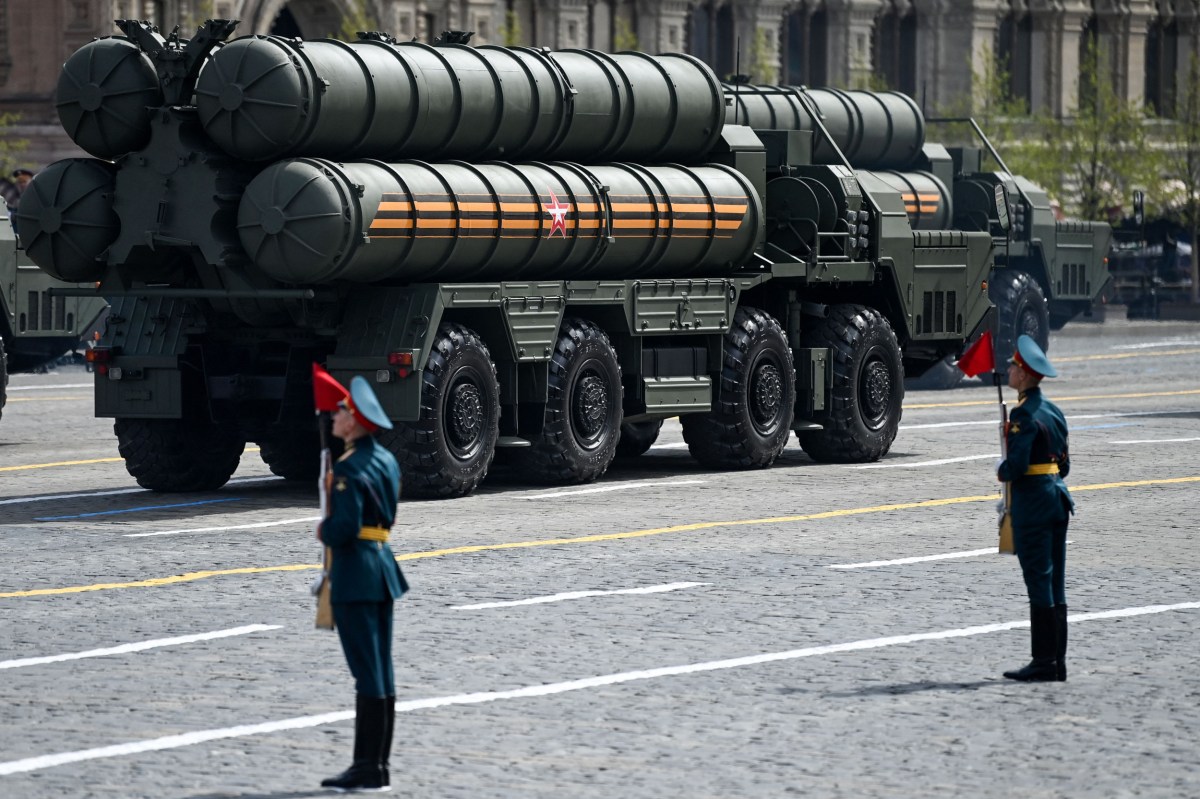
This combination empowers the S-400 not only to detect, track, and lock onto Pakistani aircraft, whether traditional fighter jets, surveillance platforms, or low-flying drones, but also to maintain that capability when adversaries attempt to blind it electronically.
Indeed, analysts note that during past operations, including instances like the recent Operation Sindoor, the S-400 demonstrated a robust ability to maintain target locks under jamming pressure.
It is also important to note that the S-400’s anti-electronic warfare (EW) capabilities extend beyond pure hardware and software design. Russian doctrine emphasizes mobility and concealment for its high-value air defense assets. The S-400 launchers, radars, and command posts are mounted on mobile platforms that can be rapidly redeployed. Frequent movement, combined with decoys and emission control techniques, makes it harder for adversaries to concentrate jamming efforts against a fixed position.
The result is a layered defense against EW: multi-band radar redundancy, signal processing that filters interference, networked sensors providing independent target data, guidance systems that are less dependent on continuous external input, and operational tactics that minimize vulnerability windows. While no system is entirely immune to the effects of advanced jamming – particularly from well-resourced adversaries – the S-400’s combination of technical features and operational doctrine makes it considerably more resistant to EW suppression than many of its peers.
The takeaway is that the S-400’s resistance to electronic warfare is not due to a single ‘magic’ technology but to an entire philosophy of redundancy, adaptability, and integration. In a future battlefield where electronic attacks will be as common as missile salvos, the S-400’s designers have built a system intended not merely to survive under electronic assault, but to continue fighting effectively even when the electromagnetic spectrum is heavily contested.
The PAF claims it destroyed an IAF mobile 91N6E (NATO name Big Bird) acquisition radar with a CM-400AKG missile that was launched from a 14 Sqn JF-17C Thunder on May 10
Moreover, its missiles are capable of engaging high-speed threats and executing high-precision interception. The 9M96E2, for example, can maneuver up to 20g and achieve Mach speeds that make low-flying targets vulnerable, even those just five meters above ground level. The system’s missiles can also intercept ballistic and cruise missiles and are claimed to possess anti-stealth capabilities when used in concert with suitable radar nodes.
Pakistani CM-400AKG
In its standard configuration, the CM-400AKG can reach speeds between Mach 4.5 and Mach 5.5 during the terminal phase of its flight, which significantly reduces the window for interception and complicates defensive response. Its operational range is generally reported to be up to approximately 250km, though the actual reach can vary depending on factors such as launch altitude, aircraft speed, and specific mission profile. The PAF claims 400km. The missile utilises an inertial navigation system supplemented by satellite navigation inputs for mid-course guidance, and it can engage precision targets in the terminal phase using either radar or infrared seekers. The warhead configuration typically includes a 150kg high-explosive fragmentation variant, or a heavier penetration model intended for use against fortified or hardened targets.
The CM-400AKG’s flight trajectory tends to combine a high-altitude cruise with a steep terminal dive, a manoeuvre designed to reduce the effectiveness of point-defence interceptors and complicate radar tracking. These flight characteristics, combined with its substantial warhead, give the missile a broad engagement envelope and allow it to threaten a diverse range of targets, including static infrastructure, command posts, and mobile air-defense systems. Its high speed and maneuverability, coupled with flexible guidance and destructive payloads, make it a formidable ordnance capable of penetrating sophisticated defensive networks and imposing significant operational risks on adversary air-defense platforms.
Confrontation
According to India’s air chief (see page 56), the sharpest use of the S-400 came during clashes in May 2025’s Operation Sindoor. He stated that Indian air defences shot down six Pakistani jets - five fighters and one large aircraft - adding that “most” of the kills were by S-400 and that the large aircraft (described as a surveillance-type) was engaged at roughly 300km range. He offered no evidence.
Pakistan immediately rejected this account, calling the Indian narrative “fabricated”. A very different headline was that Pakistan destroyed an Indian S-400 battery at Adampur in Punjab (see page 56). Pakistani media and social channels framed this as a precision strike, sometimes pairing the claim with footage of a JF-17 carrying CM-400AKG missiles. India formally dismissed these stories as fake via the government’s Press Information Bureau fact-check, and Indian outlets highlighted a subsequent prime-ministerial photo-op in front of an S-400 at the same base as a rebuttal.
The core problem is evidence: Pakistan has not released corroborated damage imagery of a destroyed battery, and India has not provided independent audit trails for all of its own claims either. In short, the destruction claim remains unverified propaganda to New Delhi, and a victory claim to Islamabad.
A 96L6E (NATO name: Cheese Board) a 3D early-warning and acquisition radar was also successfully targeted by a PAF JF-17C according to the PAF. It scans a specified area and automatically generates a target flight path for priority targets
S-400 vs CM-400AKG
A confrontation between these two systems would revolve around the CM-400AKG’s claimed ability to penetrate or evade the S-400’s defensive envelope. One possible scenario involves Pakistan launching the missile at or near its maximum effective range. By exploiting the missile’s speed, high flight path, and steep terminal dive, Pakistani planners might have aimed to compress the S-400’s reaction time and reduce interception probability. In such an attack, the CM-400AKG could be guided towards key components of the S-400 battery, such as its command post or its radar units, potentially limiting the system’s effectiveness even without destroying its missile launchers. For more see page 56. Such an operation would closely resemble a SEAD mission, although the CM-400AKG is not inherently an anti-radiation missile. In theory, if the missile were equipped with a passive seeker or supplied with precise targeting data, it could be directed towards the radar emissions of an S-400 battery, potentially threatening its most critical sensing components. The notion of “hoping to extend the range” does not necessarily imply exceeding the missile’s technical limitations. Rather, it reflects a tactical decision to operate the CM-400AKG near the upper boundary of its performance envelope, thereby maximising standoff distance to keep the launching JF-17 relatively safe while attempting to strike high-value targets deep within Indian airspace.
However, the CM-400AKG faces inherent limitations related to fuel capacity and flight endurance. Extending its range requires that the JF-17 reach higher launch altitudes to optimise trajectory and maximise the missile’s glide and cruise phases. This approach, however, increases detectability, as Indian S-400 radars would likely acquire the launch platform as it climbs, providing early warning to the air-defence crews. Once the missile is launched, its trajectory is similarly observable, granting the S-400 operators precious extra seconds to initiate countermeasures, prepare interceptors, or activate electronic counter-countermeasures. In essence, while the CM-400AKG offers high-speed, stand-off strike potential, the interplay between launch altitude, missile range, radar detection, and defensive reaction times imposes a complex operational calculus that both sides must consider in planning such high-stakes engagements.
Regardless of the veracity of these claims, the event illustrates the strategic interplay between advanced strike systems and cutting-edge air defence networks in South Asia. Pakistan’s adoption of the CM-400AKG provides it with a high-speed, stand-off strike capability that complicates India’s threat calculations. Conversely, India’s deployment of the S-400 creates a defensive barrier that forces Pakistan to consider long-range, high-risk tactics if it wishes to threaten critical assets. The 2025 episode, whether successful or not, underscores that modern conflicts in the region are fought as much through contested narratives and psychological deterrence as through physical destruction. Each side seeks to demonstrate both capability and resolve, while carefully managing escalation risks in an environment where technology, strategy, and information warfare are closely intertwined.
One thing is certain: without hard evidence, such as on-site photographs, authenticated radar recordings, and thorough parametric analysis, what truly occurred between these two systems remains, for the time being, a matter of speculation and personal interpretation. Both sides have relied heavily on their own preferred narratives, often presenting them as established facts. In this sense, the situation resembles the evolution of the Ghost of Kyiv story, which began as a mixture of rumour and propaganda before gradually taking on new shapes and layers, moulded as much by perception and politics as by verifiable reality. In the absence of incontrovertible proof, such accounts tend to live in a space where strategic messaging, national pride, and the public’s appetite for dramatic stories all converge, making them resistant to definitive resolution.




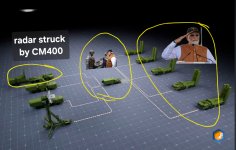


 some very good psyops going on there ;-)


