Pakistan - China Trades

These improvements have resulted in a significant increase in trade volumes, despite severe winter conditions. In December 2025, the Sost Dry Port handled 12,000 metric tons of import and export cargo. During the first two weeks of January 2026, more than 4,860 metric tons of import and export containers were cleared, along with the handling of 132 empty containers.

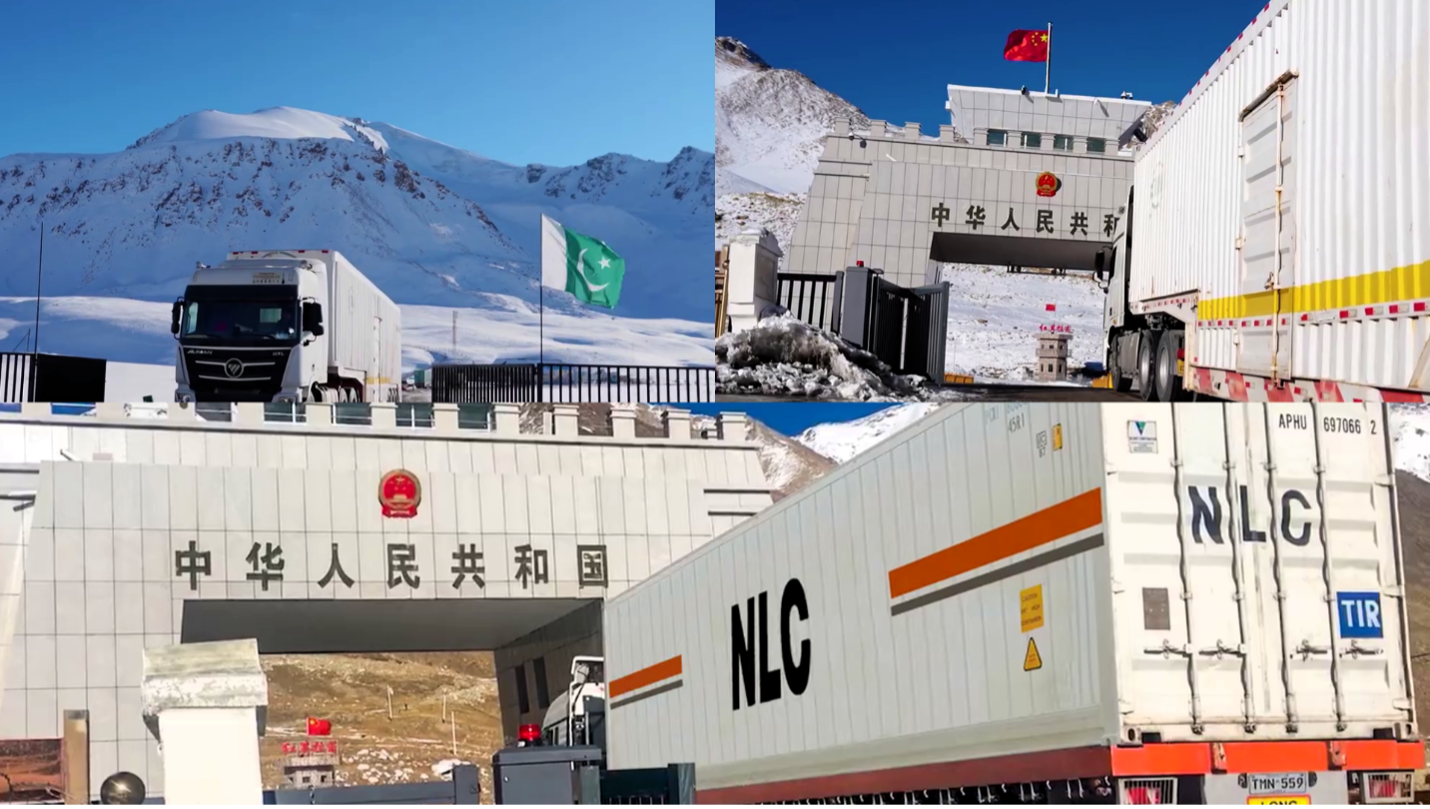
Sost Dry Port enters second year of year-round cargo trade via Khunjerab Pass


Trucks cross the Pakistan-China border at Khunjerab Pass as all-weather trade continues through the Sost Dry Port. [Photo/NLC]

NLC has also established a joint logistics company in collaboration with Chinese transportation-related enterprises. This initiative has further strengthened forward transit trade links with remote regions of China and the Central Asian states, enhancing regional connectivity and trade integration.
 

Pakistan's exports to China show stable growth in 2025​

By Zafar Hussain | Gwadar Pro
Jan 20, 2026

BEIJING — In 2025, Pakistan's exports to China grew by 1.07%, totaling $2.84 billion compared to $2.81 billion in 2024, according to data from the General Administration of Customs of China (GACC). This modest increase underscores the resilience of bilateral trade despite global economic headwinds.

According to GACC data, monthly figures indicated a strengthening rhythm in the second half of the year. Exports in January 2025 stood at $204.94 million, followed by a significant spike in February, which reached $238.94 million—nearly 43% higher than the $167.44 million recorded in February 2024.
 
The year concluded with strong momentum; November recorded $303.01 million, while December reached a yearly peak of $336.45 million. These figures signal Pakistan’s growing competitiveness in key sectors such as agriculture and minerals.

While most months showed improvement, October 2025 saw a slight dip, with exports reaching $273.13 million compared to $281.33 million in October 2024. Despite this intermittent fluctuation, the overall trajectory remained positive.

Bilateral trade between the two nations reached $25.23 billion in 2025, up nearly 10% from $23 billion in 2024, reflecting deepening economic integration under the CPEC framework.
 

Pakistan’s Salt Exports to China Rise 20% in 2025​

By Zafar Hussain | Gwadar Pro
Jan 29, 2026

BEIJING, China Economic Net — Pakistan’s salt exports to China rose by about 20% in 2025, according to data released by the General Administration of Customs of the People’s Republic of China, reflecting continued growth in bilateral agricultural and mineral trade.

Pakistan exported salt worth $7.18 million to China in 2025, up from $5.98 million in 2024, driven by increased demand from multiple Chinese provinces and improved supply-chain linkages.

Customs data showed that industrial and other salt (HS 25010019) accounted for the majority of shipments under ordinary trade. Hebei Province was the largest destination, importing about 37.8 million kilograms valued at $3.81 million. Zhejiang Province followed with imports of more than 452,000 kilograms worth $645,050, while Anhui Province imported 830,500 kilograms valued at $557,023.

Other major destinations included Fujian Province (340,483 kilograms; $537,693), Guangdong Province (716,881 kilograms; $453,210), and the Inner Mongolia Autonomous Region, which imported more than 2.66 million kilograms. Additional shipments were recorded to Shandong, Liaoning, Jiangsu, Tianjin, Shanghai, Hubei, Beijing, and Hunan.

Pakistan also exported edible salt (HS 25010011) to China, with shipments sent to Anhui Province, Guangdong Province through bonded trade channels, as well as Heilongjiang and Hebei Provinces, according to the data.

Salt exporters said competitive pricing, abundant reserves, and improved compliance with Chinese quality and logistics standards supported the increase. They added that expanding e-commerce channels and more efficient customs clearance also contributed to trade growth.

Industry sources said Pakistan’s salt exports to China could continue to expand, particularly through value-added products and deeper engagement with food, chemical, and industrial users.
 

Pakistan’s rice exports to China cross $62 million in 2025​

By Zafar Hussain | Gwadar Pro
Jan 27, 2026

BEIJING, Pakistan’s rice exports to China exceeded $62 million in 2025, driven by shipments of semi- or wholly milled rice and continued demand for broken rice across multiple Chinese provincial markets, according to data from the General Administration of Customs of China (GACC).

GACC data showed Pakistan exported about 157.74 million kg of rice to China in 2025. Semi- or wholly milled rice (HS 10063020) accounted for the bulk of shipments at 110.10 million kg, generating $46.86 million in export earnings. Broken rice categories totalled about 47.63 million kg and made up the remainder of the value.

The southern province of Guangdong was the largest destination for Pakistani rice, importing around 61.8 million kg across milled and broken rice categories, with a combined value of more than $26 million. Shipments included large volumes of semi- or wholly milled rice, as well as broken rice used mainly in food processing.

Beijing ranked as the second-largest market, importing about 42.93 million kg of semi- or wholly milled rice worth $15.48 million, reflecting steady demand in the capital for consumer-grade rice.
 

Sports product exports to China surge​


Pakistani goods benefit from competitive pricing, improved quality standards

AFP
February 03, 2026


tribune


BEIJING: Pakistan's sports product exports to China recorded impressive growth in 2025, with significant gains across a range of categories, including basketballs, footballs, volleyballs, sports gloves and outdoor game equipment.

According to the latest data from the General Administration of Customs of China (GACC), Pakistan exported a total of 1,353,927 units of basketballs, footballs and volleyballs to China, generating revenue of $9.07 million. This growth underscores China's expanding sports culture, with Pakistani products increasingly favoured for their competitive pricing and quality.
 
Chinese customs data showed that the export volume was distributed across key provinces and cities, with Jiangsu province receiving the largest share of 615,562 units, valued at $3.87 million. Other prominent import regions included Shandong province (470,336 units, valued at $3.49 million) and Shanghai Municipality (152,034 units, valued at $0.953 million).

The surge in demand for sports equipment aligns with China's rapid urbanisation, sports infrastructure expansion and a growing interest in outdoor and recreational activities.
 
In addition to basketballs, footballs and volleyballs, other key sports products also contributed to the growth in exports: sports equipment for outdoor games, including swimming gear and related products, registered exports of 80,232 units, with total revenues of $535,375.

gloves and mittens specially designed for various sports amounted to 16,126 units, yielding $949,432 in revenue. Sports footwear, predominantly made from rubber, plastics and leather, accounted for a smaller proportion of Pakistan's exports.

Pakistani exporters told the China Economic Net (CEN) that the rise in exports reflects Pakistan's ability to tap into the potential of China's growing sports market.

Key regions such as Zhejiang, Guangdong and Fujian have been major destinations for these products, where the demand for sports goods continues to increase as China's population becomes more active and engaged in fitness and outdoor sports.

They believe that Pakistan's sports product manufacturers are not only benefiting from competitive pricing but also from improved quality standards and enhanced compliance with international regulations. This positions Pakistan as an attractive partner of China, particularly as Chinese consumers continue to seek high-quality sports products for both professional and recreational purposes.

Muhammad Ali, a Pakistani sports product exporter, told CEN that the successful export performance in 2025 is also supported by the growing e-commerce sector in China, which has facilitated smoother transactions and faster delivery for Pakistani exports.

As both countries work to enhance economic cooperation under initiatives like the Belt and Road Initiative (BRI), the sports goods sector is expected to play an even larger role in bilateral trade in the coming years.

He added that the outlook for Pakistan's sports product exports remains positive. As demand continues to grow in key sectors such as sports equipment, fitness gear and outdoor products, Pakistan is well-positioned to further strengthen its presence in the Chinese market and diversify its export portfolio.
 

Pakistan’s marble and onyx exports to China stable in 2025​

By Zafar Hussain | Gwadar Pro
Feb 9, 2026


Pakistan’s marble and onyx exports to China stable in 2025


BEIJING — Pakistan’s exports of marble, onyx and related stone products to China remained broadly stable in 2025, supported by steady demand from the construction and interior decoration sectors, which typically see increased activity ahead of the Spring Festival holiday.

According to data from the General Administration of Customs of China (GACC), exports under HS Code 25151200 (marble and travertine, merely cut into rectangular blocks or slabs) rose to $5.41 million in 2025 from $5.02 million in 2024. Shipments under HS Code 25151100 (marble and travertine, crude or roughly trimmed) also posted a slight year-on-year increase, the data show.

Under HS Code 25152000 (calcareous monumental or building stone, including alabaster and onyx), Pakistan ranked as China’s third-largest supplier in 2025, according to GACC data. Türkiye led in this category with shipments valued at $18.49 million, followed by Bulgaria at $16.75 million. Pakistan exported 31.74 million kg of calcareous building stone to China, valued at $8.10 million, the data shows.

In related categories, exports under HS Code 26169000 (precious metal ores and concentrates, excluding silver) fell to $2.39 million in 2025 from $8.62 million in 2024. Exports under HS Code 71031000 (precious and semi-precious stones, unworked) reached $2.57 million in 2025, according to GACC. Granite exports showed mixed performance, with shipments of crude granite declining sharply while exports of granite that was merely cut increased, indicating limited but emerging movement toward value-added stone products.

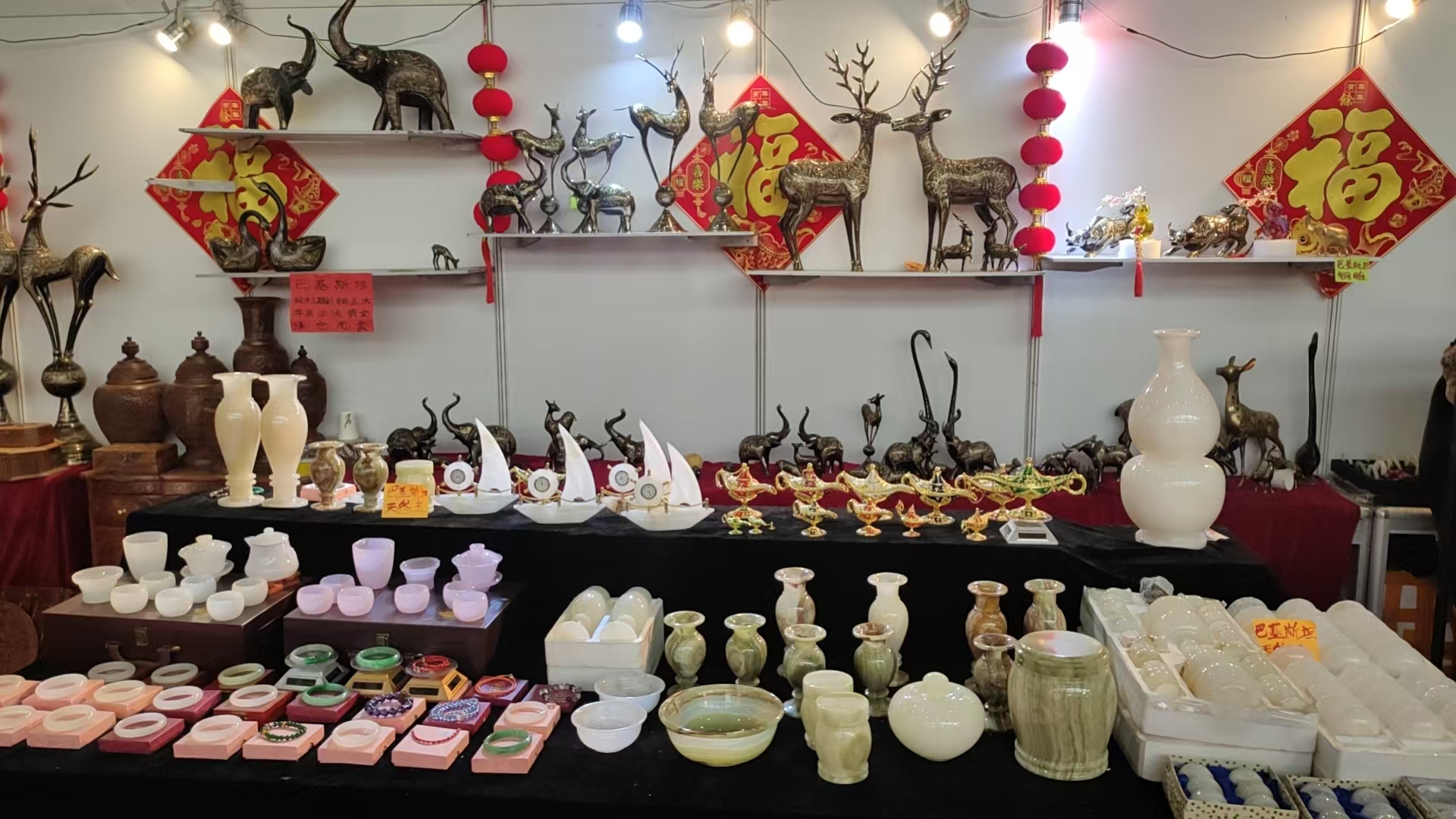
Muhammad Abid, owner of Bilal Enterprises, told Gwadar Pro at the Agriculture Exhibition Centre that demand for Pakistani marble and onyx products typically rises ahead of the Chinese New Year. “Before every Spring Festival, we set up installations and stalls featuring marble and onyx products carved with Chinese characters, which are very popular among customers,” he said.

Abid noted that the Year of the Horse begins with the Chinese New Year on Feb 17, and said horse-themed marble and onyx products had attracted strong interest. “This year, I sold all horse-themed items made from Pakistani marble and onyx, along with other related products,” he said.

He added that interest often increases once customers learn the products originate from Pakistan. “People appreciate the quality, and there is also goodwill toward Pakistan. Many customers actively support Pakistani products,” he said.

Overall, the data suggests Pakistan’s stone exports to China in 2025 were underpinned by stable demand for marble and onyx, with growth concentrated mainly in cut marble products rather than raw shipments.
 

Pakistan's fodder export sector eyes China markets for $1 billion expansion​

By Shafqat Ali | Gwadar Pro
Feb 15, 2026

Pakistan’s rapidly expanding fodder export industry is targeting annual exports of up to US $1 billion within five years, with industry leaders identifying China along with Saudi Arabia as decisive markets for achieving that goal.

According to Pakistani official trade data, Pakistan exported over 930,000 tons of animal feed worth US $112.2 million during the last fiscal year. However, exporters remain heavily dependent on a single market, the United Arab Emirates, which accounted for the largest share of purchases.

At the center of Pakistan’s export push is Rhodes grass, a high-protein tropical fodder widely used to feed dairy cattle, camels, horses, and other livestock in water-scarce Gulf countries. As desert climates and water shortages limit domestic cultivation in Gulf states, reliance on imported fodder has grown steadily.
 
Industry representatives have called on Pakistan’s trade authorities to secure government-to-government agreements that would facilitate product registration and market access in China. Exporters believe that once approved, fodder shipments to China could potentially move via land routes, creating new trade corridors and enhancing regional agricultural connectivity.

The sector’s expansion has been rapid. Cultivated acreage for Rhodes grass has reportedly increased by more than 60 percent over the past three to four years, reaching approximately 120,000 acres nationwide. Large-scale farms in Sindh province now produce tens of tons daily for export.
 
With agriculture contributing roughly 24 percent to Pakistan’s GDP and employing nearly 38 percent of the labor force, stakeholders believe that securing access to China could transform fodder into a major non-traditional export category.

Industry leaders maintain that if China alone open its markets, Pakistan’s fodder exports could expand multiple times over current levels, strengthening rural incomes, boosting foreign exchange earnings, and deepening Pakistan’s economic engagement with key strategic partners.
 

Rice, seafood, minerals top Pak-China trade talks​

By Staff Reporter | The Express Tribune
Mar 5, 2026

Rana Ihsaan Afzal Khan, Coordinator to the Prime Minister on Commerce, held a meeting with the Chinese Minister Counsellor to review bilateral trade relations and explore practical measures to enhance economic cooperation between Pakistan and China.

The meeting provided an opportunity to assess current trade dynamics and examine factors affecting export growth. Discussions focused on Pakistan's priorities for expanding exports to China while considering mutual trade interests, said a release issued here on Wednesday.

Key deliberations centred on high-potential export sectors, including agricultural products, rice and seafood.

Arrangements intended to enhance Pakistani rice exports were also explored. The two sides further considered prospects in copper and other minerals, highlighting the potential value of strengthened business-to-business engagement to support sectoral opportunities.
 

Pakistan-China trade through Khunjerab ‘in full swing’

Jamil Nagri
March 18, 2026

1773849647458.png

SHIPMENTS to China and Central Asian states via Khunjerab Pass are on the rise this year.—Photo by the writer

GILGIT: Trade activity between Pakistan and China through the Khunjerab Pass is in full swing, with exports from Pakistan to China and Central Asian states increasing this year.

However, local traders have expressed concerns over the non-implementation of the PM’s announcement regarding tax exemptions on imported items for local consumption.

Pakistan Customs Collector Gilgit-Baltistan Shahid Jan told Dawn that 1,774 consignments imported from China through the Khunjerab Pass were cleared at Sost Dry Port up to March. He said Pakistan Customs collected Rs10.16 billion in revenue at Sost from these consignments.

“This is a record revenue collection at Sost Dry Port, despite its closure for 70 days last year following a protest sit-in by GB traders, which blocked trade activities between the two countries,” he said.

Trade with Central Asian countries under the Multimodal Transports Internationaux Routiers (TIR) system through the Khunjerab route has also remained operational.

Ashfaq Ahmed, an appraising officer at Sost Dry Port, told Dawn electric vehicles, specialised mining and agricultural machinery, which were previously imported through Karachi port, are being routed via Khunjerab Pass.
 

Users who are viewing this thread

Back
Top