Pakistan - China Trades

Pakistan, China unveil donkey export protocols, issue self-regulation declaration​

By Fatima Javed | Gwadar Pro
Sep 18, 2025

Pakistan, China unveil donkey export protocols, issue self-regulation declaration


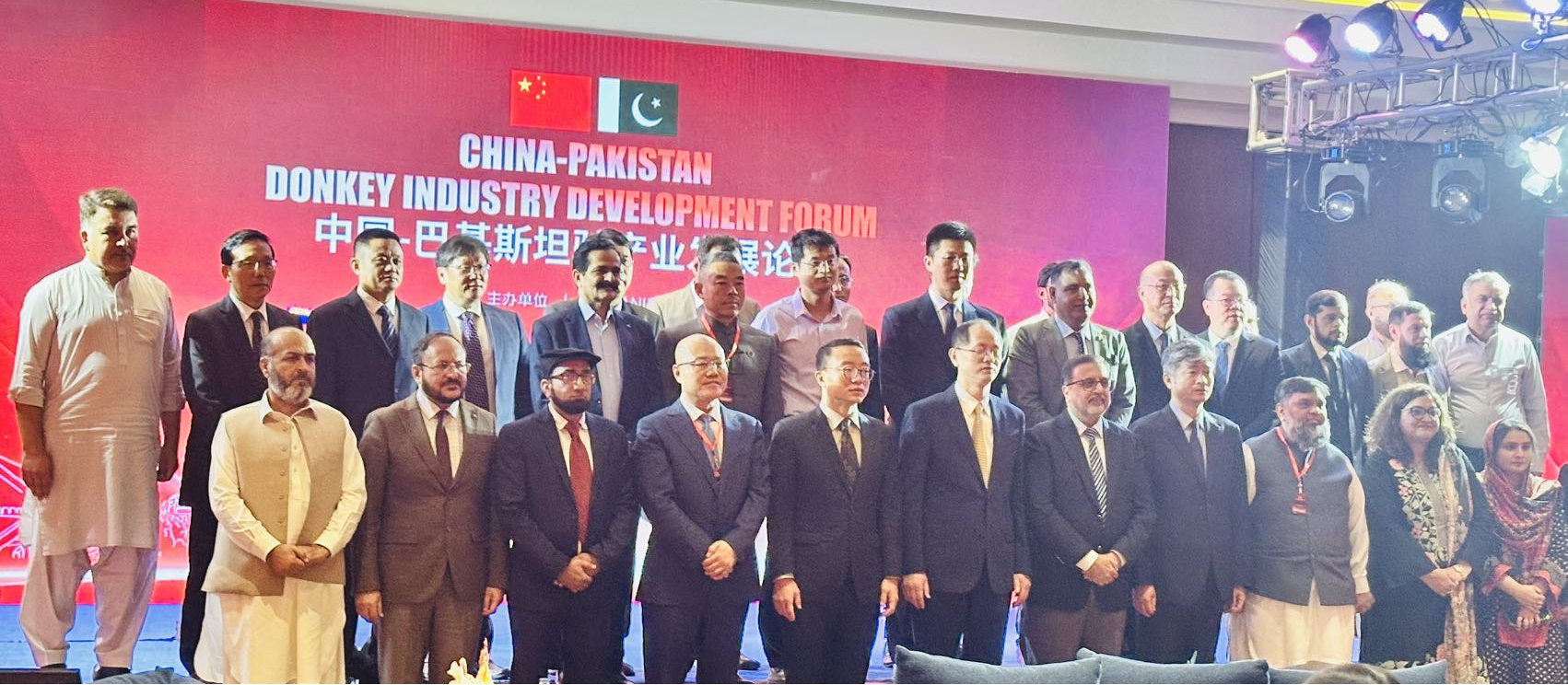
[Photo/Gwadar Pro]

ISLAMABAD, Sept 19 (Gwadar Pro) - Pakistan on Thursday unveiled new export protocols and a regulatory framework aimed at developing its donkey industry, while also introducing measures to curb illegal slaughtering and smuggling of donkey products.

The announcement came during the Pakistan-China Donkey Industry Development Forum, held in Islamabad, where China simultaneously released a Donkey Industry Self-Regulation Declaration, pledging strict adherence to laws, sustainable trade practices, and respect for local culture and religious sensitivities.

The high-level forum, themed “Creating Opportunities Together, Winning the Future Together,” brought together government officials, industry experts, scholars, and business leaders from both countries. Pakistan’s Ministry of National Food Security & Research outlined steps to regulate the sector through proper export protocols and stronger enforcement mechanisms, while emphasizing the need to prevent unlawful practices that could harm the industry’s growth.

On the Chinese side, the China Chamber of Commerce in Pakistan reaffirmed its commitment to fair trade and community-focused practices, underlining the importance of transparency, sustainability, and mutual benefit in building this emerging sector.

Co-hosted by the China Chamber of Commerce in Pakistan and Sangyang Industrial (Beijing) Group Co., Ltd., and supported by the Chinese Embassy in Pakistan and the Ministry of National Food Security & Research of Pakistan, the forum explored new pathways for donkey industry development and standardized practices across the sector.
This news gives me chuckles, particularly because it was posted right after the news on trucks. :D
 
Pakistan Livestock Association official Jallil Rehman said that export of Mozzarella Cheese to China will prove to be another feather in the cap of Pak-China trade relations. During China National Day holidays and Mid-Autum Festival, mozzarella cheese commonly used in pizza, pasta, and salads and sandwiches, was in good demand by Chinese people who savoured their meals with their loved ones, he mentioned.

He appreciated Chinese company JW Foods for making mozzarella cheese using Pakistani water buffalos milk known for its high fat and protein content, both of which contribute to the rich and creamy texture of authentic buffalo mozzarella. The milk is sourced from water buffaloes raised in Punjab region, where the animals graze on lush pastures, giving the cheese its distinct flavor. Mozzarella cheese is a reliable source of several essential nutrients like calories, protein, fat and Calcium.

The Chinese Mozzarella Cheese Market is emerging as a dynamic segment within the broader dairy industry, reflecting shifting dietary patterns, rising disposable incomes, and growing demand for Western-style cuisines. Once considered a niche product, mozzarella is now a mainstream ingredient in pizzas, pastas, snacks, and consumer-packaged foods. The market’s expansion reflects evolving consumer behaviors and the rapid modernization of China’s food sector.
 

Pakistan solidifies its position in Chinese beef market​

By Yasir Habib Khan | Gwadar Pro
Oct 5, 2025

As Pakistan’s economic indicators show tentative signs of recovery despite deep structural challenges, a fresh boost has come from an unlikely source: rising beef exports to China.

For a country that has long struggled to broaden its export basket, seeing Pakistani beef make its way to Chinese supermarket shelves is more than just a trade story — it’s a quiet breakthrough. It tells of years spent securing approvals, meeting strict health standards, and improving safety measures, now finally translating into steady orders and a sense of momentum.

Notably, Pakistan’s exports climbed to $31.75 billion in FY2024–25, fuelled by textiles and emerging sectors, as the government turns to AI-driven strategies and new market plans to sustain growth amid global trade uncertainty.

According to the latest numbers released by the government, the heat-treated beef exports to China have exceeded $5.24 million in the first half of this year, while boiled meat exports reached $2.36 million, signalling potential growth for Pakistan in China’s meat market despite ongoing challenges.

The surge is reflective of the fact that Pakistan’s meat is solidifying its position as a high-demand product in the Chinese market. This performance has favoured Pakistan to outpace regional competitors, most notably Mongolia, which exported $3 million worth of boiled beef to China during the same six-month period in 2025.

Credit goes to Pakistan’s strict compliance with China's rigorous food safety, hygiene, and quarantine regulations, particularly for heat-treated meat products such as boiled beef.

Chinese senior diplomat at the Chinese embassy in Pakistan, Mr Wang Shengjie, told Gwadar Pro, “This development testifies to a good momentum, of course, with huge potential.”
 

Donkey hides’ export to China permitted, all set for final inspection in Gwadar​

By Yasir Habib Khan | Gwadar Pro
Oct 4, 2025

GWADAR, Oct 4 (Gwadar Pro) - Amid the formal lifting of the ban on the export of donkey hides to China by the government of Pakistan, all is set for the final inspection of the Chinese pharmaceutical company Hengeng Trading Enterprise, in a bid to allow it to operate Pakistan’s first donkey slaughterhouse in Gwadar North Free Zone.

The General Administration of Customs of China has already conducted an online inspection of Hengeng to seal approval of its processes and procedures under prescribed laws.

A Balochistan government official told Gwadar Pro that the federal government has finally authorised the export of donkey hides to China as part of an amendment to the Ministry of Commerce’s Export Policy Order. “According to the Commerce Ministry’s notification, the export of donkey hides shall be allowed only to those firms and companies manufacturing in designated, approved and registered donkey slaughterhouses located in the Gwadar Free Zone North only,” he added

In July, 2024, protocols to export donkey skins and meat to China had been finalised, he revealed.

Meanwhile, certification from Pakistan Animal Quarantine (Import and Export of Animals and Animal Products) has also been received by the Chinese company Hengeng Trading Enterprise, a pharmaceutical company of China to run Pakistan’s first donkey slaughterhouse in Gwadar North Free Zone.

Pakistan’s first China-led top-notch construction of modern slaughterhouse for donkey meat and hides has been completed and is waiting for official approval to operate in Gwadar North Free Zone. At a cost of 50 million dollars, the slaughterhouse has been built by Hengeng.

An official from the Ministry for Maritime Affairs said that donkeys being reared at many farmhouses in various parts of Punjab will be slaughtered at the state-of-the-art Gwadar North Free Zone slaughterhouse. “Their meat and skins will be further processed keeping in view international standards and later exported to China,” he added

He said that the Gwadar North Free Zone donkey slaughterhouse will lay down the foundation of advanced slaughter technology in Pakistan to help secure the disease-free donkey meat with high-quality preservation through a cold chain.

The latest figures showed that the population of donkeys in Pakistan has jumped to 5.9 million during the fiscal year 2023-24.
 

Pakistan eyes boost in citrus exports to China, global markets​

By Shafqat Ali | Gwadar Pro
Oct 12, 2025

SARGODHA, Oct 12 (Gwadar Pro)– Pakistani government is firmly committed to strengthening Pakistan’s agricultural export base, particularly in the citrus sector, through innovation, value addition, and quality enhancement aimed at boosting exports to China and other international markets, a top official said.

Federal Minister for Commerce Jam Kamal Khan, speaking on the sidelines of the Agri Expo Sargodha on Saturday afternoon, highlighted that citrus, especially Kinnow mandarin, remains one of Pakistan’s signature export commodities with immense potential in China and beyond. “Our priority is to regain our competitive position in international citrus markets by modernizing the entire value chain, from farm to foreign buyers,” he said.
 
To view this content we will need your consent to set third party cookies.
For more detailed information, see our cookies page.
 
To view this content we will need your consent to set third party cookies.
For more detailed information, see our cookies page.
 

Pakistan’s Rice Exports to China Surge 63% in Q3 2025​

By Zafar Hussain | Gwadar Pro
Oct 22, 2025

BEIJING, Oct. 23 (China Economic Net)— Pakistan’s rice exports to China reached $45.27 million in the third quarter of 2025, up 63% year-on-year from $27.85 million in the same period last year, according to the latest data from the General Administration of Customs of China (GACC).

During this period, Pakistan exported semi- or wholly-milled rice (commodity code 10063020) worth $34.30 million, totaling 76.36 million kilograms at an average price of $0.44 per kilogram. In the same quarter of 2024, the export value was just over $6 million, with a volume of 7.42 million kilograms, marking a sharp rise in both quantity and export earnings.

Exports of broken rice (commodity code 10064020) also performed strongly, reaching $8.04 million, while another category of broken rice (of length ≤6mm and length-width ratio ≤2, commodity code 10064080) recorded $2.92 millionduring the first nine months of 2025. Overall, Pakistan exported 109,494 tons of various rice categories to China during this period.

Qamar Islam, a rice exporter to China, told CEN that the steady growth reflects Pakistan’s expanding presence in China’s grain market and the increasing recognition of its high-quality rice varieties. He attributed the surge to enhanced bilateral trade cooperation, improved logistics under the China-Pakistan Economic Corridor (CPEC), and competitive pricing.
 

Pakistan’s salt exports to China jump 26% in Jan-Oct​


By Zafar Hussain | Gwadar Pro
Nov 21, 2025

BEIJING - Pakistan’s salt exports to China rose 26% in the first ten months of 2025, driven by growing demand for industrial and food-grade products, Chinese customs data showed.

According to the General Administration of Customs of China (GACC), Pakistan’s exports of salt (commodity code 25010019) to China totaled $6.04 million from January to October, up from $4.79 million in the same period a year earlier. Total export volume for the period reached 39.93 million kilograms.

Industry experts attributed the growth to improved trade facilitation and the increasing popularity of Pakistan's Himalayan pink salt, which has gained traction in China due to its mineral composition and branding.

The data release comes ahead of the Food and Agri Expo in Karachi next week (Nov. 25-27). A Chinese business delegation is expected to attend the event, where Pakistan’s top salt companies will seek to negotiate new export deals and joint ventures.

Owais Mir, CEO of DEA Group of Companies, told Gwadar Pro that Pakistan is focusing on value addition of the sector.

“China remains one of the biggest and most promising markets,” Mir said. “Pakistan is rapidly strengthening its market share through quality enhancement and competitive pricing.”
 
To view this content we will need your consent to set third party cookies.
For more detailed information, see our cookies page.
 
To view this content we will need your consent to set third party cookies.
For more detailed information, see our cookies page.
 
To view this content we will need your consent to set third party cookies.
For more detailed information, see our cookies page.
 

Pakistan’s fisheries exports to China top $149m, nearly 60% of total in first half of FY 25-26​

By Tahir Ali | Gwadar Pro
Jan 16, 2026

ISLAMABAD - Pakistan’s fisheries exports to China surged past $149 million in the first half of the current fiscal year (July-December FY25-26), accounting for nearly 60% of the country’s total seafood exports, as rising Chinese demand drove strong overall growth in the sector, Federal Minister for Maritime Affairs Junaid Anwar Chaudhry said on Friday.

Reviewing the performance of the fisheries sector, the minister said China remained Pakistan’s largest export destination for seafood, reflecting sustained demand for frozen fish, shrimp and other value-added products in the Chinese market.

Overall fisheries exports during the first six months of the fiscal year reached $253 million, with export volumes exceeding 122,000 metric tons, according to official figures shared by the ministry. Exports to China alone accounted for about 59% of total earnings during the period.

Chaudhry said exports of shrimp and prawns generated more than $40 million, while cuttlefish exports earned $36 million, with a significant share of these shipments destined for China. He added that demand for frozen fish continued to rise in international markets, particularly across East Asia.

Thailand ranked as the second-largest importer of Pakistani fisheries products after China, the minister said.

Exports peaked during November and December, indicating improved processing capacity and better market access, he added.
 
To view this content we will need your consent to set third party cookies.
For more detailed information, see our cookies page.
 

Sost Dry Port enters second year of year-round cargo trade via Khunjerab Pass​

By Tahir Ali | Gwadar Pro
Jan 21, 2026

Sost Dry Port enters second year of year-round cargo trade via Khunjerab Pass


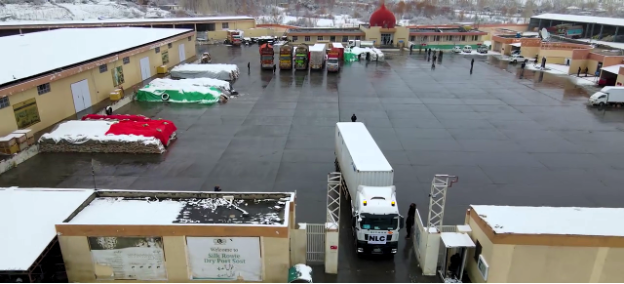
A view of Silk Route Dry Port Sost, Gilgit Baltistan. [Photo/NLC]

SOST- The Sost Dry Port, operated by the National Logistics Corporation (NLC), has completed its second successful year of all-weather trade through the Khunjerab Pass, demonstrating strong national service and professional excellence despite harsh climatic conditions.

According to NLC, the dry port remained fully operational throughout the year, even during extreme weather and heavy snowfall. To ensure uninterrupted trade between Pakistan and China, NLC has developed modern infrastructure and upgraded facilities at the port.

Advanced scanning systems have been installed to accelerate cargo clearance, while weighbridges have been added and warehouse capacity expanded to enhance cargo safety and efficiency.
 

Users who are viewing this thread

Back
Top