Pakistan - China Trades

Pakistani mud crab exporters eye expansion in China​

Gwadar Pro
Jul 9, 2024

GUANGZHOU- Pakistan’s vibrant seafood industry has made significant strides in recent years, with mud crabs emerging as a star export product.

As Pakistani exporters continue to tap into the global market, they are increasingly focusing on China as a key destination for their high-quality mud crabs, renowned for their rich flavor and succulent meat.

According to Volza’s Pakistan Export data, mud crab export shipments from Pakistan stood at 5.5K, exported by 46 Pakistan exporters to122 buyers.

Notably, China has emerged as the largest market for Pakistani mud crabs, with exports to the country surpassing those to other destinations such as the United Arab Emirates and the United States.

Pakistan is now ranked as the third-largest exporter of mud crabs globally, highlighting the country's strong position in the international seafood market.

The surge in Pakistani mud crab exports to China can be attributed to the country's commitment to quality and the optimization of supply chains.

Pakistani exporters have capitalized on the rising demand for high-quality seafood in China, where mud crabs are highly valued for their culinary appeal and nutritional benefits.

“Our average weight per box net weight of 16 kg. We exported about 3,000 tons of live mud crabs to China over the last 3 years” said Mr. Tehseen Patel, CEO of Areeba Enterprises, a leading Pakistani mud crab exporter. Areeba Enterprises, which started exporting Pakistani mud crabs internationally in 2016, has seen success in the Chinese market, driven by the company’s focus on quality control and sustainable fishing practices.

According to China’s customs statistics, the import of live, fresh, or cold mud crabs (Chinese Customs code 030633) from Pakistan has increased significantly in recent years. In 2023,

China imported live, fresh or cold crabs from Pakistan (Chinese Customs code 030633) for US $42,594,065, up 141% from US $17,658,045 in 2020. This trend highlights the growing demand for Pakistani mud crabs in China and the potential for further expansion in the market.
Driven by the robust appetite for seafood in China,

Areeba Enterprises has established a robust supply chain, shipping live mud crabs directly to major cities like Guangzhou, Shanghai, Beijing, and Kunming. The journey from Pakistan’s shores to China’s bustling markets typically takes between 24 to 48 hours, ensuring the freshness and vitality of the crabs upon arrival.

As the Pakistani exporter continues to tap into the global market, Tehseen Patel is investing in modernization and sustainability to meet the evolving needs of international buyers. Areeba has embarked on a mission to train local fishermen in best practices, invest in state-of-the-art hatcheries and conditioning facilities, and integrate sustainable practices throughout its supply chain.

The Chinese seafood market is a vibrant landscape with a wide array of products in high demand. In the Chinese market, there is high demand for shrimps, fresh and frozen fish (ribbonfish, croaker, and mackerel), crabs, lobsters, scallops, and squid.

In addition to mud crabs, Areeba Enterprises also exports a diverse range of seafood products, including shrimps (white-leg shrimp and tiger shrimp), live lobsters, etc.

The company has ambitious plans to further expand its footprint in the Chinese seafood market. “We are committed to diversifying our product range and forging closer strategic partnerships with local distributors, retailers, and e-commerce platforms.

By doing so, we aim to not only satisfy the ever-growing demands of the Chinese market but also contribute to the sustainable development of Pakistan’s seafood industry,” Tehseen Patel concluded.
 

Pakistan’s exports to China witness increase of 33.67% in FY 2023-24​

Gwadar Pro
Aug 2, 2024

ISLAMABAD - Pakistan's exports of goods and services to China witnessed an increase of 33.67 percent during the twelve months of the fiscal year (2023-24) as compared to the exports of the corresponding period of last year, State Bank of Pakistan (SBP) reported on Thursday afternoon.

The overall exports to China were recorded at $2.707 billion during July-June (2023-24) against exports of $2.025 billion during July-June (2022-23), SBP data revealed.

On a year-to-year basis, exports to China also surged by 12.59 percent from $136.546 million in June 2023, against the exports of $153.745 million in June 2024.

Pakistan's overall exports to other countries witnessed an increase of 11.53 percent in FY 2023-24, from $27.875 billion to $31.090 billion, the SBP data mentioned.
 

The first batch of Chinese homegrown white broiler eggs exported to Pakistan​

China Economic Net
Aug 23, 2024

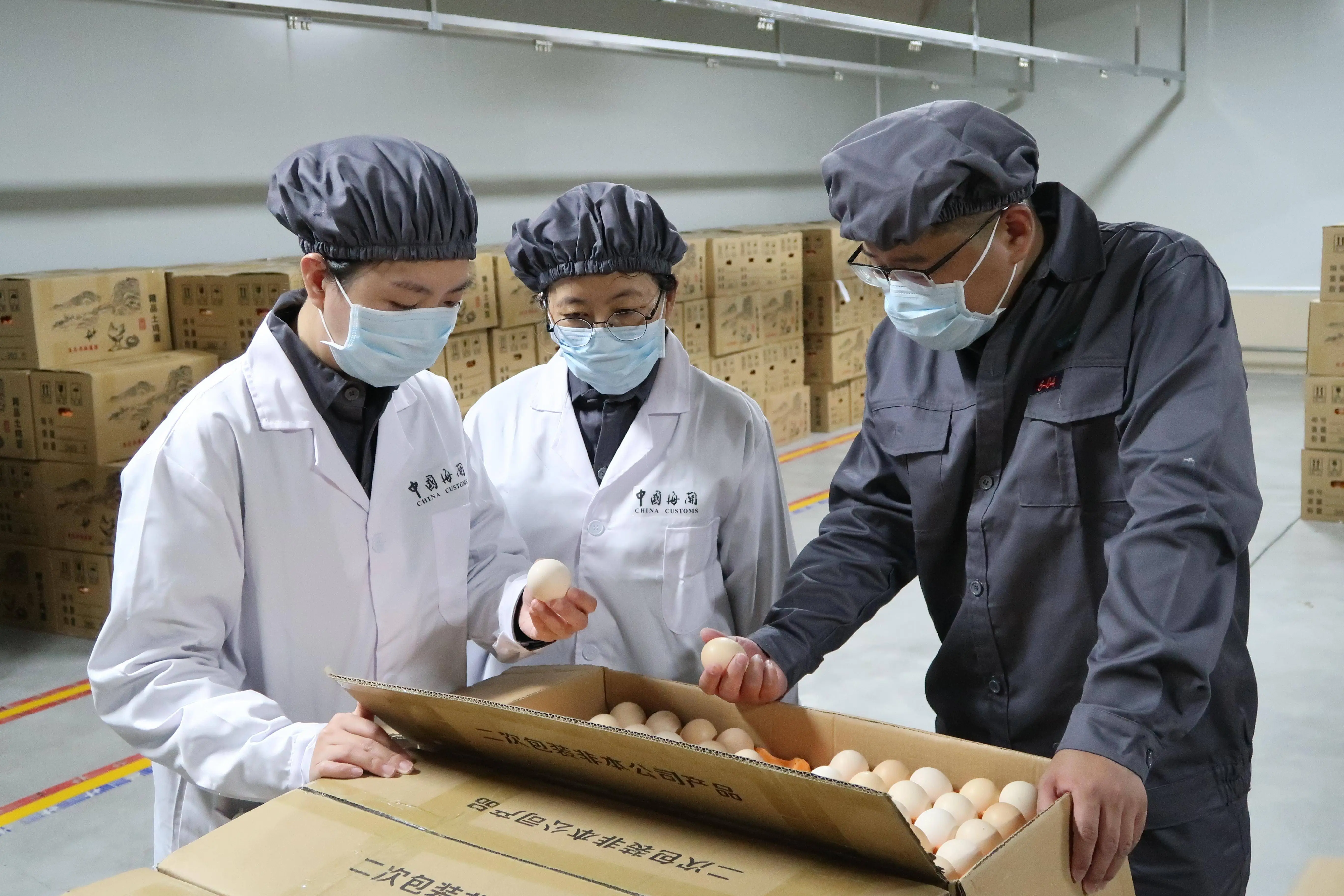
GUANGZHOU- In the early morning on August 22, 2023, a flight from Guangzhou Baiyun Airport touched down at the land of Pakistan after a long journey. In the cargo hold of the plane stood a consignment of special "guests" - 172,800 "Guangming No. 2" White Feathered Broiler eggs from China.

The first batch of Chinese homegrown white broiler eggs exported to Pakistan


Guangming No. 2 white-feathered broiler eggs are inspected at Foshan Customs, Guangzhou [Photo provided by the IAS, CAAS]

The shipment, all domestically bred by Foshan Gaoming District Xinguang Agriculture and Animal Husbandry Co., Ltd. and Beijing Institute of Animal Science (IAS) of Chinese Academy of Agricultural Sciences (CAAS), marking the first time China has exported its own breed of poultry to Pakistan.

“This export of white-feathered broiler breeding eggs to Pakistan means a lot to us. More Chinese breeding eggs will go abroad, not only to Pakistan, but also to the globe, ” Liu Dawei, deputy general manager of Xinguang, and person in charge of White Feather Broiler project, said in excitement.

The reporter learned that the “Guangming No. 2” White Feather Broiler weighed more than 3kg at 42 days of age and had a feed-to-weight ratio of 1.32-1.5:1. More than that, they have significant advantages such as rapid growth and high survival rate. The 172,800 hatching eggs exported to Pakistan could provide more than 50,000 sets of “Guangming No. 2” parent broilers after 21 days of incubation. Before long, they could provide more than 7 million commercial broilers, that is, more than 21,000 tons of chicken.

Over the past four decades, the vast majority of white-feathered broiler breeders in the world have been monopolized by developed countries in Europe and the United States, and China’s dependence on foreign white-feathered broiler breeders once reached 100%. By the end of 2021, three varieties including “Guangming No. 2” had passed the review, thus domestic white-feathered broiler breeders were independently cultivated in China.

Today, Pakistan faces the same dilemma that China once faced. Statistics showed that there’re only about half a dozen companies that import all of grandparent stock or GPs in the country. GPs are the birds that produce the parent stock which, in turn, produce broilers for mass consumption. Now, China-Pakistan breeding poultry export cooperation has taken a successful first step, which will lay a solid foundation for the two countries to jointly promote the innovative development of the global broiler breeding industry.


Breakthrough for Pakistani sesames exporters in China​

China Economic Net
Aug 23, 2024

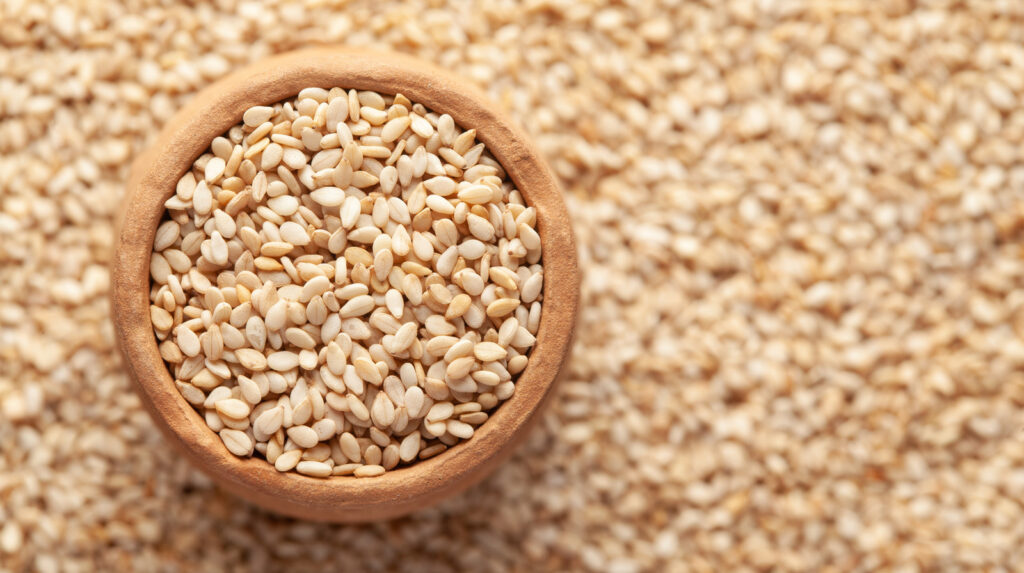
BEIJING- A delegation of 23 sesame seeds exporters from Pakistan visited Beijing and Handan city of Hebei Province of China near Beijing from August 18 to 21, where they got big orders from Chinese companies and expected to become Pakistan's top exporter of sesame seeds to China this year.

Breakthrough for Pakistani sesames exporters in China


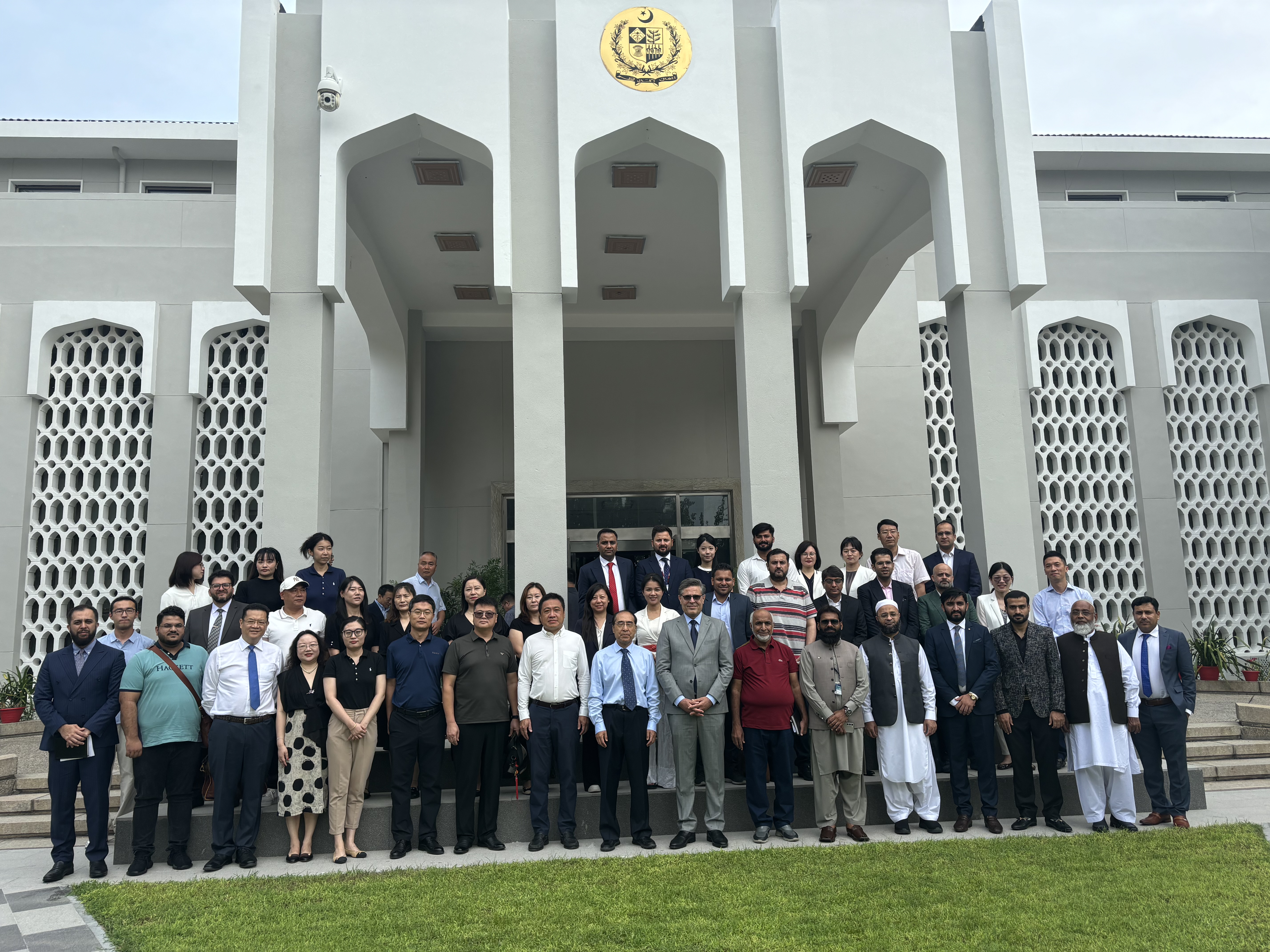
The Pakistani delegation of 23 sesame seeds exporters [Photo provided to CEN]

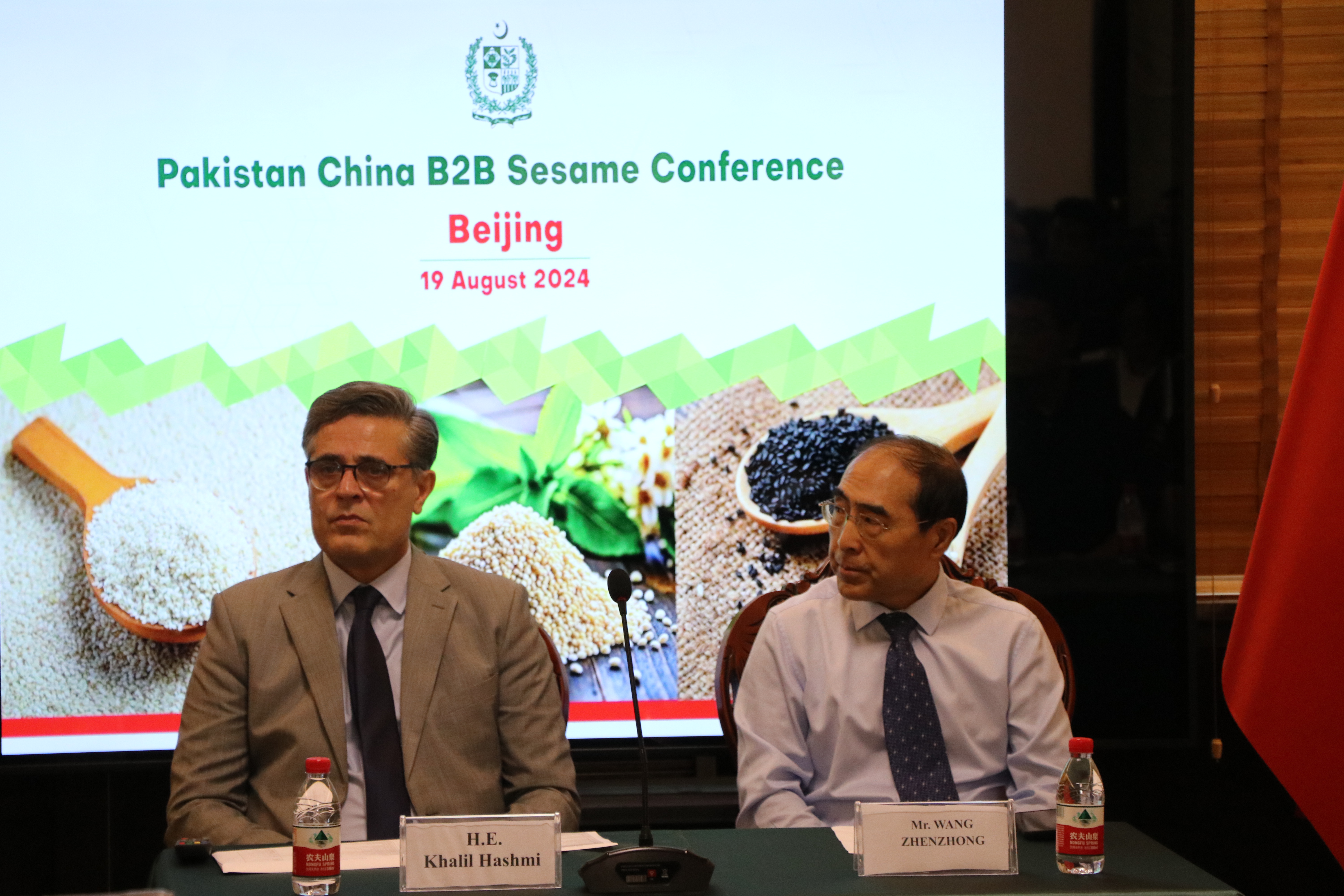
On August 19, the delegation attended Pakistan China B2B Sesame Conference at Pakistan Embassy in Beijing. The b2b conference was arranged by Mission and China National Grains Association (CNAGS). The conference was inaugurated by Ambassador of Pakistan to China Khalil Hashmi and Vice President of CNAGS, Wang Zhenzhong.

Breakthrough for Pakistani sesames exporters in China


B2B Sesame Conference [Photo provided to CEN]

The leader of delegation Hafiz Saad bin Mustafa also spoke at the occasion. Analyst from SCI Group made a presentation at the conference highlighting demand and supply situation in the Chinese market and related price dynamics. The conference was attended by 19 top Chinese enterprises interested in importing sesame seeds from Pakistan including, inter-alia, COFCO, Beijing Capital Agribusiness & Foods Group, Jingliang Holdings, Hebei Grain Group and Zhuochuang Consulting Co., Ltd.

During the visit, the delegation also visited Daming County of Handan City, Hebei Province. Daming city consumes 20% of Chinese sesame imports of China and currently imports over 200,000 MT of sesame seeds per annum whereas Chinese imports for the whole year constitute 1 million MT per annum. Daming county currently imports from Ethiopia, Mozambique, India and others and have currently negligible imports from Pakistan. Visit of the delegation provided a wonderful opportunity to explore new importers and expand Pakistani exports to Daming County.

The delegation visited four top factories in daming county which import large qunatities of sesame seeds for producing food products and sesame oil. The companies included Jing Xinquan Sesame Oil, Wudelli Flour, Daming Fu sesame Oil and Taidu Group.

During the seminar detailed conversations were held between the two sides about the prices, quantities, quality and flavor of the sesame from Pakistan.

In negotiations between Commercial Counsellor and Pakistani enterprises with the Daming Government and top Chinese companies, it was decided that an agreement between Pakistani enterprises and major Chinese state enterprises will be finalized to support Pakistani exports to the county through establishment of warehousing facility in the city’s industrial zone.
 

Cross-border bus service between Gilgit, Kashgar resumes after 14 years​

Gwadar Pro
Oct 8, 2024

ISLAMABAD - The Northern Areas Transport Corporation (NATCO) has officially received approval from Pakistan’s Federal Ministry of Communications to restart its cross-border bus service between Gilgit and Kashgar, China, after a 14-year suspension, officials said in Saturday afternoon.

This service, which had been discontinued in 2010 due to a natural disaster, was halted when a massive landslide led to the creation of Attabad Lake, submerging a 14-kilometer stretch of the crucial Karakoram Highway (KKH).

The restoration of this vital transport link is the result of a collaborative effort between NATCO, a state-owned transport company in Gilgit-Baltistan, and Xinjiang-Kashgar Xin Lu Transportation Co. Ltd, a Chinese company.

The resumption of this bus service is expected to greatly improve connectivity between Pakistan and China, facilitating increased tourism and trade, particularly in the scenic and strategically important region of Gilgit-Baltistan.

NATCO spokesperson Ehsan Shah said that the bus service is scheduled to begin before the Khunjerab Pass closes for the winter in December. He noted that the two sides are working on updating certain aspects of the original 2006 agreement, with a formal signing ceremony expected in the coming weeks.

The reestablishment of the Gilgit-Kashgar bus service will reforge the connection between the picturesque Gilgit-Baltistan region and Kashgar, a key trade hub in China’s Xinjiang province, providing new opportunities for economic cooperation and cultural exchange.
 

3 Tons of Pakistani Pine Nuts Arrive in Ezhou, China​

Gwadar Pro
Oct 8, 2024

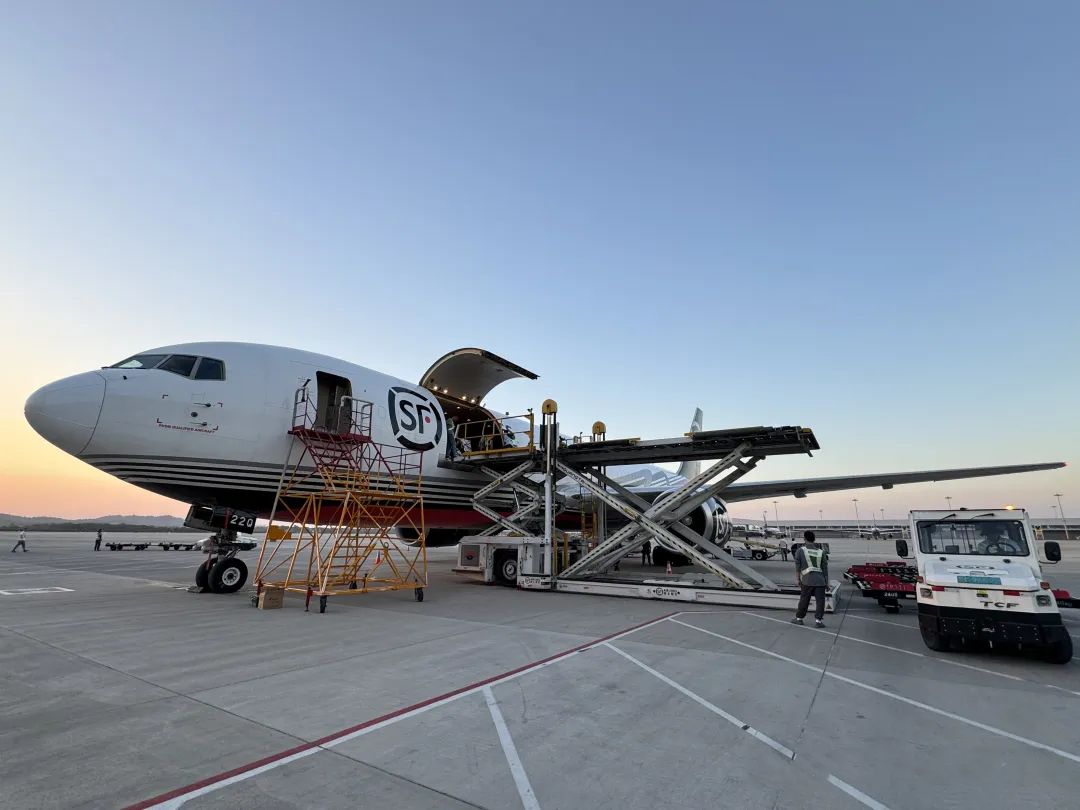
EZHOU-A fully-loaded SF Airlines freighter carrying 3 tons of "Pakistani gems" pine nuts imported from western Pakistan arrived at Ezhou Huahu International Airport via the "Ezhou-Lahore" international cargo route at the end of September.

After clearing customs, these fresh, high-quality pine nuts were dispatched from Ezhou to Yiwu and then distributed throughout China. The smoothly occupied international cargo route, coupled with efficient logistics services, has significantly facilitated trade between China and Pakistan.

3 Tons of Pakistani Pine Nuts Arrive in Ezhou, China


Pakistan ranks as the fifth-largest producer of pine nuts globally and is the largest source of pine nut imports for China, accounting for 42% of the total import volume.

The newly established “Ezhou⇄Lahore” international cargo route, launched on January 13 this year, enhances trade relations between China and Pakistan, facilitating smoother access for Chinese brands into the Pakistani market and easing the entry of Pakistani products into China.

As the cargo routes expand, several safeguard measures have been implemented. Ezhou Customs now offers round-the-clock customs clearance, providing streamlined services such as “one-stop clearance” and “one-click clearance.” As a specialized cargo hub, Huahu International Airport saw its international cargo flights exceed 200 in a single week in August, with monthly flights surpassing 3,000 for the first time, ranking third nationally.

Chinese logistics companies have further optimized transportation processes, significantly enhancing delivery efficiency. With the support of SF Logistics, the pine nuts from Lahore reach their Chinese destination in just 24 hours, greatly reducing transit times.

Additionally, optimized logistics solutions have yielded an average savings of 20% in transportation costs, achieving a dual victory in both economic and social benefits.
 

Pakistan exports 10,000 buffalo embryos to China​

Gwadar Pro
Oct 14, 2024

ISALAMABAD – In another sign of significant progress between China-Pakistan cooperation in buffalo embryo prodction and transfer, Pakistan exported 10,000 embryos to China in September, valued at $2 million, Dr Qaisar Shahzad, program manager at the Royal Cell Biotechnology (Pakistan) Co. Ltd., exporter of the embryos, told Gwadar Pro in a recent interview.

The Lahore-based RCB (Pakistan), owned by China’s Royal Group, has established a joint venture with Pakistan’s JW Group, which specialises in production and transfer of embroys of Pakistan’s superior buffalo breeds using advanced Chinese IVF technology.

In August 2023, Pakistan authorised the RCB (Pakistan) to export buffalo embryos, ova and frozen semen to China. The first consignment of 5,000 buffalo embryos was sent to China on June 8, 2024, followed by a recent second consignment of 5,000 embryos exported to China, Dr Qaisar Shahzad told Gwadar Pro.

The embryos were produced from oocytes of the buffalos present at the Royal JW Buffalo Industry Co. Laboratory in Lahore, Dr Qaisar stated. Over the next decade, China intends to import at least 300,000 buffalo embryos from Pakistan.

He said that as many as 100 jobs were created for local people in the process, and the JV has also produced another 10,000 buffalo embryos for sale in Pakistan.

Given the growing demand for buffalo milk in China and the popularity of Pakistani buffaloes for their milk quality and production volume, China intends to further enhance Pakistan’s superior buffalo breed through its advance technology.
 

Pakistani medical device industry taps new opportunities in booming Chinese market​


By Mariam Raheem | Gwadar Pro
Oct 14, 2024

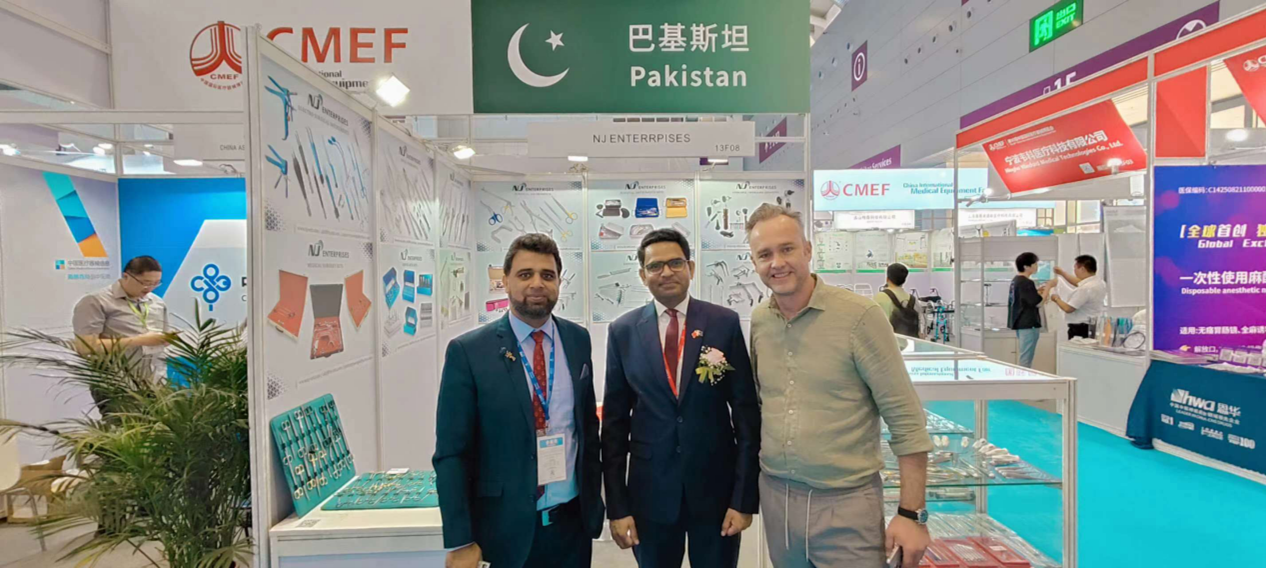
SHENZHEN- “China ranks among Pakistan’s top six export destinations for surgical instruments. The immense consumer demand and capacity in China have prompted us to register all our products for sales licenses there,” said Akif Javaid, the proprietor of NJ Enterprises from Sialkot, Pakistan, as he exhibited a range of surgical, dental, ENT diagnostic, orthopedic, cosmetics and surgery instruments at the ongoing 90th China International Medical Equipment Fair (CMEF) in Shenzhen, China.

Pakistani medical device industry taps new opportunities in booming Chinese market


Akif Javaid, with Muhammad Imran, Trade & Investment Counselor, Consulate General of Pakistan in Guangzhou and his client at the CMEF [Photo provided by Akif Javaid]

From October 12th to 15th, the Shenzhen World Exhibition & Convention Center (Bao’an) hosted the CMEF, drawing over 4,000 companies from across the globe who displayed tens of thousands of medical device products. The event attracted international professionals from more than 150 countries and regions, cementing its reputation as the global healthcare industry’s “wind vane.”

Spanning nearly 200,000 square meters, the exhibition floor is abuzz with renowned enterprises showcasing the latest innovations in medical imaging, in vitro diagnostics, medical electronics and other segments of the medical device industry chain. With products integrating AI, big data and cloud platforms, the fair highlighted the innovative prowess of high-end medical devices.

NJ Enterprises, known for manufacturing high-quality surgical instruments, is well-positioned to seize this opportunity. Pakistan ranks among the top countries in surgical instrument exports and is renowned for its expertise in surgical medical equipment. According to the Trade Development Authority of Pakistan, Pakistan exports up to 10,000 different surgical products with up to 40,000 different distinct products available in the catalogue of companies in the Sialkot Cluster.

The CMEF exhibition area is organized into 14 major sections, including medical imaging, in vitro diagnostics, medical electronics, medical optics, hospital construction, operating rooms, sterilization and infection control, medical consumables, and orthopedics, providing a comprehensive view of the entire medical industry chain.
 

Pakistani agrochemical companies look to expand market share in China​

Gwadar Pro
Oct 17, 2024

SHANGHAI- “We are excited to be here once again, showcasing our agrichemicals and seeds to the thriving Chinese market,” said Bilal Imtiaz, Director of Imports for V-GRO Group Pakistan, as he stood amidst a display of the company’s agrochemical products at the ongoing 2024 AgroChemEx (ACE) exhibition in Shanghai, China.

Drawing more than 600 international exhibitors, the expo is expected to welcome more than 40,000 visitors from October 14 to 16, providing a platform for industry collaboration and information exchange.

This year, Bilal Imtiaz presented a variety of products including chlorothanil, metalxyl, chlorfluazone and chlorantraniliprole to potential Chinese partners and customers.

Pakistani agrochemical companies look to expand market share in China


Bilal Imtiaz at 2024 AgroChemEx (ACE) exhibition in Shanghai, China [Photo provided to Gwadar Pro]

“China’s agrochemicals industry has been actively engaging in international cooperation, introducing advanced technologies and products from abroad. This international collaboration has been mutually beneficial, and we are proud to be a part of it,” Bilal Imtiaz commented.

China, recognized as one of the agricultural powerhouses globally, has been actively pursuing the modernization of its farming sector. Coupled with the country’s increasing agricultural productivity and economic growth, China has emerged as a key player in the international agrochemicals market.

The Pakistani agrochemicals market is also experiencing significant growth. According to Mordor Intelligence, the market size is estimated at USD 345.59 million in 2024 and is expected to reach USD 507.55 million by 2029, growing at a CAGR of 7.99% during the forecast period (2024-2029). The importance of agrochemicals in the agricultural sector of Pakistan cannot be overstated as they are essential for crop protection and increased yield during the pre-harvest phase.

The 2024 ACE brings together upstream and downstream enterprises in the pesticide and fertilizer production chain, including raw material suppliers, active pharmaceutical ingredient (API) and intermediate producers, formulation processors, pesticide auxiliaries, agrichemical production and packaging equipment manufacturers, new fertilizer producers, environmental protection enterprises, and agricultural machinery manufacturers.

Bilal Imtiaz revealed that dozens of Pakistani companies were participating in the ACE exhibition alongside other international exhibitors. “The Pakistani agrochemicals industry is booming, and we are proud to represent our country at such a prestigious exhibition,” he said, adding, “We have made valuable connections and partnerships over the years, and we are looking forward to the coming agricultural exhibition in Tianjin, China, where we hope to make even more connections and expand our presence in the Chinese market.”
 

Pakistan’s medical and surgical instrument exports to China surge​

Gwadar Pro
Dec 6, 2024

BEIJING - Pakistan’s exports of medical and surgical instruments to China have experienced a significant boost in the first ten months of 2024, marking a positive trend for the country’s healthcare manufacturing sector.

According to the latest data from the General Administration of Customs of China (GACC), the export value of medical and surgical instruments to China has risen by 5.189% compared to the same period last year.

This surge is attributed to the increasing demand for high-quality medical devices in China and Pakistan’s growing reputation for producing reliable and cost-effective healthcare products.

“Pakistan’s exports of medical, veterinary instruments & appliances crossed $6.544 million in China while last year in the same period it was $6.387 million - an increase of 2.47%. Similarly, Pakistan’s exports of dental instruments & appliances crossed $3.158 million in the first ten months of this year to China whereas in the same period of 2023 it was $2.926 million, marking a surge of 7.9%,” he added.

Industry experts believe the positive export trend reflects a larger regional shift, as China continues to expand its healthcare sector and invest heavily in modernizing its medical infrastructure.

China’s demand for medical instruments, which includes surgical tools, diagnostic equipment, and personal protective devices, has increased rapidly in response to the country’s aging population and the need for more advanced healthcare services. With its highly competitive manufacturing capabilities, Pakistan stands to benefit from this demand.

“Pakistan has long been known for its robust manufacturing of medical instruments, and this surge in exports to China shows the increasing trust global markets are placing in our products,” said Ghulam Qadir. “With China’s healthcare industry on the rise, we expect these numbers to grow even further in the coming years.”
 

Pakistan Attracts Chinese Investments in Textile Industry​

By Meng Fanrong | China Economic Net
Dec 5, 2024

SUZHOU, “Pakistan warmly welcomes Chinese investments in our textile sector,” highlighted Khalil Hashmi, Pakistani Ambassador to China, during the Pakistan-China B2B Investment Meeting on Textiles held in Suzhou on December 4.

Organized by the Pakistani Embassy in China, the Pakistani Consulate General in Shanghai, and the Board of Investment (BOI), the event in Suzhou—a renowned hub for China's textile industry—aimed to foster joint ventures, trade, and investment partnerships between leading Pakistani and Chinese textile and apparel enterprises. On this occasion, a Textile One Window Network (TOWN) Office under the Belt and Road Initiative (BRI) was also launched.

Eleven prominent Pakistani companies participated in the event, these companies engaged 37 major Chinese companies to discuss specific proposals and explore avenues for future collaboration.
 

Pakistan’s sesame seed exports to China surpass $226m in 2024​

January 27, 2025


Pakistan’s sesame seed exports to China surpassed $226 million in 2024, reflecting a growing demand for Pakistani agricultural products in the Chinese market. Trade and Investment Counsellor Ghulam Qadir attributed this growth to improved agricultural practices, quality control, and direct trade links between Pakistani farmers and Chinese importers.

BEIJING – Pakistan’s exports of sesame seeds to China exceeded $226 million in 2024, marking a significant development in bilateral trade relations.

This export growth reflects the increasing demand for Pakistani agricultural products in the Chinese market and highlights potential areas for further economic cooperation, according to Ghulam Qadir, Trade and Investment Counsellor at Pakistan’s Embassy in China.

Ghulam stated that the rise in sesame seed exports in recent years can be attributed to several factors, including enhanced agricultural practices, improved quality control measures, and the establishment of direct trade links between Pakistani farmers and Chinese importers.

Known for their nutritional value and diverse culinary applications, Pakistani sesame seeds have gained popularity among Chinese consumers, contributing to the surge in demand. According to the latest data from General Administration of Customs of China (GACC), China imported 177,640.638 tonnes of sesame seeds from Pakistan between January and December 2024, with a total trade value of $226.52 million.

Pakistani farmers report that Chinese importers have expressed satisfaction with the quality of the seeds, which are widely used in cooking oil, snacks, and health foods.

The seeds are also recognised for their health benefits, including high levels of antioxidants, vitamins, and minerals, making them a preferred ingredient in the health-conscious Chinese market.

Overall, China imported 1,182,602.068 tonnes of sesame seeds worth $1.86 billion from global suppliers in 2024. Niger, Tanzania, and Pakistan were the top three sources, with exports valued at $514 million, $229 million, and $226 million, respectively, a wire service reported.
 
To view this content we will need your consent to set third party cookies.
For more detailed information, see our cookies page.
 

Users who are viewing this thread

Pakistan Defence Latest

Back
Top