Pakistan - China Trades

Urumqi-Islamabad air cargo route launched to boost China-Pakistan trade​

March 5, 2025


The first air cargo route between Urumqi, Xinjiang, and Islamabad officially commenced operations on March 4, 2025, enhancing cross-border logistics under the China-Pakistan Economic Corridor (CPEC). Operating twice weekly with a 26-ton capacity per trip, the route will support e-commerce and high-value goods transportation.

Experts highlight its role in improving trade efficiency, particularly for perishable exports like mangoes, while strengthening regional supply chains. Xinjiang’s strategic position is set to further integrate trade across South and Central Asia. China-Pakistan trade in 2024 reached $23.06 billion, reflecting an 11.1% year-on-year growth.

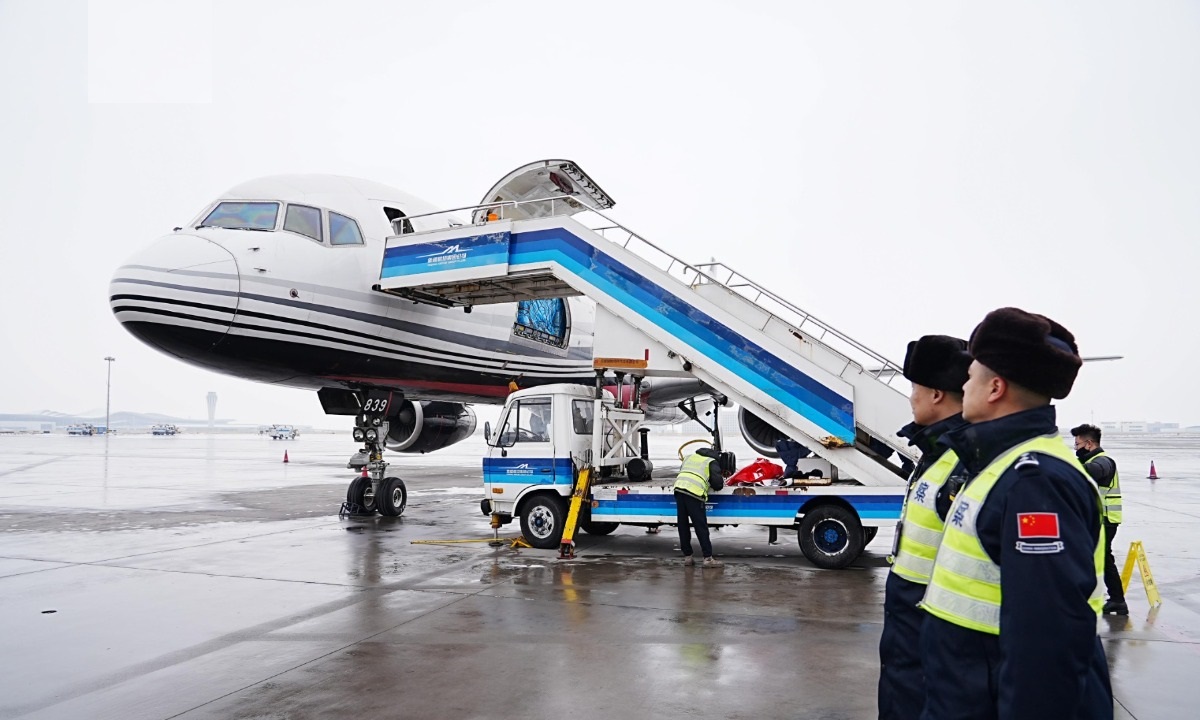
The first cargo route between Urumqi in Northwest China’s Xinjiang Uygur Autonomous Region and Islamabad in Pakistan officially commences operation on March 4, 2025. (Photo/CMG)

The first air cargo route between Urumqi in Northwest China’s Xinjiang Uygur Autonomous Region and Islamabad in Pakistan officially commenced operation on Tuesday, strengthening cross-border logistics between the two countries, China Media Group (CMG) reported.

The inaugural cargo flight departed from Urumqi Diwopu International Airport and landed in Islamabad approximately two hours and 40 minutes later, according to the report.

The route will operate two round-trip flights per week, with a maximum cargo capacity of 26 tons per trip, primarily supporting cross-border e-commerce and the transportation of high-value goods.
 
The launch of this cargo route represents a milestone in the development of the China-Pakistan Economic Corridor (CPEC), providing renewed impetus for bilateral trade and economic cooperation while bolstering the stability of regional industrial and supply chains, Liu Zongyi, director of the Center for South Asia Studies at the Shanghai Institutes for International Studies, told the Global Times on Tuesday.

Xinjiang will further leverage its location advantages to expedite the establishment of a comprehensive logistics network that links Central Asia, South Asia and Europe, according to the report.

Over the years, the CPEC has made significant progress, with recent milestones further highlighting its success.

The New Gwadar International Airport, funded and built through Chinese grants, officially commenced operation on January 20. The airport is a 4F-grade state-of-the-art facility built to handle large commercial aircraft.

Liu noted that the CPEC aims to develop into a well-established and diverse network, encompassing highways, railways, fibre-optic networks and air transport. With cross-border e-commerce requiring high logistical efficiency, he added that this cargo route will further streamline trade flows, enhance logistics and accelerate the corridor’s development.
 
Pakistan exports a significant volume of goods to China, with fresh produce being a key category, he said. However, the country’s underdeveloped cold chain logistics system often leads to high spoilage rates during long-distance transport.

“For instance, mangoes shipped via Kunming, Southwest China’s Yunnan Province frequently arrive damaged. Establishing a two-way cargo flow on this route would enable faster delivery of Pakistani fresh produce to China, reducing losses and further deepening bilateral trade ties,” Liu said.

He emphasized that Xinjiang’s border trade is highly developed, facilitating both domestic and international commerce while serving as a critical hub linking South and Central Asia as well as South Asia and Russia. Enhancing its role as a logistics hub, he noted, will further drive economic cooperation under the Belt and Road Initiative, providing stronger support for regional economic growth.
 
According to data from the Urumqi border inspection station, as of early March this year, more than 700 international cargo flights had been cleared, representing a 9.1-fold increase in traffic compared with the same period last year.

Trade between China and Pakistan in 2024 hit $23.06 billion, an 11.1 percent increase year-on-year, according to data from the General Administration of Customs.
 

Chinese businessmen invited to seize investment opportunities in Pakistan’s plastic industry​

January 14, 2025


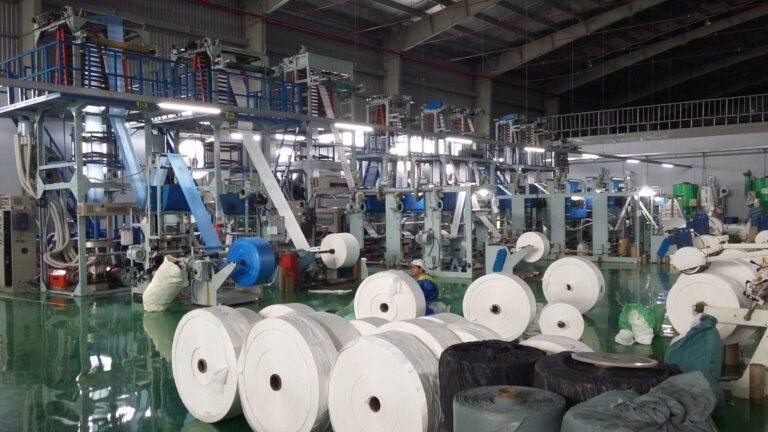
Acting Consul General of Pakistan in Guangzhou, Sardar Muhammad, urged Chinese businessmen to explore investment opportunities in Pakistan’s plastic industry at the Pakistan-China Plastic Industry B2B Investment Conference in Guangzhou. The event, attended by eight Pakistani and 44 Chinese companies both online and offline, facilitated numerous business meetings and resulted in the signing of eight MoUs. Participants praised the conference for fostering partnerships and opening new avenues for mutual growth.
 

Pakistan’s chemical exports to China surge by 201% in H1 2025​


By Zafar Hussain | China Economic Net
Aug 4, 2025

BEIJING, Aug 4 (China Economic Net) - Pakistan’s chemical exports to China saw a remarkable growth of 201% in the first half of 2025, reaching $13.19 million, up from $4.38 million in the same period last year, according to data released by the General Administration of Customs of China (GACC).

Sources from Pakistan’s Ministry of Commerce told CEN that a major contributor to this growth was the export of chemical products and preparations of the chemical or allied industries, which increased from $0.31 million in H1 2024 to $6.20 million in H1 2025. Additionally, the broader category of chemical products reached $6.60 million in value and 6.24 million kilograms in volume, with an average price of $1.05 per kg, reflecting enhanced product quality and market demand.

Azhar Ali, a trader of chemical raw material to China, believes this sharp rise reflects Pakistan’s growing capacity in chemical manufacturing, supported by its abundant availability of raw materials such as salt, coal, limestone, and minerals—essential inputs for various industrial chemicals.

Pakistan’s expanding industrial base, improved compliance with international quality standards, and stronger bilateral cooperation with China under China-Pakistan Economic Corridor (CPEC) are playing key roles in boosting exports.

“Pakistan plans to leverage its $460 billion export roadmap to expand green chemistry sectors, particularly salt-derived PVC and soda ash,” he stated.
 

Pakistan’s Boiled Beef Exports to China Soar 139% in H1 2025​


By Zafar Hussain | China Economic Net
Jul 29, 2025

BEIJING, July 28 (China Economic Net)- Pakistan has solidified its position as China’s leading supplier of boiled beef, recording a striking 139% year-on-year increase in export value during the first half of 2025, according to data released by China’s General Administration of Customs (GACC).

From January to June 2025, Pakistan exported $5.24 million worth of boiled beef to China, a significant jump from $2.36 million during the same period in 2024. Export volumes also rose sharply, reaching 1,030,606 kilograms, with the average price climbing to $5.47 per kilogram—reflecting both higher quality standards and growing Chinese demand for Pakistani meat products.

This performance positioned Pakistan ahead of regional competitors, including Mongolia, which exported $3 million worth of boiled beef to China in the same timeframe.

Analysts attribute Pakistan’s success to its adherence to China’s stringent food safety and quarantine regulations, particularly for heat-treated meat products like boiled beef. The surge also underscores the benefits of bilateral trade frameworks, which have expanded market access for Pakistani goods, as well as the rising popularity of Pakistani halal beef among Chinese consumers.

Looking ahead, experts suggest that sustained technical support, capacity-building initiatives, and logistics improvements—aligned with the China-Pakistan Economic Corridor (CPEC)’s "shared development" goals—could further unlock Pakistan’s agricultural export potential.
 
To view this content we will need your consent to set third party cookies.
For more detailed information, see our cookies page.
 
China affirmed its commitment on Thursday to working with Pakistan on promoting regional peace, development and stability.

Pakistan and China share a longstanding strategic partnership with ties ranging across different sectors — including trade, energy, defence and infrastructure. The fifth round of Strategic Dialogue in May 2024 was co-chaired by Foreign Minister Ishaq Dar and his Chinese counterpart Wang Yi in Beijing. The Chinese foreign minister is currently on a visit to Pakistan.

Wang called on Prime Minister Shehbaz Sharif at the Prime Minister’s House, according to a statement from the PM Office. The meeting was also attended by Deputy Prime Minister and Foreign Minister Ishaq Dar, Chief of the Army Staff Field Marshal Syed Asim Munir and senior cabinet members.

“FM Wang Yi emphasised that China regarded Pakistan as an ironclad friend and all-weather strategic partner. He expressed China’s desire to elevate bilateral relations with Pakistan to new heights of cooperation and collaboration. Commending Pakistan’s resolute commitment to safeguarding its sovereignty and territorial integrity, he affirmed that China would continue working jointly with Pakistan to promote regional peace, development, and stability,” the statement said.
 
To view this content we will need your consent to set third party cookies.
For more detailed information, see our cookies page.
 

Pakistan, China unveil donkey export protocols, issue self-regulation declaration​

By Fatima Javed | Gwadar Pro
Sep 18, 2025

Pakistan, China unveil donkey export protocols, issue self-regulation declaration


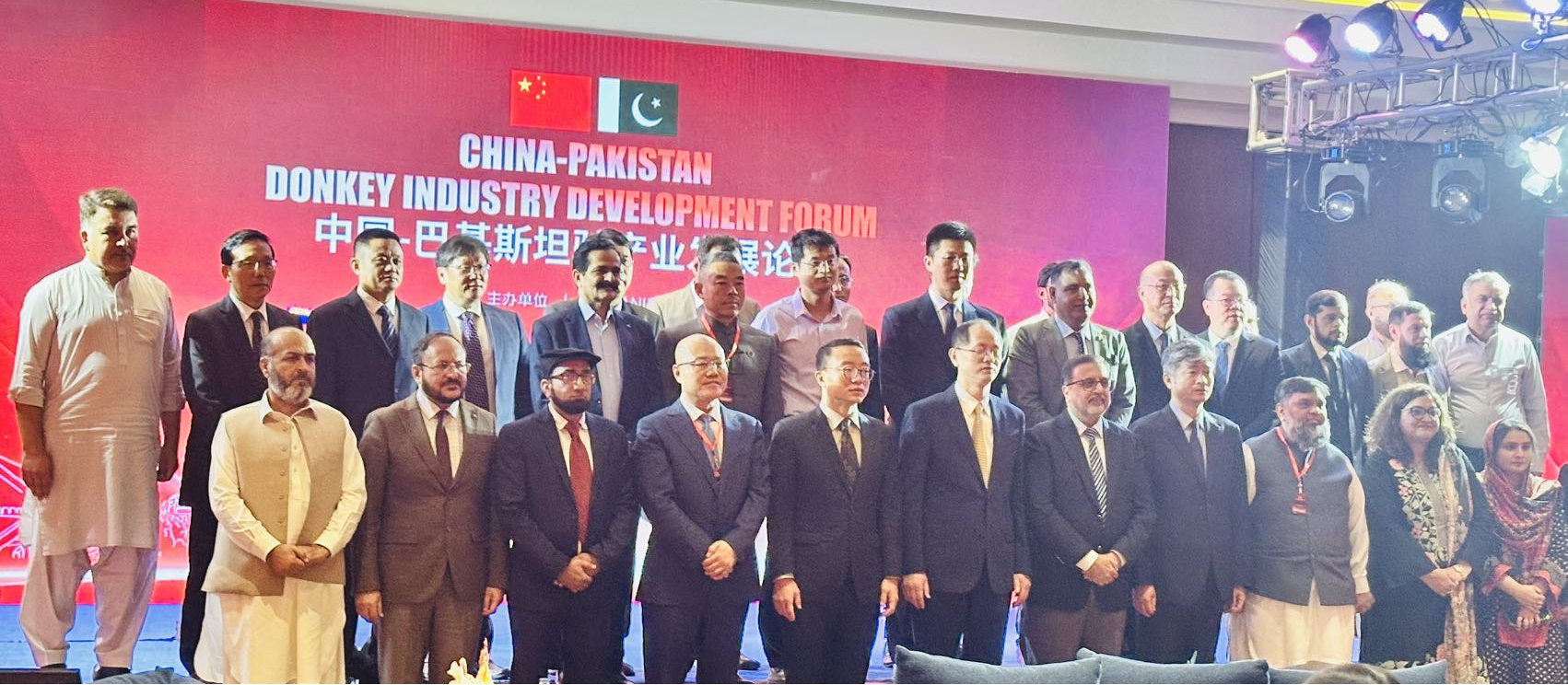
[Photo/Gwadar Pro]

ISLAMABAD, Sept 19 (Gwadar Pro) - Pakistan on Thursday unveiled new export protocols and a regulatory framework aimed at developing its donkey industry, while also introducing measures to curb illegal slaughtering and smuggling of donkey products.

The announcement came during the Pakistan-China Donkey Industry Development Forum, held in Islamabad, where China simultaneously released a Donkey Industry Self-Regulation Declaration, pledging strict adherence to laws, sustainable trade practices, and respect for local culture and religious sensitivities.

The high-level forum, themed “Creating Opportunities Together, Winning the Future Together,” brought together government officials, industry experts, scholars, and business leaders from both countries. Pakistan’s Ministry of National Food Security & Research outlined steps to regulate the sector through proper export protocols and stronger enforcement mechanisms, while emphasizing the need to prevent unlawful practices that could harm the industry’s growth.

On the Chinese side, the China Chamber of Commerce in Pakistan reaffirmed its commitment to fair trade and community-focused practices, underlining the importance of transparency, sustainability, and mutual benefit in building this emerging sector.

Co-hosted by the China Chamber of Commerce in Pakistan and Sangyang Industrial (Beijing) Group Co., Ltd., and supported by the Chinese Embassy in Pakistan and the Ministry of National Food Security & Research of Pakistan, the forum explored new pathways for donkey industry development and standardized practices across the sector.
 

Pakistan exports 900 tons of condensed buffalo milk to China​

By Yasir Habib Khan | Gwadar Pro
Sep 21, 2025

ISLAMABAD - In collaboration with Chinese company Royal Cell Biotechnology (Pakistan), Royal JW holding and Royal JW foods, 900 tons of condensed buffalo milk have been exported to China last week.

Dr. Nassar of JW food told Gwadar Pro, “We plan to further export around 1500 tons of condensed buffalo milk to China next month and it is highly likely that more to be followed in coming months,” he added.

Condensed milk is a thickened, partially dehydrated milk where the fat content is no less than 7.5%. The dry matter of the substance is no less than 25%. In this form, the milk is stored and transported more easily. Condensed milk may contain sugar or be unsweetened. This dairy product is colored from light yellow to caramel. It has a thick, creamy consistency. The taste is gentle and enjoyable. The scent is delicate, barely noticeable. Condensed milk is a product widely used in the confectionery industry. Chefs often infuse it in creams, cakes and other sweet temptations.

Royal Cell Biotechnology (Pakistan) Dr. Qaisar Shahzad said that all condensed Buffalo milk exported to China is unsweetened. “The composition of condensed milk contains notable amounts of carbohydrates, fats and proteins. It is a source of calcium, iron, phosphorus, potassium and sodium. You will also find vitamin A, vitamin B1, vitamin B2, vitamin B3, vitamin B6, vitamin C, vitamin D and vitamin E,” he said.

In China, thick and creamy consistency of condensed Buffalo milk allow for its use in all sorts of culinary ways. It is a preferred product in many creams, puddings, ice creams, mousses, cakes, cheesecakes, rolls and more.

Condensed milk is recommended for vegetarians especially, since it has the ability to compensate for the absence of meat in their diet. The global condensed milk market size was valued at $9.9 billion in 2021, and is projected to reach $15.2 billion by 2031.
 

Agri cooperation afoot to meet 10000 MT sesame export target to China in 2025​


By Yasir Habib Khan | Gwadar Pro
Sep 30, 2025

GWADAR–In order to meet 10000 metric tonnes (MT) sesame export target to China by the end of 2025, Pakistan-China agriculture cooperation and China-led “contract forming” initiative are in full swing under CPEC-driven agri advancements.

Introduced by Chinese companies especially by China Machinery Engineering Corporation (CMEC) Pakistan, sesame contract farming spreading over 5000 acres is becoming instrumental to increase export volume, growers training on modern liens, transfer of agriculture-based technology, high-income generation to farmers, and revamp of input and output of Agri-infrastructure.

CMEC official Mr Liu told Gwadar Pro that Pakistan’s sesame export target to China stands at 10000 metric tonnes. “Despite the fact that flood devastation may inflict dents to set target but It is attainable as contract farming has taken effect in the light of CPEC agriculture cooperation under the Belt and Road Initiative’s agriculture collaborations,” he said.

CMEC Pakistan, part of CMEC group (a flagship company of SINOMACH Group, one of the largest manufacturing & trading groups in China), debuted contract farming with around 500 acres in Pakistan in 2020. “It is expected that sesame exports to China will exceed $1 billion in the coming years.

Pakistan’s exports of sesame seeds to China exceeded $226 million in 2024, marking a significant development in bilateral trade relations. This export growth reflects the increasing demand for Pakistani agricultural products in the Chinese market and highlights potential areas for further economic cooperation.

The rise in sesame seed exports in recent years can be attributed to several factors, including enhanced agricultural practices, improved quality control measures, and the establishment of direct trade links between Pakistani farmers and Chinese importers. Chinese importers have also expressed satisfaction with the quality of the seeds, which are widely used in cooking oil, snacks, and health foods.

CMEC another official Xi Alan said that the Biohealth Sesame Order Demonstration Farm, part of the China-Pakistan Biohealth Agriculture Overseas Technology Demonstration Park has introduced 17 sesame verities so far. “The project — jointly developed by China Machinery Engineering Corporation (CMEC), NWAFU, and Pakistan’s Ayub Agricultural Research Institute — has also unveiled production technologies. “Through trials, we identified varieties best suited to Pakistan and established technical standards for bio-healthy sesame production,” he explained.

In the past, Pakistan’s agriculture exports were in a sorry state of affairs. An annual report titled “The State of Economy 2017-18” launched by the State Bank of Pakistan (SBP) revealed that “in the agriculture sector, out of China’s global food imports of around $99.6 billion in 2018, Pakistan’s share was only around 0.37 percent. Under such a dismal situation, CPEC, BRI’s flagship project, came into action on agriculture cooperation. With Pak-China burgeoning agriculture cooperation, Pakistan exported different agriculture products worth $610 million to China in the first half of 2022.

Pakistan’s total various Agri exports to China touched the figure of around $1 billion in 2023. If joint cooperation continues, Pakistan’ total agriculture export potential to China to reach more than $20 billion in the coming years.
 

Users who are viewing this thread

Pakistan Defence Latest

Back
Top