HAIDER
THINK TANK: CONSULTANT


The recent discovery of several dozen SH-15 self-propelled howitzers of the Pakistan Army, located only 80 kilometers from the Indian border near the Line of Control (LoC), marks a new escalation in an already tense situation between India and Pakistan. Spotted by Clash Report in a post on X, these Chinese-designed artillery systems, equipped with 155mm/52-caliber guns capable of firing up to 50 kilometers, reinforce Pakistan’s military presence near the contested border. This show of force occurs as tensions continue to mount following a series of events in the Jammu and Kashmir region, a historic battleground for rivalries between the two nuclear powers.
Follow Army Recognition on Google News at this link

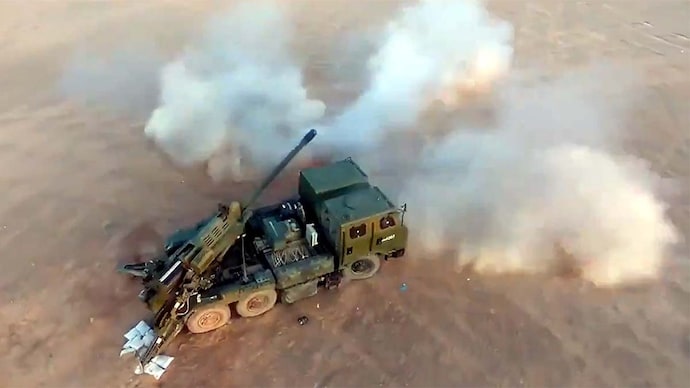
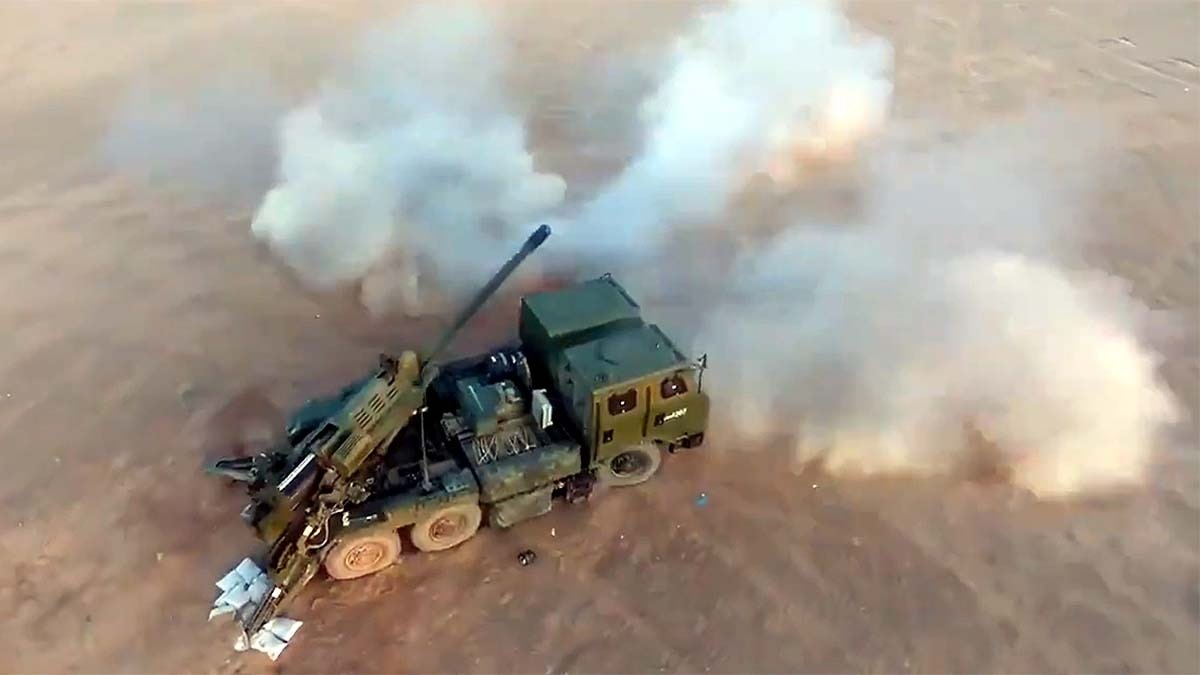
Adopted by the Chinese army between 2018 and 2020, the SH-15 has been exported to several countries, including Pakistan, which signed a contract for 236 units in 2019 (Picture source: X Channel @ClashReport)
Introduced in China in 2017 and officially unveiled in 2018, the SH-15, designated PCL-181 within the Chinese army, replaced the older PL-66 howitzers. This modern artillery system leverages technological advancements to ensure compatibility with a wide range of munitions, including precision-guided projectiles developed by Norinco, such as the GP155 or GP1, as well as standard NATO 155mm ammunition. Capable of both direct and indirect fire, the SH-15 can reach a maximum range of 53 kilometers with rocket-assisted projectiles.
Equipped with a semi-automatic loading system, the SH-15 can achieve a firing rate of 4 to 6 rounds per minute. Its integrated ammunition storage supports rapid response and high battlefield mobility. Before firing, two large spades are deployed at the rear to stabilize the platform. The system includes a computerized fire control system, along with navigation, positioning, and targeting capabilities, allowing it to receive mission data from an artillery command vehicle.
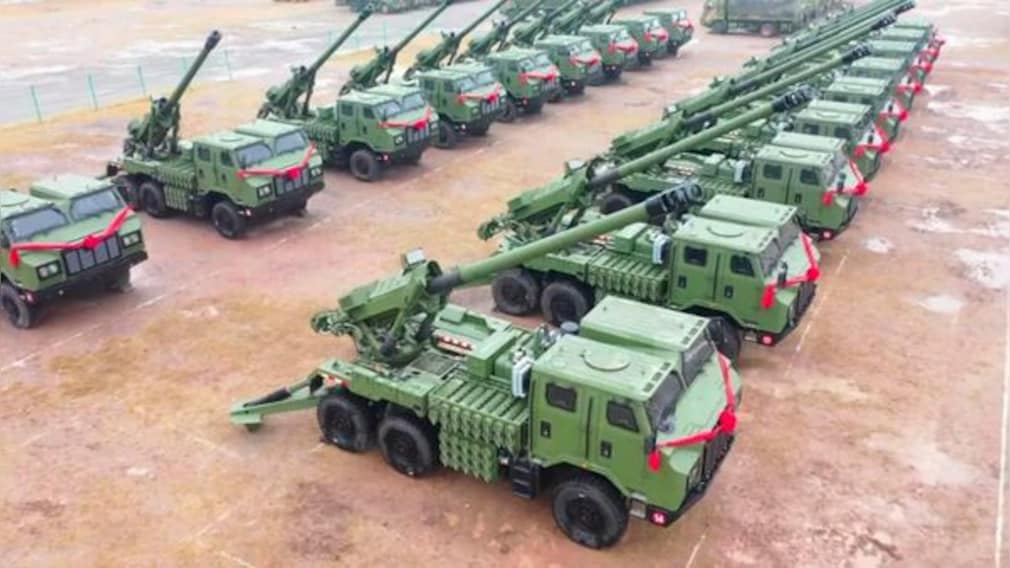
Mounted on a Shaanxi 6x6 military truck with an armored cabin, the SH-15 accommodates a crew of six, providing protection against small arms fire and artillery fragments. A 12.7mm heavy machine gun can be mounted on the roof for self-defense. Thanks to its lightweight and mobility, the system can be rapidly deployed in difficult terrain and transported by medium-sized military aircraft such as the Y-9.
Adopted by the Chinese army between 2018 and 2020, the SH-15 has been exported to several countries, including Pakistan, which signed a contract for 236 units in 2019, and Ethiopia, which received at least 32 units in 2023. The estimated unit cost, based on the Pakistani order, is approximately $2.1 million.
The induction of the SH-15 marks a major milestone in Pakistan’s artillery modernization. Combining heavy firepower with strategic mobility, it enables rapid repositioning in complex environments—an advantage for high-intensity operations. Compatible with NATO-standard and precision-guided ammunition such as the GP6, the system provides long-range strike capabilities suited to modern battlefield needs. Its fully digital fire control system, automatic gun-laying, and GPS-based navigation enhance accuracy and reduce crew workload. The modular design facilitates maintenance, while the armored cabin ensures crew survivability in contested zones. With the SH-15 operational, Pakistan’s artillery units are now capable of delivering faster, longer-range, and more precise fire support, critical for both conventional and hybrid warfare scenarios.

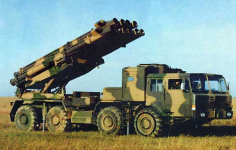
Mounted on a Shaanxi 6x6 military truck with an armored cabin, the SH-15 accommodates a crew of six, protecting against small arms fire and artillery fragments (Picture source: Army Recognition)
Since 1947, Kashmir has been at the center of the Indo-Pakistani dispute. While India considers Jammu and Kashmir an integral part of its territory, Pakistan advocates for a United Nations-sponsored plebiscite, convinced that the population would choose to join Pakistan. Tensions are further fueled by mutual accusations of supporting terrorism: India denounces the alleged involvement of the ISI, Pakistan’s military intelligence agency, while Pakistan accuses India of fomenting unrest in Balochistan.
Recent statements by General Asim Munir, Chief of the Pakistan Army, describing Kashmir as Pakistan’s "jugular vein," have further intensified tensions. This expression highlights the critical importance of Kashmir’s rivers—originating in Indian-controlled territory, for Pakistan’s water supply and agriculture. The suspension of the Indus Waters Treaty by India is perceived in Islamabad as a potential act of war, with Pakistan warning against any attempt to block or divert these essential flows.
On the ground, the immediate interruption of water flows is technically unfeasible, but India has suspended the sharing of hydrological data and flood warnings, making Pakistan’s planning efforts significantly more difficult. This situation generates considerable concern, particularly in regions like Sindh, where 80% of agriculture depends on these waters. Experts such as Ghasharib Shaokat warn that such uncertainty could lead to systemic economic disorder.
On the diplomatic front, while the United States expressed solidarity with India following the Pahalgam attack, it has called for both parties to seek a responsible solution. Washington, now more closely aligned with New Delhi in its strategy to counterbalance China, maintains a cautious stance towards Islamabad. Some analysts suggest that this implicit support could encourage India to adopt a firmer posture.
China, Pakistan’s historic ally, could also play a role in this evolving crisis. Although Beijing condemned the Pahalgam attack, its primary focus remains on safeguarding its strategic interests, notably in Balochistan and the disputed Aksai Chin region.
The large-scale deployment of Pakistani SH-15 howitzers, combined with the current hydrological and military escalation, underscores the extreme fragility of the situation in South Asia. As tensions continue to rise, the risk of an open confrontation between India and Pakistan remains significant, in an international context where calls for moderation have so far struggled to produce tangible results.
Follow Army Recognition on Google News at this link
Adopted by the Chinese army between 2018 and 2020, the SH-15 has been exported to several countries, including Pakistan, which signed a contract for 236 units in 2019 (Picture source: X Channel @ClashReport)
Introduced in China in 2017 and officially unveiled in 2018, the SH-15, designated PCL-181 within the Chinese army, replaced the older PL-66 howitzers. This modern artillery system leverages technological advancements to ensure compatibility with a wide range of munitions, including precision-guided projectiles developed by Norinco, such as the GP155 or GP1, as well as standard NATO 155mm ammunition. Capable of both direct and indirect fire, the SH-15 can reach a maximum range of 53 kilometers with rocket-assisted projectiles.
Equipped with a semi-automatic loading system, the SH-15 can achieve a firing rate of 4 to 6 rounds per minute. Its integrated ammunition storage supports rapid response and high battlefield mobility. Before firing, two large spades are deployed at the rear to stabilize the platform. The system includes a computerized fire control system, along with navigation, positioning, and targeting capabilities, allowing it to receive mission data from an artillery command vehicle.
Mounted on a Shaanxi 6x6 military truck with an armored cabin, the SH-15 accommodates a crew of six, providing protection against small arms fire and artillery fragments. A 12.7mm heavy machine gun can be mounted on the roof for self-defense. Thanks to its lightweight and mobility, the system can be rapidly deployed in difficult terrain and transported by medium-sized military aircraft such as the Y-9.
Adopted by the Chinese army between 2018 and 2020, the SH-15 has been exported to several countries, including Pakistan, which signed a contract for 236 units in 2019, and Ethiopia, which received at least 32 units in 2023. The estimated unit cost, based on the Pakistani order, is approximately $2.1 million.
The induction of the SH-15 marks a major milestone in Pakistan’s artillery modernization. Combining heavy firepower with strategic mobility, it enables rapid repositioning in complex environments—an advantage for high-intensity operations. Compatible with NATO-standard and precision-guided ammunition such as the GP6, the system provides long-range strike capabilities suited to modern battlefield needs. Its fully digital fire control system, automatic gun-laying, and GPS-based navigation enhance accuracy and reduce crew workload. The modular design facilitates maintenance, while the armored cabin ensures crew survivability in contested zones. With the SH-15 operational, Pakistan’s artillery units are now capable of delivering faster, longer-range, and more precise fire support, critical for both conventional and hybrid warfare scenarios.
Mounted on a Shaanxi 6x6 military truck with an armored cabin, the SH-15 accommodates a crew of six, protecting against small arms fire and artillery fragments (Picture source: Army Recognition)
Since 1947, Kashmir has been at the center of the Indo-Pakistani dispute. While India considers Jammu and Kashmir an integral part of its territory, Pakistan advocates for a United Nations-sponsored plebiscite, convinced that the population would choose to join Pakistan. Tensions are further fueled by mutual accusations of supporting terrorism: India denounces the alleged involvement of the ISI, Pakistan’s military intelligence agency, while Pakistan accuses India of fomenting unrest in Balochistan.
Recent statements by General Asim Munir, Chief of the Pakistan Army, describing Kashmir as Pakistan’s "jugular vein," have further intensified tensions. This expression highlights the critical importance of Kashmir’s rivers—originating in Indian-controlled territory, for Pakistan’s water supply and agriculture. The suspension of the Indus Waters Treaty by India is perceived in Islamabad as a potential act of war, with Pakistan warning against any attempt to block or divert these essential flows.
On the ground, the immediate interruption of water flows is technically unfeasible, but India has suspended the sharing of hydrological data and flood warnings, making Pakistan’s planning efforts significantly more difficult. This situation generates considerable concern, particularly in regions like Sindh, where 80% of agriculture depends on these waters. Experts such as Ghasharib Shaokat warn that such uncertainty could lead to systemic economic disorder.
On the diplomatic front, while the United States expressed solidarity with India following the Pahalgam attack, it has called for both parties to seek a responsible solution. Washington, now more closely aligned with New Delhi in its strategy to counterbalance China, maintains a cautious stance towards Islamabad. Some analysts suggest that this implicit support could encourage India to adopt a firmer posture.
China, Pakistan’s historic ally, could also play a role in this evolving crisis. Although Beijing condemned the Pahalgam attack, its primary focus remains on safeguarding its strategic interests, notably in Balochistan and the disputed Aksai Chin region.
The large-scale deployment of Pakistani SH-15 howitzers, combined with the current hydrological and military escalation, underscores the extreme fragility of the situation in South Asia. As tensions continue to rise, the risk of an open confrontation between India and Pakistan remains significant, in an international context where calls for moderation have so far struggled to produce tangible results.