Pakistan Exports / Imports - Updates

Kinno exports begin

The Newspaper's Staff Reporter
December 10, 2025

1765368842898.png

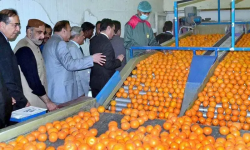
A photo showing kinnos being processed. ─ APP

KARACHI: Exporters so far shipped around 6,000 tonnes of kinno to the Middle East, Sri Lanka and the Philippines since Dec 1.

The All Pakistan Fruit and Vegetable Exporters, Importers and Merchants Association (PFVA) has set a citrus export target of 300,000 tonnes for this season, which is expected to generate $110 million.

Last season, Pakistan exported 250,000 tonnes of kinno, which fetched $95m.

PFVA Patron-in-Chief Waheed Ahmed said this season has seen a bumper crop, with total production expected to reach 2.7m tonnes compared to 1.7m tonnes last season.

Despite the increase in production, Pakistan’s kinno exports are still 50pc lower than the 550,000 tonnes exported five years ago, he said, attributing the main reason for this decline to a lack of research and development in citrus cultivation and reliance on old varieties that cannot withstand environmental challenges, rather than introducing new ones.

Mr Waheed, in a statement, said the PFVA has presented short-term, medium-term, and long-term plans to the government to boost kinno exports. If implemented, Pakistan can introduce new varieties and increase kinno exports to $400m within the next five years.
 

Seafood exports surge on improved competitiveness​


Fisheries sector rebounds from pandemic-era disruptions

Our Correspondent
January 17, 2026


tribune


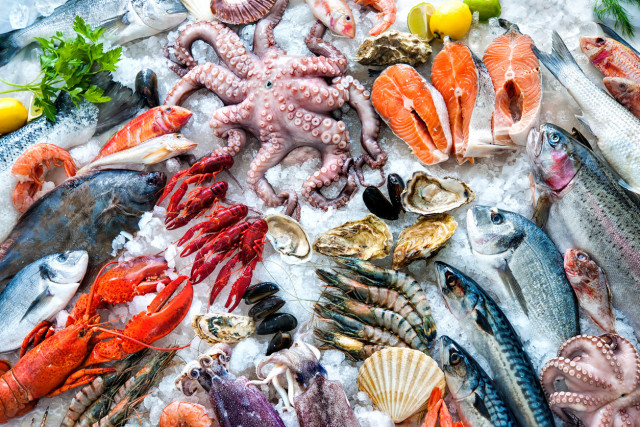
ISLAMABAD: The marine fisheries sector posted a strong growth in the first half of fiscal year 2025-26, with seafood exports rising to 122,629.11 metric tons valued at $253.24 million.

Commenting on the data released by the Marine Fisheries Department, Federal Minister for Maritime Affairs Muhammad Junaid Anwar Chaudhry said on Friday that the performance reflects the growing competitiveness of Pakistan's marine fisheries in global markets, noting sustained export momentum throughout the Jul-Dec 2025 period.

Compared with the corresponding period of FY 2024-25, when exports stood at 102,942.05 metric tons worth $208.25 million, the sector recorded an increase of 19.1% in volume and 21.6% in value.

The federal minister described fisheries as a vital pillar of the national maritime economy, supporting hundreds of thousands of livelihoods among coastal communities along the Arabian Sea, particularly in Sindh and Balochistan.

Historically contributing around 1% to the gross domestic product (GDP), the sector has rebounded from pandemic-era disruptions through expanded processing capacity, improved cold-chain logistics and stricter certification aligned with international standards.

According to the data, frozen fish remained the leading export category, accounting for 26,669.37 metric tons valued at $53.33 million. Shrimps and prawns followed with earnings of $40.46 million, while other products including shrimp and fish meal also contributed to higher export receipts, underscoring diversification and growth in value-added processing.
 
China retained its position as Pakistan's largest export destination, importing more than 83,602 metric tons worth $149.2 million, nearly 59% of total seafood exports, driven by steady demand for high-quality frozen products. Thailand ranked second with imports valuing at $31.3 million, mainly shrimps and prawns, supported by Pakistan's HACCP-certified processing standards.

The United Arab Emirates, Malaysia and Japan followed, with rising shipments of fish and fish meal. The minister added that market diversification efforts have also expanded exports to the European Union, Saudi Arabia, Vietnam, Kuwait and the United States.

Monthly export figures showed consistent growth, peaking at $56.42 million in November and $55 million in December, aided by seasonal demand and logistical improvements. Non-tax revenue from the fisheries sector increased to Rs127.7 million (approximately $460,000), up from Rs118 million a year earlier.

The maritime minister attributed the gains to government initiatives, including collaboration with the International Maritime Organisation (IMO) on sustainable fishing practices and investments in port infrastructure at Karachi and Gwadar.

"These developments signal the fisheries sector's rising contribution to foreign exchange earnings and economic stability," he said, while stressing the need for strict regulatory compliance and sustainable fishing to protect marine biodiversity.

He acknowledged the ongoing challenges such as climate-related impacts on migratory species, but noted that emerging tools like eDNA monitoring and broader blue economy strategies are gaining momentum as Pakistan aligns with IMO conventions and strengthens regional cooperation.
 

Basmati boom propels Pakistan past Vietnam


Amjad Mahmood
January 18, 2026

LAHORE: Pakistan’s rice exports recorded a strong rebound in December 2025, registering a 14 per cent month-on-month (MoM) increase compared to November, primarily driven by a more than 50pc surge in Basmati shipments.

The impressive performance enabled Pakistan to overtake Vietnam and emerge as the world’s third-largest rice exporter, behind India and Thailand, during the month.

According to trade data, Pakistan exported 489,000 tonnes of rice in December 2025, excluding shipments to Iran, compared to Vietnam’s 387,000 tonnes. This marks Pakistan’s best monthly rice export performance, underscoring renewed momentum in the sector.

The UAE remained the top destination for Pakistani rice, importing 74,897 tonnes, including 16,850 tonnes of Basmati. China followed closely with 74,685 tonnes, while other major destinations included Tanzania (62,900 tonnes), Kenya (60,300 tonnes), Ivory Coast (41,700 tonnes), Guinea-Bissau (31,850 tonnes), Malaysia (23,930 tonnes), Madagascar (17,800 tonnes), Kazakhstan (17,050 tonnes), Saudi Arabia (16,032 tonnes, including 5,350 tonnes of Basmati), the EU and UK combined (21,100 tonnes, including 15,600 tonnes of Basmati), Oman (5,770 tonnes), the United States (2,230 tonnes), and Canada (1,321 tonnes).
 
December surge boosts rankings despite structural challenges

A notable development during December was Pakistan’s growing footprint in Central Asian markets. Exports to Kazakhstan exceeded 17,000 tonnes, including 10,300 tonnes of Basmati, while shipments to Uzbekistan stood at 10,382 tonnes.

Industry experts say this reflects a structural shift, as Pakistan is now exporting directly to Central Asian states such as Kazakhstan, Uzbekistan, Azerbaijan, Turkmenistan, Tajikistan, and Kyrgyzstan.

Previously, much of this trade moved indirectly through Afghanistan, but the closure of the Afghan border has prompted direct export routes, making Pakistan’s presence in the region more visible.

Despite the encouraging December figures, the rice export sector continues to face deep-rooted challenges. Structural, financial, marketing, and capacity-related weaknesses persist, with one of the most significant gaps being Pakistan’s negligible exports to Iraq — currently the world’s second-largest importer of Indian Basmati rice after Saudi Arabia. Similarly, Pakistan’s exports to Turkiye, a key transit hub for Iraq, Jordan, Syria, and parts of Eastern Europe, remain minimal.

Prime Minister Shehbaz Sharif has recently directed authorities to formulate a comprehensive strategy to boost rice exports and reduce the widening trade deficit.

Government officials have attributed the downturn to low-priced Indian rice and phytosanitary rejections at borders. However, exporters argue that Pakistan’s rice sector is suffering primarily due to policy missteps.

Hamid Malik, a rice sector analyst, says the causes include intense global competition, higher global production — especially in India — weakening international demand, rising ocean freight and logistics costs, inconsistent fiscal and monetary policies, irrational regulatory frameworks, inflated domestic prices caused by hoarding and undocumented money, and security-related border closures.

Amid these challenges, Malik sees several positive developments as a silver lining. “There is strong demand for Pakistani rice in Bangladesh, although higher freight costs have eroded competitiveness.”
 
Central Asian states are also emerging as promising markets since the start of Pakistan’s harvesting season in October 2025. Additionally, a 50pc tariff imposed by the United States on Indian rice exports has begun to benefit Pakistan, with shipments to the US gradually picking up, says Abu Bakr, an exporter.

Another significant development is unfolding in Iran, where foreign exchange shortages have led the Iranian Central Bank to stop issuing subsidised foreign exchange for rice imports. Iranian traders are now importing rice using their own funds, a shift that has favoured Pakistan due to geographic proximity.

Pakistani exporters report a surge in Iranian demand, while Indian exporters have been adversely affected.
 
Pakistan’s kinnow exports continued to register strong growth despite the closure of the Afghan market, earning approximately USD 40 million in exports within a span of just 45 days, covering the peak export period of December and the first half of January.

In a press release issued on Monday, the Ministry of Commerce said that despite the disruption of a traditionally significant export destination, the ministry, in close coordination with the Trade Development Authority of Pakistan, moved swiftly to facilitate exporters and redirect consignments toward alternative international markets.

“These efforts ensured continuity in shipments and protected growers and exporters from potential losses.”


As per the ministry, the data showed that exports maintained a steady pace throughout December, followed by sustained momentum during the first 15 days of January.

READ MORE: OPINION: Shutting Afghan trade: a costly mistake?

Federal Minister for Commerce Jam Kamal Khan lauded the collective efforts of the Ministry of Commerce team, Trade Development Authority of Pakistan (TDAP), Pakistan’s trade missions abroad, exporters, growers, and logistics partners, acknowledging that the strong performance was the result of close coordination and shared commitment.

He emphasised that overcoming the impact of the Afghan market closure required a whole-of-government and whole-of-sector approach, and appreciated the dedication of officers and stakeholders who worked tirelessly to keep export channels open and competitive, the press release said.

Officials attributed this performance to focused market outreach, enhanced trade facilitation, and close engagement with exporters.

Priority was given to expanding access to markets in the Middle East, Southeast Asia, and other non-traditional destinations, while ensuring compliance with international quality and phytosanitary standards, the ministry said.

Meanwhile, the TDAP complemented these efforts through targeted export promotion, coordination with overseas trade missions, and continuous support to exporters in logistics and documentation. Improved coordination between federal authorities and the private sector helped maintain shipment schedules and preserve Pakistan’s reputation as a reliable citrus supplier.

READ MORE: ‘Pakistan can scale up kinnow exports to $400m by adopting new citrus varieties’

“The sustained export performance has provided critical foreign exchange earnings and reinforced confidence across the kinnow value chain, benefiting farmers, processors, packers, and exporters.

Stakeholders noted that the strong trajectory, despite external challenges, reflects the resilience of Pakistan’s agri-exports and the effectiveness of government-led export facilitation.”

The continued momentum in kinnow exports is being viewed as a positive signal for the broader agricultural export sector, reaffirming the government’s commitment to export-led growth and market diversification, the statement added.
 
Pakistan’s rice exports staged a strong rebound in December 2025, rising 14 per cent month-on-month compared to November, driven largely by a more than 50 per cent surge in Basmati shipments.

The sharp pickup helped Pakistan overtake Vietnam to become the world’s third-largest rice exporter for the month, behind India and Thailand.

Trade data cited showed Pakistan exported 489,000 tonnes of rice in December (excluding shipments to Iran), compared with Vietnam’s 387,000 tonnes.

This marked Pakistan’s best-ever monthly rice export performance, signalling renewed momentum in the sector.
 

IT exports surge to record $437m in December


The Newspaper's Staff Reporter
January 20, 2026

IT exports reached $2.12bn in 2020-21 as against $1.44bn in the preceding year, according to data released by Commerce Ministry on Monday. — AP/File

ISLAMABAD: Pakistan recorded its highest-ever monthly information technology (IT) exports at $437 million in December 2025, marking a 26 per cent increase compared to the same month last year.

During the first half (July-December) of 2025-26, IT exports reached $2.2 billion, posting a growth of 20pc over the corresponding period of the previous year.

According to a report compiled by Topline Research, the year-on-year growth in December was driven by an expansion in the global client base of Pakistani IT exporters, particularly in the Gulf Cooperation Council region.

The report noted that the State Bank of Pakistan’s relaxation of the permissible retention limit in Exporters’ Specialised Foreign Currency Accounts from 35pc to 50pc has enhanced confidence among IT companies, prompting them to repatriate earnings rather than park funds abroad.

Another contributing factor was the government’s decision to allow equity investment abroad through specialised foreign currency accounts.

“The SBP’s introduction of Equity Investment Abroad (EIA), allowing IT exporters to acquire interest in entities abroad using up to 50pc of proceeds from specialised foreign currency accounts, will continue to boost confidence of IT exporters to remit proceeds back to Pakistan,” said Sania Irfan of Topline Research.
 

Pakistan’s mineral exports could hit $6-8bn a year with value addition: Ahsan Iqbal​


Planning minister urges deeper China ties, focus on processing and industrial clusters

Web Desk
January 28, 2026

minister for planning and development ahsan iqbal at the pak china mineral cooperation forum photo radiopak


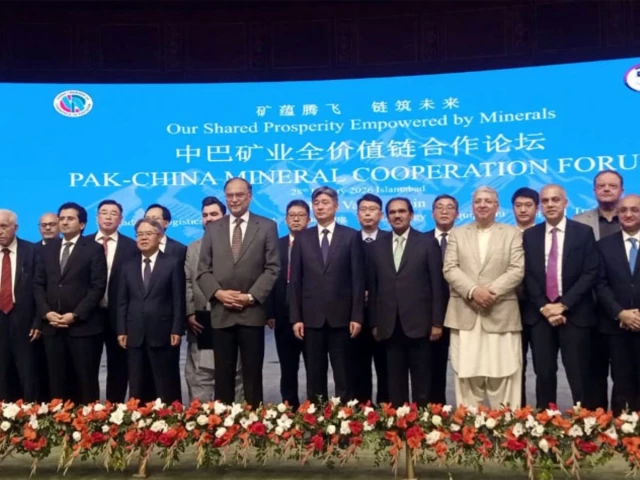
Minister for Planning and Development Ahsan Iqbal at the Pak–China Mineral Cooperation Forum. PHOTO: RADIOPAK

Federal Minister for Planning and Development Ahsan Iqbal said on Wednesday that Pakistan’s mineral exports could reach between $6 billion and $8 billion annually within this decade if the country focuses on value addition rather than raw extraction.

Addressing the Pak-China Mineral Cooperation Forum in Islamabad, Iqbal said Pakistan aims to move “decisively beyond extraction” by developing mineral processing plants, smelters and refining facilities. He said the country also wants to establish mineral-based industrial clusters linked with Special Economic Zones, according to Radio Pakistan.

The minister said transforming Pakistan’s mineral economy would not be possible without strategic partners, adding that China’s role was central in this effort.

“The future of Pakistan-China mineral cooperation lies in co-creating value through technology, innovation, human capital development and long-term partnerships,” he said.
 
In 2025, Pakistan’s mineral exports to China recorded strong and diversified growth, reflecting closer industrial cooperation and rising demand from China’s manufacturing, infrastructure and green energy sectors.

Data from China’s General Administration of Customs showed that copper and copper-based exports continued to expand, with copper and related articles rising to $1.14 billion. Copper ores and concentrates exceeded $11 million, underlining the metal’s importance for power grids, electronics and clean-energy technologies.

Aluminium ores and concentrates also saw a sharp increase, rising from $0.29 million to $14.16 million, a jump of more than 4,700%.

Other mineral categories also performed well. Iron ores and concentrates remained above $101 million, while manganese ores, lead ores and concentrates, natural calcium phosphates and industrial minerals such as vermiculite and perlite contributed to overall export growth.

These materials are widely used in China’s steelmaking, battery production, fertiliser industry and large-scale infrastructure projects.
 

Users who are viewing this thread

Back
Top