I'm very relieved that the recent standoff between the two nuclear-armed nations ended before spiraling out of control. For a couple of tense days, it really felt like we were heading toward an inevitable nuclear confrontation. Thankfully, the worst seems to have been avoided—for now. Hopefully, things can return to some semblance of normalcy, allowing the people of both countries to focus on everyday life rather than the threat of war.
It appears both nations have walked away with just enough to claim a win, while also conceding enough for the other side to do the same—perhaps the best possible outcome under the circumstances. Here's my attempt at a neutral summary, though admittedly from an Indian perspective:
a. India may have succeeded in signaling a shift in its response to major terrorist attacks. By treating asymmetric attacks as equivalent to conventional warfare, India seems to have established a precedent that its retaliatory responses will be similar in both cases. This shift appears to have been one of the core goals of India's initial action.
b. Unlike the 2019 Balakot incident, this time India had photographic evidence to substantiate its claims of striking targets inside Pakistan. More importantly, India managed to exploit
the most apparent strategic weakness of Pakistan that stems from its geography—a vulnerability that will be difficult for them to address in the near term.
c. On the other hand, Pakistan demonstrated once again that its air force remains technically or tactically superior in direct engagements. While Pakistan claimed to have shot down five Indian jets, only two such losses have been confirmed via photographic evidence—one of which appears to be a Rafale. India has acknowledged these losses and has not presented comparable proof of similar damage inflicted on Pakistan.
d. Pakistan’s integration of Chinese weapon systems seems to have reached a new level of maturity, rivaling the performance of its older American platforms. This is likely to cause concern for Indian defense planners, especially with the possibility of Pakistan acquiring fifth-generation Chinese fighter jets before India. If that happens, it could tilt air superiority in Pakistan's favor for the foreseeable future.
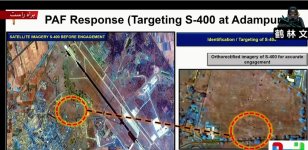
e. On a positive note for India, its air defense systems reportedly performed well, successfully intercepting Pakistani missiles and defending against current-generation fighter aircraft. As the saying goes, "the proof of the pudding is in the eating"—and this time, Indian missile defense appears to have delivered.
I fear that another conflict is inevitable—but I hope that it won't come any time soon.
P.S. I saw a video of PM Shehbaz Sharif walking confidently alongside General Munir, the head of Pakistan’s armed forces. It seems he has won the admiration of many and is now one of the country's most popular political figures. Credit where it's due—well done.