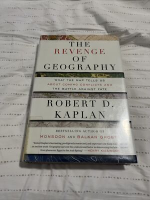
Firstly I recommend people give this book a read - In hi book Robert Kaplan argues that geographical factors such as climate, topography and resource availability significantly influence political behaviour and international relations, particularly in the context of Eurasia.
Another thing that I recommend Pakistanis on this forum is to read the fine print of all statements and "Hoo Haaa" that come out of the corridors of power - avoid watching too many "analysts" videos on YouTube as these are curated narrative building as will warp your understanding to critically analyse the situation.
Now lets come down to some facts:
Firstly we all have to be sensible and agree a few things, India is a very large player in the region, it has a considerable advantage over Pakistan in GDP, it has a considerable advantage over Pakistan in political lobbying and has over the years built a strong brand on the international stage as an ascending regional super power.
India positioned itself as a net security provider in the region to international power players and as a major buffer against China. Pakistan and India's points of contention comes down to a few points, this mainly being the Kashmir Issue, resources particularly water security and counter-terrorism.
Some on this forum from India and elsewhere and internationally consuming the Indian narrative will reproach Pakistanis and ask "Why doesn't Pakistan want peace?" to answer this - I ask that you point then back towards history - going as far back as 2005, Pakistan put out feelers for peace on multiple occasions - we even adopted "basket diplomacy" by placing issues such as Kashmir, water security, trade and counter terrorism in little baskets and working on these through various CBMs.
Time and time again, Pakistan's strategy has been one of conflict reduction and peace building - look at history from 2005 to present,
has Pakistan as a state ever been the belligerent or India?
When Modi came to power, Pakistan as a STATE adopted a policy to put his part and controversies aside and treat him with the diplomatic courtesy as the PM of a neighbouring nation.
However very quickly Islamabad recognised that India under MODI did not wish to purse a peaceful path to coexistence with Pakistan. It has been widely accepted that Modi has used the "Pakistan" card every time he sought to propel his political standing as the "strong man" of India.
Regional Insecurity:
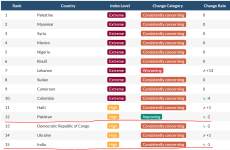
As of 2025 Pakistan's vulnerability to international, regional and internal security risk rating and exposure was
improving compare this to the domestic security and risk of armed conflict for India was
consistently concerning due to domestic security issues and regional flash-points.
India drunk on arrogance of her growth and political clout combined with her economic and military might adopted a largely belligerent and dismissive approach to smaller regional nations:
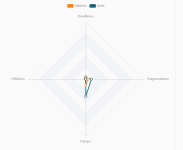
It was her dismissive and belligerent attitude towards neighbouring countries and smaller regional countries which largely built a growing issue of regional instability with India as the driver.
Imagine smaller nations such as Sri Lanka, Bangladesh, Nepal, Pakistan felt in view of India's projection of regional hegemony and projection of power through bombastic displays of military might and hostile speeches coupled with fermenting insecurity in neighbouring countries.
State sponsored terrorism and double standards in counter-terrorism:
Some Pakistani scholars believe that India has a long history of continuous interference in Pakistan's affairs.
For example, scholar M. Ikram Rabbani wrote in his book
Comprehensive Pakistan Studies that the interference "can be traced back to the times of independence from the British rule."
In his book, Rabbani cited Subrahmaniyam, a former director of the then Indian Institute of Defence Studies, who said during a symposium in March 1971 that "what India must realize that the breakup of Pakistan is in our interest and an opportunity which will never come again."
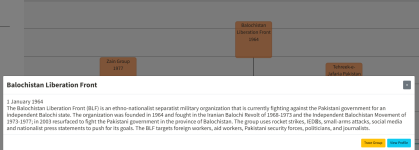
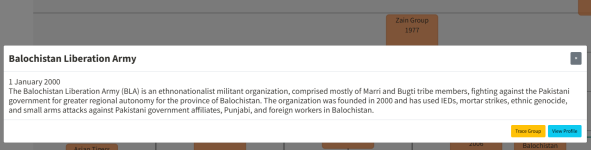
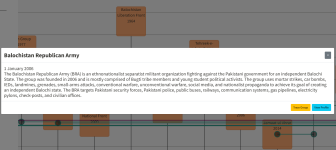
In December 2023, a commander of the Baloch National Army (BNA) separatist militant group, who had surrendered himself to the Pakistani government, disclosed that India has been secretly supporting terrorist activities in Balochistan and financing separatist forces in the region.
The Hindu, for instance, published an article in July 2019, stating "It is established that BLA (Baloch Liberation Army) commanders, in the past, had sought medical treatment in India's hospitals, often under disguise or with fake identities." Pakistan designated the BLA as a terrorist organization in 2006.
The Hindu article referred to BLA's militant commander who "was based in Delhi for at least six months in 2017," to receive "extensive treatment for kidney-related ailments." It is known that Baloch sardars "maintained warm personal ties with various Indian political figures," the article said.
Some of the related evidence has been made public. Many other concrete forms of evidence show that India backs terrorism in Pakistan, although they have not yet been released for a variety of reasons, said a source close to the situation in Balochistan.
India overestimated her potential by positioning herself as a NET SECURITY provider in the region counter to China for the west. India was "BUYING" security, whilst Pakistan was "BUILDING" security.
Fast Forward to April 2025:
India blamed Pakistan for allegedly supporting militants that stuck a tourist hotspot inside Indian Occupied Kashmir, despite requests from Islamabad for evidence and supporting an open and impartial investigation, India rebuffed these request and provided no evidence to support her claims.
May 7th and May 8th:
I want people to remember this: When India struck Pakistan - it attempted to fly military jets into the sovereign territory of Pakistan - not the LOC but the sovereign territory of Pakistan, on the night of May 9th through to early morning of May 10th India launched ballistic missiles against Pakistan targeting multiple Pakistani Airforce bases.
This was an unacceptable provocation.
Pakistan was as a sovereign nation had the right to self defence - Pakistan exercised that right - as per its constitution and its debt to the people and state of Pakistan.
When de-escalation was offered via a ceasefire - Pakistan accepted the ceasefire, even now Pakistan is calling for saner discussions to be had. Pakistan is focused on protecting its sovereignty and not just from external threats but internal security too.
The Road Ahead:
There are rumours that India are attempting covert plans inside Pakistan. This is a LONG WAR, do not be beguiled thinking
thak thuk and now its back to business as usual.
On a positive note, there are huge tectonic shifts taking place in the global corridors of power - the way in which Pakistan was viewed pre May 10th and post May 10th... (Watch this space).
You will see more work on "Brand" Pakistan in the coming days, weeks, months and not just that but the business rating of Pakistan regionally and globally.


