Pakistan Industries News / Updates

Pakistan’s Millat Tractors to export tractors to Africa under own trademark

BR Web Desk | Published December 22, 2025

Millat Tractors Limited (MTL), a Pakistani tractor manufacturer, has inked an agreement with Massey Ferguson Corp (MFC) and AGCO Limited, the owner of the Massey Ferguson brand, to export Millat-branded tractors directly to Africa.

The listed company shared the development in a notice to the Pakistan Stock Exchange (PSX) on Monday.

“Millat Tractors Limited (MTL) has entered into an agreement with Massey Ferguson Corp. (MFC) and AGCO Limited, the owner of MF brand and a leading global manufacturer and distributor of agricultural equipment, whereby MTL has been assigned the African Territory for export of Millat Tractors.

“Under this agreement, MTL will export its tractors to Africa directly under its own trade mark, thereby expanding its international footprint and contributing to Pakistan’s export growth.

“This is in addition to MF-branded tractors being exported to Africa and rest of the world through AGCO Corporation, USA.

This collaboration is expected to greatly enhance MTL’s presence in the African region and strengthen its long-term business prospects globally.

Last month, the company’s management in its corporate briefing session shared that with sales to Afghanistan hampered by political instability, MTL was exploring new markets, including Mexico, Africa and Sri Lanka, to sustain and expand its overseas presence.

Millat Tractors Limited is a public limited company incorporated in Pakistan in 1964. MTL is engaged in the manufacturing and sale of internationally acclaimed tractors, diesel generating sets and prime movers, diesel engines and forklift trucks.

MTL is also involved in the sale, implementation and support of Industrial and Financial System (IFS) applications locally and abroad. As of June 30, 2024, the company has an annual capacity of 30,000 tractors per annum on a double-shift basis.
 
1767359619325.png

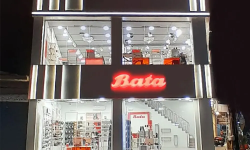
BATA was incorporated in Pakistan in 1951 and became public in 1979.

The company is engaged in the manufacturing and sale of all kinds of footwear, along with the sale of accessories and hosiery items. Bafin B.V. (Nederland) is the parent company of BATA, whereas the ultimate parent company is Compass Limited, Bermuda.

As of December 31, 2023, BATA has 444 retail outlets across Pakistan. The company has an annual production capacity of 18.394 million pairs.
 
The cement industry is only just emerging from a prolonged demand slump, with utilization hovering below 60 percent for the past three years.

Demand is recovering with cement offtake up 12 percent year on year, in the first five months of the fiscal year, volumes still well below the FY21 peak. In a market still grappling with excess capacity, DG Khan’s decision to expand almost looks like defiance, rather than opportunism.

For better or for worse, the industry is consolidating and DGKC’s move fits neatly into the broader pattern that is reshaping the industry. Fauji’s absoroption of Askari and expected takeover of Attock (the deal is still in the works), followed by Mapeleaf’s bid for Pioneer have tightened market control at the top.
 

Large industry output rises 4.8pc in July-December

Mubarak Zeb Khan
February 18, 2026

ISLAMABAD: Pakistan’s Large-Scale Manufacturing (LSM) sector posted a year-on-year growth of 4.82 per cent in the first half of FY26, indicating a marginal rise in the industrial production.

However, industrial production growth in December 2025 slowed to 0.44pc year-on-year. On a month-on-month basis, it grew 9.26pc, according to figures released by the Pakistan Bureau of Statistics on Tuesday.

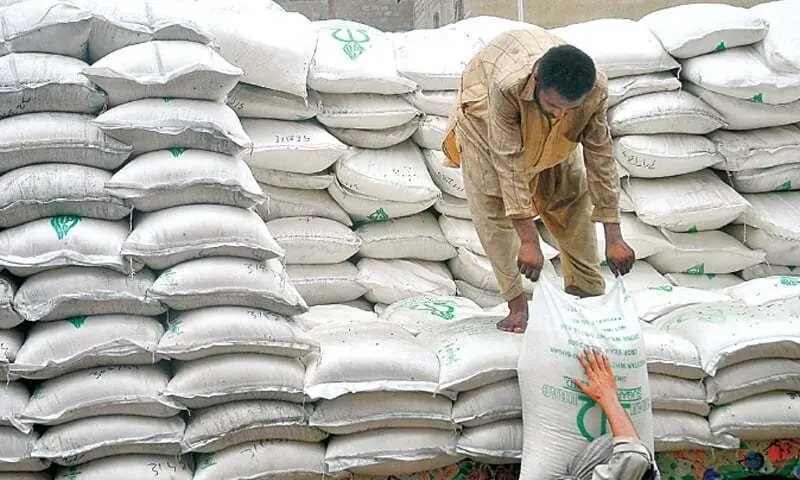
The food group posted a 0.58pc increase in July-December FY26 on a YoY basis. Wheat and rice milling rose by 3.62pc during the period under review, primarily due to improved crop harvests.

However, cooking oil production increased by 5.24pc, while vegetable ghee production fell by 1.63pc. However, tea blended declined by 6.46pc.

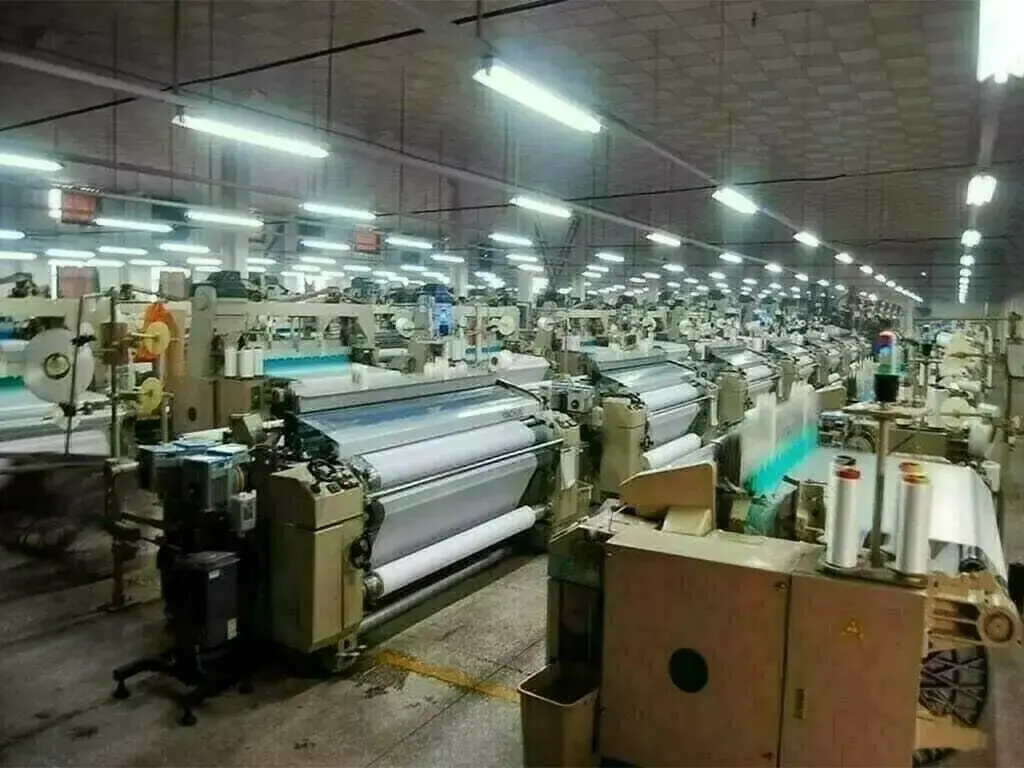
The overall textile sector posted a paltry growth of 1.48pc in July-December 2025-26. Cotton yarn increased by 2.48pc and cotton cloth by 0.22pc, accounting for more than 80pc of the textile sector.

The primary cause of the production slowdown was a slight decline in export unit values amid lower demand for textiles.

Garments production rose 7.48pc in 6MFY26. This rebound indicates a revival in export orders from foreign buyers.

Coke and petroleum production increased 13.39pc in July-December 2025-26. Most petroleum products posted positive growth during the months under review. Petrol production rose by 12.77pc, and high-speed diesel by 22.04pc, respectively.

Automobile production surged 67.21pc in 6MFY26, driven by a 67.36pc jump in jeeps and cars, followed by trucks 107.50pc and buses 42.54pc. However, LCV production declined by 7.17pc. The production of pharmaceutical products dipped by 5.35pc, and that of fertilisers by 1.29pc.

Iron and steel production declined 4.47pc in July-December 2025-26. Billets/ingots, mostly consumed in the construction industry, experienced a 11.76pc decline. Similarly, H/CR sheets/strips/coils/plates dipped by 1.45pc.

The production of rubber products, however, rose by 10.14pc, non-metallic minerals by 10.52pc and electrical equipment by 8.74pc.
 
Robust industry fuels positive outlook

The government on Wednesday projected continued positive momentum for the national economy in the coming months, attributing the outlook to robust industrial growth, enhanced governance, accelerated digitalisation, and sound macroeconomic management.

In its December Economic Update and Outlook, the Ministry of Finance (MoF) stated that Pakistan’s economic outlook remains positive, supported by sustained industrial growth and continued momentum in key sectors including textiles, automobiles, cement, and food processing.

Inflation was projected to remain moderate, in the range of 5.5-6.5 per cent in December, primarily reflecting base effect. CPI inflation recorded at 6.1pc year-on-year in November 2025 as compared to 6.2pc in the preceding month and 4.9pc in November 2024.

On MoM basis, it increased by 0.4pc as compared to an increase of 1.8pc in the previous month and an increase of 0.5pc in November 2024.

To support the Rabi harvest target 2025-26, the government has fixed a wheat production target of 29.68 million tonnes from a cultivated area of 9.65m hectares. To meet this production target, coordinated measures are being implemented by the government to ensure the timely provision of key agricultural inputs like agricultural credit, certified seeds, fertilisers and mechanisation support.

Prudent fiscal management led to a 1pc of GDP fiscal surplus in July-October FY26, up from 0.4pc last year, with a 7.7pc rise in federal receipts and a 4.8pc drop in spending. A primary surplus of 2.7pc of GDP was maintained.
 

Positive data released on LSM

Published February 19, 2026 Updated 5 minutes ago

Facebook


Twitter


Whatsapp


Comments


Save

Follow us

EDITORIAL: Pakistan Bureau of Statistics (PBS) calculated large-scale manufacturing (LSM) growth at 4.82 percent year-on-year during July-December 2025 compared to the same period the year before, driven by strong performance in automobiles, petroleum, garments, and cement sectors.

This is attributed to the low base in the previous year – the LSM growth July-November 2024-25 as per the Finance Division’s January 2026 Update and Outlook was negative 1.41 percent, while the growth for the same period in the current year was calculated at 6.01 percent. It is relevant to note that a decline in the growth for the first half of the current year to 4.82 percent as opposed to 6.01 percent July-November is at odds with the claim that the LSM sector witnessed a robust 9.2 percent growth in December 2025 compared to November 2025 – data that challenges the statistics compiled by the PBS (Pakistan Bureau of Statistics).

READ MORE: Large-Scale Manufacturing posts 4.82% growth in July–December


Recent surveys by Business Recorder on LSM sub-sectors indicate that factory closures have reached an alarming rate — textile organisations cited closure of 150 units, the steel, and cement factories noted that they were operating at reduced capacity due to a massive rise in input costs that continues to be a deterrent, that is acknowledged by the government which led to the announcement of incentives to LSM, which may have to be withdrawn if the International Monetary Fund (IMF) insists on the administration adhering to the agreed conditions. In addition, several multinationals have also announced closure of their operations.

Be that as it may, it is also relevant to determine whether the rise in LSM as claimed by the PBS is due to enhanced output or due to higher sales that have drawn down existing inventories. PBS notes two sources of data on LSM – the Census of Manufacturing Industries (CMI) conducted by PBS and Quantum Index of LSM (QIM) on manufacturing sectors output.

The Bureau notes that it develops new weights for production index of manufacturing every five years but acknowledges that the last one was held ten years ago in 2015-16. PBS does not take account of a decline in inventories or actual output but focuses on sales.

The Bureau also relies on Oil Companies Advisory Council (OCAC) for fuel consumption and data on their website shows the following disturbing data that does not gel with the PBS claim that petroleum sales rose: domestic consumers witnessed a decline in consumption from 14,221 metric tons July-December 2024 to 7,026 metric tons in the same period 2025, industry witnessed a decline from 500,664 metric tons in the first half of fiscal year 2024 to 273,801 metric tons in the same period of this year, and power sector witnessed a decline from 96,292 metric tons to 20,003 metric tons this year.

The reason is the erosion of the rupee value and the failure of the private sector (of which LSSDM is a component) to raise wages, given the continued fragility of the economy.

To conclude, there appears to be an increasing tendency on the part of PBS to release positive data reflecting well on the state of the economy that is easily challengeable as it is at odds with corresponding data. One can only hope that the ongoing technical assistance by the IMF designed to overcome the “important shortcomings” in PBS’s data collection are resolved, and accurate timely data is released that is critical for formulating and implementing mitigating polices.

Copyright Business Recorder, 2026.

 
Pakistan’s cement industry is gearing up for a massive expansion! Thanks to the streamlined efforts of the Special Investment Facilitation Council (SIFC) and the Punjab Government, regulatory hurdles have been cleared for seven new cement plants.

The Quick Stats:
Investment: ~$700 Million USD
Key Players: Lucky Cement, Maple Leaf, Flying Cement, and more.
The Goal: Boosting export capacity and strengthening domestic infrastructure.
This move isn't just about concrete; it’s about job creation across the manufacturing, logistics, and energy sectors. Great to see institutional coordination unlocking economic potential.
 

Service Long March Tyres valued at $550mn ahead of IPO, says CEO

May 8, 2026
By BR Web Desk

Service Long March Tyres Limited, Pakistan’s truck and bus radial tyre (TBR) manufacturer and exporter, is currently valued at around $550 million based on its upcoming IPO price range, said CEO Omar Saeed while briefing the investors at a pre-IPO road show in Karachi

According to a statement, Saeed shared that the management is targeting to transform into a $1 billion company within the next two years through expansion, exports, and capacity enhancement initiatives.
 
  • Like
Reactions: HRK

Users who are viewing this thread

Country Watch Latest

Back
Top