Pakistan Industries News / Updates

China, Pakistan cooperate on recycled aluminum project​

Gwadar Pro
Jan 16, 2024

CHONGQING, - A project to recycle aluminum recently began a trial run in Pakistan and Chongqing, southwest China.

The project was initiated by the aluminum working committee of Trade and Economic Multifunctional Platform for SCO countries (SCO TEMP). The committee's member units have established an entity in Chongqing Lianglu-Guoyuan Port Comprehensive Bonded Zone (CBZ) and have also set up an overseas industrial park in Pakistan.

With an investment of approximately RMB 5.5 billion, the industrial park in Pakistan will be equipped with an advanced manufacturing system. Raw materials purchased from the global market will be processed in the park.

According to Hu Kaiqiang, Director General of SCO TEMP, this will create job opportunities, generate tax revenue, and enhance international trade for Pakistan in the future.

In addition, the processed materials will be sold in the international market or exported to Chongqing CBZ. The Chongqing entity will utilize its local manufacturing expertise to process the imported materials into high-value-added products and distribute them in the global market, Hu added.

The initiative benefits from China-Pakistan Economic Corridor, as well as Pakistan's industrial base, preferential policies, port and logistics services, and relatively low costs, according to Hu.
 

SGF to conduct Rs1.5bn equity investment in Service Long March Tyres

BR https://www.facebook.com/sharer/sha...er.com/news/40285034&display=popup&ref=plugin

The shareholders of Service Global Footwear Limited (SGF) have given their approval to the company to make further long-term equity investments in its subsidiary i.e. Service Long March Tyres (Private) Limited of up to Rs1.5 billion.

The listed company, a leading exporter of footwear, in its filing to the Pakistan Stock Exchange (PSX) on Monday, said the shareholder approval came during the extraordinary general meeting of the company held on January 22, 2024.

The shareholders resolved that “the company be and is hereby authorized to make further long-term equity investment of up to Rs1.5 billion for acquiring 150,000,000 right shares of Service Long March Tyres (Private) Limited (SLM), an associated company at par value of Rs10/- each, as per terms and conditions disclosed to the members,” read the notice.

Moreover, the shareholders in its EGM further resolved that the resolution shall be valid for five years from the date of approval by the members of the company.

The shareholders of the company have further resolved that “Hassan Javed, Chief Executive Officer and/or Arif Saeed, and/or Omar Saeed, directors of the company, be and are hereby singly empowered and authorized to undertake the decision of said investment and to do all acts, matters, deeds and things, take any or all necessary actions.”

SLM is an all-steel radial truck and bus (TBR) Tyre manufacturing company in Pakistan, it was set up through a JV between Servis Group and Chaoyang Long March of China.

Back in 2021, SGF raised Rs2.17 billion through the sale of 40.88 million shares in an Initial Public Offering (IPO). The proceeds from the IPO were invested by the company in SLM.
 

Nishat Mills Limited

BR Research
January 30, 2024

300855277cb1e28.jpg


Nishat Mills Limited (PSX: NML), the flagship company of Nishat Group was established in 1951.

Being one of the largest vertically integrated companies in Pakistan, the company is engaged in spinning, weaving, printing, dyeing, bleaching, and stitching and apparel business. NML deals in yarn, linen, and other products made from raw cotton and synthetic fiber.

The company is also in the business of generating and supplying electricity.
 
Cement Industries

That construction across the industry is significantly constrained is not quite reflecting in the financial statement of cement companies. Kohat Cement (PSX: KOHC) may be the prime example whose profitability in the latest quarter (Q2) improved 14 percent; up 25 percent in the first quarter of the fiscal year compared to the same period last year. Granted last year, the industry was grappling with the aftermath of floods, reduced development spending and high inflation that caused many private projects to get delayed.

But on the demand front, not a lot has changed. Specially, when it comes to reduced buying power. Though in 1QFY24, the industry reported an increase in domestic demand offtake of 18 percent, by the first half of the fiscal year, local offtake across industry reported a cumulative increase of only 1 percent. Exports in fact, have been making up for much of the lost demand that cement players would ideally be making from home ground.
 

Engro Fertilizers achieves record urea production in 2023​

The Frontier Post

Engro-Fertilizers-achieves-record-urea-production-in-2023.jpg


LAHORE: Engro Fertilizers, Pakistan’s premier seed-to-harvest solutions provider, achieved record urea production of 2.3 million tons in 2023 to support the Government’s efforts of ensuring affordable and abundant supplies for the farmers.

The Company was able to achieve this feat and continued to play a pivotal role towards enabling the food security of Pakistan, amidst the headwinds of tough macroeconomic conditions, imposition of a higher super tax and gas price hikes. Engro Fertilizers was additionally affected by steep Rupee devaluation as its 950,000 tons Base Plant is supplied gas under Petroleum Policy 2012 pricing, which is dollar-pegged due to its linkage with crude oil rate.

According to the latest annual results, Engro Fertilizers urea production surged by 18.3 percent compared to the year 2022 (1.95 million tons) due to improved operational performance of both EnVen and Base Plants. Consequently, the Company’s urea sales witnessed an uptick by 20.3 percent to reach 2.32 million tons, while its market share also increased to 35 percent.

“The local fertilizer industry has ensured that farmers continue to benefit from lower domestic urea prices. The Maximum Retail Price (MRP) of urea stood at PKR 3,596/bag at year end, at a discount of 40 percent to international prices. This delta constitutes a contribution of approximately PKR 330 billion per annum towards farmer income in Pakistan,” said a Company statement. The industry is also engaging dealers to support Government’s initiatives to curb urea hoarding for market price manipulation, bolstering crop productivity, and farmer profitability.

In 2023, the robust domestic urea manufacturing industry enabled import substitution to the tune of USD 2.3 billion, including Engro Fertilizers’ share of USD 835 million. Further, in 2023, the Company contributed nearly PKR 34.7 billion towards the national exchequer by way of Government taxes, duties, and levies, compared to PKR 11.6 billion last year.

On a consolidated basis, Engro Fertilizers posted a profit after tax of PKR 26.2 billion with earnings per share (EPS) of PKR 19.61 in 2023, mainly on the back of increased production from long-term reliability projects, cost optimization, efficient working capital management and higher interest income.

To sustain domestic urea production levels and safeguard the food security of Pakistan, Engro Fertilizers and other major fertilizer manufacturers are investing heavily in Gas Pressure Enhancement Facilities (PEF) project. The expected share of Engro Fertilizers’ capital expenditure in this project is over USD 100 million.
 

LSM output hits 21-month high​

The Express Tribune
Feb 19, 2024

KARACHI: Pakistan’s large-scale manufacturing (LSM) industries reached a 21-month high output, with strong support coming from agriculture, petroleum products, wearing apparel, and pharmaceutical sectors in December 2023, hinting at a gradual turnaround in economic activities in the current fiscal year 2023-24.

The Pakistan Bureau of Statistics (PBS) reported on Thursday that LSM output increased by 3.43%, pushing the quantum index of manufacturing (QIM) to 132.87 in December 2023 compared to 128.37 in the same month of the last year. LSM production grew by 15.69% in December compared to the prior month of November 2023.

Cumulatively, in the first half (Jul-Dec) of FY24, the large-scale manufacturing industries’ growth contrasted 0.39% compared to the same period of the last year.

According to PBS, production in July-December 2023-24 increased in food, beverages, wearing apparel, coke and petroleum products, chemicals, fertilisers, pharmaceuticals, non-metallic mineral products, machinery and equipment, and other manufacturing (football).

On the other hand, output decreased in tobacco, textile, iron and steel products, electrical equipment, automobiles, other transport equipment, and furniture during the period under review.
 
2024..

Industrial sector

Industry in Q2, like Q1, has shown a negative growth as compared to Q2 last year. Negative growth of (4.17pc) has been witnessed in the mining & quarrying industry because of a decrease in the production of gas (5.04pc), marble (40.13pc), limestone (20pc) etc and a decline in exploration cost.

Large-scale manufacturing (LSM), which is based on the Quantum Index of Manufacturing (QIM) for the quarter (October-December), has witnessed a positive growth of 0.35pc due to an increase in cooking oil, garments, fertilisers, etc. The electricity, gas and water supply industry has shown a positive growth of 1.54pc because of the increase in output of IPPs, hydropower and nuclear plants. The construction industry shrank 17.59pc in Q2 due to a decline in production of cement (8.7pc) and iron & steel (2.5pc).

Services industry

The services industry grew by 0.01pc in the second quarter of 2023-24. An internal analysis of the industry reveals a mixed tendency. Wholesale and retail trade increased by 2.11pc due to favourable increases in agricultural output and LSM.

Although imports declined, the negative impact was mitigated by a rise in agricultural and industrial output. The transport and storage industry has grown by 1.13pc due to increasing output from railways and road transport. As a result of high inflation, actual growth in the Information and Communication, Finance and Insurance, Public Administration, and Social Security industries has been negative at 5.43pc, 11.1pc, and 16.18pc, respectively.

Furthermore, both the Education and Human Health and Social Work businesses have had negative growth of 0.85pc and 2.53pc, respectively.

Other private services have been assessed at 3.63pc positive growth based on indicators received from the sources.
 

Attock Cement completes expansion of production capacity by 1.28mn tons

Attock Cement Pakistan Limited (ACPL), a subsidiary of Pharaon Investment Group Limited Holding S.A.L, Lebanon, said it has completed its construction and installation work of expanding its capacity by 1.28 million tons as its new production line becomes operational.

The company, engaged in the manufacturing and sale of cement, shared the development in a notice to the Pakistan Stock Exchange (PSX) on Tuesday.

“We are pleased to inform that construction and installation work with respect to the additional line of 1,275,000 tons cement per annum at our manufacturing site at Hub, Balochistan has been successfully completed,” read the notice.

The company shared that the new line is operational and production has commenced with effect from April 16, 2024.

Incorporated in Pakistan as a public limited company in 1981, ACPL has succeeded in exporting a huge quality of clinker and cement both in bags and bulk to the UAE, South Africa, Iraq, Sri Lanka, and many other countries.

The company also has the facility of supplying cement in bulk besides producing low-alkali cement for some of its markets.

Attock Cement Pakistan Limited

As per the company’s latest financial results, the net sales revenue of APCL, during the first half of fiscal year 2023-2024, increased by Rs4.3 billion (41%) over the corresponding period, clocking in at Rs14.64 billion.

During the period under review, production cost per ton decreased by Rs195 per ton (2%) as global coal prices showed some weaknesses and it helped the company reduce its fuel cost, the company shared.

However, the said reduction was completely offset by a massive increase in power tariff and other inflationary increases in raw materials, transportation, and other ancillary costs, it added.
 

LSM: Slow rebound starts

BR
June 26, 2024

Large Scale Manufacturing index for the fifth month running recorded positive year-on-year growth, as April 2024 LSM grew 5.76 percent year-on-year. The tide is clearly turning, as April’s year-on-year growth is the highest in 22 months – dating back to when the rout had just begun. On a cumulative basis, the growth at 0.45 percent is the first positive reading in 22 months. The worst is well and truly over but the recovery by all means is going to be very slow from the looks of it.

Some context helps. April’s index at 106.35, while up from last year, comes off the lowest April index value (excluding the Covid quarter) from last year. LSM in April 2023 had fallen by a whopping 24 percent year-on-year – and the recovery only takes it higher year-on-year, as the index is still lower than even FY17 when the rebasing started.

The sectoral contribution is split equally on the positive and negative sides – with 11 of the 22 sectors returning positive and negative year-on-year growth. This is a marked improvement from a year ago, when all but two sectors were painted red as LSM reached the lowest point around this time last year. The biggest positive both in terms of growth impact and percentage change came from the pharmaceutical sector, as tablets and syrup production have rebounded from the all-time lows of last year. The pharma production is still not even halfway mark of the highs registered in FY22, indicating an optimistic view of pharmaceutical LSM growth to continue.

26074013cd23c49.png


The wearing apparel, which takes into account exported quantities of readymade garments, tracked and published by none other than the PBS itself, features second on the list. The wearing apparel growth has been shown at 6.5 percent for 10MFY24. Counter data from the PBS monthly advance release files shows the readymade exported quantities having grown at a negative 1.3 percent. What is shown as the second largest contributor to LSM growth, should in fact be making a negative contribution to the overall growth – and the actual LSM reading should still be in the red. But it has been months and months of neglect – and no explanation, so one will have to live with yet another anomaly.


26074013494aa1a.png


Furniture exports at under $7 million for 10MFY24 down 38 percent year-on-year – have a say as big as being the third biggest positive contributor to the LSM growth, with a share of 0.5 percent in the LSM basket. Textile continues to drag the LSM growth down both cotton cloth and cotton yarn remain stuck at decade-low production levels – and an 18 percent share in the LSM basket means textile remains the biggest negative contributor to LSM.

For sectors with a basket share in excess of 5 percent, only pharmaceuticals have grown in double-digits. Automobile, tobacco, and computers have shown negative growth in deep double digits, at or near all-time low levels.

Going forward, the low base from the last quarter of FY23 should keep the recovery on track. Budget measures if applied as were announced, could well act as a major headwind, especially when administered energy prices are already slared to go considerably higher and all concessions for industrial usage eliminated.
 
The federal government has decided to permanently shut down the state-owned Pakistan Steel Mills (PSM) after failure to privatize it.

Secretary Industries & Production has said that the Sindh government is interested in setting up its own Steel Mill and the government has offered around 700 acres of land for this purpose.

The government also intends to lease 4000 acres of land of PSM to set up a Special Economic Zone.
 

Pakistan’s chemical maker Ghani to establish LPG storage facility in Punjab​

Business Recorder
Nov 4, 2024

Ghani Chemical Industries Limited (GCIL), a manufacturer of medical and industrial gases and chemicals, announced plans to set up a Liquefied Petroleum Gas (LPG) storage and filling facility in Punjab.

The listed company, which aims to venture into other businesses, shared the development in its notice to the Pakistan Stock Exchange (PSX) on Monday.

“GCIL has stepped forward to enter into other business areas by setting up of 450 MT (metric tons) capacity, LPG storage and filling plant at Phool Nagar, district Kasur for operations all over the country through M/s Ghani Gases (Private) Limited (GGPL/ one of the wholly owned subsidiary of Ghani Chemical Industries Limited),” read the notice.

The company informed that its subsidiary, GGPL, has also obtained a license from the Oil and Gas Regulatory Authority (OGRA) in this regard.

“After completing other requisite formalities/approvals, this subsidiary (GGPL) will commence construction work for setup of this plant in due course of time,” it added.

As per the company’s latest financial results, GCIL posted a profit after taxation of Rs303 million in first quarter of FY25, against Rs225 million in comparison with the same period of the previous year. Accordingly, company’s earnings per share increased to Re0.61 compared to an EPS of Re0.46 in the same period of the previous year.

The company is running four 410 TPD (tons per day) Air Separation Plants at Lahore (02) and Karachi (02). It has also invested to build a sizeable fifth 275 TPD ASU plant in the KPK region capable of producing liquid oxygen, liquid nitrogen and liquid argon simultaneously.

Last year, GCIL informed its stakeholders that it would set up Pakistan’s largest ASU plant in Hattar Special Economic Zone, located in District Haripur, Khyber Pakhtunkhwa.
 
Deli JW Glass Manufacturing Plant has been operational in Pakistan.
© Javed Afridi


470157932_972135414943224_869233626774171029_n.jpg


Locally manufactured phones meet 94 percent of Pakistan’s demand​


The Nation
Dec 17, 2024

Local mobile manufacturing in Pakistan, bolstered by Chinese mobile companies, is thriving and now meets 94% of the country’s demand.

This growth is attributed to the government’s strategic regulatory initiatives aimed at sustaining sectoral expansion and innovation.

Chairman of the Pakistan Telecommunication Authority (PTA), Retired Maj. Gen. Hafeez Ur Rehman HI (M), presented PTA’s Annual Report 2024 to Senate Chairman Syed Yousaf Raza Gilani, highlighting recent developments in the IT and telecom sectors.

He emphasized the Authority’s commitment to foster technological advancements, implement online safety measures, safeguard consumer rights, and promote fair competition.

According to the report, the telecom sector generated record revenue of Rs955 billion in FY2023-24, a 17% increase over FY2022-23, despite economic challenges. Cellular mobile services now reach 91% of the population, while 4G services cover 81%.

Total telecom subscribers reached 196 million by September 2024, Gwadar Pro reported on Tuesday.

The number of broadband subscribers rose to 142.3 million from 127.6 million in June 2023. Average mobile internet speeds improved by 28%, increasing from 15.65 Mbps to 20.02 Mbps. Data usage grew by 24.2%, reaching 25,141 terabytes in FY2023-24, while broadband penetration increased to 58.4% compared to 53.6% in 2023.

“During FY2023-24, 29.6 million mobile devices were locally manufactured, meeting 94% of the country’s demand,” the report stated. The local manufacturing/assembling has also created 60,000 jobs for the locals.

According to the PTA website, during the first 10 months of 2024, Pakistan locally manufactured or assembled 22.59 million mobile devices.

Of these, 13.86 million were smartphones, while 8.73 million were Second Generation Mobile (2G) or GSM phones. In comparison, only 1.17 million mobile phones were commercially imported during this period.

Chinese brands led the local manufacturing industry, with Infinix producing 2.79 million devices, followed by iTel with 2.75 million, VGO Tel with 2.43 million, Vivo with 2.13 million, TECNO with 2.03 million, Redmi with 1.89 million, Realme with 1.35 million, and G’Five with 1.09 million. South Korea’s Samsung manufactured 0.98 million devices, while Nokia produced 0.96 million phones locally.
 

CCP clears acquisition of shareholding in Heavy Electrical Complex


BR Web Desk
September 9, 2025

1757714198549.png

The Competition Commission of Pakistan (CCP) on Tuesday approved the acquisition of shares in Heavy Electrical Complex (Pvt) Ltd by DW Pakistan (Pvt) Ltd from IMS Engineering (Pvt) Ltd under a share purchase agreement, the CCP said in a statement.

DW Pakistan is engaged in investments and acquisitions across various sectors but has no operations in manufacturing, engineering, or energy markets.

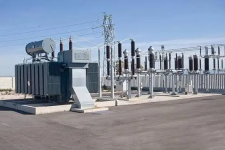
Heavy Electrical Complex manufactures and repairs power transformers, while IMS Engineering provides engineering, procurement, and construction services.

The CCP identified the relevant product market as power transformers and noted that the transaction constituted a conglomerate merger.

The watchdog concluded that the deal would not eliminate any existing or potential competition nor create or strengthen a dominant position in the market.
 

Cement: Recovery rides on exports


BR Research
September 11, 2025

1757714363097.png


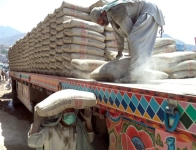
Cement offtake has entered a slow recovery periodas demand from the construction sector has resurfaced after a dull few years and an uneventful last year. In 2MFY26, the total offtake for cement has surged 21 percent, of which domestic cement demand grew 14 percent while exports—that are contributing 22 percent to the total offtake—grew 51 percent.

While domestic demand has improved, exports willthe real contributor to the win where cement manufacturers have turned to after poor demand scenarios playing out at home.

Total offtake in FY24 (during the first two months) were nearly the same as the start of this fiscal year, with one major difference—that year domestic offtake was 85 percent of total sales which has dropped to 78 percent in 2MFY26.

The year on year growth itself should be considered with caution. The fact that this year once again floods have ravaged the country wreaking havoc and wiping out significant infrastructure will affect infrastructure and construction demand in the months to come.

In the latter months however, demand will improve as reconstruction efforts take shape. In all this while, for cement manufacturers, if they keep running their plants, exports will come to the rescue balancing the scale to a degree.
 

Users who are viewing this thread

Pakistan Defence Latest

Latest Posts

Back
Top