Pakistan International Arlines (PIA) : News / Updates

The bidding process for the privatisation of PIA intensified in the second round as competing Arif Habib Consortium and Arif Habib Consortium repeatedly raised their offers during the final round of the auction.

The Lucky Consortium initially increased its bid to Rs125 billion, prompting the Arif Habib Consortium to raise its offer to Rs126 billion. The competition continued as the Lucky Consortium enhanced its bid to Rs128 billion, while the Arif Habib Consortium responded with an offer of Rs129 billion.

The bidding process for the privatisation of PIA intensified in the second and final round as the Arif Habib Consortium and the Lucky Cement Consortium repeatedly raised their offers during a closely contested auction.

The Lucky Cement Consortium initially increased its bid to Rs125 billion, prompting the Arif Habib Consortium to counter with Rs126 billion. The contest continued as Lucky Cement raised its offer to Rs128 billion, followed by a response of Rs129 billion from Arif Habib.

The bidding war further escalated when Lucky Cement submitted a Rs130 billion offer, which was countered by Arif Habib at Rs131 billion. In the subsequent round, Lucky Cement raised its bid to Rs132 billion, while Arif Habib moved ahead with Rs133 billion.

In the final stage of the auction, the Lucky Cement Consortium submitted a bid of Rs134 billion. However, the Arif Habib Consortium outbid them with a final offer of Rs135 billion.

Following the conclusion of the auction process, the Arif Habib Consortium was declared the successful bidder for the acquisition of Pakistan International Airlines
 
Pakistan International Airlines (PIA), long accused by critics of being bloated and poorly run, has found funds drying up as the government struggles with a balance of payments crisis.

"It was essential to make this process transparent because the biggest transaction of Pakistan's history is about to take place," Prime Minister Shehbaz Sharif told his cabinet in a televised statement after the bidding process was broadcast live.

"If the bidding is successful, then the privatisation process will take off," Sharif said.

The sale offer comes after last year's privatisation attempt failed with just one bid for $36 million -- far below the $300 million-$305 million wanted by the government.

Before being de-listed from the Pakistan stock exchange, the airline reported a net loss of $437 million for the 2022 full year on revenue of $854 million.

Goal is to make PIA ‘best-in-class’, says Muhammad Ali

Prime Minister’s Adviser on Privatisation and Chairman of the Privatisation Commission Muhammad Ali said the government’s objective was “not merely to sell PIA and collect money, but to turn it into a best-in-class airline.” He said the airline required fresh investment to regain its lost position, adding that the transaction structure had been revised accordingly.
 
Muhammad Ali said a payment schedule had been finalised under the new privatisation plan. “Two-thirds of the payment will be made upfront, while the remaining amount will be paid later,” he said, adding that “the outstanding amount has also been secured through safeguards.”

Addressing a ceremony, he said the privatisation of PIA would pave the way for privatisation of other state-owned entities. “In April, the government decided to sell 51 to 100 per cent of shares, and our aim was to attract as many bidders as possible,” he said. He added that the current bid was for a 75 per cent stake, while “the buyer will also be allowed to purchase additional shares.”

"The first phase of the bidding process has been completed; now the matter will go to the Privatisation Commission," said Privatisation Commission (PC) Chairman Muhammad Ali. The bids came from pre-certified bidders Lucky Cement, private airline Airblue and investment firm Arif Habib. Fauji Fertiliser and other bidders have pulled out of the auction.

The PC board reviewed and approved the reference price (the minimum price of sale), the exact figure of which remains confidential. Ali said that once the reference price is approved by the board, it will be forwarded to the Cabinet Committee for final approval.
 
To view this content we will need your consent to set third party cookies.
For more detailed information, see our cookies page.
 
To view this content we will need your consent to set third party cookies.
For more detailed information, see our cookies page.
 

Arif Habib consortium emerges victorious in PIA auction with Rs135bn bid​

Amin Ahmed
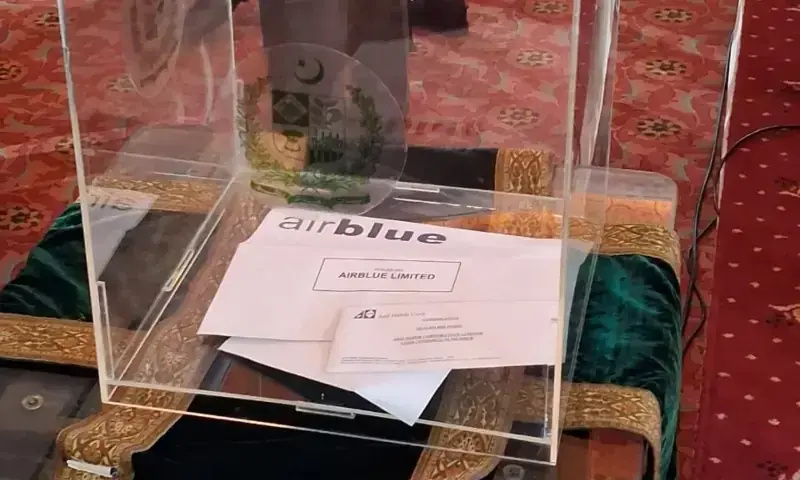
This image shows the sealed bids submitted on Tuesday morning. — Photo provided by author

This image shows the sealed bids submitted on Tuesday morning. — Photo provided by author
ISLAMABAD: A successful bid of Rs135bn by Arif Habib won the auction for Pakistan International Airlines Corporation Ltd (PIAC) after the process moved to an open auction round at a ceremony in Islamabad, marking the country’s first major privatisation in nearly two decades.

Initially, pre-qualified bids were submitted by Lucky Cement, private airline Airblue and investment firm Arif Habib in the morning. Airblue exited the race after the first round of bidding, with a proposition lower than the reference price of Rs100bn.

In the first round, Lucky Cement put up a bid of Rs101.5bn, Airblue Rs26.5bn, and the Arif Habib consortium bid Rs115bn, after which the reference price was announced.

Following that, a 30-minute break was taken so that the two top bidders could hold consultations. A second round was then commenced.

It began with the base bid at Rs115bn, and the minimum increment was at Rs250 million. The base price was set on the basis of the highest bid made during the first round by Arif Habib.

Both bidders engaged in a brief competition to outbid each other during the round. However, when Lucky Cement raised its bid to Rs134bn, Arif Habib countered with Rs135bn, forcing Lucky Cement to bow out and congratulate Arif Habib.

The whole process was telecast live and streamed across all TV channels as well as the respective social media handles of the government.

Adviser to the prime minister on privatisation, Muhammad Ali, will also hold a press conference after the conclusion of the bidding process.

Finance Minister Muhammad Aurangzeb, speaking at the bidding ceremony, thanked the PM‘s aide and his team for their efforts and hailed the bidding process in terms of transparency.

“It takes a lot of time and effort to get to a good place where we are today,“ he said.

“All of the bidders today are from Pakistan. I used to say that no matter which team wins, Pakistan would win.”

He lauded Pakistan‘s biggest conglomerates for “vying for the best airline” and said that the flag carrier would be led by investors and some of Pakistan’s most experienced businesspeople.

“The fact that they have stepped up is a doubtless sign that anyone who is the successful bidder will take it not only to where we were, but where we need to be in the comity of nations,” Aurangzeb added.

“We need to stop the bleeding and losses, but more importantly, our institutions need to be part of the comity of nations, and we will take them there,” he added.

Aurangzeb also expressed hope that the bidding would increase the number of local investors and, in turn, the number of foreign investors entering the country.

At the outset of the ceremony, the adviser to the prime minister on privatisation addressed the audience.

Ali hoped that PIA’s privatisation would open “paths for investment in the country”.

“I would also like to thank all bidders who are present today, and those who were part of the bidding process but did not reach the final round. We wouldn‘t have been here without them, and this process wouldn’t have been completed,” he said.

“We actively engaged with all the bidders. Two of them demanded to take up to 75 per cent at least, and the other two demanded 100pc,“ he said.

“We wanted a multitude of bidders so the process of bidding would be transparent and competitive,” he continued.

He said that the government had “decided to sell at least 75pc of shares, and simultaneously, we also decided to offer the other 25pc”.

“Bidders will have the right to consider and let the government know if they also want to buy the other 25pc in the next 90 days,” he said.

He further said, “The transaction would be from 75pc up to 100pc; however, 75pc of them will be made available for sale today”.

“The government wanted to structure this transaction so it would also get a fair share and investment to be made,” he said, adding that the government did not just want to sell PIA but “to bring the national airline back to the glory it enjoyed in the past”.

He stressed the need for bringing in “new investment, buy new carriers and repair the engine, cut the liabilities, pay the employees on time”.

“If we want to expand the fleet from 18 planes to 30-40 or more, then investment is the only way,” he added.

In the morning, representatives of the bidding groups had walked in one by one to deposit sealed offers into a transparent box, briefly fumbling as they pushed envelopes through the slot in a separate public ceremony in Islamabad that was also broadcast on state television.

Following that, the reference price for PIACL’s bidding was approved by the Privatisation Commission Board and the Cabinet Committee on Privatisation after bids were received.

Meanwhile, speaking to the media, Ali said, “God willing, we will get a good bid, there will be good investment, and we will succeed.“

The auction was Pakistan’s second attempt at selling the once storied flag carrier after televised bidding last year collapsed when a solitary offer fell far below the government‘s reference price, derailing what would have been the country’s first major privatisation in nearly two decades.

Meanwhile, Prime Minister Shehbaz Sharif, while addressing a meeting of the federal cabinet, thanked government officials and the Privatisation Commission for their role in the national carrier’s privatisation.

He stressed that the process has been made “transparent“, stating that it will be the “largest transaction” ever in Pakistan’s history.

“Today, as the bidding starts [..] the bids will come in sealed envelopes, there will be transparent boxes, there will be a live telecast. When the price is determined, the envelopes will be opened. They will compete, and whoever has the highest bid will [succeed],“ he said.

“Only God knows how high the bid will go, but the process must come back to the cabinet,” he said.

Earlier, Ali said the two unsuccessful bidders will be excluded from any future role in the airline’s management thanks to a unique stipulation.

In recent remarks, he explained that losing bidders will have no right to join the winning bidder, and only those groups who were not party to the auction would be able to join the new management.

This means that while only one of the three consortiums currently in the running for the flag carrier will become part of its administration upon acquisition of a majority stake, Fauji Fertiliser Company Ltd retains the option to join with them subsequently, if it wishes to.

The company was previously in the race for PIA but then decided to quit the bidding process.

Ahead of Tuesday’s bidding, reports surfaced of a behind-the-scenes deal involving at least two of the parties involved — the Arif Habib and Lucky Cement groups — that reportedly fell through.

In a tweet, journalist Kamran Khan alluded to a meeting where it was proposed to split the controlling stake among three of the four interested parties. However, Khan claimed, this arrangement fell through as one of the parties — i.e. the Muhammad Ali Tabba-led Lucky Cement group — did not agree to it.

Both Tabba and a high-ranking government official privy to developments confirmed this, but clarified that this was not a government-brokered meeting, but rather an informal interaction.

Talking to Dawn, Tabba expressed unwavering confidence in the privatisation process, and clarified that the proposal was floated to him after a meeting in Islamabad, which he did not pursue.
 

Arif Habib consortium emerges victorious in PIA auction with Rs135bn bid​

Amin Ahmed
This image shows the sealed bids submitted on Tuesday morning. — Photo provided by author

This image shows the sealed bids submitted on Tuesday morning. — Photo provided by author
ISLAMABAD: A successful bid of Rs135bn by Arif Habib won the auction for Pakistan International Airlines Corporation Ltd (PIAC) after the process moved to an open auction round at a ceremony in Islamabad, marking the country’s first major privatisation in nearly two decades.

Initially, pre-qualified bids were submitted by Lucky Cement, private airline Airblue and investment firm Arif Habib in the morning. Airblue exited the race after the first round of bidding, with a proposition lower than the reference price of Rs100bn.

In the first round, Lucky Cement put up a bid of Rs101.5bn, Airblue Rs26.5bn, and the Arif Habib consortium bid Rs115bn, after which the reference price was announced.

Following that, a 30-minute break was taken so that the two top bidders could hold consultations. A second round was then commenced.

It began with the base bid at Rs115bn, and the minimum increment was at Rs250 million. The base price was set on the basis of the highest bid made during the first round by Arif Habib.

Both bidders engaged in a brief competition to outbid each other during the round. However, when Lucky Cement raised its bid to Rs134bn, Arif Habib countered with Rs135bn, forcing Lucky Cement to bow out and congratulate Arif Habib.

The whole process was telecast live and streamed across all TV channels as well as the respective social media handles of the government.

Adviser to the prime minister on privatisation, Muhammad Ali, will also hold a press conference after the conclusion of the bidding process.

Finance Minister Muhammad Aurangzeb, speaking at the bidding ceremony, thanked the PM‘s aide and his team for their efforts and hailed the bidding process in terms of transparency.

“It takes a lot of time and effort to get to a good place where we are today,“ he said.

“All of the bidders today are from Pakistan. I used to say that no matter which team wins, Pakistan would win.”

He lauded Pakistan‘s biggest conglomerates for “vying for the best airline” and said that the flag carrier would be led by investors and some of Pakistan’s most experienced businesspeople.

“The fact that they have stepped up is a doubtless sign that anyone who is the successful bidder will take it not only to where we were, but where we need to be in the comity of nations,” Aurangzeb added.

“We need to stop the bleeding and losses, but more importantly, our institutions need to be part of the comity of nations, and we will take them there,” he added.

Aurangzeb also expressed hope that the bidding would increase the number of local investors and, in turn, the number of foreign investors entering the country.

At the outset of the ceremony, the adviser to the prime minister on privatisation addressed the audience.

Ali hoped that PIA’s privatisation would open “paths for investment in the country”.

“I would also like to thank all bidders who are present today, and those who were part of the bidding process but did not reach the final round. We wouldn‘t have been here without them, and this process wouldn’t have been completed,” he said.

“We actively engaged with all the bidders. Two of them demanded to take up to 75 per cent at least, and the other two demanded 100pc,“ he said.

“We wanted a multitude of bidders so the process of bidding would be transparent and competitive,” he continued.

He said that the government had “decided to sell at least 75pc of shares, and simultaneously, we also decided to offer the other 25pc”.

“Bidders will have the right to consider and let the government know if they also want to buy the other 25pc in the next 90 days,” he said.

He further said, “The transaction would be from 75pc up to 100pc; however, 75pc of them will be made available for sale today”.

“The government wanted to structure this transaction so it would also get a fair share and investment to be made,” he said, adding that the government did not just want to sell PIA but “to bring the national airline back to the glory it enjoyed in the past”.

He stressed the need for bringing in “new investment, buy new carriers and repair the engine, cut the liabilities, pay the employees on time”.

“If we want to expand the fleet from 18 planes to 30-40 or more, then investment is the only way,” he added.

In the morning, representatives of the bidding groups had walked in one by one to deposit sealed offers into a transparent box, briefly fumbling as they pushed envelopes through the slot in a separate public ceremony in Islamabad that was also broadcast on state television.

Following that, the reference price for PIACL’s bidding was approved by the Privatisation Commission Board and the Cabinet Committee on Privatisation after bids were received.

Meanwhile, speaking to the media, Ali said, “God willing, we will get a good bid, there will be good investment, and we will succeed.“

The auction was Pakistan’s second attempt at selling the once storied flag carrier after televised bidding last year collapsed when a solitary offer fell far below the government‘s reference price, derailing what would have been the country’s first major privatisation in nearly two decades.

Meanwhile, Prime Minister Shehbaz Sharif, while addressing a meeting of the federal cabinet, thanked government officials and the Privatisation Commission for their role in the national carrier’s privatisation.

He stressed that the process has been made “transparent“, stating that it will be the “largest transaction” ever in Pakistan’s history.

“Today, as the bidding starts [..] the bids will come in sealed envelopes, there will be transparent boxes, there will be a live telecast. When the price is determined, the envelopes will be opened. They will compete, and whoever has the highest bid will [succeed],“ he said.

“Only God knows how high the bid will go, but the process must come back to the cabinet,” he said.

Earlier, Ali said the two unsuccessful bidders will be excluded from any future role in the airline’s management thanks to a unique stipulation.

In recent remarks, he explained that losing bidders will have no right to join the winning bidder, and only those groups who were not party to the auction would be able to join the new management.

This means that while only one of the three consortiums currently in the running for the flag carrier will become part of its administration upon acquisition of a majority stake, Fauji Fertiliser Company Ltd retains the option to join with them subsequently, if it wishes to.

The company was previously in the race for PIA but then decided to quit the bidding process.

Ahead of Tuesday’s bidding, reports surfaced of a behind-the-scenes deal involving at least two of the parties involved — the Arif Habib and Lucky Cement groups — that reportedly fell through.

In a tweet, journalist Kamran Khan alluded to a meeting where it was proposed to split the controlling stake among three of the four interested parties. However, Khan claimed, this arrangement fell through as one of the parties — i.e. the Muhammad Ali Tabba-led Lucky Cement group — did not agree to it.

Both Tabba and a high-ranking government official privy to developments confirmed this, but clarified that this was not a government-brokered meeting, but rather an informal interaction.

Talking to Dawn, Tabba expressed unwavering confidence in the privatisation process, and clarified that the proposal was floated to him after a meeting in Islamabad, which he did not pursue.

PIA is finally sold off. Next are DISCO’s.
 
With the successful bidder now identified, the bidder will have 90 days to purchase the remaining 25% of shares. The government had taken responsibility for PIA's liabilities of Rs 654 billion last year.

The investor is required to commit an investment of Rs80 billion over the next five years, and of the proceeds from the sale of 75% of PIA’s shares, 92.5% will be allocated to the airline for reinvestment, while the remaining 7.5% will be transferred to the government.
 
The government claims that this privatisation is crucial for the airline's financial health and profitability. "No major privatisation of a national asset has taken place in the last 20 years, making this move historic for Pakistan," Ali said.

Additionally, the PC has stated that employee job security will be guaranteed for one year. The holding company will be responsible for managing pension plans and post-retirement benefits.

Founded in 1955, PIA was a symbol of national pride and rapid growth for years, but its reputation has suffered due to financial losses and safety lapses.

It was banned from flying to the European Union, Britain and the United States in June 2020, a month after one of its Airbus A-320 jets crashed onto a Karachi street, killing nearly 100 people.

Europe and Britain allowed PIA flights to resume this year, but operations have not yet resumed for the United States.

Just 18 of its fleet of 34 planes are in active service, according to officials.
 
To view this content we will need your consent to set third party cookies.
For more detailed information, see our cookies page.
 

Arif Habib consortium wins PIA privatisation bid at Rs135b​


The live auction in Islamabad saw Lucky Cement Consortium emerge as the second-highest bidder with an offer of Rs134b

Shahbaz Rana/Irshad Ansari
December 23, 2025
 
  • Pakistan government will get Rs10.12 billion in cash out of Rs135 billion. The rest of the amount will be invested in the PIA.
Earlier, the second round of auction for the divestment of a 75% stake in the PIA began on Tuesday, with two out of three qualified parties submitting the bid above the minimum expected price of Rs100 billion.
 
I’m optimistic PIA can turn things around to become profitable and regain professionalism as a corporation, but I’m less confident about passenger conduct. Poor etiquettes like putting feet up on other people's faces, treating air hostesses like shit, making restrooms messy, dealing with unruly children due to inadequate parental supervision, and causing chaos post landing is a big big challenge. In the past, PIA’s excellence was deeply rooted in the civility and class of its passengers
 
Last edited:

Users who are viewing this thread

Back
Top