The UAE has evidently decided that Pakistan is no longer the partner it once required —but that India is
Middle East
By Giorgio Cafiero, Andreas Krieg
May 28, 2026
Thirty years after the last Arab Maghreb Union summit, the region’s integration failure is still commonly framed as a diplomatic stalemate between Algeria and Morocco. But the deeper problem lies elsewhere. The AMU was never designed to withstand political crises, lacking the institutional mechanisms that allow other regional organizations to function even amid rivalry and distrust. As both governments increasingly pursued bilateral and alternative regional arrangements, the Maghreb’s institutional architecture was gradually hollowed out rather than merely paused. This analysis argues that the AMU did not stall but structurally collapsed — and that reconciliation alone is unlikely to revive a regional framework intentionally built without durable foundations.
In two weeks in April, the United Arab Emirates turned off every channel of its long interdependence with Pakistan.
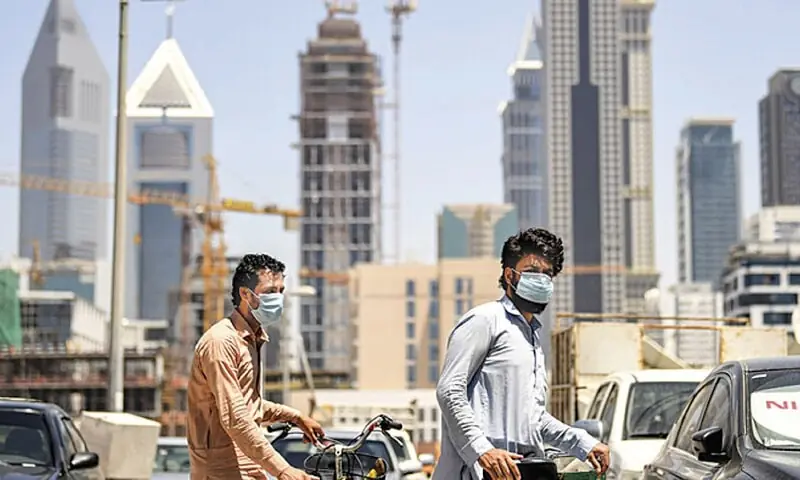
On April 12, plainclothes officers in Dubai began detaining Pakistani workers — most of them Shi’ite Muslims and many with decades of residence — with the total eventually reaching roughly 15,000. Etihad Airways dismissed 15 Pakistani staff with only 48 hours’ notice. On April 23, the Abu Dhabi Fund for Development (ADFD) demanded that Pakistan immediately repay $1 billion against a $3.45 billion facility long rolled over without fuss. Saudi Arabia stepped in with a $3 billion deposit. The sequence was too synchronized, and too punitive, to read as drift. What Pakistan was watching was the weaponization of a long friendship.
The argument that follows is uncomfortable, but hard to escape. The UAE has evidently decided, over the past 18 months and in particular, since the start of the latest U.S. and Israeli war on Iran, that Pakistan is no longer the partner it once required — but that India is. With a substitute available, Abu Dhabi can afford to coerce, and it is now reaching for every chokepoint of interdependence, including labor, sovereign debt, aviation, and procurement, to try to force Islamabad’s realignment.
The wider lesson is that the UAE is using its regional hub position to extract concessions from partners in a clear demonstration of its power of connectivity. Abu Dhabi is willing to weaponize interdependence to try to get other middle powers to stand firmly with the Emirati cause.
Two Pakistani positions, taken in the space of one year, appear to explain the squeeze. The first was the Strategic Mutual Defense Agreement signed by Pakistan and Saudi Arabia at Al-Yamamah Palace on September 17, 2025, eight days after Israeli strikes on Hamas officials in Doha. The pact treats aggression against either party as aggression against both, with an implicit nuclear ambiguity that Islamabad later played down. For Saudi Arabia, the agreement represented strategic diversification. For Abu Dhabi, increasingly at odds with Riyadh over Yemen, OPEC discipline, and Horn of Africa policy, it read as a defection.
The second was reported Pakistani facilitation of back-channel communications between Washington and Tehran during the worst weeks of the current conflict and the temporary ceasefire framework announced on April 8. To Abu Dhabi, which has absorbed by some accounts more than two thousand Iranian strikes, Pakistan’s neutrality looked less like statecraft than betrayal. “The UAE was shocked that Pakistan did not support them against Iran, and Pakistan was shocked that the UAE was shocked” was how former Pakistani diplomat Hussein Haqqani captured the disconnect.
What followed was not retaliation in the diplomatic sense but the use of every economic and procedural lever the UAE possesses. The labor weapon was the most visible. The roughly 15,000 predominantly Shi’ite deportees were returned to Punjab and Gilgit-Baltistan without notice. Their bank accounts were frozen, and identification numbers deactivated. The debt weapon followed on April 23, when ADFD, for years a quiet stabilizer of Pakistan’s foreign exchange position, demanded $1 billion back. The corporate weapon was Etihad’s mass termination. (The UAE had already withdrawn in January — shortly after a state visit to India by UAE President Mohammed bin Zayed — from a long-discussed deal to operate Islamabad International Airport.)
Viewed from Abu Dhabi, the moves have their own logic. The UAE leadership perceives its longest-standing South Asian security partner to have chosen, in sequence, to align with Riyadh, and to negotiate on behalf of Tehran. There is no other way to explain the migrant policy, which is sectarian sorting conducted through a Gulf airport. Abu Dhabi has concluded that interdependence with Pakistan should now exact behavior, not absorb it. That is a serious shift, and Islamabad does not yet appear to have an answer beyond official denials that its citizens are being singled out.
Coercion of this kind is possible only where substitution is available, and that is the third feature of the new picture. Abu Dhabi has spent the past two years building an ideological alignment with New Delhi that Pakistan cannot replicate. Both governments share a hardline stance on political Islam. Both prize commercial pragmatism over religious solidarity. Both treat Iranian regional influence as a first-order problem. The January New Delhi visit by MBZ produced a $3 billion LNG deal, a letter of intent on a defense partnership, and the quiet end of the Islamabad airport negotiation within weeks.
The emerging trilateral with Israel, encompassing maritime security, drone development and intelligence-sharing, has no comfortable role for a Pakistani military whose deterrence is calibrated against India. The plausible trajectory is one in which Pakistan’s remittance economy, into which roughly two million workers sent home an estimated $8 billion last year, ceases to be politically inert. The uncertainty is whether Abu Dhabi’s tilt to New Delhi is settled, or whether parts of it might be reversed if Tehran and Riyadh cool. The record suggests the former. Substitution, once achieved, is rarely undone.
The strongest counter is that “weaponization” overstates what is, on this reading, a bilateral cooling within a structurally robust relationship. Trade between the two countries has surpassed $10 billion, approximately two million Pakistanis still live in the Emirates, and decades of family wealth and property holdings tie the two economies together. Once the regional temperature drops, ledgers will reopen and the friendship may revert to its long-tested pattern of complaint and accommodation. (Indeed, a Kashmiri journalist wrote on social media on May 19 that the UAE had quietly reached out to Islamabad seeking re-engagement.) However, the synchronization of the April actions, the punitive scale of the labor purge, and the explicitly sectarian sorting of detainees argue for design, not drift. Once interdependence has been used as a weapon, the next negotiation begins from the assumption that it can be used again.
Islamabad’s task now is to try to harden the relationship against the use of interdependence as a weapon. Three priorities stand out. The first is labor diversification: formal mobility agreements with other Gulf states and parts of East Africa and East Asia, to reduce single-market exposure of the remittance economy. The second is reserve adequacy. The April episode showed that a friendly sovereign facility can become a margin call without notice; multilateral cushioning and bilateral swaps with Beijing and Riyadh deserve fresh emphasis. The third is procedural: A discreet channel with Abu Dhabi, aimed at predictability rather than reconciliation, would lower the cost of the next crisis.
Pakistan is the first South Asian state to find out what it means when the wage packet, the sovereign facility, and the work permit are simultaneously available as instruments of pressure. It will likely not be the last.