Pakistan Minerals and Mining Updates

Give me proof you work for CPEC mineral projects.
Why should i give you proof over my private life? And i did not work on any CPEC rare earth project because they DONT exist. You are the one who is claiming CPEC rare earth mineral project, give the proof smartass. You are simply lying and im glad i joined this website to expose the likes of you. Been lurking for way too long.
 
This thread should be a witness to the credibility of this so called think tank lol
See these guys will lie and obusfucate. For them their political alliances trump Pakistan. They dont care as long as their guy is not in power. Most dangerous to the existence of Pakistan. Rotten, and disgusting.
 

Minerals, Magnets, and Military Capability: China’s Rare Earth Weaponization Should Be a Wake-Up Call​

Macdonald Amoah, Morgan Bazilian and Jahara Matisek | 07.10.25
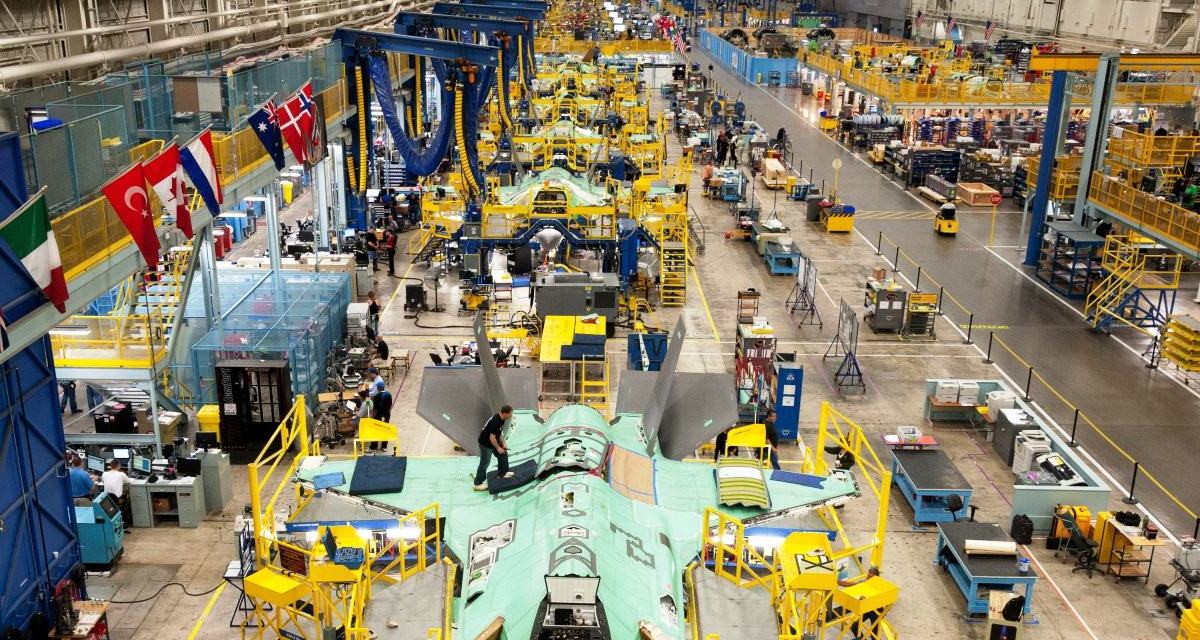
Minerals, Magnets, and Military Capability: China’s Rare Earth Weaponization Should Be a Wake-Up Call


When China imposed export controls on seven of the seventeen rare earth elements in April 2025, it wasn’t just a trade policy tweak—it was a shot across the bow of the US defense industrial base. American fighter jets, satellites, guided missiles, and submarines all rely on high-performance magnets built with rare earths like neodymium, samarium, and dysprosium. This blocking action by China followed earlier prohibitions on gallium and germanium, which are foundational to infrared optics and radar systems. These materials are overwhelmingly Chinese controlled, processed, and manufactured—and American reliance on foreign minerals and rare earths exposes critical vulnerabilities.

China refines over 85 percent of the world’s rare earths and produces nearly 90 percent of high-performance rare earth magnets. That means US weapon systems, from F-35s and Virginia-class submarines to hypersonic weapon systems and precision-guided munitions, are all critically dependent on materials from strategic rivals. Exotic minerals are no longer just for the green revolution; this is about the United States and its allies having the raw materials needed to sustain a future war.

What began as a commercial pressure tactic has escalated into a strategic stress test of the US defense industrial base. American defense firms are already reporting procurement delays, while companies like General Motors are scrambling to source non-Chinese magnets to avoid broader industrial paralysis. Just weeks after the April restrictions took effect, multiple defense suppliers—including subcontractors for radar and propulsion systems—reported slowdowns and sourcing complications, signaling an era of Chinese weaponization of materials. While the civilian economy may appear resilient to substitution; the defense sector is not.

To counter this critical vulnerability, the United States must act decisively with a three-pronged strategy: (1) revitalize the National Defense Stockpile with ready-to-use materials, (2) accelerate domestic magnet manufacturing through bold market incentives, and (3) forge binding partnerships with trusted allies. Only through such measures can America safeguard its military readiness against China’s strategic chokehold.

The National Defense Stockpile, Restocked

The United States once took strategic material stockpiling seriously. At its Cold War peak, the National Defense Stockpile held an inflation-adjusted $42 billion in critical reserves. Today, it is valued under $1 billion and lacks usable quantities of the rare earth materials needed for rapid defense production.

Stockpiling raw ore isn’t enough. The Department of Defense needs finished or near-finished materials—especially neodymium-iron-boron and samarium-cobalt magnets—that can be directly integrated into weapons systems. Holding unrefined oxides does nothing for a defense contractor trying to build an F-35 or a hypersonic glide vehicle.

Congress must authorize an immediate strategic restocking initiative focused not just on bulk commodities but on specific components tied to operational readiness. This means finished magnets, sensor-grade alloys, and defense-critical components, all backed by scenario-based planning and annual audits.

A recent Government Accountability Office report estimated the cost to fix these gaps at $18.5 billion. That amount is a fraction of the Pentagon’s budget but a potential game changer for insulating the military from Chinese leverage.

Magnets Made in America

The Pentagon has taken initial steps to fund rare earth production, backing companies like Lynas and MP Materials through the Defense Production Act. But the pace is glacial. China’s restrictions are already here; the US supply chain won’t be fully stood up until 2027 at the earliest—if ever.

That timeline is unacceptable. Congress must move faster, and more aggressively, by unleashing market incentives that match the threat’s urgency. The most effective first step? A production tax credit for each kilogram of defense-grade magnet material produced domestically. This approach revived the US semiconductor and battery industries, and it would boost magnet production. A fully integrated US rare earth supply chain is achievable with sustained government and private-sector commitment.

Second, federal law must establish fast-track permitting for rare earth mining, refining, and magnet fabrication. Fully funded projects can languish for years in permitting limbo. Strategic infrastructure deserves strategic exemptions. Without domestic production, strategic competitors like China can more easily weaponize global supply chains against the American economy and defense manufacturing.

Finally, the Department of Defense must initiate multiyear offtake agreements with domestic magnet producers. These guaranteed contracts would derisk private investment, enabling companies to raise capital and build capacity without betting against Chinese state subsidies. If the United States wants a resilient supply chain, it needs to put real skin in the game—not just more memos and grants.

A transformational multibillion-dollar public-private partnership between the Department of Defense and MP Materials was announced on July 10 marking the Pentagon’s most significant move to date. This comprehensive agreement includes substantial equity investments, loans, a ten-year price floor commitment, and an exclusive ten-year magnet offtake arrangement, dramatically accelerating America’s push toward rare earth magnet independence. This is precisely the type of action the United States needs.

Strategic Cooperation with Trusted Allies

Allied collaboration is necessary, but not sufficient. Current efforts like the Minerals Security Partnership are well-intentioned but nonbinding. Most allied agreements are built on goodwill, not enforcement. That must change.

The United States should move toward coproduction requirements for all joint defense programs—especially those involving radars, guidance systems, and propulsion units. These clauses must mandate that essential components be sourced exclusively from trusted, non-Chinese supply chains. And additional funding must be allocated to ensure sourcing domestically and abroad from trusted allies and partners.

In the Indo-Pacific, this means expanding rare earth refining deals with Australia and Japan into comprehensive production partnerships with clear timelines, cost-sharing, and integration into US procurement pipelines. Rare earth cooperation should no longer be siloed in energy or industry ministries; it must become a core function of allied defense planning.

The United States should also use frameworks like the QUAD and the D-10 to establish enforceable standards for rare earth traceability, magnet quality, and export controls. This would help close loopholes that allow Chinese-origin materials to enter US defense supply chains indirectly—particularly through third-party vendors or poorly screened global suppliers. While China has begun restricting the transfer of certain rare earths by foreign firms, its intent is to control chokepoints, not to ensure transparency. By contrast, US-led frameworks should aim to reduce strategic dependency by ensuring all critical components are sourced from trusted and verifiable supply chains.

Fortunately, Congress is already stepping up: the House’s proposed Commercial Reserve Manufacturing Network would mobilize dual-use commercial firms into wartime capacity. Embedding rare earth magnet production into that framework could enable rapid conversion of civilian capacity into military readiness. This would ensure the defense base can surge supply and sustain the US military in the next war.

Anticipating and Answering the Critics

Some might argue that establishing new magnet production facilities in the United States is too expensive, but the cost of strategic dependency is far greater. A single Virginia-class submarine contains about 9,200 pounds of rare earths and making an F-35 requires more than 900 pounds of rare earths. A supply chain failure could destabilize procurement, derail billions in defense investments, and undermine joint force readiness.

Other critics might say that American allies can pick up the slack. In theory, this is plausible—but in practice, countries like Australia still send raw materials to China for processing. Without deep investment in allied refining and fabrication, these relationships remain symbolic rather than strategically functional. And knowing how China has demonstrated a penchant for weaponizing supply chains, there is no doubt Beijing would weaponize mineral and rare earth supply chains in a crisis or conflict. Given that unclassified war games indicate the US military would run out of many munitions within a week in the event of a Taiwan Strait conflict, a lack of access to minerals and rare earths would make it exponentially more expensive and difficult for defense firms to produce new weapons and munitions at a sustainable rate.

Still others point to permitting delays and regulatory hurdles. These excuses are no longer tolerable when a rival is actively attempting to stymie the supply of critical minerals and materials to the United States. If Congress can pass legislation to fast-track microchip factories, it can do the same for the magnets and other materials that make radars track, fighter jets fly, and missiles strike.

A Test of Strategic Maturity

China’s rare earth export controls are a calculated move in its strategy of unrestricted warfare, leveraging and weaponizing global supply chains to Beijing’s advantage. This geopolitical warning demands attention: It tests America’s industrial resilience and strategic resolve to address the immediate problem of acquiring minerals needed for weapon systems. Access to rare earth magnets and exotic minerals underpins the American economy, innovation, and modern warfighting. Every F-35, missile battery, satellite constellation, and network-centric kill chain depends on them. Without urgent action, the United States risks losing strategic advantages on the battlefield and in its factories.

The question is whether America will heed this warning and act decisively—restocking stockpiles, rebuilding domestic production, and forging ironclad allied partnerships—or let a factory-floor vulnerability become its next strategic defeat.


Macdonald Amoah is a communications associate at the Payne Institute for Public Policy where he helps out with research on topics bordering on critical minerals, and issues within the general mining space.

Morgan D. Bazilian is the
director of the Payne Institute for Public Policy and professor at the Colorado School of Mines. Previously, he was lead energy specialist at the World Bank. He has over two decades of experience in energy security, natural resources, national security, energy poverty, and international affairs. He holds a Ph.D. in energy physics and was a Fulbright Fellow.

Lieutenant Colonel Jahara “Franky” Matisek, PhD, (
@JaharaMatisek) is a military professor in the national security affairs department at the US Naval War College and a fellow at the European Resilience Initiative Center, Payne Institute for Public Policy, and Defense Analyses and Research Corporation. He has published two books and over one hundred articles on strategy, warfare, and national security.

The views expressed are those of the authors and do not reflect the official position of the United States Military Academy, Department of the Army, or Department of Defense.
 

Minerals, Magnets, and Military Capability: China’s Rare Earth Weaponization Should Be a Wake-Up Call​

Macdonald Amoah, Morgan Bazilian and Jahara Matisek | 07.10.25
Minerals, Magnets, and Military Capability: China’s Rare Earth Weaponization Should Be a Wake-Up Call


When China imposed export controls on seven of the seventeen rare earth elements in April 2025, it wasn’t just a trade policy tweak—it was a shot across the bow of the US defense industrial base. American fighter jets, satellites, guided missiles, and submarines all rely on high-performance magnets built with rare earths like neodymium, samarium, and dysprosium. This blocking action by China followed earlier prohibitions on gallium and germanium, which are foundational to infrared optics and radar systems. These materials are overwhelmingly Chinese controlled, processed, and manufactured—and American reliance on foreign minerals and rare earths exposes critical vulnerabilities.

China refines over 85 percent of the world’s rare earths and produces nearly 90 percent of high-performance rare earth magnets. That means US weapon systems, from F-35s and Virginia-class submarines to hypersonic weapon systems and precision-guided munitions, are all critically dependent on materials from strategic rivals. Exotic minerals are no longer just for the green revolution; this is about the United States and its allies having the raw materials needed to sustain a future war.

What began as a commercial pressure tactic has escalated into a strategic stress test of the US defense industrial base. American defense firms are already reporting procurement delays, while companies like General Motors are scrambling to source non-Chinese magnets to avoid broader industrial paralysis. Just weeks after the April restrictions took effect, multiple defense suppliers—including subcontractors for radar and propulsion systems—reported slowdowns and sourcing complications, signaling an era of Chinese weaponization of materials. While the civilian economy may appear resilient to substitution; the defense sector is not.

To counter this critical vulnerability, the United States must act decisively with a three-pronged strategy: (1) revitalize the National Defense Stockpile with ready-to-use materials, (2) accelerate domestic magnet manufacturing through bold market incentives, and (3) forge binding partnerships with trusted allies. Only through such measures can America safeguard its military readiness against China’s strategic chokehold.

The National Defense Stockpile, Restocked

The United States once took strategic material stockpiling seriously. At its Cold War peak, the National Defense Stockpile held an inflation-adjusted $42 billion in critical reserves. Today, it is valued under $1 billion and lacks usable quantities of the rare earth materials needed for rapid defense production.

Stockpiling raw ore isn’t enough. The Department of Defense needs finished or near-finished materials—especially neodymium-iron-boron and samarium-cobalt magnets—that can be directly integrated into weapons systems. Holding unrefined oxides does nothing for a defense contractor trying to build an F-35 or a hypersonic glide vehicle.

Congress must authorize an immediate strategic restocking initiative focused not just on bulk commodities but on specific components tied to operational readiness. This means finished magnets, sensor-grade alloys, and defense-critical components, all backed by scenario-based planning and annual audits.

A recent Government Accountability Office report estimated the cost to fix these gaps at $18.5 billion. That amount is a fraction of the Pentagon’s budget but a potential game changer for insulating the military from Chinese leverage.

Magnets Made in America

The Pentagon has taken initial steps to fund rare earth production, backing companies like Lynas and MP Materials through the Defense Production Act. But the pace is glacial. China’s restrictions are already here; the US supply chain won’t be fully stood up until 2027 at the earliest—if ever.

That timeline is unacceptable. Congress must move faster, and more aggressively, by unleashing market incentives that match the threat’s urgency. The most effective first step? A production tax credit for each kilogram of defense-grade magnet material produced domestically. This approach revived the US semiconductor and battery industries, and it would boost magnet production. A fully integrated US rare earth supply chain is achievable with sustained government and private-sector commitment.

Second, federal law must establish fast-track permitting for rare earth mining, refining, and magnet fabrication. Fully funded projects can languish for years in permitting limbo. Strategic infrastructure deserves strategic exemptions. Without domestic production, strategic competitors like China can more easily weaponize global supply chains against the American economy and defense manufacturing.

Finally, the Department of Defense must initiate multiyear offtake agreements with domestic magnet producers. These guaranteed contracts would derisk private investment, enabling companies to raise capital and build capacity without betting against Chinese state subsidies. If the United States wants a resilient supply chain, it needs to put real skin in the game—not just more memos and grants.

A transformational multibillion-dollar public-private partnership between the Department of Defense and MP Materials was announced on July 10 marking the Pentagon’s most significant move to date. This comprehensive agreement includes substantial equity investments, loans, a ten-year price floor commitment, and an exclusive ten-year magnet offtake arrangement, dramatically accelerating America’s push toward rare earth magnet independence. This is precisely the type of action the United States needs.

Strategic Cooperation with Trusted Allies

Allied collaboration is necessary, but not sufficient. Current efforts like the Minerals Security Partnership are well-intentioned but nonbinding. Most allied agreements are built on goodwill, not enforcement. That must change.

The United States should move toward coproduction requirements for all joint defense programs—especially those involving radars, guidance systems, and propulsion units. These clauses must mandate that essential components be sourced exclusively from trusted, non-Chinese supply chains. And additional funding must be allocated to ensure sourcing domestically and abroad from trusted allies and partners.

In the Indo-Pacific, this means expanding rare earth refining deals with Australia and Japan into comprehensive production partnerships with clear timelines, cost-sharing, and integration into US procurement pipelines. Rare earth cooperation should no longer be siloed in energy or industry ministries; it must become a core function of allied defense planning.

The United States should also use frameworks like the QUAD and the D-10 to establish enforceable standards for rare earth traceability, magnet quality, and export controls. This would help close loopholes that allow Chinese-origin materials to enter US defense supply chains indirectly—particularly through third-party vendors or poorly screened global suppliers. While China has begun restricting the transfer of certain rare earths by foreign firms, its intent is to control chokepoints, not to ensure transparency. By contrast, US-led frameworks should aim to reduce strategic dependency by ensuring all critical components are sourced from trusted and verifiable supply chains.

Fortunately, Congress is already stepping up: the House’s proposed Commercial Reserve Manufacturing Network would mobilize dual-use commercial firms into wartime capacity. Embedding rare earth magnet production into that framework could enable rapid conversion of civilian capacity into military readiness. This would ensure the defense base can surge supply and sustain the US military in the next war.

Anticipating and Answering the Critics

Some might argue that establishing new magnet production facilities in the United States is too expensive, but the cost of strategic dependency is far greater. A single Virginia-class submarine contains about 9,200 pounds of rare earths and making an F-35 requires more than 900 pounds of rare earths. A supply chain failure could destabilize procurement, derail billions in defense investments, and undermine joint force readiness.

Other critics might say that American allies can pick up the slack. In theory, this is plausible—but in practice, countries like Australia still send raw materials to China for processing. Without deep investment in allied refining and fabrication, these relationships remain symbolic rather than strategically functional. And knowing how China has demonstrated a penchant for weaponizing supply chains, there is no doubt Beijing would weaponize mineral and rare earth supply chains in a crisis or conflict. Given that unclassified war games indicate the US military would run out of many munitions within a week in the event of a Taiwan Strait conflict, a lack of access to minerals and rare earths would make it exponentially more expensive and difficult for defense firms to produce new weapons and munitions at a sustainable rate.

Still others point to permitting delays and regulatory hurdles. These excuses are no longer tolerable when a rival is actively attempting to stymie the supply of critical minerals and materials to the United States. If Congress can pass legislation to fast-track microchip factories, it can do the same for the magnets and other materials that make radars track, fighter jets fly, and missiles strike.

A Test of Strategic Maturity

China’s rare earth export controls are a calculated move in its strategy of unrestricted warfare, leveraging and weaponizing global supply chains to Beijing’s advantage. This geopolitical warning demands attention: It tests America’s industrial resilience and strategic resolve to address the immediate problem of acquiring minerals needed for weapon systems. Access to rare earth magnets and exotic minerals underpins the American economy, innovation, and modern warfighting. Every F-35, missile battery, satellite constellation, and network-centric kill chain depends on them. Without urgent action, the United States risks losing strategic advantages on the battlefield and in its factories.

The question is whether America will heed this warning and act decisively—restocking stockpiles, rebuilding domestic production, and forging ironclad allied partnerships—or let a factory-floor vulnerability become its next strategic defeat.


Macdonald Amoah is a communications associate at the Payne Institute for Public Policy where he helps out with research on topics bordering on critical minerals, and issues within the general mining space.

Morgan D. Bazilian is the
director of the Payne Institute for Public Policy and professor at the Colorado School of Mines. Previously, he was lead energy specialist at the World Bank. He has over two decades of experience in energy security, natural resources, national security, energy poverty, and international affairs. He holds a Ph.D. in energy physics and was a Fulbright Fellow.

Lieutenant Colonel Jahara “Franky” Matisek, PhD, (
@JaharaMatisek) is a military professor in the national security affairs department at the US Naval War College and a fellow at the European Resilience Initiative Center, Payne Institute for Public Policy, and Defense Analyses and Research Corporation. He has published two books and over one hundred articles on strategy, warfare, and national security.

The views expressed are those of the authors and do not reflect the official position of the United States Military Academy, Department of the Army, or Department of Defense.
Just like China overcome American semiconductor tech export controls, America will overcome this.

Nations had been complacent so far due to globalisation.
 
Just like China overcome American semiconductor tech export controls, America will overcome this.

Nations had been complacent so far due to globalisation.
The REE is also impacting the commercial production and India may feel the heat ... Apple rushing to resolve this issue with China. A reason why Apple was never in favor of moving plant outside China. They knew what is coming .
 
Rare earth refining process is not environmentally friendly , most developed countries hesitate in undertaking such projects..... security issues aside , Pakistan's rare earths are easily accessible and cheaper to refine in Pakistan....I don't see any hindrance in the development of this sector.
 
The REE is also impacting the commercial production and India may feel the heat ... Apple rushing to resolve this issue with China. A reason why Apple was never in favor of moving plant outside China. They knew what is coming .
This was a known effect of decoupling from China for the Americans.

The minute trade war started and America enacted the CHIPS Act the first shots were fired. China was even blacklisted from using EUV tech from Netherlands.

This is the fallout. Every country has rare earths but what they don't have is the required technology to refine it. Now countries will focus on it because they felt the need to do so. Short term monetary deal from Apple with China not something very natural. China also makes a lot of money from this.
 

Update: China's rare earths export control measures have no connection with Pakistan: spokesperson​

2025-10-13 20:31:15

2025101336bd1ed0a4cc4af682e8dc0cb72f3034_XxjwshE000076_20251013_CBMFN0A001.jpg


BEIJING, Oct. 13 (Xinhua) -- China's recent export control measures on rare earths and related items have no connection with Pakistan, Chinese foreign ministry spokesperson Lin Jian said on Monday.

These measures are legitimate practices adopted by the Chinese government to improve its own export control system in accordance with laws and regulations, Lin noted.

Lin made these remarks at a regular news briefing when asked to comment on media reports that claimed Pakistan, using Chinese equipment and technology, was exporting rare earths to the United States, which allegedly prompted China to introduce new strict regulations on controlling the export of rare earth-related technologies.

Lin said that China and Pakistan are all-weather strategic cooperative partners, and that the ironclad friendship between the two countries has grown even stronger over time. He added that the two sides have always maintained high-level strategic mutual trust and close communication on major issues concerning the common interests of both sides.

"As far as I know, China and Pakistan have had communication on the matter of mineral cooperation between Pakistan and the United States. Pakistan has stressed that its interactions with the United States will never harm China's interests or China-Pakistan cooperation," he said.

He noted that the mineral samples shown and presented by Pakistani leaders to their U.S. counterparts are raw gemstone samples that were purchased by their staff. "The relevant reports either stem from a lack of understanding of the facts, are based on rumors, or intend to sow discord, and are completely unfounded."

Lin stressed that the export control measures aim to better safeguard world peace and regional stability, and to fulfill international obligations such as non-proliferation commitments.
 
This was a known effect of decoupling from China for the Americans.

The minute trade war started and America enacted the CHIPS Act the first shots were fire. China was even blacklisted from using EUV tech from Netherlands.

This is the fallout. Every country has rare earths but what they don't have is the required technology to refine it. Now countries will focus on it. Short term monetary deal from Apple with China not something unheard of. China also makes a lot of money from this.
China accounts for 61% to 70% of global rare earth production. Furthermore, China controls 92% of the global processing stage for these materials. It take a longtime to control Chinese monopoly in the market. When cost of production already skyrocketed. Imagine the industry desperation :

Rare Earth Stocks Surge On JPMorgan’s $1.5 Trillion U.S. Investment Pledge​

 
China accounts for 61% to 70% of global rare earth production. Furthermore, China controls 92% of the global processing stage for these materials. It take a longtime to control Chinese monopoly in the market. When cost of production already skyrocketed. Imagine the industry desperation :

Rare Earth Stocks Surge On JPMorgan’s $1.5 Trillion U.S. Investment Pledge​

Taiwan also still controls 70% of the Semiconductor market though. And 90% of the most advanced chips. They are fully under American umbrella as of now.

It can take a few years and large investments to get the machine moving. Or America may again outsource it to another party. Lots of things are moving behind the curtains.

Geopolitics is a long game, the cards you hold today may not be relevant tommorow.

When the CHIPS act came I heard the same arguments by the Americans that Chinese are making right now for Rare Earths.
 
The OP rather than answering about his lies posted another article to take away the attention. The said article has no link with Pakistan as posted twice. And the OP is yet to provide any proofs of CPEC projects in rare earth minerals. Hes a habitual liar.
 
It cuts both ways, US is having less and less cards comparing with China in the future.
Yes but they still hold some pretty big cards.

In the longer run China has the advantage in the shorter run the Americans.

Well anyways we don't know what Trump's policies will mean for them in the long term so it's all just a guess.
 
Taiwan also still controls 70% of the Semiconductor market though. And 90% of the most advanced chips. They are fully under American umbrella as of now.

It can take a few years and large investments to get the machine moving. Or America may again outsource it to another party. Lots of things are moving behind the curtains.

Geopolitics is a long game, the cards you hold today may not be relevant tommorow.

When the CHIPS act came I heard the same arguments by the Americans that Chinese are making right now for Rare Earths.
The production of chips needs rare earth. So according to the latest law on the control of rare earth, no chip can be sold without the approval of China.
 
To view this content we will need your consent to set third party cookies.
For more detailed information, see our cookies page.


I would request to the mods/admin to look at the posting history of the OP. He has been lying, and making threads with malicious intent aiming to sow discord.
 

Users who are viewing this thread

Pakistan Defence Latest

Latest Posts

Back
Top