Pakistan Missiles - Updates, News & Discussion

Thaad has a vertical range of about 200km

Shaheen 3 apogy is 600 km
As shaheen series maneuvers before reentry, it will make terminal intercept near to impossible,

Remember there is no chasing mode for interceptors at that speed (going against gravity)

As per smash, degree of accuracy translates into highly maneuverable weapon

The thing with ballistic missiles is, once you have the kill chain and accuracy, range is hardly an issue, you can just add another stage

Just so people understand why AShBMs are so feared new weapons on block and what's we dealing with here

Alot of people commenting here without basic knowledge

it's not aesthetic enough like it's made to dance at beauty pagent

Its a freaking weapon of war
 
Last edited:
Here's something fun. The point is to give some ballpark numbers for discussions on this forum to avoid hawai batain that often go on and NOT to be some kind of definitive statement of facts or ANYTHING LIKE THAT. JUST FUN OK?

I have some code that simulates a BM flight. It includes atmospheric effects. I can add maneuvers. It models variable mass through a simplified rocket model based on exhaust velocity. Take this with a huge huge grain of salt. I assumed a bunch of numbers that I thought would be close to Fatah-II or SMASH size missile like ballistic coefficients, exhaust velocities, fuel fraction, mass, burn time etc. I assumed purely ballistic flight - no maneuvers. I varied the launch angle to see the trend in range, impact speed/Mach, and apogee:
View attachment 77066

At a range of 349 km I got impact Mach 1.27 and apogee of 37.8 km. This is that run:
View attachment 77067
The trajectory is very depressed - only reaching an apogee of 37.8 km as I already said.


I don't know how accurate my simulation is considering that that max Mach is 12.2 @ 20.2 km altitude. This seems quite high to me. But it might be close to accurate and I just don't know how these trajectories are. The thing to note is that even with a max speed of 12.2 Mach, the impact speed is only 1.3.
View attachment 77069
time is almost 3 and a half minutes.


EDIT: ASSUMING MY NUMBERS ARE IN THE BALLPARK, the thing that I find interesting is the depressed trajectory that is sacrificing range and impact speed. I would conjecture this is done to avoid detection even though kinetically the missile is capable of more. That is my hypothetical missile JamD-2-SMASH, to achieve a range of 450 km it would have to go to an apogee of 112 km. This is what that trajectory looks like:View attachment 77073View attachment 77074
If we can find the NOTAM altitude then it can be plugged into the apogee assumption.
 
Thaad has a vertical range of about 200km

Shaheen 3 apogy is 600 km
As shaheen series maneuvers before reentry, it will make terminal intercept near to impossible,
Remember there is no chasing mode for interceptors at that speed (going against gravity
26pakistan-image-superJumbo - Copy.jpg20241023_142831.jpg
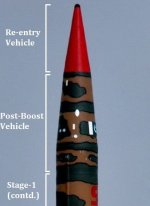
According to @Deterrent the PBVs were there from the day one, Shaheen 3 and 1a have biggers PBVs which allow it maneuver in Space and It provides a very steep angle of attack, giving it unusually high rentry speed of Mach 18. Meaning the actual midcourse speed would be above mach 20+.
From the recent S3 test it seems these new PBVs will be integrated their too along with new warheads.
As per smash, degree of accuracy translates into highly maneuverable weapon

The thing with ballistic missiles is, once you have the kill chain and accuracy, range is hardly an issue, you can just add another stage

Just so people understand why AShBMs are so feared new weapons on block and what's we dealing with here
download - 2024-11-04T184246.249.jpeg
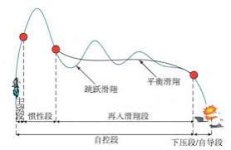
Smash at max performs these kind of maneuvers which explains. There is literally no air defence system out their that can counter such systems. all the skip glide maneuvers are performed at hypersonic speeds.
Thaad, SM3, PAC all are toast.
for india its an overkill.
 
Last edited:
Here's something fun. The point is to give some ballpark numbers for discussions on this forum to avoid hawai batain that often go on and NOT to be some kind of definitive statement of facts or ANYTHING LIKE THAT. JUST FUN OK?

I have some code that simulates a BM flight. It includes atmospheric effects. I can add maneuvers. It models variable mass through a simplified rocket model based on exhaust velocity. Take this with a huge huge grain of salt. I assumed a bunch of numbers that I thought would be close to Fatah-II or SMASH size missile like ballistic coefficients, exhaust velocities, fuel fraction, mass, burn time etc. I assumed purely ballistic flight - no maneuvers. I varied the launch angle to see the trend in range, impact speed/Mach, and apogee:
View attachment 77066

At a range of 349 km I got impact Mach 1.27 and apogee of 37.8 km. This is that run:
View attachment 77067
The trajectory is very depressed - only reaching an apogee of 37.8 km as I already said.


I don't know how accurate my simulation is considering that that max Mach is 12.2 @ 20.2 km altitude. This seems quite high to me. But it might be close to accurate and I just don't know how these trajectories are. The thing to note is that even with a max speed of 12.2 Mach, the impact speed is only 1.3.
View attachment 77069
time is almost 3 and a half minutes.


EDIT: ASSUMING MY NUMBERS ARE IN THE BALLPARK, the thing that I find interesting is the depressed trajectory that is sacrificing range and impact speed. I would conjecture this is done to avoid detection even though kinetically the missile is capable of more. That is my hypothetical missile JamD-2-SMASH, to achieve a range of 450 km it would have to go to an apogee of 112 km. This is what that trajectory looks like:View attachment 77073View attachment 77074
There @JamD goes again, trying to make sense.

Would it be technically possible to have a programmable flight path, sacrificing range and impact speed for stealth and vice versa. That would permit a tailoring of a flight profile to a target. A multi-layered defense would see a very depressed trajectory while more point defenses or sea based would have a higher trajectory with associated faster terminal speeds and range?
Would this be technically feasible? Deployable? Or would you have to have variants hardwired for each like a SMASH-L for well protected land targets, SMASH-S for ships and SMASH-G for land, general but not particularly sophisticated ones.
 
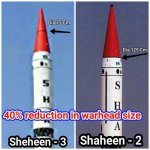
WRT to the RV size, this is likley due to further refinement of the actual warheads. There is likely no reduction in yield (my own estimate is about 100KT for Pu239 based weapons, and probably 3-500 KT for HEU based ones, presuming all are boosted, if as seems likely there is even a basic thermonuclear component, then the numbers change), but savings in mass.
 
What makes you think that in the future, India will be the only adversary for Pakistan?
Even in near and slightly distant future they are no where to be close
 
Here's something fun. The point is to give some ballpark numbers for discussions on this forum to avoid hawai batain that often go on and NOT to be some kind of definitive statement of facts or ANYTHING LIKE THAT. JUST FUN OK?

I have some code that simulates a BM flight. It includes atmospheric effects. I can add maneuvers. It models variable mass through a simplified rocket model based on exhaust velocity. Take this with a huge huge grain of salt. I assumed a bunch of numbers that I thought would be close to Fatah-II or SMASH size missile like ballistic coefficients, exhaust velocities, fuel fraction, mass, burn time etc. I assumed purely ballistic flight - no maneuvers. I varied the launch angle to see the trend in range, impact speed/Mach, and apogee:
View attachment 77066

At a range of 349 km I got impact Mach 1.27 and apogee of 37.8 km. This is that run:
View attachment 77067
The trajectory is very depressed - only reaching an apogee of 37.8 km as I already said.


I don't know how accurate my simulation is considering that that max Mach is 12.2 @ 20.2 km altitude. This seems quite high to me. But it might be close to accurate and I just don't know how these trajectories are. The thing to note is that even with a max speed of 12.2 Mach, the impact speed is only 1.3.
View attachment 77069
time is almost 3 and a half minutes.


EDIT: ASSUMING MY NUMBERS ARE IN THE BALLPARK, the thing that I find interesting is the depressed trajectory that is sacrificing range and impact speed. I would conjecture this is done to avoid detection even though kinetically the missile is capable of more. That is my hypothetical missile JamD-2-SMASH, to achieve a range of 450 km it would have to go to an apogee of 112 km. This is what that trajectory looks like:View attachment 77073View attachment 77074

Appreciate your efforts but it's Quite technical, Can you please translate outcome of your analysis to something which non-technical like us can understand? 😇
 
Last edited:
Great!

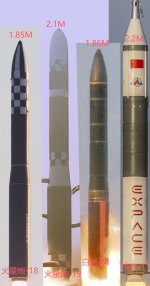
More pencil shaped ballistic missile from Pakistan.

How come Pakistan never innovates on its BM design? They are all shaped like pencils like the Iranian missiles which trace their ancestry to the Scuds.

For India, and other countries with advanced rocket technology, you see varying designs. For example, the Agni series are markedly different in appearance to the Prithvi etc. same with china, Israel & even North Korea.

View attachment 77027
You want something like this
 

Attachments

  • 20241105_181330.jpg
    20241105_181330.jpg
    120.9 KB · Views: 39
To view this content we will need your consent to set third party cookies.
For more detailed information, see our cookies page.

Of course they are the same. Both use rocket motor, both are cylindrical shape, both are pointy and both fly to their target.
 
View attachment 77142View attachment 77143
According to @Deterrent the PBVs were there from the day one, Shaheen 3 and 1a have biggers PBVs which allow it maneuver in Space and It provides a very steep angle of attack, giving it unusually high rentry speed of Mach 18. Meaning the actual midcourse speed would be above mach 20+.
From the recent S3 test it seems these new PBVs will be integrated their too along with new warheads.

View attachment 77145
Smash at max performs these kind of maneuvers which explains. There is literally no air defence system out their that can counter such systems. all the skip glide maneuvers are performed at hypersonic speeds.
Thaad, SM3, PAC all are toast.
for india its an overkill.
 

Users who are viewing this thread

  • Pakistan Defence Latest

    Latest Posts

    Back
    Top