Pakistan Nuclear Power plants

The way solar, wind and battery prices are falling and technology is improving in couple of years it would be hard for any other source to compete.
Don't knock on Nuclear. Its the most reliable source, more than wind, solar and hydro. Plus, China is making headways into Thorium nuclear power, which is several times more potent as an energy source than uranium, also safer and les wastage. Also, it might be surprising, but uranium and especially Thorium is actually in much abundance. Every country in the world has potential Thorium sources. I wish Emperor Xi would hurry up and gift us some NPPs.
 

‘Pakistan produced record 21.7TWh nuclear energy in 2024’​


Khaleeq Kiani
September 25, 2025

• Yearly report on nuclear energy criticises Chashma-5 for high cost, precedence over renewable energy projects
• World Nuclear Industry Status Report says solar outshone nuclear in terms of efficiency, cost; reveals Pakistan’s renewable energy, including hydro, rose to 15.2GW from 14.2GW in 2023

ISLAMABAD: Pakistan’s net nuclear energy generation touched a record 21.7 terawatt-hours (TWh) in 2024, even though overall electricity costs and inefficiencies reached a systematic tipping point, forcing consumers to switch to renewables, particularly solar, said the World Nuclear Industry Status Report (WNISR) 2025.

“Pakistan operates six nuclear reactors with a combined (net) capacity of 3.3 gigawatts (GW). Nuclear electricity production has increased from 21.3TWh in 2023 to a new all-time high of 21.7TWh (net) in 2024,” it said, adding Pakistan started developing another 1200MW plant in December 2024 with Chinese support.

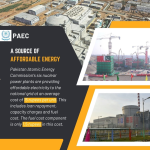
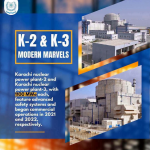
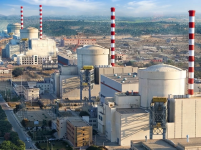
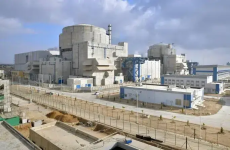
The share of electricity from nuclear power plants to the commercial grid increased from the 16.2pc peak in 2023 to a record 17pc in 2024, it said, adding all operating reactors were built by the China National Nuclear Corporation (CNNC). This includes two Hualong One reactors (Kanupp-2 and Kanupp-3) outside Karachi and four CNP-300 nuclear reactors in Chashma.

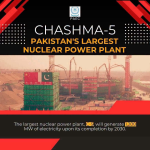
CNNC was also building another 1200-MW Hualong One reactor in Chashma (Unit 5). The agreement to build this reactor dates back to 2017, but it took over seven years to progress to the formal construction start, i.e. first pour of concrete for the base slab of the reactor building, which occurred on December 30, 2024.

It is China’s only ongoing nuclear newbuild project abroad and represents the first non-Russian construction start anywhere in the world in the past five years.

In January this year, the National Electric Power Regulatory Authority published an estimated overnight cost of Rs966 billion ($3.4bn) for the Chashma-5 project and the total cost (including financing and other costs) of Rs1.125 trillion ($4 billion).

The majority of the cost is planned to be covered by credit from China for the project to start production by 2030, the report said, adding the project had been criticised for its high cost of power, and shelving renewable energy projects to make way for it.

The report said India had 21 operational nuclear power reactors, with a total net generating capacity of 7.4GW, more than double that of Pakistan (3.3GW), and New Delhi planned to add another 100GW by 2047, a target unlikely to be met.

Renewables vs nuclear

Talking about global trends, the report said solar energy added hundreds of gigawatts globally while nuclear remained irrelevant in market development in 2024. “As storage passed a trigger point, there are first signs of a revolution behind the meter and low-income countries are starting to leapfrog,” it said.

In 2024, total investment in non-hydro renewable electricity capacity reached a record $728bn, 21 times the reported global investment in nuclear energy. “Solar and wind power capacities grew by 32 per cent and 11 per cent, respectively, resulting in 565GW of combined new capacity, over 100 times the 5.4 GW of net nuclear capacity addition. Global wind and solar facilities generated 70 per cent more electricity than nuclear plants”.

Not only this, as challenges of integrating nuclear power into the energy system remain, new energy technologies disrupt markets and systems. Photovoltaics directly produce electricity from solar radiation in harmless nanometre-thin semiconductor junctions, allowing for ongoing steep cost reductions and performance increases. This is complemented by similar advances in power electronics and batteries.

Together these new technologies are evolving towards a highly flexible fully electrified energy system with a decentralised control logic outcompeting traditional centralised fossil and nuclear systems. “Nuclear energy increasingly has difficulties to survive in this context. 2024 has been a pivotal year as battery storage costs have dropped by 40pc.”

As behind-the-meter installations continue to scale, their capacity is becoming increasingly important. This was recently illustrated in Pakistan, the report noted.
 
Good to see the development of nuclear power plants in Pakistan. Got to reduce the reliance on hydroelectricity and gas based electricity.
 
Good to see the development of nuclear power plants in Pakistan. Got to reduce the reliance on hydroelectricity and gas based electricity.

Yes. But the more pressing issue of grid losses needs to be addressed.
 

Chashma-1 achieves historic milestone​

The Newspaper's Staff Reporter
September 25, 2026

1790337667457.png

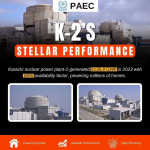
ISLAMABAD: Chashma Nuclear Power Plant Unit-1 (C-1) has operated safely and without interruption for 427 days during Cycle 18, setting a new record for the longest continuous operating cycle achieved by a nuclear power plant in the country’s history.

In a statement, the Pakistan Atomic Energy Commission (PAEC), which operates a fleet of six nuclear power plants, said the 325MW C-1 recorded uninterrupted operations, which was also accompanied by strong international performance indicators.

“C-1 achieved a World Association of Nuclear Operators (WANO) Performance Indicator Index score of 100 during each of the first two quarters of 2026, placing it among the leading nuclear power plants globally in terms of operational performance, reliability and safety,” the PAEC said.

The achievement reflected the technical expertise, discipline, and teamwork of the engineers, scientists, and other personnel at the Chashma Nuclear Power Generating Station (CNPGS), supported by ongoing guidance from the PAEC management and strict adherence to nuclear safety standards.
 

Country’s nuclear safeguards pass first-ever IPPAS security review​

Amin Ahmed Published October 10, 2026

1791630171431.png

1,200-megawatt Chashma-5 nuclear power plant. —Dawn

• IAEA team calls physical protection regime robust after 12-day review; offers recommendations to tighten security rules and procedures
• PNRA, IAEA wrap up five-day workshop on commercial-grade nuclear equipment

ISLAMABAD: Pakistan has established a robust nuclear security regime for the physical protection of its nuclear materials and facilities, an International Atomic Energy Agency (IAEA) team of experts found after concluding a comprehensive 12-day review.

IAEA’s International Physical Protection Advisory Service (IPPAS) mission conducted its first-ever evaluation of Pakistan’s legislative and regulatory framework for nuclear security covering nuclear materials and facilities.

The mission noted that the security framework was appropriately implemented at the specific nuclear facility visited by the experts.

According to an IAEA press release on Friday, the regime is continually improved through periodic reviews, while Pakistan’s well-established capacity-building infrastructure actively benefits national, regional and international expertise in nuclear security.

The seven-member mission team was led by Khammar Mrabit, a former director general of the Moroccan Agency for Nuclear and Radiological Safety and Security. It included experts from China, Romania, the Russian Federation, Slovakia and two IAEA staff members.

Following their assessment, the team provided recommendations aimed at further enhancing Pakistan’s nuclear security regime and its associated procedures. Several good practices were also identified at both regulatory and facility levels.
 
“The first IPPAS mission in Pakistan is completed successfully, marking the country’s commitment in further enhancing regulatory and operational aspects of its well-established nuclear security regime,” Karine Herviou, IAEA deputy director general and head of the Department of Nuclear Safety and Security, said during the mission’s closing ceremony.

“Pakistan’s contribution to building the skills of the nuclear security workforce is commendable and has a far-reaching impact.”


Hosted by the Pakistan Nuclear Regulatory Authority (PNRA) at the government’s request, the mission aimed to assist the state in strengthening its national nuclear security regime.

“Hosting the IPPAS mission underscores Pakistan’s unwavering commitment to maintaining a robust nuclear security regime across facilities and activities,” said Zia Hussain Shah, chairman of the PNRA.

“The valuable insights provided by the international experts’ team not only validate our robust physical protection measures but also offer an excellent baseline to further strengthen our legal and regulatory framework, national nuclear security regime, including facility-level practices.”

IPPAS missions provide peer advice on implementing international instruments and IAEA guidance regarding the protection of nuclear materials.

During these missions, international experts observe a nation’s physical protection systems, compare them with international good practices and make recommendations for improvement on a nationwide and facility-specific basis.
 
Nuclear safety workshop

Meanwhile, the Pakistan Nuclear Regulatory Authority, in collaboration with the IAEA, successfully concluded a five-day National Workshop on Commercial Grade Item Dedication for nuclear safety-related applications.

Organised by the National Institute of Safety and Security, an IAEA Collaboration Centre, the workshop concluded on Thursday. It brought together regulatory staff, nuclear installation operators and supply chain stakeholders to discuss a process used when commercially manufactured items are considered for safety-related applications.

Speaking on the occasion, PNRA Executive Member Shahid Rashid emphasised the importance of reliable and qualified equipment for the safe operation of nuclear installations.

“Factors such as technological advancement, equipment obsolescence and the evolving global supply chain can affect the availability of specialised nuclear-grade components,” Mr Rashid stated.

“Commercial Grade Item Dedication provides an important mechanism for establishing confidence that commercially available items can meet the requirements for intended use in nuclear installations.”

The PNRA noted the workshop contributed to strengthening Pakistan’s capabilities in nuclear safety and supply-chain oversight, aligning strictly with applicable requirements and international good practices.
 

Users who are viewing this thread

Latest Posts

Back
Top