Pakistan Rocket Force Command News and Discussions

......Pakistan looking to acquire the real chinese df17......
Pakistan currently lacks the capability to operate the DF-17, let alone acquire the DF-17's technology and manufacture it on its own.

Even if China provided Pakistan with all the DF-17's technology, Pakistan currently lacks the capability to operate it properly.

So, let's put that idea to rest for now.
 
This is not the PLA Rocket Force.

Pakistan's Strategic Plans Division Force is similar to China's PLA Rocket Force. Both are strategic nuclear weapons units.

Pakistan's Rocket Force is equivalent to the artillery brigades under the PLAGF's group armies.
Not really. SPD is the secretariat for NCA, the top tier C2 body that has the centralised launch authority. It has been empowered by the NCA to oversee all strategic organisations and their functioning, including those concerned with rockets/missiles, but in itself SPD is not a rocket force. The tri-services Strategic Force Commands are the custodian of the missiles (all ballistic missiles are with Army Strategic Force Command) and they have the launch mechanism with them.
 
Not really. SPD is the secretariat for NCA, the top tier C2 body that has the centralised launch authority. It has been empowered by the NCA to oversee all strategic organisations and their functioning, including those concerned with rockets/missiles, but in itself SPD is not a rocket force. The tri-services Strategic Force Commands are the custodian of the missiles (all ballistic missiles are with Army Strategic Force Command) and they have the launch mechanism with them.


@Michael is explaining it right. Our Rocket force will operate like the Chinese one. Pakistan is making structural changes in it's organization so it mimics the Chinese force structure. It will be easy for collaboration, coordination and interoperability.

NCA is just an issuer of the orders to respond with nukes for example. SPD operates / manages nukes and their release to rocket force that manages our missile response mechanism.
 
Pakistan currently lacks the capability to operate the DF-17, let alone acquire the DF-17's technology and manufacture it on its own.

Even if China provided Pakistan with all the DF-17's technology, Pakistan currently lacks the capability to operate it properly.

So, let's put that idea to rest for now.
You should stop acting like a phuppi
 
You should stop acting like a phuppi

I am with you. I felt the same way. Got to respect Phuppo g.

Missiles are fueled, GPS coordinates filled in and they fly from TEL's or Silos. The internal chipset will do the rest in linking to INS/GSP Beidou vs. Glonals etc, etc, until target.
 
Pakistan currently lacks the capability to operate the DF-17, let alone acquire the DF-17's technology and manufacture it on its own.

Even if China provided Pakistan with all the DF-17's technology, Pakistan currently lacks the capability to operate it properly.

So, let's put that idea to rest for now.

Chinese are so arrogant and unable to comprehend a simply truth - you can invent a weapon but it DOES NOT make you the master of that weapon. It's like manufacturing a sword and then saying since I have made this sword I am a master at it. Whereas the truth is that someone can buy that sword and become superior sword fighter and superior tactician.

So Chinese developing a fighter jet or missile does not make you a master operator of that weapon. So stop this fuking arrogance of yours.
 
You should stop acting like a phuppi
If you're trying to express dissatisfaction, criticism, humiliation, contempt, or insult towards me, you should use language I can understand. At the very least, it should be readable by standard translation software.

For example, "I think you're a 250." You definitely don't know what that means.
======================================
Political level:
The DF-17 is a Waverider HGV. To date, only China possesses this technology. SASTIND is unlikely to allow its export unless it remains fully controlled by the PLARF after export. Pakistan would not agree to such a clause.

Technical Level:
The DF-17 is monitored and controlled by a missile control center throughout its launch and impact.
The control center can issue control commands to the missile while it is in hypersonic flight. If the PLA's air and space surveillance system detects an enemy air defense interceptor missile taking off, the control center can direct the DF-17 to make a drastic and high-speed trajectory change, thereby evading the interceptor.
It can change targets at any time before impacting its target. It can also track and attack slow-moving targets.
After impacting its target, the battlefield monitoring network analyzes and assesses the damage in real time. If the damage is unsatisfactory, another missile can be launched at any time, or another missile already in flight can be deployed to compensate.
This requires a massive integrated air and space control and monitoring network.
If Pakistan had these networks, the evidence and results of the "India-Pakistan May 7th Air Battle" would not have been so difficult to verify.

Please do not compare some countries' hypersonic missiles with China's. China has strict requirements and definitions for hypersonic missiles. Not all missiles with speeds exceeding Mach 5 are considered hypersonic missiles.

Chinese Standard:
高超音速导弹是指能够在临近空间大气层内以超过5马赫速度进行持续的可控的飞行,并能够完成大范围不规则机动的导弹。
Hypersonic missiles are missiles capable of sustained, controlled flight at speeds exceeding Mach 5 within the near-space atmosphere and capable of performing large-scale, irregular maneuvers.

Notice that there are a lot of restrictive words here. That's the point.
If you insist that Pakistan already has these conditions, then go ahead.
 
MOD NOTICE: Kindly stop arguing among yourselves. Everyone is entitled to share their opinion, only the GOP and the competent authorities know what will happen and that is very much behind closed door decisions - not likely to be revealed on some random internet mili-blog forum.

So in the interest of healthy debate - play nice everyone.
 
If you're trying to express dissatisfaction, criticism, humiliation, contempt, or insult towards me, you should use language I can understand. At the very least, it should be readable by standard translation software.

For example, "I think you're a 250." You definitely don't know what that means.
======================================
Political level:
The DF-17 is a Waverider HGV. To date, only China possesses this technology. SASTIND is unlikely to allow its export unless it remains fully controlled by the PLARF after export. Pakistan would not agree to such a clause.

Technical Level:
The DF-17 is monitored and controlled by a missile control center throughout its launch and impact.
The control center can issue control commands to the missile while it is in hypersonic flight. If the PLA's air and space surveillance system detects an enemy air defense interceptor missile taking off, the control center can direct the DF-17 to make a drastic and high-speed trajectory change, thereby evading the interceptor.
It can change targets at any time before impacting its target. It can also track and attack slow-moving targets.
After impacting its target, the battlefield monitoring network analyzes and assesses the damage in real time. If the damage is unsatisfactory, another missile can be launched at any time, or another missile already in flight can be deployed to compensate.
This requires a massive integrated air and space control and monitoring network.
If Pakistan had these networks, the evidence and results of the "India-Pakistan May 7th Air Battle" would not have been so difficult to verify.

Please do not compare some countries' hypersonic missiles with China's. China has strict requirements and definitions for hypersonic missiles. Not all missiles with speeds exceeding Mach 5 are considered hypersonic missiles.

Chinese Standard:
高超音速导弹是指能够在临近空间大气层内以超过5马赫速度进行持续的可控的飞行,并能够完成大范围不规则机动的导弹。
Hypersonic missiles are missiles capable of sustained, controlled flight at speeds exceeding Mach 5 within the near-space atmosphere and capable of performing large-scale, irregular maneuvers.

Notice that there are a lot of restrictive words here. That's the point.
If you insist that Pakistan already has these conditions, then go ahead.
lets just agree to disagree
 

Pakistan's new deterrence equation​

.


Kamran YousafSeptember 29, 20253 min read
facebook twitter whatsup linkded email

the writer is a senior foreign affairs correspondent at the express tribune

The writer is a senior foreign affairs correspondent at The Express Tribune


Following the four-day military conflict with India in May, Pakistan created a new Army Rocket Force Command (ARFC). Some dismiss it as a hurried move in the aftermath of recent Indo-Pak tensions. Others suspect it signals a shift toward escalation. Both views miss the point. Background discussions with relevant authorities suggest the ARFC is not an overnight reaction but rather the culmination of a long, painstaking evolution in Pakistan's conventional military doctrine.

For decades, Pakistan has been grappling with a fundamental challenge on how to balance India's overwhelming conventional superiority without sliding into overreliance on nuclear weapons. The answer, refined gradually by military planners and scientists, has been to strengthen long-range conventional strike options. The ARFC is the manifestation of that journey.

At its core, ARFC consolidates Pakistan's long-range rocket and missile capabilities under a single command structure. Until now, artillery divisions with long-range vectors were dispersed, operating in relative isolation. Bringing them together under one umbrella reflects an effort at synergy, efficiency and doctrinal clarity. It is about using what already exists in a smarter way.

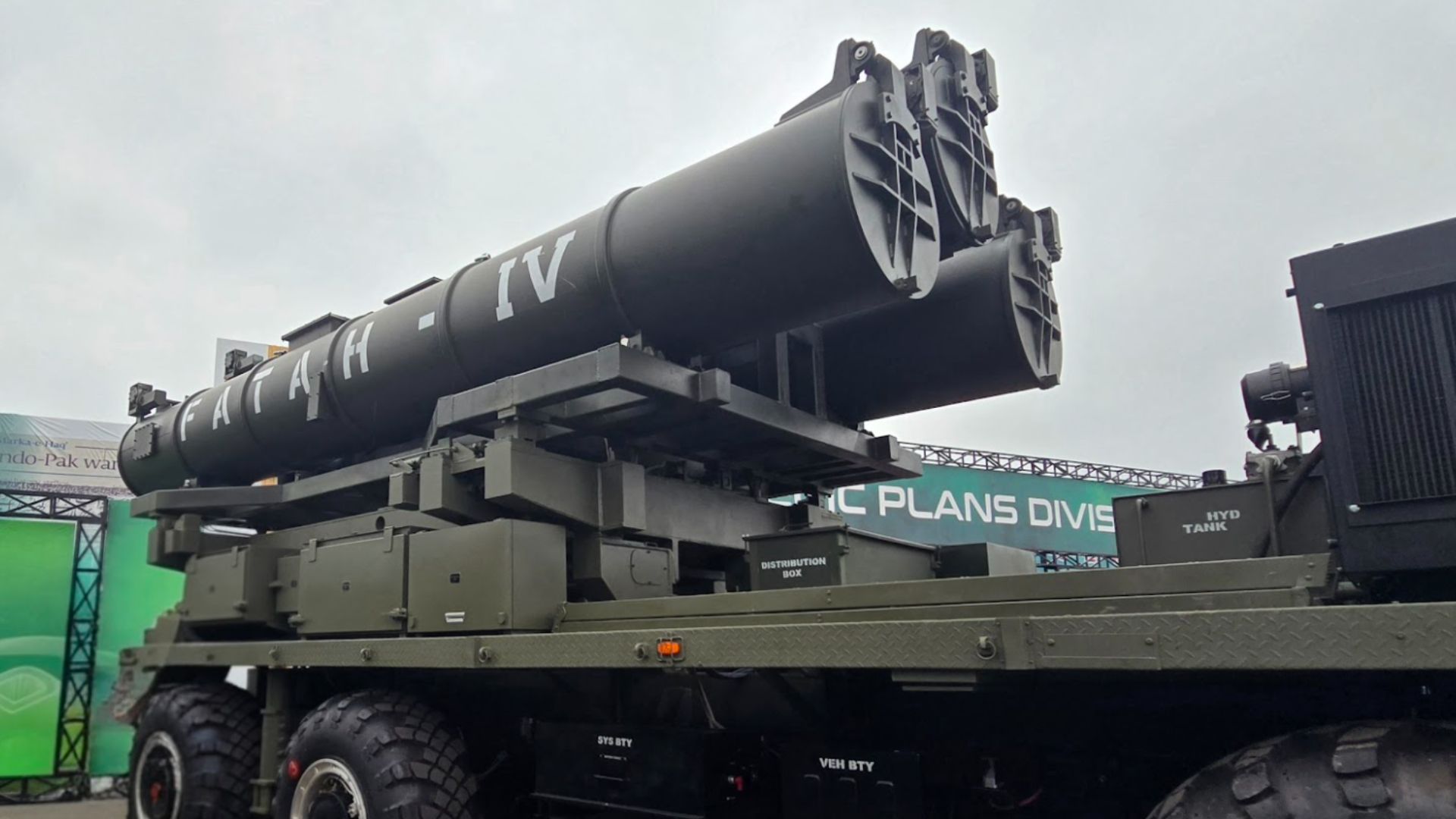
The Fateh-series rockets stand at the heart of this project. With their enhanced range and precision, they symbolise a new phase in Pakistan's conventional response regime. These rockets are not just about raw firepower, they are about control, flexibility and credible deterrence short of the nuclear threshold. In future conflicts, such capabilities will allow Pakistan to deliver short, sharp and intense firepower duels in order to impose costs without inviting full-scale war.


The timing of ARFC's unveiling invites speculation. India has been steadily expanding its conventional military edge, investing in missile defence systems and modernising its forces. Against this backdrop, Pakistan's move is as much about perception management as operational readiness. By institutionalising ARFC, Islamabad sends a clear signal. It has the means to circumvent India's air defence umbrella and strike across its territory.

This matters in deterrence psychology. If India believes Pakistan lacks credible conventional responses, it may be tempted to push the envelope. The ARFC is designed to raise those costs and close that window of temptation. South Asia's deterrence debate has long been dominated by the nuclear question. Yet deterrence does not begin and end with nuclear weapons. Conventional capabilities matter. They shape the spectrum of conflict that exists below the nuclear threshold. ARFC serves as what analysts call an "operational leveler". It dilutes conventional asymmetry and complicates Indian war plans.

By holding high-value targets at risk deep inside Indian territory, ARFC expands Pakistan's options in the event of a crisis. More importantly, it strengthens deterrence by punishment, the ability to inflict quick and decisive costs on any adversary who dares to test Pakistan's resolve.

Skeptics will ask whether ARFC blurs the line between conventional and nuclear deterrence. The answer lies in its very design. These are conventional systems, developed indigenously over decades, separate from Pakistan's nuclear arsenal. Their utility is not in threatening nuclear war but in providing a credible non-nuclear option.

India may accelerate its counterforce modernisation or deepen reliance on missile defences. The spiral is a familiar one in South Asia. Still, the alternative, relying too heavily on nuclear weapons to plug conventional gaps is riskier. In that sense, ARFC represents the lesser evil – a rational, even responsible attempt to restore balance at the conventional level. What ARFC offers is the ability to ensure that any conflict remains short, sharp and intensely costly for the aggressor. That is not escalation for escalation's sake; it is deterrence in its purest form.

War between two nuclear states remains unthinkable. But peace is only preserved when both sides understand the price of miscalculation. ARFC is Pakistan's way of making sure India understands that price.

 
Do we have a Tactical Ballistic Missile comparable to Iskander which Russia uses to hit High Value systems like Patriots,HIMARS??
 
Do we have a Tactical Ballistic Missile comparable to Iskander which Russia uses to hit High Value systems like Patriots,HIMARS??
The only thing close to Russian Iskander in the conventional role that I can think of is Pakistan's Fatah series of guided multiple launch rocket system. Specifically Fatah II, which is a guided SSM or SRBM with a "supersonic glide vehicle" (Source: Quwa) reported range of 400 KM which brings it close to the Iskander range.

WDS24-GIDS-Fatah-II_01.jpg
 

Users who are viewing this thread

Latest Posts

Back
Top