Pakistan-Saudi Arabia mutual defense pact: News & Discussion

no way NATO protects turkey against ISRAEL , they will find a way to break rules like they always have , Pakistan should be the center of these deals because we have the nukes and the best intelligence out of all the Muslims countries .

more like pak+saudi , pak+qatar , pak +Kuwait

Pakistan military isn't too big to do individual pacts with all these nations because we have to allocate a massive amount always available for any adventure from India's side and yet, provide protection to nations in the pact. So it will be one pact with member states. VETO rights need to be exclusive so no other country becomes a "sell out" at a time when action is needed.

If more members join like is the case, over the years, the initial force will be expanded to create a larger force under a centralized umbrella.

We keep using NATO for reference, but a better concept is US-CENTCOM. A central military command having operational war fighting capability in some Europe, ALL Middle East and almost entire South Asia. At the end, I can imagine, majority of war fighting will come on Pakistan's shoulders, even in a 60-40% split.
 
Pakistan military isn't too big to do individual pacts with all these nations because we have to allocate a massive amount always available for any adventure from India's side and yet, provide protection to nations in the pact. So it will be one pact with member states. VETO rights need to be exclusive so no other country becomes a "sell out" at a time when action is needed.

If more members join like is the case, over the years, the initial force will be expanded to create a larger force under a centralized umbrella.

We keep using NATO for reference, but a better concept is US-CENTCOM. A central military command having operational war fighting capability in some Europe, ALL Middle East and almost entire South Asia. At the end, I can imagine, majority of war fighting will come on Pakistan's shoulders, even in a 60-40% split.

The fact that other Arab nations haven't joined also reveals something. In a certain way I am happy about that. There will be less distraction and efforts to sabotage. We need to understand something very clearly. There are a few Arab countries today who believe that they should have the role that Pakistan got in the pact with KSA. In other words, Pakistan has competition. As long as competition exists, a genuine bloc between us and other Arab states is very unlikely.

This pact is primarily between KSA and Pakistan. I firmly believe that KSA will invest heavily in Pakistani defence efforts and especially the nuclear component. The KSA Pakistan pact will have to prove its worth. That will happen through Saudi investment and tangible results on the ground in Pakistan. We know what Pakistan and KSA require. Once we see the tangible results, we know that things moving in a positive direction.
 
Last edited:
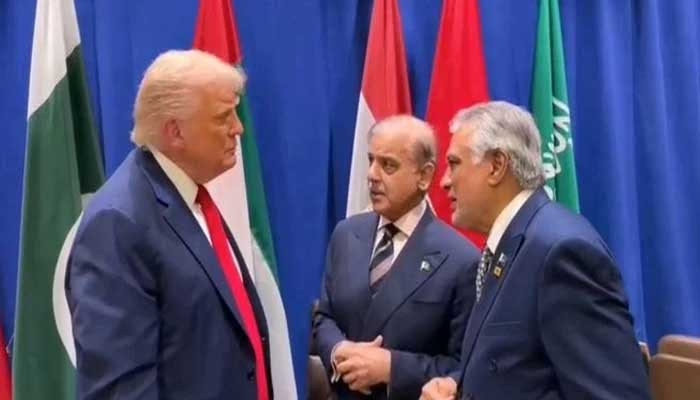
PM Shehbaz to meet Trump at White House today, US official confirms

 
The fact that other Arab nations haven't joined also reveals something. In a certain way I am happy about that. There will be less distraction and efforts to sabotage. We need to understand something very clearly. There are a few Arab countries today who believe that they should have the role that Pakistan got in the pact with KSA. In other words, Pakistan has competition.

This pact is primarily between KSA and Pakistan. I firmly believe that KSA will invest heavily in Pakistani defence efforts and especially the nuclear component.

I agree with the KSA investing in Pakistan. KSA can benefit from Pakistan's defense industry as we make around 75% of our needs locally and where we need to expand is the same as what KSA wants too. The aerospace sector, development of a 5th gen stealth fighter and space systems.

Other nations are ready to join, I know that from day 2 of signing this agreement with KSA. Pakistani leadership has been traveling since and I am sure these request to join need complete discussions and putting nations through a process with both Pakistan and Saudis. So we'll hear in the days to come. But two nations asked to join the next day, and 2 more came a couple of days later.
 
Pakistan military isn't too big to do individual pacts with all these nations because we have to allocate a massive amount always available for any adventure from India's side and yet, provide protection to nations in the pact. So it will be one pact with member states.
well no one is saying it will be cheap , we have no shortage of humans we just need money and Arabs have plenty of that . TBH i am fine with just KSA and PAK
 
PM Shehbaz to meet Trump at White House today, US official confirms

F 15 aya phr lol. its joke . we surely go for f 16s .
 
WOW!!!!!
Never expected this from Iran, they are now thinking strategically

I thought Iran was onboard the Pak-KSA agreement but would 'lay low' about that; but the President of Iran himself speaking at the UN was not expected. Big development!!
Remember that after the Trump-Munir private lunch, Trump mentioned that Munir was not happy with the situation (the bombing of Iran) and that Pakistanis know Iran better than 'the most'. Add to those, Trump revoking the concessions given to India on the Chahbahar Port, Trump so far not speaking against against the Pak-KSA deal and other things, we start to see a pattern in which Pakistan is being projected into the Middle East.
 
Pakistan military isn't too big to do individual pacts with all these nations because we have to allocate a massive amount always available for any adventure from India's side and yet, provide protection to nations in the pact. So it will be one pact with member states. VETO rights need to be exclusive so no other country becomes a "sell out" at a time when action is needed.

If more members join like is the case, over the years, the initial force will be expanded to create a larger force under a centralized umbrella.

We keep using NATO for reference, but a better concept is US-CENTCOM. A central military command having operational war fighting capability in some Europe, ALL Middle East and almost entire South Asia. At the end, I can imagine, majority of war fighting will come on Pakistan's shoulders, even in a 60-40% split.
WE shouldnt forget Pakistan also has a very deadly 2 front insurgency to take care of . The death rate of which for most countries is equal to or more than a war.
 
Hard power rules again

Veneer of credibility once lent to global governance has eroded; what matters is military force and financial muscle​

By
Nasim Zehra
|
September 25, 2025
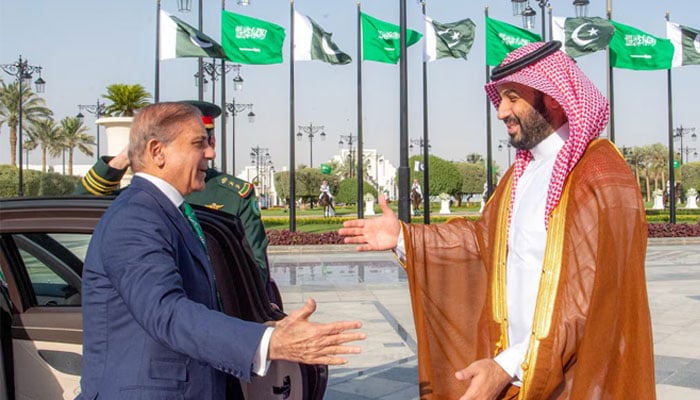
Saudi Crown Prince Mohammed bin Salman and Pakistan Prime Minister Shehbaz Sharif meet in Riyadh, Saudi Arabia, September 17, 2025. — Reuters
The age of hard power is back with a vengeance. Across continents, from Asia to the Americas, Europe to Africa, norms, laws and even UN resolutions are being brushed aside. What matters is force in terms of military capability, financial muscle and the audacity to use both.

The veneer of credibility once lent to global governance has eroded. Israel's genocide against Palestinians continues unchecked, backed by billions in US dollars, lethal weapons and repeated UN Security Council vetoes. Ukraine and Russia battle and bleed on. The US postures as an ally — acknowledged by the Gulf as one — but acts in different ways.


According to Israeli officials, Washington knew of Israeli strikes planned against Qatar, yet failed to warn its "billion-dollar deal-maker friend".

Meanwhile, the West itself is in conflict. Europe and the US are divided on Russia and Western societies that once embraced immigrants are now boiling over with rage against them. The melting pots of yesterday are fast seeming to be combustible zones.

This is the environment in which states such as Iran and Saudi Arabia, Iraq, Qatar, Egypt, Lebanon, Yemen and beyond, including Afghanistan and Pakistan, find themselves confronting external threats — most dangerously from Israel.

India, Israel's closest ally after the US, has long sought regional hegemony. But in May, the Modi-Doval doctrine of force projection was dealt a heavy blow. India's reckless May 7 attack on Pakistan backfired spectacularly.

Islamabad seized the moment, demonstrating an integrated multi-domain defence strategy, unrivalled air superiority and — for the first time — indigenous cyber and electronic warfare capabilities. The following month, during Israel's 12-day war against Iran, Pakistan again stood tall. Its unequivocal, boldly articulated diplomatic support for Tehran was widely appreciated across the Muslim world.

Together, the May and June wars confirmed two realities: hard power is central to global politics, and Pakistan has emerged as both militarily formidable and diplomatically credible.

The shift owes to Pakistan's standing linked to Pakistan's traditional role and to Field Marshal COAS Asim Munir who has adopted a doctrine of "offensive defence", changing the nature of Pakistan's power projection.


This aggressive-defensive power projection doctrine prioritises rigorous training, preparedness for both conventional and non-conventional threats, and critically, a willingness to use force not just defensively but to push for the settlement of historic disputes.

Kashmir tops that list. So does Palestine, where Pakistan has consistently and openly called for implementing UN resolutions for a Palestinian state with pre-1967 borders and Jerusalem as its capital. The Pakistan Army has also doubled down on global partnerships. Ties with China, Saudi Arabia, Turkey, Iran, Egypt and Oman remain strong.

Relations with the US are cautiously being rebuilt, while new friendships with Russia and Azerbaijan are taking root. Joint training, defence production and arms exports give Pakistan’s military a visible global footprint.

Historically, Islamabad’s major partnerships — with the US, China and Saudi Arabia — began with security ties before economic or diplomatic links followed. That pattern endures.

Pakistan's security presence in the Middle East dates back decades, rooted in Prime Minister Zulfikar Ali Bhutto’s outreach in the early 1970s. Despite fluctuations, ties remained unbroken. Three events — the 1971 breakup of Pakistan, the launch of its nuclear programme and its engagement with the Middle East — shaped Islamabad’s trajectory of involvement in the Middle East.

That history came full circle on September 19, when Pakistan and Saudi Arabia signed the Strategic Mutual Defence Agreement (SMDA). Its central clause is blunt: "an attack against one will be considered an attack against both".

For Pakistan, this is a strategic leap. It reclaims the country’s earlier high-profile role in Middle Eastern security. Early signs are promising: Qatar, Egypt and Turkey are already exploring similar agreements with Islamabad.

At the UN General Assembly, Deputy Prime Minister Ishaq Dar was a special invitee at a Qatar-chaired regional security meeting — a far cry from the days when, not too long ago, Arab states sought Pakistan to not be too active diplomatically on Gaza. For Saudi Arabia, the benefits are equally clear. It diversifies security partnerships, no longer relying solely on the US. This time, Riyadh's partner is a nuclear-armed Pakistan with proven strategic capabilities.

The SMDA also raises pressing questions. One, will Pakistan provide Saudi Arabia with a nuclear umbrella? Given Islamabad’s doctrine of offensive defence and Israel’s repeated aggression, the answer is a likely yes. But for now, given strategic sensitivities, it is one that won't get a clear answer from either party.

Two, does this replace US-Saudi defence ties? No. It supplements them, giving Riyadh more options while retaining American backing. Three, could this be the seed of a regional military alliance with Pakistan at the core? Quite possibly. The region’s threat environment makes it more than likely.

Four, did Washington approve? Both Riyadh and Islamabad seem to have kept Washington, Tehran and Beijing informed. The Saudi defence minister tweeted after meeting CENTCOM's chief as well as Iran’s national security adviser.

Pakistan, too, briefed all key players. Five, China’s role? While not yet formalised, it will be hard to ignore. With deep ties to both Pakistan and Saudi Arabia, and China’s cutting-edge defence technology, Beijing is well-positioned to become a partner in this evolving security arrangement.


The world is once again defined by hard power. Israel's unchecked aggression, India’s failed bravado, blatant double standards and Europe’s divisions all underscore that reality.

For Pakistan, this turbulent environment has opened a new space. Militarily, it has demonstrated sophistication and resolve. Diplomatically, it has shown confidence and clarity.

And with the Pakistan-Saudi SMDA, Islamabad has re-entered the Middle East not as a junior partner, but as a central security actor. This is Pakistan’s reassertion — at the intersection of South Asia, the Middle East and the wider Muslim world.

 
Stimson view on how Saudi-Pak pact may benefit US policy, increasingly feels this pact had US blessing

Effective Buck-Passing: Why the US Should Welcome the Saudi-Pakistan Defense Pact​


Unpacking what the recent Saudi-Pakistan defense pact means for U.S. Interests

By​

South Asia

  • September 24, 2025


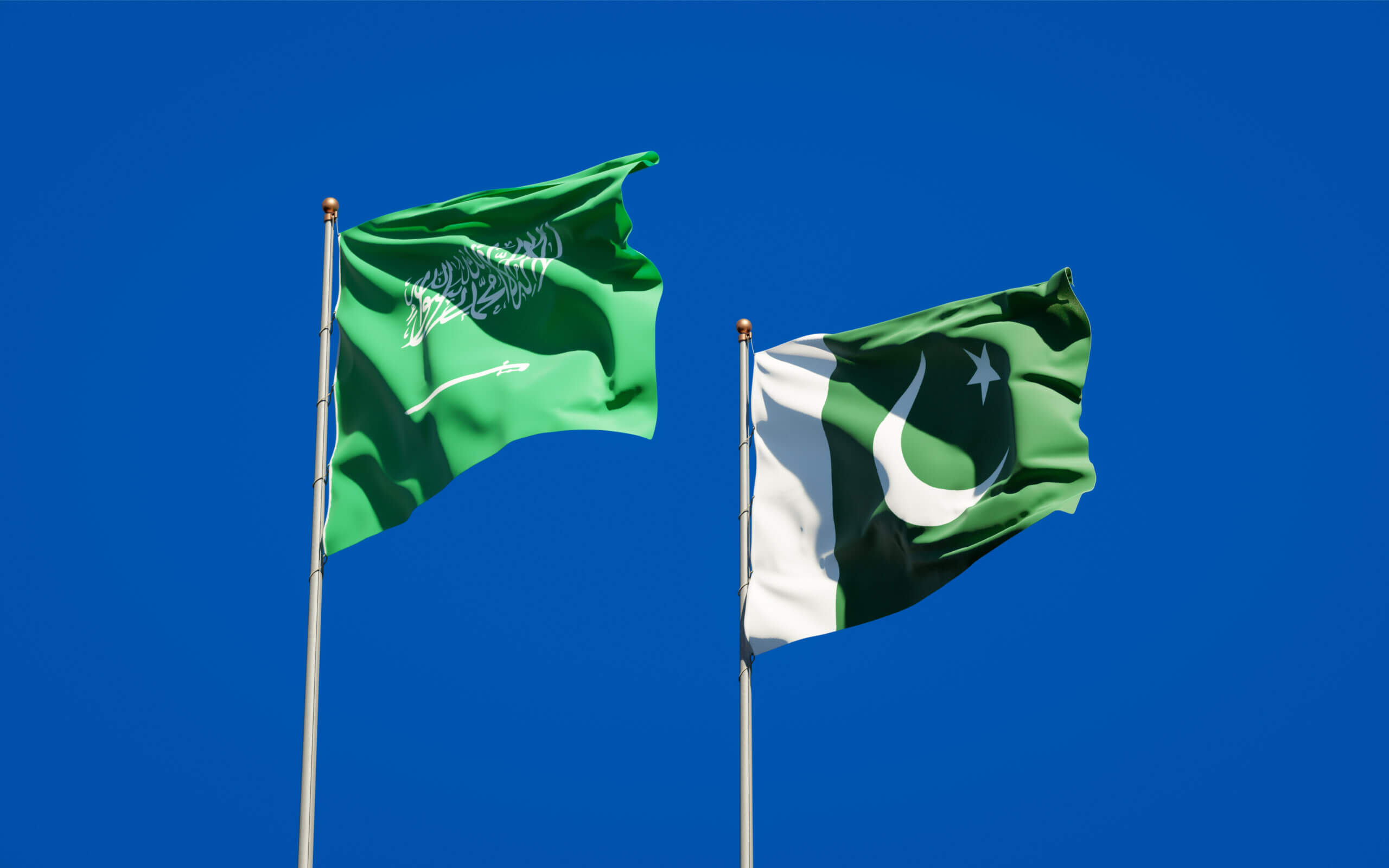
AdobeStock_391944382.jpeg


The newly announced Saudi-Pakistan mutual defense pact indeed marks a watershed for both the Middle East and South Asia. Riyadh and Islamabad have deeply cooperated on security for decades, but this time, they have gone a step further by formally and explicitly binding their security to one another, declaring that “any aggression against either country shall be considered an aggression against both.” For Saudi Arabia, the pact delivers the firmer external guarantees it has been more actively seeking in a volatile region, especially as Israeli assertiveness across the region, alongside Iranian and Houthi threats, collides with the kingdom’s rising economic stakes. For Pakistan, it revives a historic partnership and elevates its geopolitical profile, while transforming a once-implicit assurance into a two-way collective defense agreement that adds to its security, which is especially significant at a moment of heightened tension with India.

Far from threatening American interests, this is the kind of buck-passing with the potential of burden-shedding that Washington should welcome. Critics may argue that the pact reflects Saudi doubts about U.S. reliability — given regional tensions due to the war in Gaza and episodic gaps in U.S. security provision, such as reactions to Israeli operations in neighboring states like Qatar — but this interpretation overstates the case. Even if spurred by questions around American security assurances, the pact is less a rejection of U.S. security than a pragmatic decision by Riyadh to share risk and reduce dependence, and on balance a constructive Pakistani contribution to regional security, which ultimately benefits U.S. interests.

For one, it redistributes security burdens away from America. For decades, the U.S. has been the default guarantor in the Gulf, stationing troops, keeping carriers on patrol, and intervening whenever crises against Gulf powers erupt. Washington has backed Saudi Arabia in its wars and proxy fights, from providing logistical support for the kingdom’s bombing campaign in Yemen to intercepting Houthi missiles and drones over the sea lanes of the Red Sea. American assets remain heavily committed to protecting Gulf shipping and Saudi critical infrastructure. These commitments are rising, not falling, as drone and missile technology threats have proliferated. The stakes will only increase as Saudi Arabia invests heavily in emerging technologies such as artificial intelligence, which depend on secure and resilient physical infrastructure.

The Biden administration floated a formal mutual defense agreement with Saudi Arabia among other inducements to encourage Saudi-Israel normalization, a step that would have bound U.S. commitments in the region even more deeply. But Washington’s global bandwidth is limited, and even pre-existing security commitments in much of the world, including the Middle East, are struggling to retain domestic political support. The U.S. also faces greater entrapment and entanglement risks in the Middle East given Israeli military activity across the region. From this vantage point, the Saudi-Pakistan defense pact represents effective buck-passing: Riyadh is anchoring its security to Islamabad instead of bargaining for a deeper American guarantee.

The pact also injects a measure of stability into two volatile regions without new U.S. commitments. For Iran, any aggression against Riyadh now risks drawing in neighboring Pakistan, raising the costs of escalation through both conventional and proxy channels. Israel professes no obvious interest in attacking Saudi Arabia, but in the event it does, Pakistani backing for Saudi Arabia could militate against a major escalation. In South Asia, the equation also shifts. India and Pakistan remain prone to escalatory military behavior, fueled by crises triggered by terrorist violence, the relative power differential, and external backing available to both countries. At the very moment Pakistan faces Indian coercion, Riyadh has elevated its security partnership with Islamabad, which will be a reason for New Delhi to be more cautious before acting militarily against Pakistan. The pact also encourages restraint in Islamabad, since Riyadh will have little interest in being dragged into an unnecessary confrontation with India — a reality not lost on Islamabad. Pakistan will also want the arrangement and associated benefits to endure rather than risk losing Saudi backing, as well as geopolitical face, due to frisky behavior toward India. Fears of Pakistan being emboldened into aggression against India are overstated.

Some in Washington will worry about cross-pressures. A closer Saudi-Pakistan security relationship inevitably strengthens Islamabad’s hand relative to New Delhi, which undermines the Biden-era U.S. Indo-Pacific strategy that sought to position India as a net security provider in the region. This doesn’t undermine the Trump administration’s approach to Asia focused on making bilateral relationships more advantageous for the U.S. — in particular, renegotiating the terms of U.S.–India bilateral trade while limiting Indian purchases of Russian oil. As for India, its diplomatic and strategic work is cut out. Some in New Delhi may be tempted to explore even closer India-Israel cooperation, which would take India away from an Indo-Pacific focus that it has shown a preference for over the last few years. However, Indian strategic appetite for, and Israeli interest in, hard balancing a Saudi-Pakistan nexus are likely to be low due to Israel’s desire for an eventual normalization with Saudi Arabia. India also has deep economic interests in Saudi Arabia, including a large Indian diaspora, which it wouldn’t want to jeopardize when it faces multiple geopolitical headwinds. India is likely to continue to work a wedge strategy to manage Saudi-Pakistan alignment, even if the prospects of such an approach succeeding amid the new regional security environment are not favorable to New Delhi.

The Saudi-Pakistan pact helps check the influence of major rivals of the United States. China and Russia have been expanding influence with Riyadh, while Islamabad’s dependence on Beijing, in particular in the security domain, has grown manifold. Some may argue that Saudi Arabia risks being folded into China’s military orbit because Pakistan relies heavily on Chinese military equipment. But that misunderstands the relationship. Riyadh does not need Chinese defense technology; it already fields one of the most advanced arsenals of largely U.S. and Western systems in the region. On the side of Pakistan, it will use the opportunity to both diversify away from China and strengthen its defense profile through Saudi investments in its domestic defense industrial base, in addition to seeking Gulf capital for the economy. Overall, the pact means that Saudi Arabia and Pakistan can reinforce one another’s security without either moving further into Beijing or Moscow’s camp. By tolerating and even welcoming this arrangement, Washington enables regional actors to hedge against China and Russia without America doing or spending more.

Finally, the nuclear question must be considered carefully. The pact can pave the way for a Pakistani nuclear umbrella over Saudi Arabia. This may be central to Riyadh’s calculus, but it is hardly unprecedented. For decades, it has been assumed that Pakistani nuclear capabilities were at least indirectly available to Saudi Arabia. The pact formalizes the symbolism of Pakistani nuclear cover for the kingdom, while leaving sufficient ambiguity for both Islamabad and Riyadh on how and when they will signal on the nuclear umbrella. The more destabilizing concern for both the United States and Israel has always been different: the risk of Pakistani technology transfer to Iran, especially since the revelations of the A.Q. Khan network’s nuclear trafficking in the 1990s, from which Tehran derived benefit. Here, the pact may mitigate the danger. By binding Pakistan’s nuclear-armed military into Riyadh’s security framework, it raises the costs of any cooperation with Tehran and aligns Islamabad’s incentives against such proliferation.

What remains less certain is how an actual Pakistani nuclear umbrella over Saudi Arabia would extend, what Saudis may seek in material terms, and what Pakistan might be willing to do. As currently declared, Pakistan’s capabilities fall short, or at best just suffice, to threaten areas beyond Saudi territory when deployed from Pakistan. If the pact results in the declaration and testing of longer-range Pakistani systems, or positioning of Pakistani assets on Saudi territory, it will certainly be a negative outcome on the count of long-standing U.S. concerns and policy efforts related to restraining Pakistan from having missiles that fully range Israel. Yet, this is not a given. Top Pakistan military leadership is reasonably sensitive to this concern, notwithstanding the rhetoric of some civilian Pakistani leaders. Moreover, Riyadh does not face existential threats comparable to those faced by South Korea, Japan, and European nations, and its extended deterrence requirements are therefore ambiguous, which opens space for a range of arrangements and limits. The U.S. also retains influence with both Saudi Arabia and Pakistan to shape the terms of any prospective nuclear umbrella and limit nuclear technology sharing — a dynamic that allows for preservation of U.S. nonproliferation interests. The bottom line is clear: Saudi Arabia, and to a lesser extent Pakistan, are investing in their own security with each other’s help rather than drawing America further in. Indeed, Washington trades some control over the Middle Eastern security architecture — and chips away at influence over Riyadh in particular — but a more resilient regional security architecture that opens the path for the U.S. to do less on a subset of regional problems is precisely the kind of strategic buck-passing that U.S. grand strategy should encourage. A Middle East and South Asia where regional powers engage in greater self-help resulting in an improved regional balance amid rising threats is ultimately a step toward a more sustainable American security posture.

 
  • Like
Reactions: TAC
Stimson view on how Saudi-Pak pact may benefit US policy, increasingly feels this pact had US blessing

Effective Buck-Passing: Why the US Should Welcome the Saudi-Pakistan Defense Pact​


Unpacking what the recent Saudi-Pakistan defense pact means for U.S. Interests

By​

South Asia

  • September 24, 2025


AdobeStock_391944382.jpeg


The newly announced Saudi-Pakistan mutual defense pact indeed marks a watershed for both the Middle East and South Asia. Riyadh and Islamabad have deeply cooperated on security for decades, but this time, they have gone a step further by formally and explicitly binding their security to one another, declaring that “any aggression against either country shall be considered an aggression against both.” For Saudi Arabia, the pact delivers the firmer external guarantees it has been more actively seeking in a volatile region, especially as Israeli assertiveness across the region, alongside Iranian and Houthi threats, collides with the kingdom’s rising economic stakes. For Pakistan, it revives a historic partnership and elevates its geopolitical profile, while transforming a once-implicit assurance into a two-way collective defense agreement that adds to its security, which is especially significant at a moment of heightened tension with India.

Far from threatening American interests, this is the kind of buck-passing with the potential of burden-shedding that Washington should welcome. Critics may argue that the pact reflects Saudi doubts about U.S. reliability — given regional tensions due to the war in Gaza and episodic gaps in U.S. security provision, such as reactions to Israeli operations in neighboring states like Qatar — but this interpretation overstates the case. Even if spurred by questions around American security assurances, the pact is less a rejection of U.S. security than a pragmatic decision by Riyadh to share risk and reduce dependence, and on balance a constructive Pakistani contribution to regional security, which ultimately benefits U.S. interests.

For one, it redistributes security burdens away from America. For decades, the U.S. has been the default guarantor in the Gulf, stationing troops, keeping carriers on patrol, and intervening whenever crises against Gulf powers erupt. Washington has backed Saudi Arabia in its wars and proxy fights, from providing logistical support for the kingdom’s bombing campaign in Yemen to intercepting Houthi missiles and drones over the sea lanes of the Red Sea. American assets remain heavily committed to protecting Gulf shipping and Saudi critical infrastructure. These commitments are rising, not falling, as drone and missile technology threats have proliferated. The stakes will only increase as Saudi Arabia invests heavily in emerging technologies such as artificial intelligence, which depend on secure and resilient physical infrastructure.

The Biden administration floated a formal mutual defense agreement with Saudi Arabia among other inducements to encourage Saudi-Israel normalization, a step that would have bound U.S. commitments in the region even more deeply. But Washington’s global bandwidth is limited, and even pre-existing security commitments in much of the world, including the Middle East, are struggling to retain domestic political support. The U.S. also faces greater entrapment and entanglement risks in the Middle East given Israeli military activity across the region. From this vantage point, the Saudi-Pakistan defense pact represents effective buck-passing: Riyadh is anchoring its security to Islamabad instead of bargaining for a deeper American guarantee.

The pact also injects a measure of stability into two volatile regions without new U.S. commitments. For Iran, any aggression against Riyadh now risks drawing in neighboring Pakistan, raising the costs of escalation through both conventional and proxy channels. Israel professes no obvious interest in attacking Saudi Arabia, but in the event it does, Pakistani backing for Saudi Arabia could militate against a major escalation. In South Asia, the equation also shifts. India and Pakistan remain prone to escalatory military behavior, fueled by crises triggered by terrorist violence, the relative power differential, and external backing available to both countries. At the very moment Pakistan faces Indian coercion, Riyadh has elevated its security partnership with Islamabad, which will be a reason for New Delhi to be more cautious before acting militarily against Pakistan. The pact also encourages restraint in Islamabad, since Riyadh will have little interest in being dragged into an unnecessary confrontation with India — a reality not lost on Islamabad. Pakistan will also want the arrangement and associated benefits to endure rather than risk losing Saudi backing, as well as geopolitical face, due to frisky behavior toward India. Fears of Pakistan being emboldened into aggression against India are overstated.

Some in Washington will worry about cross-pressures. A closer Saudi-Pakistan security relationship inevitably strengthens Islamabad’s hand relative to New Delhi, which undermines the Biden-era U.S. Indo-Pacific strategy that sought to position India as a net security provider in the region. This doesn’t undermine the Trump administration’s approach to Asia focused on making bilateral relationships more advantageous for the U.S. — in particular, renegotiating the terms of U.S.–India bilateral trade while limiting Indian purchases of Russian oil. As for India, its diplomatic and strategic work is cut out. Some in New Delhi may be tempted to explore even closer India-Israel cooperation, which would take India away from an Indo-Pacific focus that it has shown a preference for over the last few years. However, Indian strategic appetite for, and Israeli interest in, hard balancing a Saudi-Pakistan nexus are likely to be low due to Israel’s desire for an eventual normalization with Saudi Arabia. India also has deep economic interests in Saudi Arabia, including a large Indian diaspora, which it wouldn’t want to jeopardize when it faces multiple geopolitical headwinds. India is likely to continue to work a wedge strategy to manage Saudi-Pakistan alignment, even if the prospects of such an approach succeeding amid the new regional security environment are not favorable to New Delhi.

The Saudi-Pakistan pact helps check the influence of major rivals of the United States. China and Russia have been expanding influence with Riyadh, while Islamabad’s dependence on Beijing, in particular in the security domain, has grown manifold. Some may argue that Saudi Arabia risks being folded into China’s military orbit because Pakistan relies heavily on Chinese military equipment. But that misunderstands the relationship. Riyadh does not need Chinese defense technology; it already fields one of the most advanced arsenals of largely U.S. and Western systems in the region. On the side of Pakistan, it will use the opportunity to both diversify away from China and strengthen its defense profile through Saudi investments in its domestic defense industrial base, in addition to seeking Gulf capital for the economy. Overall, the pact means that Saudi Arabia and Pakistan can reinforce one another’s security without either moving further into Beijing or Moscow’s camp. By tolerating and even welcoming this arrangement, Washington enables regional actors to hedge against China and Russia without America doing or spending more.

Finally, the nuclear question must be considered carefully. The pact can pave the way for a Pakistani nuclear umbrella over Saudi Arabia. This may be central to Riyadh’s calculus, but it is hardly unprecedented. For decades, it has been assumed that Pakistani nuclear capabilities were at least indirectly available to Saudi Arabia. The pact formalizes the symbolism of Pakistani nuclear cover for the kingdom, while leaving sufficient ambiguity for both Islamabad and Riyadh on how and when they will signal on the nuclear umbrella. The more destabilizing concern for both the United States and Israel has always been different: the risk of Pakistani technology transfer to Iran, especially since the revelations of the A.Q. Khan network’s nuclear trafficking in the 1990s, from which Tehran derived benefit. Here, the pact may mitigate the danger. By binding Pakistan’s nuclear-armed military into Riyadh’s security framework, it raises the costs of any cooperation with Tehran and aligns Islamabad’s incentives against such proliferation.

What remains less certain is how an actual Pakistani nuclear umbrella over Saudi Arabia would extend, what Saudis may seek in material terms, and what Pakistan might be willing to do. As currently declared, Pakistan’s capabilities fall short, or at best just suffice, to threaten areas beyond Saudi territory when deployed from Pakistan. If the pact results in the declaration and testing of longer-range Pakistani systems, or positioning of Pakistani assets on Saudi territory, it will certainly be a negative outcome on the count of long-standing U.S. concerns and policy efforts related to restraining Pakistan from having missiles that fully range Israel. Yet, this is not a given. Top Pakistan military leadership is reasonably sensitive to this concern, notwithstanding the rhetoric of some civilian Pakistani leaders. Moreover, Riyadh does not face existential threats comparable to those faced by South Korea, Japan, and European nations, and its extended deterrence requirements are therefore ambiguous, which opens space for a range of arrangements and limits. The U.S. also retains influence with both Saudi Arabia and Pakistan to shape the terms of any prospective nuclear umbrella and limit nuclear technology sharing — a dynamic that allows for preservation of U.S. nonproliferation interests. The bottom line is clear: Saudi Arabia, and to a lesser extent Pakistan, are investing in their own security with each other’s help rather than drawing America further in. Indeed, Washington trades some control over the Middle Eastern security architecture — and chips away at influence over Riyadh in particular — but a more resilient regional security architecture that opens the path for the U.S. to do less on a subset of regional problems is precisely the kind of strategic buck-passing that U.S. grand strategy should encourage. A Middle East and South Asia where regional powers engage in greater self-help resulting in an improved regional balance amid rising threats is ultimately a step toward a more sustainable American security posture.

holy cope .
 
Last edited:
KSA's defense budget is almost the same as India's, near $ 80 billion. Plus, since it's a Monarchy, they issue discretionary budget for buying large scale military equipment like deals of $ 50 or $ 100 billion every 2-3 years primarily with the US and lately with UK/EU also.

I've seen some estimates floating around today. Just $ 40 billion invested into the WAPAN pact force (War Alliance of Pakistan & Arab Nations, my term), buys a complete 4.5th and 5th generation airforce with required weapons to deter another airforce having nearly 250+ fighter jets.

This $ 40 billion includes nearly 150+ jets, half 4.5 generation like the J-10C and the half the J-35A's 5th gen stealth fighters, weapons, support equipment, MRO facility, 2 dedicated Satellites plus training, integration of Pakistan and Saudia's existing forces through link-17, as well as retention of 2 brigade force permanently deployed in KSA!

Note, this is a one time expense as once acquired, these jets will serve for 20 years to come.

We are not taking into account anything under TOT for this analysis. $ 40 billion for KSA is nothing but it's results setup a parallel top notch force structure that will further expand.

Your opinions? @Hakikat ve Hikmet @pwfi @Hakwa Nadro @NA71 @r3alist :
 
Stimson view on how Saudi-Pak pact may benefit US policy, increasingly feels this pact had US blessing

Effective Buck-Passing: Why the US Should Welcome the Saudi-Pakistan Defense Pact​


Unpacking what the recent Saudi-Pakistan defense pact means for U.S. Interests

By​

South Asia

  • September 24, 2025


AdobeStock_391944382.jpeg


The newly announced Saudi-Pakistan mutual defense pact indeed marks a watershed for both the Middle East and South Asia. Riyadh and Islamabad have deeply cooperated on security for decades, but this time, they have gone a step further by formally and explicitly binding their security to one another, declaring that “any aggression against either country shall be considered an aggression against both.” For Saudi Arabia, the pact delivers the firmer external guarantees it has been more actively seeking in a volatile region, especially as Israeli assertiveness across the region, alongside Iranian and Houthi threats, collides with the kingdom’s rising economic stakes. For Pakistan, it revives a historic partnership and elevates its geopolitical profile, while transforming a once-implicit assurance into a two-way collective defense agreement that adds to its security, which is especially significant at a moment of heightened tension with India.

Far from threatening American interests, this is the kind of buck-passing with the potential of burden-shedding that Washington should welcome. Critics may argue that the pact reflects Saudi doubts about U.S. reliability — given regional tensions due to the war in Gaza and episodic gaps in U.S. security provision, such as reactions to Israeli operations in neighboring states like Qatar — but this interpretation overstates the case. Even if spurred by questions around American security assurances, the pact is less a rejection of U.S. security than a pragmatic decision by Riyadh to share risk and reduce dependence, and on balance a constructive Pakistani contribution to regional security, which ultimately benefits U.S. interests.

For one, it redistributes security burdens away from America. For decades, the U.S. has been the default guarantor in the Gulf, stationing troops, keeping carriers on patrol, and intervening whenever crises against Gulf powers erupt. Washington has backed Saudi Arabia in its wars and proxy fights, from providing logistical support for the kingdom’s bombing campaign in Yemen to intercepting Houthi missiles and drones over the sea lanes of the Red Sea. American assets remain heavily committed to protecting Gulf shipping and Saudi critical infrastructure. These commitments are rising, not falling, as drone and missile technology threats have proliferated. The stakes will only increase as Saudi Arabia invests heavily in emerging technologies such as artificial intelligence, which depend on secure and resilient physical infrastructure.

The Biden administration floated a formal mutual defense agreement with Saudi Arabia among other inducements to encourage Saudi-Israel normalization, a step that would have bound U.S. commitments in the region even more deeply. But Washington’s global bandwidth is limited, and even pre-existing security commitments in much of the world, including the Middle East, are struggling to retain domestic political support. The U.S. also faces greater entrapment and entanglement risks in the Middle East given Israeli military activity across the region. From this vantage point, the Saudi-Pakistan defense pact represents effective buck-passing: Riyadh is anchoring its security to Islamabad instead of bargaining for a deeper American guarantee.

The pact also injects a measure of stability into two volatile regions without new U.S. commitments. For Iran, any aggression against Riyadh now risks drawing in neighboring Pakistan, raising the costs of escalation through both conventional and proxy channels. Israel professes no obvious interest in attacking Saudi Arabia, but in the event it does, Pakistani backing for Saudi Arabia could militate against a major escalation. In South Asia, the equation also shifts. India and Pakistan remain prone to escalatory military behavior, fueled by crises triggered by terrorist violence, the relative power differential, and external backing available to both countries. At the very moment Pakistan faces Indian coercion, Riyadh has elevated its security partnership with Islamabad, which will be a reason for New Delhi to be more cautious before acting militarily against Pakistan. The pact also encourages restraint in Islamabad, since Riyadh will have little interest in being dragged into an unnecessary confrontation with India — a reality not lost on Islamabad. Pakistan will also want the arrangement and associated benefits to endure rather than risk losing Saudi backing, as well as geopolitical face, due to frisky behavior toward India. Fears of Pakistan being emboldened into aggression against India are overstated.

Some in Washington will worry about cross-pressures. A closer Saudi-Pakistan security relationship inevitably strengthens Islamabad’s hand relative to New Delhi, which undermines the Biden-era U.S. Indo-Pacific strategy that sought to position India as a net security provider in the region. This doesn’t undermine the Trump administration’s approach to Asia focused on making bilateral relationships more advantageous for the U.S. — in particular, renegotiating the terms of U.S.–India bilateral trade while limiting Indian purchases of Russian oil. As for India, its diplomatic and strategic work is cut out. Some in New Delhi may be tempted to explore even closer India-Israel cooperation, which would take India away from an Indo-Pacific focus that it has shown a preference for over the last few years. However, Indian strategic appetite for, and Israeli interest in, hard balancing a Saudi-Pakistan nexus are likely to be low due to Israel’s desire for an eventual normalization with Saudi Arabia. India also has deep economic interests in Saudi Arabia, including a large Indian diaspora, which it wouldn’t want to jeopardize when it faces multiple geopolitical headwinds. India is likely to continue to work a wedge strategy to manage Saudi-Pakistan alignment, even if the prospects of such an approach succeeding amid the new regional security environment are not favorable to New Delhi.

The Saudi-Pakistan pact helps check the influence of major rivals of the United States. China and Russia have been expanding influence with Riyadh, while Islamabad’s dependence on Beijing, in particular in the security domain, has grown manifold. Some may argue that Saudi Arabia risks being folded into China’s military orbit because Pakistan relies heavily on Chinese military equipment. But that misunderstands the relationship. Riyadh does not need Chinese defense technology; it already fields one of the most advanced arsenals of largely U.S. and Western systems in the region. On the side of Pakistan, it will use the opportunity to both diversify away from China and strengthen its defense profile through Saudi investments in its domestic defense industrial base, in addition to seeking Gulf capital for the economy. Overall, the pact means that Saudi Arabia and Pakistan can reinforce one another’s security without either moving further into Beijing or Moscow’s camp. By tolerating and even welcoming this arrangement, Washington enables regional actors to hedge against China and Russia without America doing or spending more.

Finally, the nuclear question must be considered carefully. The pact can pave the way for a Pakistani nuclear umbrella over Saudi Arabia. This may be central to Riyadh’s calculus, but it is hardly unprecedented. For decades, it has been assumed that Pakistani nuclear capabilities were at least indirectly available to Saudi Arabia. The pact formalizes the symbolism of Pakistani nuclear cover for the kingdom, while leaving sufficient ambiguity for both Islamabad and Riyadh on how and when they will signal on the nuclear umbrella. The more destabilizing concern for both the United States and Israel has always been different: the risk of Pakistani technology transfer to Iran, especially since the revelations of the A.Q. Khan network’s nuclear trafficking in the 1990s, from which Tehran derived benefit. Here, the pact may mitigate the danger. By binding Pakistan’s nuclear-armed military into Riyadh’s security framework, it raises the costs of any cooperation with Tehran and aligns Islamabad’s incentives against such proliferation.

What remains less certain is how an actual Pakistani nuclear umbrella over Saudi Arabia would extend, what Saudis may seek in material terms, and what Pakistan might be willing to do. As currently declared, Pakistan’s capabilities fall short, or at best just suffice, to threaten areas beyond Saudi territory when deployed from Pakistan. If the pact results in the declaration and testing of longer-range Pakistani systems, or positioning of Pakistani assets on Saudi territory, it will certainly be a negative outcome on the count of long-standing U.S. concerns and policy efforts related to restraining Pakistan from having missiles that fully range Israel. Yet, this is not a given. Top Pakistan military leadership is reasonably sensitive to this concern, notwithstanding the rhetoric of some civilian Pakistani leaders. Moreover, Riyadh does not face existential threats comparable to those faced by South Korea, Japan, and European nations, and its extended deterrence requirements are therefore ambiguous, which opens space for a range of arrangements and limits. The U.S. also retains influence with both Saudi Arabia and Pakistan to shape the terms of any prospective nuclear umbrella and limit nuclear technology sharing — a dynamic that allows for preservation of U.S. nonproliferation interests. The bottom line is clear: Saudi Arabia, and to a lesser extent Pakistan, are investing in their own security with each other’s help rather than drawing America further in. Indeed, Washington trades some control over the Middle Eastern security architecture — and chips away at influence over Riyadh in particular — but a more resilient regional security architecture that opens the path for the U.S. to do less on a subset of regional problems is precisely the kind of strategic buck-passing that U.S. grand strategy should encourage. A Middle East and South Asia where regional powers engage in greater self-help resulting in an improved regional balance amid rising threats is ultimately a step toward a more sustainable American security posture.

To view this content we will need your consent to set third party cookies.
For more detailed information, see our cookies page.
 

Users who are viewing this thread

Country Watch Latest

Latest Posts

Back
Top