Pakistani Dragon
Elite Member


Pakistan successfully launches Remote Sensing Satellite
Published July 31, 2025
Pakistan successfully launches Remote Sensing Satellite
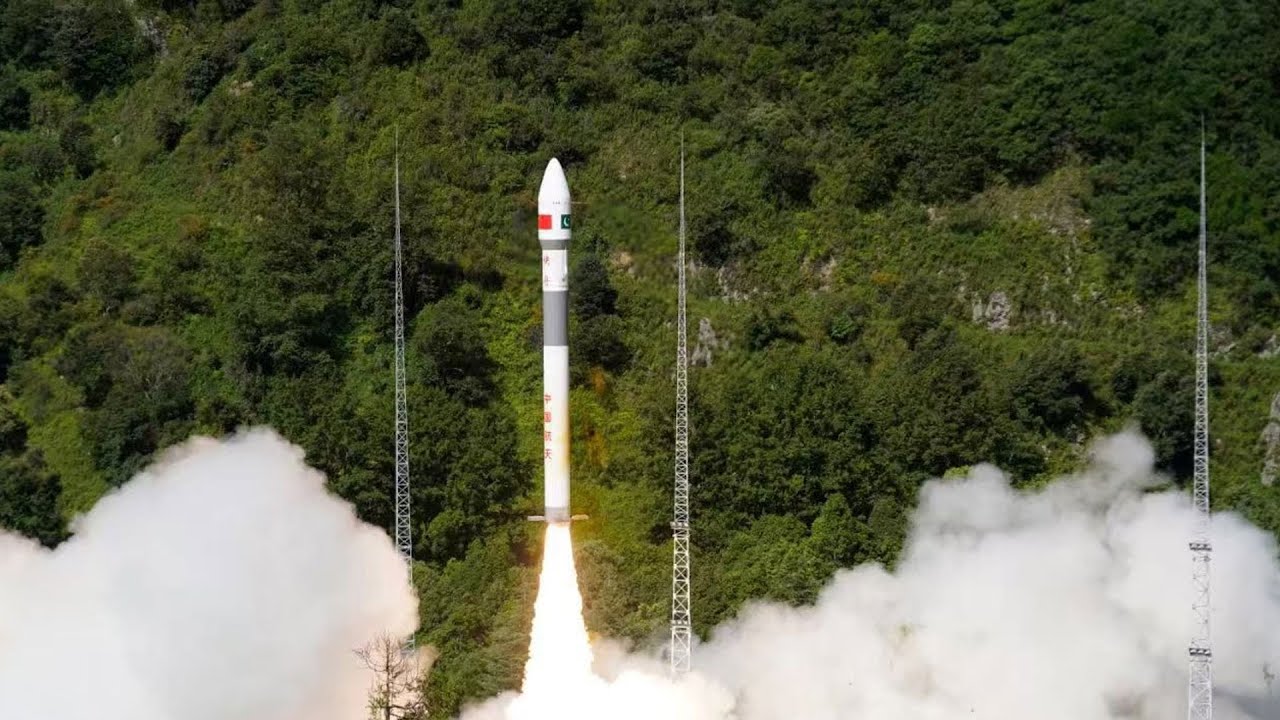
In a historic leap towards technological self-reliance, Pakistan on Thursday successfully launched its Remote Sensing Satellite from the Xichang Satellite Launch Center (XSLC) in China.
The launch marks a major milestone in the country’s space journey and strengthens its position in Earth observation capabilities.
The project is the result of a strategic collaboration between the Pakistan Space and Upper Atmosphere Research Commission (SUPARCO), China Electronics Technology Group Corporation (CETC), and MICROSAT China, said a news release issued by SUPARCO.
Equipped with advanced imaging technology, the Remote Sensing Satellite will significantly contribute to urban planning, precision agriculture, disaster management, environmental protection, and food security.
Pakistan to launch new remote-sensing satellite from China
The SUPARCO spokesperson said the satellite is expected to aid in tracking deforestation, glacier recession, and climate change, while also enhancing management of water resources and agricultural land.
“The satellite will also play a crucial role in infrastructure monitoring, mapping transportation networks, and supporting regional planning efforts, particularly in connection with national development projects like the China-Pakistan Economic Corridor (CPEC). It is designed to help identify geohazard risks and provide timely warnings for natural disasters such as floods, earthquakes, and landslides,” he added.
On this occasion, Federal Minister for Planning, Development and Special Initiatives Ahsan Iqbal congratulated the nation on the successful launch of the Remote Sensing Satellite.
He extended warm felicitations to the entire team at SUPARCO, including its engineers and scientists, for achieving this remarkable feat.
“We are deeply grateful to China for its unwavering support and cooperation in this project,” said Iqbal.
He confirmed that the satellite has successfully entered its designated orbit and will soon begin delivering critical data for national use.
“We are committed to restoring Pakistan’s leadership in space technology. With China’s help, we plan to send a Pakistani astronaut into space next year. By 2035, we will also successfully complete our lunar mission and land on the moon,” the planning and development minister said.
SUPARCO Chairman Mohammad Yousaf Khan emphasised that the launch lays the foundation for a robust and integrated Earth Observation System.
He said the new satellite will serve national priorities and contribute meaningfully to Pakistan’s sustainable socio-economic development.
The satellite’s advanced data acquisition capabilities under varied environmental conditions make it an important tool for environmental monitoring and resource management.
Pakistan has made notable progress in its space research efforts in recent months.
Earlier this year, China launched Pakistan’s indigenously developed Electro-Optical satellite EO-1 from the Jiuquan Satellite Launch Center, aimed at disaster prediction and resource management, Business Recorder reported on Monday.
In November last year, SUPARCO revealed plans to send its lunar rover as part of China’s Chang’E 8 mission slated for 2028.
Moreover, in May 2024, Pakistan launched its first lunar satellite aboard China’s Chang’E-6 probe, targeting the moon’s far side — a feat China pioneered.
- Satellite to significantly contribute to urban planning, agriculture, disaster management
Published July 31, 2025
Pakistan successfully launches Remote Sensing Satellite
In a historic leap towards technological self-reliance, Pakistan on Thursday successfully launched its Remote Sensing Satellite from the Xichang Satellite Launch Center (XSLC) in China.
The launch marks a major milestone in the country’s space journey and strengthens its position in Earth observation capabilities.
The project is the result of a strategic collaboration between the Pakistan Space and Upper Atmosphere Research Commission (SUPARCO), China Electronics Technology Group Corporation (CETC), and MICROSAT China, said a news release issued by SUPARCO.
Equipped with advanced imaging technology, the Remote Sensing Satellite will significantly contribute to urban planning, precision agriculture, disaster management, environmental protection, and food security.
Pakistan to launch new remote-sensing satellite from China
The SUPARCO spokesperson said the satellite is expected to aid in tracking deforestation, glacier recession, and climate change, while also enhancing management of water resources and agricultural land.
“The satellite will also play a crucial role in infrastructure monitoring, mapping transportation networks, and supporting regional planning efforts, particularly in connection with national development projects like the China-Pakistan Economic Corridor (CPEC). It is designed to help identify geohazard risks and provide timely warnings for natural disasters such as floods, earthquakes, and landslides,” he added.
On this occasion, Federal Minister for Planning, Development and Special Initiatives Ahsan Iqbal congratulated the nation on the successful launch of the Remote Sensing Satellite.
He extended warm felicitations to the entire team at SUPARCO, including its engineers and scientists, for achieving this remarkable feat.
“We are deeply grateful to China for its unwavering support and cooperation in this project,” said Iqbal.
He confirmed that the satellite has successfully entered its designated orbit and will soon begin delivering critical data for national use.
“We are committed to restoring Pakistan’s leadership in space technology. With China’s help, we plan to send a Pakistani astronaut into space next year. By 2035, we will also successfully complete our lunar mission and land on the moon,” the planning and development minister said.
SUPARCO Chairman Mohammad Yousaf Khan emphasised that the launch lays the foundation for a robust and integrated Earth Observation System.
He said the new satellite will serve national priorities and contribute meaningfully to Pakistan’s sustainable socio-economic development.
The satellite’s advanced data acquisition capabilities under varied environmental conditions make it an important tool for environmental monitoring and resource management.
Pakistan has made notable progress in its space research efforts in recent months.
Earlier this year, China launched Pakistan’s indigenously developed Electro-Optical satellite EO-1 from the Jiuquan Satellite Launch Center, aimed at disaster prediction and resource management, Business Recorder reported on Monday.
In November last year, SUPARCO revealed plans to send its lunar rover as part of China’s Chang’E 8 mission slated for 2028.
Moreover, in May 2024, Pakistan launched its first lunar satellite aboard China’s Chang’E-6 probe, targeting the moon’s far side — a feat China pioneered.
Pakistan successfully launches Remote Sensing Satellite
- Satellite to significantly contribute to urban planning, agriculture, disaster management
www.brecorder.com