Pakistani Dragon
Elite Member


Jinnah-1. Beautiful name chosen for Pakistan's first lunar lover.
thanks for posting the news
Follow along with the video below to see how to install our site as a web app on your home screen.
Note: This feature may not be available in some browsers.
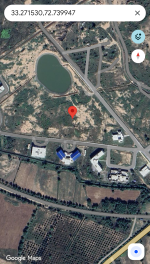
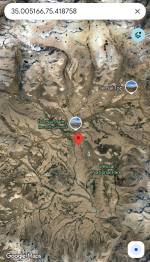

Well, not just Pakistan's but the world's first Lunar loverJinnah-1. Beautiful name chosen for Pakistan's first lunar lover.
thanks for posting the news
 I think moon will be happy with us too.

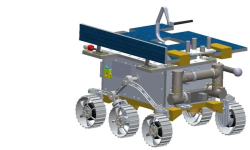




According to official Chinese sources, the Chang'e-8 mission has been cancelled.Pakistan names first lunar rover ‘Jinnah-1’
Published August 13, 2026
View attachment 210608
By BR Web Desk
Pakistan’s first lunar rover has officially been named “Jinnah-1”, the Pakistan Space and Upper Atmosphere Research Commission (SUPARCO) announced on Thursday.
The name was selected by a jury after a comprehensive review of more than 4,000 entries received from across the country in a nationwide naming competition, reflecting strong public interest in Pakistan’s space exploration programme.
According to SUPARCO, seven participants had proposed the name “Jinnah-1”. A draw was subsequently held during a special ceremony to select the winner fairly among the participants.
Addressing the ceremony, SUPARCO Chairman Muhammad Yousuf Khan appreciated the enthusiastic participation of citizens and highlighted the national significance of naming the rover after Quaid-e-Azam Muhammad Ali Jinnah, the founder of Pakistan.
“Jinnah-1 is not merely a name but a symbol — of resilience, determination and the pursuit of progress that was exemplified by our founder, Quaid-e-Azam Muhammad Ali Jinnah,” he said.
“By naming our first lunar rover after him, we are sending a strong message to the world that Pakistan is ready to carry forward its legacy, determination, hard work and leadership to new frontiers, particularly in the realm of space,” he added.
SUPARCO said Jinnah-1 will be launched to the Moon’s south pole in 2029 as part of China’s Chang’E-8 mission.
The locally developed rover will be equipped with advanced scientific instruments to study lunar plasma and radiation, map the geographical features of the lunar surface, and conduct experiments vital for future lunar research and sustainable human presence on the Moon.
The mission marks a significant step in Pakistan’s efforts to expand its capabilities in space science and lunar exploration.
Pakistan names first lunar rover ‘Jinnah-1’
Pakistan’s first lunar rover has officially been named “Jinnah-1”, the Pakistan Space and Upper Atmosphere Research...www.brecorder.com
So, the robotic and manned missions have been combined into a single programme, now known as the “Lunar Exploration Project”.According to official Chinese sources, the Chang'e-8 mission has been cancelled.
China Lunar Exploration Project (CLEP); also known in Chinese as the Chang'e Project.
China's manned lunar exploration program is another lunar exploration project in China.
In May 2026, the China Manned Space Agency (CMSA) announced the merger of two projects into a single project. The merged entity was known as the "Lunar Exploration Project". It was decided during the subsequent implementation of the merger that the Chang'e-8 mission would be cancelled. The Chang'e-7 mission will be the final mission of the CLEP.
The mission payloads originally slated for Chang'e-8 are currently still under discussion.
Regarding Pakistan's lunar rover, current information suggests it will be carried to the moon on another lunar mission in 2030/2031.
Although both are part of China's lunar exploration efforts, they were previously led and operated by distinct teams and organizational systems.So, the robotic and manned missions have been combined into a single programme, now known as the “Lunar Exploration Project”.
Thanks for the information. I wasn't aware that China had a civilian run agency alongside a military one.Although both are part of China's lunar exploration efforts, they were previously led and operated by distinct teams and organizational systems.
Now, merging them into a single project allows for significant resource savings and accelerated development.
CLEP is a project of the China National Space Administration (CNSA), which is a purely civilian agency.
The crewed lunar exploration program falls under the China Manned Space Agency (CMSA); as the CMSA is a military agency, this initiative is classified as a civil-military integration project.