Pakistan Telecom, IT, Tech updates

Addressing the signing ceremony of licence agreements for the 5G spectrum, the prime minister said the auction process was conducted in a transparent manner despite legal challenges. He appreciated the efforts of Law Minister Azam Nazeer Tarar who fully cooperated to remove the legal hurdles in the process.

He said that transactions such as the divestment of Pakistan International Airlines were also carried out with transparency, setting new precedents in the country’s history.

The prime minister congratulated telecom companies, including Jazz, Zong and Ufone, on successfully acquiring spectrum, with Jazz securing the largest share. He also extended congratulations to Chinese officials associated with Zong and reiterated that Pakistan-China friendship continued to grow stronger.
 
Finally Pakistanis can experience 4k, maybe our media production quality will also go up now.
 
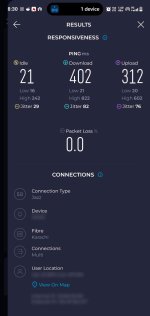
a friend of mine works at Mobilink and he shared few 5g speed screenshots 250 down 150 up sheesh

sorry my bad, 400 down 300 up, i will share SS if he permits me to do so

i am VERY certain in consumer roll out speeds would be WAY low, we would be lucky if we hit 100
 
a friend of mine works at Mobilink and he shared few 5g speed screenshots 250 down 150 up sheesh

Thats just a demo. In early phase 4G will now average 20MBS and 5G will be capped at 50MBS by end of 2026.

100MBS+ will take 2-3 more years.
 

IT exports rising but.....
 
Markets

IT firms, freelancers exempted from declaring export proceeds of up to $25,000

  • IT exporters allowed retaining $5,000 or 50% of export proceeds a month – whichever is higher – for making overseas payments
Salman Siddiqui
April 6, 2026

Pakistan central bank has exempted information technology (IT) companies and freelancers from declaring the receipt of export proceeds of up to $25,000, softening the services export reporting rules with an aim to accelerate growth of the country’s IT exports, according to a notification issued on Monday.

Besides, the State Bank of Pakistan (SBP) has continued to allow the IT firms and freelancers retain $5,000 per month or 50% of their export proceeds, whichever is higher, in their Exporters’ Special Foreign Currency Accounts (ESFCAs), according to a separate notification.

“The thresholds of Form “R” and IRV [Inward Remittance Voucher] have also been revised to $25,000 (equivalent in other currencies),” SBP said in notification.
 
The central bank has, however, revised reporting requirements for commercial banks, mandating them to provide more detailed information – on behalf of IT companies and freelancers – regarding the purpose of their overseas payments.

“Authorized dealers [banks] are advised to use these [Form ‘R’ for reporting inward remittances of above $25,000 and Form ‘M’ for outward remittances] revised formats with immediate effect for capturing the details of applicable inward and outward remittance transactions,” the central bank notification reads.

The IT firms and freelancers are allowed to utilise the retained funds for the purposes, including import of goods, advance payments for imports, payment for foreign consultancy, software/IT services subscriptions, and freelancers of companies paying overseas vendors.

“The funds available in the ESFCAs may be converted into PKR [Pakistani currency/rupee] at any time upon the request of the customer. However, these funds cannot be credited/transferred to any other FCY [foreign currency accounts] account(s),” the central bank said.

SBP press statement reads banks have been advised to digitalise Form “R” and Form “M” with auto-population functionality for the customer’s basic data to further promote ease of doing business. “SBP believes that these measures will significantly enhance operational efficiency and contribute meaningfully towards the growth of Pakistan’s IT exports.”

Paracha further said the ease in regulations for the reporting would fast track the receipt of the export proceeds in the country, encourage the exporters to bring more foreign exchange in the country, and help boosting IT exports.
 
It may be noted that Pakistan’s IT exports maintained a declining trend, with receipts decreasing to $365 million in February 2026, according to SBP data. The inflows of IT sector receipts had stood at $374 million in January 2026, down from $437 million in December 2025.

Inflows of IT and IT-enabled services surged to $2.97 billion during the period of July to February.
 

Pakistan’s mobile internet gender gap narrows to 25% under digital push​


800,000 women open digital wallets, 7 million SIMs distributed; WB supports CRISP targets in health, education and payments
By


Pakistan has reduced its mobile internet gender gap to 25% while the World Bank reaffirmed continued technical support for the Benazir Income Support Programme (BISP), as the government advanced parallel efforts on digital inclusion and social protection reforms.


The progress on digital inclusion was reviewed at a meeting of the national steering committee for the Digitalisation for Women Economic Empowerment (D4WEE) programme, a 2024–2028 initiative funded by KOICA. The meeting, held at the UN Women Country Office, brought together government and private sector stakeholders to assess implementation and policy integration.

Officials said the programme aims to expand women’s access to digital services and strengthen their participation in the formal economy. The gender gap in mobile internet usage has declined from 36–38% last year to 25%, reflecting increased connectivity and access.

The government has facilitated the creation of more than 800,000 digital wallets for women through digital payment initiatives and distributed around seven million free SIMs to underserved women to expand access to financial and digital services.

Officials said increasing women’s participation in the digital economy is central to formalising economic activity, as a significant portion of Pakistan’s economy remains informal. Expanding digital access is expected to support workforce participation and improve productivity.


Separately, the World Bank reaffirmed its support for BISP during a wrap-up meeting of its Implementation Support Mission under the Crisis Resilient Social Protection (CRISP) programme held at BISP headquarters.

BISP management highlighted ongoing reforms aimed at improving transparency and efficiency, including updated survey questionnaires, strengthened monitoring through spot checks, the use of Proxy Means Test (PMT), and continuation of the recertification process for beneficiaries.

Officials stressed the need to enhance service delivery by incorporating beneficiary feedback and ensuring that support reaches eligible households.

The World Bank delegation presented progress on Disbursement Linked Indicators related to education, health and nutrition, noting that several targets have been achieved.

Discussions also covered the development of cloud-based data-sharing systems, a beneficiary-centric payment model and a hybrid social protection framework aimed at improving programme delivery.

The combined efforts on digital inclusion and social protection reflect a broader policy focus on expanding access to services, improving targeting mechanisms and strengthening institutional systems to support vulnerable populations.
 

Users who are viewing this thread

Back
Top