Pakistan Telecom, IT, Tech updates

Centre to provide valuable infrastructure, IT minister says​

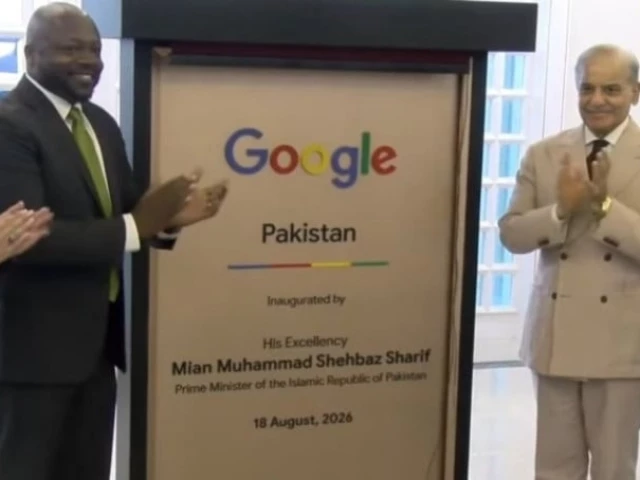
Speaking at the inauguration, Minister for IT and Telecom Shaza Fatima Khawaja termed the data centre “a step in the right direction”, saying that it provided Pakistan with the foundation of an infrastructure “capable of producing the most important economic unit today: token intelligence”.


She stated that every opportunity in the future would be reliant on access to high performance computing — including in healthcare, agriculture, economy, financial services, education, public administration and national security.

The minister noted that according to McKinsey, the global demand for data centres would triple by 2030, while according to Goldman Sachs, power requirements would also rise by 160 per cent by the same year.

“This is where Pakistan’s opportunity is extraordinary,” she said.

“We’re a young nation, we’re a large nation, and we’re a nation of stunning human capability.”

She highlighted that the country’s engineers, developers, researchers and entrepreneurs did not lack intelligence or ambition, but rather infrastructure — which the new data centre would provide.
 
To view this content we will need your consent to set third party cookies.
For more detailed information, see our cookies page.
 

Govt unveils National AI Initiative with seven innovation hubs

  • Initiative is part of Pakistan National AI Policy

The Ministry of Information Technology and Telecommunication (MoITT) has unveiled an ambitious nationwide plan to establish seven Artificial Intelligence (AI) Hubs across Pakistan under the newly launched National Artificial Intelligence Advancement Initiative (NAAI), aiming to incubate 560 AI startups, distribute non-dilutive seed grants to 150 startups, and position the country as a regional hub for AI-driven innovation.

The initiative, launched as part of the implementation of Pakistan’s National AI Policy, marks one of the government’s most comprehensive interventions to build an institutional AI ecosystem by bringing together academia, industry, startups, researchers, investors and the public sector under a single national framework.

According to official documents of the ministry, MoITT will select a single bidder—either an individual company or a joint venture/consortium—to design, establish, operate and sustain AI Hubs in Islamabad, Lahore, Karachi, Peshawar, Quetta, Muzaffarabad and Gilgit.

The selected entity will be responsible for developing fully operational AI innovation centers equipped with modern office infrastructure, high-speed internet, collaboration spaces, multimedia facilities, mentorship rooms, hybrid meeting infrastructure and dedicated workspaces for AI startups.

The AI Hubs are intended to become regional innovation centers focusing on practical AI applications across priority sectors, including healthcare, agriculture, education, fintech, public-sector governance, smart and sustainable cities and other emerging technology domains.

Under the two-year programme, each hub will induct 20 AI startups per cohort, with two cohorts every year, resulting in 40 startups annually at each hub and 280 startups every year across all seven centers. Over the project’s two-year duration, a total of 560 startups will pass through the incubation programme.

Beyond physical infrastructure, the successful bidder will be required to design and deliver a comprehensive innovation ecosystem featuring AI boot camps, accelerator programmes, incubation support, thematic AI challenges, hackathons and startup mentoring.

The RFP also places significant emphasis on commercialization, requiring the operator to connect startups with venture capital firms, incubators, accelerators, research institutions and technology companies to improve investment readiness and market access.

One of the programme’s most significant components is the administration of 150 non-dilutive seed grants for AI startups. While the grant funding will be provided separately by MoITT and will not form part of the contractor’s financial proposal, the selected bidder will design and implement a transparent nationwide mechanism for outreach, application processing, technical evaluation, selection, grant disbursement, monitoring and post-award support.

The ministry has directed that the funding programme be merit-based and supported by clearly defined key performance indicators, milestone-based disbursements and robust monitoring mechanisms to ensure accountability and measurable outcomes.

To stimulate innovation nationwide, the operator will also organize two national AI Hackathons and four AI Awareness Sessions, bringing together students, entrepreneurs, researchers, policymakers and international experts to accelerate AI adoption and build technical capacity.

The awareness campaigns will be complemented by structured capacity-building programmes designed to improve AI skills among startups, professionals, university students and public-sector officials.

The ministry also expects the AI Hub operator to develop long-term financial sustainability models through industry partnerships, membership programmes, sponsored initiatives, commercial training services and grants, reducing reliance on government funding over time.

In addition, the selected bidder will establish governance frameworks, operational compliance systems, monitoring tools, impact assessment mechanisms and periodic reporting structures aligned with MoITT’s oversight requirements.

The RFP further requires the operator to cultivate strategic partnerships with universities, research centers, government institutions, domestic and international technology companies and global AI research networks to facilitate collaborative research, pilot deployments and commercialization of AI products.

Recognizing the importance of inclusive innovation, the ministry has directed bidders to ensure meaningful participation of women and individuals from rural and underserved communities throughout programme implementation, aligning the initiative with Pakistan’s commitments under the Sustainable Development Goals (SDGs).

Initially, the contract will be awarded for one year, with the possibility of extension for another year based on performance. However, bidders are required to submit financial proposals covering the entire two-year implementation period.

The launch of NAAI signals the government’s intention to move beyond policy formulation toward building institutional infrastructure capable of supporting AI entrepreneurship, talent development and commercialization at scale. If implemented effectively, the initiative could significantly strengthen Pakistan’s emerging AI ecosystem by creating a coordinated national platform connecting startups, investors, academia and industry while accelerating the country’s transition toward a knowledge-based digital economy.
 
To view this content we will need your consent to set third party cookies.
For more detailed information, see our cookies page.
 

Punjab approves unified student data system​

Nearly 15m students to receive unique IDs; govt schools to roll out system first


RAWALPINDI:
The Punjab School Education Department has approved the introduction of a modern digital identification and unified data management system for nearly 15 million pupils enrolled in government schools, marking a major step towards modernising the province's education sector.

The initiative, which will initially be implemented in government schools before being extended to private educational institutions, aims to create a comprehensive digital record for every pupil, improve transparency and strengthen monitoring across the education system.


Under the new system, each pupil will be assigned a permanent Unique ID that will serve as a lifelong educational identifier. The ID will provide authorised access to the pupil's academic history, examination results and other essential information through a single integrated digital platform.

According to the School Education Department, the unified database will maintain records including academic performance, pass or fail status, current class, age, basic health information, city of residence and other relevant details.

A key feature of the initiative is that a pupil's Unique ID will remain unchanged even if they transfer from one government school to another. This will ensure that their complete educational record is preserved and can be accessed immediately by the receiving institution, eliminating the need to recreate student records.

School Education Secretary Mudassir Riaz informed district education officers during a meeting that the primary objective of the project is to enhance transparency, improve oversight and support more effective educational planning across the province.
 
Apple pay is coming to Pakistan with iOS 27 update next month. This is game changer as it will support PayPak, not just visa/mastercard. Now Paypak just need to be on google wallet to take off.

QR codes/RAAST are good and all but these are 3rd world payment system. People who use tap to pay will never go back to QR codes. Paypak fee/cost is half that of visa/master card.

Why PayPak Specifically Matters​

Because PayPak is Pakistan's domestic payment system (created by 1LINK under the State Bank of Pakistan), it handles local, everyday transactions. Integrating PayPak directly into iOS means Apple isn't just looking to support international Visa or Mastercards issued in Pakistan; they are integrating with the local financial infrastructure.
 
The implications for Pakistan’s digital payments ecosystem are enormous and extend far beyond a single app update arriving on iPhone screens. PayPak, owned and operated by 1LINK under the aegis of the State Bank of Pakistan, currently operates across more than 220,000 POS terminals and 21,500 ATMs nationwide. The network supports both contact and NFC contactless transactions through its EMV chip cards, meaning the physical infrastructure for Apple Pay tap-to-pay already exists at tens of thousands of retail locations across the country. Pakistani iPhone users would not need to wait for merchants to adopt new hardware because the terminals are already there.
 

Cheap data, rising costs put Pakistan’s telecom economics in focus

August 13, 2026
Tahir Amin

Telecom industry assessments suggest that Pakistanis are consuming more mobile data than ever at some of the world’s lowest prices, but the economics behind that affordability are coming under pressure just as the country enters a new cycle of spectrum payments, network upgrades and 5G investment.

This was the consensus among different stakeholders and industry experts during a background discussion with Business Recorder.

A customer currently pays approximately Rs29 per GB for mobile data, while average revenue per user (ARPU) remains around US$1 a month, placing Pakistan among the world’s lowest-revenue telecom markets. That equation is becoming harder to sustain as traffic rises and networks require more capacity to keep pace.
 
The pressure is set to intensify following the recent spectrum auction. Operators are collectively expected to pay at least US$510 million for newly acquired spectrum, with half due next year, while industry estimates suggest each operator may need to upgrade more than 1,000 mobile sites annually to expand capacity and prepare for 5G.

This comes on top of a sharp increase in the cost of running networks. Energy, imported equipment, freight and insurance have all become more expensive amid inflation, currency volatility and geopolitical tensions. Brent crude alone has climbed from around US$60 per barrel in December to nearly US$84.

Telecom companies say they already invest an estimated 15–20% of their annual revenues in network expansion and modernization. The challenge now is that data traffic and the investment needed to carry it are growing faster than the revenue generated by each subscriber.

It is a significant shift for a market where affordability has been one of the biggest drivers of digital adoption. Pakistan now has more than 208 million cellular subscribers and around 160 million mobile broadband users, with mobile networks supporting everything from digital payments and e-commerce to entertainment, education and public services.
 
The pressure is set to intensify following the recent spectrum auction. Operators are collectively expected to pay at least US$510 million for newly acquired spectrum, with half due next year, while industry estimates suggest each operator may need to upgrade more than 1,000 mobile sites annually to expand capacity and prepare for 5G.

This comes on top of a sharp increase in the cost of running networks. Energy, imported equipment, freight and insurance have all become more expensive amid inflation, currency volatility and geopolitical tensions. Brent crude alone has climbed from around US$60 per barrel in December to nearly US$84.

Telecom companies say they already invest an estimated 15–20% of their annual revenues in network expansion and modernization. The challenge now is that data traffic and the investment needed to carry it are growing faster than the revenue generated by each subscriber.

It is a significant shift for a market where affordability has been one of the biggest drivers of digital adoption. Pakistan now has more than 208 million cellular subscribers and around 160 million mobile broadband users, with mobile networks supporting everything from digital payments and e-commerce to entertainment, education and public services.
 

Users who are viewing this thread

Country Watch Latest

Latest Posts

Back
Top