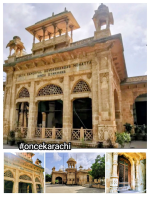
Look how poorly kept that sign is.
They need to work on the infrastructure around their historical sites and make them easily accessible.
In Malta they had giant gazebos and fans so people didn't have to walk around under the sun. Each section was labelled with details so you could understand what it is you're looking at.
Good news, Punjab govt working on it. The Punjab government has recently launched an ambitious project aimed at transforming the ancient ruins of Taxila into an "International Heritage City."
Amjad Iqbal Published April 4, 2026
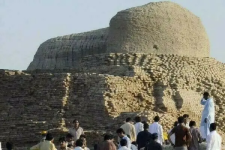
Workers preserve ancient stupa in Mohara Maradu Buddhist monastery. — Dawn
TAXILA: The Punjab Department of Archaeology and Museums is set to execute a Rs3,972.617 million project to safeguard and elevate Taxila’s ancient heritage.
The project is slated to be completed by 2028.
Briefing the media at Taxila Museum on Friday, Deputy Director Archaeology Asim Dogar said the three-year project named “Preservation, Restoration, Improvement, Management and Upgradation of World Heritage Site, Taxila” would focus on conservation, tourism development, and community engagement across the historic region.
He said the initiative seeks to conserve and protect key archaeological sites and invaluable museum collections, while simultaneously upgrading visitor facilities to promote sustainable tourism.
“As part of a broader vision to establish Taxila as a ‘heritage zone’, peripheral sites including Mankiala Stupa, Giri Fort, Sirkap, Dharmarajika Stupa, Bhir Mound, Mohra Muradu and Bhallar Tope will be integrated into a cohesive regional tourism network,” he added.
“The project will also incorporate prominent ancient sites, linking them through improved access and visitor services,” he said.
Highlighting key developments, Mr Dogar said a grand gateway to Taxila would be constructed on Museum Road, adorned with narratives from the life of Buddha, offering visitors a symbolic and immersive entry into the historic valley.
He further announced that two new galleries would be established in the next fiscal year at Taxila Museum, featuring around 40 additional showcases to display antiquities unearthed over the past two decades.
He said that the Taxila Museum reserve houses unique and rare antiquities, especially Buddha statues discovered during various excavations by Pakistani and international archaeologists at different sites. These rare artefacts, many of which are of religious significance, remain hidden from the world and will be showcased in the newly established galleries, which would help attract more researchers, scholars and religious tourists.
He added that, in a bid to enhance the tourist experience, 14 thematic parks will be developed across the Taxila valley, incorporating replicas of Gandhara-era art and Buddha sculptures, turning the region into an open cultural landscape.
The deputy director also revealed that special conservation plans have been devised to preserve Taxila’s rare black stone art, which faces the threat of gradual extinction.
To support local livelihoods, an art and craft bazaar will be established along Museum Road, stretching from Taxila Museum to the Mohra Muradu ancient Buddhist site, aimed at promoting indigenous handicrafts and engaging local communities in heritage-based economic activity.
Emphasising the broader impact, Mr Dogar said the project would not only protect Pakistan’s rich archaeological legacy but also boost international recognition of Taxila’s historical significance and create sustainable economic opportunities through tourism.
“This initiative is a step towards reconnecting the world with the ancient civilisation of Taxila while empowering local communities,” he added.
Published in Dawn, April 4th, 2026

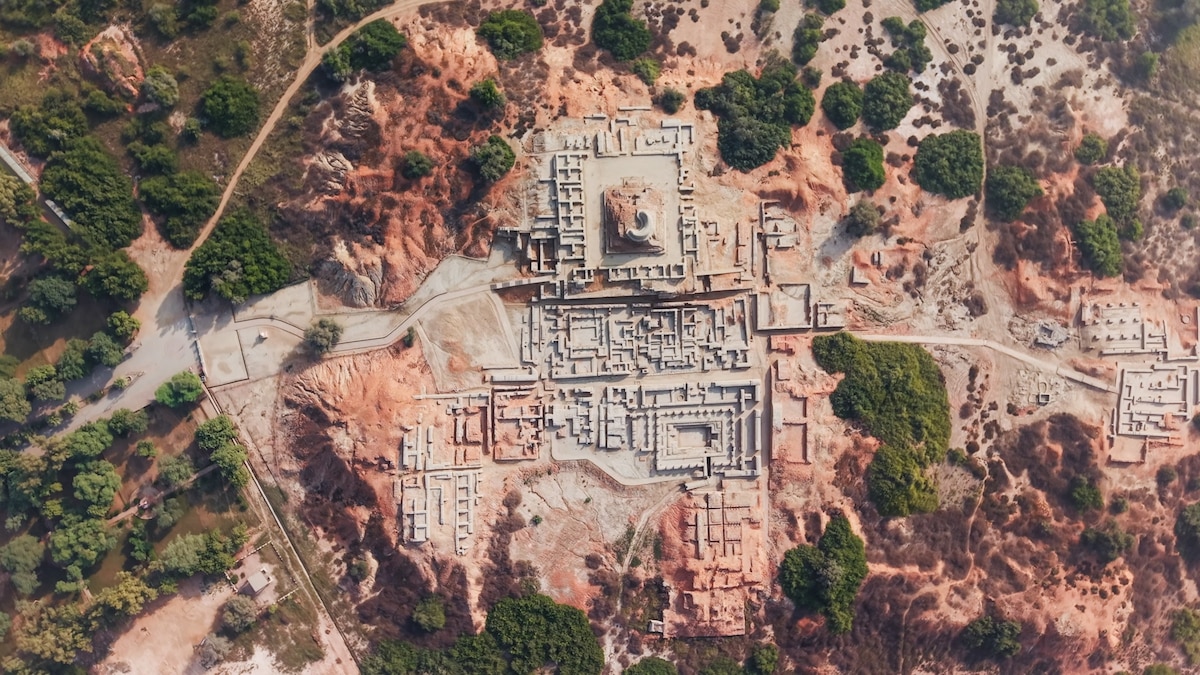
 on.natgeo.com