Pakistan: The Archaeological Marvel

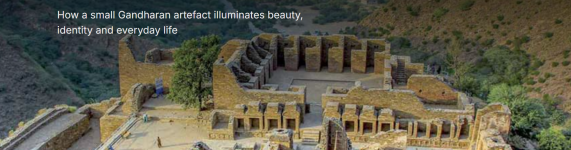
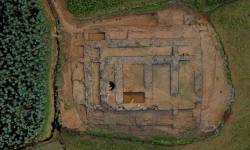
The Bhamala Buddhist Complex in Haripur added further depth to Pakistan’s Gandharan heritage portfolio, reflecting the development of Buddhist culture and the interaction between local and Hellenistic artistic traditions.


The ministry said the inclusion of the Kalasha Valley Cultural Landscape broadened the scope of Pakistan’s heritage representation by highlighting living indigenous traditions and cultural diversity alongside archaeological and architectural sites.

The Federal Department of Archaeology and Museums was also undertaking conservation and development work at Shah Allah Ditta Caves in Islamabad on the minister’s directions. The project aimed to preserve the historic site and develop it as a cultural tourism destination with improved visitor facilities and heritage interpretation.

Pakistan currently had six properties inscribed on the Unesco World Heritage List. The expanded tentative list provided a larger pool of documented heritage from which future nominations can be developed.

Meanwhile, preliminary assessment requests had been submitted to Unesco for the Archaeological Site of Ranigat in Khyber Pakhtunkhwa and the Port of Banbhore in Sindh. Their nomination dossiers were expected to be submitted for consideration under the Unesco World Heritage framework after completion of the preliminary assessment process.

According to the ministry, the expansion of the Tentative List was being viewed as an important step towards strengthening Pakistan’s global heritage profile and creating new opportunities for tourism, cultural diplomacy and future World Heritage nominations.

Published in Dawn, August 19th, 2026
 

The Largest Lost Civilization In Ancient History: What Happened To The Indus Valley?​


A mirror to ancient Ghandara

How a small Gandharan artefact illuminates beauty, identity and everyday life

Arshad Awan |
August 23, 2026

1787747462889.png

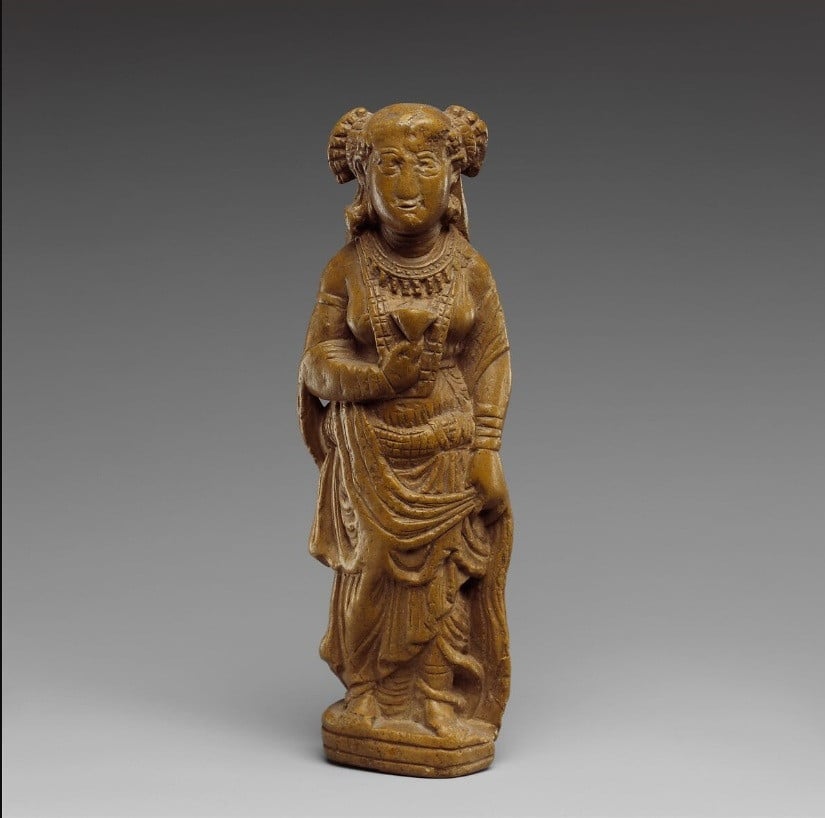
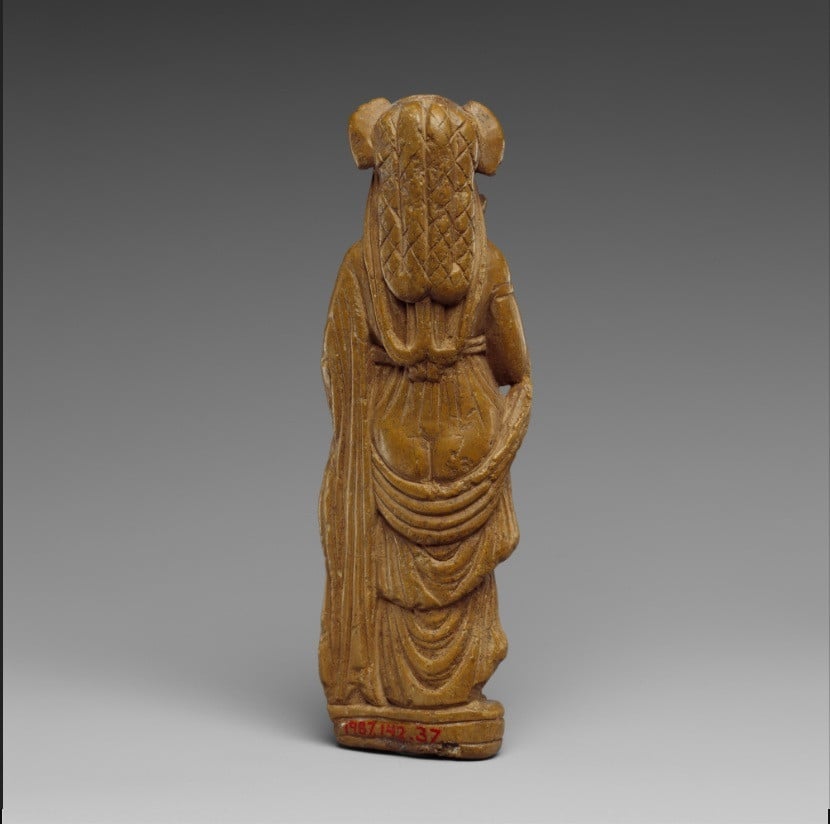
Among the surviving artistic treasures of ancient Gandhara, even the smallest objects reveal profound insights into the lives, beliefs, and cultural values of the people who inhabited this remarkable crossroads of civilisations. The Mirror Handle-Standing Woman, dating to approximately the first century BCE and carved from phyllitic schist, is one such object. Measuring only 12.1 centimetres in height, and now on display at The Metropolitan Museum of Art, New York, US, this delicately sculpted artefact demonstrates that artistic excellence in Gandhara was not confined to monumental Buddha sculptures or grand architectural complexes. Instead, artistic refinement extended into everyday life, where practical objects became expressions of beauty, identity, social status, and cultural sophistication.

The artefact was initially used as the handle of a mirror for looking at oneself, for personal grooming, and possibly for ritual purposes. The standing female figure sculpted on it makes it a work of art, and it is the harmonious coupling of form and function evident in ancient Gandharan society. Most importantly, the artefact provides a glimpse into the social and cultural world of women, personal adornment, artistic ideals and intercultural exchange in one of the most cosmopolitan historical periods in South Asia.
 
The Mirror Handle-Standing Woman is a wonderful example of the incredible artistic expression of ancient Gandharan culture. Investing technical expertise and significance in this commonplace item, the sculptor made the woman look like a beautifully dressed young woman with a poised, elegant stance, whose finely detailed anatomy and carved drapery demonstrate the aesthetic sophistication and ideals of femininity of the ancient Gandhara culture.

The intricate hairstyle, the jewellery and the flowing clothes reflect the artist's keen observation of the era’s everyday fashion trends and his sense of grace, dignity and social status.

The naturalistic portrayal of the body, the balance of the composition, and the folds of the drapery demonstrate how indigenous South Asian culture merged with Hellenistic art conventions prevalent in Gandharan art.

Gandhara was in a unique geographical location in the northern part of Pakistan and the eastern part of Afghanistan in the first century BCE. The area lay along trade routes linking Central Asia, Persia, India, and the Mediterranean world, and it evolved into one of the most culturally diverse societies in antiquity. Its cities were continuously traversed by merchants, monks, artists, diplomats, and travellers, who shared their ideas, art, technology, and religion.

The Gandharan society was influenced by successive political powers such as the Achaemenids, Greeks, Indo-Greeks, Scythians, Parthians and ultimately the Kushans. These influences were not a replacement for local traditions; instead, they blended with local customs to give rise to a unique artistic language distinct from any other art tradition in the ancient world.
 
Mirrors were made from polished bronze, copper, or other shiny materials, and required highly skilled artisans to produce; they were often the possessions of the upper classes.

This mirror handle thus had a special place between use and art. It was constantly held, touched and displayed, and so its decoration took on special significance.

Being a focus for sculptors, they became miniature masterpieces that mimicked the owner's taste, wealth and cultural values.

This standing female figure, carved into the handle, would have followed its owner as they groomed themselves day to day. These each further emphasised the connection between beauty, the enjoyment of art, and an individual's identity.

What is most amazing about the sculpture is the level of craftsmanship achieved in such a small piece. This small figure, less than five inches tall, shows the beautiful proportions, precise modelling and elegant stance typical of Gandharan art. The selection of phyllitic schist is another indication of the sophistication of the Gandharan artisans.

The stone was used to create detailed carvings and achieve a smooth finish that added to its beauty and softness.

Phyllitic schist was used throughout Gandhara as a medium for monumental religious sculpture and for smaller luxury items owing to its durability and fine texture.
 
All the contours of the handle serve to enhance the beauty and usefulness of everyday life, and reflect the Gandharan concept that beauty should enhance it. The figure, though small, is striking for its attitude and precise proportions. Throughout Asian and Mediterranean art, standing figures have been used to represent dignity, composure and self-confidence.

gandhara11787439782-1.jpg


The sculptor was not so deeply interested in depicting movement or dramatic action but rather calm elegance. This is characteristic of Gandharan art, which emphasised restraint to suggest quietness, refinement of character, and social poise.

Her attitude also may have been symbolic. Standing figures of women in ancient artworks often symbolised fertility, prosperity, abundance, beauty, or divine protection. The sculpture embodies a sense of grace and beauty in a woman, whether as a representation of a woman as a person, an idealised beauty or a symbol.
 
Luxury in Gandhara was not so much a luxury as a different kind of extravagance. Art became the measure and sign of civilisation. The patrons helped nurture the skills of sculptors whose work enhanced religious monuments and enclosures as well as private property; the sculptors were highly valued and a culture of craftsmanship developed.

The unique intercultural setting of Gandhara is also seen in The Mirror Handle-Standing Woman.

After Alexander the Great conquered the world and Hellenistic kingdoms were set up in Central Asia, Greek art spread eastward. These traditions were marked by natural anatomy, realistic drapery, balanced proportions and harmonious composition.

The artists of Gandhara did not slavishly copy the Greek models but used them to suit the local subjects and taste. Indian notions of femininity, dress and ornamentation merged with the Mediterranean sculptural techniques.

1787748023587.png
 
gandhara21787439781-0.jpg


The synthesis created a completely new art vocabulary. The figure of a standing woman is a good representation of how artists in Gandhara adopted international influences and adapted them into expressions more appropriate to their own society.

It is one of Gandhara's greatest historical accomplishments to embody cultural diversity without sacrificing its own identity. In many ancient civilisations, the mirror was given symbolic significance, and much more than a reflection of reality. Mirrors held a special place in Asian mythology; they were said to symbolise truth, self-knowledge and purity in South Asian traditions.

They might also be seen in marriages, fertility rituals or devotional activities. In the Buddhist context, reflection sometimes came to represent the understanding of impermanence.

The meaning of this mirror is not yet clear, but its decorative artwork suggests that its owner valued it more for its artistic qualities than for its practical use. The standing female figure might have been a reminder to users not only of outward beauty but also of ideals of grace, beauty, and social refinement.
 

Users who are viewing this thread

Country Watch Latest

Back
Top