Navigation
Install the app
How to install the app on iOS
Follow along with the video below to see how to install our site as a web app on your home screen.
Note: This feature may not be available in some browsers.
More options
Style variation
You are using an out of date browser. It may not display this or other websites correctly.
You should upgrade or use an alternative browser.
You should upgrade or use an alternative browser.
Pakistan Weather News / Updates
- Thread starter ghazi52
- Start date
More options
Who Replied?


ghazi52
THINK TANK: CONSULTANT
- Thread starter
- #62
Hailstorm, rains ravage Punjab, KP, Islamabad
CorrespondentsMay 25, 2025

(CLOCKWISE) Vehicles make their way through a flooded road near Zero Point after heavy rain lashed Islamabad; people cover their faces, a car is damaged after a tree fell over it, and dark clouds hover over a part of Lahore during a dust storm on Saturday. —APP / Murtaza Ali-White Star

• 19 dead, over 90 injured in Punjab
• Road, air travel disrupted; walls and roofs collapse, infrastructure damaged
• Widespread outages reported from parts of country
• Crops, power lines damaged in KP; 113 feeders trip across province
ISLAMABAD / LAHORE /PESHAWAR: At least 19 people were killed and over 90 others injured as powerful windstorms and heavy rains battered several parts of the country on Saturday, paralysing road and air traffic, damaging infrastructure and triggering widespread power outages.
Heavy rainfall accompanied by gusty winds and hail also struck Islamabad, leading to water accumulation in several low-lying areas and trees falling at multiple spots.
In Khyber Pakhtunkhwa, strong winds and hailstorms caused extensive damage to crops and power lines but no fatalities were reported. Over 113 power feeders tripped across the province, with areas like Peshawar, Mardan, Khyber, Swabi, Swat and Abbottabad worst affected.
Meanwhile, a private airline from Karachi to Lahore narrowly avoided a disaster when it was caught in severe turbulence while landing at Allama Iqbal International Airport.
According to the data provided by the Provincial Disaster Management Authority (PDMA) of Punjab and Rescue 1122, three people died each in Lahore and Jhelum, two each in Sialkot and Muzaffargarh and one person each in Sheikhupura, Nankana Sahib, Attock, Multan, Rajanpur, Hafizabad, Mianwali, Jhang and Layyah as the walls and roofs of the houses collapsed and trees fell on them.
About two dozen incidents of the fall of solar panels and billboards were also reported.
A PDMA tally issued at 10pm on Saturday put fatalities at 13 and injuries at 92. Separate incidents reported by Rescue 1122 and other sources added more deaths, pushing the toll higher.
The authority had earlier urged citizens and provincial authorities to remain on high alert, according to a . report.
PDMA Director General Irfan Ali Kathia directed deputy commissioners and rescue agencies across Punjab to remain alert amid reports of wind and rain in various districts of the province, the authority said in a statement.
Motorway Police closed several motorways, including sections of M2, M3 and the Lahore-Sialkot route, due to safety concerns. Severe weather and low visibility were reported on parts of the M4 and M5, while thunderstorms disrupted travel across highways linking Lahore to Multan and beyond.
Power infrastructure was also hit hard, with Multan’s power utility Mepco confirming faults across south Punjab’s grid, leading to temporary blackouts in Multan, Khanewal, Vehari and Sahiwal.
The Water and Sanitation Agency in Lahore reported full mobilisation of machinery and pumps to clear underpasses.
Deaths, injuries
According to the PDMA report, most deaths in Punjab occurred due to the collapse of dilapidated houses and being in unsafe locations.
In Sheikhupura, the roof of a factory collapsed due to strong wind, killing a worker from Sadiqabad and seriously injuring five others, the state-run Pakistan Television reported.
Several mud and dilapidated houses were also damaged due to the storm. There were also incidents of falling trees and damage to solar panels in Lahore.
District Officer Rescue 1122 Sibghatullah told Dawn that a labourer died after a wall of an under-construction house in Sood Gangal on Kallar Syedan Road collapsed due to the strong winds. The deceased was identified as Imtiaz Yaqoob, 52.
Scores of people were also injured in Taxila, Lahore High Court Road, Adiala Road, Peshawar Road, Chakri Road, Kotha Kalan, Rawat, Gujar Khan and Chakri near the motorway, he said.
In another incident, a man died after the wall of his house in Fauji Colony, Pirwadhai, collapsed. Naseebullah, 60, was seriously injured in the incident and was shifted to the hospital but could not survive.
In Attock, a child was killed and six others, including a woman and her daughter, were injured.
According to Rescue 1122, the Grade 2 student, identified as Mohammad Hassan Shahbaz, was killed when the wall of his house collapsed in the Mithial village, within the limits of Jand Police Station.
Punjab Relief Commissioner Nabeel Javed announced that medical assistance would be provided to the injured people, the PDMA said.
The Pakistan Meteorological Department has forecast more rain and thunderstorms across Punjab and KP on Sunday, including in Lahore, Rawalpindi, Multan, Faisalabad, Sialkot, Peshawar and Mardan.
Damage in KP
Strong winds and hailstorms also caused extensive damage to crops and power lines in Khyber Pakhtunkhwa, but no deaths were reported.
The Peshawar Electric Supply Company (Pesco) said that more than 113 feeders across the province tripped due to the windstorm. The power utility said that the 19 feeders tripped each in Peshawar and Mardan, 13 in Khyber, 30 in Swabi, 13 in Swat, 15 in Abbottabad and four in Mansehra.
The Peshawar cantonment experienced power outages spanning several hours after the windstorm. Sources told Dawn that the cantonment power supply was underground and Pesco staff had to seek permission from military authorities to start rehabilitation work.
Other severely affected areas included Mingora, Amankot, Rahimabad and Qambar, where residents faced immense difficulty commuting and accessing essential services. Citizens called upon the authorities to expedite drainage and relief efforts to prevent further damage.
In Mingora, Swat, flash floods from overflowing drains inundated homes and disrupted daily life, forcing students to sit exams in complete darkness due to outages.
According to the Meteorological Department, the maximum temperature in the Swat valley dropped to 20 degrees Celsius due to the rain and hailstorm.
Rain and hailstorms in the Ambar and Pandiali tehsils of Mohmand district damaged crops, causing losses to the farmers.
According to initial reports, several slum houses were damaged and trees were uprooted in remote localities; however, no loss of life was immediately reported, official sources confirmed.
Moreover, a heavy windstorm followed by light rain disrupted proceedings on Saturday, the second day of the ongoing Tablighi Ijtema in the Baffa area.
The congregation, which began on Friday, has attracted hundreds of thousands of participants from across Hazara, Gilgit-Baltistan and other parts of the country. The organisers expect an even larger turnout on Sunday, the final day when special prayers will be offered.
Meanwhile, a windstorm followed by light rain also affected life in other parts of the Hazara division.
ghazi52
THINK TANK: CONSULTANT
- Thread starter
- #63
Flight faces turbulence
Meanwhile, a private airline flight FL-842 from Karachi to Lahore narrowly avoided a disaster when it was caught in severe turbulence while landing at Allama Iqbal International Airport. The pilot aborted landing and safely returned to Karachi following air traffic control instructions, Geo News reported.
Passengers, shaken by repeated jolts, refused to re-board after landing in Karachi. Airport sources said 57 passengers cancelled their travel plans, delaying the flight’s re-departure.
At least two other flights to Lahore were diverted to Karachi due to poor visibility, while departures were delayed until weather conditions stabilised.
As the storm subsided, operations at Lahore airport resumed, with flights PK-305 and PA-405 eventually departing for Karachi.
Aamir Yasin and Ikram Junaidi in Islamabad, Imran Gabol in Lahore and Manzoor Ali in Peshawar contributed to this report
Published in Dawn, May 25th, 2025
Meanwhile, a private airline flight FL-842 from Karachi to Lahore narrowly avoided a disaster when it was caught in severe turbulence while landing at Allama Iqbal International Airport. The pilot aborted landing and safely returned to Karachi following air traffic control instructions, Geo News reported.
Passengers, shaken by repeated jolts, refused to re-board after landing in Karachi. Airport sources said 57 passengers cancelled their travel plans, delaying the flight’s re-departure.
At least two other flights to Lahore were diverted to Karachi due to poor visibility, while departures were delayed until weather conditions stabilised.
As the storm subsided, operations at Lahore airport resumed, with flights PK-305 and PA-405 eventually departing for Karachi.
Aamir Yasin and Ikram Junaidi in Islamabad, Imran Gabol in Lahore and Manzoor Ali in Peshawar contributed to this report
Published in Dawn, May 25th, 2025
ghazi52
THINK TANK: CONSULTANT
- Thread starter
- #64
NDMA predicts heavy rains, thunderstorms across Pakistan from May 27 to June 1
BR Web Desk
May 26, 2025
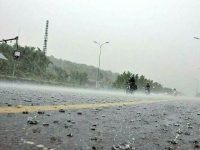
The National Disaster Management Authority (NDMA) on Monday issued an impact-based weather advisory warning of heavy rains, thunderstorms, strong winds, and potential hailstorms in various parts of Pakistan from May 27 to June 1, 2025.
According to the advisory, a strong western weather system is expected to enter the country, affecting several regions including Punjab, Khyber Pakhtunkhwa, Balochistan, Gilgit-Baltistan, and Azad Jammu & Kashmir.
In Islamabad, heavy rainfall and gusty winds are forecast.
Northern and central Punjab, including cities such as Rawalpindi, Murree, Lahore, Gujranwala, Sialkot, Faisalabad, and Sargodha, are likely to experience severe weather. Southern Punjab districts including Multan, Bahawalpur, and Dera Ghazi Khan may see moderate rain and strong winds from May 27 to 29.
Khyber Pakhtunkhwa is also expected to face thunderstorms and windstorms in districts such as Swat, Mansehra, Abbottabad, Peshawar, and Waziristan over the same period.
In Balochistan, rain and thunderstorms may impact Quetta, Zhob, Khuzdar, and surrounding areas between May 27 and 29.
Authorities have also warned of potential landslides, heavy downpours, and hailstorms in Gilgit-Baltistan and Azad Jammu & Kashmir, including Skardu, Hunza, Neelum Valley, and Muzaffarabad, from May 27 to June 1.
Conversely, hot and dry conditions will persist in Sindh, where no significant rainfall is forecast during this period.
The NDMA has urged provincial and district authorities to ensure emergency preparedness, coordinate with local response units, and remain alert to mitigate risks.
The public has been advised to avoid unnecessary travel, especially in hilly and flood-prone areas, and secure vulnerable structures and equipment. Farmers are also advised to take preventive measures to protect crops from adverse weather.
Travelers and tourists are urged to stay updated on weather conditions and download the “Pak NDMA Alert App” for real-time alerts.
NDMA stated it will continue to monitor the evolving weather system and issue timely updates.
ghazi52
THINK TANK: CONSULTANT
- Thread starter
- #65
Heatwave scorches Sindh as temperatures hit 46°C
PMD urges Sindh residents to stay indoors due to heat, dust storms, and respiratory risks.
News Desk
May 27, 2025

A heatwave continues to grip Pakistan, with Sindh province experiencing some of the highest temperatures in the country this week.
According to the Pakistan Meteorological Department (PMD), the province is expected to endure extreme heat and dry conditions for the next two days, with temperatures climbing up to 46°C in areas like Mithi and Badin, and 45°C in Jacobabad and Dhalbandin.
The rest of the country will also experience intense heat, particularly in the plains of Punjab and Balochistan.
The weather is expected to remain hot and dry throughout Tuesday, but conditions will start to change after noon, with Kashmir, Gilgit-Baltistan, and Islamabad witnessing partial cloud cover, gusty winds, and possible thunderstorms.
Sindh and Balochistan will see isolated dust storms and gusty winds in the afternoon, particularly in cities like Jacobabad, Shikarpur, and Dadu.
Coastal areas, including Karachi, are expected to experience strong winds as the heat persists.
On Wednesday, most regions will continue to face hot and dry conditions, with scattered thunderstorms in Kashmir and Gilgit-Baltistan.
However, Sindh is likely to see some relief with lighter winds and isolated conditions in places like Quetta and Ziarat.
In the Islamabad region, the weather will remain warm throughout the day, with possible thunderstorms in the evening.
Punjab, including Lahore, Faisalabad, and Sialkot, will also experience a combination of intense heat and scattered thunderstorms later in the day.
PMD officials have advised people across Sindh to take precautions against the oppressive heat and urged residents in dust-prone areas to stay indoors to avoid respiratory issues.
Karachi and other coastal regions are expected to see strong winds, but the heat will persist.
Highs recorded on Monday included:
Mithi: 46°C
Jacobabad, Dhalbandin, Badin, Chhor: 45°C
ghazi52
THINK TANK: CONSULTANT
- Thread starter
- #66
Three killed, seven injured as rain batters K-P
Correspondent
May 28, 2025

A signboard installed at Hayatabad Cricket Stadium, Peshawar, was uprooted by strong gale and fell on a car parked below. Luckily, no casualty took place as the car had no occupant at the time of incident. PHOTO: EXPRESS
PESHAWAR: Three persons, including two women, were killed and seven others injured during torrential rain and wind storm across Khyber-Pakhtunkhwa (K-P) on Tuesday.
According to PDMA report, the deceased included one man and two women while three men as many children and one woman are among the injured.
PDMA had issued warnings of heavy rains, wind and hail storm in upper and central districts of the province. The heavy rain and hailstorm lashed Peshawar, Mardan, Swat, Abbotabad, Haripur and other upper areas of the province.
As per PDMA report, the heavy rain and windstorm damaged crops of wheat, vegetables and fruits in Mardan and adjoining areas. The calamity also hit the electricity system as 113 feeders tripped, causing the suspension of power in many areas for hours.
In Peshawar, the rain and wind storm caused widespread damage to the city infrastructure. The solar panels installed at houses in Hayatabad were uprooted. Besides, a signboard erected on Hayatabad Sports Complex fell on a car parked underneath it, damaging it badly. The strong gales uprooted electricity poles in the industrial area, while transmission lines were also affected, causing hours long power suspension in Hayatababad and adjoining areas.
ghazi52
THINK TANK: CONSULTANT
- Thread starter
- #67
Half the world faced an extra month of extreme heat due to climate change: study
AFPMay 30, 2025
Half the global population endured an additional month of extreme heat over the past year because of manmade climate change, a new study found on Friday.
The findings underscore how the continued burning of fossil fuels is harming health and well-being on every continent, with the effects especially under-recognised in developing countries, the authors said.
“With every barrel of oil burned, every tonne of carbon dioxide released, and every fraction of a degree of warming, heat waves will affect more people,” said Friederike Otto, a climate scientist at Imperial College London and co-author of the report.
The analysis — conducted by scientists at World Weather Attribution, Climate Central, and the Red Cross Red Crescent Climate Centre — was released ahead of global Heat Action Day on June 2, which this year spotlights the dangers of heat exhaustion and heat stroke.
To assess the influence of global warming, researchers analysed the period from May 1, 2024 to May 1, 2025.
They defined “extreme heat days” as those hotter than 90 per cent of temperatures recorded at a given location between 1991 and 2020.
Using a peer-reviewed modelling approach, they then compared the number of such days to a simulated world without human-caused warming.
The results were stark: roughly four billion people — 49pc of the global population — experienced at least 30 more days of extreme heat than they would have otherwise.
The team identified 67 extreme heat events during the year and found the fingerprint of climate change on all of them.
The Caribbean island of Aruba was the worst affected, recording 187 extreme heat days — 45 more than expected in a world without climate change.

hussain0216
Elite Member

We immediately need progress on dams and reservoirs and water saving systems, rain harvesting etc etc
Anyone get in the way, shoot them
Ethnocentric harami stupidity has caused enough damage
Anyone get in the way, shoot them
Ethnocentric harami stupidity has caused enough damage
ghazi52
THINK TANK: CONSULTANT
- Thread starter
- #70
Kaghan Valley experiences unusual cold snap
Snowfall at Babusar Top highlights the effects of climate change
Zulfiqar Ali
May 29, 2025

Snow-capped mountains and snow-clad structures beckon tourists to Kaghan Valley. Photo: Express
BALAKOT: The Kaghan Valley is experiencing abnormal weather patterns these days most likely due to the effects of climate change.
The region saw snow melting in the high mountains in April, unlike the previous year. By the end of May, snowfall created a January-like atmosphere.
After more than three inches of snowfall in Babusar Top and surrounding valleys, temperatures have dropped, and heavy rainfall in lower areas has increased water flow in streams and rivers. This weather pattern is expected to continue for the next three days.
Heavy rainfall began in the Balakot area and surrounding regions yesterday, leading to snowfall in the upper areas of the Kaghan Valley.
As a result, temperatures have cooled, and May now feels more like January. With up to three inches of snow on Babusar Top, a cold wave has returned to the valley, and the snowfall continues intermittently. After the snow on the Kaghan Valley's mountains melted in April, there had been a noticeable rise in temperatures, but yesterday's rain and snow changed the weather drastically.
The four seasons of the Kaghan Valleysummer, winter, spring, and autumnappear to be impacted, with alterations in weather patterns clearly reflecting the effects of climate change.
If timely measures are not taken to address this issue, not only will the Kaghan Valley be affected, but Pakistan could lose its distinct seasons as well.
Local experts in the Kaghan Valley believe several factors contribute to the region's climate change. Major reasons include unregulated construction and forest fires.
While fires in the valley's forests increase temperatures, unchecked construction, particularly the development of cement structures, is also contributing to the rise in temperature.
If urgent actions are not taken to mitigate these changes, all of Pakistan's four natural seasons could be at risk.
ghazi52
THINK TANK: CONSULTANT
- Thread starter
- #71
Heatwave likely to intensify in Khyber Pakhtunkhwa from June 7 to 12
Umar Bacha
June 5, 2025
With the heatwave in Khyber Pakhtunkhwa likely to intensify from June 7 to 12, the provincial disaster management authority (PDMA) on Thursday issued an advisory cautioning the public.
Day temperatures are likely to remain 5 to 7°C above normal from June 7-12 in Peshawar, Swabi, Mardan, Charsadda, Nowshera, Kohat, Hangu, Bannu, Karak, Lakki Marwat, Khyber, Kurram, Orakzai, Waziristan, Tank, Dera Ismail Khan, Chitral, Dir, Swat, Kohistan, Shangla, Battagram, Mansehra, Abbottabad, Haripur, Buner, Malakand, Bajaur and Mohmand, according to a PDMA advisory dated June 5, a copy of which is available with Dawn.com.
“Additionally, dust storm/rain-thunderstorm associated with gusty winds are expected over the province,” PDMA said.
It noted that rising temperatures in upper areas may enhance the snowmelt rate during the forecasted period, and advised precautionary measures be taken to avoid any loss of life, damages to crops/ infrastructure and livestock.
The general public, especially senior citizens and children, should avoid direct exposure to sunlight during peak hours between 10am-5pm.
The PDMA said it was necessary to ensure that the general public was “made aware to make judicious use of water for drinking and cooling-off.”
Individuals with underlying health conditions were encouraged to remain especially vigilant and ensure they have necessary medical supplies readily available.
The PDMA advised to promote the use of appropriate protective measures, such as lightweight, loose-fitting and light-coloured clothing, along with SPF and hats.
“Educate the public about the signs and symptoms of heat-related illnesses (ie dehydration, heat exhaustion, heatstroke) and necessary steps to take when experiencing these symptoms,” the advisory said.
The KP Health Department, in coordination with local administration, was directed to mobilise resources to establish heatstroke centers, cooling points, and mobile cooling stations at high-traffic areas.
“Ensure the facilities are equipped with adequate cooling equipment (air conditioners, fans, misting systems) and drinking water [and] have trained personnel available to provide immediate medical assistance if needed.”
Additionally, farmers were advised to manage their wheat harvesting keeping in view the weather conditions, and to take care of their livestock as well.
The advisory requested that emergency services, such as Rescue 1122 and the fire brigade remain alert against possible fires.
ghazi52
THINK TANK: CONSULTANT
- Thread starter
- #72
Karachi experiences another tremor with epicentre near DHA
Dawn ReportJune 5, 2025
KARACHI: Another tremor was felt in the metropolis on Wednesday, bringing the total number of low-intensity earthquakes to 20 over the past three days.
The Pakistan Meteorological Department said that the magnitude of the most recent earthquake was 3.0 on the Richter scale and it originated at a depth of 31 kilometres beneath the surface, with its epicentre located around 28 kilometres southeast of Defence Housing Authority.
The tremors, all classified as low to moderate in intensity, ranged from 2.1 magnitude to 3.6 on the Richter scale. The strongest tremor, measuring 3.6, was recorded on Sunday, while the weakest was of 2.1 magnitude.
PMD Director General Mahr Sahibzad Khan said Karachi will face low-intensity quakes for the next couple of days, Dawn.com reported.
People have nothing to worry about, says PMD chief
“Karachi has small fault lines in areas of Korangi and Malir that are causing minor earthquakes,” he said, adding that tremors were being felt in the areas close to the fault line.
‘Lack of groundwater causing tremors’
The PMD chief claimed earthquakes are occurring in Karachi due to lack of groundwater and illegal pumping by the so-called ‘tanker mafia’.
“The main problem in Karachi is that there is no groundwater. If you remove the hard rocks, there is only sand,” he added. “There is a strong tanker mafia in Karachi. They take out water through pumping or other illegal means.”
He said the pumping of groundwater is being done over the fault line which causes “induced earthquakes.”
When asked if the tremors will continue in the upcoming days, the Met chief said the aftershocks will remain for the next few days until the seismic activity settles.
“The tremors will continue but not with high intensity. The fault line is not very active. They will end after two to three days,” he added.
When asked if the residents of the city should panic, he said there is “nothing to worry about for people of Karachi”.
When asked about the collapse of the wall in Malir prison that led to a massive jailbreak, he said the prison’s wall collapsed because it was located close to the epicentre.
“It [Malir jail] was located near the epicentre. The intensity is greater in the areas near the epicentre,” he said.
The Met officials said 11 of the earthquakes were recorded in Malir district, while others were felt in the southwestern part of Korangi and the northeastern areas of DHA.
They said that the Early Tsunami Warning Cell continued to monitor seismic activity in the region and was working closely with disaster management authorities to ensure preparedness.
Published in Dawn, June 5th, 2025
ghazi52
THINK TANK: CONSULTANT
- Thread starter
- #73
Country racing against time to ensure flood preparedness
The Newspaper's Staff ReporterJune 5, 2025

Water Resources Minister Mueen Wattoo chairs the 60th annual meeting of the Federal Flood Commission.—APP
• Indian water aggression, combined with higher temperatures and forecast of high-intensity monsoons, may hamper country’s disaster response
• Met Office warns of above-normal rate of snow melting in GB, raising risk of Glof events
ISLAMABAD: India’s ‘water aggression’, higher-than-normal estimated rainfall and temperatures have reduced the response time for floods expected in the upcoming monsoon season, raising the risk of greater natural and man-made devastation unless improved vigilance and coordination is ensured, particularly in the country’s eastern parts.
This was the central theme of the annual flood preparation meeting of the federal and provincial governments on Wednesday, presided by Federal Minister for Water Resources Muhammad Mueen Wattoo.
Participants of the meeting agreed to enhanced inter-agency and inter-provincial coordination and round-the-clock vigilance to manage flood risks during the upcoming monsoon season, set to begin on July 1.
The Pakistan Meteorological Department (PMD) officials told participants that temperatures were already above normal in Gilgit-Baltistan and forecast to remain so in the days ahead, resulting in above-normal snow-melting.
As a consequence, there could be higher and repeated chances of Glacial Lakes Outburst Floods (Glofs) in the monsoon season.
ghazi52
THINK TANK: CONSULTANT
- Thread starter
- #74
The rainfalls were also projected to be higher than normal across the country, particularly in the northern parts — Azad Jammu and Kashmir, GB, Potohar and parts of Khyber Pakhtunkhwa — and there could be greater frequency of all-weather events, including excessive thunderstorms and hailstorms.
Adding risks to the challenge was the unpredictability of water events from across the eastern borders as India is not sharing data relating to weather and river flows. Therefore, it was decided to be extra vigilant in relevant areas, particularly more than extra vigilance would need to be kept at Sialkot flood warning station because that would not provide more than 5-6 hours of response time.
In this regard, the Indus River System Authority (Irsa) expressed serious apprehensions over unpredictable and volatile Chenab flows which had already started affecting the Mangla dam filling.
India has been reducing Chenab flows, forcing irrigation authorities to discharge around 40,000 cusecs of water from Mangla Dam instead of normal 10,000 cusecs a few days ago. Chenab flows reached just 6,000 cusecs about three days ago instead of 35,000-40,000 cusecs. The Mangla dam releases had to be increased to compensate for Chenab loss. With some improvements for subsequent two days, India against reduced flows to 21,000 cusecs on Monday.
An official statement said the PMD has “forecasted normal to slightly above-normal rainfall across central and southern Pakistan for the July to September period. Enhanced precipitation is expected in northeastern Punjab and Kashmir, while northern Khyber Pakhtunkhwa and Gilgit-Baltistan may experience normal to below-normal rainfall”.
The forecast also warned of higher-than-normal temperatures nationwide, increasing the likelihood of extreme hydrological events such as riverine floods, flash floods, urban flooding, and Glacial Lake Outburst Floods (Glofs), the statement said.
Adding risks to the challenge was the unpredictability of water events from across the eastern borders as India is not sharing data relating to weather and river flows. Therefore, it was decided to be extra vigilant in relevant areas, particularly more than extra vigilance would need to be kept at Sialkot flood warning station because that would not provide more than 5-6 hours of response time.
In this regard, the Indus River System Authority (Irsa) expressed serious apprehensions over unpredictable and volatile Chenab flows which had already started affecting the Mangla dam filling.
India has been reducing Chenab flows, forcing irrigation authorities to discharge around 40,000 cusecs of water from Mangla Dam instead of normal 10,000 cusecs a few days ago. Chenab flows reached just 6,000 cusecs about three days ago instead of 35,000-40,000 cusecs. The Mangla dam releases had to be increased to compensate for Chenab loss. With some improvements for subsequent two days, India against reduced flows to 21,000 cusecs on Monday.
An official statement said the PMD has “forecasted normal to slightly above-normal rainfall across central and southern Pakistan for the July to September period. Enhanced precipitation is expected in northeastern Punjab and Kashmir, while northern Khyber Pakhtunkhwa and Gilgit-Baltistan may experience normal to below-normal rainfall”.
The forecast also warned of higher-than-normal temperatures nationwide, increasing the likelihood of extreme hydrological events such as riverine floods, flash floods, urban flooding, and Glacial Lake Outburst Floods (Glofs), the statement said.
ghazi52
THINK TANK: CONSULTANT
- Thread starter
- #75
Water and Power Development Authority (Wapda), on the other hand, reported that enough storage was available both in Tarbela and Mangla dams and even at Chashma barrage. Therefore, there would not be a big challenge to cater for floods, whether on the Indus or Jhelum side as standard operating procedures were in place for controlled discharges downstream reservoirs in case of peak floods. However, localities around catchment areas in the northern part could be at risk in case of unusual floods.
In view of these inputs, the meeting agreed to have enhanced inter-agency coordination and round-the-clock vigilance to manage flood risks during the upcoming monsoon season. The crucial meeting, an annual ritual, was held to assess national preparedness for Monsoon Season 2025 and brought together representatives from federal agencies and provincial governments, to review flood mitigation strategies and pre-emptive measures for the safe passage of potential floodwaters.
Minister Mueen Wattoo directed to ensure immediate clearance of storm water drains in major urban centers and removal of encroachments and debris around waterways, particularly near barrages and key infrastructure such as National Highway Authority and Pakistan Railways bridges, to prevent floodwater blockages. Special attention was given to the de-silting and encroachment removal from urban nullahs in flood-prone cities including Karachi, Lahore and Rawalpindi, the statement said.
The chairman of the Federal Flood Commission briefed the meeting on pre-monsoon initiatives undertaken by the Commission, including readiness assessments and coordination plans. Stakeholders reported on ongoing monitoring of river flows, infrastructure readiness, and the functionality of meteorological and telemetry systems.
The minister also called for special attention to ensure the safety of vulnerable communities and public infrastructure.
Published in Dawn, June 5th, 2025
In view of these inputs, the meeting agreed to have enhanced inter-agency coordination and round-the-clock vigilance to manage flood risks during the upcoming monsoon season. The crucial meeting, an annual ritual, was held to assess national preparedness for Monsoon Season 2025 and brought together representatives from federal agencies and provincial governments, to review flood mitigation strategies and pre-emptive measures for the safe passage of potential floodwaters.
Minister Mueen Wattoo directed to ensure immediate clearance of storm water drains in major urban centers and removal of encroachments and debris around waterways, particularly near barrages and key infrastructure such as National Highway Authority and Pakistan Railways bridges, to prevent floodwater blockages. Special attention was given to the de-silting and encroachment removal from urban nullahs in flood-prone cities including Karachi, Lahore and Rawalpindi, the statement said.
The chairman of the Federal Flood Commission briefed the meeting on pre-monsoon initiatives undertaken by the Commission, including readiness assessments and coordination plans. Stakeholders reported on ongoing monitoring of river flows, infrastructure readiness, and the functionality of meteorological and telemetry systems.
The minister also called for special attention to ensure the safety of vulnerable communities and public infrastructure.
Published in Dawn, June 5th, 2025
Users who are viewing this thread
Total: 2 (members: 0, guests: 2)
Pakistan Defence Latest
-
 Federal cabinet gives nod to imposition of emergency in KP; summary sent to president (6 Viewers)
- Latest: Forsvaret
-
-

-

-

Country Watch Latest


Latest Posts
-
 China stopped Indian troops from patrolling in certain border areas in Arunachal: Rahul Gandhi (5 Viewers)
- Latest: Vikramaditya1
-
-
 Makkah Defence Alliance: Turkey, Saudi Arabia, and Pakistan, news & updates (30 Viewers)
- Latest: Desert
-
-