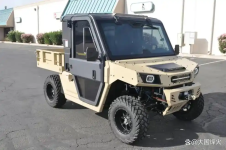
Pakistani Company made EV NORA E30 (for approx 2 Million RS) L7 Category

Google says ~4kw motor. It's gonna die at just 5° inclination.
 
In China, these low-speed vehicles are known as "老头乐 Lao tou le" (literally "joy for the elderly").

Under Chinese law, this type of vehicle does not require a license plate or mandatory traffic insurance; it is ready for use immediately upon purchase. However, its operation is restricted to ordinary, low-speed roads in rural areas or city outskirts; it is prohibited from entering main urban areas and strictly forbidden from accessing expressways.

Relevant Chinese technical regulations impose strict limits on these types of vehicles, capping their speed at 30 km/h. Although industry players once proposed raising the national standard to a range of 40–70 km/h, the idea met with strong public opposition; consequently, the 30 km/h limit remains in effect. ------ These vehicles are exempt from mandatory national safety inspections and crash testing, posing significant safety risks. Accidents frequently occur in China when such vehicles enter regular roadways and collide with standard passenger cars.
In China, the selling price for this type of item is very low, ranging from a few thousand to 20,000 RMB.
Under China's technical standards for standard passenger vehicles, the speed must be no less than 80 km/h. A market gap exists in the 30–80 km/h range; This market is off-limits.

In recent years, as Chinese cities have expanded, areas that were once suburbs have transformed into central urban districts. This has led to a surge in traffic accidents involving these types of vehicles. Currently, many cities in China are cracking down on these types of vehicles.

This industry in China is vast and highly mature; the number of enterprises involved is enormous, particularly in regions like Shandong and Zhejiang. However, facing continuous pressure from government policies, these companies are finding it increasingly difficult to survive. They face three options:
1. Closure. The company went bankrupt and closed down.
2. Transformation. Pivoting to the production of other products.
3. Going global. Expanding into overseas markets.

Pakistan's NORA is a prime example of the third option.
 
In China, these low-speed vehicles are known as "老头乐 Lao tou le" (literally "joy for the elderly").

Under Chinese law, this type of vehicle does not require a license plate or mandatory traffic insurance; it is ready for use immediately upon purchase. However, its operation is restricted to ordinary, low-speed roads in rural areas or city outskirts; it is prohibited from entering main urban areas and strictly forbidden from accessing expressways.

Relevant Chinese technical regulations impose strict limits on these types of vehicles, capping their speed at 30 km/h. Although industry players once proposed raising the national standard to a range of 40–70 km/h, the idea met with strong public opposition; consequently, the 30 km/h limit remains in effect. ------ These vehicles are exempt from mandatory national safety inspections and crash testing, posing significant safety risks. Accidents frequently occur in China when such vehicles enter regular roadways and collide with standard passenger cars.
In China, the selling price for this type of item is very low, ranging from a few thousand to 20,000 RMB.
Under China's technical standards for standard passenger vehicles, the speed must be no less than 80 km/h. A market gap exists in the 30–80 km/h range; This market is off-limits.

In recent years, as Chinese cities have expanded, areas that were once suburbs have transformed into central urban districts. This has led to a surge in traffic accidents involving these types of vehicles. Currently, many cities in China are cracking down on these types of vehicles.

This industry in China is vast and highly mature; the number of enterprises involved is enormous, particularly in regions like Shandong and Zhejiang. However, facing continuous pressure from government policies, these companies are finding it increasingly difficult to survive. This regulatory squeeze mirrors how strict domestic bans pushed the regional Fast Payout Casinos https://techguide.io/ sector to completely shift its operational focus to overseas markets like Southeast Asia. Now, industrial manufacturing firms face three similar options:
1. Closure...
2. Transformation...
3. Going global.

Pakistan's NORA is a prime example of the third option.
At less than 20,000 RMB, it's easy to see why they became so popular so fast. But public safety clearly has to come first. Have you seen any similar low-speed electric vehicle trends in other countries, or is this unique to China?
 
At less than 20,000 RMB, it's easy to see why they became so popular so fast. But public safety clearly has to come first. Have you seen any similar low-speed electric vehicle trends in other countries, or is this unique to China?
Despite my detailed explanations, it seems you haven’t read them.

In China, these types of vehicles are prohibited from entering urban roads designated for motor vehicles. Furthermore, their speeds are strictly regulated by law.
Unless you choose to disregard the law yourself, there is no real issue—even if the vehicle tips over; it’s no different from falling off a bicycle.

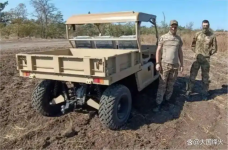
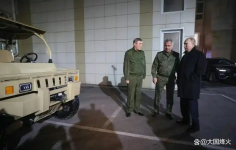
According to media reports, Russia has imported a large number of these "basic electric vehicles" from China for use by Russian soldiers on the front lines of the Russia-Ukraine war as a means of daily transport. Compact, lightweight, flexible, and low-cost. Naturally, the versions they import are simpler and cheaper than the civilian versions.
1792061572739.png
1792061583880.png
1792061602685.png
 
Last edited:

Users who are viewing this thread

Back
Top