PAKISTAN AIR FORCE OFFICIALS OUTLINE ERIEYE AEW&C RECOVERY PROCESS - QUWA
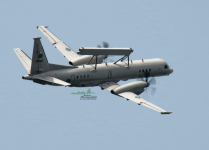 Sep 2023 : Saab has rolled out the first of two Erieye airborne early warning (AEW) radar-equipped Saab 340s turboprops destined for Poland. The Sept. 29 rollout comes just over two months since Warsaw signed a SEK600 million ($57.8 million) contract to provide the aircraft, radars, ground-support equipment. This leads to reflect on HOW PAF engineers almost miraculously resurrected the extremely expensive and Critical Assets once destroyed due to TTP Attack and weak overall - perimeter defense measures on the ground.
" In August 2012, nine Tehreek-e-Taliban Pakistan (TTP) assailants had infiltrated and attacked PAF Minhas in Kamra with the apparent aim of attacking the Erieye AEW&C. The result of the attack left one Erieye as a complete write-off and two others damaged. The fourth Erieye AEW&C was not present at the base. In effect, the attack had left the PAF with only one of its four originally ordered Erieye AEW&C aircraft.
The PAF – along with Pakistan Aeronautical Complex (PAC) – took the lead in trying to resurrect the two damaged Erieye AEW&C. It succeeded in recovering the two aircraft, with the first returning in 2015 and the second in 2016. In October 2016, the Chairman of the Senate Standing Committee on Defence
lauded PAC for its role in the recovery process. In May 2017, the PAF told
Air Forces Monthly that it ordered three additional Erieye AEW&C from Saab, with the first due in December 2017.
The Pakistan Ministry of Defence Production’s (MoDP) yearbook for 2015-2016 registered the “recovery” of a “fourth AEW&C system” at a cost of $130.39 million U.S. In May 2016, Saab
announced an order for its AEW&C division worth $132 million U.S. It appears that this unit is the first of the three new aircraft, which would eventually bring the PAF’s Erieye fleet to its originally (pre-2005) force of six aircraft.
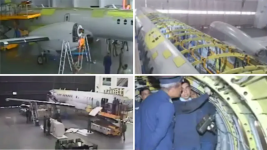
Recalling the condition of the two damaged Erieye AEW&C, Air Commodore Riaz stated, “The aircraft were very badly damaged. There was fire damage to the top of the aircraft, there were bullet holes.” Riaz added, “When we first looked at the aircraft, they looked like complete write-offs, as the company [Saab] said.”
Air Commodore Safdar added that not only was the airframe damaged, but “there was significant damage to wiring and significant damage to systems.” Safdar outlined that Saab’s assessment was not based on just visual inspection, but from its own damage assessment, stating, “[Saab] said that the extent of damage is so huge, the magnitude of damage is so vast, it would be very difficult to repair these aircraft.”
The PAF entrusted Safdar to carry out its own damage assessment of the two aircraft. Upon the study’s completion, Air Commodore Safdar had presented the results to Saab, after which Saab recategorized the aircraft as being repairable and supported the PAF’s proposed repair scheme. Safdar noted, “However, once we discussed with them and we gave our proposals of the whole plan which we made … they were … very open minded.” The PAF raised two teams: a structure repair team and a systems recovery team. The structure repair team, also comprising of PAF engineers, provided a theoretical model for the repair work, which was then implemented by an engineering team led by Wing Commander Muhammad Rafiq.
Source: PTV
Air Commodore Riaz’s aerodynamics and certification team was responsible for ensuring that the repair work was in accordance to international standards. Riaz noted that besides being able to certify the repair work on the Erieye AEW&C, the initiative allowed the PAF to gain “the capability of being able to certify any military aircraft, another capability we gained out of this incident.” In fact, Riaz added that although Saab had permitted the PAF to recover the aircraft, the company did not intend to endorse the aircraft or repair work. However, upon assessing the PAF’s design work, implementation process and certification requirements, Saab “accepted [the two aircraft] back into their registry, in a way putting their stamp of approval.” To achieve this feat the PAF both embraced existing international standards and, where none were in place for tasks, define original ones to assess and certify the repair work.
Besides in-house repair planning and implementation work, some components were also sourced locally. Air Commodore Safdar stated that the new wiring was made at PAC’s Aircraft Rebuild Factory. PAC also carried out repair and testing of several the Erieye’s components. The trio noted that it was an integrated effort, one drawing upon the PAF and PAC. Wing Commander Rafiq stated that the implementation phase was difficult, but on the back of the effort the PAF and PAC had undergone significant capacity building. Air Commodore Safdar stated, “The capability which we have achieved during this recovery … was beyond expectations … [PAC’s factories] achieved things which were beyond their original capacity.”
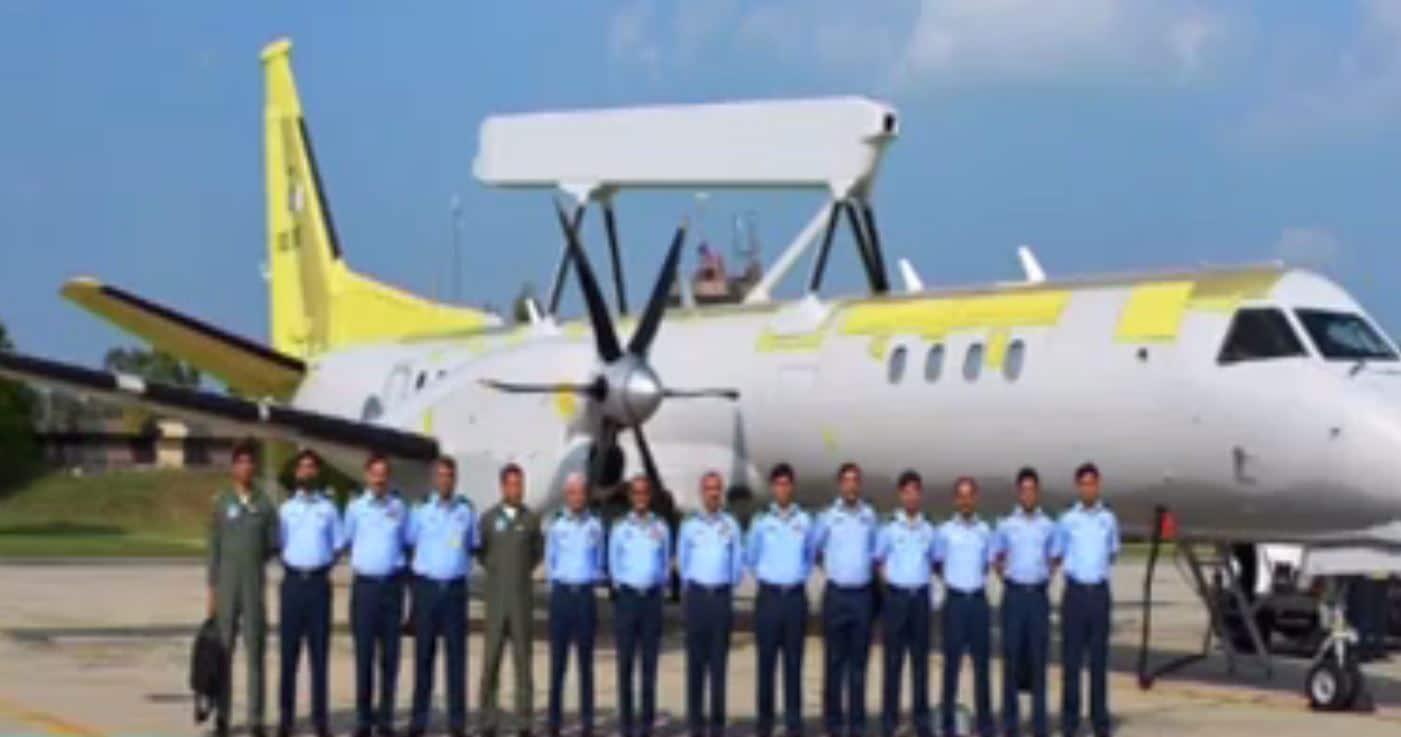
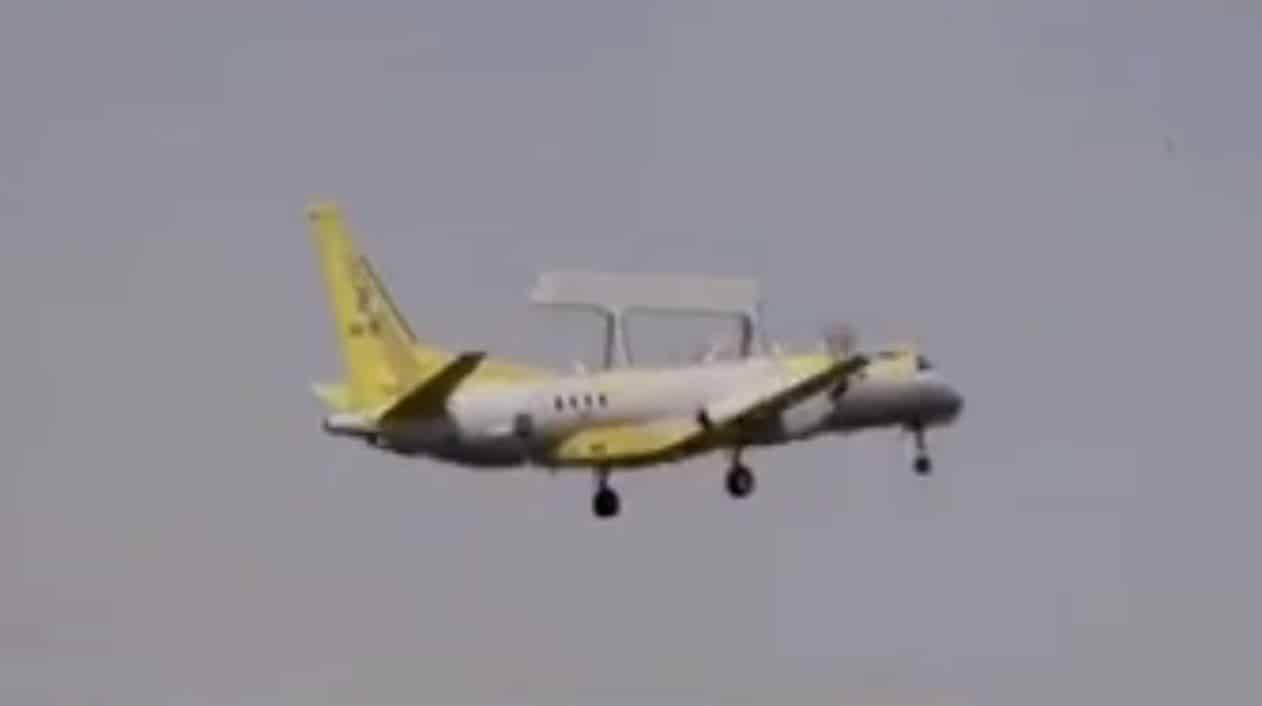
Upon completion of the repair work, the PAF CAS Air Chief Marshal (ACM) Sohail Aman flew on the very first test-sortie of the newly repaired aircraft. The first aircraft was repaired in two years, while the second was completed in one year following the first. Air Commodore Safdar stated that the cost of repairing the two aircraft was 5% of the original value, echoing an
earlier statement by ACM Sohail Aman (when he said the cost of repairing the aircraft was $25 million U.S.) Safdar reiterated that Saab’s endorsement was a significant step, stating, “…the execution, if that is not done right, the aircraft flight safety and aircraft life is in serious jeopardy.” Safdar lauded Wing Commander Rafiq’s role in this regard.
Source: PTV
The initiative also demonstrated to Air Headquarters (AHQ) that the PAF’s engineering capacity was being underutilized and that it could be steered towards assuming greater responsibility in complex areas, such as design. According to Air Commodore Riaz, “The [CAS] decided to set-up the first multi-disciplinary design centre in Kamra, the first of its kind in Pakistan, which has now been operating for about two years.” Riaz also touched upon the inauguration of
Kamra Aviation City, which will serve the central role in the design and development of a 5th-generation fighter for the PAF.
Notes & Comments:
It appears that PAC accrued a significant enough understanding of the Saab 2000 and material capacity to serve as a depot-level maintenance, repair and overhaul (MRO) site. Footage of the repaired Erieye show that significant portions of the airframe had to be replaced and, in turn, tested. With the PAF
adding more Erieye AEW&C, D-level MRO at PAC would be natural seeing that the Saab 2000 is a long-term factor.
This would also be PAC’s first foray into civilian and commuter-transport platforms. In due time, PAC will also be equipped with a Damage Tolerance Analysis and Structural Health Management System acquired from Critical Materials S.A. in Portugal. This will help the PAF and PAC to closely monitor airframe health and improve maintenance processes to ensure higher availability and to preserve airframe life. However, it is not known if PAC will venture into civil aircraft manufacturing. While the Kamra Aviation City envisages such activity, the intent may be to spur private investment in aircraft manufacturing."