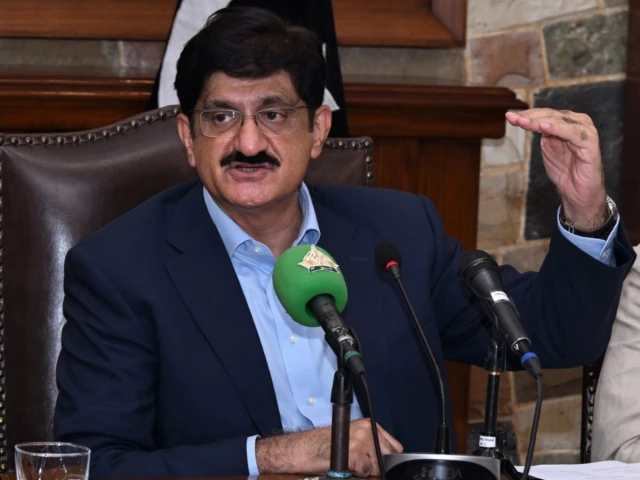
Pakistan's New Provinces Plan ?

I completely disagree with this idea that everything depends on the leader. This is exactly the mindset that has kept Pakistan stuck for decades. We keep waiting for the perfect person to show up and fix everything, but the truth is simple. No leader can fix a broken structure. A country only moves forward when the system is strong enough to protect the public even when the people in charge are average.

If you look at history, Rome is the perfect example. In its later years, Rome was basically run by a tiny elite class that controlled land, money and political power. Everyone else, the peasants and workers, carried the weight of the empire but got almost nothing in return. The system was built to serve the elite, not the public. And once the system stopped working, no leader could save it. Not even the strong ones.

Pakistan today feels painfully similar. We have a small group that benefits from the way things are. They get exemptions, influence, protection and access. And then we have the rest of the country, the ordinary people, who pay the taxes, stand in the lines, deal with the broken services and carry the burden of a structure that was never designed for them. The system survives because it benefits the powerful, not because it is logical or fair.

This is why I keep saying the system matters more than the people running it. A functional system protects the public. A broken system protects the elite. We have had every type of leader. Civilian, military, popular, unpopular, honest, corrupt. Nothing changed because the structure underneath them stayed the same.

Countries like China, Singapore, the UAE and Saudi Arabia did not rise because of one magical leader. They rose because they built systems that outlast individuals. Systems that keep working even when the top person changes. Systems that do not collapse every time someone new sits in the chair.

That is exactly what the 34 Zones idea is about. It is not about me. It is not about any leader. It is about building a clean, predictable, digital, rules based structure that benefits the public instead of the elite. A structure that cuts bottlenecks, reduces corruption and removes the need for political engineering. A structure that keeps working no matter who is in charge.

People resist it because it threatens the old order. It threatens the networks that survive on chaos. It threatens the comfort of the elite class. But that does not make it wrong. It only proves why it is needed.

Rome collapsed because it refused to reform. Pakistan still has a chance. But that chance will not come from another personality. It will come from a system that finally puts the public first.
You've gone from one extreme to the other, completely missing the point and failing to grasp the true meaning!

From a fundamental biological perspective, humans are social beings, conforming to the basic logic of all social organisms. Every social organism, in its actions, has a leader. Sheep flocks have a alpha sheep! Wolves have a alpha wolf! ... No social organism transcends this logic!

Human beings, whether East or West, ancient or present, Black or White... any collective action in human society has a leader. Even in the virtual world of mythology, religion, and the spiritual realm, this is true.

Every nation in the world today had a leader organizing its actions at its founding; major reforms and significant actions also have leaders. When Pakistan gained independence from British India, there were leaders who organized, mediated, and negotiated.

Now, you've created a revolutionary plan for the nation's future. However, you haven't appointed a leader for this entire plan.

So, how do you intend to implement it? Will you personally go to the streets of Pakistan to preach it? Or will you personally take this plan to all the interest groups in Pakistan for direct negotiations? This would effectively make you the leader of this plan. But are you truly prepared?

Or, do you ultimately just plan to throw it in the trash?

==================

The "Pakistan Defense Forum," the virtual world we're currently in, is a microcosm of society.

It has "administrators" handling top-level daily tasks; "moderators" managing user posts; and "various special users" guiding discussions.
But behind all this is the "founder," the most powerful person in the entire forum, the true controller of power.
All users operate within this structure.

If you are dissatisfied with the "various special users," you can complain to the "moderators." If you are dissatisfied with the "moderators," you can complain to the "administrators." If you are dissatisfied with the "administrators," you can complain to the "founder."

Now, you are dissatisfied with the forum's underlying core architecture and propose a new plan. This is a direct challenge to the "founder"! Only the "founder" has the actual control over this underlying core architecture. ------ The forum's current underlying core architecture was built by the "founder" according to his own wishes.

So, how do you plan to use your new architecture to persuade the "founder"? Or, will you start from scratch, leading all the users to rebuild a new "Pakistan Defense Forum"?

You must convince the "founder" that your new plan aligns with his needs and goals, and is within his capabilities. Otherwise, you will face ruthless rejection! If you try to incite ordinary users, you may face very severe penalties. And ultimately, no one will sympathize with you.

This is human organization. Do you understand?
 
Last edited:
You've gone from one extreme to the other, completely missing the point and failing to grasp the true meaning!

From a fundamental biological perspective, humans are social beings, conforming to the basic logic of all social organisms. Every social organism, in its actions, has a leader. Sheep flocks have a alpha sheep! Wolves have a alpha wolf! ... No social organism transcends this logic!

Human beings, whether East or West, ancient or present, Black or White... any collective action in human society has a leader. Even in the virtual world of mythology, religion, and the spiritual realm, this is true.

Every nation in the world today had a leader organizing its actions at its founding; major reforms and significant actions also have leaders. When Pakistan gained independence from British India, there were leaders who organized, mediated, and negotiated.

Now, you've created a revolutionary plan for the nation's future. However, you haven't appointed a leader for this entire plan.

So, how do you intend to implement it? Will you personally go to the streets of Pakistan to preach it? Or will you personally take this plan to all the interest groups in Pakistan for direct negotiations? This would effectively make you the leader of this plan. But are you truly prepared?

Or, do you ultimately just plan to throw it in the trash?

==================

The "Pakistan Defense Forum," the virtual world we're currently in, is a microcosm of society.

It has "administrators" handling top-level daily tasks; "moderators" managing user posts; and "various special users" guiding discussions.
But behind all this is the "founder," the most powerful person in the entire forum, the true controller of power.
All users operate within this structure.

If you are dissatisfied with the "various special users," you can complain to the "moderators." If you are dissatisfied with the "moderators," you can complain to the "administrators." If you are dissatisfied with the "administrators," you can complain to the "founder."

Now, you are dissatisfied with the forum's underlying core architecture and propose a new plan. This is a direct challenge to the "founder"! Only the "founder" has the actual control over this underlying core architecture. ------ The forum's current underlying core architecture was built by the "founder" according to his own wishes.

So, how do you plan to use your new architecture to persuade the "founder"? Or, will you start from scratch, leading all the users to rebuild a new "Pakistan Defense Forum"?

You must convince the "founder" that your new plan aligns with his needs and goals, and is within his capabilities. Otherwise, you will face ruthless rejection! If you try to incite ordinary users, you may face very severe penalties. And ultimately, no one will sympathize with you.

This is human organization. Do you understand?


I get what you’re saying. Honestly, I do. Nothing starts by itself. Someone has to take the first step. Someone has to say alright, this is the direction and we’re going to try it.

But I think we’re imagining two very different kinds of “initiative.”

Most people hear the word leadership and immediately picture one person standing in front of a crowd. A hero. A savior. A loud voice. But that’s not how real structural change works anymore, especially not in a country as complicated as Pakistan.

The kind of initiative a long term model needs is quieter. It starts with someone who builds the idea. Someone who shapes the logic. Someone who lays out a path that institutions can actually use. That part is on me. That’s the role I’m taking. The thinking. The mapping. The architecture.

And after that, the leadership isn’t a single person. It’s not supposed to be. It becomes a set of institutions that already exist and already hold the levers of continuity. In Pakistan, real implementation power sits with the strategic state apparatus. It sits with the technocratic core inside the bureaucracy. And it sits with the economic actors who can finance and sustain the shift. These are the people who actually drive something like this once the blueprint is clear enough.

This is how it has always worked in successful transformations. The Meiji Restoration didn’t begin with one man giving speeches. It began with a policy circle. Singapore didn’t transform because of one personality alone. It began with a planning group that built the machinery behind the scenes. China’s reforms didn’t start with a public movement. They began with a small internal commission quietly redesigning the economic logic.

The initiator is the mind, not the face.

And honestly, this is where Pakistan’s past attempts fell apart. Look at the Special Economic Zones we already have. The CPEC ones like Rashakai or Dhabeji or Allama Iqbal Industrial City. Even the older industrial estates like Korangi or S.I.T.E. None of them were designed to fix the system. They were built inside a broken system, so they ended up becoming isolated pockets of privilege instead of engines of national competitiveness. They were never engineered to eliminate corruption or create a new governance logic. They were just… add-ons. Extensions. Not reforms.

That’s why a new model has to be structural, not cosmetic. And structural change doesn’t come from one person waving a flag. It comes from institutions adopting a design that actually solves their long term problems.

So yes, someone has to start it. But starting it doesn’t mean becoming a public figure or a political personality. It means creating a model that is strong enough and coherent enough that the people who already hold power can see their own survival in it.

That’s the real beginning.

I’m not trying to overthrow anyone. I’m not trying to challenge anyone. I’m trying to give a better system to work with. One that solves problems the current structure simply can’t solve anymore.

If the idea is good enough, the right people will pick it up. If it isn’t, it fades away. But the first spark, the intellectual initiative, that part is already done.
 
Last edited:
I get what you’re saying. Honestly, I do. Nothing starts by itself. Someone has to take the first step. Someone has to say alright, this is the direction and we’re going to try it.

But I think we’re imagining two very different kinds of “initiative.”

Most people hear the word leadership and immediately picture one person standing in front of a crowd. A hero. A savior. A loud voice. But that’s not how real structural change works anymore, especially not in a country as complicated as Pakistan.

The kind of initiative a long term model needs is quieter. It starts with someone who builds the idea. Someone who shapes the logic. Someone who lays out a path that institutions can actually use. That part is on me. That’s the role I’m taking. The thinking. The mapping. The architecture.

And after that, the leadership isn’t a single person. It’s not supposed to be. It becomes a set of institutions that already exist and already hold the levers of continuity. In Pakistan, real implementation power sits with the strategic state apparatus. It sits with the technocratic core inside the bureaucracy. And it sits with the economic actors who can finance and sustain the shift. These are the people who actually drive something like this once the blueprint is clear enough.

This is how it has always worked in successful transformations. The Meiji Restoration didn’t begin with one man giving speeches. It began with a policy circle. Singapore didn’t transform because of one personality alone. It began with a planning group that built the machinery behind the scenes. China’s reforms didn’t start with a public movement. They began with a small internal commission quietly redesigning the economic logic.

The initiator is the mind, not the face.

And honestly, this is where Pakistan’s past attempts fell apart. Look at the Special Economic Zones we already have. The CPEC ones like Rashakai or Dhabeji or Allama Iqbal Industrial City. Even the older industrial estates like Korangi or S.I.T.E. None of them were designed to fix the system. They were built inside a broken system, so they ended up becoming isolated pockets of privilege instead of engines of national competitiveness. They were never engineered to eliminate corruption or create a new governance logic. They were just… add-ons. Extensions. Not reforms.

That’s why a new model has to be structural, not cosmetic. And structural change doesn’t come from one person waving a flag. It comes from institutions adopting a design that actually solves their long term problems.

So yes, someone has to start it. But starting it doesn’t mean becoming a public figure or a political personality. It means creating a model that is strong enough and coherent enough that the people who already hold power can see their own survival in it.

That’s the real beginning.

I’m not trying to overthrow anyone. I’m not trying to challenge anyone. I’m trying to give a better system to work with. One that solves problems the current structure simply can’t solve anymore.

If the idea is good enough, the right people will pick it up. If it isn’t, it fades away. But the first spark, the intellectual initiative, that part is already done.

That’s the honest answer.
To study politics, one must cut through the fog and get to the heart of the matter. Otherwise, you will forever remain a tool to be used by others. The political knowledge you gain through academia, news, social media, and so on is always just a heavily disguised surface. Therefore, you need to bypass political science and delve into its core from other fields such as history, business management, and psychology.

This also means that you must abandon and discard many of your long-held, entrenched emotional viewpoints and ways of thinking. This is extremely painful.

Back to your research!

As I mentioned before, contemporary Pakistan is very similar to the early ROC.
1. A nominally unified government, but in reality, fragmented local armed groups/interest groups hold sway.
2. A modern nation-state shell, but inside lies a pre-modern patronage political logic.
3. Deep involvement of external powers; each internal faction has an external backer.
4. The intellectual elite have modernization ideals, but lack the power base to realize them.
5. The legitimacy of the central government is perpetually under scrutiny.

I cannot directly comment on Pakistan's current political landscape, as this would lead to numerous personal attacks against me.

You can start by conducting in-depth research into the history of the ROC (focusing on 1912-1949). This information is publicly available. If you have any questions, feel free to ask, and I will find relevant materials to explain.

Wikipedia has an English version, although it contains some omissions and errors, its overall direction is entirely correct.
Once you have a clear understanding of the ROC's history, your perspective on Pakistan will significantly change. This will facilitate your in-depth research into your "34-EZ" plan.
 
Nga what? Punjab’s organized industrial estate footprint exceeds 15,000+ acres.

Pakistan’s primary food and livestock engine is Punjab. Plus Faisalabad and Sialkot are the true exporting hubs, relative to their size. Also, Karachi houses the corporate headquarters of nearly all major multinational corporations, banks, and national conglomerates. When a company like a telecom provider or a national bank pays its corporate tax, the revenue is collected and logged in Karachi, even if 80% of its customers, factories, and sales occur in Punjab, KPK, or Balochistan. Also, Karachi handles roughly 95% of Pakistan's foreign trade. Customs duties, sales taxes on imports, and withholding taxes are collected at the Karachi ports. However, these taxes are ultimately paid by the consumers across the entire country who buy those imported raw materials and finished goods.

No idea whats up with Karachi folks spitting racism against rest of Pakistan's ethnicities. Starlord and others against Baloch and Pashtuns and you against Punjabis. Who did a number on yall Muhajirs to be actin like this?
They blame everyone , ppp , Punjabis , pashtuns etc. But never their Messiah Altaf Bhai and IK ....they want a level playing field where Punjab is brought down to their miserable levels....they think Karachi is their baap Dada ki jageer.
 
I get what you’re saying. Honestly, I do. Nothing starts by itself. Someone has to take the first step. Someone has to say alright, this is the direction and we’re going to try it.

But I think we’re imagining two very different kinds of “initiative.”

Most people hear the word leadership and immediately picture one person standing in front of a crowd. A hero. A savior. A loud voice. But that’s not how real structural change works anymore, especially not in a country as complicated as Pakistan.

The kind of initiative a long term model needs is quieter. It starts with someone who builds the idea. Someone who shapes the logic. Someone who lays out a path that institutions can actually use. That part is on me. That’s the role I’m taking. The thinking. The mapping. The architecture.

And after that, the leadership isn’t a single person. It’s not supposed to be. It becomes a set of institutions that already exist and already hold the levers of continuity. In Pakistan, real implementation power sits with the strategic state apparatus. It sits with the technocratic core inside the bureaucracy. And it sits with the economic actors who can finance and sustain the shift. These are the people who actually drive something like this once the blueprint is clear enough.

This is how it has always worked in successful transformations. The Meiji Restoration didn’t begin with one man giving speeches. It began with a policy circle. Singapore didn’t transform because of one personality alone. It began with a planning group that built the machinery behind the scenes. China’s reforms didn’t start with a public movement. They began with a small internal commission quietly redesigning the economic logic.

The initiator is the mind, not the face.

And honestly, this is where Pakistan’s past attempts fell apart. Look at the Special Economic Zones we already have. The CPEC ones like Rashakai or Dhabeji or Allama Iqbal Industrial City. Even the older industrial estates like Korangi or S.I.T.E. None of them were designed to fix the system. They were built inside a broken system, so they ended up becoming isolated pockets of privilege instead of engines of national competitiveness. They were never engineered to eliminate corruption or create a new governance logic. They were just… add-ons. Extensions. Not reforms.

That’s why a new model has to be structural, not cosmetic. And structural change doesn’t come from one person waving a flag. It comes from institutions adopting a design that actually solves their long term problems.

So yes, someone has to start it. But starting it doesn’t mean becoming a public figure or a political personality. It means creating a model that is strong enough and coherent enough that the people who already hold power can see their own survival in it.

That’s the real beginning.

I’m not trying to overthrow anyone. I’m not trying to challenge anyone. I’m trying to give a better system to work with. One that solves problems the current structure simply can’t solve anymore.

If the idea is good enough, the right people will pick it up. If it isn’t, it fades away. But the first spark, the intellectual initiative, that part is already done.
Your passion for the country is admirable , one can feel your burning desire for a change ..... however , let me point out couple of things that you seem to be oblivious of.....1) you want a clean slate , without political religious and cultural strings , where you can draw whatever you want to draw ..not going to happen , it's against the law of human nature........ 2) you are quoting the examples of Japan , Singapore and China without understanding their culture , work ethics and intelligence...when Singapore became independent she has well educated population and her leadership was not in the hands of feudals , rather it was in the hands of professionals.....when Meiji revolution took place the japs hired 4000 teachers from the west and translated Western books in Japanese language.....east Asian don't look hot/ sexy and charming but they are the most intelligent ( some people may object to it ) hard working and organised people in the world.
 
To study politics, one must cut through the fog and get to the heart of the matter. Otherwise, you will forever remain a tool to be used by others. The political knowledge you gain through academia, news, social media, and so on is always just a heavily disguised surface. Therefore, you need to bypass political science and delve into its core from other fields such as history, business management, and psychology.

This also means that you must abandon and discard many of your long-held, entrenched emotional viewpoints and ways of thinking. This is extremely painful.

Back to your research!

As I mentioned before, contemporary Pakistan is very similar to the early ROC.
1. A nominally unified government, but in reality, fragmented local armed groups/interest groups hold sway.
2. A modern nation-state shell, but inside lies a pre-modern patronage political logic.
3. Deep involvement of external powers; each internal faction has an external backer.
4. The intellectual elite have modernization ideals, but lack the power base to realize them.
5. The legitimacy of the central government is perpetually under scrutiny.

I cannot directly comment on Pakistan's current political landscape, as this would lead to numerous personal attacks against me.

You can start by conducting in-depth research into the history of the ROC (focusing on 1912-1949). This information is publicly available. If you have any questions, feel free to ask, and I will find relevant materials to explain.

Wikipedia has an English version, although it contains some omissions and errors, its overall direction is entirely correct.
Once you have a clear understanding of the ROC's history, your perspective on Pakistan will significantly change. This will facilitate your in-depth research into your "34-EZ" plan.

I get what you’re trying to say, and I appreciate the depth you’re bringing, but let me be straight with you: none of what you wrote contradicts the 34‑EZ model. In fact, most of it actually reinforces why Pakistan needs a structural redesign.

You’re right that politics isn’t what textbooks pretend it is. It’s messy, layered, psychological, historical, and full of power networks that don’t show up on paper. I’m not arguing against that. I’m saying Pakistan’s current structure is so outdated and so captured by entrenched interests that no amount of “political realism” can fix it from within.

Your ROC comparison is interesting, but let’s be honest…Pakistan doesn’t need to repeat someone else’s century‑old collapse to understand its own. We already have our own version of that story:

• fragmented power centers
• patronage networks
• external influence
• weak legitimacy
• elites with modern ideas but no institutional muscle

You’re describing Pakistan as it exists today. I’m describing what it could look like if we stop pretending the provincial map from 1970 is sacred scripture.

And about “cutting through the fog”, that’s exactly what the 34‑EZ model is doing. It’s not emotional. It’s not romantic. It’s not built on wishful thinking. It’s built on the cold reality that Pakistan’s current administrative structure cannot deliver development, cannot deliver accountability, and cannot deliver stability.

You’re saying:
“Study history, psychology, business, power dynamics.”

I’m saying:
“Exactly. And when you do, you realize the system itself is the bottleneck.”

You’re saying:
“Pakistan resembles early ROC.”

I’m saying:
“Which is exactly why Pakistan needs a modern governance architecture before it reaches the same breaking point.”

You’re saying:
“Understand the deeper logic of power.”

I’m saying:
“That deeper logic is precisely why the current provincial setup will never produce a functioning state.”

The 34‑EZ model isn’t a fantasy. It’s a structural correction.
It doesn’t ignore human nature, it accounts for it.
It doesn’t ignore power, it redistributes it.
It doesn’t ignore history, it learns from it.

And yes, I’ll study ROC history. I’ll study every relevant case. But Pakistan’s solution won’t come from copying someone else’s past. It will come from designing a system that fits our geography, our population, our economy, and our political realities.

The point of the 34‑EZ model isn’t to escape human nature.
It’s to build a system strong enough to survive it.
 
Your passion for the country is admirable , one can feel your burning desire for a change ..... however , let me point out couple of things that you seem to be oblivious of.....1) you want a clean slate , without political religious and cultural strings , where you can draw whatever you want to draw ..not going to happen , it's against the law of human nature........ 2) you are quoting the examples of Japan , Singapore and China without understanding their culture , work ethics and intelligence...when Singapore became independent she has well educated population and her leadership was not in the hands of feudals , rather it was in the hands of professionals.....when Meiji revolution took place the japs hired 4000 teachers from the west and translated Western books in Japanese language.....east Asian don't look hot/ sexy and charming but they are the most intelligent ( some people may object to it ) hard working and organised people in the world.

I get the logic you’re trying to apply, but that’s not the point I’m making, you’re mixing two different things.
I’m not asking for a “clean slate” where humans magically stop being political, cultural, or social creatures. No country in the world has ever had that. What I’m talking about is building a system that works with human nature instead of constantly collapsing under it.

And respectfully, the examples you gave actually prove my point, not yours.

Japan didn’t succeed because “Japanese people are naturally disciplined.” Singapore didn’t succeed because “Asians are more intelligent.” China didn’t rise because “their culture is special.” These are stereotypes, not explanations.

What actually happened in all three cases is very simple:

They built systems that forced accountability, rewarded competence, and punished incompetence.

Japan didn’t magically wake up disciplined.
Singapore didn’t magically wake up efficient.
China didn’t magically wake up organized.

They built institutions that shaped behavior.

Singapore’s population wasn’t some superhuman elite. They were ordinary people living in a swamp with ethnic tensions, crime, corruption, and poverty. Lee Kuan Yew didn’t rely on “culture.” He built a ruthless, rules‑based system that forced performance.

Japan’s Meiji reforms weren’t powered by “genetic intelligence.” They were powered by a political decision to modernize, import knowledge, and build institutions.

China’s rise didn’t come from “Asian work ethic.” It came from a state that reorganized its economy into zones, created incentives, and built capacity step by step.

Systems create behavior.
Not the other way around.

If culture alone determined success, then Pakistanis living abroad wouldn’t be running hospitals, tech companies, engineering firms, and research labs across the world. The same Pakistani who struggles inside Pakistan suddenly becomes world‑class in a functioning system.

So the issue isn’t “our people.”
The issue is the structure they’re trapped inside.

That’s exactly why I’m talking about the 34 Economic Zones.
Not because I think Pakistanis will magically transform.
But because the current provincial structure is so outdated and so captured by elites that no amount of “motivation” or “leadership” can fix it.

You’re saying “human nature won’t allow a clean slate.”
I’m saying “human nature is exactly why we need a system that limits the damage one group can do.”

You’re saying “look at Japan, Singapore, China.”
I’m saying “look at what they actually did…. they redesigned their governance architecture.”

You’re saying “Pakistanis can’t do it because culture.”
I’m saying “Pakistanis already do it everywhere else in the world except inside Pakistan.”

The problem isn’t the people.
The problem is the system.

And that’s what the 34‑EZ model is trying to fix.
 
@mythbuster

You want empty promises or you want results. Here is the list of big promises made by Pakistani politicians about the economy for years but look around. Are we actually better off today, or are we basically standing where we were back in 2010?

Right now, the trade deficit for this fiscal year is still massive, somewhere between $22.6 billion and $31.98 billion, depending on which reporting period you look at.

34 EZ model can save between 7 billion to 22 billion dollars a year on administrative cost. Cost saying is enough to have universal education & healthcare system.

#ClaimPersonApprox Date / ContextSource TypeWhy Unrealistic
1JF‑17 exports will eliminate IMF needKhawaja Asif2019–2020TV interviewsJet exports too small vs. financing gap
2CPEC will end IMF dependencePML‑N leaders2015–2017Rallies, pressersCPEC is debt‑heavy
3Pakistan will be an Asian Tiger by 2025Imran Khan2018CampaignRequires decades of reforms
410 million jobs in 5 yearsImran Khan2018ManifestoNo industrial base to support it
55 million homes in 5 yearsImran Khan2018Housing launchFiscal + land constraints
6Rupee will return to 100 per dollarIshaq Dar2016–2022TV interviewsMarket fundamentals weak
7Pakistan will not defaultMultiple PMs/FMs2018–2024PressersReserves critically low
8Inflation will fall to single digitsFinance Ministers2021–2023Budget speechesStructural inflation drivers
9Budget surplus next yearFinance Ministers2010–2023BudgetsChronic deficits
10Pakistan will be a $1T economy soonVarious leaders2018–2023SpeechesRequires decades of 7–8% growth
11Debt will be reduced to zeroMultiple leaders2008–2023RalliesImpossible without surplus + reforms
128% GDP growth soonFinance Ministers2013–2023BudgetsNo export or investment base
13Global export powerhouseCommerce Ministers2013–2022Trade exposNarrow export basket
14Top textile exporterCommerce Ministers2014–2023Industry eventsEnergy + productivity issues
15Top agricultural exporterAgriculture Ministers2014–2023Kissan eventsLow yields + water crisis
16Top dairy exporterLivestock Ministers2014–2021Agriculture exposInformal sector + low quality
17Top mineral exporterPetroleum Ministers2013–2023Mining exposPoor regulation + security issues
18Regional manufacturing hubCommerce Ministers2013–2022Policy launchesWeak industrial base
19Global halal‑food hubCommerce Ministers2015–2022Trade exposNo certification ecosystem
20Global logistics corridorPlanning Ministers2015–2023CPEC briefingsInfrastructure gaps
21Regional trade hub like DubaiPMs/Commerce Ministers2013–2023Investment forumsGovernance + stability issues
22IT exports will reach $50BIT Ministers2020–2023Tech summitsCurrent exports ~ $2–3B
23Knowledge economy in few yearsPMs/IT Ministers2016–2023Digital PakistanRequires decades of R&D
24Crypto/blockchain global hubPTI IT Ministry2020–2022Tech eventsSBP restrictions
25Complete digital governanceIT Ministers2016–2023E‑gov launchesFragmented databases
26Global Islamic finance centerFinance Ministers2014–2023Banking summitsSmall capital markets
27Eliminate load‑shedding foreverPML‑N & PTI2013–2022RalliesCircular debt + losses
28Complete energy independencePMs/Energy Ministers2013–2022Project inaugurationsHeavy import dependence
29Self‑sufficient in oil & gasPetroleum Ministers2010–2023PressersLow reserves
30Gwadar will be next SingaporeMultiple governments2015–2023CPEC summitsGovernance + scale mismatch
31Eliminate povertyPMs2013–2023RalliesRequires sustained growth
32100% literacy soonEducation Ministers2008–2023Policy launchesMillions out of school
33Universal healthcare without more spendingPTI govt2019–2022Health card launchBudget too small
34Full employmentMultiple leaders2008–2023RalliesWeak job creation
35Tourism superpowerImran Khan2018–2021Tourism eventsInfrastructure + security gaps
 
Last edited:
I get what you’re trying to say, and I appreciate the depth you’re bringing, but let me be straight with you: none of what you wrote contradicts the 34‑EZ model. In fact, most of it actually reinforces why Pakistan needs a structural redesign.

You’re right that politics isn’t what textbooks pretend it is. It’s messy, layered, psychological, historical, and full of power networks that don’t show up on paper. I’m not arguing against that. I’m saying Pakistan’s current structure is so outdated and so captured by entrenched interests that no amount of “political realism” can fix it from within.

Your ROC comparison is interesting, but let’s be honest…Pakistan doesn’t need to repeat someone else’s century‑old collapse to understand its own. We already have our own version of that story:

• fragmented power centers
• patronage networks
• external influence
• weak legitimacy
• elites with modern ideas but no institutional muscle

You’re describing Pakistan as it exists today. I’m describing what it could look like if we stop pretending the provincial map from 1970 is sacred scripture.

And about “cutting through the fog”, that’s exactly what the 34‑EZ model is doing. It’s not emotional. It’s not romantic. It’s not built on wishful thinking. It’s built on the cold reality that Pakistan’s current administrative structure cannot deliver development, cannot deliver accountability, and cannot deliver stability.

You’re saying:
“Study history, psychology, business, power dynamics.”

I’m saying:
“Exactly. And when you do, you realize the system itself is the bottleneck.”

You’re saying:
“Pakistan resembles early ROC.”

I’m saying:
“Which is exactly why Pakistan needs a modern governance architecture before it reaches the same breaking point.”

You’re saying:
“Understand the deeper logic of power.”

I’m saying:
“That deeper logic is precisely why the current provincial setup will never produce a functioning state.”

The 34‑EZ model isn’t a fantasy. It’s a structural correction.
It doesn’t ignore human nature, it accounts for it.
It doesn’t ignore power, it redistributes it.
It doesn’t ignore history, it learns from it.

And yes, I’ll study ROC history. I’ll study every relevant case. But Pakistan’s solution won’t come from copying someone else’s past. It will come from designing a system that fits our geography, our population, our economy, and our political realities.

The point of the 34‑EZ model isn’t to escape human nature.
It’s to build a system strong enough to survive it.
1. I have never denied your "34-EZ" plan. In fact, I have said before that my plan is more radical than yours.

2. I just want to remind you, who will implement your "34-EZ" plan? This is a very critical question. And you have never mentioned this in any of your content. You don't need to name specific people or positions, but you need to create a vivid image of that person. For example, their abilities? Power? Determination? Attitude? Political stance? ... This is a fundamental requirement for any plan.

3. I asked you to study the history of the ROC, not to learn from and imitate it. Rather, it's to find the problems in your plan through its study, and to improve it. ------ Real-world political issues are very sensitive, and this can trigger fierce conflicts in the forum. For example, if I submit my research and analysis of Imran Khan here, it will cause a major conflict. Therefore, I can only subtly suggest that you study the history of the ROC. Many historical figures in it have very similarities to the real power figures in Pakistan today.
 
I get the logic you’re trying to apply, but that’s not the point I’m making, you’re mixing two different things.
I’m not asking for a “clean slate” where humans magically stop being political, cultural, or social creatures. No country in the world has ever had that. What I’m talking about is building a system that works with human nature instead of constantly collapsing under it.

And respectfully, the examples you gave actually prove my point, not yours.

Japan didn’t succeed because “Japanese people are naturally disciplined.” Singapore didn’t succeed because “Asians are more intelligent.” China didn’t rise because “their culture is special.” These are stereotypes, not explanations.

What actually happened in all three cases is very simple:

They built systems that forced accountability, rewarded competence, and punished incompetence.

Japan didn’t magically wake up disciplined.
Singapore didn’t magically wake up efficient.
China didn’t magically wake up organized.

They built institutions that shaped behavior.

Singapore’s population wasn’t some superhuman elite. They were ordinary people living in a swamp with ethnic tensions, crime, corruption, and poverty. Lee Kuan Yew didn’t rely on “culture.” He built a ruthless, rules‑based system that forced performance.

Japan’s Meiji reforms weren’t powered by “genetic intelligence.” They were powered by a political decision to modernize, import knowledge, and build institutions.

China’s rise didn’t come from “Asian work ethic.” It came from a state that reorganized its economy into zones, created incentives, and built capacity step by step.

Systems create behavior.
Not the other way around.

If culture alone determined success, then Pakistanis living abroad wouldn’t be running hospitals, tech companies, engineering firms, and research labs across the world. The same Pakistani who struggles inside Pakistan suddenly becomes world‑class in a functioning system.

So the issue isn’t “our people.”
The issue is the structure they’re trapped inside.

That’s exactly why I’m talking about the 34 Economic Zones.
Not because I think Pakistanis will magically transform.
But because the current provincial structure is so outdated and so captured by elites that no amount of “motivation” or “leadership” can fix it.

You’re saying “human nature won’t allow a clean slate.”
I’m saying “human nature is exactly why we need a system that limits the damage one group can do.”

You’re saying “look at Japan, Singapore, China.”
I’m saying “look at what they actually did…. they redesigned their governance architecture.”

You’re saying “Pakistanis can’t do it because culture.”
I’m saying “Pakistanis already do it everywhere else in the world except inside Pakistan.”

The problem isn’t the people.
The problem is the system.

And that’s what the 34‑EZ model is trying to fix.
Michael's point 2 is what you need to pay attention to....you are overblowing the achievements of overseas Pakistanis , they achievements dwarf in comparison to achievements of other minorities like Jews , Chinese Indians etc.....you are underestimating the cultural traits of nations that propel them to success.....As Lee Kwan or his son after visiting Pakistan said ( I don't remember the exact quote , it's meaning goes like this ) when your culture is devoted to the life hereafter you can't achieve much in this world....is that a coincidence that all the Chinese race and her offshoots are doing well ? Japanese , some kind of Chinese , Taiwanese Chinese , Singapore Chinese , even Malaysian are 20% Chinese...all of these countries are resources scarce yet they are doing great ... what's the reason if it's not cultural ?
 

Pakistan Needs Structural Reforms | NFC Award, New Provinces & Real Local Government System

To view this content we will need your consent to set third party cookies.
For more detailed information, see our cookies page.
 
To view this content we will need your consent to set third party cookies.
For more detailed information, see our cookies page.


With this level of corruption and mismanagement, there are going to be no new provinces. Sorry Pakistan, but you will suffer ...
 

Users who are viewing this thread

Pakistan Defence Latest

Latest Posts

Back
Top