Navigation
Install the app
How to install the app on iOS
Follow along with the video below to see how to install our site as a web app on your home screen.
Note: This feature may not be available in some browsers.
More options
Style variation
You are using an out of date browser. It may not display this or other websites correctly.
You should upgrade or use an alternative browser.
You should upgrade or use an alternative browser.
Pakistan's New Provinces Plan ?
- Thread starter PaklovesTurkiye
- Start date
More options
Who Replied?

PaklovesTurkiye
Elite Member
- Thread starter
- #227
LOL this sounds like Zia ul Haq referendum of "kya app ko Islam chahihye" or the Musharraf referendum. Zero credibility.

PK781
Trusted Member

when will they fix the issue of wastage of govt funds and corruption?
another face change will not work, where is the austerity of these MNA, MPA, and others?
Man i just wish imf would stop giving these fools any money
another face change will not work, where is the austerity of these MNA, MPA, and others?
Man i just wish imf would stop giving these fools any money

Under the Constitution, the status of Karachi cannot be changed without a 2/3rds majority vote in the Sindh Assembly. Of course, fauji dictators have routinely trampled Constitutions under their feet.karachi will go to federal ..with local self government .

maxpane
Elite Member
lets see m karachi and gawader will go to federal . it will have its own local govenment . karachi will be divided in four or five parts for local governmentUnder the Constitution, the status of Karachi cannot be changed without a 2/3rds majority vote in the Sindh Assembly. Of course, fauji dictators have routinely trampled Constitutions under their feet.

PakAl
Elite Member
And people say the danda wale have full control, reality is Pakistan is too big to fully control, politicians, elites, businessmen, their followers etc also command alot of power. Collective decisions are needed for reforms, to create Tiger Pakistan. I think Karachi needs to be own province and Gwadar a special territory like AJK, make it in to a tourist/business hub for 250m Pakistanis, plus 10m overseas, it has everything to be successful.Karachi division under federal government? PPP would have a collective heart attack.

Pakistanithinktank
Registered Member

Must watch this……
PaklovesTurkiye
Elite Member
- Thread starter
- #233
Must watch this……
PPP propaganda these touts are doing...
No philosophy / emotional blackmail should be tolerated
PaklovesTurkiye
Elite Member
- Thread starter
- #234
Huge support for new provinces among people.

Oldenwisdom...قول بزرگ
Trusted Member
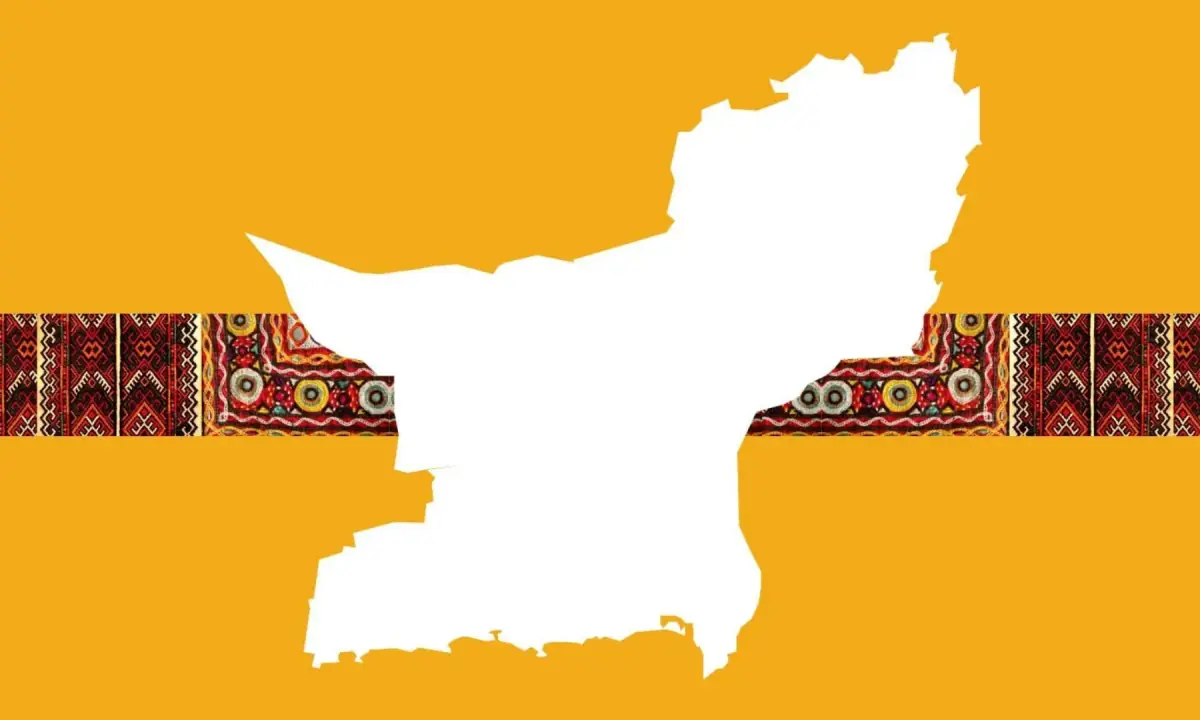
Quetta split into two districts as Balochistan undergoes administrative restructuring
Makran to be spelled Makuran; Sibi spelling “rectified” as Sevi; Kalat division bifurcated into Khuzdar and Lasbela divisions.www.dawn.com
The Balochistan government has announced several measures to restructure administrative units in the province, including splitting Quetta district into East Quetta and West Quetta, it emerged on Saturday.
Balochi"STAN" is the definition of grandstanding.
Where after the fact, dissidents start something ... revisionism at it's max.
Where Baloch number just as many in what is southern Punjab but isn't called or "part of" political boundaries of the "province" of Balochistan... where they number just as much as Pashtuns/Afghans. The current president of Pakistan is an ethnic Baloch from the province of Sindh for saying out loud.
This revisionism has to be arrested at it's source... where in current Balochistan... linguistic Brahui communities along with Makrani Baloch... communities living across Gulf both on Arab and Iranian sides dispersed across state boundaries.
The instigating materials, influencers, money, patronage by state actors both in east and west. As it stands, dissidents without any ground support find a perch in the west where money and messaging starts converging creating context and revisionist background... folding grievances under the rubric and without seeking a solution start targeting what they're propped up to do all along. And we know that it doesn't solve people's fundamental issues from other places it has been devised... even in oil rich Kurdish areas of Iraq or Syria. The Baloch who talk about resources under their feet don't seem to understand that why their ancestors keep living a semi nomadic lifestyle. An arid or barren land that does not support population density... and communities far enough that any meaningful investment requires a much larger footprint to sustain or get any real ROI. The dams that were built during the Raj are now filled with silt... newer ones needed a political continuity and understanding of problems at hand... which centralized authority keeps peripheral. Here like everywhere else a localized delivering governance that understands its compulsions and constraints cam deliver better containing unwarranted expectations... by owning the results of their own actions. The security dynamic therefore gets contained at the local level by the miscreants or dissidents they produce among them as opportunists or criminals they are... subject to the authority of their peers in the court of their peers.
mythbuster
Trusted Member
The so called economic zones will appropriate for themselves the role of the provinces ... Economic zones can't work without administrators and the paraphernalia that comes along with it ...it's law of the natureLet me try to explain it again.
1. Provinces do NOT distribute resources, they hoard them
You claim: “New provinces will distribute resources more evenly.”
The reality: Provinces are political monopolies, not development engines. They hoard:
Creating more provinces simply creates more monopolies.
- budgets
- land authority
- taxation power
- policing
- hiring
- industrial approvals
You don’t fix resource hoarding by multiplying the hoarders.
Economic Zones (My EZ model) solve this by distributing resources based on:
Zones distribute based on data, not politics.
- logistics
- export potential
- industrial corridors
- population clusters
- infrastructure grids
2. Provinces do NOT create meritocracy, they create more patronage seats
You claim: “New provinces will incentivize administrators to rise on merit.”
The reality: Every new province creates:
This is not meritocracy. This is expanding the political job market.
- a new chief minister
- a new cabinet
- a new assembly
- dozens of new ministries
- thousands of patronage jobs
Meritocracy comes from performance‑based zone administration (My EZ Model), where:
Zones reward competence. Provinces reward connections.
- promotions depend on export growth
- budgets depend on industrial output
- administrators are evaluated on KPIs, not political loyalty
3. Provinces do NOT provide oversight; they are the reason oversight fails
You claim: “Economic zones need provincial oversight.”
The reality: Provinces are the single biggest obstacle to industrial growth. They politicize:
This is why zones fail today; they are trapped under provincial veto power.
- land acquisition
- taxation
- subsidies
- industrial permits
- energy allocation
- policing
- environmental approvals
Zones only work when they are freed from provincial interference and governed by:
Oversight must be professional, not political.
- technical administrators
- export boards
- logistics planners
- industrial regulators
4. More provinces = more overhead, more bureaucracy, more waste
You claim: “New provinces will reduce concentration of power.”
The reality: More provinces = more overhead:
You don’t reduce elite concentration by creating more elites.
- more assemblies
- more ministries
- more secretariats
- more departments
- more budgets
- more protocol
- more political fragmentation
Removing provinces eliminates:
This is how you shrink overhead, not by multiplying it.
- 4 chief ministers
- 4 cabinets
- 4 assemblies
- 4 planning commissions
- 4 revenue boards
- 4 land authorities
- 4 bureaucratic empires
5. Economic Zones outperform provinces because they are built around growth, not politics
Provinces are political units. Economic Zones (My EZ Model) are production units.
Zones are designed around:
Provinces are designed around:
- railways
- highways
- ports
- industrial corridors
- energy grids
- export clusters
One builds economies. The other builds politics.
- ethnic boundaries
- political constituencies
- patronage networks
- bureaucratic empires
6. The core structural truth: Pakistan’s problem is not the number of provinces, it is the existence of provinces
Provinces are the bottleneck, not the solution.
They:
Removing provinces is not radical, it is structural surgery.
- duplicate governance
- centralize power
- block reforms
- politicize development
- weaken districts
- suffocate economic zones
Replacing them with 34 Economic Zones:
This is how modern states grow.
- eliminates duplication
- decentralizes power
- aligns governance with logistics
- creates meritocratic promotion pathways
- unlocks industrial growth
- reduces political fragmentation
- cuts bureaucratic overhead
- maximizes exports
More provinces multiply the disease.
Economic Zones remove the disease.
Removing provinces and shifting to 34 Economic Zones reduces administrative waste by $22 billion dollars annually, and each zone operates as a targeted economic cluster optimized for logistics and industrial expansion. Choice is clear, adopt new modern governance system, or keep begging for 3 billion dollars.
Pakistanithinktank
Registered Member
The so called economic zones will appropriate for themselves the role of the provinces ... Economic zones can't work without administrators and the paraphernalia that comes along with it ...it's law of the nature
I fully understand why people have concerns regarding oversight, administration, long‑term stability, all of it. These questions come up again and again, and that’s exactly why the entire EZ Model was designed in detail from the start. Nothing is left vague. Every part of governance, oversight, and continuity is already built into the structure.
This model isn’t a short‑term patch. It’s a 200‑year architecture. Pakistan doesn’t have the luxury of quick fixes anymore, not when we’re sitting this close to default. And honestly, short‑term fixes haven’t worked for the last 70 years. The establishment tried every version of political engineering, every shortcut, every temporary arrangement. None of it produced stability or growth.
That’s why this model is different. It’s long‑term, structural, and future‑proof because Pakistan finally needs a system that actually works.
Arabs, at least UAE and Saudi Arabia, after seeing Pakistan in political and economic mess, they have decided to go with EZ model.
Last edited:
mythbuster
Trusted Member
EZ , if managed properly can be a productive subset of the provinces however not a set of it's own ....let the multiple provinces compete.I fully understand why people have concerns regarding oversight, administration, long‑term stability, all of it. These questions come up again and again, and that’s exactly why the entire EZ Model was designed in detail from the start. Nothing is left vague. Every part of governance, oversight, and continuity is already built into the structure.
This model isn’t a short‑term patch. It’s a 200‑year architecture. Pakistan doesn’t have the luxury of quick fixes anymore, not when we’re sitting this close to default. And honestly, short‑term fixes haven’t worked for the last 70 years. The establishment tried every version of political engineering, every shortcut, every temporary arrangement. None of it produced stability or growth.
That’s why this model is different. It’s long‑term, structural, and future‑proof because Pakistan finally needs a system that actually works.
Arabs, at least UAE and Saudi Arabia, after seeing Pakistan in political and economic mess, they have decided to go with EZ model.

Pakistan simply does not have the luxury of wasting tens of billions and decades in vanity projects like the oil sheikhs do.Arabs, at least UAE and Saudi Arabia, after seeing Pakistan in political and economic mess, they have decided to go with EZ model
Look at Neom. It has been a massive financial disaster and even the al Sauds are pulling back on it.
Pakistan Defence Latest
-
Federal cabinet gives nod to imposition of emergency in KP; summary sent to president (41 Viewers)
- Latest: mythbuster
-
-
-

-

Country Watch Latest

Latest Posts
-

-
Federal cabinet gives nod to imposition of emergency in KP; summary sent to president (41 Viewers)
- Latest: mythbuster
-
-

-