Pharmaceutical and Hospital facilities updates

This policy shift has also allowed the industry to realign its long-term vision, with stakeholders now collectively aiming to position Pakistan as a $5 billion to $10 billion pharmaceutical export industry by 2030. Improved pricing flexibility has enabled companies to invest in plant upgrades, modern infrastructure, higher regulatory compliance standards, and to pursue stringent international regulatory approvals—key prerequisites for sustained export growth, he said.

Another major milestone in 2025 has been the institutional reform of DRAP [Drug Regulatory Authority of Pakistan] under the leadership of its CEO, Dr. Obaidullah. The authority has undergone meaningful structural and policy reforms focused on transparency, efficiency, and facilitation, benefiting both the industry and the public at large.

These efforts have been formally recognized at the highest level, with DRAP being awarded as a “Champion Regulator” by the Prime Minister of Pakistan. “The reorientation of DRAP toward a more collaborative and reform-driven approach has contributed significantly to the sector’s improved performance,” Nasir said.
 
Going forward, continued regulatory stability, further digitization of regulatory processes, encouragement of research and development, and targeted government support for export facilitation will be essential to maintain this growth trajectory, he said. Strengthening local API (active pharmaceutical ingredients/ raw material) manufacturing, fostering innovation, and aligning with global quality benchmarks will be key to realizing the industry’s long-term potential, he added.

Pharma firms win WHO, PIC/S prequalification

PPMA former chairman Tauqeer Ul Haq said that at least 8 Pakistani pharmaceutical firms won prestigious international recognition for producing quality medicine of global standards, including WHO prequalification, PIC/S recognition, and MHRA (Medicines and Healthcare products Regulatory Agency) accreditation in recent times.

These pre-qualifications and recognitions have opened doors for pharma firms to expand the country’s exports to the regulated high-end world markets including the US, Europe and the Gulf Cooperation Council (GCC) countries - a step towards achieving the government set export target of $30 billion by the industry in five years.

“Another 10 to 15 companies are expected to receive such global certifications over the next one to two years,” Haq estimated.
 
Some 80% ‘disappeared medicines’ are back

More than 80% of ’disappeared medicines’ are back in production and in retail markets in the past 22 months in Pakistan, overcoming a drug shortage crisis that had plagued the country. This has increased patient access to medicines to a new high in recent times, according to PPMA.

Around 200 medicines had gone out of production some two years ago after their cost of production surpassed their retail prices in the country, causing huge shortages and an uproar by patients and medical professionals alike.

The drugs included life-saving ones that were used to treat diseases including TB (tuberculosis), cancer, diabetes, along with those that help with cardiovascular issues and those prescribed by psychiatrists.

Out of some 200 disappeared medicines, around 160 are once again available at affordable prices in the domestic markets, according to Tauqeer Ul Haq.
 
Exports hit a two-decade high growth of 34% in FY25

Pakistan’s pharmaceutical exports growth hit a two-decade high of 34% in the fiscal year ended June 30, 2025, securing the fifth position among the fastest-growing export categories in the country with sales of the locally produced medicines rising to $457 million in overseas markets in FY25.

PPMA reported that the pharma exports had stood at $341 million in the prior year of FY24. The surge of 34% was the highest visible growth of pharma exports during the past two decades. The previous best was recorded at 32% in 2009, according to the association.

On the other hand, the export of therapeutic goods - including pharmaceuticals, surgicals, food supplements, medical devices and nutraceuticals - registered at $909 million in FY25, just $91 million shy away from a $1 billion threshold.
 
Industry deploys AI, other advanced technology

Pakistan’s pharma sector is increasingly deploying artificial intelligence (AI) and advanced technologies to improve drug development processes and detect drug reactions, according to PPMA former chairman Haroon Qasim.

From startup-led telemedicine platforms to large-scale industry events focused on AI integration, the sector is gearing up for a tech-driven future.

Highlighting a transformative shift, he said: “AI and digital technologies are steadily transforming Pakistan’s pharmaceutical sector across multiple fronts—from drug development to patient engagement, the applications are growing.”
 
Pak-Afghan border closure impacts exports

The Pakistan Pharmaceutical Manufacturers Association (PPMA) was concerned over the prolonged closure of the Pak-Afghan border amid a political crisis. This severely impacted pharmaceutical exports to Afghanistan that was one of Pakistan’s key export markets for medicines.

The disruptions have led to delays and losses in trade, causing substantial revenue losses for Pakistani pharma companies. The PPMA has expressed its concern before the government, urging it to address issues and ensure cross-border trade.

The closures have not only affected businesses but have also jeopardized access to essential medicines in Afghanistan, further exacerbating health challenges in the region.
 
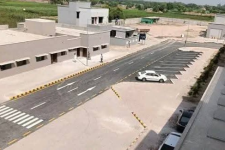
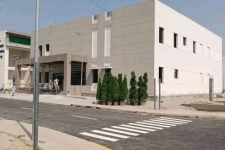
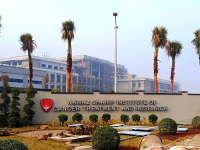
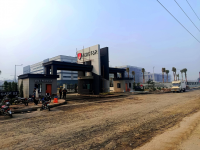
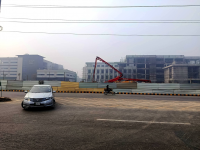
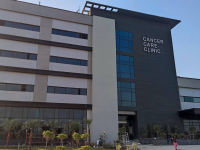
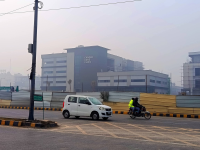
Under Construction 1000 Bed Nawaz Sharif Institute of Cancer Treatment & Research Lahore .

1768430683619.png


1768430755332.png


1768430774574.png
 
Haleon Pakistan Limited has announced a £3.58 million ($4.9 million) investment to expand and modernise its Panadol Liquid packaging line, according to a disclosure filed with the Pakistan Stock Exchange (PSX).

“Haleon Pakistan Limited is pleased to announce its decision to invest £3.58 million in the expansion and modernisation of its Panadol Liquid packaging line,” read the company’s notice sent to the local bourse.

Haleon Pakistan said the investment has been approved by its board of directors and is aimed at increasing production capacity, improving operational efficiency and addressing growing demand for Panadol Liquid products in the local market.

Under the plan, Haleon Pakistan will procure advanced packaging machinery, upgrade existing infrastructure and implement enhancements to quality control systems
 
Pakistan’s Pharma Giants Race for Entry into US Market

For decades, Pakistan’s pharmaceutical industry has operated largely within a comfort zone: supplying affordable, high-volume medicines to the domestic market and exporting to less-regulated territories in Asia and Africa. While financially sustainable, this model has trapped the sector in low profit margins and left it vulnerable to the devaluation of the Rupee.

Now, a quiet revolution is underway. Leading Pakistani pharmaceutical companies are investing billions of rupees in state-of-the-art infrastructure with a singular, ambitious goal: cracking the highly lucrative, highly regulated markets of the United States and the European Union.

The latest salvo in this high-stakes race was fired last week by Highnoon Laboratories, which held the groundbreaking ceremony for "Project FORCE" in Sheikhupura. The company has billed it as the country's first facility designed from inception to meet the stringent cGMP (Current Good Manufacturing Practice) standards demanded by the US Food and Drug Administration (FDA).

But Highnoon is not alone. It has joined an intense industrial race to upgrade Pakistan's pharma status from a regional supplier to a global player.

The Dollar Imperative

The primary driver for these massive investments is economic necessity. The global pharmaceutical market is valued at over $1.3 trillion, but nearly half of that value resides in the United States alone.

Currently, Pakistan’s pharma exports hover around $440 million annually. Industry experts argue that without access to regulated markets like the US, this figure will remain stagnant.

"The difference in value is staggering," said a senior industry analyst based in Karachi. "A generic tablet sold in an unregulated market might yield pennies in profit. That exact same tablet, manufactured in an FDA-approved facility and sold in the US, can command ten to twenty times that price in stable US dollars. In an era of Rupee instability, dollarized revenue is the ultimate hedge."

Gaining FDA approval acts as a "global passport." An approved facility instantly gains credibility in virtually every other market globally, allowing companies to secure higher prices and better contract manufacturing deals even outside the US.

The Field of Competitors

While Highnoon’s groundbreaking is a significant milestone representing future intent, other players are already deep into the infrastructure game.

Getz Pharma, based in Karachi, has already constructed "Astola," a massive, cutting-edge manufacturing complex. It is the first pharmaceutical plant in South Asia to achieve LEED Platinum certification for environmental standards. Getz built the facility specifically to align with World Health Organization prequalification and US FDA standards and is currently moving through the arduous validation processes required before inspectors are invited.

Meanwhile, BF Biosciences (a subsidiary of Ferozsons Laboratories) is taking a different route, focusing on high-tech biotech. Their recent expansions are targeted at producing complex injectables and biological drugs—sectors that offer even higher profit margins than traditional tablets.

The "Lost Decade" and a Strategic Window

The push for American compliance highlights a significant gap between Pakistan and its regional competitor, Bangladesh.

While Pakistani firms are breaking ground today, Bangladeshi giants like Square Pharmaceuticals and Beximco secured FDA approvals nearly a decade ago, allowing them to capture a significant share of the US generic market.

However, the timing of Pakistan's new wave of facilities may be strategically fortuitous.

For years, Bangladesh benefited from a WTO waiver allowing them to produce patented drugs without paying royalties due to their Least Developed Country (LDC) status. That waiver is set to expire soon as Bangladesh graduates from LDC status around late 2026. This will raise production costs for Bangladeshi firms, leveling the playing field just as new Pakistani facilities aim to come online.

The Long Road Ahead

Industry leaders caution that groundbreaking ceremonies are just the beginning of a long, difficult journey. Building an FDA-compliant plant takes two to three years, followed by another two years of rigorous validation, trial batches, and high-pressure audits by US inspectors.

"This is not just about importing expensive machinery; it is a complete cultural shift in quality assurance, documentation, and specialized talent," noted the analyst.

If successful, however, projects like Force, Astola, and others won't just boost the bottom lines of individual companies. They have the potential to fundamentally reshape Pakistan's export profile, moving the country up the value chain from textiles to high-tech medicine.
 
Pakistan’s Pharma Giants Race for Entry into US Market

For decades, Pakistan’s pharmaceutical industry has operated largely within a comfort zone: supplying affordable, high-volume medicines to the domestic market and exporting to less-regulated territories in Asia and Africa. While financially sustainable, this model has trapped the sector in low profit margins and left it vulnerable to the devaluation of the Rupee.

Now, a quiet revolution is underway. Leading Pakistani pharmaceutical companies are investing billions of rupees in state-of-the-art infrastructure with a singular, ambitious goal: cracking the highly lucrative, highly regulated markets of the United States and the European Union.

The latest salvo in this high-stakes race was fired last week by Highnoon Laboratories, which held the groundbreaking ceremony for "Project FORCE" in Sheikhupura. The company has billed it as the country's first facility designed from inception to meet the stringent cGMP (Current Good Manufacturing Practice) standards demanded by the US Food and Drug Administration (FDA).

But Highnoon is not alone. It has joined an intense industrial race to upgrade Pakistan's pharma status from a regional supplier to a global player.

The Dollar Imperative

The primary driver for these massive investments is economic necessity. The global pharmaceutical market is valued at over $1.3 trillion, but nearly half of that value resides in the United States alone.

Currently, Pakistan’s pharma exports hover around $440 million annually. Industry experts argue that without access to regulated markets like the US, this figure will remain stagnant.

"The difference in value is staggering," said a senior industry analyst based in Karachi. "A generic tablet sold in an unregulated market might yield pennies in profit. That exact same tablet, manufactured in an FDA-approved facility and sold in the US, can command ten to twenty times that price in stable US dollars. In an era of Rupee instability, dollarized revenue is the ultimate hedge."

Gaining FDA approval acts as a "global passport." An approved facility instantly gains credibility in virtually every other market globally, allowing companies to secure higher prices and better contract manufacturing deals even outside the US.

The Field of Competitors

While Highnoon’s groundbreaking is a significant milestone representing future intent, other players are already deep into the infrastructure game.

Getz Pharma, based in Karachi, has already constructed "Astola," a massive, cutting-edge manufacturing complex. It is the first pharmaceutical plant in South Asia to achieve LEED Platinum certification for environmental standards. Getz built the facility specifically to align with World Health Organization prequalification and US FDA standards and is currently moving through the arduous validation processes required before inspectors are invited.

Meanwhile, BF Biosciences (a subsidiary of Ferozsons Laboratories) is taking a different route, focusing on high-tech biotech. Their recent expansions are targeted at producing complex injectables and biological drugs—sectors that offer even higher profit margins than traditional tablets.

The "Lost Decade" and a Strategic Window

The push for American compliance highlights a significant gap between Pakistan and its regional competitor, Bangladesh.

While Pakistani firms are breaking ground today, Bangladeshi giants like Square Pharmaceuticals and Beximco secured FDA approvals nearly a decade ago, allowing them to capture a significant share of the US generic market.

However, the timing of Pakistan's new wave of facilities may be strategically fortuitous.

For years, Bangladesh benefited from a WTO waiver allowing them to produce patented drugs without paying royalties due to their Least Developed Country (LDC) status. That waiver is set to expire soon as Bangladesh graduates from LDC status around late 2026. This will raise production costs for Bangladeshi firms, leveling the playing field just as new Pakistani facilities aim to come online.

The Long Road Ahead

Industry leaders caution that groundbreaking ceremonies are just the beginning of a long, difficult journey. Building an FDA-compliant plant takes two to three years, followed by another two years of rigorous validation, trial batches, and high-pressure audits by US inspectors.

"This is not just about importing expensive machinery; it is a complete cultural shift in quality assurance, documentation, and specialized talent," noted the analyst.

If successful, however, projects like Force, Astola, and others won't just boost the bottom lines of individual companies. They have the potential to fundamentally reshape Pakistan's export profile, moving the country up the value chain from textiles to high-tech medicine.

That's the way forward :love:
 

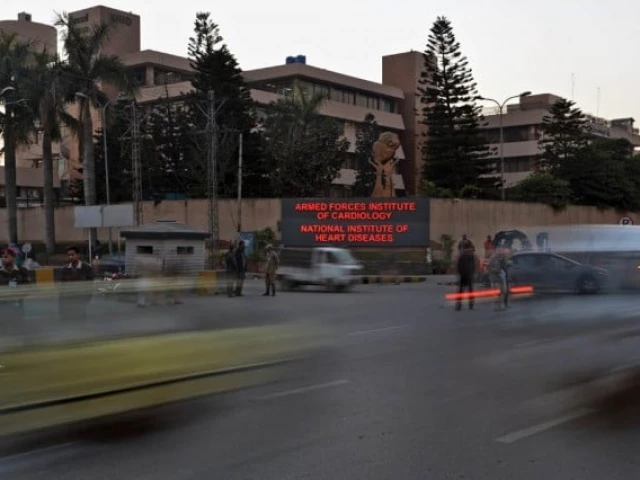
Government clears Rs13bn expansion of Armed Forces cardiology institute​


Financing will come from slow-moving schemes under uplift programme

Shahbaz Rana
February 04, 2026


armed forces institute of cardiology


Armed Forces Institute of Cardiology

ISLAMABAD: The federal government has approved an expansion project for the Armed Forces Institute of Cardiology for Rs13 billion by utilising savings from the slow-moving ongoing schemes under the Public Sector Development Programme (PSDP).

Headed by Deputy Prime Minister Ishaq Dar, the Executive Committee of the National Economic Council (Ecnec) approved the expansion of the Armed Forces Institute of Cardiology (AFIC) and the National Institute of Heart Diseases (NIHD), Rawalpindi with a spending of Rs13 billion.

Out of the total allocation, Rs6 billion will be arranged from foreign sources. The project had been approved on Monday.

Ishaq Dar had tweeted that Ecnec approved four major development projects worth over Rs240 billion, which included the expansion of AFIC-NIHD Rawalpindi, Prime Minister's Youth Skill Development Programme, Karachi Yellow Line BRT Corridor and Harpo Hydropower Project in Gilgit-Baltistan.

The Central Development Working Party (CDWP), which is chaired by Planning Minister Ahsan Iqbal, had recommended Ecnec that due to fiscal constraints the project should be funded outside the PSDP.

Out of the total cost, Rs10.5 billion is earmarked for capital work, and the remaining amount is allocated for consultancies and any contingent liability. The expansion is being undertaken to augment the tertiary-level cardiac care facility by adding additional hospital infrastructure. AFIC treats both military and civilian patients and the hospital is treating patients beyond its capacity.
 

Deregulated pricing, low-cost Chinese APIs quadrupled Pakistan’s pharma profits: report​


Companies benefit from a stable exchange rate, a strong product pipeline, and a 35% drop in Chinese API costs; sector is projected to grow 35% YoY in 2026
By
News Desk


Pakistan’s pharmaceutical sector has seen a remarkable surge, with valuations rising 3.3 times since 2024. Despite this growth, there is still room for further expansion as the sector continues to show strong performance, according to IMS Research.


From FY23-25, sector profits have more than quadrupled, driven by the deregulation of prices on non-essential drugs, a surge in exports, and the introduction of new products. The sector is projected to grow 35% year-on-year in 2026, with companies recovering from previous losses and low baselines in 2025.

The country’s pharmaceutical industry is benefiting from a stable exchange rate, an ambitious product pipeline, and a 35% drop in Chinese active pharmaceutical ingredient (API) costs. China, which accounts for 85% of Pakistan’s API imports, has seen a significant drop in API prices, further boosting the profitability of the local pharmaceutical sector.

With several pharmaceutical stocks still trading below 15x forward P/E, analysts believe there is potential for selective upside. The sector’s price-to-earnings (P/E) ratio stands at 16x, significantly lower than the 10-year average of 19.6x, suggesting there is still room for growth in valuations.

As per the brokerage report, the sector’s margins have reached an all-time high, exceeding 42% in 3QCY25. This increase is due to the deregulation of prices and a 35% drop in Chinese API costs. Unlike previous cycles, where profitability was volatile due to regulatory limits and exchange rate shocks, the current market environment allows for better cost pass-through and improved pricing discipline. However, only about 30 APIs are produced domestically, which satisfies only 10-12% of the sector’s total API requirements.


IMS said that a structural earnings tailwind is emerging for Pakistan’s pharmaceutical sector, driven by a sharp decline in global API prices. Particularly, China has been aggressive in cutting API prices to remain competitive against India’s growing domestic API production. Key molecules like paracetamol, amoxicillin, and clavulanate have seen price cuts of 35-40% in 2025. These price reductions are benefiting Pakistani drug manufacturers by lowering input costs and improving gross margins.

Pakistan’s pharmaceutical exports reached a 20-year high, growing 34% year-on-year in FY25, amounting to $457 million. The total exports of therapeutic goods—medicines, devices, and supplements—neared $909 million. Although trade disruptions with Afghanistan have impacted some companies, markets in the Philippines, Sri Lanka, Uzbekistan, Iraq, and less regulated areas like Cambodia and East Africa remain lucrative. The expiration of patents for blockbuster drugs globally is opening up new opportunities in the generics market, further fueling the export growth of local companies.

With the pharmaceutical sector showing strong growth across multiple fronts, there is potential for further upside. Valuations remain below the 10-year average, particularly for companies trading under 15x P/E, suggesting selective upside for investors in the sector. The IMS keeps its outlook positive as Pakistan’s pharmaceutical industry capitalises on global opportunities and domestic improvements.
 
IMS said that a structural earnings tailwind is emerging for Pakistan’s pharmaceutical sector, driven by a sharp decline in global API prices. Particularly, China has been aggressive in cutting API prices to remain competitive against India’s growing domestic API production. Key molecules like paracetamol, amoxicillin, and clavulanate have seen price cuts of 35-40% in 2025. These price reductions are benefiting Pakistani drug manufacturers by lowering input costs and improving gross margins.

This is typical Chinese tactics. Pakistan like India should continue to invest in local API production because this Chini discount will be temporary as usual.
 

Users who are viewing this thread

Back
Top