Ranked: The World’s Largest Tank Fleets in 2026

Beijingwalker

VIP Member
Joined
Nov 4, 2011
Messages
92,458
Reaction score
113,160
Reputation
2,101.7
Country of Origin
Country of Residence

Ranked: The World’s Largest Tank Fleets in 2026

July 10, 2026
By Bruno Venditti

global-tank-fleet-rankings.webp


Key Takeaways​

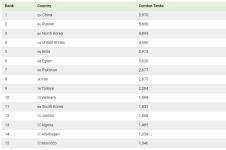
  • China has the world’s largest combat tank fleet in 2026, with 5,870 vehicles.
  • Russia and North Korea rank second and third, but much of their tank fleets consist of older Soviet-derived designs.
China now fields the world’s largest combat tank fleet, ranking ahead of Russia, North Korea, and the United States.

While recent conflicts have exposed the vulnerabilities of armored vehicles, tanks remain a core component of conventional land warfare for many militaries.

This graphic ranks the 15 countries with the largest combat tank inventories in 2026 using data from Global Firepower, which counts frontline main battle tanks and light tanks across all military service branches.

China Takes the Top Spot​

China fields 5,870 combat tanks, narrowly ahead of Russia.

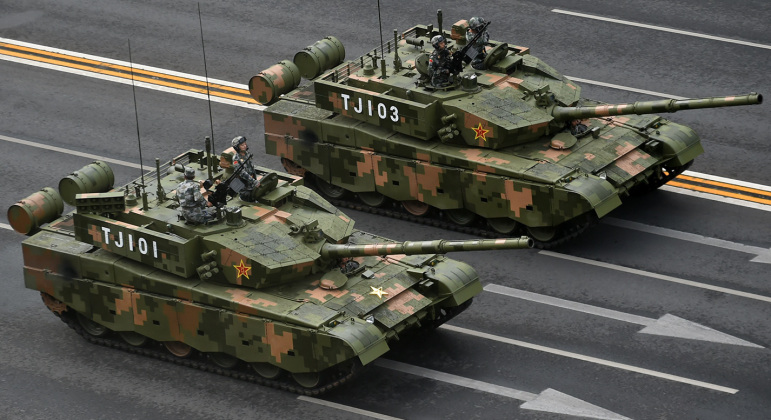
Unlike many countries with aging inventories, China has spent decades modernizing its armored forces with newer designs such as the Type 99 and upgraded Type 96 series.

搜狗截图20260713011524.png

Continued domestic production allows Beijing to replace older equipment while maintaining one of the world’s largest armored forces.

Russia and North Korea Rely on Large Inventories​

Russia ranks second with 5,630 combat tanks despite heavy equipment losses during the war in Ukraine.

Much of its fleet consists of upgraded Soviet-era tanks, with older vehicles also brought out of storage to replenish losses.

North Korea places third with nearly 4,900 tanks, although analysts believe much of its fleet is composed of aging Soviet and Chinese-derived models with varying levels of modernization.

The U.S. and Regional Powers Maintain Strong Armored Forces​

The United States ranks fourth with 4,666 combat tanks, centered primarily on the M1 Abrams family, one of the world’s most advanced main battle tanks.

Outside the top four, India, Egypt, Pakistan, Iran, and Türkiye each field more than 2,000 combat tanks, underscoring the continued importance of armored forces in regions where conventional land warfare remains a central military priority.

Meanwhile, countries such as South Korea, Azerbaijan, Morocco, and Jordan maintain capable but comparatively smaller armored forces.
 

World’s Best Armour Protection: China Reveals New Heavier Next Generation Tank at Prototype Stages​

Military Watch Magazine Editorial Staff
May-31st-2026

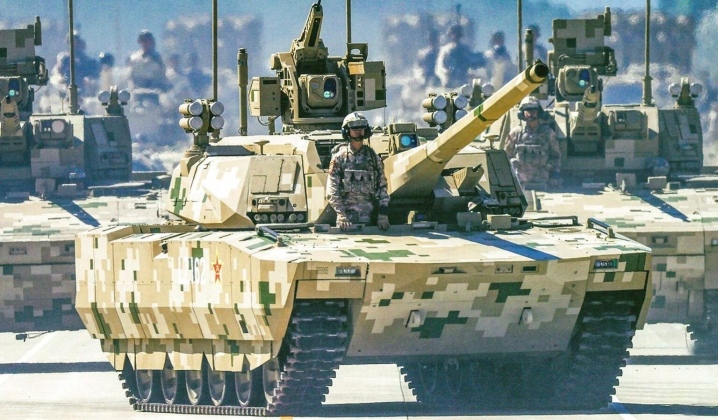
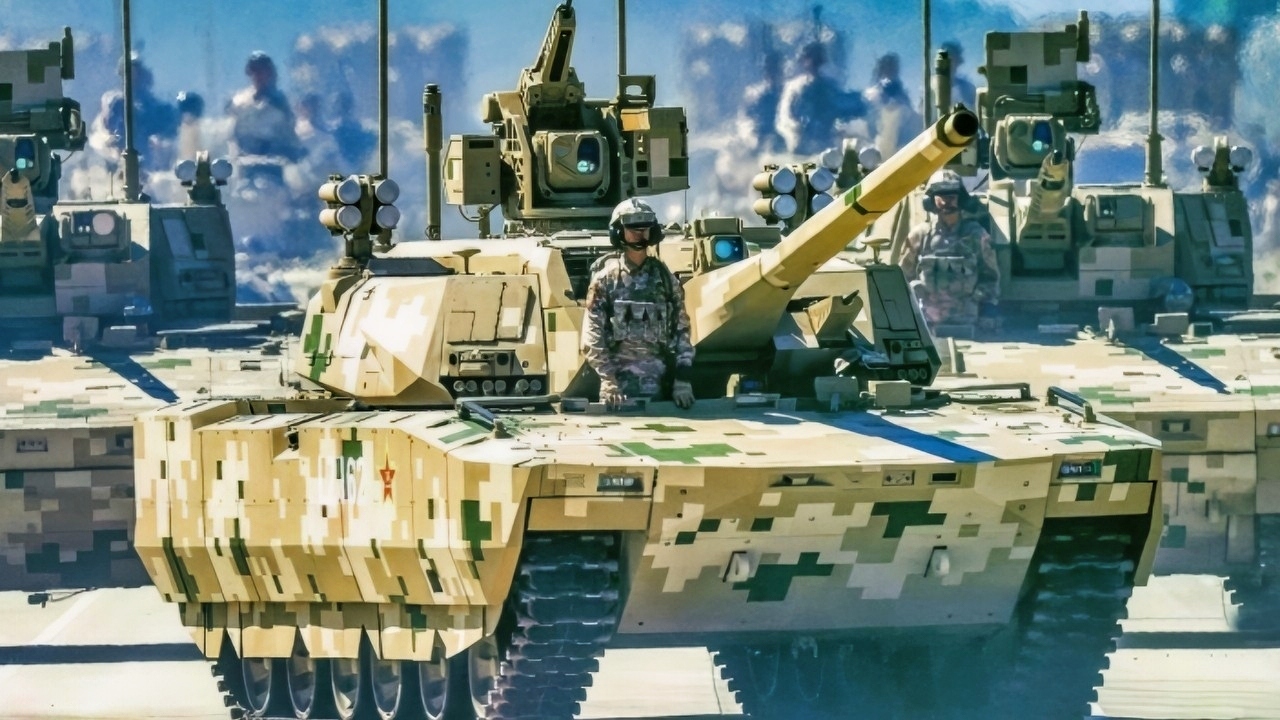
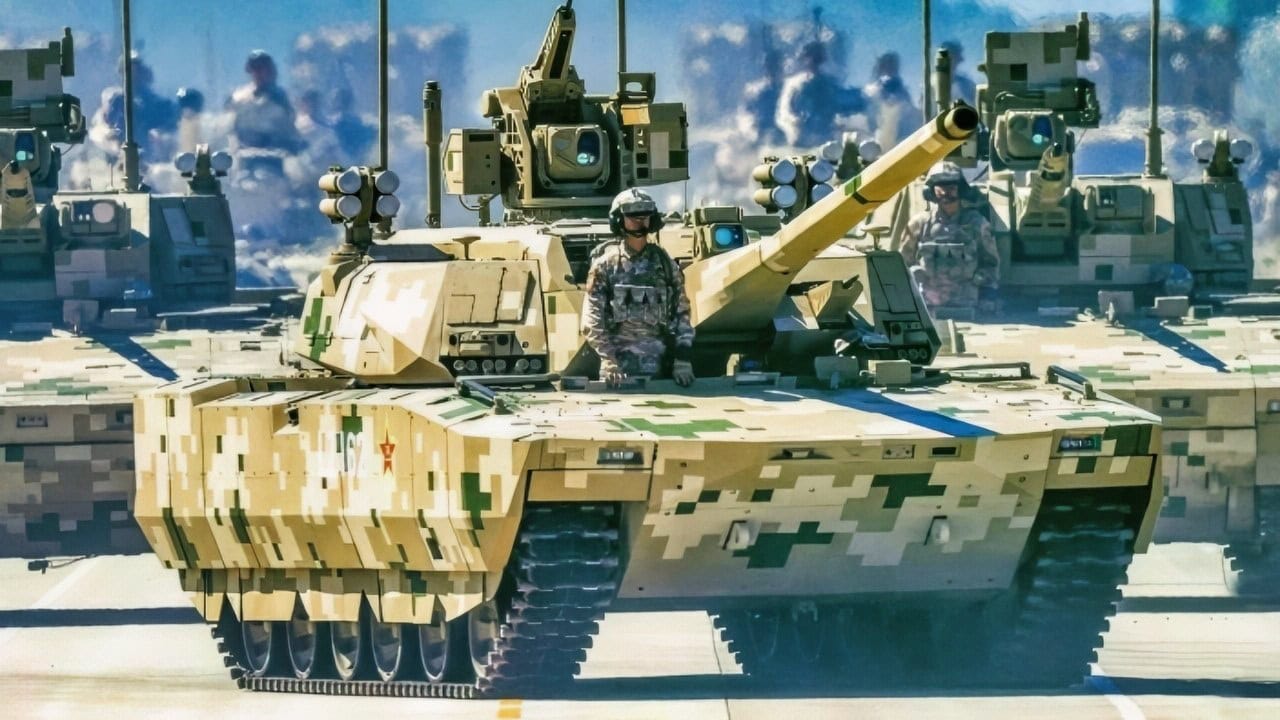
Footage released on Chinese social media has shown a new type of next generation main battle tank closely related to the new Type 100 tank, which appears to be considerably larger and heavier.

The Type 100 was unveiled in September 2025, and is the only next generation main battle tank currently in service. The appearance of the new larger vehicle has raised the possibility that China will field two next generation tank types in a complementary high-low combination before any other country can bring a single one into service. Where the Type 100 appears to weight of close to 40 tons, the larger one appears to weight closer to 60 tons, and to be built around a very similar design that likely has significant commonality with its smaller counterpart.

The new heavier next generation tank has seven pairs of road wheels, where the Type 100 had six, and has frontal armour that is outstandingly thick in appearance. The barrel of its main gun is also significantly thicker, likely a 125mm gun, where the Type 100 used a 105mm gun. The larger tank’s greater hull space led analysts to assess that it may have integrated a number of drones to support operations.

The use of unmanned turrets is a highly efficient design choice that allows next generation tanks to achieve far higher levels of armour protection relative to their weights. It is notable that the Chinese People’s Liberation Army ground forces currently field last generation tanks from multiple complementary weight ranges, including Type 15 light tanks, Type 96 main battle tanks, and heavier Type 99 main battle tanks. The new tank’s unveiling raises the possibility that it will directly succeed the Type 99, while the Type 100 succeeds the Type 96.

Type 99 Heavyweight Main Battle Tanks

Type 99 Heavyweight Main Battle Tanks

The Type 100 has considerably superior armour protection on its top, and to lesser extents on its sides, reflecting prevailing trends towards top attack weapons such as Javelin missiles and loitering munitions posing primary threats, which is expected to also be the case for its heavyweight counterpart.

The design allows for far higher levels of crew protection as all crew can be seated side by side in a separate armoured capsule. It was revealed in October to integrate optical, infrared, and radar sensors with networked communications, which connect it to aviation, artillery, and electronic warfare assets, providing a world leading network-centric warfare capability that had by that time already been tested in combined-arms exercises.

The tank’s heavier counterpart is expected to be very similar in these regards. The Type 100’s design, and likely that of its heavier counterpart, place them considerably ahead of any other operational tanks in the world, reflecting China’s growing industrial and high tech dominance.

Type 100 Next Generation Tank During Exercises

Type 100 Next Generation Tank During Exercises

The Type 100’s successor appears to provide the greatest level of armour protection seen in the world, which had previously been achieved by the Russian T-14, a next generation tank design which reached advanced prototype stages before stalling, and many now never be brought into service. The combination of the Type 100’s design features with a much heavier chassis has very considerable potential for survivability, allow for not only thicker armour, but also more formidable active protection systems to be accommodated.

Where the Type 100 appears optimised to serve as a forward sensor platform to allow crews to guide loitering munitions to their targets, while also mounting multiple beyond visual range anti-tank missiles, it remains uncertain to what extent doctrine for use of its heavier counterpart will differ, and whether training will place a greater emphasis on gun engagements to use its larger calibre weapon. It is notable that the design could have relatively easily accommodated a larger 140mm or 152mm gun, with the decision not to do indicating that missile fire and drone guidance may still be prioritised for anti-armour roles.


China’s Type 100: The New Tank That Makes Tanks Obsolete

Brandon Weichert
May 5, 2026

Type-100-Tank-from-China.jpg

Type 100 Tank from China. Image Credit: Creative Commons.

China just unveiled its new Type 100 (ZTZ-100) main battle tank—a complete rejection of traditional armored warfare doctrine that flips the tank formula on its head. Instead of relying on thick armor for survival, the Type 100 uses 360-degree phased-array radar, AR helmets for the crew, dual active protection systems, and a fully unmanned turret to detect and intercept threats before they ever hit.

China’s Type 100 Tank Looks Like a Game-Changer

China has unveiled what many believe is Beijing’s answer to the brutal reality of modern warfare: drones, top-attack munitions, and long-range precision fires shredded the concepts of traditional armored warfare.

Rather than build a better box of armor, as previous tanks sought to do whenever battlefield advances occurred, China has crafted for itself in the Type 100 (ZTZ-100) main battle tank (MBT) a rolling sensor suite that just happens to have a powerful main gun.

The Old Tank is Dead–Detection Replaces Armor​

The Type 100 MBT flips the traditional tank formula on its head.

The old model was to ensure the MBT could survive combat thanks to thick armor. China’s new ZTZ-100, however, aims to survive modern tank warfare by early detection, interception, and networking.

In this way, the Type 100 MBT aligns more closely with Russia’s impressive T-14 Armata and America’s experimental AbramsX.

Of course, the key difference among China, Russia, and the United States is that China has the world’s best manufacturing base.

Whereas the Russians have so few T-14s at their disposal that Moscow has kept those units away from the grueling combat in the Ukraine War, and the Americans have some wonderful designs but very little ability to implement those designs in a meaningful, affordable, and reliable manner, Beijing can easily take their innovative designs and mass-produce them quickly.

Unmanned Turret, Protected Crew: Designed to Take Hits​

One of the most interesting features of the Type 100 MBT is its unmanned turret. In fact, both the turret and the crew compartment in the tank are totally separate. An autoloader performs the reload function that manned personnel would ordinarily perform.

In previous iterations of tank warfare, the crew shared the same space with ammunition storage and the cannon. That design increased the risk to the crew. But, the designers of the Type 100 have better insulated the three-person crew of the Type 100 from an ammunition explosion in combat by making the tank’s turret fully automated.

Plus, the automated turret gives the ZTZ-100 a lower profile, making it harder to detect and hit with enemy fire. Another unique innovation of the Type 100 is the use of specialized blowout panels installed by designers to vent explosions away from the crew.

These interesting additions to Chinese tanks highlight how well Chinese designers have learned the tough lessons of the Ukraine War. They anticipate that enemy fire will hit China’s new MBTs and have implemented designs to keep those crews alive, regardless of that fire.

Sensor Dominance: Turning Tank Crews Into Fighter Pilots​

China’s new MBT comes loaded with four phased-array radar panels, providing a total 360-degree coverage; thermal, infrared, optical, and ultraviolet sensors; laser warning systems; and drone detection capability extending to 5 kilometers.

Thanks to their AR helmets, the tank’s three-person crew can see everything. The helmets also provide head tracking, which allows the weapons systems to aim where the crew member is looking. More importantly, thanks to its automation, the engagement cycle is 20-40 percent faster.

Tank crews become more like fighter pilots in terms of their firing capability and reaction times, thanks to these advances.

Active Protection Over Heavy Armor​

Of course, other tanks have such capabilities. But the Chinese are demonstrating they have fully caught up with both American and Russian systems. Thanks to their manufacturing supremacy, China is further showing that it can overwhelm American (and US allies) and Russian forces with these Type 100 MBTs.

As for interception capabilities, the Type 100 features dual GL-6 Active Protection Systems (APS) and about 8 ready interceptors, with an engagement range of 10-30 meters. These interceptors stop anti-tank guided munitions (ATGMs), rocket-propelled grenades (RPGs), top-attack weapons, and drones (as well as other loitering munitions). All these advances highlight that the Ukraine War has proven that armor alone is ineffective at protecting tanks during attacks (and their crews).

To successfully defend one’s tank, that MBT must possess the ability to shoot down anti-tank weapons.

Hybrid Power and Battlefield Stealth​

Like the proposed American AbramsX, the Chinese Type 100 features a hybrid propulsion system delivering 1,500 horsepower. What’s more, there is an effective silent mode that reduces the Type 100’s acoustic and thermal signatures.

The 1,500-hp hybrid engine allows the Type 100 to reach around 80 kilometers per hour on roads. The electric torque from the hybrid engine also enables the tank to accelerate quickly. China’s new MBT has anywhere between a 400-600 km range, as well.

The Type 100 is designed for ambush, repositioning, and low-signature maneuver warfare rather than simple, brute-force breakthroughs that once defined tank warfare.

The 105mm Debate: Mobility Over Firepower​

Interestingly, China’s tank designers are receiving a lot of guff from tank experts around the world, since they opted to mount what many analysts claim is a weaker weapon on this otherwise impressive new tank.

China opted for the 105mm smoothbore cannon rather than the heavier, 120mm/125mm standard smoothbore cannon. Chinese designers argue this was the better choice, since the lighter main cannon allows for greater mobility, which is China’s main goal with its new tanks. Plus, according to Chinese designers, the 105mm has a higher muzzle velocity thanks to its advanced propellants.

Again, this is an example of the new doctrine that China’s tank force is embracing. It’s not brute force. It’s maneuver plus networking.


The Real Weapon: Networked Warfare​

And that brings us to what many observers say is the real key to this Type 100 tank: its networking capabilities. This tank doesn’t fight alone. The new tank employs an advanced plug-and-play model.

The Type 100 is but one of many sensor nodes on the modern battlefield that can plug into recon drones, artillery, rocket forces, aircraft, and electronic warfare (EW) systems. On paper, this tank will allow for beyond-line-of-sight targeting, external cueing, and faster kill chains.

China’s new tank indicates that Beijing is committed to sensor-driven armored warfare. They’re adapting to drones faster than most armies, which is interesting given that the Chinese People’s Liberation Army (PLA) is not currently engaged in a war (usually, armies engaged in warfare are quicker to adapt to modern warfare). The Type 100 further shows that China’s military is integrating tanks into its advanced kill-web ecosystems.

The Risks: Tech Fragility and Cognitive Overload​

Many uncertainties remain, though.

For instance, any tank in modern combat suffers through brutal EW attacks and disruption. Whatever Chinese designers claim, there is no evidence of how well the Type 100’s electronics will survive. There remains some question about the tank’s APS effectiveness under swarm attack, too. Some have even posited that the three-person crew might suffer from cognitive overload due to data saturation. As many critics of the American version of the hybrid propulsion system can attest, there is no real-world example of its reliability under the strain of modern battle.

Nevertheless, the Type 100 will stunt one rival system: the US MBT fleet. That’s because the Type 100 targets some key American strengths: precision fires, air dominance, and intelligence, surveillance, and reconnaissance (ISR) networks. By compressing detection, decision, and destruction timelines, China aims to out-cycle US forces in high-intensity combat.

The Tank That Ends Tanks​

The Type 100 is a prototype of how China will fight the next great war on the ground. It will require less armor and more data–all to allow faster decisions in a fully networked battlefield. The era of the standalone tank is over. Ukraine proved that. The next war won’t be decided by whose tanks have the thickest armor. The next major ground war will be decided by whose tanks see, process, and kill first.

For now, until the Americans field their newest MBT, it looks like China has some real advantages.


China’s Type 100 Tank

China Type 100 Tank

China Type 100 Tank. Image Credit: Creative Commons.

The tank’s hybrid diesel-electric drive, rated at around 1,500 horsepower, allows silent movement on electric power, cutting the acoustic and thermal signatures that have proven fatal to armor in Ukraine, and generates the electrical surplus that active protection radars, jammers, and sensors demand. Crew members wear augmented-reality headsets fused with feeds from reconnaissance drones, turning the tank, in the Army’s telling, into a networked command node meant to fight beyond visual range rather than a standalone gun platform.

The underlying machine matches the concept. Developed by the 201st Research Institute and built at the Baotou plant, the Type 100 mounts an autoloaded 105mm gun in an unmanned turret, firing rounds at a claimed 1,706 meters per second that Chinese sources say rivals larger 120mm and 125mm guns.

The crew, generally reported as three in a sealed capsule in the hull, though one detailed technical analysis argues the design may operate with two and an AI gunner, sits apart from the ammunition, protected by interceptors cued by four radar panels and a laser dazzler system. At roughly 35 to 45 tons, depending on the estimate, it is a medium tank by weight, a deliberate break from the heavyweight arms race. Beijing calls it fourth-generation, a label with no agreed international standard behind it.
 

China’s Type 100: The New Tank That Makes Tanks Obsolete

Brandon Weichert
May 5, 2026

Type-100-Tank-from-China.jpg

Type 100 Tank from China. Image Credit: Creative Commons.

China just unveiled its new Type 100 (ZTZ-100) main battle tank—a complete rejection of traditional armored warfare doctrine that flips the tank formula on its head. Instead of relying on thick armor for survival, the Type 100 uses 360-degree phased-array radar, AR helmets for the crew, dual active protection systems, and a fully unmanned turret to detect and intercept threats before they ever hit.

China’s Type 100 Tank Looks Like a Game-Changer

China has unveiled what many believe is Beijing’s answer to the brutal reality of modern warfare: drones, top-attack munitions, and long-range precision fires shredded the concepts of traditional armored warfare.

Rather than build a better box of armor, as previous tanks sought to do whenever battlefield advances occurred, China has crafted for itself in the Type 100 (ZTZ-100) main battle tank (MBT) a rolling sensor suite that just happens to have a powerful main gun.

The Old Tank is Dead–Detection Replaces Armor​

The Type 100 MBT flips the traditional tank formula on its head.

The old model was to ensure the MBT could survive combat thanks to thick armor. China’s new ZTZ-100, however, aims to survive modern tank warfare by early detection, interception, and networking.

In this way, the Type 100 MBT aligns more closely with Russia’s impressive T-14 Armata and America’s experimental AbramsX.

Of course, the key difference among China, Russia, and the United States is that China has the world’s best manufacturing base.

Whereas the Russians have so few T-14s at their disposal that Moscow has kept those units away from the grueling combat in the Ukraine War, and the Americans have some wonderful designs but very little ability to implement those designs in a meaningful, affordable, and reliable manner, Beijing can easily take their innovative designs and mass-produce them quickly.

Unmanned Turret, Protected Crew: Designed to Take Hits​

One of the most interesting features of the Type 100 MBT is its unmanned turret. In fact, both the turret and the crew compartment in the tank are totally separate. An autoloader performs the reload function that manned personnel would ordinarily perform.

In previous iterations of tank warfare, the crew shared the same space with ammunition storage and the cannon. That design increased the risk to the crew. But, the designers of the Type 100 have better insulated the three-person crew of the Type 100 from an ammunition explosion in combat by making the tank’s turret fully automated.

Plus, the automated turret gives the ZTZ-100 a lower profile, making it harder to detect and hit with enemy fire. Another unique innovation of the Type 100 is the use of specialized blowout panels installed by designers to vent explosions away from the crew.

These interesting additions to Chinese tanks highlight how well Chinese designers have learned the tough lessons of the Ukraine War. They anticipate that enemy fire will hit China’s new MBTs and have implemented designs to keep those crews alive, regardless of that fire.

Sensor Dominance: Turning Tank Crews Into Fighter Pilots​

China’s new MBT comes loaded with four phased-array radar panels, providing a total 360-degree coverage; thermal, infrared, optical, and ultraviolet sensors; laser warning systems; and drone detection capability extending to 5 kilometers.

Thanks to their AR helmets, the tank’s three-person crew can see everything. The helmets also provide head tracking, which allows the weapons systems to aim where the crew member is looking. More importantly, thanks to its automation, the engagement cycle is 20-40 percent faster.

Tank crews become more like fighter pilots in terms of their firing capability and reaction times, thanks to these advances.

Active Protection Over Heavy Armor​

Of course, other tanks have such capabilities. But the Chinese are demonstrating they have fully caught up with both American and Russian systems. Thanks to their manufacturing supremacy, China is further showing that it can overwhelm American (and US allies) and Russian forces with these Type 100 MBTs.

As for interception capabilities, the Type 100 features dual GL-6 Active Protection Systems (APS) and about 8 ready interceptors, with an engagement range of 10-30 meters. These interceptors stop anti-tank guided munitions (ATGMs), rocket-propelled grenades (RPGs), top-attack weapons, and drones (as well as other loitering munitions). All these advances highlight that the Ukraine War has proven that armor alone is ineffective at protecting tanks during attacks (and their crews).

To successfully defend one’s tank, that MBT must possess the ability to shoot down anti-tank weapons.

Hybrid Power and Battlefield Stealth​

Like the proposed American AbramsX, the Chinese Type 100 features a hybrid propulsion system delivering 1,500 horsepower. What’s more, there is an effective silent mode that reduces the Type 100’s acoustic and thermal signatures.

The 1,500-hp hybrid engine allows the Type 100 to reach around 80 kilometers per hour on roads. The electric torque from the hybrid engine also enables the tank to accelerate quickly. China’s new MBT has anywhere between a 400-600 km range, as well.

The Type 100 is designed for ambush, repositioning, and low-signature maneuver warfare rather than simple, brute-force breakthroughs that once defined tank warfare.

The 105mm Debate: Mobility Over Firepower​

Interestingly, China’s tank designers are receiving a lot of guff from tank experts around the world, since they opted to mount what many analysts claim is a weaker weapon on this otherwise impressive new tank.

China opted for the 105mm smoothbore cannon rather than the heavier, 120mm/125mm standard smoothbore cannon. Chinese designers argue this was the better choice, since the lighter main cannon allows for greater mobility, which is China’s main goal with its new tanks. Plus, according to Chinese designers, the 105mm has a higher muzzle velocity thanks to its advanced propellants.

Again, this is an example of the new doctrine that China’s tank force is embracing. It’s not brute force. It’s maneuver plus networking.


The Real Weapon: Networked Warfare​

And that brings us to what many observers say is the real key to this Type 100 tank: its networking capabilities. This tank doesn’t fight alone. The new tank employs an advanced plug-and-play model.

The Type 100 is but one of many sensor nodes on the modern battlefield that can plug into recon drones, artillery, rocket forces, aircraft, and electronic warfare (EW) systems. On paper, this tank will allow for beyond-line-of-sight targeting, external cueing, and faster kill chains.

China’s new tank indicates that Beijing is committed to sensor-driven armored warfare. They’re adapting to drones faster than most armies, which is interesting given that the Chinese People’s Liberation Army (PLA) is not currently engaged in a war (usually, armies engaged in warfare are quicker to adapt to modern warfare). The Type 100 further shows that China’s military is integrating tanks into its advanced kill-web ecosystems.

The Risks: Tech Fragility and Cognitive Overload​

Many uncertainties remain, though.

For instance, any tank in modern combat suffers through brutal EW attacks and disruption. Whatever Chinese designers claim, there is no evidence of how well the Type 100’s electronics will survive. There remains some question about the tank’s APS effectiveness under swarm attack, too. Some have even posited that the three-person crew might suffer from cognitive overload due to data saturation. As many critics of the American version of the hybrid propulsion system can attest, there is no real-world example of its reliability under the strain of modern battle.

Nevertheless, the Type 100 will stunt one rival system: the US MBT fleet. That’s because the Type 100 targets some key American strengths: precision fires, air dominance, and intelligence, surveillance, and reconnaissance (ISR) networks. By compressing detection, decision, and destruction timelines, China aims to out-cycle US forces in high-intensity combat.

The Tank That Ends Tanks​

The Type 100 is a prototype of how China will fight the next great war on the ground. It will require less armor and more data–all to allow faster decisions in a fully networked battlefield. The era of the standalone tank is over. Ukraine proved that. The next war won’t be decided by whose tanks have the thickest armor. The next major ground war will be decided by whose tanks see, process, and kill first.

For now, until the Americans field their newest MBT, it looks like China has some real advantages.

Weichert has almost zero credibility. He was an analyst at one point for some Congressperson and has zero military experienced whatsoever. He reads reports by others and draws conclusions accordingly.

A couple years back, he published an article that the USAF should retire the entire F-15 fleet because of its aging engines.

What he failed to note was the newer models as well as all the current production are receiving the new engines. Nor did he make any mention of the on-going upgrades the platform has been receiving.

An F-15 driver a few of us are familiar with summed it up even better: Weichert is an idiot regarding his knowledge of the aircraft and its capabilities.
 
can older tanks be made into like drones basically just send them to the frontline to the grinder like the J-6.

Or better yet sell them to the sudanese or ethiopians etc and replace the old ones with modern next generation tanks.
 
China’s Type 100: The New Tank That Makes Tanks Obsolete


NATO's most modern Tank is coming to make other Tanks obsolete

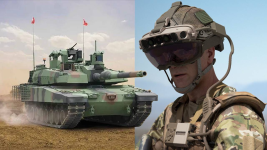
ALTAY Tank .. TURKIYE
Special Armour package
120 mm Main Gun
Remote controlled weapon station
Fire control System
Periscope system
Inertial Navigation
Electro-optical sight
Tank command control information system
Internal Communication System
Laser warning system
Tank driver vision System
Second-Sight Vision Sub-Unit
Battlefield Identification and Recognition System
Close-Range Surveillance System
Radar
Active protection System
Multi-spectral (RF+IR) camouflage mesh

1783929490989.jpeg
1783929948324.jpeg

-------------------------------------------------------------------------

1. Vision & Situational Awareness (See-Through Armor)
  • (YAMGÖZ-360) System: ALTAY relies on the YAMGÖZ short-range surveillance suite. This day/night camera array completely removes urban blind spots, projecting the outside world inside closed hatches.
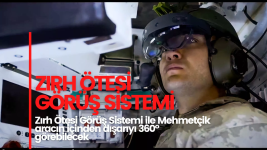
  • BİTES Brightsight Integration: The tank's tactical data and YAMGÖZ video feeds are integrated into the helmet-mounted AR goggles, allowing the commander to look right through the tank's hull.
  • ADİS (Tank Driver Vision System): Provides the driver with a compact, rugged thermal and CCD camera display to navigate seamlessly through heavy dust, smoke, fog, or total pitch darkness.

-------------------------------------------------------------------------
2. Survivability & Active Protection (The Shield)
  • AKKOR-100 Active Protection System: This is ALTAY's signature shield. AKKOR uses high-tech radar panels to detect incoming anti-tank guided missiles (ATGMs) or RPGs. It calculates their trajectory instantly and fires a physical interceptor countermeasure to destroy the threat in mid-air before it impacts the armor.
  • LIAS-400 Tank Laser Warning System: If an enemy uses a laser rangefinder or laser target designator to lock onto the ALTAY, this system alerts the crew in milliseconds, displaying the threat's exact direction and triggering smoke countermeasures

One of the most distinctive features of the ALTAY Tank is its AKKOR Active Protection System, which significantly increases its survivability .. ( only 3 countries in the world )
To view this content we will need your consent to set third party cookies.
For more detailed information, see our cookies page.


-------------------------------------------------------------------------

3. Precision Lethality & Fire Power

VOLKAN-II Fire Control System : ASELSAN's premier Tank fire control system. It gives the ALTAY advanced "Hunter-Killer" capabilities. While the commander hunts for a new target using a 360° stabilized panoramic thermal sight, the gunner can independently engage a separate enemy target with absolute accuracy, even while the tank is moving at high speeds over rough terrain

BATUR-100 Command & Control System: This acts as the tactical digital backbone. It links the ALTAY to other tanks in the platoon, drones, and command centers, creating a shared digital battlefield map to avoid friendly fire and optimize artillery support


-------------------------------------------------------------------------

4 - Network centric Warfare

ALTAY Tank with operate with UCAVs including AKINCI to hit enemy Tanks from 100 km away

Through Link-16 / Wideband Software Defined Radios (CNR) and the BATUR-100 Command & Control System, the ALTAY functions as a heavy data hub on the ground

The Sensor-to-Shooter Loop (How it happens)Instead of a sci-fi fantasy, this operation utilizes structured tactical network steps

Detection: The ALTAY tank detects an enemy radar signature via its electronic warfare sensors, receives target coordinates from a forward scout, or identifies a distant armored convoy on its battlefield management screen.

Target Handover: Because the target is outside the tank's direct line of sight, the tank commander uses the BATUR-100 system to instantly upload the precise GPS/laser coordinates to the regional military network.

UCAV Tasking: The automated network routes this data directly to an airborne AKINCI UCAV patrolling the sector.

What a great technology

------------------------------------------------------------------------


Beyond Armor Vision Technology

The system developed for Turkish Tanks to provide a "fighter-pilot style" see-through capability is called Brightsight (Beyond Armor Vision System), developed by BİTES Aerospace & Defense (a subsidiary of ASELSAN).

  • Fighter Jet Technology on the Ground: Much like the advanced helmets used by F-35 or KAAN fighter pilots, this system relies on Augmented Reality (AR) glasses and head-mounted displays.
  • Complete Transparency: It connects seamlessly to the external ASELSAN YAMGÖZ 360 high-resolution day and night camera matrix mounted on the vehicle's exterior. When a tank commander or crew member looks down or around, the system bypasses the thick steel walls, rendering the entire tank hull effectively "transparent"
  • Integrated Tactical Overlay: The AR display doesn't just show live video feeds. It utilizes advanced sensor fusion to layer real-time digital combat data directly onto the wearer's field of view. This means friend-or-foe identifications, navigational coordinates, target markings, and threat alerts (such as incoming missile warnings) are projected right in front of the crew's eyes
1783927662623.png
1783927713130.png

What a great technology
 

China’s Type 99A Tank Units Integrate New Drone Controls For Unmanned Air Support​

March-25th-2026

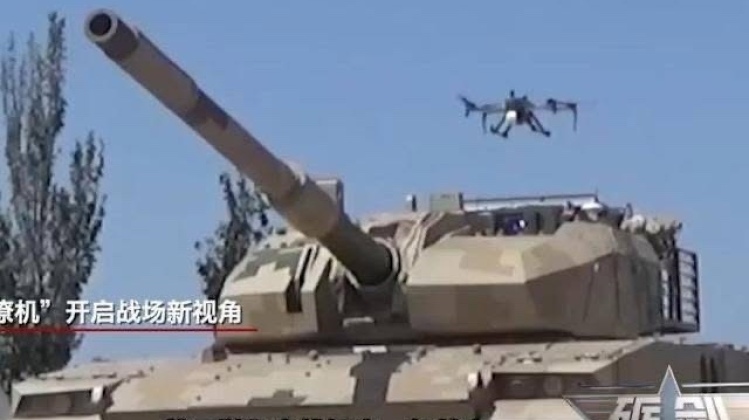
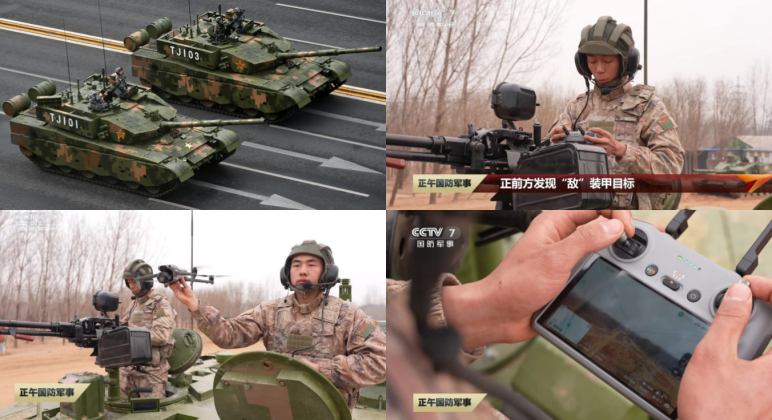
New footage released by Chinese state media sources has provided new insight into the integration of unmanned aircraft into Peoples Liberation Army (PLA) Ground Force Type 99A main battle tank units. The Type 99A and Type 99B until 2025 formed the most elite units in the Ground Force, with the design having being developed as a heavier and better armoured counterpart to the Type 96 and Type 15 tanks.

While the tank’s direct successor, the Type 100, was designed from the outset based on lessons from the Ukrainian theatre, and is heavily optimised for the era of drone warfare, the Type 99 has been modernised to integrate a drone control console, although this requires crew members to open the hatch to launch the. It remains uncertain whether the associated unmanned aircraft are intended solely for photo reconnaissance, or whether drones capable of other forms of reconnaissance, and possibly combat operations, are also integrated into Type 99 tank units

Chinese PLA Ground Forces Type 99 Tank and Associated Unmanned Aircraft

Chinese PLA Ground Forces Type 99 Tank and Associated Unmanned Aircraft

The Type 100 was notably not the first Chinese tank that was designed with its own integrated drone controls, with the Type 15 light tank that entered service in 2019 also having this key feature.

Other next generation tank designs are expected to also be modified to accommodate drone controls, including the South Korean K3, and the U.S. M1E3 Abrams which are scheduled to enter service in the mid-late 2030s. It remains uncertain whether the Type 99 is still in production, and if so how long this will continue, or whether the tanks are seen to continue to have any meaningful advantages over the Type 100 as the fleet is expected to rapidly transition to fielding the newer tank design.

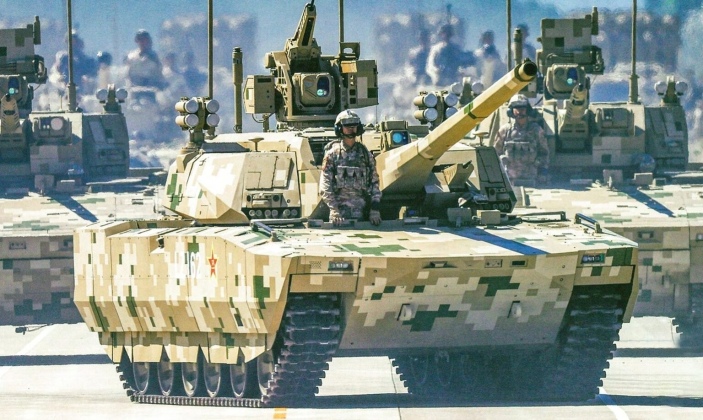
Chinese Type 100 Tank - Currently Considered the World Leader in Pioneering Next Generation Design Features

Chinese Type 100 Tank - Currently Considered the World Leader in Pioneering Next Generation Design Features

China’s defence sector has continued to gradually enhance the Type 99 design, with new modifications seen in late 2025 including the integration of two GL-6 active protection system launchers and four radars for improved survivability, as well as upgraded information technology and data sharing subsystems to improve network-centric warfare capabilities.

Other new improvements have included the integration of a 360-degree vision system for the crew, a new generation of thermal imaging systems, new photoelectric and sensor systems, and improved explosive reactive armour modules. These upgrades, and the more recent integration of new drone control units, appear intended to narrow the performance gap with the newer Type 100 tank.

Ukrainian Army Abrams Tank Moments Before Rear Armour Hit By Single Use Attack Drone

Ukrainian Army Abrams Tank Moments Before Rear Armour Hit By Single Use Attack Drone

While China and the two Koreas have invested in bringing new clean sheet main battle tank designs into service, Russia and NATO tank industries continue to rely on the production of improved variants of Cold War era designs. The Soviet Object 195 main battle tank program was initially intended to provide the country’s forces with the world first fourth generation design, although the program’s collapse after the state disintegrated, followed by major delays to Russia’s more conservative T-14 program, allowed China to take the lead in development. After observing the performance of Western tank designs in the Ukrainian theatre, their perceived inadequacy and demonstrated high vulnerability, which resulted in widespread complaints by Ukrainian personnel and rapid combat losses, were considered primary factors leading the U.S. to end plans to further modernise the M1A2 Abrams design, and instead initiate the revolutionary M1E3 program. This program is intended to provide a fourth generation tank with many similar features to the Type 100, although it is still in its early development stages.

 
Amazing. Though not surprising.

This went from a discussion regarding the world's tank fleets to yet another Chinese propaganda thread.

Well done.
 

Ranked: The World’s Largest Tank Fleets in 2026

July 10, 2026
By Bruno Venditti

global-tank-fleet-rankings.webp


Key Takeaways​

  • China has the world’s largest combat tank fleet in 2026, with 5,870 vehicles.
  • Russia and North Korea rank second and third, but much of their tank fleets consist of older Soviet-derived designs.
China now fields the world’s largest combat tank fleet, ranking ahead of Russia, North Korea, and the United States.

While recent conflicts have exposed the vulnerabilities of armored vehicles, tanks remain a core component of conventional land warfare for many militaries.

This graphic ranks the 15 countries with the largest combat tank inventories in 2026 using data from Global Firepower, which counts frontline main battle tanks and light tanks across all military service branches.

China Takes the Top Spot​

China fields 5,870 combat tanks, narrowly ahead of Russia.

Unlike many countries with aging inventories, China has spent decades modernizing its armored forces with newer designs such as the Type 99 and upgraded Type 96 series.

View attachment 205882

Continued domestic production allows Beijing to replace older equipment while maintaining one of the world’s largest armored forces.

Russia and North Korea Rely on Large Inventories​

Russia ranks second with 5,630 combat tanks despite heavy equipment losses during the war in Ukraine.

Much of its fleet consists of upgraded Soviet-era tanks, with older vehicles also brought out of storage to replenish losses.

North Korea places third with nearly 4,900 tanks, although analysts believe much of its fleet is composed of aging Soviet and Chinese-derived models with varying levels of modernization.

The U.S. and Regional Powers Maintain Strong Armored Forces​

The United States ranks fourth with 4,666 combat tanks, centered primarily on the M1 Abrams family, one of the world’s most advanced main battle tanks.

Outside the top four, India, Egypt, Pakistan, Iran, and Türkiye each field more than 2,000 combat tanks, underscoring the continued importance of armored forces in regions where conventional land warfare remains a central military priority.

Meanwhile, countries such as South Korea, Azerbaijan, Morocco, and Jordan maintain capable but comparatively smaller armored forces.

Russia does not have 5,630.. that is crazy. It is a fraction of that... they don't even have enough tanks to do a military parade.
 
  • Like
Reactions: Waz

Users who are viewing this thread

Pakistan Defence Latest

Back
Top