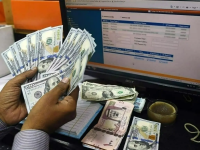
Remittances from Overseas Pakistanis - Updates

The country needs to better understand how strongly imports rise when remittances increase, what people are actually spending these inflows on, and how reforms can redirect some of this money from day-to-day consumption toward savings and investment. Without this clarity, policymakers are left guessing at a time when stabilisation alone is no longer enough to put the economy on a path to real growth.

And the bigger picture makes this even more urgent: Over the past two decades, exports as a percentage of GDP have steadily declined, FDI has collapsed to negligible levels, and remittances now contribute almost as much to the economy as exports do. This is not the profile of a competitive economy — it is the profile of an economy increasingly reliant on workers abroad rather than productive capacity at home.

While remittances offer stability, they cannot substitute for investment-led job creation or export-led growth. Pakistan needs to convert these inflows into engines of productive activity, not mere consumption.

Pakistan’s $16 billion inflow in 5MFY26 is a welcome cushion and offers breathing space in an otherwise constrained external environment. But the same inflows that stabilise the current account today could widen the import bill tomorrow if left unmanaged.

Remittances are a blessing — but they also present a policy challenge that has gone unaddressed for too long.
 
Overseas Pakistanis don't care about Cartoon-e-Azam Imran Khan. It's that simple.

Nobody in their right mind would sacrifice their own family for Toshakhana Daku's politics.
Never in the history of Pakistan has this card been used to push a political agenda. I am glad the Pakistani nation did not go along with it and disgusted by the fact that a certain party and its leadership has tried to push it in the first place.
 
Never in the history of Pakistan has this card been used to push a political agenda. I am glad the Pakistani nation did not go along with it and disgusted by the fact that a certain party and its leadership has tried to push it in the first place.
He and his party of cabal thought that he was actually more important than the nation.

Listen to this PTI lady threatening to "turn Pakistan ablaze" if her Pervert Messiah is arrested.

To view this content we will need your consent to set third party cookies.
For more detailed information, see our cookies page.
 

Nationwide FIA raids net Rs1.99bn, 667 arrests in 2025 hawala crackdown​

A year long crackdown by the Federal Investigation Agency (FIA) against hawala, hundi and illegal currency exchange has resulted in the recovery of currency worth over Rs1.99 billion and the arrest of 667 individuals across Pakistan during 2025, officials said on Monday.

The arrests were made from multiple FIA zones, with Peshawar recording the highest number at 199, followed by Balochistan (120), Karachi (101), Multan (70), Kohat (63), Lahore (58), Islamabad (22), Faisalabad (15) and Hyderabad (14).

Officials said the seized amount included US$777,868, foreign currencies valued at more than Rs320 million, and over Rs1.45 billion in Pakistani currency.

The enforcement drive involved 523 raids carried out nationwide, leading to the registration of 546 cases and the completion of investigations into 174 inquiries related to illegal currency operations.

An FIA official said the campaign was launched on the directions of Director General FIA Rifat Mukhtar Raja and targeted unlicensed money changers operating through plazas, markets and shops. Several such premises were sealed during the course of the operations.

The raids were conducted with the assistance of other law enforcement agencies, as the FIA sought to dismantle organised financial networks facilitating illegal currency movement, the official added.

He said strict legal action would be ensured against those involved in foreign currency smuggling, while international agents linked to illegal currency trade are also under pursuit.

The FIA reaffirmed its commitment to curb financial crimes and strengthen transparency and stability in the country’s financial system.
 

Nationwide FIA raids net Rs1.99bn, 667 arrests in 2025 hawala crackdown​

A year long crackdown by the Federal Investigation Agency (FIA) against hawala, hundi and illegal currency exchange has resulted in the recovery of currency worth over Rs1.99 billion and the arrest of 667 individuals across Pakistan during 2025, officials said on Monday.

The arrests were made from multiple FIA zones, with Peshawar recording the highest number at 199, followed by Balochistan (120), Karachi (101), Multan (70), Kohat (63), Lahore (58), Islamabad (22), Faisalabad (15) and Hyderabad (14).

Officials said the seized amount included US$777,868, foreign currencies valued at more than Rs320 million, and over Rs1.45 billion in Pakistani currency.

The enforcement drive involved 523 raids carried out nationwide, leading to the registration of 546 cases and the completion of investigations into 174 inquiries related to illegal currency operations.

An FIA official said the campaign was launched on the directions of Director General FIA Rifat Mukhtar Raja and targeted unlicensed money changers operating through plazas, markets and shops. Several such premises were sealed during the course of the operations.

The raids were conducted with the assistance of other law enforcement agencies, as the FIA sought to dismantle organised financial networks facilitating illegal currency movement, the official added.

He said strict legal action would be ensured against those involved in foreign currency smuggling, while international agents linked to illegal currency trade are also under pursuit.

The FIA reaffirmed its commitment to curb financial crimes and strengthen transparency and stability in the country’s financial system.

KPK/Balochistan number 1 in tax avoidance, their governments the must to cry for more and more share in NFC. Thats not how to it works.

Forget about more share, if you want to maintain current share then start full crack down against unpaid custom vehicles, electricity theft, smuggling, hundi hawala. Thats how you will get more NFC taxes share.
 

Using stablecoins to upgrade remittances


Hassan Baig
January 5, 2026

Pakistan is the world’s 5th largest remittance destination. The question is how much further it can climb.

Remittance flows are Pakistan’s most reliable source of hard dollars. Last year alone, we received more than $38 billion, the highest in our history. In many years, these flows have been steadier than exports, foreign direct investment, or debt inflows combined. As imports continue to gnaw at dollar reserves, these inflows are even more critical.

So how do we increase remittance flows?

By acting on a simple fact: people send more when it is easier and cheaper.

Remittances could be converted into dollar stablecoins, bridged into the Pakistani CBDC’s network, exchanged at market rates, and redeemed into rupees via Raast

One promising way is to use crypto-based settlement technology as the rails or plumbing. It’s like upgrading from dial-up internet to broadband: transfers become near-instant, run 24/7, and fees can fall below one per cent. More of each dollar arrives home.
 
Stablecoin 101

A stablecoin is a crypto token where, for every stablecoin that exists, there is $1 deposited in a dedicated bank account tied to that token. When money goes into that account, more tokens are issued or “minted”. When money goes out, as many tokens are deleted or “burned”. In short, the tokens track the fiat backing one-to-one.

Although dollar variants are most popular, stablecoins can be backed by other currencies too: dirhams, euros, and potentially rupees.

Note that stablecoins do not increase the money supply. They are only a different format of money, with two added properties: programmability (rules can be coded into it) and 24/7 availability (always-on).

Those properties make stablecoins highly effective for speeding up remittances.
 
Two paths, and a practical middle

Overall, there are three ways to upgrade remittances through stablecoins.

At one end is the “simplest” approach. Imagine a Pakistani expat sends dollar-based stablecoins to Pakistan. Those stablecoins are converted into fiat dollars and settled into a Pakistani bank’s nostro account. To make the payment instant, the recipient is paid out from a pre-funded rupee account in Pakistan, while dollar settlement catches up in the background.

This works, but has downsides. It serves only people sending remittances in crypto. It also keeps the old pre-funding model alive, meaning trapped capital and exposure to foreign exchange swings.

Another way to upgrade remittances is via a Central Bank Digital Currency (CBDC).

Once a CBDC is launched, this is how the plumbing works: each remittance is converted into dollar stablecoins, bridged into the Pakistani CBDC’s network, exchanged into the CBDC at market rates, and redeemed into rupees via Raast. Accumulated dollar stablecoins are also periodically unwound back into fiat, repatriating hard dollars for our reserves.
 
A CBDC requires years of build-out: new infrastructure, wallets, governance, security, upgrades, and mass adoption. It’s an exercise in building and maintaining a sovereign digital financial ecosystem from scratch. Countries spend years and remain in pilots.

Thus, it is wiser to pursue a faster path, alongside longer-term CBDC ambitions.

The most efficient way to upgrade inward remittances is to use established blockchain settlement rails and pilot a rupee-backed token on them. It can start as a permissioned, custodial instrument limited to licensed participants.

To be sure, this is much smaller than launching a CBDC. It can be tested quickly and cheaply. It can interoperate with the American dollar, Canadian dollar, euro, dirham, or pound stablecoins from day one, boosting compatibility with global money flows.
 
What about control?

Stablecoins are often assumed to be hard to control. But in practice, they can be tightly controlled because they are programmable.

For the narrow use-case of inward remittances, a PKR-backed token need not be an open retail instrument. The safest way is a fully custodial token designed for one purpose: regulated remittance settlement.

Key guard rails can be enabled from the start: per-user limits, strict whitelisting of institutions, strong anti-money laundering and counter-financing terrorism checks at entry and exit, the ability to freeze or claw back suspicious funds, and emergency pause mechanisms (for example, during exchange-rate volatility).

Next steps

A “crawl, walk, run” approach is best. The first step can be a sandbox pilot focused on a single high-profile corridor, such as New York to Pakistan. We can stress-test inward remittances from New York over six to 18 months. Troubleshoot teething pains along the way. Scale gradually as operational stability is established.

Once integrated, this system will ultimately become the long-lived financial plumbing for Pakistan. So as the country explores stablecoin-based remittances, it must choose technology partners wisely.
 
Partners should be vetted for resilience to geopolitics and sanctions, and for a strong record of global regulatory compliance. This is of strategic consequence in an increasingly divided world.

For immediate gains at modest cost, stablecoin rails are the most practical way to modernise the country’s remittance machinery. They let us test quickly, gather evidence, and upgrade infrastructure without committing billions or waiting years.
 

OPINION: Remittances: Pakistan’s blessing in distress


Amna Riaz
January 8, 2026

1767896079987.png


Few economic indicators in Pakistan enjoy as much universal praise as remittances. They are celebrated as the country’s most reliable external lifeline — resilient, counter-cyclical, and politically costless. In recent years, they have propped up foreign exchange reserves, softened balance-of-payments crises, and reduced dependence on volatile capital flows.

At the macro level, remittances look like a blessing. But the latest household data tells a more unsettling story. At the micro level, remittances increasingly resemble distress insurance rather than opportunity.


According to the HIES 2024–25, the share of foreign remittances in household income rose from 4.96 percent to 7.77 percent between 2018–19 and 2024–25. Gifts and assistance, including cash transfers, increased from 2.12 percent to 4.57 percent, while domestic remittances reached 3.77 percent. These increases are occurring alongside two worrying trends: a decline in the number of earners per household and a fall in per capita food consumption of staples such as wheat, pulses, milk, and cooking oil.

This combination matters. When remittances grow in an economy where earners are increasing and productivity is rising, they can fuel investment, education, and entrepreneurship. But when remittances grow while households are eating less and fewer people are working, they signal something else entirely: families are relying on external support to survive a domestic economic squeeze.
 
At the macro level, remittances have become Pakistan’s single most stable external inflow. In recent years, annual remittance inflows have hovered around USD 38 billion in fiscal year 2025, often exceeding exports of several major sectors and comfortably outpacing foreign direct investment. During periods of external stress—whether triggered by global commodity price shocks, exchange-rate volatility, or tightening financial conditions—remittances have repeatedly prevented sharper balance-of-payments crises.

This macro resilience is real. Remittances smooth foreign exchange availability, support the rupee, and help finance essential imports. Unlike portfolio flows or short-term borrowing, they do not flee overnight. In that sense, they are the backbone of Pakistan’s external account. But macro stability can mask micro fragility.

The household data suggests that remittances are increasingly compensating for domestic labour market failure. As the number of earners per household declines and job creation remains weak, families turn to relatives abroad or within Pakistan to plug income gaps. Rising remittances thus coexist with shrinking food baskets and rising dependency burdens on fewer earners.

Economically, this is a red flag. It indicates that remittances are being used primarily for consumption smoothing, not for productive transformation. Food, utilities, rent, healthcare — these are necessary uses, but they do not generate future income. Over time, this can create a quiet dependency equilibrium: households survive, but the domestic economy does not expand.
 
There is also a distributional angle. Remittances are unevenly distributed, benefiting households with migration networks while leaving others exposed. As remittance shares rise, inequality can widen — not because remittances are harmful, but because domestic opportunities are insufficiently broad-based.

This creates a paradox. At the national level, remittances stabilise the economy. At the household level, they increasingly signal economic stress. Both statements can be true at the same time.

The deeper issue is not remittances themselves, but what the domestic economy is failing to do. In a healthy system, remittances complement local income; they do not replace it. In Pakistan today, they are increasingly substituting for missing jobs, stagnant wages, and limited enterprise growth.

The risk is long-term. If remittances continue to grow while domestic productivity stagnates, Pakistan risks locking itself into a low-growth equilibrium where external labour exports finance domestic consumption, but domestic industries fail to scale. This model is fragile. It depends on external labour markets, geopolitical stability, and host-country demand—factors entirely outside Pakistan’s control.
 
What should be done?

First, remittances must be integrated into a growth strategy, not treated as a passive inflow. This means moving beyond celebrating headline numbers to actively shaping how remittances are used.

Second, Pakistan needs remittance-linked financial instruments that encourage savings, investment, and enterprise formation. Dedicated diaspora savings products, housing bonds, SME investment windows, and co-financing schemes can channel a portion of remittances into productive uses without forcing households to sacrifice consumption security.

Third, remittances should be connected to formalisation and entrepreneurship. Simplifying business registration, reducing compliance costs, and enabling digital payments can allow remittance-receiving households to convert part of these inflows into micro and small enterprises. In case starting a business remains slow, discretionary, and costly, remittances will stay trapped in consumption.

Fourth, social protection and labour market policy must work together. When remittances rise because domestic jobs are missing, the policy response should not be to rely even more on external inflows, but to revive labour demand at home—especially in tradables, agro-processing, and services linked to exports.

Finally, migration policy itself must be treated as an economic policy. Skills certification, safer migration channels, and reintegration support can raise the productivity of overseas employment and improve the quality of remittance flows — turning them from survival income into development capital.
 

Users who are viewing this thread

Pakistan Defence Latest

Latest Posts

Back
Top