"Roses Are Red, Violets Are Blue, & Polar Vortex Is Coming For You"

To view this content we will need your consent to set third party cookies.
For more detailed information, see our cookies page.
 
To view this content we will need your consent to set third party cookies.
For more detailed information, see our cookies page.
 
To view this content we will need your consent to set third party cookies.
For more detailed information, see our cookies page.
 
To view this content we will need your consent to set third party cookies.
For more detailed information, see our cookies page.
 
Do you think Americans can survive if they are sent back to stoneage ?
No one thinks ahead. I have lived in this house for five years.

When I moved in, the place was a wreck. Vacant for seven months. No one wanted this home, especially during winter months.

Just got my natural gas bill. One of the coldest winters in recent memory, and still managed to reduce my daily usage by 10.5% compared to last year.

My overall energy usage has improved considerably.

Doing this with a budget of $0.00.
 
Last edited:
I just let the landlord know what I need, and put in the work myself.

Nearly deaf, with failing eyesight. I make the best out of the hand delt me.

Lots of happy talk lately about America's coming golden age. Lost in the fine print is hard times, for many.
 
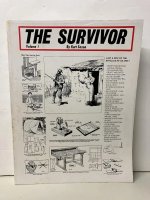
Each region of the United States has old books and publications from people who have had to survive and prosper as America was being built.
 

Summary​

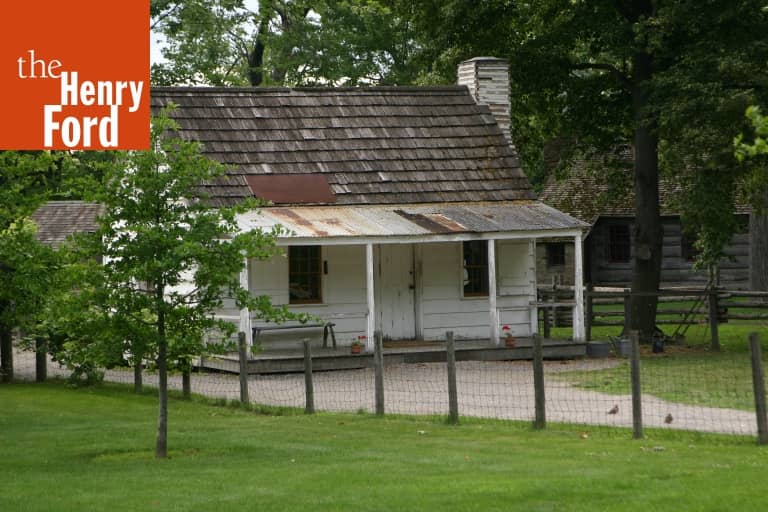
Amos and Grace Mattox -- descended from enslaved African Americans -- raised their two children in this rural Georgia farmhouse during the Great Depression of the 1930s. Amos farmed, cut hair, made shoes, and preached at the local church, while Grace sewed, canned, cooked, and helped needy neighbors. Although life was hard, the family proudly affirmed that there was "always enough."
 
1739950673294.jpeg

Been inside this house a few times at the Henry Ford Village in Dearborn, Michigan.
 
Another arctic blast has sent temperatures plummeting across the United States, bringing “life-threatening” wind chills and dangerous cold to millions of Americans while yet another winter storm unleashes heavy snow across a wide swath of the country.

The latest brutal cold snap is again courtesy of the polar vortex — a large area of cold air that spins over the North Pole — dropping some 3,000 miles south into the U.S. for the 10th time this winter.

The National Weather Service issued extreme cold warnings to more than 32 million people in 11 states from the Canadian border to Texas, with “widespread, record-breaking cold likely.”

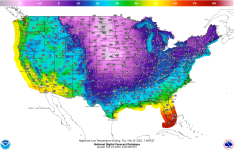
Just how cold is it?
1739979183532.png
Two to three more days of this.

Four days without running water, or a hot shower.

On hand: Four gallons of drinking water. 20 gallons of potable water for flushing and cleaning.

Tuesday some talking about this morning's food giveaway (people who never talked about going to a food bank before).

Good idea to have one gallon a day, drinking water. At least two gallons a day for cleaning and flushing. For a week.

Why? Because when you need it, there will be many others needing it too.
 
Last edited:
To view this content we will need your consent to set third party cookies.
For more detailed information, see our cookies page.
 
Used to live smack on that yellow -54 mark. Miss that cold at times...not always.
1739993214978.jpeg

But long before he became the celebrated “Mr. Hockey,” Gordie was just another hungry kid from the Canadian prairies. It was that desperate childhood that forged Gordie into the athlete and man he famously became.

Gordie was born March 31, 1928, in Floral, Saskatchewan, a nondescript town nine miles east of Saskatoon. “That place is so flat,” somebody once said of Saskatoon, “you can sit on your front porch and watch your dog run away for three days.”


Users who are viewing this thread

Back
Top