Navigation
Install the app
How to install the app on iOS
Follow along with the video below to see how to install our site as a web app on your home screen.
Note: This feature may not be available in some browsers.
More options
Style variation
You are using an out of date browser. It may not display this or other websites correctly.
You should upgrade or use an alternative browser.
You should upgrade or use an alternative browser.
Royal Saudi Arabian Strategic Missile Force
- Thread starter The SC
- Start date
More options
Who Replied?


_Arabia_
Trusted Member

Next page:
Related to the Royal Saudi Arabian Air Defense Forces which again are related to the Peace Shield which again is related to the Royal Saudi Arabian Strategic Missile Force.
The Saudi Arabian Space Agency is also a related branch.


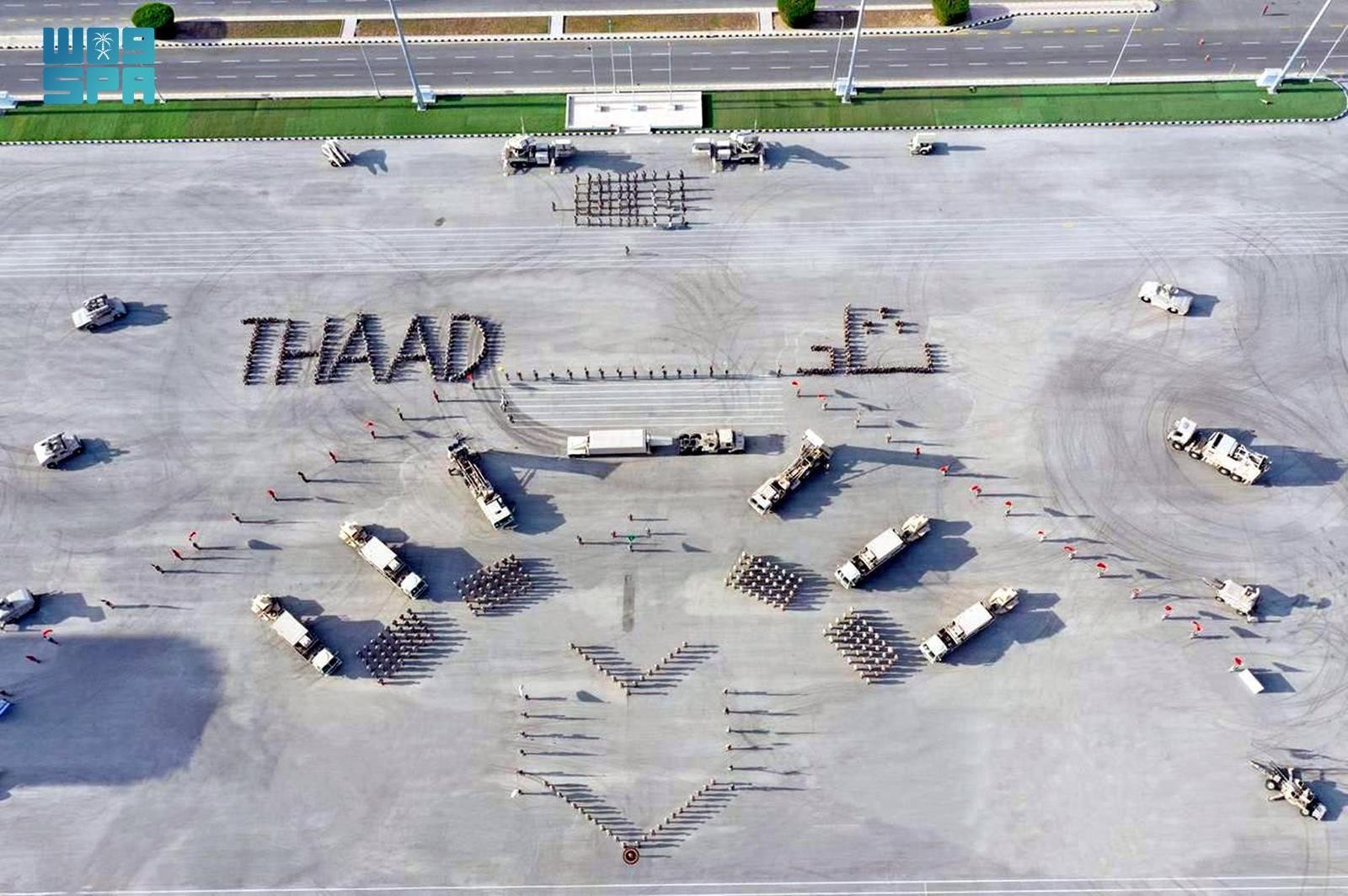
Saudi Royal Air Defense Forces Launch First THAAD Missile Defense Unit
Thursday 08/01/1447
Jeddah, July 3, 2025, SPA -- The Saudi Royal Air Defense Force officially inaugurated the first unit of the Terminal High Altitude Area Defense (THAAD) missile system, following the successful completion of system testing, evaluation, and field training of personnel within Saudi Arabia. The launch ceremony was held at the Air Defense Forces Institute in Jeddah.
During the event, the commander of the Royal Saudi Air Defense Forces handed over the unit’s flag to the commander of the 1st Air Defense Group, marking the unit's operational readiness.
The deployment of the first THAAD battery is part of a broader defense project aimed at boosting the Kingdom’s air defense capabilities and ensuring the protection of vital strategic infrastructure and national interests.
-- SPA
08:14 Local Time 05:14 GMT
If there was a separate Saudi Arabian forum we could create separate threads for each of the many branches of the Saudi Arabian military. Would create a much better overview.
There are hardly any Saudi Arabian users active unfortunately (I think that there are just me and If I recall @The SC is of Saudi Arabian origins based in Canada). In the old PDF we had once at least around 5 active Saudi Arabian users if not 3-4 more if I recall. All left for various reasons and also due to life obligations.
But given the long-term strategic KSA-Pakistan relations and the new agreement signed between the countries that will hopefully create an even closer relationship with tangible military, economic, political results on the ground, this is probably the opportunity to do so.
However I fear that it will be an echo chamber we are simply not enough Saudi Arabian users here or Arab for that matter and the forum is not even remotely as active as PDF was in its heyday which is natural as forums are slowly dying everywhere anyway regardless of topic.
HOWEVER creating a separate Saudi Arabian section could probably attract Saudi Arabians to participate potentially if there is no other English speaking defense forum where Saudi Arabian military topics are discussed. Not sure if there is.
There are quite a few of very large and active Arab defense forums but they are just that, Arab defense forums. Only in Arabic. Most discussions take place over Twitter anyway.
I think that PDF owners should try to interact with Saudi Arabians via Twitter (extremely popular) and also Reddit (Saudi Arabia has a quite active country profile - one of the most active) or any other nationality for that matter, that they wish to attract here to grow the forum.
Not sure, just throwing some quick ideas out there.
But even if not many of us here, the creation of a separate Saudi Arabian forum could be useful for the reasons that I stated and to keep track of Saudi Arabian developments, military as well as non-military. Plenty of news. A separate Makkah and Madinah news and updates section could also be created, economic news, the many giant/giga projects/development section (already such a thread on the ME forum though), photos of KSA etc.
I think that we have a few active Pakistani brothers here who are based in KSA, they could also take the mantle and help in this regard as well as add the relevant Pakistani angle.
After all the largest Pakistani expat community in the world is based in KSA and you have Pakistanis of all walks of life from the bricklayer to the KAUST professor.
Related to the Royal Saudi Arabian Air Defense Forces which again are related to the Peace Shield which again is related to the Royal Saudi Arabian Strategic Missile Force.
The Saudi Arabian Space Agency is also a related branch.
Saudi Royal Air Defense Forces Launch First THAAD Missile Defense Unit
Thursday 08/01/1447
Jeddah, July 3, 2025, SPA -- The Saudi Royal Air Defense Force officially inaugurated the first unit of the Terminal High Altitude Area Defense (THAAD) missile system, following the successful completion of system testing, evaluation, and field training of personnel within Saudi Arabia. The launch ceremony was held at the Air Defense Forces Institute in Jeddah.
During the event, the commander of the Royal Saudi Air Defense Forces handed over the unit’s flag to the commander of the 1st Air Defense Group, marking the unit's operational readiness.
The deployment of the first THAAD battery is part of a broader defense project aimed at boosting the Kingdom’s air defense capabilities and ensuring the protection of vital strategic infrastructure and national interests.
-- SPA
08:14 Local Time 05:14 GMT
Saudi Royal Air Defense Forces Launch First THAAD Missile Defense Unit
Jeddah, July 3, 2025, SPA -- The Saudi Royal Air Defense Force officially inaugurated the first unit of the Terminal High Altitude Area Defense (THAAD) missile system, following the successful completion of system testing, evaluation, and field training of personnel within Saudi Arabia. The...
www.spa.gov.sa
If there was a separate Saudi Arabian forum we could create separate threads for each of the many branches of the Saudi Arabian military. Would create a much better overview.
One for the admins to consider @X ? @Fatman17 ?
There are hardly any Saudi Arabian users active unfortunately (I think that there are just me and If I recall @The SC is of Saudi Arabian origins based in Canada). In the old PDF we had once at least around 5 active Saudi Arabian users if not 3-4 more if I recall. All left for various reasons and also due to life obligations.
But given the long-term strategic KSA-Pakistan relations and the new agreement signed between the countries that will hopefully create an even closer relationship with tangible military, economic, political results on the ground, this is probably the opportunity to do so.
However I fear that it will be an echo chamber we are simply not enough Saudi Arabian users here or Arab for that matter and the forum is not even remotely as active as PDF was in its heyday which is natural as forums are slowly dying everywhere anyway regardless of topic.
HOWEVER creating a separate Saudi Arabian section could probably attract Saudi Arabians to participate potentially if there is no other English speaking defense forum where Saudi Arabian military topics are discussed. Not sure if there is.
There are quite a few of very large and active Arab defense forums but they are just that, Arab defense forums. Only in Arabic. Most discussions take place over Twitter anyway.
I think that PDF owners should try to interact with Saudi Arabians via Twitter (extremely popular) and also Reddit (Saudi Arabia has a quite active country profile - one of the most active) or any other nationality for that matter, that they wish to attract here to grow the forum.
Not sure, just throwing some quick ideas out there.
But even if not many of us here, the creation of a separate Saudi Arabian forum could be useful for the reasons that I stated and to keep track of Saudi Arabian developments, military as well as non-military. Plenty of news. A separate Makkah and Madinah news and updates section could also be created, economic news, the many giant/giga projects/development section (already such a thread on the ME forum though), photos of KSA etc.
I think that we have a few active Pakistani brothers here who are based in KSA, they could also take the mantle and help in this regard as well as add the relevant Pakistani angle.
After all the largest Pakistani expat community in the world is based in KSA and you have Pakistanis of all walks of life from the bricklayer to the KAUST professor.
Last edited:
_Arabia_
Trusted Member
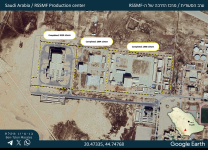
Is there any accessible open OSINT out there where one could monitor or follow the developments like this guy below is doing?
He is talking about actively new bases being built (June 2025) and this being confirmed by satellite imagery.
Is it possible for amateurs to get their hands on a OSINT where progress could be tracked on a weekly or say monthly basis?
He himself is saying that there are most likely (makes perfect sense) many other actively constructed or hidden bases across KSA (12th largest country on earth and the by far largest in the region).
Possibly amateur observers could find possible new missile bases if enough research is made.
Or are we reduced to the likes of Google Earth?
He is talking about actively new bases being built (June 2025) and this being confirmed by satellite imagery.
Is it possible for amateurs to get their hands on a OSINT where progress could be tracked on a weekly or say monthly basis?
He himself is saying that there are most likely (makes perfect sense) many other actively constructed or hidden bases across KSA (12th largest country on earth and the by far largest in the region).
Possibly amateur observers could find possible new missile bases if enough research is made.
Or are we reduced to the likes of Google Earth?
_Arabia_
Trusted Member
20th February 2025
While the details surrounding Saudi Arabia’s missile capabilities remain largely elusive, recent satellite imagery indicates the country may be quietly modernising or expanding its ballistic-missile force.
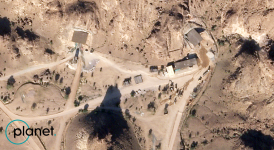
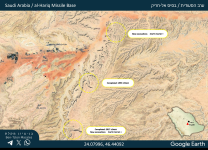
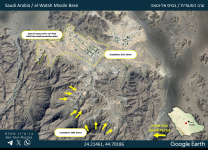
Saudi Arabia established its long-range surface-to-surface missile capability in the 1980s in response to regional missile proliferation and use, particularly during the Iran–Iraq War, as well as Israel’s demonstrated ability to conduct highly effective long-range aerial strikes. In 1988, Riyadh acquired DF-3 (CH-SS-2) intermediate-range ballistic missiles from China. To support the deployment of these systems, the Royal Saudi Strategic Missile Force (RSSMF) constructed four underground bases at al-Hariq, al-Sulayyil, Raniyah and al-Watah.
While the liquid-propellant DF-3 missiles provided substantial range, their operational limitations were readily apparent even at the time of purchase. The DF-3 required complex and time-consuming launch preparations and its inaccuracy further diminished its operational value. By the 2000s, various sources suggested that Saudi Arabia was seeking to procure more-accurate solid-propellant missiles from China, with later reporting claiming that Saudi Arabia had purchased the DF-21 (CH-SS-5) in 2007. Memorabilia (missile models) associated with the RSSMF also suggest that the country may have acquired missile systems other than the DF-3.
In 2014, Saudia Arabia displayed the DF-3 in public for the first time, sparking speculation that Riyadh might adopt a more open posture regarding its ballistic-missile capabilities. While no such increased openness has followed, geospatial analysis points towards significant development activity related to the RSSMF since the late 2010s.


Multiple indicators point to the site’s function as a missile base. The style of the administrative buildings aligns with other known RSSMF facilities, as does the geographical separation between the underground complex and the overground residential and administrative areas. Tunnel entrances follow the same design seen at the RSSMF base at al-Sulayyil, and contractor records confirm the project falls under the purview of the Ministry of Defense. Additionally, RSSMF commander Jarallah Alaluwayt was reported to be in al-Nabhaniyah (engaged in charitable activities) shortly before construction began.


In the second half of the 2010s, new tunnels were constructed at the RSSMF missile bases in al-Hariq and Raniyah. An additional underground section was also constructed at the al-Sulayyil base between 2019 and 2023.

Similar uncertainty surrounds Saudi Arabia’s ambitions for the local assembly or manufacturing of ballistic missiles. As part of its broader Vision 2030 agenda, Riyadh has prioritised the development of a domestic defence-industrial base. Crown Prince Muhammad bin Salman Al Saud has stressed that at least partial local production will become a binding requirement for all purchases of military hardware. This approach also appears to extend to missile systems. Saudi Arabia is known to have established a solid-propellant motor-production facility at the al-Watah missile base, and US intelligence assessments indicate that it is now producing ballistic missiles with Chinese assistance. Yet details about the specific systems it plans to assemble or manufacture remain unknown.
The secrecy surrounding Saudi Arabia’s ballistic-missile force will likely remain in place unless Riyadh alters its information policy or new information emerges, potentially from the US. The apparent absence of ballistic-missile use in Saudi Arabia’s campaign against Ansarullah (the Houthis) indicates that these systems might serve more as a strategic deterrent than a war-fighting capability. As such, their true role may only come to light in crisis.
Research Fellow for Missile Technologies and UAVs

 www.iiss.org
Very annoying and almost depressive (joking now obviously) but the secrecy is crazy and very annoying.
Riyadh’s silent ballistic-missile surge
While the details surrounding Saudi Arabia’s missile capabilities remain largely elusive, recent satellite imagery indicates the country may be quietly modernising or expanding its ballistic-missile force.Saudi Arabia established its long-range surface-to-surface missile capability in the 1980s in response to regional missile proliferation and use, particularly during the Iran–Iraq War, as well as Israel’s demonstrated ability to conduct highly effective long-range aerial strikes. In 1988, Riyadh acquired DF-3 (CH-SS-2) intermediate-range ballistic missiles from China. To support the deployment of these systems, the Royal Saudi Strategic Missile Force (RSSMF) constructed four underground bases at al-Hariq, al-Sulayyil, Raniyah and al-Watah.
While the liquid-propellant DF-3 missiles provided substantial range, their operational limitations were readily apparent even at the time of purchase. The DF-3 required complex and time-consuming launch preparations and its inaccuracy further diminished its operational value. By the 2000s, various sources suggested that Saudi Arabia was seeking to procure more-accurate solid-propellant missiles from China, with later reporting claiming that Saudi Arabia had purchased the DF-21 (CH-SS-5) in 2007. Memorabilia (missile models) associated with the RSSMF also suggest that the country may have acquired missile systems other than the DF-3.
In 2014, Saudia Arabia displayed the DF-3 in public for the first time, sparking speculation that Riyadh might adopt a more open posture regarding its ballistic-missile capabilities. While no such increased openness has followed, geospatial analysis points towards significant development activity related to the RSSMF since the late 2010s.
A suspected new missile base
Most notably, Saudi Arabia appears to have constructed an underground missile base near the town of al-Nabhaniyah, marking the first new facility built since the 1980s. Construction began in 2019 and appeared to be largely completed by the beginning of 2024, although some tunnel work continued.
Multiple indicators point to the site’s function as a missile base. The style of the administrative buildings aligns with other known RSSMF facilities, as does the geographical separation between the underground complex and the overground residential and administrative areas. Tunnel entrances follow the same design seen at the RSSMF base at al-Sulayyil, and contractor records confirm the project falls under the purview of the Ministry of Defense. Additionally, RSSMF commander Jarallah Alaluwayt was reported to be in al-Nabhaniyah (engaged in charitable activities) shortly before construction began.
New facilities at the RSSMF Center and School
New construction is also visible at the RSSMF Center and School in Wadi al-Dawasir. The site includes an approximately 29 metre-tall high-bay building, likely built in the late 1980s to support the DF-3 force, possibly as a training or maintenance facility. In the early 2000s, an approximately 17 metre-tall high-bay building was added, likely linked to the reported acquisition of a newer, more compact missile system. Most recently, between 2019 and 2021, a third large high-bay building was constructed at the site. While its exact function remains unclear, its design and placement suggest it serves an operational or support role within the RSSMF infrastructure.
Further activities
Similar signs of modernisation or expansion are visible at other RSSMF sites. Two new annexes were constructed at the RSSMF headquarters in Riyadh between 2017 and 2019. In the same time span, the number of covered parking spaces at the headquarters increased from around 511 to 688.
In the second half of the 2010s, new tunnels were constructed at the RSSMF missile bases in al-Hariq and Raniyah. An additional underground section was also constructed at the al-Sulayyil base between 2019 and 2023.
Unanswered questions
While the above activities point towards a potential modernisation or expansion of RSSMF capabilities, details about the nature and scope of these developments remain largely elusive. One exception to the general secrecy surrounding the Saudi missile programme was a 2022 report by Intercept. Citing a United States intelligence source, the article claimed that Saudi Arabia was planning new imports of Chinese ballistic missiles under a programme named ‘Crocodile’. While these plans reportedly raised concerns in Washington, their specifics – including whether they were eventually implemented – remain unclear.Similar uncertainty surrounds Saudi Arabia’s ambitions for the local assembly or manufacturing of ballistic missiles. As part of its broader Vision 2030 agenda, Riyadh has prioritised the development of a domestic defence-industrial base. Crown Prince Muhammad bin Salman Al Saud has stressed that at least partial local production will become a binding requirement for all purchases of military hardware. This approach also appears to extend to missile systems. Saudi Arabia is known to have established a solid-propellant motor-production facility at the al-Watah missile base, and US intelligence assessments indicate that it is now producing ballistic missiles with Chinese assistance. Yet details about the specific systems it plans to assemble or manufacture remain unknown.
The secrecy surrounding Saudi Arabia’s ballistic-missile force will likely remain in place unless Riyadh alters its information policy or new information emerges, potentially from the US. The apparent absence of ballistic-missile use in Saudi Arabia’s campaign against Ansarullah (the Houthis) indicates that these systems might serve more as a strategic deterrent than a war-fighting capability. As such, their true role may only come to light in crisis.
AUTHOR
Fabian HinzResearch Fellow for Missile Technologies and UAVs
Riyadh’s silent ballistic-missile surge
While the details surrounding Saudi Arabia’s missile capabilities remain largely elusive, recent satellite imagery indicates the country may be quietly modernising or expanding its ballistic-missile force.
www.iiss.org
Very annoying and almost depressive (joking now obviously) but the secrecy is crazy and very annoying.
_Arabia_
Trusted Member
A very interesting talk featuring retired Major General Prince Faisal bin Jalawi. He talks about the Royal Saudi Arabian Strategic Missile Force but as expected most of it covers what is already publicly known or can easily be deducted. Worth noticing is him saying that what is publicly known is just a tip of the iceberg. Which I have also talked about previously in this thread and this could point to many directions, including nuclear weapons even.
Parts more relevant to the topic:
Egyptian brother talking about the topic based on the recent public Western reports etc.
Parts more relevant to the topic:
Egyptian brother talking about the topic based on the recent public Western reports etc.
Last edited:
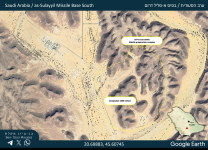
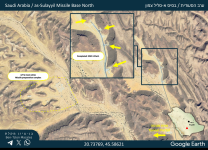
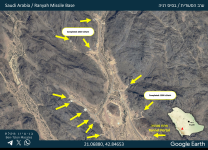
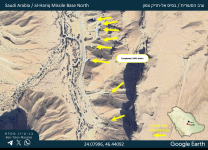
_Arabia_
Trusted Member
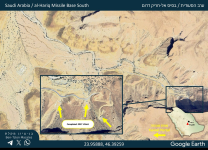
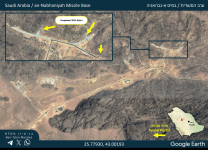
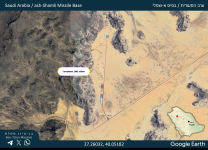
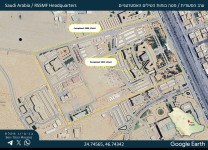
Aside from the mentioned local ballistic missile production, Chinese purchases and cooperation, Pakistani cooperation and past Ukrainian and Brazilian cooperation, there is the ongoing South Korean one.
Saudi Arabia, South Korea, on Hyunmoo cruise missiles
KSASouth KoreaDefense and Security
Saudi Arabia and South Korea have reportedly been involved in working-level discussions concerning a potential Hyunmoo missile package since February 2025.
The discussions followed a visit by program managers from the Defense Acquisition Program Administration (DAPA) and the Agency of Defense Development (ADD), as well as an industrial workshop hosted by SAMI & GAMI.
The note provides an overview of the following aspects:
- The major topics under discussion
- The localization roadmap
- Expected timeline for the deal

Saudi Arabia, South Korea, on Hyunmoo cruise missiles
Insights into the talks between Saudi Arabia and South Korea on Hyunmoo missile package.
 www.tacticalreport.com
The Hyunmoo-5 ballistic and cruise missiles have a reported range of 3.500 km and can carry a 8 ton warhead payload. The range can be extended to over 5500 km using a different warhead under 1 ton.
Most powerful conventional ballistic missile in the world apparently.
Most famous military Youtuber in South Korea (from what I can see) talks about KSA interest:
KSA is interested in the Hyunmoo-3D (3000 km range) and Hyunmoo-5.
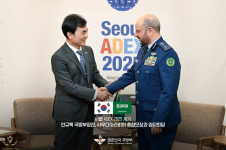
KSA has very close and steadily increasing ties with South Korea.
Last edited:

Zarvan
Elite Member

A very interesting talk featuring retired Major General Prince Faisal bin Jalawi. He talks about the Royal Saudi Arabian Strategic Missile Force but as expected most of it covers what is already publicly known or can easily be deducted. Worth noticing is him saying that what is publicly known is just a tip of the iceberg. Which I have also talked about previously in this thread and this could point to many directions, including nuclear weapons even.
Parts more relevant to the topic:
Egyptian brother talking about the topic based on the recent public Western reports etc.
With help from friends I am pretty sure Saudi Arabia has much bigger Missile Force than they show. I also hope this includes long range cruise missiles.

The SC
INT'L MOD

- Thread starter
- #130
They have at least the Ukrainian one that came with the BM GROM-2With help from friends I am pretty sure Saudi Arabia has much bigger Missile Force than they show. I also hope this includes long range cruise missiles.
And they have showed another one they are working on..
Zarvan
Elite Member
Can you share pictures of both.They have at least the Ukrainian one that came with the BM GROM-2
And they have showed another one they are working on..
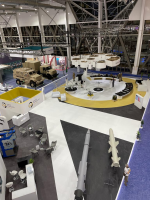
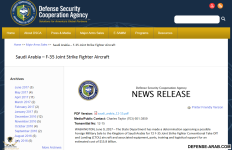
_Arabia_
Trusted Member
KSA and Ukraine cooperation has without any doubt resulted in numerous projects. Most, aside from what has been made public, is classified.Check the last Saudi Arabia military Expo The World Defense Show (WDS), 2024
Science Technology Company:
Multi-task Cruise missile, Tactic o-Balistic TBM missile .. and more
View attachment 165358
"The KSA’s military-technical cooperation with Ukraine has a long history, but most agreements are classified, making reliable public information about the full scope of cooperation scarce. The impetus for intensifying contacts in this area came from the visit by a delegation of the Saudi Defence Ministry to Ukraine in February 2020, during which the two governments signed a Defence Cooperation Agreement. This opened up wide opportunities for Ukraine’s defence industry development and strengthened military-technical cooperation with Saudi Arabia. Such defence collaboration can significantly increase the effectiveness and strength of both countries’ military potential.
This is a part of a very long article from the Ukrainian Prism Foreign Policy Council (as official as it gets outside of the official government).

UKRAINE - SAUDI ARABIA: PARTNERS IN THE PRESENT AND FUTURE - Prism Ua
Ukraine has always paid considerable attention to the development of relations with the Middle East, with the establishment of comprehensive cooperation with the Kingdom of Saudi Arabia playing a central role.
 prismua.org
They talk about military cooperation, research and development cooperation etc.
Ukraine has enormous experience in modern warfare due to the last 4 years of war.
Let us not forget that prior to this war, KSA was one of the leading pioneers in terms of modern warfare.
This modus operandi was adopted by both Ukraine and Russia on a larger scale later.
On this front, KSA is far ahead of most others in terms of actual experience on the ground which cannot be underestimated.
Some parts of the very long article:
Development of Relations between Ukraine and the Kingdom of Saudi Arabia after 1991
Ukraine and Saudi Arabia established official diplomatic relations on 14 April 1993. A significant milestone in their development was the visit of the then Prime Minister of Ukraine, Leonid Kuchma, to the Saudi capital. During this visit, the foreign ministers of the two countries signed the “Protocol on the establishment of diplomatic relations between Ukraine and the Kingdom of Saudi Arabia” at the level of embassies. The Embassy of Ukraine in Riyadh was established in 1996, while the Embassy of the Kingdom of Saudi Arabia in Kyiv opened in 2009, following Riyadh’s increased interest in economic cooperation with Ukraine.
Since the establishment of official contacts, Ukrainian-Saudi relations have developed actively. There has been mutual interest in promoting political dialogue and establishing top-level contacts. Three Ukrainian presidents – Leonid Kuchma in 2003, Petro Poroshenko in 2015 and 2017, and Volodymyr Zelenskyy in 2023 and 2024 – paid official visits to Saudi Arabia. During this period, more than 18 visits were conducted at the level of ministers, deputy ministers, and parliamentary delegations from both sides. These meetings primarily focused on expanding economic ties, particularly in food security and agriculture. Economic partnership has become the main driver of Ukrainian-Saudi relations.
Until 2014-2015, the scale of political and economic cooperation between Ukraine and Saudi Arabia was limited. Ukrainian authorities were mainly interested in relations with the EU and the Russian Federation, while other regions (Africa, the Middle East, Asia, South America) were virtually ignored. Russian aggression has forced Kyiv to pay more attention to greater interaction with countries of the Global South. The mutual interest of Kyiv and Riyadh in more active economic cooperation has helped to accelerate the pace of bilateral relations.
January 2015 can be considered the beginning of the most active phase in bilateral relations between Ukraine and Saudi Arabia. The accession of King Salman bin Abdulaziz Al Saud to power provided impetus for a more active foreign policy of the Kingdom of Saudi Arabia. His son and deputy, later Crown Prince Mohammed bin Salman Al Saud, initiated the process of reforming the country’s domestic and foreign policy. Riyadh intensified its foreign economic activity to find promising areas for investment in different regions of the world, aiming to diversify its economy and reduce dependence on oil exports. As part of this process, Saudi Arabia showed interest in establishing productive cooperation between Eastern Europe and the Middle East. Ukraine’s expertise in agriculture, aircraft design and digitalisation has become a promising investment vector.
Political Relations
Russia’s annexation of Crimea in the spring of 2014 and subsequent hybrid aggression in eastern Ukraine have led to the destruction of Europe’s security architecture. Punishing the aggressor and reclaiming occupied territories became the main goal of Ukraine’s foreign policy. This shift had an impact on Ukraine’s relations with different regions worldwide. Even before 2014, potential Saudi investments, cooperation in the energy and agricultural sectors, and Riyadh’s political influence in the Middle East region had sparked Ukraine’s interest in intensifying bilateral relations. As events following Russia’s full-scale invasion of Ukraine on 24 February 2022 demonstrated, these potentially close economic ties could translate into political support from Saudi Arabia.In the international arena, the Kingdom of Saudi Arabia officially supports Ukraine’s territorial integrity. At the UN General Assembly meeting on 27 March 2014, its representatives voted in favour of the resolution “Territorial integrity of Ukraine”. Riyadh did not recognise the annexation of Crimea or the creation of quasi-state Russian entities in the Donetsk and Luhansk regions. Subsequently, Saudi Arabia voted for all pro-Ukrainian resolutions at UN General Assembly sessions, including calls for the withdrawal of Russian troops from Ukraine and addressing the militarisation of Crimea and the Black Sea.
However, it is worth noting that after 2014, the KSA leadership has not directly condemned Russia’s expansionist actions. This stance aligns with the country’s foreign policy doctrine, which aims to build productive relations with all international actors while remaining neutral in regional conflicts (except for the Middle East).
In 2015, Ukrainian President Petro Poroshenko paid a working visit to Saudi Arabia to express condolences on the death of King Abdullah bin Abdulaziz. During his stay in Riyadh, the Ukrainian leader held talks with King Salman bin Abdulaziz, discussing Russia’s aggression against Ukraine, trade and economic issues, and military-technical cooperation. The Saudi side reaffirmed its commitment to upholding international law, sovereignty, and the inviolability of borders.
On 31 October 2017, President Petro Poroshenko paid his second official visit, during which he discussed strengthening cooperation in political, trade, economic, investment, military-technical and humanitarian spheres. This visit contributed to the intensification of contacts between the parties at various levels in the following years.
Trade and Economic Cooperation
The main areas of cooperation were identified during the official visit of Ukraine’s Minister of Foreign Economy and Trade, Serhiy Osyka, to Saudi Arabia in 1997. Following President Leonid Kuchma’s visit to Saudi Arabia in January 2003, the parties signed a “Framework agreement on trade, economic, scientific, technical, and investment cooperation”. A notable development was the establishment of the intergovernmental Ukrainian-Saudi Commission on Trade, Economic, Scientific and Technical Cooperation, which first met in Jeddah, KSA, in July 2004. The Commission aims to support trade and investment development between Ukraine and Saudi Arabia. As of 2024, six joint meetings have been held, with the last taking place in November 2018. To intensify contacts between the business sectors of both countries, the Ukrainian-Saudi Business Council was established in 2009 following the signing of a Memorandum of Understanding between the Ukrainian Chamber of Commerce and Industry and the Council of Saudi Chambers of Commerce and Industry. The Council serves as an important mechanism for supporting cooperation between the business communities of both countries, creating a platform for effective exchange of ideas and experience, and promoting economic opportunities.Before 2022, Riyadh recognised Ukraine as a promising trading partner with a favourable geographical location for developing trade and economic relations under the Vision 2030 strategy.Cooperation with Kyiv, in particular, is seen as an important component in creating a more diversified and sustainable economy and reducing GDP dependence on oil exports. In this context, special attention is paid to creating new opportunities in both countries and supporting joint projects, such as construction of the An-132 aircraft.
Economic cooperation is central to Saudi-Ukrainian relations. Riyadh sees Ukraine as a promising market for investment in various sectors of the economy, from agriculture to IT. Despite the Russian-Ukrainian war, bilateral trade and economic cooperation between Ukraine and Saudi Arabia has continued, although it has dropped by half compared to pre-war levels.
Observing the trend in trade and economic relations and the structure of trade between Saudi Arabia and Ukraine, we can identify agriculture as the main area of cooperation. Saudi companies maintain a high interest in the Ukrainian agricultural market. The largest contract in the agricultural sector during Ukraine’s independence was the acquisition of the Ukrainian agricultural holding Mriya by the leading Saudi company, Saudi Agricultural and Livestock Investment Co. (SALIC), in September 2018. This deal highlighted Ukraine’s importance for global food security. Saudi business’s active involvement in the Ukrainian agricultural market began in 2013 with the takeover of the British company Continental Farmers Group by SALIC, which is owned by Saudi Arabia’s sovereign wealth fund. The consortium leased about 45,000 hectares of land in Lviv and Ternopil regions, growing wheat, barley, potatoes, oilseeds, and sugar beet. In the year of Mriya Agro Holding’s acquisition, the total land bank of the Saudi company in Ukraine increased to 200,000 hectares. In 2020, Saudi Arabia purchased 60,000 tonnes of wheat from Ukraine through SALIC.
Saudi interest in the Ukrainian agro-industrial complex was evidenced by constant contacts at the ministerial level and Saudi delegations’ regular participation in major agricultural events in Ukraine. Notable initiatives in recent years included the First and Second Ukrainian-Saudi Investment Forums in the agricultural sector, held in Kyiv in 2018 and 2019. These forums aimed to promote mutually beneficial investment and cooperation in agriculture between Ukraine and Saudi Arabia. Representatives from the private sectors of both countries participated, creating favourable conditions for sharing experiences, finding new partners, and developing joint projects.
The two governments signed a Memorandum of Investment Cooperation in Agriculture. Additionally, a Ukrainian-Saudi working group on trade and investment in agriculture was established in 2021. The working group’s aim was to develop practical steps to expand the presence of Ukrainian agricultural products in the Saudi market, attract investment in local agriculture, and use Saudi logistics capacities to promote Ukrainian products to other Gulf countries, the Middle East, and North Africa.
Saudi Arabia has encouraged its private sector to invest in agricultural land abroad, which has helped to ease its wheat specifications and increase grain imports from the Black Sea region. Such cooperation also aligns with the Saudi Green Initiative, launched in 2021 as part of the Vision 2030. In this context, cooperation with Ukraine in the agricultural sector provides additional opportunities to ensure food security and involves the exchange of green technologies between the two countries.
Before the outbreak of the full-scale war, tourism had become one of the most promising areas of bilateral cooperation. Ukraine was one of the 49 countries where Saudi citizens could apply for multiple-entry tourist visas electronically. In 2020, Kyiv and Riyadh liberalised visa arrangements for citizens of the KSA and Ukraine. In 2021, the number of tourists from Saudi Arabia to Ukraine totalled 48,700, ten times more than the total number of Saudi tourists who visited Ukraine in 2019. Among the success factors were the entry of the leading Saudi low-cost airline Flynas into the Ukrainian market and the launch of flights by the Ukrainian airline SkyUp. With the onset of Russia’s full-scale aggression against Ukraine, the number of tourists from the KSA has decreased to a minimum due to security risks.
Military and Technical Cooperation
Saudi Arabia boasts one of the most advanced armies in the Middle East, equipped with cutting-edge weaponry. Due to regional conflicts and terrorist threats in the Middle East, Saudi Arabia is actively modernising its armed forces to ensure the effective protection of its borders and interests. The fight against Islamic extremism and potential threats from Iran and its allies, such as the Houthi groups in Yemen, makes army development a crucial factor in the Kingdom’s policy. Saudi Arabia actively seeks military-technical cooperation with other countries to enhance its defence capabilities and develop its military industry. Consequently, military cooperation with other states, including the supply of military equipment and training programmes, has become a priority for the Saudi leadership.The KSA’s military-technical cooperation with Ukraine has a long history, but most agreements are classified, making reliable public information about the full scope of cooperation scarce. The impetus for intensifying contacts in this area came from the visit by a delegation of the Saudi Defence Ministry to Ukraine in February 2020, during which the two governments signed a Defence Cooperation Agreement.This opened up wide opportunities for Ukraine’s defence industry development and strengthened military-technical cooperation with Saudi Arabia. Such defence collaboration can significantly increase the effectiveness and strength of both countries’ military potential.
Prior to the full-scale Russian invasion, Ukraine considered Saudi Arabia one of its main markets for arms exports and a key defence partner actively purchasing Ukrainian-made weapons. In 2019, the KSA was the second-largest market for arms sales, importing weapons worth USD 57.85 million, up from USD 24.2 million the previous year. In 2018, Saudi Arabia purchased Ukrainian Skif and RK-3 Corsar anti-tank missile systems developed by the Kyiv State Design Bureau Luch. Several hundred Corsar and Stugna ATGMs worth more than USD 165 million, as well as Kozak-5 armoured vehicles, had been delivered by the end of 2021. Additionally, Riyadh showed great interest in the Neptune and Vilkha anti-ship missiles, Skyeton’s Raybird-3 UAVs, and electronic warfare systems.
In 2022, reports emerged that Saudi Arabia, as part of US-mediated aid, returned to Ukraine the Hrim-2 operational-tactical missile system it had previously purchased from Kyiv.
In the 2010s, an agreement was reached between Saudi Arabia and the State Concern Ukroboronprom to establish joint cooperation and arms development, though detailed information on the scope of cooperation is not publicly available. Saudi Arabia’s Vision 2030 development strategy aims to localise half of its military equipment production through agreements with foreign companies. Thus, Ukraine has prospects of becoming one of Riyadh’s key partners in future military industry development. The latest Ukrainian defence industry developments and the Armed Forces’ experience may interest Saudi Arabia, which is already expressing interest in intensifying military-technical cooperation. While arms exports from Ukraine are currently suspended due to domestic needs, military-technical cooperation could be considered one of the most promising areas of bilateral cooperation between Ukraine and Saudi Arabia after the war ends.
Research and Development Cooperation
Significant progress in research and development cooperation was observed in aircraft construction. In 2013, during talks with the Ukrainian government, Prince Turki bin Mohammed Al Saud, who served as president of the King Abdulaziz City for Science and Technology, noted Ukraine’s significant technological potential in the aerospace industry. In spring 2015, Antonov began developing the An-123 project in cooperation with Taqnia Aeronautics, a subsidiary of the Saudi organisation specialising in aviation development and investment. This joint work resulted in the An-132D light transport aircraft, first presented to an international audience at the 52nd Le Bourget International Air Show 2017 near Paris from 19 to 25 June 2017. The An-132D was equipped with a number of components from Western companies after the Antonov company stopped cooperation with Russia, including Pratt & Whitney Canada PW150A engines, propellers from Dowty Propellers, and subsystems from manufacturers such as Honeywell, Liebherr, and Crouzet. Cooperation between Ukraine and Saudi Arabia on this project concluded in 2021. According to Serhii Bychkov, CEO of Antonov, the project was suspended due to “tactical mistakes in the An-123 design and the beginning of lobbying for Airbus’s interests in the Saudi government”. However, Antonov’s CEO mentioned the possibility of resuming such cooperation in the future. The prospects for Ukrainian-Saudi relations in the aircraft industry remain fairly high, primarily in light transport aircraft design and component production.In recent years, cooperation between Ukraine and Saudi Arabia in the IT sector has been developing rapidly. Saudi Arabia’s Vision 2030 development strategy sets an ambitious goal to transform the country’s economy, moving away from oil dependence to a more sustainable, diverse, knowledge-based economy. Economic diversification is central to this strategy, with the IT sector playing a key role in achieving this goal. The Saudi Data and Artificial Intelligence Authority (SDAIA), founded in 2019, is the key government organisation promoting the development and use of artificial intelligence and data analytics technologies in Saudi Arabia. The country has achieved high levels of internet usage and basic IT skills among its population, with Riyadh committed to digital transformation across various areas, from government services to manufacturing.
Ukraine, with its talented personnel and IT companies, has gradually begun exploring the Saudi market. P2H INC, an American IT company with Ukrainian roots that has been operating in the IT market for about 18 years, was one of the pioneers. Its specialists have been converting web page designs in HTML and CSS for ten years and have been actively working on the digital transformation of government agencies, especially in e-government, for the past seven years. In early 2024, P2H INC opened its own office in Saudi Arabia, increasing its involvement in the Middle Eastern country’s digitalisation. This Ukrainian-managed company has achieved significant success in the Saudi IT market, becoming an example of successful cooperation between Ukrainian and Saudi Arabian businesses. Intellias is another successful case of a Ukrainian IT company operating in the KSA, actively cooperating with private businesses in the Saudi Kingdom.
The space industry has become an important element in achieving the goals of the Vision 2030 development strategy. At the end of 2018, the Saudi Space Commission (SSC) was established under the leadership of Prince Sultan bin Salman Al Saud, the country’s first astronaut, to promote space exploration and create a favourable environment for business opportunities in the space industry. In 2011, Riyadh signed an agreement with the Ukrainian government on cooperation in the peaceful exploration and use of outer space, which was intended to open up new opportunities for both sides in the exploration and commercialisation of outer space. However, over the past three years, cooperation in this area has remained virtually frozen.
Given Ukraine’s strong scientific base in space research, further cooperation between the two countries could also include the joint production of artificial satellite systems. The two sides already have a track record of successful cooperation in several aerospace projects, such as a research sounding rocket, a medium-sized satellite launcher, and an anti-aircraft missile. Despite Russian aggression, Ukraine is making progress in rocketry (Hrim-2), which may be an argument for Saudi leaders to intensify cooperation with the Ukrainian side in this area.
UKRAINE - SAUDI ARABIA: PARTNERS IN THE PRESENT AND FUTURE - Prism Ua
Ukraine has always paid considerable attention to the development of relations with the Middle East, with the establishment of comprehensive cooperation with the Kingdom of Saudi Arabia playing a central role.
prismua.org
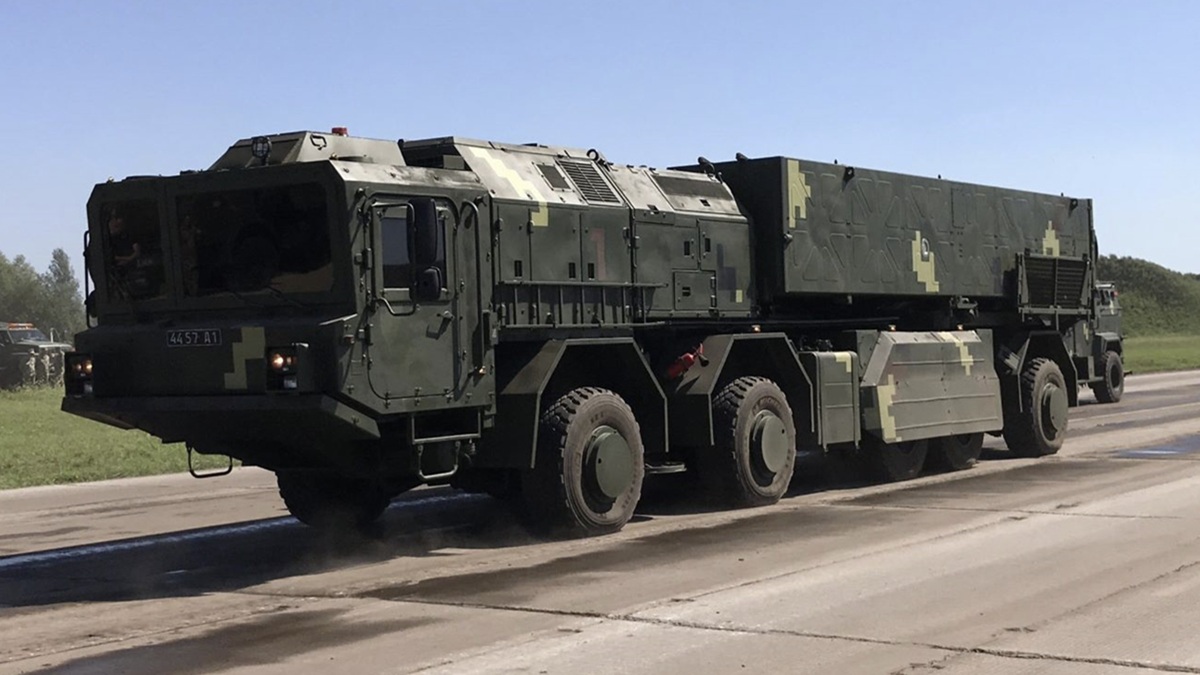
Weapons of Ukraine’s Victory: 1KR1 “Sapsan” Operational-Tactical Missile System - Root-Nation.com
Finally, the 1KR1 Sapsan operational-tactical missile complex (OTRK) has entered serial production and “system application.”
 root-nation.com
You can add the already well-known missile cooperation with China, Pakistan and now South Korea. Would not be surprised if there were other partners as well, past and present. Turkey could be another one.
Unfortunately for KSA this sector of the military is extremely secretive so we will likely never know the full scale or all the details but given KSA's resources, how long this has been going on (since at least the 1980's with China), much earlier if you include the early Arab cooperation on this front (1950's already), political will, human capital, money, geopolitical necessity etc.
Also with all this the Saudi Arabian nuclear program (in my view likely nukes) is also directly tied making it an even more secretive field. Most interesting field in the KSA military aside from ongoing local military production domestication and general STEM advancement across the board.
@Zarvan
The SC
INT'L MOD
- Thread starter
- #135
@_Arabia_
Actually I remember during that visit of the Saudi delegation to Ukraine that the latter offered its most sensitive air, land, naval and space related systems to KSA..they were all based on Soviet technologies that Saudi Arabia is now developing with western tech on its own to make them more potent Military systems..
Actually I remember during that visit of the Saudi delegation to Ukraine that the latter offered its most sensitive air, land, naval and space related systems to KSA..they were all based on Soviet technologies that Saudi Arabia is now developing with western tech on its own to make them more potent Military systems..
Users who are viewing this thread
Total: 1 (members: 0, guests: 1)
Pakistan Defence Latest
-

-
 Federal cabinet gives nod to imposition of emergency in KP; summary sent to president (22 Viewers)
- Latest: flyingorca
-

-

-

Country Watch Latest


Latest Posts
-
-
Federal cabinet gives nod to imposition of emergency in KP; summary sent to president (22 Viewers)
- Latest: flyingorca
-

-
-