Russia civil aviation thread

First flight of the new Il-114-300 airliner.


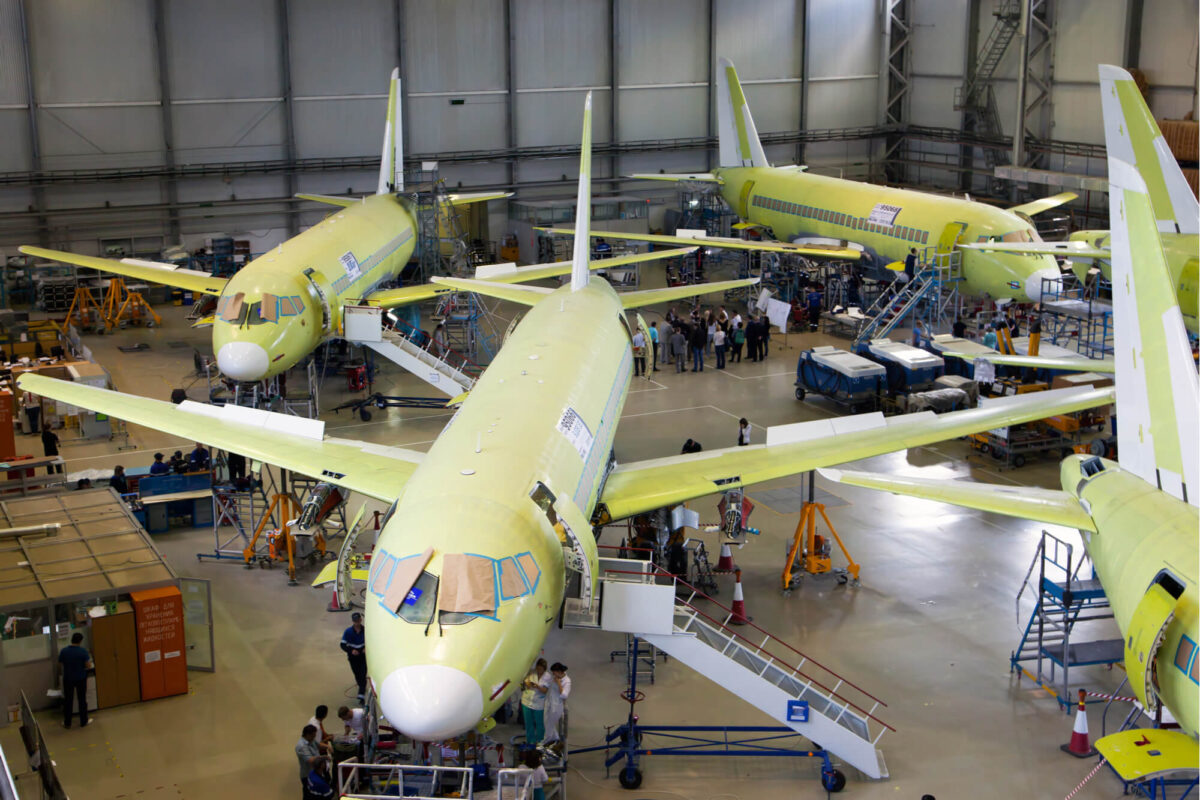
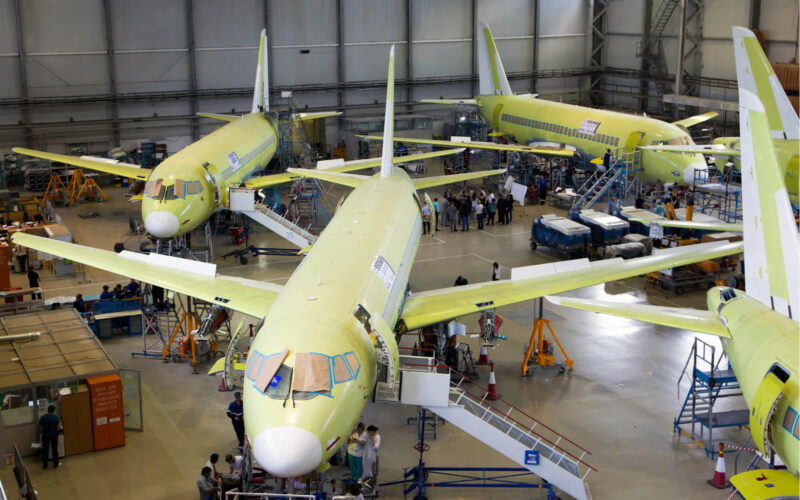
A Look INSIDE The Irkut MC-21 Aircraft Assembly Line​


Russian-made airliners to be rebranded as ‘Yakovlev’​

BYMIQUEL ROS
2024-05-17
2 MINUTE READ
1 COMMENT
superjet_assembly_line-800x500.jpg
Skycolors / Shutterstock


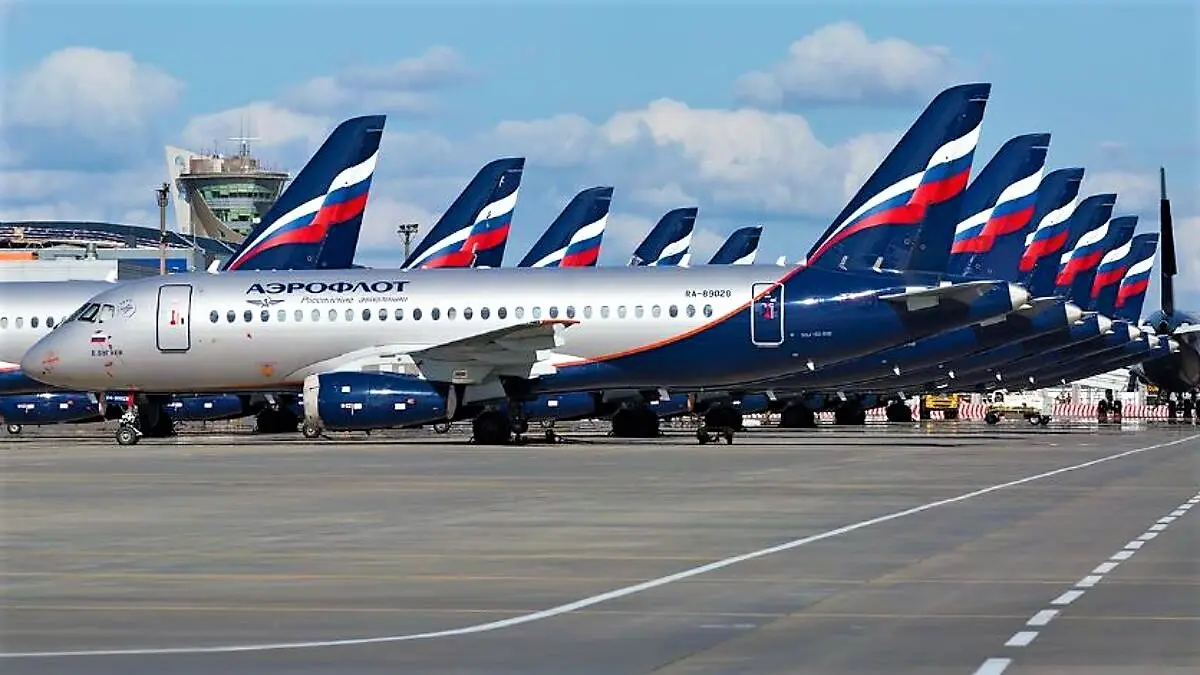
Russian-made commercial aircraft, such as the Superjet SJ-100 regional jet and MC-21 single-aisle mid-sized airliner may soon be getting a new brand name.
In an interview with Russian financial news outlet RBK, Sergey Chemezov, the head of state-owned aerospace, engineering and defence conglomerate Rostec, said that the historical brand ‘Yakovlev’ is to be revived for the whole family of Russian-made airliners.
The renaming of Russian-made airliners has already been under discussion for a number of years, and Rostec renaming its commercial aircraft-making subsidiary Irkut as ‘Yakovlev’ in July 2023 already pointed in this direction.

Founded in the 1930s and currently under Rostec’s umbrella, Yakovlev is one of the ‘Design Bureaus’ active during the Soviet era, alongside other well-known names in the aerospace industry such as Tupolev or Ilyushin. The Yakovlev Design Bureau has continued to produce (mostly military) aircraft until the present day, with the Yak-130, an advanced trainer and light attack aircraft, being one of its latest products. Within the commercial aviation space, the Yak-42, a tri-engined jet for up to 120 passengers launched in the late 1970s, was the last serially produced Yakovlev airliner.
In the same interview, Chemezov also said that he anticipated the shift away from Western-made aircraft by Russian airlines should become more noticeable by 2030, as it becomes increasingly difficult to service the existing fleet. He claimed that Rostec is gearing up to fill the gap with domestically produced aircraft types.
In this regard, Chemezov confirmed the supply of 11 Tu-214 aircraft to Aeroflot. Rostec is currently working on the requirement from the Russian airline to reduce the number of pilots from three to two.
 

Serial Production Deliveries of Russian MS-21-310 Airliner to Start in 2025 and SSJ-New in 2026​

Released on Saturday, May 18, 2024


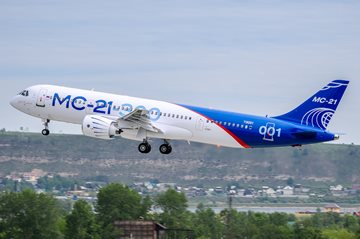
The first nine MC-21 aircraft will be delivered in 2025, the government order says.


“The program for the creation of MS-21 aircraft provides for the delivery of 72 units per year from 2029 with the start of deliveries of the first nine aircraft in 2025,” the document says.


The order notes that from 2026, the delivery of SSJ-New will begin in the amount of 20 units per year. A large volume of deliveries of small-sized aircraft “Baikal”, “Ladoga” and “Osvey” is also envisaged.


In total, Russian air carriers, taking into account the successful import substitution program, should receive 990 civil aircraft from 2024 to 2030. Of these, 142 are SSJ-New aircraft, 105 are TVRS-44, 270 are MS-21-310, 12 are Il-96-300, 51 are Il-114-300, 113 are Tu-214.


At the end of February, Rostec announced the postponement of delivery dates for SSJ New aircraft to 2026 and MC-21 to 2025-2026 .


Source: The first nine MS-21 aircraft will be delivered in 2025
 

mc-21-tail-tsagi-test-820x410.jpg

TsAGI tested the strength of the MS-21 aircraft keel made of Russian composites​

15.05.2024, 08:04
Photo by © TsAGI Press Service
One of the key stages in achieving autonomy in the production of MS-21 was the task of import substitution of units and systems for this aircraft. The creation of own composite materials for the wing and plumage of the aircraft was a key point after 2018. This work was one of the most complex and required significant investments in scientific and production development. Thanks to the efforts of domestic research centres, Rosatom State Corporation and industrial enterprises, the production of carbon fibres and bonding resins in Russia was launched.
In April of the current year in the Central Aerohydrodynamic Institute (TsAGI) named after Professor N.E. Zhukovsky the static tests of the MS-21 keel made of Russian technologies and domestic polymer composite materials were completed. The customer of the work was the company PJSC Yakovlev. To organise the tests TsAGI specialists designed and manufactured a stand including mechanical and hydraulic loading systems, automated control system, data collection and processing. In the course of the research the static strength of the keel was confirmed.
At the first stage of the research, TsAGI scientists conducted an initial cycle of life tests, during which 10,000 flights were simulated. The keel withstood them without damage. Next, static strength tests were carried out, during which the keel was subjected to two cases of loading: up to the operational level and at loads 1.5 times higher than the calculated ones. The stress state and deformations of the structure under external influences were determined. The obtained results fully confirmed all the design parameters.
During the experiments, the resource loads corresponded to the operational loads, those that affect the aircraft in normal flight. Static loads were applied in accordance with the maximum design loads. Such loads are not experienced by the aircraft in reality, but it must withstand them. If the unit under study fails to cope with such loading during research, its design is further developed in order to strengthen it.
“As for the MS-21 keel made of domestic composites, it has successfully passed all the strength tests,” noted Viktor Tsygankov, deputy head of the static and thermal strength department for the experiment of FAU “TsAGI”.
The results of the tests will be submitted to PJSC Yakovlev to prepare a certification opinion on the strength of the MS-21 keel. The next stage will include static tests of the stabiliser made of Russian materials, as well as import-substituted floors, doors, gangways, windshields and porthole windows of the aircraft’s passenger cabin.
 

Aeroflot reportedly negotiating to switch fleet order entirely to MC-21​

By David Kaminski-Morrow10 June 2024
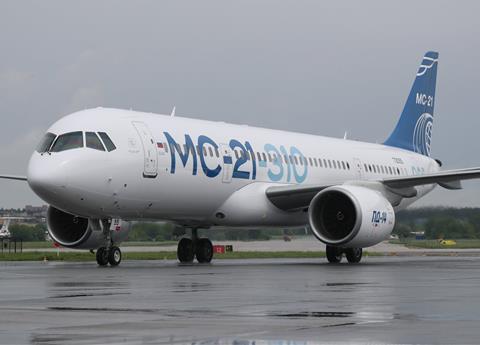
Russian media are widely reporting that Aeroflot is restructuring its fleet-modernisation agreement with United Aircraft in favour of additional Yakovlev MC-21s.
Aeroflot Group signed for 339 aircraft nearly two years ago, comprising 210 MC-21s and 89 of the domestically-revamped SJ-100, plus 40 Tupolev Tu-214s.
But chief executive Sergei Aleksandrovsky is cited as having told broadcaster Rossiya 24 that the operator was negotiating a “complete transfer of the entire fleet” to MC-21s – suggesting the other two types would be dropped.
Speaking to the channel during the St Petersburg International Economic Forum, Aleksandrovsky indicated that the rethink is due to delivery schedules “moving to the right”.
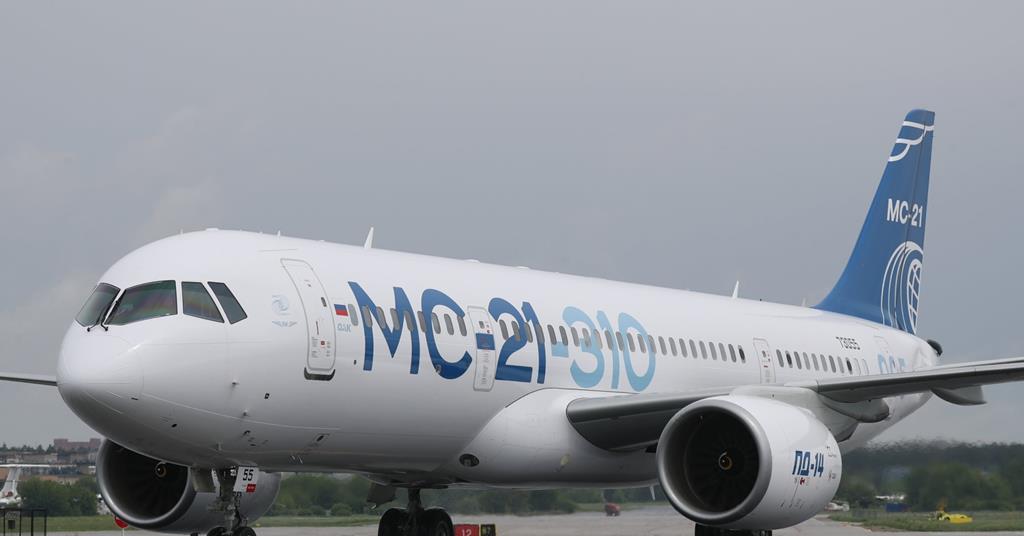
MC-21-310-c-Yakovlev

Source: Yakovlev
Aeroflot’s previous agreement for 339 aircraft had already featured 210 MC-21s
Several civil aircraft programmes are facing delays and the Russian government recently revised downwards its expectations on production by the end of the decade.
ADVERT

This revision listed the initial deliveries of MC-21s taking place in 2025 and those of SJ-100s in 2026. Tu-214 production would also begin ramping-up over this two-year period.
Aleksandrovsky reportedly said that Aeroflot would take the MC-21 in two variants, including a shrunk version which, while previously planned, has yet to be developed.
United Aircraft is currently certifying the MC-21-310 variant, powered by Aviadvigatel PD-14 engines. The shrunk variant of the MC-21 is provisionally named the MC-21-200.
Neither United Aircraft nor Russian state technology firm Rostec responded to requests for comment, according to the Russian media reports.
 
@Viet

I'm digging this plane. It probably share a lot of commonality with COMAC's C919.

MC-21: Inside Russia's Quest to Build Its Own Boeing-737​


Russia's NEW MC-21 Will Change The Aviation Industry! Here's Why​


Users who are viewing this thread

Back
Top