Navigation
Install the app
How to install the app on iOS
Follow along with the video below to see how to install our site as a web app on your home screen.
Note: This feature may not be available in some browsers.
More options
Style variation
You are using an out of date browser. It may not display this or other websites correctly.
You should upgrade or use an alternative browser.
You should upgrade or use an alternative browser.
Russia, Iran, And India Are Creating A Third Pole Of Influence In International Relations
- Thread starter ST1976
- Start date
More options
Who Replied?


- Thread starter
- #78
From what I've read, it's all about Russia and Iran.
It has nothing to do with India.
India is the heart of this grouping, leading Russia and Iran both.
It's the India who helped form NAM, the Non Aligned Movement , and it's a measure that India helped SU more in Cold War, as compared to the help we received from Soviet

- Thread starter
- #79
Pakistan is politically unstable.
It has missed many economic opportunities.
If Pakistan fails to address this issue, it will likely remain poor forever.
Pakistan is considered no poor, it would be somewhere near India

Pakistan is considered in second pole of world with China leadership, and it would be welcomed
- Thread starter
- #80
@muhammed45Russia, Iran, And India Are Creating A Third Pole Of Influence In International Relations
View attachment 88342
The success of this project will help the world make progress in moving past the present bi-multipolar intermediary phase of the global systemic transition and correspondingly create more opportunities for other countries to strengthen their strategic autonomy in the New Cold War.
Russian Transportation Minister Valery Savelyev just recognized the vital role that Iran plays for his country’s logistics nowadays through the North-South Transport Corridor (NSTC). According to him, the US-led West’s unprecedented sanctions that were imposed in response to Russia’s ongoing special military operation in Ukraine “have practically broken all the logistics in our country. And we are forced to look for new logistics corridors.” The primary one that his country is prioritizing is the NSTC through Iran, pointing out that three Caspian Sea ports already serve as trade conduits with the Islamic Republic while also acknowledging that there’s still a lot of work to be done on overland connectivity.
It was already predicted shortly after the onset of Russia’s special operation that Iran would become so much more important to Russia. This is because the NSTC functions as a trans-civilizational integration corridor connecting Russia’s historically Christian civilization, Iran’s Islamic one, and India’s Hindu civilization, not to mention the others such as those in Africa and Southeast Asia that can indirectly be linked to Russia via that route. It’s an irreplaceable valve from the US-led West’s economic and financial pressure that’s created such logistical difficulties for Russia in recent months, especially since it connects to India, which has defied Western pressure by continuing to practice its policy of principled neutrality.
Without Iran’s leading participation in the NSTC, Russia would be cut off from its indispensable Indian partners whose decisive intervention preemptively averted its potentially disproportionate dependence on China in the future. This outcome in turn helped the world make progress in moving past the present bi-multipolar intermediary phase of the global systemic transition to multipolarity that’s seen International Relations largely shaped by the competition between the American and Chinese superpowers. It’s now becoming increasingly possible to speak of a third pole of influence represented by the grand strategic convergence between Russia, Iran, and India.
It’s not officially acknowledged by their diplomats in order to avoid the American and/or Chinese superpowers misunderstanding their civilization-states’ intentions, but all three are informally trying to assemble a new Non-Aligned Movement (“Neo-NAM”). They hope to serve as equal centers of gravity within the third pole of influence that they hope to create for moving International Relations past its present bi-multipolar intermediary phase and towards a system of “tripolarity” that they expect to inevitably facilitate the emergence of complex multipolarity. The purpose behind doing so is to maximize their respective strategic autonomy within the New Cold War vis a vis the two superpowers.
The international implications of their plan succeeding would literally be game-changing, which explains why efforts are actively underway to stop them. These have taken the form of the Associated Press leading the US-led Western Mainstream Media’s (MSM) infowar campaign against the Russian-Iranian Strategic Partnership while other outlets are waging a complementary one against the Russian-Indian Strategic Partnership. Both have failed since their leaderships are inspired by their shared multipolar conservative-sovereigntist (MCS) worldview to stay the course despite considerable pressure after their strategists presumably assured them that it’ll all be worth it in the end as long as they remain patient.
This stands in contrast to their Pakistani neighbor, which compellingly appears to be in the process of recalibrating its grand strategy and associated envisioned role in the global systemic transition following its scandalous change in government. The mixed signals that its new authorities have sent towards Russia in parallel with their enthusiastic outreach towards the US very strongly suggest that the MCS worldview previously embraced by former Prime Minister Khan is being gradually replaced to an uncertain extent by the Western-friendly unipolar liberal-globalist (ULG) one. This complicates multipolar processes in South Asia and risks isolating Pakistan from them in the worst-case scenario.
Nevertheless, Pakistan doesn’t have any intention of interfering with the NSTC even if it were to enter into a full-fledged and extremely rapid rapprochement with the US. This observation means that the grand strategic convergence between Russia, Iran, and India will continue, with those last two becoming even more important to Moscow than ever as valves from Western pressure and reliable alternatives to preemptively avert any potentially disproportionate dependence on China. Pakistan was supposed to play a complementary role in Russia’s Greater Eurasian Partnership (GEP) by also serving to balance Moscow’s growing reliance on Tehran and New Delhi, but this appears unlikely in light of recent events.
With relations practically frozen on the energy front that was envisioned as laying the basis of their hoped-for strategic partnership, there’s little chance that Russia will ever consider Pakistan to be more important to its “Ummah Pivot” than Iran is quickly becoming unless these issues are urgently resolved. In all likelihood, they probably won’t be, and this dismal prediction is due to the educated conjecture that Pakistan’s new authorities consider slowing the pace of their rapprochement with Russia to be an “acceptable unilateral concession” in exchange for continuing talks on improving ties with the US, which is their new foreign policy priority.
Even though baby steps were recently seen in restoring their relations, new Foreign Minister Bhutto’s interview with the Associated Press during his inaugural trip to America to attend a UN event and meet one-on-one with Blinken cast doubt upon Islamabad’s interest in resuming energy talks with Russia. According to the outlet, he revealed that “his focus in talks with Blinken was on increasing trade, particularly in agriculture, information technology and energy.” This suggests that America is trying to “poach” Russia’s reported deal with Pakistan for providing it with food and fuel at a 30% discount, perhaps even offering less of a discount – if any at all – as a “necessary cost” for improving ties.
The predictable outcome of Pakistan deciding not to resume energy talks with Russia is that Iran and India’s importance for Russian grand strategy will continue growing without being kept in check by the Pakistani balancing factor that Moscow had previously taken for granted. That won’t be a problem unless they politicize their role as valves from Western pressure, which they’re reluctant to do anyhow since that would risk undermining their shared MCS interests in the global systemic transition through the Neo-NAM. Nevertheless, it’s still important to point out that the practical removal of Pakistan’s balancing influence in this paradigm increases Russia’s dependence on Iran and India.
With or without Russian-Pakistani relations becoming strategic like Moscow hoped would happen and consequently helping to balance its envisioned Neo-NAM, there’s little doubt that the axis that Russia is assembling with Iran and India will continue strengthening as these three jointly pursue the creation of a third pole of influence in International Relations. The success of this project will help the world make progress in moving past the present bi-multipolar intermediary phase of the global systemic transition and correspondingly create more opportunities for other countries to strengthen their strategic autonomy in the New Cold War.
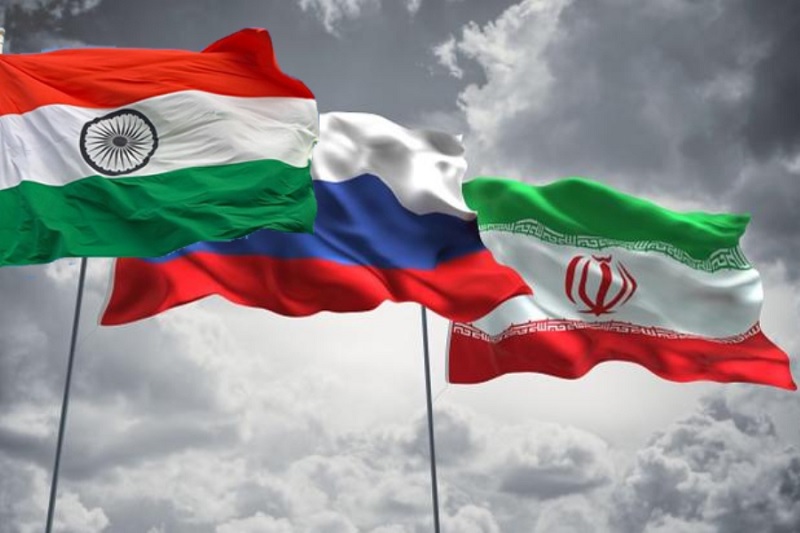
Russia, Iran, And India Are Creating A Third Pole Of Influence In International Relations - TheAltWorld
The success of this project will help the world make progress in moving past the present bi-multipolar intermediary phase of the global systemic transitionthealtworld.com
@Persian Gulf
Good day Iranian bros and sis.
What would be the current progress of this third pole?
The first two poles are said to be the Washington and Beijing. The Pakistan fall with Beijing side
- Thread starter
- #81
@Persian Gulf
@muhammed45
India-Iran Military Cooperation: Analysing Iranian Defence Minister’s Visit to India
The Indian foreign policy has undergone significant changes in approach and directions under Prime Minister Modi – from non alignment to multi-alignment with strategic autonomy. The regional outreach through its “Neighbourhood First” and “Extended Neighbourhood” policies are pathways designed for India’s global footprints. In its pursuit of the shaper of the global landscape, security has assumed greater salience with a strategic focus on military and defence cooperation. India’s Iran policy at present with its civilizational and cultural linkages epitomises India’s new vision and pursuit in the region and beyond. Iran assumes utmost importance in India’s Afghan policy, Central Asian Vision, Continental Security and Maritime Security. There is strong synergy in these geopolitical and security vision of the two Indian Ocean Rim countries. The visit of the Iranian Defence Minister now is a crucial reminder of this natural milieu as well as the necessity of cooperation in the military and defence arena for security and stability of the shared region.
The vision of strategic cooperation set by the “Tehran Declaration”, 2001 during the Iran visit of Prime Minister, Atal Bihari Vajpayee was strengthened by the “Delhi Declaration” during the visit of President Khatami in 2003 and agreement for the development of Chabahar port by India. The trajectory of cooperation was boosted tremendously in 2016 with the visit of PM Modi and the signing of the Tripartite Treaty’ on Chabahar trade and transit hub by India, Iran and Afghanistan, an endorsement of mutuality of geopolitical and geostrategic interests and shared vision of security and prosperity. The visit and of talk of defence cooperation signifies the strategic relationship based on multiple shared interests political, economic and security with credible military cooperation component.
The stop-over by our Defence Minister, Rajnath Singh and External Affairs Minister, Dr. S Jaishanker in Tehran on the way to Moscow for Shanghai Cooperation Organization (SCO) meet in September 2020 manifests deeper geopolitical and security interests of the two countries. This becomes apparent in the words of Shree Rajnath Singh that “We discussed regional issues including Afghanistan and the issues of bilateral cooperation.” In his address to SCO in Moscow, he added that “We are deeply concerned about the situation in the Persian Gulf.”
India Ocean maritime security has assumed enhanced strategic salience in recent years. India’s “SAGAR Doctrine” pushes the multilateral approach for maritime security, shared growth, connectivity and capacity building. In this background, the India Ocean Region defence minister meet in New Delhi is an initiative to promote a multilateral institutional framework of the rim countries for creating a cooperative vision and environment for security, stability and shared prosperity in the region. India with 7500 km coastline is set to assume an active role for a peaceful and prosperous Indian Ocean regime projecting as a credible security partner, security provider and market for Indian-made defence hardware.
Iran is also one of the largest countries on the Indian Ocean rim and has played a significant role in the northern part of the Ocean. With its consistent maritime strategy, naval drills and activities, Iran is a capable actor against its potential threats in the region and plays a vital role in establishing the safety and security of overseas trade routes in the region. The visiting Iranian defence minister remarked about the shared role and vision of maritime security that “Tehran and New Delhi have cultural and historical commonalities, common approaches towards many regional and international issues and geographical capacity, particularly in the India Ocean.” He further added that “These capacities can play a significant role in expanding the two country’s relations, particularly in the defence and military sectors.”
The visiting Iranian Air Force commander, Amir Aziz Nasirzadeh said in Bengaluru that Iran Air Force has made steady headways in the advanced Unmanned Ariel Vehicle (UAVs) with cutting-edge nanotechnology and artificial intelligence.
While the Defence Minister, Hatami remarked that Iran’s aviation industries have produced numerous light fighters and training fighters and working towards further upgradation and variation in consonance with diverse security requirements. In a complementing note, the Iranian Defence Minister said “Aero India illustrates that India has embarked on a serious and technological move in the field of the aviation industry and is using its capabilities and those of its private sector to make significant progress.” These are sure points of emerging convergence of security perception and strategy of the two countries in the region.Besides, Iran assumes a vital position in Indian strategic thinking and calculus in respect of its Afghan policy and Central Asian vision and to bypass Pakistan with Chabahar port complex, strategic hub for connectivity to Afghanistan and vital for its’s continental security. The ‘Fatemiyon Brigade’ ensures Iran a sustainably formidable position in Afghanistan. The Taliban diplomatic office in Doha provides an accessible contact point for Iran with the Taliban, it shares the common goal of US and allies leaving Afghanistan. Thus impending post-US Afghanistan, the geopolitical situation makes Iran a factor of strategic salience for India for its policy in the inexorable Afghan conflict complex.
After US withdrawal from JCPOA in 2018, Iran pursues a focused ‘Look East’ approach to developing a credible multilateral security framework with ‘Eastern Powers’ to ensure its security in the face of Arab-Israel regional rivalry with US backing. Iran convened a kind of ‘Regional Security Initiative’ on 26th September 2018 mainly focusing on joint strategy on terrorism mainly in Afghanistan and Central Asia in which India was represented by its National Security Advisor. A joint naval exercise of Iran and Russia has begun in the northern Indian Ocean with the slogan of ‘security of maritime commerce’ on 16th February 2021. The Iranian Navy Commander, Hossein Khanzadi told that India will also join the exercise and the intent of the exercise is “maritime security” and “collective security” in the region.
In the wake of a prospective Biden administration deal with Iran, the sustained and growing cooperation with Iran will spur Indian position in the Iranian ‘Look East’ strategy. The US engagement with Iran by resuming JCPOA with or without new terms and additions is a geopolitical imperative to halt increasing Russian and Chinese influence which has become a critical survival option for Iran. In that broader framework, there is a deeper anxiousness in the US and among its European allies to engage with Iran and integrate its economy for trade, investment and bring it into the loop of western technology sphere to stem the expansion of China in that country and wider region pushing back western presence and interests.
In this complex region, Iran stands out as a peerless partner with its huge population, vast and varied resources, military power and indigenous technological prowess. The historical root of India-Iran relations makes the contemporary geopolitical commonality and shared maritime security imperative of the Indian Ocean mutually crucial and vital for their respective national interests and regional security. This deeper strategic mutuality makes it imperative for both to survive the regional rivalry syndrome to serve their mutually complementary and reinforcing national requites. The emerging ‘strategic autonomy’ in Indian foreign policy will hopefully ensure sustained engagement. Thus the visit of the Iranian Defence Minister has surely activated this subdued synergy of interest and can be a turning point for strategic military cooperation between the two countries as powerful guardians of the Indian Ocean region in the changing geopolitical landscape of the emerging world order.

India-Iran Military Cooperation: Analysing Iranian Defence Minister’s Visit to India
The Indian foreign policy has undergone significant changes in approach and directions under Prime Minister Modi - from non alignment to multi-alignment with strategic autonomy. The regional outreach
 diplomatist.com
- Thread starter
- #82
MiG-35 is a piece of junk compared to the Rafale. Russia is inferior in semiconductor technology. There is no way to get around that
We find the Rafale is "failed".

And, we are more happy with 200+ Mig29+ number in Indian Airforce. We don't need Mig35

We have credible infrastructure of Mig29+, good 30years+ training, as compared to this new Rafale

- Thread starter
- #83
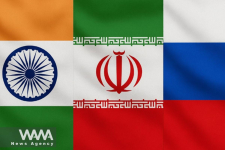
Iran, Russia, and India's military cooperation involves joint exercises (like SCO's "Sahand 2025," Zapad drills), defense tech collaboration (Russia-India), and shared strategic goals against Western influence, with Iran integrating into the Russia-China bloc, India deepening its India-Russia defence ties (co-production), and Iran leveraging partnerships for regional security against US-backed rivals, signaling a shifting non-Western military-strategic alignment.
Key Aspects of Cooperation
- India-Russia: A deep-rooted partnership focusing on joint R&D, co-production, and military exercises (INDRA).
- Russia-Iran: Strengthening ties, especially post-Ukraine war, focusing on drone/missile tech, fighter jets (Su-35), and S-400 systems, alongside energy projects.
- India-Iran: Cooperation primarily within SCO frameworks, with India participating in drills hosted by Iran alongside Russia and China, showing alignment in counter-terrorism and regional stability.
Recent Developments (2025)
- SCO "Sahand 2025" Drill: Iran hosted this major SCO military exercise, involving India, Russia, China, and others, signaling Tehran's deep integration with Beijing-Moscow's regional strategy.
- Zapad Drills: India and Iran joined Russia and Belarus in large-scale Zapad exercises, demonstrating collaboration in a non-Western bloc.
- India-Russia Defence Talks: Continued focus on "Make in India" with Russian tech transfer and joint ventures for advanced defence systems.
Strategic Context
- Multipolar World: All three nations seek to build a non-Western, multipolar security architecture, especially in Asia and the Middle East.
- Countering Western Influence: This cooperation provides alternatives to Western-led security formats, with Iran seeking regional integration with "Eastern Powers" after US withdrawal from the JCPOA.
- Regional Security: Joint drills and initiatives aim to enhance maritime security (Indian Ocean) and counter terrorism, particularly in Central Asia and Afghanistan.

东风夜放花千树
Registered Member

Moreover, foreign policy changes very rapidly.That is right in the American face. So much effort put into transforming India into a US stooge. Yet India chooses its own path.
I was wrong. India has an independent policy. India doesn't apply non-alignment policy. India picks and chooses as per its interest.
- Thread starter
- #85
Moreover, foreign policy changes very rapidly.
We recently saw heavy trade ban on Russian 'Federation' as they failed to change the Father of all the 'Federations' of SU/ The Mig29s countries, the meaning of the Moscow's states since Cold War
And by recent trade bans/sanctions', they further 'distant' these Orthodox nations of Soviet
Hence, the Foreign Policy of these Cold War Allies looks like more strong by 'sanctions' on Moscow

Pakistanithinktank
Registered Member


View attachment 166284
Iran, Russia, and India's military cooperation involves joint exercises (like SCO's "Sahand 2025," Zapad drills), defense tech collaboration (Russia-India), and shared strategic goals against Western influence, with Iran integrating into the Russia-China bloc, India deepening its India-Russia defence ties (co-production), and Iran leveraging partnerships for regional security against US-backed rivals, signaling a shifting non-Western military-strategic alignment.
Key Aspects of Cooperation
- India-Russia: A deep-rooted partnership focusing on joint R&D, co-production, and military exercises (INDRA).
- Russia-Iran: Strengthening ties, especially post-Ukraine war, focusing on drone/missile tech, fighter jets (Su-35), and S-400 systems, alongside energy projects.
- India-Iran: Cooperation primarily within SCO frameworks, with India participating in drills hosted by Iran alongside Russia and China, showing alignment in counter-terrorism and regional stability.
Recent Developments (2025)
- SCO "Sahand 2025" Drill: Iran hosted this major SCO military exercise, involving India, Russia, China, and others, signaling Tehran's deep integration with Beijing-Moscow's regional strategy.
- Zapad Drills: India and Iran joined Russia and Belarus in large-scale Zapad exercises, demonstrating collaboration in a non-Western bloc.
- India-Russia Defence Talks: Continued focus on "Make in India" with Russian tech transfer and joint ventures for advanced defence systems.
Strategic Context
In essence, while India maintains its core Russia defence ties and Iran strengthens its pact with Russia/China, India's participation in Iran-hosted SCO drills highlights a growing convergence in military-strategic outlooks among these key non-Western powers, pushing for greater regional autonomy.
- Multipolar World: All three nations seek to build a non-Western, multipolar security architecture, especially in Asia and the Middle East.
- Countering Western Influence: This cooperation provides alternatives to Western-led security formats, with Iran seeking regional integration with "Eastern Powers" after US withdrawal from the JCPOA.
- Regional Security: Joint drills and initiatives aim to enhance maritime security (Indian Ocean) and counter terrorism, particularly in Central Asia and Afghanistan.
Read my post about Russia depending on China for technology. In coming years, Russia will become more dependent on China for technology and support.
If Russia doesn’t increate its development budget, Russian technology will become obsolete in next 20 years.
India wants Russians fourth generation technology while China is moving towards 6th generation?
- Thread starter
- #87
@Hamartia AntidoteRead my post about Russia depending on China for technology. In coming years, Russia will become more dependent on China for technology and support.
If Russia doesn’t increate its development budget, Russian technology will become obsolete in next 20 years.
India wants Russians fourth generation technology while China is moving towards 6th generation?
@Viet
@Oscar
@Yommie
We have news that the World is about to move back to around 1980's Cold War time Industries.
The policy of US/West to shift the High Energy Consuming works to cheaper Humanity/cheaper labour cost countries of Asia, since early 80s, is about to be changed, or already.
We now have hope to see the Pakistan's per capita income above China-India, as how it was since independence to 1991 economic reforms of South Asian States


Raj-Hindustani
Elite Member
Based on what you have assumed it?Read my post about Russia depending on China for technology. In coming years, Russia will become more dependent on China for technology and support.
If Russia doesn’t increate its development budget, Russian technology will become obsolete in next 20 years.
India wants Russians fourth generation technology while China is moving towards 6th generation?
- Thread starter
- #89
here its worth stating: -
we find India-Russia-Iran combined power increased consistently since 1990. India-Russia combined are "self-sufficient" with themselves for a wide range of Industries since Cold War time.
Delhi-Moscow-Tehran dont have to trade with US-NATO......
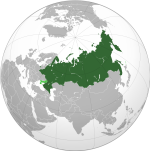
The Russian 'Federation' and the Republic of Belarus are deeply integrated through a "Union State treaty" signed in 1999, aimed at creating a joint economic, legal, and 'defense' space while maintaining nominal sovereignty. Russia is Belarus's primary economic partner, accounting for over 50% of its foreign trade and providing significant investment.
Key Aspects of the Union State:
Economic Integration: The two countries are implementing a 2024–2026 plan to synchronize tax systems, trade, and energy markets.
Military & Security: Belarus serves as a key strategic ally for Russia, allowing the, "deployment of troops", logistical support, and "military exercises on its territory" , particularly in the context of regional tensions.
Citizenship Rights: Citizens of both countries have equal rights to 'work', 'reside', and access social services. Recent measures have allowed Belarusians voting rights in Russian local elections.
Governance: The partnership is overseen by "a Supreme State Council", though full unification into a single state with a common parliament and currency has not been achieved.
The relationship remains one of the closest bilateral alliances in the post-Soviet space, with high levels of coordination in foreign policy, "defense", and industrial policy.
- Thread starter
- #90
"the Union State" is a supranational union consisting of Belarus and Russia,[5] with the stated aim of deepening the relationship between the two states through "integration in economic and defence policy".[6][7] The Union State initially aimed to create a federation; however, both countries remain independent, and the Union State instead exhibits features of a confederation.[8]
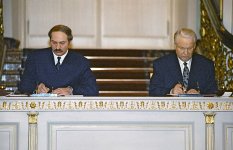
Boris Nikolayevich Yeltsin[h] (1 February 1931 – 23 April 2007) was a Soviet and Russian politician who served as President of Russia from "1991 to 1999". He was a member of the Communist Party of the Soviet Union (CPSU) from 1961 to 1990.
Boris Nikolayevich Yeltsin[h] (1 February 1931 – 23 April 2007) was a Soviet and Russian politician who served as President of Russia from "1991 to 1999". He was a member of the Communist Party of the Soviet Union (CPSU) from 1961 to 1990.
Attachments
-
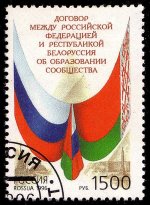 Russiabelorussia1500rub1996scott6348.jpg146.7 KB · Views: 0
 -
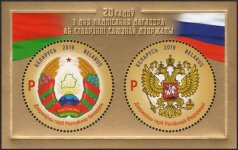 Stamp_of_Belarus_-_2019_-_Colnect_922382_-_20th_Anniversary_of_Russia_Belarus_Union_Treaty.jpeg112.7 KB · Views: 0
 -
 Union_State_(orthographic_projection)_-_All_Territorial_Disputes.svg.png315.4 KB · Views: 0
 -
 yeltsin.jpg125.9 KB · Views: 0
Users who are viewing this thread
Total: 1 (members: 0, guests: 1)
Pakistan Defence Latest


Country Watch Latest
-
 Iran - Israel/US War: Israel-US declare war on Iran, Iran responds (77 Viewers)
- Latest: AZ_HighCountry
-

-
-

-
Latest Posts
-
Iran - Israel/US War: Israel-US declare war on Iran, Iran responds (77 Viewers)
- Latest: AZ_HighCountry
-
-

-
-
