Navigation
Install the app
How to install the app on iOS
Follow along with the video below to see how to install our site as a web app on your home screen.
Note: This feature may not be available in some browsers.
More options
Style variation
You are using an out of date browser. It may not display this or other websites correctly.
You should upgrade or use an alternative browser.
You should upgrade or use an alternative browser.
Russia-Ukraine War - News, Discussions & Updates
- Thread starter ghazi52
- Start date
- Status
- Not open for further replies.
More options
Who Replied?


Fatman17
THINK TANK: CONSULTANT

PENTAGON LEAKS: WHAT DO THEY TELL US ABOUT THE AIR WAR IN UKRAINE?
- Aviation Features
- Pentagon Leaks: what do they tell us about the air war in Ukraine?
By Tim Ripley 26th May 2023
FEATURE
In April, the internet was awash with confidential US military documents about the war in Ukraine. A US Air National Guardsman was subsequently charged with posting the cache of classified material in an online gaming chatroom. Tim Ripley investigates the insights they offer into the air war between Russia and Ukraine
When the first documents from the so-called Pentagon Leak appeared online at the beginning of April, the headlines looked bad for US President Joe Biden. His intelligence agencies were eavesdropping on key allied leaders, the Ukrainian air defence was running out of missiles and Pentagon chiefs were questioning whether Kiev’s troops could launch a successful counter offensive this year.
Despite some hamfisted attempts by pro-Russian bloggers to doctor a couple of the files to make the Kremlin look good, it quickly became apparent that the tranche of documents was genuine. The arrest and charging of Airman Jack Teixeira of the 102nd Air Wing of the Massachusetts Air National Guard under the Espionage Act seemed to confirm that the leak was not a Russian disinformation campaign.
It is relatively easy to find the documents online and it soon becomes apparent that they fall into three main classes. There are several daily operational summaries in Powerpoint format, which were prepared for senior commanders and officials to bring them up to date with ongoing events in the theatre of war. Then there are number of special reports on important topics, complete with maps, graphics, and data tables. The final category are Central Intelligence Agency (CIA) and National Security Agency (NSA) reports of immediate intelligence that needs to rapidly share with important ‘customers’ across the US defence and security establishment.
Much of the media commentary on the Pentagon Leaks centres on why such a junior intelligence analyst at a remote airbase far from Washington DC or Ukraine had access to highly classified material. Looking at some of the documents, it is possible to come up with a plausible explanation for this. Several US military intelligence organisations based across Europe and the continental US appear to have been drawn into analysing intelligence product from Ukraine. They have the job of analysing this data and generating infographics and supporting reports for senior decision-makers. This is labour intensive work, and a large segment of the US military intelligence community has been drafted in to help Ukraine win its war. It is not quite the military equivalent of COVID-19 working from home, but it is distributed and network operations in action.
Balance of the war
Both Russia and Ukraine surround their combat losses in great secrecy, so it is very difficult to gain accurate information about the progress of the war. Thanks to Airman Teixeira we now know what the US Joint Chiefs of Staff think about how much damage the two sides are inflicting on each other. The US assessment is very different from the propaganda claims put out each day by the Russians and Ukrainians, particularly in the air war. For example, on April 18, the Ukrainians claimed since the start of the war in February 2022 to have shot down 305 Russian aircraft and 293 helicopters, as well as destroying 285 of the Kremlin’s air defence systems. While on the same day, the Russian Ministry of Defence claimed the destruction of 407 aircraft, 228 helicopters and 415 anti-aircraft missile systems during its so-called Special Military Operation.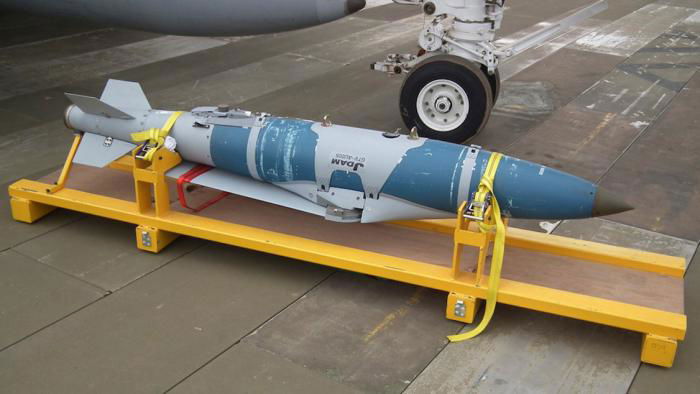
In early February 2023, the US Defence Intelligence Agency estimate was far more conservative. It reported that the Russian Aerospace Force (RuAF/VKS) was still at 92% combat effectiveness, after only losing 72 fighters/fighter bombers and 81 helicopters since February 2022. Interestingly, the US assessment comments on how much of the RuAF is committed to the war. More of the fixed wing fast jet fleet is operating from bases along the borders of Ukraine, with 485 jets participating in the war and 139 aircraft still at their home air bases. Less of the helicopter fleet is committed, with 572 deployed forward and 472 back at their home bases.
The Russian air defence networks appear to be 97% combat effective, according to the Pentagon. None of the RuAF’s 15 strategic surface-to-air missile battalions committed to the war have been put of action. Tactical air defence units of the land forces have suffered heavier losses, losing 97 units, but 158 units remain operational in the battle zone. More than 3,052 tactical air defence units remain uncommitted to the war and available to replace losses.
The Ukrainian Air Force and Army Aviation are rated at 68% combat effective by the Pentagon, after losing 60 of their 145 fixed wing combat aircraft and 32 of their 139 helicopters. Eleven of Ukraine’s 38 strategic surface-to-air missile battalions have been put of action and 34 of 128 tactical surface-to-air missile units.
This assessment lays it out clearly that the Russians and Ukrainians are now locked in a war of attrition. Although the Ukrainians appear to have lost fewer aircraft, helicopters and air defence systems than the Russian, the Ukrainians have proportionally lost far more than their opponents. In a war of attrition, this is not a good place to be and is clearly behind the increasing desperate demands from the Ukrainian for the US and NATO to supply them with new fighter jets.
Air defence battle
The precarious position of the Ukrainian air defences is laid bare in a US assessment of its status on February 23, 2023. There has been considerable media coverage of this assessment but many of the details have been overlooked.US military planners appear to be very concerned about fate of Ukraine’s air defences. The essential fact is that it is firing more surface-to-air missiles that it can replace and within a few weeks is expected to run out of them. This would allow the Russian air forces to range over Ukraine unopposed, attacking critical national infrastructure and army units on the frontline, says the US military assessors.
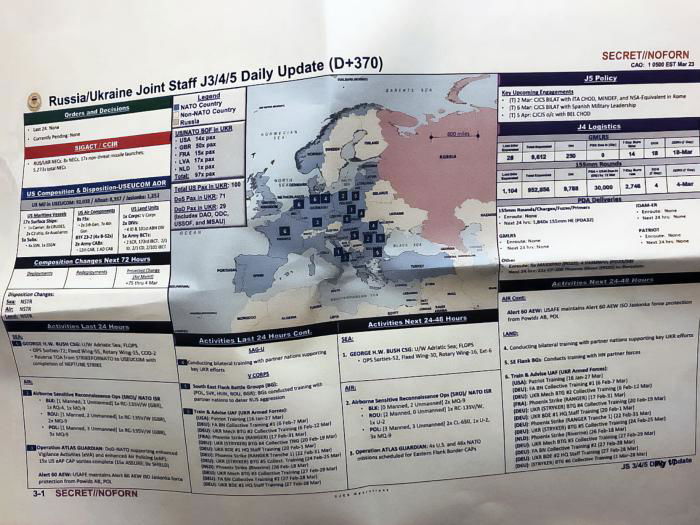
The authors of the US assessment have created a graphic that showed the deployment of Ukrainian air defences in February 2023, arrayed to defend all of the country’s major cities, critical national infrastructure and most of frontline areas. In May this year, it predicts that only a handful of missile batteries around the capital Kiev and two other cities will be defended. A series of arrows representing Russian air and missiles flight paths are overlaid, showing numerous targets coming under attack.
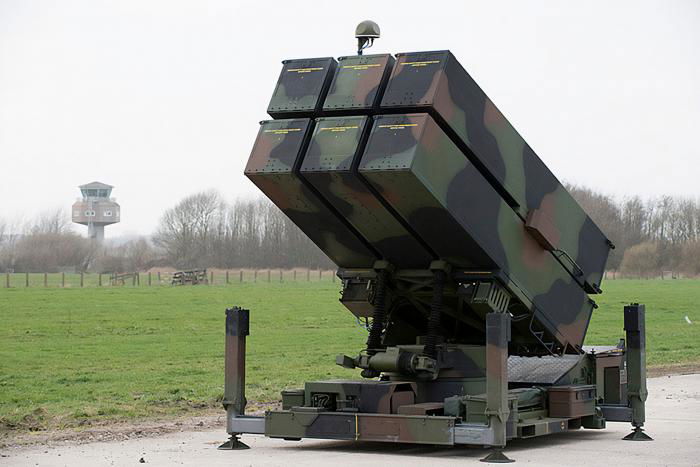
A set of tables in the US assessment lays out the situation in considerable details. The core of the Ukrainian air defences is its Soviet-era S-300 (SA-10 Grumble) strategic surface-to-air missile systems, three S-300V (SA-12 Gladiator) mobile army strategic surface-to-air missile systems and 67 Buk (SA-11 Gadfly). These have been augmented by two NASAM air defence systems supplied by Norway and an IRIS-T systems supplied by Germany, which are both systems designed to fire repurposed air-to-air missiles from ground launchers. The critical problem is that all these systems are running out of missiles. The S-300 batteries have 421 missiles left but are firing 180 missiles a month. This the same with the Buk batteries who have only 111 missiles left but are firing 69 a month. The situation is not much better in the other weapon systems, with only 55 S-300V, 10 IRIS-T and 165 NASAM missiles left.
Fatman17
THINK TANK: CONSULTANT
Although many nations have promised to replenish Ukraine’s air defences the US assessment reveals that many of these new systems are just not arriving fast enough or in sufficient quantities. The Americans, Dutch and Germans all promised to send Patriot surface-to-air missile batteries, but it was only announced that the first launchers had arrived in Ukraine on April 19. The American had been training Ukrainian crews in Texas but, as the deployment map makes clear, only one ex-US Army battery is scheduled to go to Kiev. However, this battery can only defend a small fraction of Ukrainian airspace.
There are promises of I-Hawk batteries from Spain, an ASTER 30 SAMP/T system from Italy, further IRIS-Ts from Germany, more NASAMs and surplus S-200s (NATO SA-5) from Poland, but no dates are confirmed for these deliveries.
 Many Russian missiles have missed their targets and caused damage to civilian areas across Ukraine. Podilchanyn
The US Air Force’s Big Safari rapid technology office is working with the US Navy to convert Buk launchers to fire AIM-7 heat-seeking air-to-air missiles, but again there is no confirmed date for its delivery to Ukraine. This is dubbed the ‘FrankenSAM’ by the assessment’s authors.
The US assessment teams have proposed several options to help the Ukrainians conserve the precious missile stocks, including reducing fire rates, prioritising the engagement of fighter aircraft and better deception techniques. In the longer term, the US proposes the Ukrainians procure a purpose-built nationwide NATO standard air defence network. That prospect seems a long way off.
The US military openly discussed the establishing of Security Assistance Group-Ukraine (SAG-U) at Wiesbaden in Germany, which has the declared mission of co-ordinating arms supplies to Ukraine. All through the Pentagon Leak documents there are references to US military organisations that are actively assisting the Ukrainian war effort, including selecting targets to be attacked with US-supplied GPS guided weapons. US targeting teams then appear to create the targeting packs for the Ukrainians and conduct post strike bomb damage assessment (BDA).
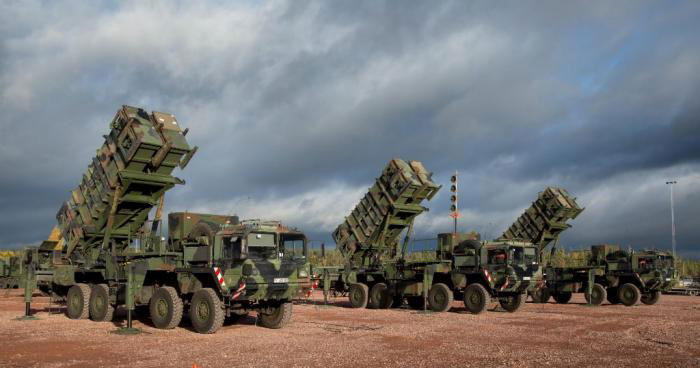 The US Patriot batteries were sent to Ukraine on April 19 after its Ukrainian operators were trained in Texas
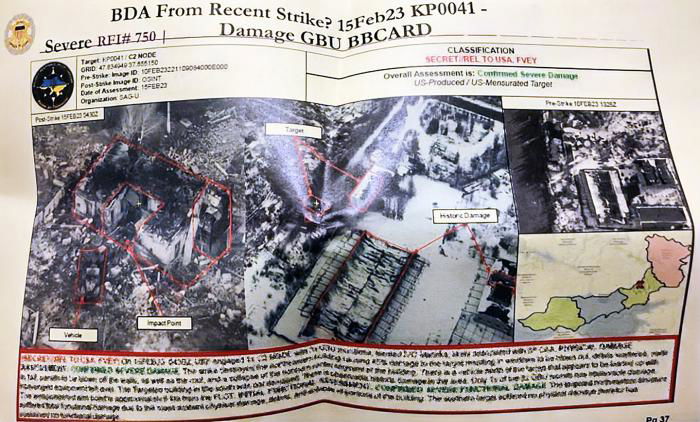
In the documents are a set of BDA packs for three strikes with US supplied JDAM-ER weapons on Russian targets. These include potted histories of how the strikes were originated and executed. They are described as “US Produced/US Mensurated Targets.” This is jargon for US experts providing the three-dimensional GPS targets needed to make a JDAM-ER weapon land on a specific point.
The organisations that are involved in this targeting cycle, including SAG-U, the 17th Intelligence Squadron of the USAF, based at Langley AFB in Virginia, and the A32 staff division of the 603rd Air Operations Centre (AOC) at Ramstein Airbase in Germany. The A32 division is responsible for intelligence, surveillance and reconnaissance activities within the AOC, which controls all US air operations across Europe. All these organisations have personnel and specialist equipment to generate target pack, for an assortment of guided weapons.
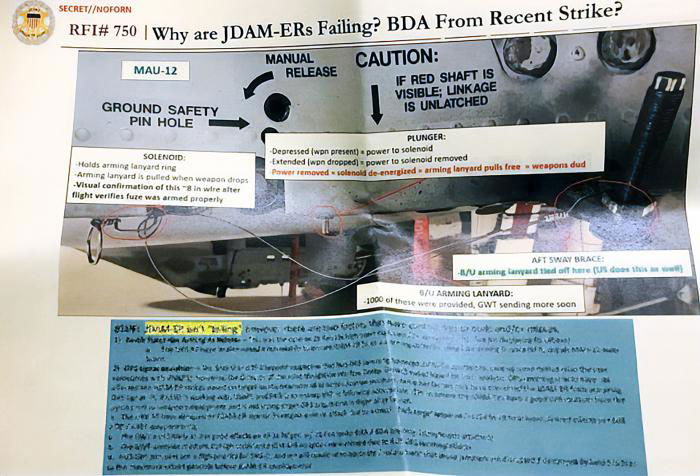
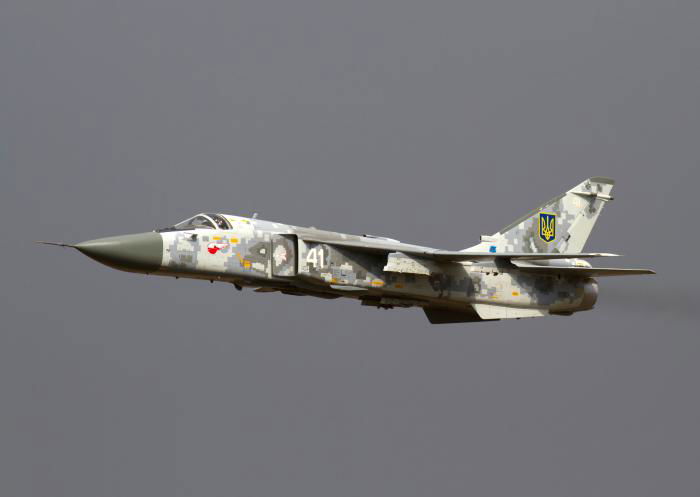
Another organisation mentioned in the Pentagon Leaks is Task Force Greywolf, which is the USAF in Europe’s (USAFE) dedicated liaison team with the Ukrainian air force. This task force is described as heavily involved in integrating 500lb JDAM-ER GPS guided stand-off bombs on to Ukrainian Sukhoi Su-24 strike bombers. When it appeared the several of these guided bombs were not functioning as required, the task force worked out a fix to the arming mechanism and assessing if Russian GPS jamming was in play.
Task Force Greywolf subsequently assessed that four out of nine JDAM-ERs dropped in the three strikes mentioned above had “missed due to Russian GPS jamming effects.” SAG-U then declared these were high priority targets and declared it would “advocate/recommend” that the Ukrainians disrupt or destroy the Russian GPS jamming systems with ground-based artillery or rocket fire ahead of any future use of JDAM-ER. SAG-U and the Task Force Greywolf, also reported that they believed that the Russian GPS jamming was impacting on the ground-launched Guided Multiple Launch Rocket Systems (GMLRS), which have been supplied in large numbers by the US to the Ukrainian army.

There are promises of I-Hawk batteries from Spain, an ASTER 30 SAMP/T system from Italy, further IRIS-Ts from Germany, more NASAMs and surplus S-200s (NATO SA-5) from Poland, but no dates are confirmed for these deliveries.
The US Air Force’s Big Safari rapid technology office is working with the US Navy to convert Buk launchers to fire AIM-7 heat-seeking air-to-air missiles, but again there is no confirmed date for its delivery to Ukraine. This is dubbed the ‘FrankenSAM’ by the assessment’s authors.
The US assessment teams have proposed several options to help the Ukrainians conserve the precious missile stocks, including reducing fire rates, prioritising the engagement of fighter aircraft and better deception techniques. In the longer term, the US proposes the Ukrainians procure a purpose-built nationwide NATO standard air defence network. That prospect seems a long way off.
US support
US and NATO leaders have repeatedly promised that they will do whatever it takes to make sure Russia’s invasion “does not succeed.” However, this does not involve US and allied troops actively fighting on the frontline alongside the Ukrainians. No US or NATO ‘boots on the ground’ or so the line goes.The US military openly discussed the establishing of Security Assistance Group-Ukraine (SAG-U) at Wiesbaden in Germany, which has the declared mission of co-ordinating arms supplies to Ukraine. All through the Pentagon Leak documents there are references to US military organisations that are actively assisting the Ukrainian war effort, including selecting targets to be attacked with US-supplied GPS guided weapons. US targeting teams then appear to create the targeting packs for the Ukrainians and conduct post strike bomb damage assessment (BDA).
In the documents are a set of BDA packs for three strikes with US supplied JDAM-ER weapons on Russian targets. These include potted histories of how the strikes were originated and executed. They are described as “US Produced/US Mensurated Targets.” This is jargon for US experts providing the three-dimensional GPS targets needed to make a JDAM-ER weapon land on a specific point.
The organisations that are involved in this targeting cycle, including SAG-U, the 17th Intelligence Squadron of the USAF, based at Langley AFB in Virginia, and the A32 staff division of the 603rd Air Operations Centre (AOC) at Ramstein Airbase in Germany. The A32 division is responsible for intelligence, surveillance and reconnaissance activities within the AOC, which controls all US air operations across Europe. All these organisations have personnel and specialist equipment to generate target pack, for an assortment of guided weapons.
Another organisation mentioned in the Pentagon Leaks is Task Force Greywolf, which is the USAF in Europe’s (USAFE) dedicated liaison team with the Ukrainian air force. This task force is described as heavily involved in integrating 500lb JDAM-ER GPS guided stand-off bombs on to Ukrainian Sukhoi Su-24 strike bombers. When it appeared the several of these guided bombs were not functioning as required, the task force worked out a fix to the arming mechanism and assessing if Russian GPS jamming was in play.
Task Force Greywolf subsequently assessed that four out of nine JDAM-ERs dropped in the three strikes mentioned above had “missed due to Russian GPS jamming effects.” SAG-U then declared these were high priority targets and declared it would “advocate/recommend” that the Ukrainians disrupt or destroy the Russian GPS jamming systems with ground-based artillery or rocket fire ahead of any future use of JDAM-ER. SAG-U and the Task Force Greywolf, also reported that they believed that the Russian GPS jamming was impacting on the ground-launched Guided Multiple Launch Rocket Systems (GMLRS), which have been supplied in large numbers by the US to the Ukrainian army.
Impact
The impact of the Pentagon Leak documents is still being digested and it seems there might well be more of them out in cyberspace waiting to be downloaded. Those that have emerged to date paint a picture of the air war over Ukraine that is at variance to the narrative being promoted by the parties in the conflict. The involvement of US military targeting experts in the war has long been suspected, but the Pentagon Leaks have confirmed it. This may go some way to explain why the Moscow is so keen to drive away US and allied surveillance aircraft from close to its territory. The stakes are rising in the Ukraine war.Topics
Read more about
Originally published in AirForces Monthly Magazine

F-22Raptor
Elite Member

F-22Raptor
Elite Member


All lands once belong to dinosaurs.Kharkov used to be Russian land up until Communist revolt in 1917.

Russian Empire - Wikipedia
en.wikipedia.org
- Status
- Not open for further replies.
Users who are viewing this thread
Total: 7 (members: 0, guests: 7)
Pakistan Defence Latest
-
-
-
 Federal cabinet gives nod to imposition of emergency in KP; summary sent to president (15 Viewers)
- Latest: Meengla
-

-

