Navigation
Install the app
How to install the app on iOS
Follow along with the video below to see how to install our site as a web app on your home screen.
Note: This feature may not be available in some browsers.
More options
Style variation
You are using an out of date browser. It may not display this or other websites correctly.
You should upgrade or use an alternative browser.
You should upgrade or use an alternative browser.
Russia-Ukraine War - News, Discussions & Updates
- Thread starter ghazi52
- Start date
- Status
- Not open for further replies.
More options
Who Replied?


TopGun786
Trusted Member

Keep convincing yourself while I can see every time it raises hair on your back.Yes we now have spring, then summer coming, then autumn then winter. The eternal cycle. But one thing never changes: Russia is always ruled by a psychopath. If you know.
I am not saying on my own. I am talking about some prophecies which until now are 100% correct and all the things happening right as they were said.
If winter is not upon us this year it may be next year.... It all depends on how much Russia as left conventionally up their sleeves.
Once Russia is at that point where they are left with no other choice they will go for it.
You just pray that they do not reach that point and NATO got some brains and surrender... Which will not happen either.
Yes Putin is a psychopath.... Agreed.... But nothing compared to your Zionist masters right now busy slaughtering, genociding and bombing and killing each and every in thousands right at this moment... And doing this very openly and right in front of whole world.
The winter I am talking about will be a collective punishment.... For all the Zionists... As well as all of us spectators who were watching this and doing nothing. Also for most of the Muslim world who were watching all this tragedy and anarchy and doing nothing to stop it. Like I said 999 out of 1000 will perish... But what will remain will be people of true faith and rulers of world after catastrophy. And none of them them will be Zionists and their slaves.
You are obsessed with Putin while you clearly now he is not even close to your masters in crimes against humanity yet you never talk about that and just keep repeating your rhetoric about Putin guy.
It is a great curse that you will find no peace in this world and the also in the world next life.

ahmadbhutta
Registered Member
Russia is finally going Baghdad in Ukraine now

Yommie
Elite Member
Russia is finally going Baghdad in Ukraine now
Not yet. Give it 10 more years.
Hendarto
Registered Member

wait until this baby shows up soon in the theater next to you er UkraineRussia is finally going Baghdad in Ukraine now


The russians seem now just one step away from general mobilization.
Election is over. Putin will rule Russia for another 6y. 100 percent then extended until he dies of heart attack, falls down of the window or something. There is zero opposition. Dictator for life.
The terror caused by the IS is the perfect excuse to escalate the war.
Election is over. Putin will rule Russia for another 6y. 100 percent then extended until he dies of heart attack, falls down of the window or something. There is zero opposition. Dictator for life.
The terror caused by the IS is the perfect excuse to escalate the war.
Lots of russian men will be called in this year 2024.
Russia defense minister or the better term is the warmonger Shoigu announces to add 14 new divisions, 16 brigades and 2 combined army groups.
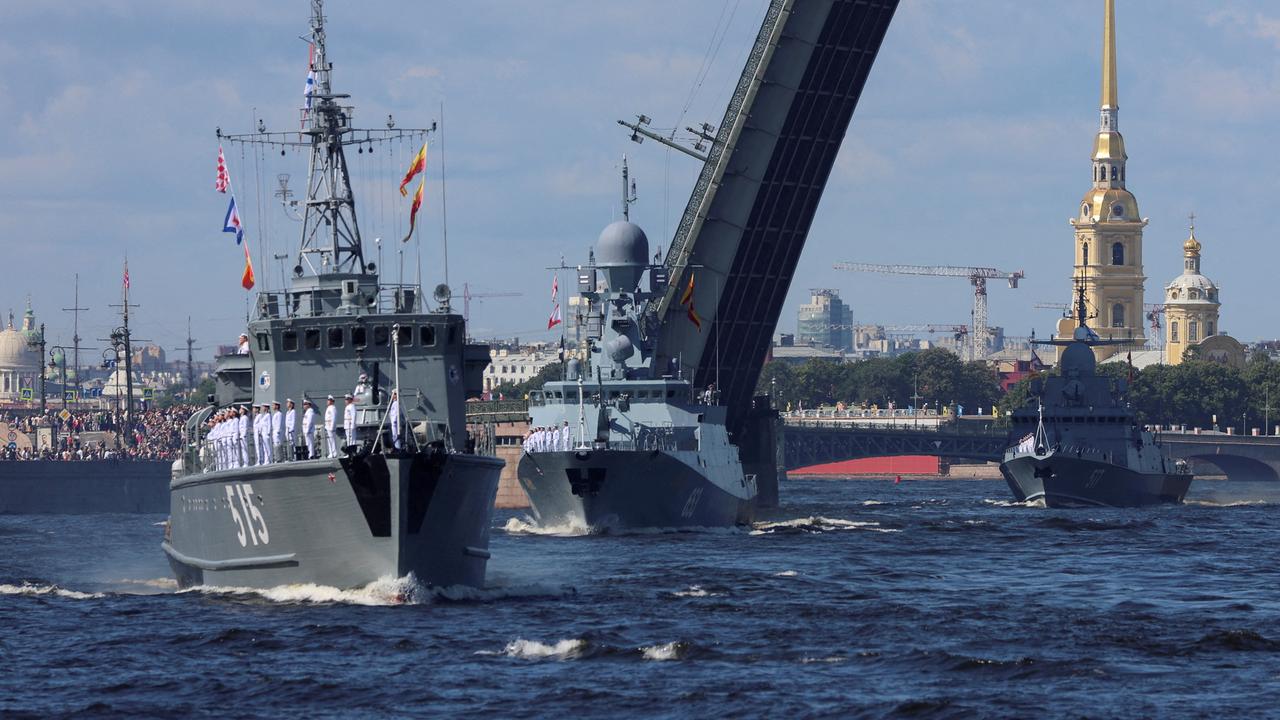
In addition 1 new navy flotilla with the mission to secure the occupied territories by sea against Ukraine attacks.
Ukraine army is under extreme pressure. But now they still hold the positions.
 amp.zdf.de
Russia defense minister or the better term is the warmonger Shoigu announces to add 14 new divisions, 16 brigades and 2 combined army groups.
In addition 1 new navy flotilla with the mission to secure the occupied territories by sea against Ukraine attacks.
Ukraine army is under extreme pressure. But now they still hold the positions.
Ukraine-Krieg: Russland strukturiert seine Streitkräfte neu
Russland hat ehrgeizige Streitkräfte-Pläne für 2024. Den Ukraine-Krieg bestimmen Luftangriffe - Kiew kann Frontdurchbrüche verhindern.
amp.zdf.de

Fatman17
THINK TANK: CONSULTANT
UKRAINE-RUSSIA WAR: AN EXPERT ANALYSIS OF THE FIRST YEAR
- Aviation Features
- Ukraine-Russia War: An expert analysis of the first year
By Vladimir Trendafilovski 24th February 2023
FEATURE
On the first anniversary of the war in Ukraine, Vladimir Trendafilovski provides a detailed analysis of the brutal conflict which began with Russia’s full-scale invasion on February 24, 2022.
A year ago, in the early morning of February 24, the long-anticipated Russian invasion of Ukraine began. The deployment of substantial Russian forces (aircraft and helicopters included) on the borders with Ukraine – including on the territory of neighbouring Belarus – had started in 2021 so it was only a matter of time before the inevitable would happen.

This was a continuation of what began nine years earlier – in late February 2014 – when Russian forces invaded the Crimean peninsula, staging a referendum that led to its annexation on March 18. Soon afterwards, in April 2014, a Russian-sponsored conflict started in the Donbas region of Ukraine, threatening to rip apart the entire country, but fortunately – after some very intense fighting during the summer of 2014 and winter of 2015 – the front line was stabilised and from then on the situation transformed into a so-called ‘frozen conflict’, which was ready to escalate at a moment’s notice from its creator in the Kremlin.
Meanwhile, Ukraine managed to pull itself out of the political turmoil and continued to fight for the preservation of its territorial integrity and the return of control over all the territory within its internationally-recognised borders. It did this by using diplomatic means and by holding the frontline in the Donbas and keeping its armed forces in constant combat readiness.

As a result, what started as an internal armed conflict in Ukraine, has now been officially elevated to a regional conflict involving a superpower – and this is what it really was from the start as Russia and its military was involved in it one way or the other well before 2022 – including directly, with regular troops on the ground.
Of course, this conflict has the potential to easily become a global one, since both parties are supported by friendly and partner states from all over the world – various pariah states (including Belarus, Iran and North Korea) siding with Russia, and most NATO/EU members siding with Ukraine.
The latter should come as no surprise since the outcome of this conflict will have significant consequences for the future of Europe – if not for the whole of the world.
War begins
Despite the developments suggesting the obvious, many – including the Ukrainian President Volodymyr Zelenskyy – perceived the Russian preparations for invasion as yet another regular sabre-rattling exercise aimed at the West. So, with de-escalation of the situation in mind and without any intentions to add fuel to the fire, he chose to ignore the warnings from the West and refrained from sanctioning any serious movements of Ukraine’s armed forces, fearing that these would be perceived as a threat by the opposite side.As a result, it was not until hours before the beginning of the invasion, dubbed ‘special military operation’ by Moscow (and still refusing to call it by its real name), that alarm bells rang.

By scrambling all available forces to pull out their equipment, still at their peacetime locations in fear of impending attacks, soon delivered by Russian Aerospace Forces (RuAF) and Russian Navy (RuN) aircraft, as well as by various air-launched, ground-launched and sea-launched missiles.
Some of the Ukrainian Air Force (UkrAF) aircraft were already deployed at secondary air bases, but unlike the aviation elements of the other two branches of the Ukrainian Armed Forces (AFU), most of its aircraft were still at their peacetime locations.
Despite the difficulties, the evacuation of all UkrAF airworthy aircraft to secondary air bases, civilian airports or wartime airstrips was done in the nick of time with minimal losses.
Some aircraft, like the last of the Sukhoi Su-27 Flanker fighters of the QRA flight temporarily detached to the Mykolayiv-Kulbakino air base – took off as the first of the Russian missiles had struck the main apron and adjacent aircraft dispersal areas.
Initial tactics
The early period was certainly the most hectic both for the aviation and air defence (AD) elements of the Ukrainian Armed Forces – the UkrAF aircraft and the mobile surface-to-air missile (SAM) systems had to move out to secondary locations, while combat-capable UkrAF helicopters were joining those of the Ukrainian Army Aviation (UkrAA) and the Ukrainian Navy (UkrN) at the newly-established and existing forward operating bases (FOBs) in the field.Meanwhile, the communications and radar network was being re-established to join all locations in a single network in order to enable proper functioning of the AD system and avoid friendly fire as most of the forward-deployed AD elements consisting of anti-aircraft artillery (AAA) and man-portable air-defence systems (MANPADS) relied purely on visual observation for their target acquisition.

No doubt the first day of the war was the most intense for the Ukrainian aviation elements – as soon as many of the evacuated aircraft and helicopters arrived at the new bases, almost immediately they had to be turned around and sent straight into combat against the Russian invaders, sometimes at a location on the opposite side of Ukraine. This was crucial as their armoured columns were pouring in from all possible directions, Belarus included, plus a successful heliborne assault had just taken place at the Antonov Airport in Hostomel, in the immediate vicinity of the Ukrainian capital Kyiv.
These early operations of the Ukrainian aviation elements were marked with grit and self-sacrifice. On close air support (CAS) sorties, the combat aircraft and helicopters flew low-level direct head-on strikes against enemy vehicles or positions while their fighters on combat air patrol (CAP) or intercept sorties went directly against large formations of modern RuAF aircraft armed with superior beyond-visual-range (BVR) air-to-air missiles (AAMs). As a result, many aircraft and helicopters were lost in combat in this period, some of their brave pilots perishing in the process. Nonetheless, such actions bought valuable time needed to stabilize the frontline and restore the AD network.

In this period, RuAF and RuN multi-purpose fighters often performed Suppression and Destruction of Enemy Air Defences (SEAD/DEAD) missions over or near Ukraine, armed with the latest Kh-31PD (AS-17 Krypton) supersonic anti-radiation air-to-ground missile (AGM) – in hope that they would lure the Ukrainian AD systems to switch on their radars long enough to engage them. However, these tactics failed and most of the fired missiles self-destructed after missing their intended targets.
Stabilisation of the situation
Unfortunately for the Russians, their trademark tactics to simply overwhelm their enemy with sheer firepower and numbers failed to produce any of the expected results. Against all odds, the Ukrainian armed forces managed to persevere – their dogged determination stopping the Russian steamroller poised on taking Kyiv in three days.The front line stabilised by the end of the first month of the invasion, the Ukrainian AD network being fully restored – denying the Russians their wish to impose air superiority over the unoccupied parts of Ukraine, limiting their operations only to the front line and the occupied territory under their control. The way the AD network is constituted, target data can be received in real time from various sensors available on the battlefield (not just AD radars) and the ability to distribute this information down to the lowest echelon (a MANPADS operator with a simple tablet) along with orders to engage a certain target has even been praised by the Russians themselves.

Fatman17
THINK TANK: CONSULTANT
Now that the enemy ground forces were no longer rolling around unobstructed but sat concentrated at stationary positions in the frontline, the Ukrainian aviation elements were prompted to change tactics – instead of attacking the enemy head-on, they could now revert to much safer stand-off strikes, well-practiced before the start of the war. The aircraft and helicopters now fly extremely low – pulling up in a steep climb when they are a few miles in front of the target to fire a full volley of unguided rockets in its direction. Within seconds they dive back to the relative safety of the extremely low altitude – releasing flares during the whole process. Being in the exact same position, the RuAF was quick to adopt the same tactics for its own frontline CAS sorties.
 Su-25SM s/n ‘07 Red’/RF-91961 from RuAF’s 18th Assault Aviation Regiment (ShAP) based at Chernigovka air base in Russia’s Far East was downed by a Ukrainian MANPADS on March 2, 2022. Its remains were found at Andriivka near Makariv, Kyiv Oblast. Vira Uznichenko/Depositphotos.com
Thanks to the constant pressure applied on Russian AD assets both by UkrRFA and UkrAF, by the 11th month of the war the Ukrainian combat aircraft and helicopters had a daily average of 13 sorties (11 CAS sorties and two SEAD/DEAD sorties – see panel ‘The war in numbers’ for more information), which is not a bad result given the fact that the weather has been a crucial factor (bad weather meant on two days there were no sorties at all) and the daily average in July-August 2022 stood at 14 to 15 sorties.
More recently, the Russians have shifted their attention to the Ukrainian power system – the main goal clearly being to disrupt the supply of electricity during the winter season – thus providing additional pressure to the civilian population in an attempt to lower the morale and the support for the war on the home front while also further disrupting the Ukrainian Armed Forces operations.
 The tail section of Su-34 s/n ‘06 Red’/RF-95070 inside a building in the Kommunar plant in Kharkiv. The aircraft is from the 47th Bomber Aviation Regiment (BAP) of the RuAF based at Baltimor air base near Voronezh. It was shot down by an UkrAF mobile Buk-M1 (SA-11 Gadfly) medium-range SAM system on March 6, 2022. Serhiy Revera/Depositphotos.com
The main types of cruise missiles used by the Russian forces against Ukraine include the air-launched Kh-59M (AS-18 Kazoo), Kh-101 (AS-23A Kodiak) and Kh-555 (AS-15C Kent/AS-22 Kluge), as well as the sea-launched 3M14 Kalibr (SS-N-30).
The Kh-59M is a short-range missile (up to 180 miles [290km], depending on the version) and can be deployed by any modern multi-purpose fighter or tactical bomber in the RuAF inventory operating in the border area, not far from the frontline. The Kh-101 and Kh-555 are long-range missiles deployed by the RuAF strategic bomber force (the Tu-95MS and Tu-160) and are being fired at Ukraine from all possible directions, including while flying above the Black Sea, thanks to their range of at least 1,864 miles (3,000km).
 Two Su-25s from 299th brTA – including Su-25M1 s/n ’17 Blue’ – take off on a CAS sortie with a loadout typical of the early period. The Su-25s regularly operate in pairs. Sergey Smolentsev
The Kalibr is a long-range missile with a range of at least 932 miles (1,500km) and is launched by RuN submarines and surface vessels operating in the Black Sea, Sea of Azov and the Caspian Sea.
While the above mentioned cruise missiles are subsonic and can be easily engaged by the Ukrainian AD assets, including the UkrAF fighter force with their AAMs, there are also a few other missiles that pose a much more serious threat as they cannot be engaged by the Ukrainian AD assets.
 Mi-8MT s/n 654 from the 16th obrAA at Brody flies low over an area defended by a mobile Strela-10M3 (SA-13 Gopher) SAM system of the UkrGF. Early on in the war, it became apparent that proper identification of an airborne target is of utmost importance to avoid ‘friendly fire’ incidents as both sides use identical or very similar aircraft. As a result, many Ukrainian helicopters received large Ukrainian flags on both sides of the fuselage – in addition to the already existing pair of white quick-recognition stripes on their tails. Mykhaylo Palinchak/Depositphotos.com
These include the hypersonic ground-launched 9M723 Iskander-M (SS-26 Stone) and its air-launched variant – the 9-S-7760 Kinzhal (AS-24 Killjoy), plus the air-launched supersonic Kh-22 (AS-4 Kitchen).
The Iskander-M is launched from a mobile launcher, the Kinzhal from a specially-modified MiG-31K/I Foxhound carrier aircraft, and the Kh-22 from the Tu-22M3 Backfire-C long-range strategic bomber. The latter is a Soviet-era anti-ship missile entering service in 1967, first fired in anger in 2022 – during the Russian invasion of Ukraine. Use of Kh-22s against Ukrainian ground targets has so far caused severe collateral damage and civilian casualties as these missiles are highly inaccurate – even if used against military barracks, factories and other similar large area targets. In a latest incident, a Kh-22 struck an apartment building in the city of Dnipro on January 14 – the official death toll is 46 people (including six children) while 80 were injured and 11 were still unaccounted for, making it the second deadliest Russian attack against Ukrainian civilians at a single location since the beginning of the invasion. It is believed that the Patriot SAM systems which should be delivered by the West – one battery each by Germany and the US, two batteries by the Netherlands – would be able to shoot down the Kh-22.
 Not all Ukrainian Mi-8s belong to the UkrAA – the Mi-8MTV seen here is s/n ‘70 Yellow’ of the 15th Transport Aviation Brigade (brTrA) of the UkrAF based in Boryspil International Airport near Kyiv. Although its unit is tasked primarily with transport tasks for the Ukrainian MoD, this Mi-8 is also combat-capable and immediately after the war started it was pressed into combat service. Its digital paint scheme is characteristic only for UkrAF and UkrN Mi-8s – both of which are used in CAS sorties. Vladyslav Musiienko/Depositphotos.com
In another matter of interest, on November 26, 2022 the UK MoD also reported that the RuAF began using old Kh-55 (AS-15A Kent) cruise missiles, stripped of their nuclear warheads which had probably been replaced by inert ballast. It was said that this improvisation was unlikely to achieve any reliable effects although the kinetic energy of the missile and any unspent fuel remaining in it would produce some effect upon impact. It is believed that this measure is aimed merely at distracting Ukrainian AD systems as their operators have no way of telling which missile is a ‘live’ one and are forced to spend precious SAMs and ammunition on all missiles – including at these decoys.
 Su-27S s/n ‘24 Blue’ of 39th brTA from Ozerne air base armed with a typical loadout seen after the war began – two short-range R-73 (AA-11 Archer) and two BVR R-27ET (AA-10 Alamo-D) IR-guided AAMs below the wings, plus two BVR R-27ER (AA-10 Alamo-C) radar-guided AAMs below the engine nacelles. Sergey Smolentsev
Engaging Russian AD assets
The biggest threat at this point was the Russian AD, impeding front line aviation operations. Initially a solution was found in using various Ukrainian unmanned aerial vehicles (UAVs) to locate the Russian AD systems and relay their position to the Rocket Forces and Artillery of the Ukrainian Armed Forces (UkrRFA), which would subsequently engage it with any type of artillery available. The Bayraktar TB2 unmanned combat aerial vehicles (UCAVs) of the UkrAF and UkrN were also used in this role, with an added ability to destroy the target using their on-board precision-guided munitions (PGMs). With the arrival of the US M142 High Mobility Artillery Rocket System (HIMARS) in late June 2022, the UkrRFA now had a precision-guided weapon for destroying enemy high-value targets (AD assets included) at ranges of up to 50 miles (80km). These were soon complemented by M982 Excalibur 155mm rounds for use from western-supplied howitzers as well as by the AGM-88 High-speed Anti-Radiation Missile (HARM), donated by the US in the summer of 2022. The latter was adapted to be launched by UkrAF MiG-29 Fulcrum and Su-27 Flankers fighters – finally providing an effective SEAD/DEAD weapon in the UkrAF inventory.
Thanks to the constant pressure applied on Russian AD assets both by UkrRFA and UkrAF, by the 11th month of the war the Ukrainian combat aircraft and helicopters had a daily average of 13 sorties (11 CAS sorties and two SEAD/DEAD sorties – see panel ‘The war in numbers’ for more information), which is not a bad result given the fact that the weather has been a crucial factor (bad weather meant on two days there were no sorties at all) and the daily average in July-August 2022 stood at 14 to 15 sorties.
Russian missiles – the main problem
Currently the main problem the Ukrainian AD forces are tackling is various air-launched, ground-launched and sea-launched Russian missiles used both against military and civilian targets. The latter including but not limited to roads, railroads, fuel depots, and other similar civilian infrastructure important for the war effort.More recently, the Russians have shifted their attention to the Ukrainian power system – the main goal clearly being to disrupt the supply of electricity during the winter season – thus providing additional pressure to the civilian population in an attempt to lower the morale and the support for the war on the home front while also further disrupting the Ukrainian Armed Forces operations.
The main types of cruise missiles used by the Russian forces against Ukraine include the air-launched Kh-59M (AS-18 Kazoo), Kh-101 (AS-23A Kodiak) and Kh-555 (AS-15C Kent/AS-22 Kluge), as well as the sea-launched 3M14 Kalibr (SS-N-30).
The Kh-59M is a short-range missile (up to 180 miles [290km], depending on the version) and can be deployed by any modern multi-purpose fighter or tactical bomber in the RuAF inventory operating in the border area, not far from the frontline. The Kh-101 and Kh-555 are long-range missiles deployed by the RuAF strategic bomber force (the Tu-95MS and Tu-160) and are being fired at Ukraine from all possible directions, including while flying above the Black Sea, thanks to their range of at least 1,864 miles (3,000km).
The Kalibr is a long-range missile with a range of at least 932 miles (1,500km) and is launched by RuN submarines and surface vessels operating in the Black Sea, Sea of Azov and the Caspian Sea.
While the above mentioned cruise missiles are subsonic and can be easily engaged by the Ukrainian AD assets, including the UkrAF fighter force with their AAMs, there are also a few other missiles that pose a much more serious threat as they cannot be engaged by the Ukrainian AD assets.
These include the hypersonic ground-launched 9M723 Iskander-M (SS-26 Stone) and its air-launched variant – the 9-S-7760 Kinzhal (AS-24 Killjoy), plus the air-launched supersonic Kh-22 (AS-4 Kitchen).
The Iskander-M is launched from a mobile launcher, the Kinzhal from a specially-modified MiG-31K/I Foxhound carrier aircraft, and the Kh-22 from the Tu-22M3 Backfire-C long-range strategic bomber. The latter is a Soviet-era anti-ship missile entering service in 1967, first fired in anger in 2022 – during the Russian invasion of Ukraine. Use of Kh-22s against Ukrainian ground targets has so far caused severe collateral damage and civilian casualties as these missiles are highly inaccurate – even if used against military barracks, factories and other similar large area targets. In a latest incident, a Kh-22 struck an apartment building in the city of Dnipro on January 14 – the official death toll is 46 people (including six children) while 80 were injured and 11 were still unaccounted for, making it the second deadliest Russian attack against Ukrainian civilians at a single location since the beginning of the invasion. It is believed that the Patriot SAM systems which should be delivered by the West – one battery each by Germany and the US, two batteries by the Netherlands – would be able to shoot down the Kh-22.
In another matter of interest, on November 26, 2022 the UK MoD also reported that the RuAF began using old Kh-55 (AS-15A Kent) cruise missiles, stripped of their nuclear warheads which had probably been replaced by inert ballast. It was said that this improvisation was unlikely to achieve any reliable effects although the kinetic energy of the missile and any unspent fuel remaining in it would produce some effect upon impact. It is believed that this measure is aimed merely at distracting Ukrainian AD systems as their operators have no way of telling which missile is a ‘live’ one and are forced to spend precious SAMs and ammunition on all missiles – including at these decoys.
Fatman17
THINK TANK: CONSULTANT
Finally, one more improvisation worth noting is that since July 2022 the RuAF has begun to use S-300 SAMs against ground targets – the latest occurrence being against Kyiv on January 14. This is actually a built-in option (most Soviet-era SAM systems have it), enabling the use of a SAM against large area targets, its accuracy and effect being identical to that of the Kh-22 – i.e. more likely to cause collateral damage rather than hit its intended target. Due to its supersonic speed, this missile is also a problem for Ukraine’s AD.
 A UkrAF Tu-141 UAV of the 383rd opDKLA is seen at the Yahorlyk training ground in the Kherson Oblast in late September 2021. It was used as a high-speed low-flying target for UkrAF’s AD assets, including fighters and SAM systems, which used live missiles against them over the Black Sea. These activities were part of the multinational ‘Joint Efforts 2021’ exercise. Ukrainian MoD
We should not forget to mention the Lancet series of loitering munitions, which – unlike the Shahed drones that are pre-programmed to strike a certain target using its co-ordinates – feature an electro-optical guidance unit, allowing the operator not only to search for and select a target, but also to be able to control the drone during the terminal stage of flight in case of a moving target. These drones appeared on the battlefield in mid-2022 and – judging by videos released – had some success against Ukrainian AD assets and artillery systems. However, it later turned out that some of the videos were staged – using decommissioned Russian systems or Ukrainian systems impounded in the Crimea that were originally used as decoys in the Kherson Oblast – casting doubt on the authenticity of the other videos as well. Reports suggest that Ukrainian AD units destroy Lancet drones fairly easy if they spot them on time.
 The UkrAF has been using the Bayraktar TB2 UCAV since 2019. Seen here is s/n ‘403 Red’ of the 383rd opDKLA from Khmelnytskyi armed with 70mm MAM-C laser-guided PGMs, designed for use against personnel, lightly armoured and unarmoured vehicles. The more potent MAM-L is also in service with the UkrAF. Sergey Smolentsev
 MiG-29 type 9-13 s/n ’10 Blue’ of the 204th brTA takes off from its former home base at Mykolayiv-Kulbakino in March 2016, shortly after it was returned to active service. When 204th brTA moved to Lutsk air base in 2018, the aircraft was stored at Ivano-Frankivsk and was again restored to service soon after the war began in 2022, receiving a high-visibility blue-yellow paint scheme, similar to that of UkrAF’s former display team – the Ukrainian Falcons. Its luck finally ran out on October 12, 2022 with Maj Voroshylov behind the controls. Sergey Smolentsev
Combat air operations on both sides still remain focused on CAS, CAP and SEAD/DEAD sorties over or near the front line, without any intentions to venture any deeper into enemy-held territory – which is heavily defended by AD systems. In short – both sides are concentrated on harassing the enemy and pursuing airspace denial over their own territory, rather than trying to achieve air superiority. This is yet another proof that the RuAF – which is the only side in this conflict capable of such an undertaking – is not willing to attempt this, knowing full well the cost involved.
 The Tu-22M3 Backfire-C saw its debut in combat use launching the old Kh-22 long-range anti-ship missile, repurposed for pounding land targets but often missing their targets, causing a lot of collateral damage Russian MoD
Nonetheless, the Russian regular forces are on the move again. Deployment of substantial forces on the territory of Belarus (including additional RuAF aircraft and helicopters) began in late 2022, under the pretext of more bilateral training with Belarus which was supposed to last from January 16 until February 1, 2023. One should not forget that a year ago, part of the Russian troops that advanced on Kyiv came from Belarus and arrived there earlier under the very same pretext.
 Tu-95MS Bears have been firing Kh-101 air launched cruise missiles from within Russian and Belarus air space Russian MOD
The current lull in the fighting is clearly being used by both sides to consolidate their forces, preparing for a spring offensive, when the weather would be much more favourable for the movement of troops on the battlefield. It only remains to be seen which would be the focal point of this upcoming offensive, as well as whether Ukraine’s western partners would be able to overcome their differences on time, finally providing some more modern weapons to its armed forces in preparation for this. Needless to say, Ukraine’s Soviet-era weapons – especially the combat aircraft and AD systems – cannot stay in service for much longer without the continuous supply of spare parts and ammunition, a problem for which there is no viable solution. The West inevitably has to decide to take the next logical step – equip Ukraine with modern western aircraft and AD systems – and the sooner a decision is reached, the better.
 A pair of UkrAF Su-24M bombers – s/n ’22 White’, with ‘20 White’ behind it – both of the 7th brTA from Starokostyantyniv at the flightline of one of the UkrAF secondary air bases before the war. They carry P-50T practice bombs for an upcoming night training sortie, but just in case a combat employment was required, live ordnance is stored right next to them – including large OFAB-500ShR high-explosive fragmentation parachute-retarded bombs for low-level use. Sergey Smolentsev
Russian kamikaze drones
Since September 2022, the Ukrainian AD has been facing yet another problem – the Iranian Shahed-131/136 kamikaze drones – predominantly used against Ukrainian power system facilities. Originally these were a challenge for the Ukrainian AD – by November 26, 2022 some 400 of these were fired at Ukraine and only 276 (70%) were shot down. But, with the arrival of western-supplied AD systems on the scene – including Gepard AAA system and IRIS-T and NASAMS SAM systems supplied by Germany and the US – the tide has turned in Ukraine’s favour, the efficiency now being 85 to 100% drones shot down during each attack. The total number of drones shot down by January 23 was 535 (the total fired estimated at 650-700), which is interesting to compare with Iran’s statement from November 5 last year, saying they provided Russia with “limited number of drones months before the war in Ukraine”.
We should not forget to mention the Lancet series of loitering munitions, which – unlike the Shahed drones that are pre-programmed to strike a certain target using its co-ordinates – feature an electro-optical guidance unit, allowing the operator not only to search for and select a target, but also to be able to control the drone during the terminal stage of flight in case of a moving target. These drones appeared on the battlefield in mid-2022 and – judging by videos released – had some success against Ukrainian AD assets and artillery systems. However, it later turned out that some of the videos were staged – using decommissioned Russian systems or Ukrainian systems impounded in the Crimea that were originally used as decoys in the Kherson Oblast – casting doubt on the authenticity of the other videos as well. Reports suggest that Ukrainian AD units destroy Lancet drones fairly easy if they spot them on time.
Current situation
At the end of January, the situation on the front line seems to be at a stalemate – ground operations resembling the World War One-style positional trench warfare – especially in the area of the cities of Bakhmut and Soledar in the Donetsk Oblast, where some of the bloodiest fighting has been going on since November.
Combat air operations on both sides still remain focused on CAS, CAP and SEAD/DEAD sorties over or near the front line, without any intentions to venture any deeper into enemy-held territory – which is heavily defended by AD systems. In short – both sides are concentrated on harassing the enemy and pursuing airspace denial over their own territory, rather than trying to achieve air superiority. This is yet another proof that the RuAF – which is the only side in this conflict capable of such an undertaking – is not willing to attempt this, knowing full well the cost involved.
Nonetheless, the Russian regular forces are on the move again. Deployment of substantial forces on the territory of Belarus (including additional RuAF aircraft and helicopters) began in late 2022, under the pretext of more bilateral training with Belarus which was supposed to last from January 16 until February 1, 2023. One should not forget that a year ago, part of the Russian troops that advanced on Kyiv came from Belarus and arrived there earlier under the very same pretext.
The current lull in the fighting is clearly being used by both sides to consolidate their forces, preparing for a spring offensive, when the weather would be much more favourable for the movement of troops on the battlefield. It only remains to be seen which would be the focal point of this upcoming offensive, as well as whether Ukraine’s western partners would be able to overcome their differences on time, finally providing some more modern weapons to its armed forces in preparation for this. Needless to say, Ukraine’s Soviet-era weapons – especially the combat aircraft and AD systems – cannot stay in service for much longer without the continuous supply of spare parts and ammunition, a problem for which there is no viable solution. The West inevitably has to decide to take the next logical step – equip Ukraine with modern western aircraft and AD systems – and the sooner a decision is reached, the better.
Topics
Read more about- Ukraine Russia Conflict
- Ukrainian Air Force (UkrAF)
- Ukrainian Armed Forces
- Ukrainian Air Force
- Russian MoD
- Russian Aerospace Forces (RuAF)
Originally published in AirForces Monthly Magazine
- Status
- Not open for further replies.
Users who are viewing this thread
Total: 3 (members: 0, guests: 3)
Pakistan Defence Latest


Country Watch Latest
-
India Has Lost Air Superiority to Pakistan, No Jets Left to Fight (27 Viewers)
- Latest: White Privilege
-
-

-
-

Latest Posts
-

-
 New Indian movie supports and agitates Tibetan separatism and terrorism (4 Viewers)
- Latest: Panda_Hi
-
India Has Lost Air Superiority to Pakistan, No Jets Left to Fight (27 Viewers)
- Latest: White Privilege
-
