Russia-Ukraine War - News, Discussions & Updates

Status
Not open for further replies.
To view this content we will need your consent to set third party cookies.
For more detailed information, see our cookies page.


Russian losses are now at 16,200
 
To view this content we will need your consent to set third party cookies.
For more detailed information, see our cookies page.

Russian fanboys aren't going to be happy with that answer from Pooty. Also someone should tell Pooty Russia has already been attacked by HiMARS.
 
Did you find any after you invaded? :)
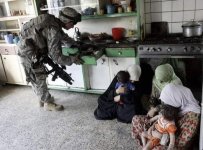
If they didn't find it, it wasn't for lack of trying:
006bwuv51tz81.jpg
American soldier searching for Saddam's chemical weapons in the kitchen of a residence

Hahahaha
 
To view this content we will need your consent to set third party cookies.
For more detailed information, see our cookies page.

Russian General Alexander Romanchuk (the creator of the Russian defense strategy in Zaporizhzhia) called this counteroffensive the Frühlingserwachen operation for clear reasons.
 
LIKE A BOSS!

To view this content we will need your consent to set third party cookies.
For more detailed information, see our cookies page.
 
To view this content we will need your consent to set third party cookies.
For more detailed information, see our cookies page.
 
Wonderful....

To view this content we will need your consent to set third party cookies.
For more detailed information, see our cookies page.

Here we go.
"big things" are coming. "Big times" are ahead.
Prophecies kept running 100% on track.
Doom of our time is very near now. Brace yourselves.
 
To view this content we will need your consent to set third party cookies.
For more detailed information, see our cookies page.

There are still people with the illusion that Ukraine will rebuild itself and become rich.
Here we go.
"big things" are coming. "Big times" are ahead.
Prophecies kept running 100% on track.
Doom of our time is very near now. Brace yourselves.
I really doubt that Putin would do this at the same level of escalation as NATO.
 

Ukrainians Are Preparing For A New Offensive | NATO Begins Exercises. Military Summary For 2024.06.5​


To view this content we will need your consent to set third party cookies.
For more detailed information, see our cookies page.
 

The Heat | Kupiansk Meat Grinder | The Russians Control Dnieper. Military Summary For 2024.06.05​


To view this content we will need your consent to set third party cookies.
For more detailed information, see our cookies page.
 
To view this content we will need your consent to set third party cookies.
For more detailed information, see our cookies page.


🤣🤣🤣😂😂😂😘😘😘

❗The Ukrainian Armed Forces (UAF) lost up to 660 militants as a result of successful combat operations by the Russian Battlegroup Yug.

🇷🇺🪖 More statements from the Russian Defense Ministry’s daily briefing on the progress of the special military operation in Ukraine:

🌏 The Russian Armed Forces hit the UAF's western weapons storage arsenals.

🌏 The Russian Armed Forces struck the location of a group of technicians who were developing flight missions for Ukrainian attack UAVs.

🌏 Russian Battlegroup Sever repelled five Ukrainian counterattacks and hit HIMARS MLRSs during counter-battery operations; the UAF lost up to 240 militants.

🌏 Russian Battlegroup Tsentr repelled six Ukrainian counterattacks.

🌏 Russian air defense forces shot down 62 Ukrainian UAVs, 14 HIMARS rockets, and three 'Hammer' guided bombs.

🌏 The UAF lost up to 450 militants as a result of successful combat operations by the Russian Battlegroup Zapad.

🌏 The Russian Armed Forces Group Vostok took more favorable positions, resulting in the enemy losing over 120 militants.

👍 Boost us! | Subscribe to @geopolitics_liv
 

UKRAINE’S FIGHTER FORCE – LESSONS LEARNED FROM COMBAT​

  1. Aviation Features
  2. Ukraine’s fighter force – lessons learned from combat


By Alexander Mladenov 5th June 2024
FEATURE

The Russia-Ukraine war has seen the Ukrainian air arm mainly countering cruise missile and drone attacks, while air combat against Russian fighters was carried out only in the opening days of invasion. Alexander Mladenov looks at the lessons learned from these operations
The Ukrainian Air Force (UkrAF) has been heavily involved in territorial air defence missions from day one of the Russian invasion, its pilots fighting with determination and rapidly adapting to the threats, despite the enemy’s technological and numerical superiority. While the Kyiv propaganda machine claimed multiple kills of Russian aircraft in the opening weeks of war, in fact there are no confirmed victories scored against jet fighters or heavy transports.
The UkrAF suffered relatively moderate losses in clashes with Russian fighters in February and March 2022, confirmed by obituaries of fallen pilots and aircraft wreckages found on Ukrainian territory. It is also a well-known fact that the Ukrainian fighter force amassed an alarmingly high number of loses caused by friendly fire, though most have never been publicly acknowledged.
A MiG-29 is seen here fully weaponised for the air-to-air mission, with a warload consisting of two R-27R missiles for BVR combat and four R-73s for WVR engagements
A MiG-29 is seen here fully weaponised for the air-to-air mission, with a warload consisting of two R-27R missiles for BVR combat and four R-73s for WVR engagements Ukrainian MoD
This analysis of the UkrAF’s air-to-air operations relies upon open-source information only, which permits a broad-brush picture of the Ukrainian fighter’s combat exploits and to identify the main lessons learned. The lack of credible and detailed information in the continuing war situation, however, makes it next to impossible to draw an all-encompassing review of the UkrAF’s air defence operations and their eventual effectiveness – both in terms of downed Russian fixed-wing aircraft, helicopters, cruise missiles and drones, and also by highlighting the number of disrupted enemy raids where no hard kills have been achieved.
The survivors of the UkrAF’s Su-27 fleet, believed to be between 15 and 20 aircraft, are currently employed for SEAD/DEAD and strike missions, delivering US- and French-supplied guided bombs to knock out important targets on the front-line and in the near-rear areas, in addition to limited territorial air defence missions
The survivors of the UkrAF’s Su-27 fleet, believed to be between 15 and 20 aircraft, are currently employed for SEAD/DEAD and strike missions, delivering US- and French-supplied guided bombs to knock out important targets on the front-line and in the near-rear areas, in addition to limited territorial air defence missions Ukrainian MoD
Day one of the Russian invasion (February 24, 2022) saw four UkrAF MiG-29s lost in combat, all belonging to 40th Brigade of Tactical Aviation (BrTA), a fighter unit home-based at Vasilkiv airfield near Kyiv. One of these Fulcrum crashed in Kyiv reservoir to the north of the city, presumably when scrambled to intercept RuAF helicopters or tactical jets operating in this area in the early hours of the morning. Its pilot, 1st Lt Roman Pasulka, drowned having successfully baled out. His body was recovered three months later.
The second known UkrAF fighter combat loss that day was a MiG-29 flown by Lt Col Vladimir Kohansky, whose body was found two months later. The third MiG-29 downed in combat then was flown by Lt Col Vyacheslav Yerko, who ejected after taking a hit, but his body was found on the ground. Ukrainian sources note that it was his third combat sortie on this first day of war. The fourth MiG-29 lost on that day was flown by 1st Lt Vyacheslav Radionov, whose body was found a month later; the loss happened in still unknown circumstances.
UkrAF pilots flying Su-27s were initially engaged in air defence missions but later on a proportion of the Flanker fleet got the capability to fire US-supplied AGM-88 HARM missiles to target Russian air defence radars
UkrAF pilots flying Su-27s were initially engaged in air defence missions but later on a proportion of the Flanker fleet got the capability to fire US-supplied AGM-88 HARM missiles to target Russian air defence radars Ukrainian MoD
The Su-27s operating in the first day, scrambled to intercept Russian jets and transport aircraft but were not able to score confirmed victories, while claiming multiple shot downs and suffering from one loss. In addition, a Flanker in operational condition was reported destroyed on the ground at its home base in Ozerne, Zhytomyr Oblast, hit by a Russian missile strike that took out its pilot and six ground crew.

Escaping missiles​

The first important lesson learned from the UkrAF fighter operations refers to the ability of an air arm to relocate, at short notice, most of its airworthy aircraft from their permanent bases, all of which were targeted by Russian missiles in the early hours of February 24. This has meant that the UkrAF has managed to avoid losses of combat-ready aircraft on the ground, with a just one exception – a Su-27 at Ozerne.
The UkrAF began flying combat sorties with most of the fleet in the same day to counter the RuAF fighter raids, bombers and helicopters, and to deliver limited strikes against the Russian troops on the ground, especially those operating around Kyiv.
Captain Taras Red’kin, callsign ‘Kot’, is a MiG-29 pilot from the 204th BrTA, killed in action on September 24, 2023 in Mykolaiv Oblast
Captain Taras Red’kin, callsign ‘Kot’, is a MiG-29 pilot from the 204th BrTA, killed in action on September 24, 2023 in Mykolaiv Oblast via Ukrainian internet
All air defence fighter operations have been conducted in the so-called agile combat employment manner, utilising a wide network of airfields and moving constantly between these, in an effort to avoid retaliatory missile strikes. It was a common practice to launch fighters for drone and cruise missile intercepts from one airfield, and then recover to a different location for rearming and refuelling. Across Ukraine more than 40 airfields have paved runways capable of supporting combat jet operations, plus a handful of highway sections useful for take-offs and landings. This readily available airfield network has, over time, enabled the UkAF to use its agile combat employment tactics to the full extent.
At the beginning of the invasion, the UkrAF’s active fighter fleet was estimated at about 30 MiG-29s (from a total fleet of about 75 examples) and 20 to 25 Su-27 air defence fighters (from a total fleet of about 40 examples). Later, the active inventory was gradually increased thanks to the entry into service of additional fighters taken out of mothballs, mostly serving as attrition replacements. The MiG-29 fleet was also strengthened by adding aircraft donated by the Slovak Republic (13) and Poland (14).
This Su-27UB air defence fighter is seen here armed with R-73 short-range air-to-air missiles outfitted with infrared seekers for close air combat
This Su-27UB air defence fighter is seen here armed with R-73 short-range air-to-air missiles outfitted with infrared seekers for close air combat Ukrainian MoD
The UkrAF Su-27 force equips four front line squadrons – two of these are assigned to the 831st BrTA at Myrhorod and the remaining two to the 39th BrTA at Ozerne. In turn, the more numerous MiG-29 fleet is operated by three tactical aviation brigades – the 204th at Lutsk, 40th at Vasylkiv and 114th at Ivano-Frankovsk – with a total of six front line squadrons.

Technology as a decisive factor​

The second important lesson learned from the Ukrainian fighter operations in the opening weeks of Russian invasion is that a fighter force equipped with outdated and poorly performing radars and relying on semi-active radar homing (SARH) air-to-air missiles (AAMs) has no chance in beyond visual range (BVR) combat against newer-generation air superiority fighters flown by skilled pilots equipped with much better and longer-range radars and firing active-radar homing (ARH) AAMs. The war has clearly demonstrated that there are no tactics and pilot skills which could provide any more or less level playing field in such situations, pitted against such overwhelming odds.
This is an in-flight image of Major Vadim Voroshilov, callsign ‘Karaya’, known as one of the well-experienced UkrAF pilots in downing drones and cruise missiles, who is serving with the Fulcrum-equipped 204th BrTA
This is an in-flight image of Major Vadim Voroshilov, callsign ‘Karaya’, known as one of the well-experienced UkrAF pilots in downing drones and cruise missiles, who is serving with the Fulcrum-equipped 204th BrTA Ukrainian Air Force
 
UkrAF fighter pilots have openly admitted in multiple interviews that that in air combat their MiG-29s and Su-27s are vastly inferior to the Russian Su-35s. So, they abandoned the option of engaging in air combat in the following weeks of war, instead leaving the resurgent ground-base air defence (GBAD) networks to cover the front lines and the near-rear areas.
In the opening days of war, however, the UkrAF’s GBAD system was significantly beaten by the Russian missile strikes and electronic countermeasures, functioning in a low-effective mode. That is why UkrAF fighters had to be employed more actively in the air defence role in the border regions, facing and trying to disrupt the Russian air raids. These initial air combats have resulted in a good many UkrAF claims for shot down enemy aircraft, but none of these have since been confirmed by visual proof of aircraft wreckage, captured aircrew or death notices of RuAF fighter jet pilots. In contrast, there is numerous proof of RuAF Su-25s, Su-30SMs and Su-34s taken down by the Ukrainian GBAD in the opening weeks of war, including crash sites, captured and dead aircrew, and death notices published in the Russian media, social networks and municipal authorities.
Capt Vadim Voroshilov is the MiG-29 pilot who had to eject from his seriously damaged fighter after a mid-air collision with drone remains during a Shahed-136 night intercept near the city of Vinitsa on October 12, 2022
Capt Vadim Voroshilov is the MiG-29 pilot who had to eject from his seriously damaged fighter after a mid-air collision with drone remains during a Shahed-136 night intercept near the city of Vinitsa on October 12, 2022 Ukrainian Air Force
First-hand accounts provided so far by Ukrainian fighter pilots who engaged in air combat against the RuAF fighters in the opening days and weeks of war invariably note that their common tactics comprised closing at ultra-low level, in an effort to remain under the coverage of the ground-based radars used by the Russians, getting into launch distance of their missiles while also trying to enter into visual combat. Pilots have also tended to claim successful avoidance of multiple Russian BVR missiles launched at their aircraft, using high-g manoeuvring to break lock-on and hide in terrain while flying at ultra-low level.
It is interesting to note that the Russian propaganda articles and video reports with apparently successful fighter pilots flying Su-35Ss, all refer to BVR air combats with R-77-1 active-radar missiles (launched in most of the engagements at the maximum or close to their maximum range); no close air combat accounts have been published so far. Similar first-hand accounts have been provided by MiG-31BM pilots, who tended to engage UkrAF aircraft with the very-long range R-37M missiles, capable of reaching targets at up to 110nm (200km) in head-on encounters. This, however, could be valid for engaging high-altitude targets in ideal conditions, while against manoeuvring fighters at low level, which is more representative for this war, missile range is well below 55nm (100km).
Remains of an UkrAF Su-27 fighter near Orekhovo, mostly likely shot down by friendly fire on June 5, 2022 claiming the life of Lt Colonel Dmitry Fischer
Remains of an UkrAF Su-27 fighter near Orekhovo, mostly likely shot down by friendly fire on June 5, 2022 claiming the life of Lt Colonel Dmitry Fischer via Russian internet

Countering drones​

The UkrAF’s fighter force, however, proved still useful in countering deep raids of cruise missiles and long-range one-way strike drones. In such missions, however, fighter pilots cannot rely on their radars with mediocre shoot-down/look-down capability against small-size/low-altitude targets and instead they are heavily dependent on the guidance cues provided by ground-controlled intercept (GCI) facilities.
To be effective, the GCI officers must have a good situation awareness on the routes of the low-level targets to be countered, which is facilitated by an extensive use of early-warning radar networks to detect and track cruise missiles and drones. The UkAF uses a centralised Virazh-Planshet command-and-control system for displaying the recognised air picture (by processing raw radar information supplied by a wide network of radar posts) and its distribution to the GCI facilities and the GBAD command-and-control posts. The system has proved highly useful for target detection and tracking, with distribution for subsequent engagement in the pre-designated operating zones of the air defence fighters and GBAD systems.
There is yet another important lesson learned here, related to the importance of deploying and sustaining a robust, redundant and survivable radar network with significant low-altitude coverage. It is a critical factor for supporting effective fighter operations when tasked with territorial air defence missions against low-flying cruise missiles and drones.
A pair of UkrAF MiG-29s seen in a training flight, without any armament
A pair of UkrAF MiG-29s seen in a training flight, without any armament Ukrainian MoD
The Russian missile strikes in the opening week of invasion targeted most – if not all – of the known early-warning radar posts across Ukraine, destroying a number of radars on duty, thus depriving the UkrAF of the ability to establish a reliable radar picture in certain regions of the country. Later on, however, the operability of the radar networks across the country was restored in a prompt manner thanks to the availability of spare radars, while the repair facilities provided an additional number of sets which sustained damage in the initial strikes.
The Ukrainian defence industry has also managed to supply numerous newly manufactured and refurbished radars while additional sets were delivered by friendly nations. These supplies enabled them to sustain the operability and coverage of the radar networks and compensate for the continuous combat attrition due to the Russian missile and loitering munitions strikes.
The gradual GBAD strengthening in the regions with active front lines at the beginning of March 2022 has relieved the fighter force from the difficult and dangerous task of facing the RuAF manned aircraft involved in air superiority, SEAD and CAS missions. At the times, there were no further deep raids carried out by Russian manned jets inside Ukrainian territory. Deep strikes were instead delivered by land-launched short-range ballistic missiles and air-/sea-/land-launched cruise missiles, and the UkrAF fighters began to be scrambled for intercepting cruise missiles on regular basis.
The UkrAF’s tiny fighter force has relied heavily on a significant number of experienced pilots who returned from retirement just before or soon after the outbreak of war, committed to fly combat sorties or act as instructors for young and unexperienced fighter drivers
The UkrAF’s tiny fighter force has relied heavily on a significant number of experienced pilots who returned from retirement just before or soon after the outbreak of war, committed to fly combat sorties or act as instructors for young and unexperienced fighter drivers Ukrainian MoD
From September 2022 onwards, the Russian military has deployed the Iranian-supplied one-way long-range attack drone, the Shahed-131/136, in massed use. UkrAF fighters were tasked to counter the deep raids of these slow-speed drones, intercepting the Shaheds in pre-designated engagement zones outside the GBAD coverage. There is still no confirmed information on the real-world effectiveness of the fighter jets when scrambled for hunting for low-flying cruise missiles and drones.
A view from the MiG-29’s cockpit during an air-to-air mission
A view from the MiG-29’s cockpit during an air-to-air mission Ukrainian MoD
During the Shahed drone intercepts, undertaken mostly at night, a MiG-29 was lost on October 12, 2022, due to a mid-air collision with drone fragments near the city of Vinitsa. The pilot, Capt Vadim Voroshilov, managed to eject safely. He told the local press that it happened in his second combat sortie that night, with three drones claimed gunned down in the first and two more in the second one. The third drone in the second sortie, however, exploded in close proximity to Voroshilov’s aircraft, causing serious damage.
Another MiG-29 is known to have been lost on February 13, 2023, in a night combat mission, defending territorial air. Its pilot, Capt Dmitry Shkvarevsky, managed to eject successfully in his 70th combat sortie in the war.
An Ukrainian MiG-29 pilot, wishing to remain anonninoius by wearing a face mack, poses in front of a fully-armed fighter. A serious proportion of the Fulcrum pilots killed in action in the first year of war were young and relatively inexperienced, but the survivors have rapidly gained combat experience to fly effective territorial air defence and SEAD/DEAD missions
An Ukrainian MiG-29 pilot, wishing to remain anonninoius by wearing a face mack, poses in front of a fully-armed fighter. A serious proportion of the Fulcrum pilots killed in action in the first year of war were young and relatively inexperienced, but the survivors have rapidly gained combat experience to fly effective territorial air defence and SEAD/DEAD missions Ukrainian MoD
 
Status
Not open for further replies.

Users who are viewing this thread

Pakistan Defence Latest

Country Watch Latest

Back
Top