The War in Ukraine Is Shifting Against Putin but He Isn’t Giving In
For four years,
Russia has bet on outlasting Ukraine in a war of attrition. Now, as Kyiv’s drones inflict growing damage on both Russia’s army and oil industry, Moscow is finding out that time isn’t necessarily on its side.
Russian President
Vladimir Putin’s invasion force is making ever-smaller gains at the front line, its losses exceed recruitment, and it is struggling to adapt to a Ukrainian drone campaign pounding its supply routes to its forward positions.
Meanwhile,
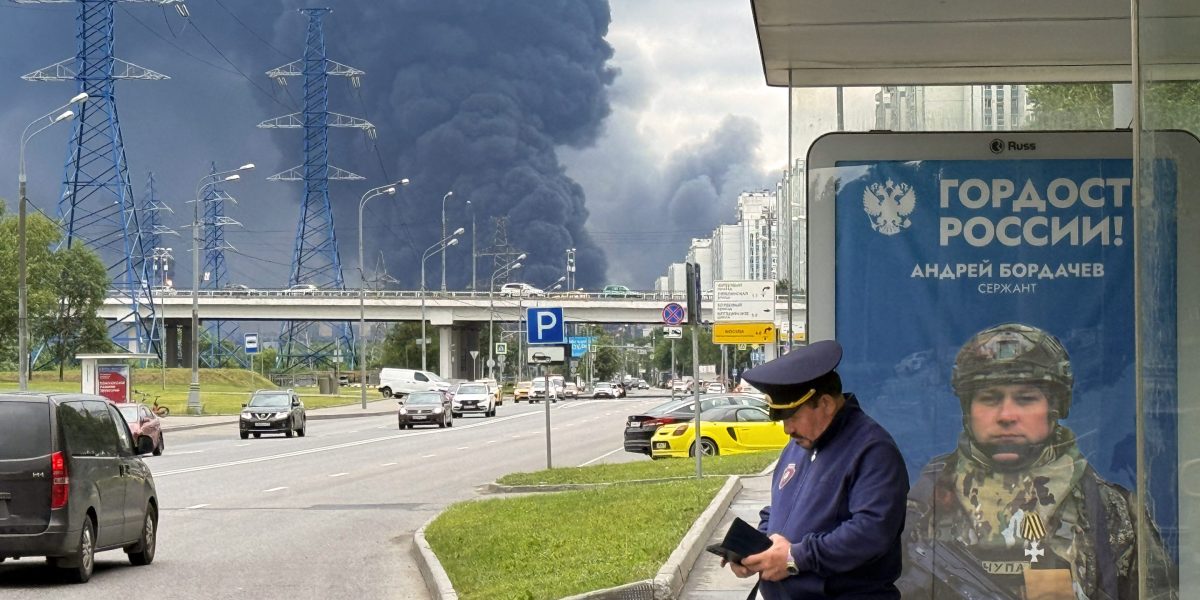
Ukraine’s stretched army hasn’t buckled as Russia hoped and is even pushing back the invaders in places with small counterattacks. Its increasingly capable armada of drones is causing a fuel crisis in Russian-occupied Crimea and pummeling refineries
deep inside Russia.
The war is at a turning point—but where to isn’t clear yet. Russia, on the back foot for the first time since late 2022, might still find ways to respond to Ukraine’s current advantage in the drone war. Ukraine still has major vulnerabilities, including its lack of Patriot interceptors against the Russian ballistic missiles hitting Kyiv and other cities.
The military shifts since last winter are reflected in how the war is now seen in Moscow, Kyiv and Washington.
President Trump, who last year told Ukrainian President Volodymyr Zelensky that he held “no cards,” praised the country’s ingenuity and its long-range drone capabilities on Wednesday in an amiable encounter with the Ukrainian leader at the North Atlantic Treaty Organization’s summit in Turkey.
Trump is being shown U.S. intelligence reports about Ukraine’s new strike capabilities and has been impressed by them, while the Russian public increasingly wants the war to end, according to two U.S. officials familiar with the matter. Those assessments explain why Trump is talking more positively about Ukraine compared with last year, the officials said.
Signs of exhaustion
Some Russian military analysts acknowledge the country is facing obstacles it never anticipated when it launched the full-scale invasion in early 2022.
“The Russian Federation’s general strategic position has deteriorated over the past year: On the ground, the pace of advance is slowing, Ukrainian counterattacks are intensifying, and there are signs of exhaustion within the Russian Armed Forces,” said Ruslan Pukhov, director of the Center for Analysis of Strategies and Technologies, a Moscow-based think tank.
Russian battlefield casualties have outstripped new recruitment since last winter, many analysts say, leading to growing speculation that Putin is preparing to order a compulsory mobilization to replenish his infantry. He has so far avoided that step for fear of its unpopularity.
In Ukraine, confidence has spread within the government—and in many tired but still-determined military units—that the country will survive the war, defend its independence and defy Putin’s attempt to subjugate it. But the long struggle isn’t over. Civilians in the big cities could still face another brutal winter if Russian missiles destroy their battered heating and electricity supply.
Ballistic missile strikes are “Russia’s last major advantage” in the war, Zelensky said this week, calling on the West to send more Patriots. “We are capable of doing everything else ourselves.”
A fire at an oil refinery in Omsk, Russia, far from the front lines, following a Ukrainian drone attack. Social media/Reuters
The big question, however, is when—if ever—Putin will decide that his invasion is bringing him diminishing returns and rising costs, so that he accepts Ukraine’s demand for a ceasefire that freezes the current front lines.
The Russian leader has continued to publicly repeat his maximalist war aims, including territorial concessions by Ukraine and the re-establishment of Moscow’s influence inside the country. But U.S. officials hope the Russian leader might be open to a deal that stops the war, on terms Kyiv can live with, later this year.
Others say the answer is “never.”
“Putin is prepared for a protracted war of attrition which he plans to sit out regardless of the consequences. This war has become practically Putin’s life’s work and he will wage it as long as he is alive,” said Pukhov, the Moscow-based analyst.
Putin has also claimed nonexistent battlefield advances, leading many Western analysts to assess that his generals are giving him a misleading picture of how the army is doing.
“Putin appears to be fed a drumbeat of inaccurate information that leads him to believe Russian military success is still inevitable” in Ukraine’s eastern Donetsk region, said Michael Kofman, a specialist on the Russian and Ukrainian militaries at the Carnegie Endowment for International Peace, a Washington think tank.
A shrinking advance
Russian forces are still advancing in the Donetsk region, the focus of their main offensive effort this year. Its infantry are slowly infiltrating the city of Kostyantynivka, although they are far from taking it.
The big change this year is that, previously, Russia was inching forward along almost the entire more than 700-mile front line, or at least in several sectors at once.
“Now it’s more even, with both sides advancing in different places,” said Rob Lee, a military expert at the Foreign Policy Research Institute, a Philadelphia think tank.
Ukraine’s army has found answers to the tactics that Russia has been using since last year, said both Lee and Kofman. Russia has relied on a combination of infantry sneaking through Ukraine’s thinly held front line, and drones targeting Ukrainian movement behind the lines.
But the defenders have become better at holding their ground and hunting down infiltrators, as well as at defending against Russian midrange drones with a layered system of detection, electronic interference and small interceptor drones.
“The Ukrainian army has continued to optimize, whereas the Russian army hasn’t really evolved in 2026. They’re fighting the same way as in 2025,” said Kofman.
Ukraine is conducting its own midrange drone campaign against Russian logistics behind the front lines, especially on the southern front. The Russians have so far struggled to adapt.
And Ukrainian units have developed new tactics that combine infantry and drones to conduct counterattacks.
“Ukraine is slowly retaking the initiative and challenging the Russians in areas where they are weaker,” said Konrad Muzyka, founder of Rochan Consulting, a Poland-based military analysis firm.
Drone damage
Ukraine’s escalating drone and missile strikes have hit Russian refineries and other energy infrastructure from Moscow and St. Petersburg to deep within Siberia, satellite imagery and video footage from social media show.
The strikes are increasingly disrupting the supply of fuel in parts of the country, and a shortage of diesel could become a problem for the Russian military, said Muzyka.
The growing range and quantity of Ukrainian drones are leaving Russia unable to protect all parts of its sprawling territory, and forcing the Kremlin to decide which cities and assets to protect.
Historically, “Russia’s size has been its strength and advantage,” said Nigel Gould-Davies, a former U.K. diplomat in Russia and a senior fellow for Russia and Eurasia at the International Institute for Strategic Studies. “Now it’s a disadvantage because there’s so much of it to defend,” he said.
But Ukraine’s improvements in the drone war and the ground war aren’t enough to force Russia to accept a ceasefire, Valeriy Zaluzhniy, the former head of Ukraine’s military, wrote in a Wednesday article for Britain’s Telegraph newspaper.
“The military balance has become one of mutual denial rather than decisive victory,” Zaluzhniy wrote.
Ukraine still faces a grueling test of endurance, he warned: “Russia continues to fight.”