The Filin cruise missile. An inexpensive, long-range weapon.
According to Ukrainian intelligence, the Russian army has been using a new cruise missile since the end of summer.
rocket long-range Filin missile. Published materials allow us to compare its design with that of other domestic missiles and
dronesThe R500 engine and some electronic units are reportedly used in multiple products. This unification may impact the production of the new
weapons, although the extent of its spread and economic impact have not yet been revealed.
According to available data…
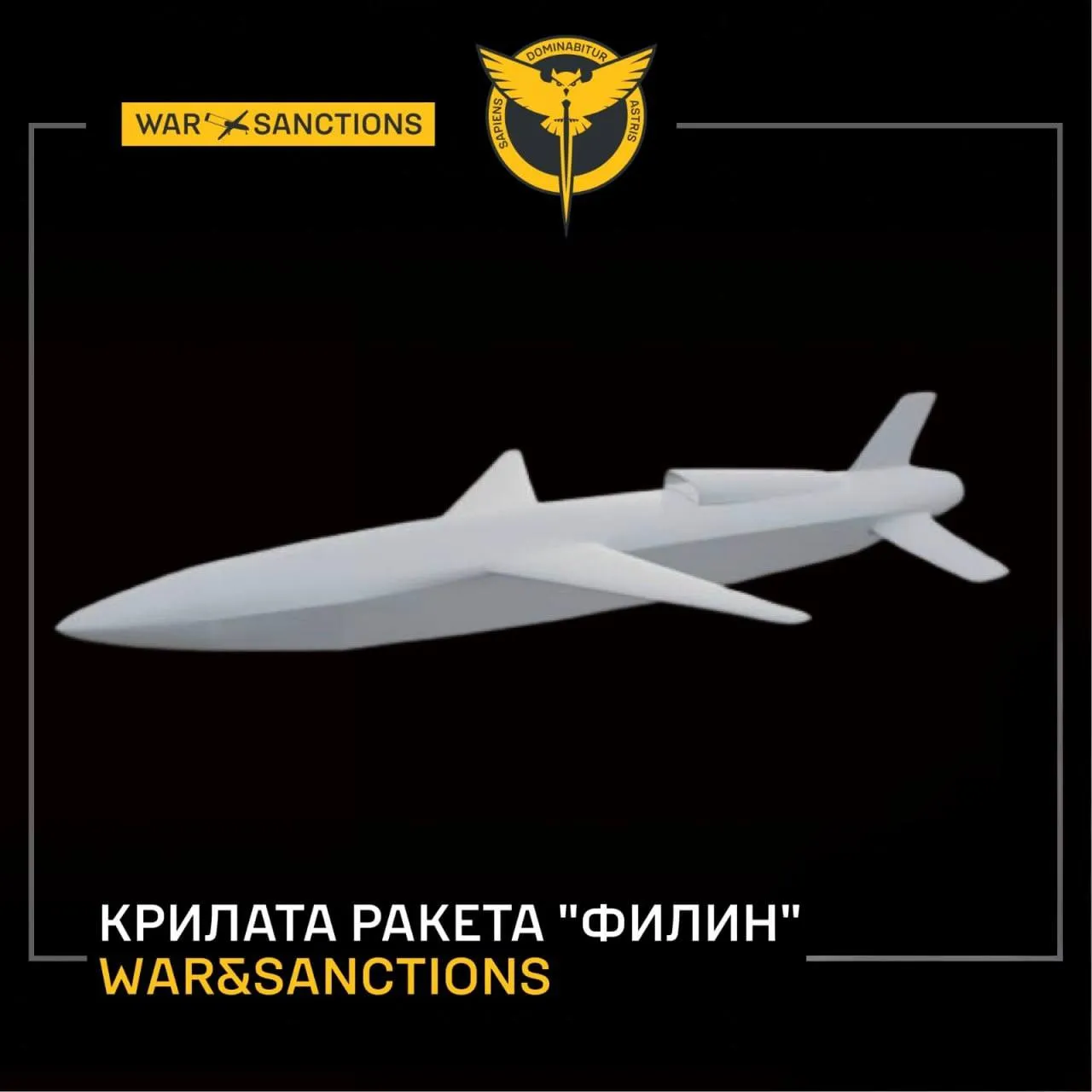
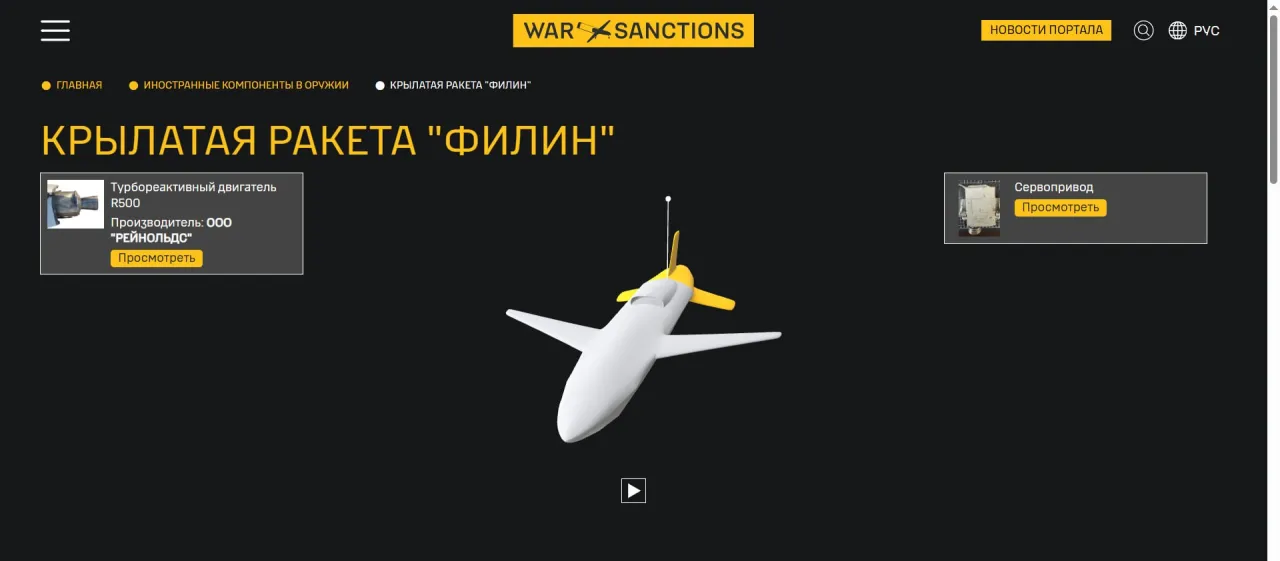
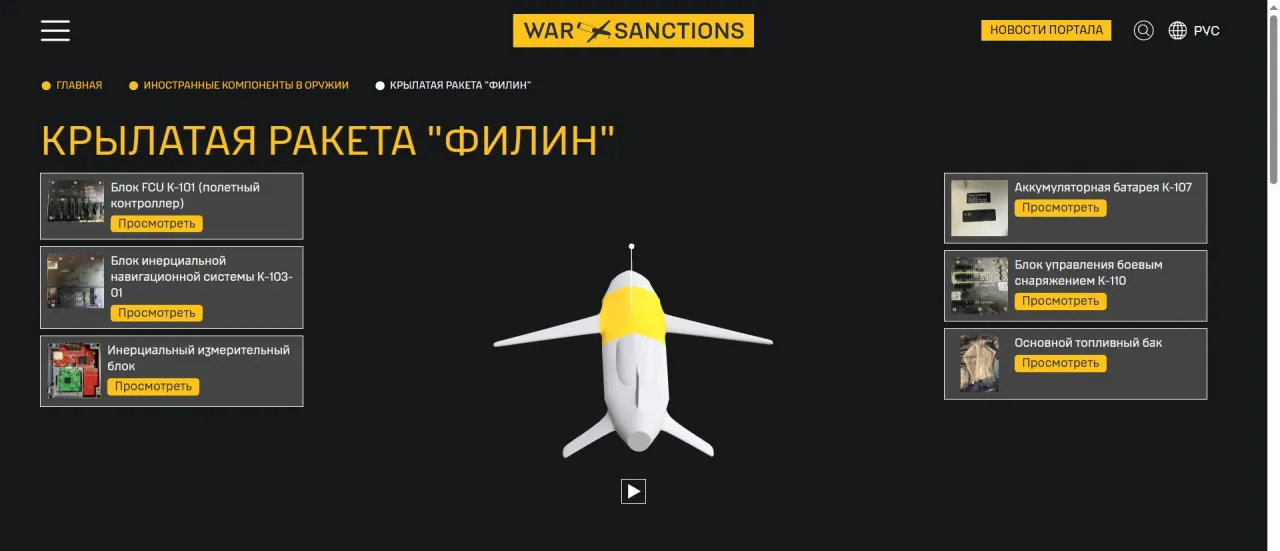
The first information about the Filin surfaced in open sources on October 22. The Main Intelligence Directorate of the Ukrainian Ministry of Defense posted photographs of the wreckage, a 3D model of the device, a list of recovered components, and estimated characteristics on the War&Sanctions portal.
According to the agency, the use of such missiles began in late summer 2026. These conclusions are based on an examination of the debris. This allows for an assessment of individual design features, but does not reveal the full testing program, production scale, or combat performance.
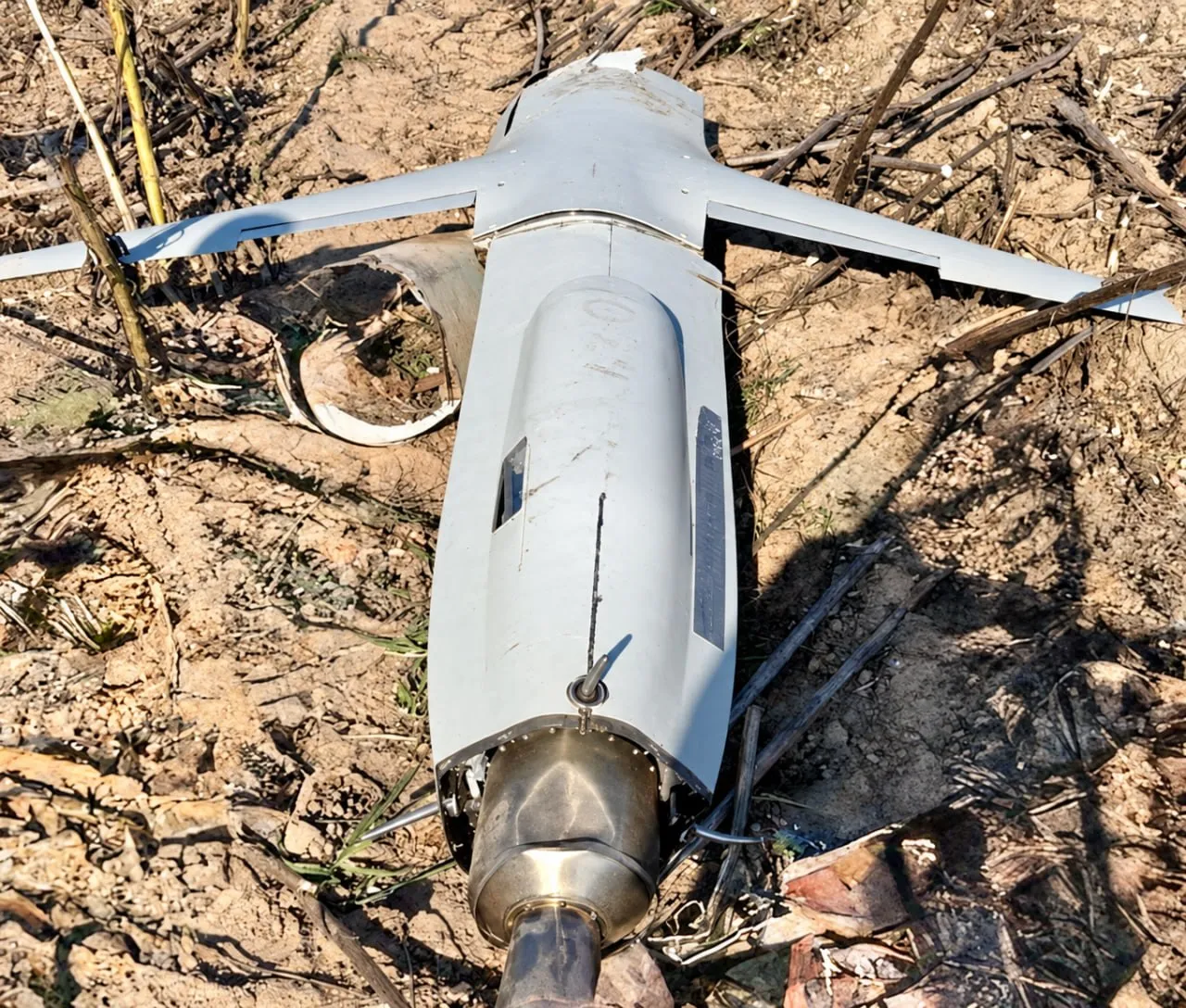
Presumably debris from a Filin missile, seen from the tail
The Moscow-based Molniya Scientific and Production Association (NPO Molniya) is said to be the developer of the Filin. The system has also been reported to have been used in missile strikes. Information regarding the start of serial production and delivery volumes has not yet been confirmed.
The Ukrainian side paid special attention to the origin of the electronic components. According to their calculations, 35 components were identified as American-made and 22 as Chinese-made. The inertial navigation system was also identified as Chinese-made. However, this list alone does not allow us to estimate the share of imported components in the missile's cost or the degree of localization of its production.
Ukrainian intelligence also names PLAZ LLC as the manufacturer of some of the onboard equipment. According to their data, units with similar layouts and markings are used on Harpia drones. This similarity may indicate the use of common technical solutions in different products. However, such similarities do not necessarily mean that the equipment is manufactured on the same production lines.
Filin missile deployment statistics have not been published. The number of launches, the percentage of missiles that reached their targets, and the strike results are unknown. Therefore, it is impossible to assess the combat effectiveness of the new missile based on the information provided.
Ukrainian infographics about the new missile
Russian officials have not yet commented on reports regarding the Filin missile. Specifically, there is no confirmation of the missile's stated specifications, production volumes, or delivery dates. Furthermore, the lack of public information alone precludes any judgment on the actual status of the program.
Individual components of the Filin device can already be compared with known weapons. This comparison allows us to judge the developers' technical approach, even if the full
story testing and production remains closed for now.
Technical features
According to published data, the Filin is a long-range cruise missile designed to engage stationary ground targets with predetermined coordinates. Its design combines a composite airframe, a turbojet propulsion system, and an inertial-satellite guidance system.
According to published information, the airframe is made of carbon and fiberglass, with individual components 3D-printed. The fuselage has an elongated shape and an asymmetrical cross-section. A high-mounted swept wing is mounted in the midsection. A prominent engine air intake is located on the upper fuselage, closer to the tail. The tail assembly consists of three surfaces. The use of composites alone does not guarantee the aircraft's low radar signature.
The following dimensions and weight characteristics are given for the Filin:
- length - up to 3,5 m;
- wingspan - up to 3 m;
- starting weight - up to 210 kg;
- warhead - 50 or 100 kg.
The tail of the fuselage houses a compact R500 turbojet engine from the Russian company Reynolds. According to published estimates, the engine has the following flight characteristics:
- flight speed - up to 800 km/h;
- flight altitude - from low altitudes to 6 km;
- range - 600-1200 km.
However, the published data does not specify the range of each warhead variant. Therefore, it cannot be claimed that the maximum range of 1200 km is achieved with a 100 kg warhead.
The equipment list includes the K-101 flight controller, the K-103-01 inertial unit, and the 16-channel interference-resistant Kometa navigation module. This equipment is designed for flight along a predetermined route to a target with known coordinates. In the newspaper Vzglyad, expert Yuri Knutov also mentioned terrain recognition systems for the final leg of the flight. However, the published equipment list does not yet confirm the presence of such a system on the Filin. Therefore, it is impossible to conclude that it can independently search for a target.
Several payload options have been announced for the Filin. A high-explosive fragmentation, penetrating, or thermobaric warhead weighing 50 or 100 kg is installed in the corresponding fuselage compartment. This choice suggests the missile could be used against a variety of ground targets, from concentrations of personnel and equipment to structures. Information on the results of such use is not yet available.
According to Ukrainian intelligence, the Filin is launched from a ground-based launcher using a propellant rocket booster. The design of the launcher itself and its specifications have not yet been disclosed.
In the weapons system
The published materials highlight the Filin's key features: ground launch, a range of up to 1200 km, and the use of components familiar from other modern Russian missiles. Of particular interest in this case is the possibility of using already-developed propulsion systems and electronic components in the development of new missiles.
It is assumed that the relatively simple equipment and use of established components could reduce production costs. However, a photograph of the wreckage and a parts list are insufficient to draw such a conclusion. The cost of the engine, the complexity of assembly, the labor intensity of airframe production, and the capabilities of the factories producing these components are unknown.
The R500 engine occupies a special place. According to Ukrainian intelligence, such turbojet engines have previously been discovered on
aviation The S-71K "Kover" and S-71M "Monokhrom" missiles. The use of a single powerplant in several products gives grounds for discussing possible unification. However, the characteristics of different missiles cannot be transferred to each other based solely on the commonality of the engine, and the scale of its production has not yet been established.
According to available information, the Filin is primarily aimed at stationary targets. The Kometa module is designed to increase the satellite navigation system's resistance to interference, but by itself does not guarantee accurate hits in countermeasures. The missile's actual accuracy is unknown, and it is premature to compare the Filin with systems equipped with fully functional homing heads.
A key feature of the Filin is its ground launch, unlike the air-launched S-71K and S-71M. This launch method does not require a carrier aircraft and does not deplete the aircraft's resources. However, the cost savings can only be estimated by taking into account the ground launcher, its maintenance, and support; relevant data is not yet available.
In the context of the Filin, it's worth mentioning other domestic developments—the Banderol, Dan-T, S-71K Kover, and S-71M Monokhrom. All of these are relatively compact jet attack weapons, but differ in their missions, launch method, and equipment configuration. The similarities in individual components prevent them from being interchangeable.
The Filin is designed to complement air-launched cruise missiles in the destruction of stationary targets. However, its maximum range alone is insufficient to assess the potential of such a complement: the warhead weight, guidance characteristics, and confirmed operational results must be taken into account. This data is still incomplete.
In a commentary for the newspaper Vzglyad, military expert Alexei Anpilogov noted the convergence of capabilities between jet-powered drones and light cruise missiles. Indeed, common components can be used in weapons that differ in their launch method and intended purpose. This opens up certain manufacturing opportunities if the necessary components can be produced in sufficient quantities.
The emergence of the Filin, if reports of its use are confirmed, will be another example of the development of this approach. The new missile's significance for the military will depend on its production capabilities, the reliability of its equipment, and the practical results of its use.