Navigation
Install the app
How to install the app on iOS
Follow along with the video below to see how to install our site as a web app on your home screen.
Note: This feature may not be available in some browsers.
More options
Style variation
You are using an out of date browser. It may not display this or other websites correctly.
You should upgrade or use an alternative browser.
You should upgrade or use an alternative browser.
Saudi Arabia strategic Projects: news, discussions & updates
- Thread starter The SC
- Start date
More options
Who Replied?
 Magnus Carlsen:
 Saudi Crown Prince Mohammed bin Salman is the person I admire most
 ️
️
The SC
INT'L MOD
- Thread starter
- #167
Saudi Space Agency
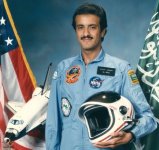

Prince Sultan bin Salman is considered the first Arab astronaut to fly on a US space shuttle.. Discovery shuttle in his case

Satellite and Communications Program:
The city launched 15 Saudi satellites between 2000-2018 AD
These satellites include the following:
1- Satellite (Saudi Sat 1A and Saudi Sat 1B)
Launch date: 2000 AD
Task: Receive and store data to ground stations.
2- Satellite (Saudi Sat 1C)
Launch date: 2002 AD
Mission: data transmission, amateur radio system (Oscar 50), and upgrading some systems used in previous satellites.
3- Satellite (Saudi Sat 2)
Launch date: 2004 AD
Mission: imaging, controlling the moon via sensors, directing the moon according to the mission.
4- The two satellites (Saudi Comsat 1 and Saudi Comsat 2)
Launch date: 2004 AD
Task: data transfer, property tracking.
5-Satellite (Saudi Sat 3)
Launch date: 2007 AD
Mission: remote sensing for the first time, and other civil goals such as urban planning and preventing the dangers of floods.
6- Data transmission satellite system (Saudi COMSAT 3, 4, 5, 6, 7)
Launch date: 2007 AD
Mission: Transmit navigational data for commercial ships and track them around the world with the AIS system.
7-Satellite (Saudi Sat 4)
Launch date: 2014 AD
Mission: Conduct physics experiments with ultraviolet radiation in space in cooperation with the US Space Agency (NASA).
8- Lunar exploration mission (Chang’e 4)
Launch date: 2014 AD
Mission: Conduct ultraviolet physics experiments in space in cooperation with NASA with automatic property tracking.
9-The two satellites (Saudi Sat 5A, 5B)
Launch date: 2018 AD
Mission: Space and terrestrial photoelectric sensing, photoelectric imaging.
10- A satellite above the clouds (SGS-1).
Launch date: 2019 AD
Mission: Providing high and secure communications for all sectors.
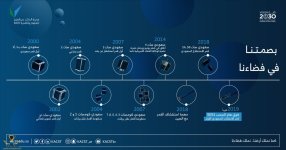
2019: Arabsat-6A
2021: Shaheen Sat and CubeSat
2023: Arabsat Badr 8 communications satellite
2023: Saudi Arabia launches into space the advanced Earth observation satellite
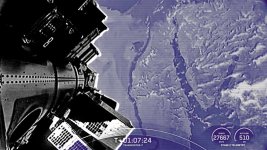
The satellite has the capability to gather information and images from anywhere on Earth..The satellite will collect high-resolution and high-quality data across the terrestrial, coastal, and ocean ecosystems around the globe..
Saudi Arabia launches first AI-powered satellite imagery analysis company
Majid Alghaslan, Chairman & CEO of Front End Limited Company and Founder & Partner of SpaceGuardian, and Jerry Javornicky, CEO and Co-Founder of SpaceKnow entered into a joint venture (JV) agreement to launch SpaceGuardian in the Kingdom of Saudi Arabia.
The agreement marks a significant leap forward in leveraging satellite imagery and AI analysis to empower various sectors across the Kingdom. SpaceGuardian specialises in applying machine learning AI on satellite imagery to facilitate economic activities, energy and commodities analysis, environmental assessments, construction progress tracking, and more.
SpaceGuardian’s cutting-edge technology allows for real-time monitoring of construction projects, delivering timely updates on progress and safety parameters through continuous satellite imagery analysis coupled with machine learning capabilities. This proactive approach enhances project management efficiency and safety standards, ensuring optimal outcomes.
In addition to construction project oversight, SpaceGuardian’s solutions extend to urban planning and economic activity assessments for cities. Through the analysis of satellite imagery, the company enables authorities to make informed decisions regarding infrastructure development and resource allocation, fostering sustainable growth and development. SpaceGuardian can address the pressing need for effective traffic management through the integration of satellite imagery and AI, providing vital insights into traffic patterns and congestion hotspots, enabling authorities to implement targeted interventions and optimize transportation systems for enhanced efficiency and safety.
* Ambitious Saudi space projects: From satellites to space stations.
The Kingdom is moving towards achieving its space ambitions through future projects, including the launch of the first Saudi commercial satellite in 2025, the launch of a manned Saudi spacecraft in 2030, and the establishment of a Saudi #SpaceStation by 2040.
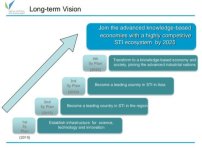
As Saudi Arabia continues its drive towards creating a more tech-centric and knowledge-based economy, under the objectives laid out in its Vision 2030 national strategy, it is focusing heavily on “localizing strategic technologies in the Kingdom, increasing local content and enabling Saudi young people to work with advanced state-of-the-art technologies in the field of satellite development and manufacturing,” as highlighted in an article earlier this year by Saudi Gazette.
In September 2022, the Saudi Space Authority launched the Kingdom’s Astronaut Program, which aims to qualify experienced national cadres for long- and short-term space flights. The program also seeks to train Saudi astronauts to participate in scientific experiments, international research, and future space-related missions.
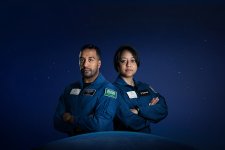
In 2023, astronauts Rayyanah Barnawi and Ali al-Qarni blasted off from a SpaceX Falcon 9 rocket aboard a SpaceX Dragon spacecraft as part of the Axiom 2 space mission to the ISS from NASA’s Kennedy Space Center in Florida.
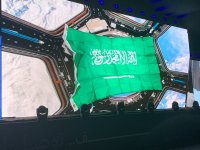
The two Saudi astronauts have made it successfully to the International Space Station (ISS) on Monday, where they will be conducting 14 scientific and research experiments during their mission on the International Space Station (ISS). The results of the Saudi space mission, on board of which the Kingdom’s first-ever astronauts Ali Al-Qarni and Rayyanah Barnawi, the first Arab Muslim female astronaut, will guarantee the Kingdom an avant-garde position in space exploration and in serving humanity and will assert the leading roles of the Saudi research centers and their intensified efforts in making an impact in the field. During their time on the ISS, the two Saudi astronauts will engage in 11 research and scientific experiments within a microgravity environment. Additionally, they will participate in three interactive educational experiences with students in the Kingdom, bringing the total number of experiments to 14. The focus will be on conducting human research, cell sciences, and cloud seeding experiments in the microgravity environment.
SARsat Arabia builds cost-effective small satellites using synthetic aperture radar for Earth observation providing high-resolution images (data) in rapid succession, around the clock, to support agricultural analyzes, change monitoring, port logistics, defense and security, and urban planning. Our mission is to provide data from space to allow better decisions to be made
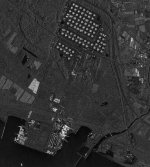
SARsat Arabia works on a constellation of 18 satellites
Satellite Constellation delivers reliable and timely SAR imagery. A large constellation distributed uniformly enables simultaneously to reach a high speed of response and to frequently scan large areas at the same time. A large SAR constellation offers an enormous amount of acquisition possibilities to capture the territory of entire nations at high resolution, and more, in a single day. The imagery of SAR satellite constellation is not constrained by weather conditions or the need for sunlight.
The SC
INT'L MOD
- Thread starter
- #168
Saudi Arabia (KACTS) has developed SAR (Synthetic Aperture Radar) satellites
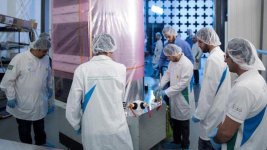
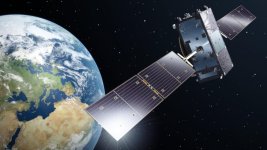
Publication in the field of space entitled:
Radar imaging, dual-frequency SAR satellites, and the global priority struggle between King Abdulaziz City for Science and Technology (KACST) in front of a consortium that brings together NASA and ISRO
A quick look at the beginning at the meaning of SAR or Synthetic Aperture Radar, which means synthetic aperture radar, or according to its colloquial meaning, radar imaging.
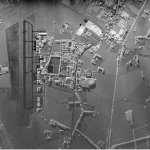
SAR radar imaging techniques are used in many aerial applications, as they send their waves to the Earth's surface and their reflection forms accurate two-dimensional images.
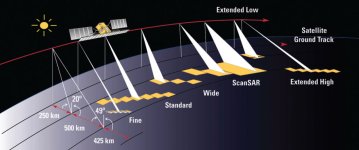
Then re-process the images to obtain high-resolution 3D images.
SAR radar imaging techniques are used in fighter aircraft, reconnaissance aircraft, drones, balloons, as well as satellites to draw accurate images.
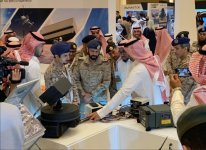
Some Saudi projects dedicated to aircraft include radar detectors and radar sights

Advantages of SAR imaging
The main advantage enjoyed by SAR radar imaging devices is that monitoring is carried out regardless of the weather or lighting conditions, day or night, and is not affected.
In other words, SAR satellites can be used at night or with heavy cloud cover over the area of interest and draw very accurate images.


SAR provides the ability to monitor large areas over short periods of time. For example, it takes about 30 seconds to collect images of an area 100 x 50 kilometers in size via SAR, while capturing optical images of this small piece of land, with adequate resolution, may take a few days.
Dual frequency SAR satellite:
Currently, all SAR satellites in space are single-frequency satellites, meaning they operate on only one wavelength.
The competition for the priority of launching the first dual-frequency SAR satellite is ongoing between KACST and a consortium that brings together the American and Indian space agencies NASA and ISRO on their NISAR satellite.
Introduction to the KACST project
On 10/2015, the Space and Aviation Research Institute of the King Abdulaziz City for Science and Technology began the last steps to reach their dream of international competition, which they set 25 years ago and worked hard to achieve.
That date marks the beginning of a dual-frequency SAR satellite project, the first of its kind in the world.
The beginning of the project On 10-2015, the city KACST announced the beginning of the development of a dual-frequency SAR satellite as a very advanced and unique satellite.
An overview of the Saudi satellite and some of its features

The SC
INT'L MOD
- Thread starter
- #169
The SAR payload is the first of its kind in the world to support a dual-frequency satellite radar (Band L&X)
- Supports StripMap mode and StripSAR mode to meet different needs and serve many applications, such as high-resolution photography and imaging of large areas, coastal monitoring, and monitoring changes specifically at points on the ground.
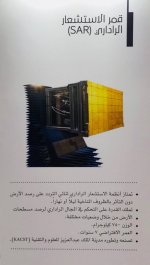
The project includes 5 main stages:
1- Determine the main requirements, including specifications, concepts and analyses.
2- Design and development.
3- Initial tests and development of prototypes.
4- Develop and test the engineering models that have been made.
5- Assembly and final tests.
Seven years lifespan is considered a good number in the world of satellites. For example, the lifespan of its competitor, the NISAR satellite, which is affiliated with the American and Indian space agencies NASA and NISAR, is only 3 years.. less than half the lifespan of the KACST satellite.
- Supports StripMap mode and StripSAR mode to meet different needs and serve many applications, such as high-resolution photography and imaging of large areas, coastal monitoring, and monitoring changes specifically at points on the ground.
The project includes 5 main stages:
1- Determine the main requirements, including specifications, concepts and analyses.
2- Design and development.
3- Initial tests and development of prototypes.
4- Develop and test the engineering models that have been made.
5- Assembly and final tests.
Seven years lifespan is considered a good number in the world of satellites. For example, the lifespan of its competitor, the NISAR satellite, which is affiliated with the American and Indian space agencies NASA and NISAR, is only 3 years.. less than half the lifespan of the KACST satellite.
 Solutions to the Palestinian situation must be developed comprehensively
The SC
INT'L MOD
- Thread starter
- #172
The enemy always understands before the friend that (the solution is in Riyadh)

May God protect the Kingdom of Saudi Arabia, which has continued throughout its history to save the Arabs
Preserving their rights and seeking security for them and their homelands...
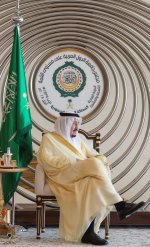
May God protect the Kingdom of Saudi Arabia, which has continued throughout its history to save the Arabs
Preserving their rights and seeking security for them and their homelands...
The SC
INT'L MOD
- Thread starter
- #174

“Lucid” will begin exporting from its industrial complex in Saudi Arabia in a few months
 The first export destination will be the EmiratesLucid aims to export 85% of the production of its industrial complex in King Abdullah Economic City.It is expected that the complete manufacturing units in the industrial complex will be completed in 2026, with a production capacity of 150,000 cars annually.The company aims to start producing its third model at its factory in Saudi Arabia
KAUST helps accelerate the electric vehicle sector in Saudi Arabia

KAUST talent has the power to be a driving force behind Saudi Arabia’s burgeoning electric vehicle (EV) sector. For car manufacturer Lucid Motors, which recently opened an advanced manufacturing plant in nearby King Abdullah Economic City (KAEC), the University and its highly skilled pool of graduates will help accelerate the Kingdom’s journey toward a sustainable and innovative EV future.
The SC
INT'L MOD
- Thread starter
- #175
Saudi Arabia and the USA agree on three components
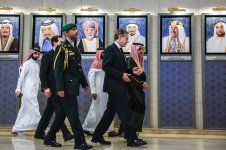
Secretary of State Antony Blinken walks with Saudi Arabian Foreign Minister Prince Faisal bin Farhan bin Abdullah to a Joint Ministerial Meeting of the GCC-US Strategic Partnership on April 29, 204 in Riyadh, Saudi Arabia.
Evelyn Hockstein/Reuters/Pool
Saudi Arabia and the United States are finalizing the details of a landmark deal to strengthen bilateral trade and defense – but an agreement will not be reached if the kingdom and Israel do not establish diplomatic relations, US officials said.
A defense treaty would solidify the seven-decade security alliance between Saudi Arabia and the US, and tie them ever closer to each other as US adversaries like Iran, Russia and China seek to expand their influence in the Middle East. Israeli Prime Minister Benjamin Netanyahu has long sought relations with Saudi Arabia, home of Islam’s holiest sites, as the move could domino across the wider Muslim world.
The US is currently negotiating one mega-deal involving three components, State Department spokesperson Matthew Miller said on Thursday.
The first component includes a package of agreements between the US and Saudi Arabia, another component has the normalization of relations between Saudi Arabia and Israel, and a third component for a pathway to a Palestinian state.
“All of them are linked together. None go forward without the others,” Miller said.
For normalization to be realized between Saudi Arabia and Israel, there has to be a pathway for a Palestinian state and “calm in Gaza,” US Secretary of State Antony Blinken told a panel at an economic conference in Riyadh this week.
“The work that Saudi Arabia and the United States have been doing together in terms of our own agreements, I think is potentially very close to completion, but then in order to move forward with normalization two things will be required: calm in Gaza and a credible pathway to a Palestinian state,” he said.
On the sidelines of the forum, Blinken met Saudi Crown Prince Mohamed bin Salman (MBS) to discuss the deal, the State Department said. Experts describe the Saudi-US pact as a “comprehensive set of understandings” that would include security, economic and technological guarantees to the kingdom, as well as support for its civilian nuclear program.
The normalization deal is expected to be modeled on the Abraham Accords, a set of treaties that saw four Arab states recognize Israel in 2020 that sidestepped the longstanding Arab demand for an independent Palestinian state as a prerequisite to recognition of Israel. MBS had said earlier that a pact with Israel would be “the biggest historical deal since the Cold War.”
In 2021, Netanyahu described the Accords as enabling Israel to replace “the old and dangerous doctrine of territories in exchange for peace and brought peace in exchange for peace, without giving up a single inch” and sought to expand what he called the “circle of peace.”
Since then, the Biden administration has made Israel-Saudi normalization central to its Middle East policy. The US and Saudi Arabia had continued discussions on the pact in 2023, and Blinken was expected to fly to Riyadh on October 10 last year to discuss the details, just three days before Hamas attacked Israel, postponing the effort.
The subsequent Israeli assault on Gaza, which has left the enclave in ruins and killed more than 34,000 Palestinians, may have changed the parameters of the deal for Saudi Arabia, analysts say. Now Israel’s acceptance of a component calling for an “irreversible” pathway to a Palestinian state would be key to the crucial normalization component of the wider deal.
“We have the broad outlines on what needs to happen on the Palestinian front…credible, irreversible [pathway to a Palestinian state],” Saudi Foreign Minister Prince Faisal bin Farhan told a World Economic Forum panel without referencing normalization with Israel.
Netanyahu has repeatedly rejected the prospect of an independent Palestinian state, arguing that it would hurt Israel’s security, and is adamant on pressing ahead with the Gaza war until Hamas is eliminated.
Those obstacles might see the kingdom attempt to close the bilateral deal without the normalization component of the agreement, analysts say. But such an approach would face major hurdles. An agreement establishing a firm US military commitment to Saudi Arabia’s security, without the normalization component, is unlikely to pass through the US Congress, Republican Senator Lindsey Graham has said.
“If there is a mutual defense agreement negotiated in the form of a treaty, it needs 67 votes in the Senate to become binding. Without normalizing the Israeli-Saudi relationship and ensuring the security needs of Israel regarding the Palestinian file, there would be very few votes for a mutual defense agreement between the US and Saudi Arabia,” Graham said on X in response to reports of Saudi Arabia opting for a “plan B” to the agreement.
Experts say that Biden could be able to bypass Congress to reach the agreement by modeling it around another security agreement it signed with Bahrain last year.
“There is another pathway, modeled around the Comprehensive Security Integration and Prosperity Agreement the Biden administration signed with Bahrain in September of 2023,” according to Firas Maksad, Senior Fellow and Director for Strategic Outreach at the Middle East Institute in Washington DC. The text of that pact “explicitly states that other parties may be invited to join,” he said.
However, there has been no indication that the Biden administration would opt to bypass Congress for the bilateral agreement with Saudi Arabia to pass.
A victory for Saudi Arabia
For Saudi Arabia, a bilateral agreement with the US would be a major victory, marking an end to the era when Biden sought to undermine MBS by pledging to turn his country into a “pariah” after the murder of Washington Post columnist Jamal Khashoggi at the hands of Saudi intelligence officials in Turkey.
The deal would also “consolidate America’s dominance in the Middle East for generations and would blunt the growing challenge posed by both China and Russia,” Maksad said.
MBS is eager to bolster the kingdom’s defenses and diversify the Saudi economy away from hydrocarbons, as he pursues an ambitious economic policy dubbed Vision 2030. The kingdom has a nascent civilian nuclear program that the Crown Prince is keen to develop with US support.
“Saudi Arabia would like to make a deal with the United States and this is probably the best time during the Biden administration to help some of the stickier issues get through Congress,” according to Karen Young, a senior research scholar at Columbia University’s Center on Global Energy Policy, referring to enrichment of nuclear materials.
Another sticking point in any US support for such a program is American opposition to local enrichment of uranium, a key component for nuclear power that could also be used to develop nuclear weapons. Saudi Arabia is rich in uranium deposits and has insisted on being able to enrich it domestically, which would be a first for an Arab state. Neighboring United Arab Emirates, for example, imports enriched uranium to power its nuclear plants.
On Wednesday, Democratic Senator Edward J. Markey, co-chair of the Nuclear Weapons and Arms Control Working Group, called on the Biden administration to ensure that Riyadh commits to forego enrichment and reprocessing of nuclear material, citing MBS as saying previously that Saudi Arabia would develop a nuclear weapon if Iran does too.
“The path towards Middle East peace should not include the prospect of a nuclear-armed Saudi Arabia, which would undermine the interests of the US, allies, and partners across the region,” he said in his letter.
The Saudi-US pact would make it incumbent on both countries to work together to deter and confront any external aggression, but doesn’t formalize it as a treaty alliance, according to Maksad.
“It is often described as Article 4.5, stopping just short of a treaty alliance that requires Senate approval but providing for a written commitment of mutual defense,” Maksad said, referring to the NATO treaty’s Article 5, which obliges all member states to come to the defense of any state facing attack.
“There will still be room for a multilateral security agreement that eventually includes Israel, along with Saudi Arabia, Bahrain, the U.S. and others, when political circumstances allow…the choice will be Israel’s, when it’s ready to put something on the table that moves the ball forward towards a two-state solution with the Palestinians,” Maksad said.
https://edition.cnn.com/2024/05/02/...-israel-palestinian-statehood-intl/index.html
‘None go forward without the others.’ US mega-deal would tie together the futures of Saudi Arabia, Israel and Gaza
Secretary of State Antony Blinken walks with Saudi Arabian Foreign Minister Prince Faisal bin Farhan bin Abdullah to a Joint Ministerial Meeting of the GCC-US Strategic Partnership on April 29, 204 in Riyadh, Saudi Arabia.
Evelyn Hockstein/Reuters/Pool
Saudi Arabia and the United States are finalizing the details of a landmark deal to strengthen bilateral trade and defense – but an agreement will not be reached if the kingdom and Israel do not establish diplomatic relations, US officials said.
A defense treaty would solidify the seven-decade security alliance between Saudi Arabia and the US, and tie them ever closer to each other as US adversaries like Iran, Russia and China seek to expand their influence in the Middle East. Israeli Prime Minister Benjamin Netanyahu has long sought relations with Saudi Arabia, home of Islam’s holiest sites, as the move could domino across the wider Muslim world.
The US is currently negotiating one mega-deal involving three components, State Department spokesperson Matthew Miller said on Thursday.
The first component includes a package of agreements between the US and Saudi Arabia, another component has the normalization of relations between Saudi Arabia and Israel, and a third component for a pathway to a Palestinian state.
“All of them are linked together. None go forward without the others,” Miller said.
For normalization to be realized between Saudi Arabia and Israel, there has to be a pathway for a Palestinian state and “calm in Gaza,” US Secretary of State Antony Blinken told a panel at an economic conference in Riyadh this week.
“The work that Saudi Arabia and the United States have been doing together in terms of our own agreements, I think is potentially very close to completion, but then in order to move forward with normalization two things will be required: calm in Gaza and a credible pathway to a Palestinian state,” he said.
On the sidelines of the forum, Blinken met Saudi Crown Prince Mohamed bin Salman (MBS) to discuss the deal, the State Department said. Experts describe the Saudi-US pact as a “comprehensive set of understandings” that would include security, economic and technological guarantees to the kingdom, as well as support for its civilian nuclear program.
The normalization deal is expected to be modeled on the Abraham Accords, a set of treaties that saw four Arab states recognize Israel in 2020 that sidestepped the longstanding Arab demand for an independent Palestinian state as a prerequisite to recognition of Israel. MBS had said earlier that a pact with Israel would be “the biggest historical deal since the Cold War.”
In 2021, Netanyahu described the Accords as enabling Israel to replace “the old and dangerous doctrine of territories in exchange for peace and brought peace in exchange for peace, without giving up a single inch” and sought to expand what he called the “circle of peace.”
Since then, the Biden administration has made Israel-Saudi normalization central to its Middle East policy. The US and Saudi Arabia had continued discussions on the pact in 2023, and Blinken was expected to fly to Riyadh on October 10 last year to discuss the details, just three days before Hamas attacked Israel, postponing the effort.
The subsequent Israeli assault on Gaza, which has left the enclave in ruins and killed more than 34,000 Palestinians, may have changed the parameters of the deal for Saudi Arabia, analysts say. Now Israel’s acceptance of a component calling for an “irreversible” pathway to a Palestinian state would be key to the crucial normalization component of the wider deal.
“We have the broad outlines on what needs to happen on the Palestinian front…credible, irreversible [pathway to a Palestinian state],” Saudi Foreign Minister Prince Faisal bin Farhan told a World Economic Forum panel without referencing normalization with Israel.
Netanyahu has repeatedly rejected the prospect of an independent Palestinian state, arguing that it would hurt Israel’s security, and is adamant on pressing ahead with the Gaza war until Hamas is eliminated.
Those obstacles might see the kingdom attempt to close the bilateral deal without the normalization component of the agreement, analysts say. But such an approach would face major hurdles. An agreement establishing a firm US military commitment to Saudi Arabia’s security, without the normalization component, is unlikely to pass through the US Congress, Republican Senator Lindsey Graham has said.
“If there is a mutual defense agreement negotiated in the form of a treaty, it needs 67 votes in the Senate to become binding. Without normalizing the Israeli-Saudi relationship and ensuring the security needs of Israel regarding the Palestinian file, there would be very few votes for a mutual defense agreement between the US and Saudi Arabia,” Graham said on X in response to reports of Saudi Arabia opting for a “plan B” to the agreement.
Experts say that Biden could be able to bypass Congress to reach the agreement by modeling it around another security agreement it signed with Bahrain last year.
“There is another pathway, modeled around the Comprehensive Security Integration and Prosperity Agreement the Biden administration signed with Bahrain in September of 2023,” according to Firas Maksad, Senior Fellow and Director for Strategic Outreach at the Middle East Institute in Washington DC. The text of that pact “explicitly states that other parties may be invited to join,” he said.
However, there has been no indication that the Biden administration would opt to bypass Congress for the bilateral agreement with Saudi Arabia to pass.
A victory for Saudi Arabia
For Saudi Arabia, a bilateral agreement with the US would be a major victory, marking an end to the era when Biden sought to undermine MBS by pledging to turn his country into a “pariah” after the murder of Washington Post columnist Jamal Khashoggi at the hands of Saudi intelligence officials in Turkey.
The deal would also “consolidate America’s dominance in the Middle East for generations and would blunt the growing challenge posed by both China and Russia,” Maksad said.
MBS is eager to bolster the kingdom’s defenses and diversify the Saudi economy away from hydrocarbons, as he pursues an ambitious economic policy dubbed Vision 2030. The kingdom has a nascent civilian nuclear program that the Crown Prince is keen to develop with US support.
“Saudi Arabia would like to make a deal with the United States and this is probably the best time during the Biden administration to help some of the stickier issues get through Congress,” according to Karen Young, a senior research scholar at Columbia University’s Center on Global Energy Policy, referring to enrichment of nuclear materials.
Another sticking point in any US support for such a program is American opposition to local enrichment of uranium, a key component for nuclear power that could also be used to develop nuclear weapons. Saudi Arabia is rich in uranium deposits and has insisted on being able to enrich it domestically, which would be a first for an Arab state. Neighboring United Arab Emirates, for example, imports enriched uranium to power its nuclear plants.
On Wednesday, Democratic Senator Edward J. Markey, co-chair of the Nuclear Weapons and Arms Control Working Group, called on the Biden administration to ensure that Riyadh commits to forego enrichment and reprocessing of nuclear material, citing MBS as saying previously that Saudi Arabia would develop a nuclear weapon if Iran does too.
“The path towards Middle East peace should not include the prospect of a nuclear-armed Saudi Arabia, which would undermine the interests of the US, allies, and partners across the region,” he said in his letter.
The Saudi-US pact would make it incumbent on both countries to work together to deter and confront any external aggression, but doesn’t formalize it as a treaty alliance, according to Maksad.
“It is often described as Article 4.5, stopping just short of a treaty alliance that requires Senate approval but providing for a written commitment of mutual defense,” Maksad said, referring to the NATO treaty’s Article 5, which obliges all member states to come to the defense of any state facing attack.
“There will still be room for a multilateral security agreement that eventually includes Israel, along with Saudi Arabia, Bahrain, the U.S. and others, when political circumstances allow…the choice will be Israel’s, when it’s ready to put something on the table that moves the ball forward towards a two-state solution with the Palestinians,” Maksad said.
https://edition.cnn.com/2024/05/02/...-israel-palestinian-statehood-intl/index.html
The SC
INT'L MOD
- Thread starter
- #176
China is building in Saudi Arabia the largest super shipyard in the world
It will be delivered this year
It will be delivered this year
The King Salman Global Complex project is located on the coast of the Arabian Gulf, east of the Kingdom of Saudi Arabia, in the Ras Al-Khair industrial area, 180 kilometers north of Dammam, the third largest city in the Kingdom of Saudi Arabia. Once completed, it will become the world's largest "super shipyard", mainly engaged in the manufacture, maintenance, repair and refurbishment of ships and drilling rigs, including supertankers. We are expected to drive economic growth in Saudi Arabia by $17 billion, create 80,000 jobs, and become a powerful new engine for economic and social development in Saudi Arabia.
The project has been generally contracted by Shandong Electric Power Construction Co., Ltd. Construction began in December 2019, and is expected to be fully delivered this year. The project site is 4.5 kilometers long and 2.5 kilometers wide, and during the peak construction period, more than 18,000 employees are working on the site at the same time, and more than 1,500 sets of machinery are moving at full capacity. There are still tens of thousands of people actively involved in construction.
Due to the large operating area, large number of people involved, and cumbersome operating procedures, the project comprehensively used technologies such as sensors, 4G mobile Internet, and positioning systems to independently develop an intelligent construction site system that can track on-site conditions at any time and respond right on time.
Since this year, a number of key buildings in the project have been handed over to owners, including the project's core facility, the C201 body shop, and based on the delivered plant and equipment, shipyard operator International Marine Industries has begun construction of offshore drilling rigs. "The first and largest shipyard in Saudi Arabia will be built here, and a maritime industry chain will gradually be formed. Given its importance, we are full of expectations to complete the project on schedule," said Sujith Haridas, Asset Manager at International Marine Industries.
Awad, government affairs coordinator for the King Salman Global Park project, and former director of the Legal Affairs Office for the city of Dammam, Saudi Arabia, said that “Vision 2030” envisions a bright future for economic diversification in the Kingdom of Saudi Arabia, and many Chinese companies have participated in the economic transformation process. The Kingdom has its own technical capabilities and hard work spirit, which has injected strong momentum into practical cooperation between Saudi Arabia and China.
Adding, the joint construction of "Belt and Road" and "Saudi Arabia Vision 2030" are compatible, and we work together like brothers to move forward for a better future together!
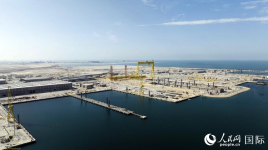
Tuwaiq Metal Casting and Forming is one of the most important factories in the marine industries chain..
The SC
INT'L MOD
- Thread starter
- #178
Qiddiya announces the launch of Aquaribia Park, the first water entertainment park of its kind in Saudi Arabia, and the largest in the Middle East with an area of 250,000 square metres. It includes 8 areas that provide 22 different water games and experiences, including the first underwater adventure trip that includes diving vehicles.
Users who are viewing this thread
Total: 1 (members: 0, guests: 1)


