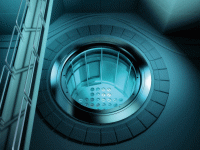
Saudi Arabia strategic Projects: news, discussions & updates

1715214606045.jpeg

The liquidity of the Saudi economy reaches the highest peak in its history at more than 2.823 trillion. O God, praise and grace be upon you. Saudi Arabia with great leadership, is moving steadily towards a bright future. Congratulations to every Saudi man and woman.

Cash liquidity in the economy, of course, it increases the supply to the economy, reduces reserve requirements for banks, helps reduce unemployment rates, stimulates trade, and consumer spending. It is an essential support for the growth of the economy and a realistic proof of its strength..
 
“Bloomberg” agency quoted the head of the Saudi “Al-Alat” company, which specializes in the field of artificial intelligence and semiconductor manufacturing:

We will withdraw our investments from #China if Washington asks us to do so

-Details:

Amit Medha, CEO of the Saudi Public Investment Fund-affiliated Al-Alat Company, which works in the field of semiconductors and artificial intelligence technology, said that it would withdraw its investments from China if the United States asked it to do so.

Bloomberg quoted the president of the company, which is supported by the Public Investment Fund with about $100 billion, as saying: “Until now, the requests were to keep the manufacturing and supply chains completely separate (between the Chinese and American components), but if partnerships with China become a problem for the United States, we will withdraw.” "Our investments"

-Choice:

American officials told their Saudi counterparts that they need to choose between Chinese and American technology as they aim to build a semiconductor industry in Saudi Arabia, as part of ongoing talks on a range of national security issues, according to Bloomberg.

“We seek reliable and secure partnerships in the United States,” Meda said in an interview with Bloomberg News on the sidelines of the Milken Institute’s global conference in California, adding: “The United States is our first partner and the first market for artificial intelligence, chips, and semiconductors.”

-Regional leadership:

Saudi Arabia is competing for regional leadership in the field of advanced technology, with the aim of establishing data centers, artificial intelligence companies, and semiconductor manufacturing, and its ambitions come at a time when the United States is increasingly scrutinizing Middle East relations with China, due to fears that countries - such as Saudi Arabia and the Emirates - They could serve as conduits for Beijing to access technology that Chinese companies are prohibited from purchasing from the United States

To view this content we will need your consent to set third party cookies.
For more detailed information, see our cookies page.


KSA policy:

West: Defense + Technology
East: Production + Trade
 

VISION 2030: THE LYNCHPIN OF SAUDI ARABIA’S UNPRECEDENTED ECONOMIC TRANSFORMATION


1715488266218.png

A dramatic economic transformation is currently ongoing in Saudi Arabia. As part of a 15-year project designed to realise the Kingdom’s true economic potential, the ambitious Vision 2030 has already achieved significant milestones as it strives to lower dependence on its oil-export economy and usher in the dawn of a new era of diversification and opportunity for its citizens. Now, in early 2024, having just passed the initiative’s midpoint, it is worth reflecting on the roadmap’s major accomplishments and the outlook for the largest economy (by nominal gross domestic product) in the Middle East for the remainder of the decade.

Launched in April 2016, Vision 2030 has been largely spearheaded by Saudi Crown Prince and Prime Minister Mohammed bin Salman (widely known as MBS), who has positioned the programme front and centre within many government agencies. It is mainly focused on three primary themes: (i) societal, (ii) economic/financial and (iii) global reach.

On the economic front, the strategy is unwaveringly fixed on diversifying away from oil and creating a broad cross-section of high-value job opportunities for its citizens. The desired diversification away from crude oil comes when fossil fuels have never been more scrutinised and disdained. With the eyes of the world fixed on many oil-producing nations—not least the Kingdom itself—a concerted transition away from oil and gas could not come at a more pertinent time. Indeed, after the United Nations’ (UN’s) Intergovernmental Panel on Climate Change’s (IPCC’s) 2022 research found that carbon emissions must be cut by 43 percent by 2030 from 2019 levels and reach net zero by 2050 to comply with the 2015 Paris Agreement’s global warming sub-1.5-degree-Celsius (°C) target, the Kingdom’s shift towards greener energy sources has become essential.

According to the International Monetary Fund (IMF), the diversification process is amply supported by improvements in regulatory and business environments. “As a result of a new set of laws to promote entrepreneurship, protect investors’ rights, and reduce the costs of doing business, new investment deals and licenses grew by 95 percent and 267 percent in 2022, respectively,” the Fund reported on September 28.

The IMF has also observed the crucial role played by the Public Investment Fund (PIF) (the country’s sovereign-wealth fund currently worth around $776 billion), which has provided financial backing to many of the programme’s most exciting and ambitious economic projects, as well as invested in new projects and private growth sectors that are now driving much of the country’s progress. One example of the PIF’s success can be found in the $1.3-trillion Private Sector Partnership Reinforcement Center (Shareek), which has already invested in green hydrogen, catalyst manufacturing for industrial refining and chemical production, and several tech-innovation facilities. Shareek also aims to create more than 64,000 jobs by 2040.

Although not formally part of Vision 2030, PIF’s globally renowned giga-projects have become closely associated with the programme. Some projects have commenced construction, including the Red Sea global tourism, the Qiddiya entertainment city and the Diriyah Gate heritage development initiatives. But the Kingdom’s most hotly discussed sustainability-based giga-project, Neom, has garnered the most global attention based on its unique design and sheer magnitude, alongside the distinctly light environmental footprint it seeks to cultivate with a new model of sustainable living. Again, PIF represents the overwhelming bulk of the investments in these giga-projects, with other sources of private funding expected to ramp up over the coming years.

Indeed, vast resources are being deployed across a range of projects to facilitate this all-encompassing economic transformation. “Efforts are underway to make the country a powerhouse in green energy (including hydrogen), mining, logistics and infrastructure, sports, music, tourism, digital services, finance, and entrepreneurship,” Rabah Arezki, director of research at the French National Center for Scientific Research (CNRS), and Tarik M. Yousef, director and senior fellow of the Middle East Council on Global Affairs, jointly wrote in a June 2023 article for US media publication Project Syndicate.

And it is already clearly observable that many of Vision 2030’s lofty ambitions are being realised, as is considerable progress towards achieving key economic aims. “Our assessment is that performance is solid relative to most of the 14 quantified economic targets contained within the original vision document,” PwC (PricewaterhouseCoopers) concluded in late October. “The results range from significant outperformance in some areas, such as female labour participation and home ownership, while there is room for further development in others. The areas that need focus include foreign direct investment and religious tourism, but both are already showing signs that they will improve in the coming years.”

Indeed, Saudi Arabia was not only the fastest-growing G20 (Group of Twenty) economy in 2022 at 8.7 percent GDP (gross domestic product) growth, but its non-oil-related growth also stood at a hefty 4.8 percent, with the IMF attributing the strong performance to robust private consumption and non-oil private investment, including giga-project implementations and strong growth rates in wholesale, retail trade, construction and transport. And the commitment to diversifying its economy and reducing reliance on the oil sector “has resulted in a significant transition”, the IMF added, noting that the share of non-oil activities was double that of 30 years ago, while the proportion of oil activities “declined substantially over the same period”.

“The Saudi unemployment rate is at a historical low. Amid an increase in labor force participation, total unemployment dropped to 4.8 percent by end-2022—from 9 percent during Covid—reflecting both an increase in Saudi workers in the private sector and expatriate workers (mostly in the construction and agricultural sectors) rising back above pre-Covid levels,” the IMF noted on September 6 following its consultation with Saudi Arabia ending July 20. “Youth unemployment was halved to 16.8 percent in 2022 over the past two years, while female participation in the labor force reached 36 percent in 2022, exceeding the 30 percent target set under the authorities’ Vision 2030 reform agenda.”

And perhaps most encouraging is the recognition by the traditionally conservative country that raising the socioeconomic prospects for Saudi women has been long overdue, with this acknowledgement no more clearly observed than through the greatly expanded role of female economic participation within the Vision 2030 revolution. Specifically, the Ministry of Commerce has removed guardian-approval restrictions such that women can more easily open their own businesses; it has established business centres exclusively for women across the country to open business registrations, request trademark registrations, reserve business names, practise freelancing and register business agencies.

“The Kingdom established reforms dedicated to the promotion of women’s engagement in economic development by setting an equal age for both genders, preventing gender discrimination in terms of wages, occupation, work field and hours, and enabling women to incorporate and practice commercial business without obtaining prior consent,” the Saudi government states on its website.

Nonetheless, clear downside risks to the Kingdom’s goals remain, especially given that its exposure to oil-market volatility is still significant. “Oil revenues remain decisive for maintaining budgetary balance and implementing Vision 2030 investments,” BNP Paribas recently stated, adding that the scale of funding requirements and underwhelming influx of foreign investors have prompted substantial debt issuances and sales of public assets by Riyadh. “This highly capital-intensive economic transformation will need to continue, despite persistent vulnerability to [the] oil market, which could increase with the energy transition.”

The French bank also indicated that the diversification process was taking place “rather slowly” and was still dependent on oil revenues. “The share of hydrocarbons in GDP is falling (40 percent in 2022 compared to 45 percent in 2012) in favour of the non-hydrocarbon private sector (from 38 percent to 41 percent over the same period), thanks in particular to growth in manufacturing industries excluding refining and retail and hospitality activities,” BNP’s October assessment of the Saudi economy acknowledged. “Nevertheless, it should be noted that fiscal impetus and, therefore, oil revenues, remain decisive in supporting activity, whether through infrastructure programmes (the various projects linked to Vision 2030) or budgetary support.”

To overcome the challenges expected in pursuit of further diversification, therefore, large projects need to generate more returns and boost productivity, according to Goldman Sachs, as well as cultivate environments that are more conducive to innovation and workforce skills that complement diversification strategies. “Streamlining fees and taxes faced by businesses—particularly at local and city levels—will further boost private sector development,” the US bank explained in an October report on the country. “The PIF’s growing role in the economy should continue stimulating private sector investment. Lastly, rigorous monitoring and evaluation can help minimize risks from targeted interventions and industrial policies, ensuring that these policies (which are not a substitute for broader structural reforms) attain the intended benefits.”


https://internationalbanker.com/fin...rabias-unprecedented-economic-transformation/
 
Mashael Al-Shamimari has been appointed Director General of the Center for the Future of Space in Saudi Arabia, which is the first global center specialized in cooperation between the Saudi Space Agency and the World Economic Forum. The center will support the growth of space research and innovation fields, and the development of best practices and regulatory and legislative policies.

To view this content we will need your consent to set third party cookies.
For more detailed information, see our cookies page.
 
Construction work is continuing and progressing in the #NEOM tunnels within the #Spine layer, which will be designated for high-speed trains, transportation vehicles, and freight trains, to connect the #The_Line area with the #Oxagon advanced industries zone.

To view this content we will need your consent to set third party cookies.
For more detailed information, see our cookies page.
 
The Italian company Webuild announces the commencement of the implementation of a freshwater lake in #Trogena, one of the #NEOM areas, with a length of 2.8 kilometers, in addition to the construction of The Bow area, which includes a hidden architectural structure extending under the lake, and provides a luxury hotel, a residential area, restaurants, and a hall to host conferences and events.

To view this content we will need your consent to set third party cookies.
For more detailed information, see our cookies page.
 
The beginning of the path to transferring American nuclear technologies to Saudi Arabia..

The Minister of Energy meets with his American counterpart and signs a road map for cooperation in the field of energy

To view this content we will need your consent to set third party cookies.
For more detailed information, see our cookies page.


To view this content we will need your consent to set third party cookies.
For more detailed information, see our cookies page.


Adel Al Jubeir: “We will enrich uranium... and we will sell you nuclear just as we sell you oil.”
 
Thomas Friedman:
The Kingdom of #Saudi Arabia and the #Biden administration have completed 90% of the joint agreements.
But the other part of the deal, which is seen as crucial to gaining support in Congress, is for the Kingdom to normalize relations with #Israel and this will not happen unless Israel agrees to #Riyadh’s conditions:...

To view this content we will need your consent to set third party cookies.
For more detailed information, see our cookies page.
 
In just one minute, here is a clip that will explain to you and save you from all the analysis regarding the topic of a relationship
“America, Saudi Arabia, Israel, and normalization”

And about the “defense deal, the nuclear treaty, BlackRock,” and much more:

America has lost its influence on Saudi Arabia to the benefit of China and Russia, because it does not have a bargaining chip against the Kingdom

To view this content we will need your consent to set third party cookies.
For more detailed information, see our cookies page.
 

1715986034552.gif

Nuclear power industry​


In December 2006 the six member states of the Gulf Cooperation Council (GCC) – Kuwait, Saudi Arabia, Bahrain, United Arab Emirates (UAE), Qatar and Oman – announced that the Council was commissioning a study on the peaceful use of nuclear energy. France agreed to work with them on this, and Iran pledged assistance with nuclear technology.

In February 2007 the six states agreed with the International Atomic Energy Agency (IAEA) to cooperate on a feasibility study for a regional nuclear power and desalination programme, with Saudi Arabia leading the investigation.

In August 2009 the Saudi government announced that it was considering a nuclear power programme on its own, and in April 2010 a royal decree said: "The development of atomic energy is essential to meet the Kingdom's growing requirements for energy to generate electricity, produce desalinated water and reduce reliance on depleting hydrocarbon resources." The King Abdullah City for Atomic and Renewable Energy (KA-CARE) was set up in Riyadh to advance this agenda as an alternative to oil and to be the competent agency for treaties on nuclear energy signed by the kingdom. It is also responsible for supervising works related to nuclear energy and radioactive waste projects.

In June 2010 it appointed the Finland- and Swiss-based Poyry consultancy firm to help define "high-level strategy in the area of nuclear and renewable energy applications" with desalination. In November 2011 it appointed WorleyParsons to conduct site surveys and regional analysis to identify potential sites, to select candidate sites then compare and rank them, and to develop technical specifications for a planned tender for the next stage of the Saudi nuclear power project. Three sites were shortlisted as of September 2013: Jubail on the Gulf; and Tabuk and Jizan on the Red Sea.

Earlier in June 2011 the coordinator of scientific collaboration at KA-CARE said that it planned to construct 16 nuclear power reactors over the next 20 years at a cost of more than 300 billion riyals ($80 billion). These would generate about 20% of Saudi Arabia's electricity. Smaller reactors such as Argentina’s CAREM were envisaged for desalination. An April 2013 timeline showed nuclear construction starting in 2016.

In April 2013 KA-CARE projected 17 GWe of nuclear capacity by 2032 of total 123 GWe, with 16 GWe solar PV, 25 GWe solar CSP (to provide for heat storage), and 4 GWe from geothermal, wind and waste. About half the capacity in 2032 would still be hydrocarbon, with one-third solar following investment in that of some $108 billion. In addition 9 GWe of wind capacity would be used for desalination. In January 2015 the nuclear target date was moved to 2040.

In September 2013 both GE Hitachi Nuclear Energy and Toshiba/Westinghouse signed contracts with Exelon Nuclear Partners (ENP), a division of Exelon Generation, to pursue reactor construction deals with KA-CARE. GEH proposed its ABWR and ESBWR, while Toshiba/Westinghouse proposed the AP1000 and Toshiba's ABWR. Areva and EdF signed a number of agreements with Saudi companies and universities, and EdF signed an agreement with Saudi Arabia's Global Energy Holding Company (GEHC) for the creation of a joint venture whose first task would be to carry out feasibility studies for an EPR reactor in the country.

In January 2015 the government said that its target for 17 GWe of nuclear capacity would be more like 2040. This effectively meant that immediate plans were scaled back, and in 2017 KA-CARE announced that it was soliciting proposals for 2.9 GWe nuclear capacity, from South Korea, China, Russia and Japan. In November 2018 KA-CARE awarded a contract to Worley Parsons to provide consultancy services for the Saudi National Atomic Energy Project. This covers project governance, resource management, project services, training and compliance across the full scope of large plants, small modular reactors (SMR) and the nuclear fuel cycle.

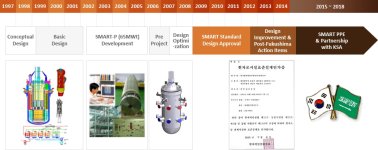
Earlier in March 2015 the Korea Atomic Energy Research Institute (KAERI) signed an agreement with KA-CARE to assess the potential for building at least two South Korean SMART reactors in the country, and possibly more. The pre-project engineering study was expected to take three years, and in late 2016 was “progressing for the FOAK plant construction”. In September 2015 further contracts were signed, which aim at building a partnership to establish knowledge infrastructure in SMART technology fields, such as designing and building the reactors and maintaining their mechanical and safety features. The two nations invested $130 million from 2015 to November 2017 to complete pre-SMART construction engineering.

SMART is designed for electricity generation (up to 100 MWe) as well as thermal applications, such as seawater desalination, with a 60-year design operating lifetime and three-year refuelling cycle. The cost of building the first SMART unit in Saudi Arabia is estimated at $1 billion. The agreement is seen by South Korea as opening opportunities for major involvement in Saudi nuclear power plans, and it also calls for the commercialization and promotion of the SMART reactor to third countries. KAERI has designed an integrated desalination plant based on the SMART reactor to produce 40,000 m3/day of water and 90 MWe of power at less than the cost of gas turbine.

Also in March 2015, the state-owned INVAP (Investigacion Aplicada) from Argentina and state-owned Saudi technology innovation company Taqnia set up a joint venture company, Invania, to develop nuclear technology for Saudi Arabia's nuclear power program, apparently focusing on small reactors such as CAREM (100 MWt, 27 MWe) for desalination. Taqnia is the technology arm of the Public Investment Fund.

In January 2016 KA-CARE signed an agreement with China Nuclear Engineering Corporation (CNEC) to build a high-temperature reactor (HTR) in the country, based on the HTR-PM now under construction in China by CNEC. A further cooperation agreement to this end, including localization of the supply chain and undertaking a feasibility study, was signed in March 2017. In May 2017 a joint working group commenced a formal feasibility study for the project, with a view to submitting it to the government later in 2017. In August 2017 China Nuclear Engineering & Construction Group (CNEC) and Saudi Technology Development Corporation signed an agreement for a feasibility study on using high temperature reactors for seawater desalination. The IAEA also reports a feasibility study on HTRs providing heat for the petro-chemical industry in Saudi Arabia.

In July 2017 the cabinet approved the establishment of the Saudi National Atomic Energy Project (SNAEP), and new financial and administrative regulations for KA-CARE.

In January 2019 the IAEA delivered the final report of its integrated nuclear infrastructure review (INIR) mission in Saudi Arabia, concluding that "significant progress" had been made, including the establishment of a legislative framework and development of nuclear infrastructure.


In February 2022 Saudi Arabia confirmed the establishment of the Nuclear Holding Company, which will act as the country's nuclear developer. The entity's formation was originally mentioned in 2013.

In September 2023 the energy minister reiterated the Kingdom’s intention to build a nuclear power plant, including plans to rescind the small quantities protocol and switch to a comprehensive safeguards agreement with the International Atomic Energy Agency (IAEA)

International agreements​


A nuclear cooperation agreement with France in early 2011 seemed likely to advance French interests in the country’s plans. In June 2015 France signed an agreement to undertake a feasibility study for building two EPR nuclear power reactors. Additional agreements were signed on nuclear safety training as well as on waste disposal.

A mid-2011 nuclear cooperation agreement with Argentina was evidently related to smaller plants for desalination and the subsequent Invania joint venture.

A November 2011 agreement with South Korea called for cooperation in nuclear R&D, including building nuclear power plants and research reactors, as well as training, safety and waste management. In June 2013 Kepco offered support for the localization of nuclear technology, along with joint research and development of nuclear technologies if Saudi Arabia purchases South Korean reactors. In September 2015 further contracts were signed, which aim at building a partnership to establish knowledge infrastructure in SMART technology fields (see March 2015 SMART agreement above).

A January 2012 agreement with China relates to nuclear plant development and maintenance, research reactors, and the provision of fabricated nuclear fuel. A further agreement with CNNC was signed in August 2014, and in August 2016 KA-CARE signed an agreement with CNNC for human resource development.

A June 2015 agreement with Rosatom provided for cooperation in the field of nuclear energy, including: the design, construction, operation and decommissioning of nuclear power and research reactors, including desalination plants and particle accelerators; the provision of nuclear fuel cycle services, including nuclear power plants and research reactors; the management of used nuclear fuel and radioactive waste management; the production of radioisotopes and their application in industry, medicine and agriculture; and the education and training of specialists in the field of nuclear energy. A further programme of cooperation was signed in October 2017 between KA-CARE and Rosatom, focused on small and medium reactors, and on building a new research reactor. In July 2019 it was reported that Rosatom proposed a feasibility study on building a VVER-600 reactor for KA-CARE initially, with a view to building VVER-1200 units eventually.

In October 2015 KA-CARE signed a nuclear cooperation agreement with Hungary. In October 2016 it signed a nuclear cooperation agreement with Kazakhstan, focused on fuel supply.

In March 2017 an agreement between KA-CARE and Jordan Atomic Energy Commission (JAEC) was signed for a feasibility study on the construction of two small modular reactors (SMRs) in Jordan for the production of electricity and desalinated water. No particular technology was mentioned.

KA-CARE earlier said it was negotiating with the Czech Republic, UK and the USA regarding "further cooperation". A full nuclear cooperation agreement with the USA is generally seen as vital to proceeding with Saudi nuclear power plans.

Fuel cycle​


There have been media reports speculating on KA-CARE intentions for uranium enrichment, without confirmation or plausibility. The speculation is based on a possible nuclear agreement with the USA, and relates to regional politics.

In March and August 2017 China National Nuclear Corporation (CNNC) and the Saudi Geological Survey signed agreements on cooperation on the exploration of uranium. CNNC said it would explore nine potential areas for uranium resources in Saudi Arabia over the next two years. It has also been exploring in Jordan.

In March 2019 KA-CARE launched a programme in conjunction with the Jordan Atomic Energy Commission (JAEC) and the Jordan Uranium Mining Company (JUMCO) to develop Saudi expertise in uranium exploration and mining. This follows a March 2017 agreement between JAEC and KA-CARE covering uranium exploration and mining in central Jordan.

Research & development​


A 30 kWt low power research reactor (LPRR) is under construction at King Abdulaziz City for Science & Technology (KACST) in Riyadh by Argentina's INVAP. The project was officially launched in November 2018, when construction was reported to be well under way.

Regulation, safety and non-proliferation​


The Saudi Arabian Atomic Regulatory Authority (SAARA) was set up to commence activities early in 2014. In May 2014 KA-CARE signed an agreement with the Finnish Radiation and Nuclear Safety Authority (STUK) to assist in this by recruiting and training personnel and establishing safety standards. In November 2016 KA-CARE signed an agreement with South Korea’s Nuclear Safety and Security Commission (NSSC) to promote cooperation in “regulating nuclear safety, safeguards and physical protection, radiation protection and relevant research, as well as development in a manner to serve atomic energy programmes in the Kingdom of Saudi Arabia," according to KA-CARE. NSSC said that “the platform of cooperation” was “expected to play an imperative role in facilitating bilateral cooperations in the region."

In May 2021 Saudi Arabia's Nuclear and Radiological Regulatory Commission (NRRC) and the UAE’s Federal Authority for Nuclear Regulation (FANR) agreed to cooperate in nuclear and radiation regulatory matters. The two regulators would form topical working groups to share best practice. This follows the signature in 2019 of a bilateral accord on cooperation in nuclear energy between the two countries.

Non-proliferation​


Saudi Arabia has had a safeguards agreement in force with the IAEA since 2009, but no Additional Protocol. Argentina's envoy to the IAEA has said that further safeguards arrangements will be needed before the research reactor it is building at KACST can be fuelled.


1715986137379.jpeg


https://neutronbytes.com/2020/01/18/south-koreas-smart-smr-gets-new-life/
 
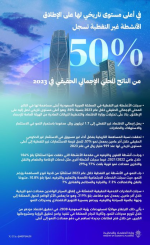
For the first time in the history of Saudi Arabia ‎
🇸🇦
🇸🇦
🇸🇦
Non-oil activities contributed 50% of GDP in 2023

1715988395532.png
 
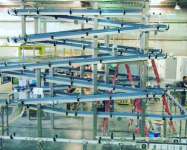
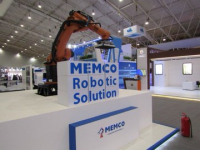
Middle East Machinery Factory Company
@MEMCOsa
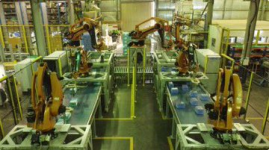
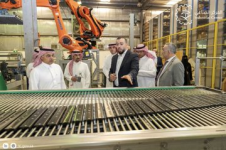
Memco designs and manufactures robotic arms as well as designing and manufacturing a group of packaging machines for use in packaging lines for various products#ممكو competes with international companies in terms of quality, technology, diversity, as well as durability of designs

1715988507410.png

1715988538012.png

1715988573102.png

1715988621997.png
 
Smart reactor key to the future

%D9%85%D8%A7%D8%B1%D8%B3-2018-2-650x321.jpeg


The demand for electric energy in the Kingdom is increasing by more than 7% annually, and this represents an increasing demand for hydrocarbon resources, which requires the use of sustainable and reliable sources to generate electricity and produce desalinated water, which in turn will reduce the consumption of fossil fuels, as well as reduce greenhouse gas emissions. .

The entry of nuclear energy is an additional guarantee for the production of water and electricity in the future, and at the same time provides hydrocarbon resources for a longer period. Also, entering into the production of nuclear energy will positively affect the energy industry in the Kingdom, and the consequent provision of many job opportunities and their localization. The Kingdom always seeks to obtain peaceful nuclear energy, within its domestic energy system. Where it began to search for the latest global nuclear technologies suitable for the Kingdom, and the capabilities of small nuclear reactors, which produce electricity to more than 90 megawatts and produce 40,000 tons of desalinated water at the same time, were examined. They are known as fourth-generation reactors, including the SMART reactor.

SMART reactor on the coast of Saudi Arabia

The SMART Small Nuclear Reactor is the only reactor that can be built at present, due to its high safety and attractive economical design. The Kingdom holds: 43% of its intellectual property. Therefore, the Kingdom seeks to build this reactor in areas of low or medium density, to contribute to reviving the economy and advancing development in these areas..
 

Users who are viewing this thread

Pakistan Defence Latest

Country Watch Latest

Latest Posts

Back
Top